Stop,Look,Listen…my weekly selection of favourite films, books and events to get you out of the house

Watch

the pearl button

The Pearl Button (Home)….another brilliant documentary by Chilean filmmaker Patricio Guzman, once more looking at the brutal history of his country; this time in Chilean Patagonia. At one time the nomadic Kaweskar (or “Water People”) paddled up and down the length of the immense Chilean coast, living in harmony with the ocean which was their life and their livelihood. The pearl button is a reference to the price paid for a young indigenous man to  be taken back to England by  a British sea captain. But there is a modern twist to the story:in the 1970s the Pinochet regime used the now deserted home of the Kaweskar people as a concentration camp and the water around it as a place to dump dissidents whom they  they  had murdered. In the film the remaining Kaweskar people tell their story, as do the survivors of the concentration camp. It’s a stunningly beautiful film, but telling a story of   conquest, genocide and horror.

Remember
easter rising

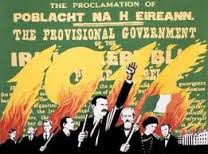
The Easter Rising,which took place in Dublin one hundred years ago next month. Glossop Labour Club have organised a day of talks and films to mark the event on Sunday 3 April. Taking part is writer Robin Stocks, author of Hidden Heroes of Easter Week which reminds us that Irish people from this side of the water went to Ireland to take part in the Rising. Further details see

Read

kinder trespass

A new book by Mark Metcalf about local hero and communist Benny Rothman:Benny Rothman; a fighter for the right to roam, workers’ rights and socialism. He is best known for his involvement in the Kinder Trespass in the 1932, but, as Mark points out in this new book, Benny did much more in his life. As a young  man Benny was active in the Young Communist League in North Manchester and was  out on the streets  fighting the fascists; he was a lifetime shop steward; as well as active in environmental campaigns. At a time when important socialist events such as International Women’s Day and Peterloo have been taken over by a middle class elite, it is good to see an event that firmly anchors our history into a Communist tradition of activism and collectivism. And you will get a free copy of the book if you attend  a book launch on Friday 8 April 1.30-4.00pm at the WCML in Salford.

Support

wakefield 14 april

The Fast Food Global Day of Action on 14 April in Wakefield. The fast food workers campaign, led by the Bakers and Food Allied Workers Union, is one of the most dynamic going at the moment, and other unions and activists  could learn a lot from them. They are following in the footsteps of  earlier trade union activists such as Mary Quaile, in their demands for a living wage and trade union rights. But theirs is a truly international campaign as it is linked up with the fast food workers in the USA, who will also be campaigning across 300 cities on  14 April. Further details see

 Look
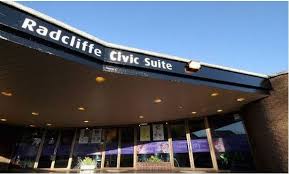
radcliffe civc suite

At a modernist building before the philistines knock it down. Join the Manchester Modernists on a visit to The Radcliffe Civic Suite, which was built in 1974, and due for demolition by the end of April. The tour will  also include a look at other local art deco buildings. A bargain at £3.50/2.50! Further details see


Posted in anti-cuts, biography, book review, Communism, feminism, films, labour history, Socialist Feminism, trade unions, Uncategorized, women, working class history | Tagged , , , , | Leave a comment

Stop,Look,Listen…my weekly selection of favourite films, books and events to get you out of the house

 Watch

high rise

High Rise  (Home and elsewhere) based on the J G Ballard novel of the same name which was written in the 70s. Tom Hiddleston plays Richard Laing, a new occupant in a soaring modernist tower block. Not sure if there is a play on his name, R.D.Laing was a radical psychiatrist of the 70s who believed that it was normal to be insane given modern society. By the 70s tower block living, at least for the working classes was seen as a disaster, so this film mirrors C21st century living. The poor have been chucked out of the blocks, they have been gentrified and are now luxury living for the monied,  although all is not happy in this Garden of Eden. The infrastructure starts to fall apart – reflecting the dissolute lifestyle of many of the residents – and there is plenty of sex, drugs and bad behaviour. The film  looks like the 70s with the clothes, hairdos and furniture but it’s just another reactionary way of life for the women whose lives mirror the Valley of the Dolls. Tensions start to rise between the classes; not working class versus middle class, more Camerons vs Blairs. It’s hard to feel sorry for anyone as utopia turns into dystopia but the women do get revenge on some of the most violent characters. Love the soundtrack particularly Portishead remaking Abba’s SOS.

 Go

the beanfield

to see some political drama. It is 30 years since a group of new age travellers were attacked by the police in what was dubbed as The Battle of the Beanfield. It took place at Stonehenge and the police decided to enforce an injuction to stop the annual free festival. Following from the Miners’ Strike – and particularly the events at Orgreave – it showed the way in which the state was clamping down on attempts to create free spaces where people could live an alternative lifestyle, even if just for the weekend. None of us who were involved with the Miners’ Strike were surprised at the violence that the police meted out to the travellers but they also arrested over 500 people which was unprecedented in terms of mass arrests. In this new play Beanfield the writers have used documentary footage as well as live action to recreate the events. An incredible attempt with only six actors! It’s important to remember this history as we are seeing similar events being played out across the country as groups of activists such as the Free Education for All challenge university authorities on issues including privatisation and the living wage. The play may be about events 30 years ago but, as Kierkegaard said; “Life must be lived forwards but can only be understood backwards.” See it at Home at

Read

stalin ate my homework

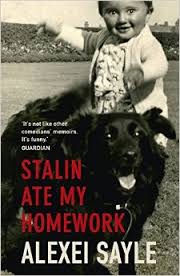
Stalin Ate My Homework by Alexei Sayle (2010). I didn’t read this when it first came out because, knowing people who were Communists, I cringed at the idea of another revelatory autobiography by,the celebrity son of Communists, criticising or making fun of essentially decent people. But it’s  not that bad and for me it’s Alexei’s parents who make this a touching and intimate story of a privileged child brought up by idealistic parents. I had heard about his mother, Molly, because she was very involved with supporting my favourite bookshop, News from Nowhere, in Liverpool. But Molly and her husband Joe were important people, more so than Alexei, as part of a local, national and international movement that really did want to make life better for everyone. It was a movement that was flawed; the Communist Party was not one I would join, it was seriously undemocratic, driven by the corrupt establishment of the Soviet Union… I could go on. But within the CP were wonderful people such as Molly and Joe who did much more to make a difference to this country. For me the book comes alive when Alexei talks about his parents; his father’s commitment to his trade union and Molly’s involvement in the campaign against the war in Vietnam and setting up Unity Theatre in Liverpool. It’s hard being a child of leftwing parents; how can you rebel?? Alexei trying to be different from his parents is what makes this book so funny – an affectionate and funny  insight into a world that has completely and utterly changed.

Posted in book review, Communism, drama, feminism, films, human rights, Uncategorized, working class history, young people | Tagged , , , , , | 1 Comment

Stop,Look,Listen…my weekly selection of favourite films, books and events to get you out of the house


Watch

underground

Underground, (only one showing on April 6 at Home) – a classic British film about the lives of working class Londoners. Nell is a shop girl ( a prestigious job at that time), Bert is an Underground porter and Bill works as an electrician.  Set in the Underground, which was a much nicer place in the 1920s, we watch as Bert and Bill vie for attractive Nell. Love the scenes in the corridors and carriages of the Underground as people are thrown together in a smokey, intimate closeness.  The heady atmosphere of a black and white silent film is captured by the brilliant photography and a music script that channels the drama and fun of the lives of these young people. Nell, played by Elissa Landi, is particularly captivating with her modern look – bobbed hair and  short skirts – which make her the epitome of the 1920s woman. Watch trailer at

 Go

gracie fields

to Our Gracie, a play about Rochdale’s Gracie Fields at the Coliseum Theatre in Oldham. Before the play I sat in the bar and spoke to some of the theatregoers. They remembered Gracie Fields and wanted to share their stories with me. Gracie came from a working class family in Rochdale and was a half timer; half the time in a mill and half the time at school. But her mother recognised her talents as a singer, comedienne and actress. She was right, and Gracie went on to become one of the most famous northern singers of her generation. During the play it was evident that the audience were in touch with the world it described; of mills, small northern towns and feisty women and men. You could feel the emotion for that past; a sense of being part of a community with Gracie representing a typical Northern lass.

Sue Devaney was exceptional as Gracie, but there were many fine performances by the rest of the cast, including some wonderful singing by Liz Carney. I didn’t grow up in mill towns like Rochdale and Oldham, so I knew little about Gracie Fields, but the play and the audience took me with them on a journey into a past that has now gone. It’s what local northern theatre does best, connecting with the ordinary working class audience that is definitely out there, and should be respected and included in our culture.


Support

top shop

the cleaners at Top Shop. They are contract cleaners and cannot earn enough to make a decent life. Read Susanna’s story and support their petition and, if you can afford to, make a donation. It is not just about signing petitions: this is part of a campaign run by independent trade union UVW who have won victories for many low paid workers. See

Find

alice wheeldon

out about Alice Wheeldon. She was a socialist feminist who lived in Derby. She supported the suffrage movement and campaigned against the First World War through the No Conscription Fellowship. Alice was part of a movement that supported men who refused to serve in the war and, because of that, she was framed by the state for allegedly conspiring to kill the Prime Minister. Alice, her daughter and son-in-law were convicted and sent to prison. For those of us involved with miscarriages of justice campaigns it is not a new story: the recent revelations about the use of undercover cops is just the latest chapter in the story of the state seeking to undermine democratic organisations in this country. Alice’s family are now running a campaign to find out why she was targeted and get justice for the family. Listen to her great granddaughter Chloe Mason speak on 16 March at 2pm at the WCML.

Sheila Rowbotham has written an  excellent book on the case Friends of Alice Wheeldon. You can  read my review at

Posted in anti-cuts, drama, feminism, films, human rights, labour history, trade unions, Uncategorized, women, working class history | Tagged , , , | Leave a comment

Why we need to reclaim International Women’s Day from the middle class feminists!

headscarves and hymens

I have grown to hate International Women’s Day. As the lives of women (and the partners we live with) deteriorate under the Tory government with the collaboration of Labour councils, the meaning  of the annual Day, started by Socialist women in 1911, is drowned under   a hail of “let’s celebrate women”. Celebrate what?? IWD, apart from a few events run by trade unions or women’s groups at the margins of society, is now an event that gets crazier every year. The latest being the whole bonkers  idea of  statues. Manchester Council plans to put up a statue of  Emmeline Pankurst, which given the fact  she abandoned her Socialist beliefs and had joined the Tory party at the end of her life , would suit her well.

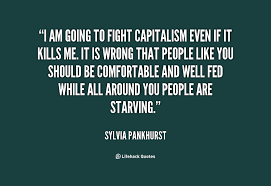
But it has reached rock bottom when a weird combination of the Corporation of London and the TUC want to erect a statue of Sylvia Pankurst. Obviously it has nothing to do with her Communist politics, her anti-fascism, nor her lifelong committment to poor women and men.  It does reflects an ever growing divide in society when IWD  has become an event for middle class, privileged women who have annexed  a Socialist event as an opportunity for them to take centre stage, whilst ignoring their poorer sisters.

sp quote
For me feminism is about changing society from the bottom up and in this new book Headscarves and Hymens; Why the Middle East Needs a Sexual Revolutionthe author Mona Eltahawy sums up the revolutionary nature of feminism. Mona is a writer from Egypt and is an activist who took part in the revolution there in 2011 and was beaten up and sexually assaulted by the police.

In this book she makes the case for a sexual revolution in the Middle East. She believes that revolution is the chance; “to dismantle an entire political and economic system that treats half of humanity like children at best.” I found this a difficult book to read because of the graphic descriptions of the abuses that Arab women face. From the daily sexual harassment of women who are dressed in traditional burkas to women having their genitals cut, to women activists who are subjected to “virginity tests” as a punishment for speaking out, the acceptance of child marriage and of men beating their wives and so it goes on.

Mona’s own experiences, even as a child of professional parents, underlines the reality that  women across the Middle East cannot escape the systematic second class citizenship of women. Her parents moved to Saudi Arabia when she was 15 years. Her mother, a lecturer, was forced to work on a female-only campus and  was not allowed to drive. When they couldn’t get driven by her father or a taxi, she and her mother  got the local bus where women are segregated into the back of the bus. As she says; “I lived in this surreal atmosphere for six years.”

For Mona this experience had a momentous affect; “I was traumatised into feminism-there’s no other way to describe it-because to be a female in Saudi Arabia is to be the walking embodiment of sin.” But even in ultra-conservative Jeddah she found feminist tracts in the university library. She discovered Huda Shaarawi, who in the 1920s launched the Egyptian women’s rights movement and, a familiar name to western feminists, Nawal El Saadawi another Egyptian activist, who has been imprisoned and received death threats for her politics.

nawal el saadawi

                                                                                       Nawal El Saadawi

It was when Mona returned to Egypt in the 1980s and  became a freelance writer that she met up with people who had been fighting the Mubarak regime for years; opposing the systematic state brutality of people and the particular attacks on young people. Twenty three years later and the Egyptian revolution began. To Mona this was the beginning of  a movement  that would not just change society but “root out the systematic hatred of women that reduces us to little more than our headscarves and hymens.”

Central to the book is Mona’s own experiences and the way in which she deals with the particular pressures on young women; from the wearing of a hijab to the exploration of her sexuality. In the West we are used to frankness in all matters relating to sexuality, but it is a brave step for a woman from such a conservative society to do so publicly.

Terrible things are happening to women over there but Mona tells the stories of women across the region who refuse to be cowed and silenced; from  women speaking publicly in the Lebanon about being lesbian, bisexual and transgender to the campaign in Morocco to change the law which punishes people caught having sex outside marriage with imprisonment.

Headscarves and Hymens is not a depressing book although it is horrifying to read the violence meted out to women and children in a systematic way by governments in the Middle East. Mona moved back to Egypt in 2013 to continue her activist work. There is a growing feminist movement there inspired by longterm activists such as Nawal El Saadawi who is still out there passing on her experiences and supporting new women to get involved. And Mona is part of that thread of women whom she says; “We will have a reckoning with our culture and religion, with military rulers and Islamists-two sides of one coin. Such a reckoning is essentially a feminist one. And it is what will eventually free us.”
IWD was created by German socialist women to gain power and representation for women (alongside their men) and to me this book, this author and the feminist movements in the Middle East are the embodiment of what women should be doing in 2016. We should refuse to “celebrate” and instead get angry and refuse to accept the attacks on our lives, our partners and our society. Start by buying this book at 

Support the women and men in Tameside against the Cuts by making a donation  see

Posted in anti-cuts, book review, Communism, education, feminism, human rights, International Women's Day, Palestine, political women, Socialist Feminism, trade unions, working class history | Tagged , | 3 Comments

Stop,Look,Listen…my weekly selection of favourite films, books and events to get you out of the house


Watch

hail caesar
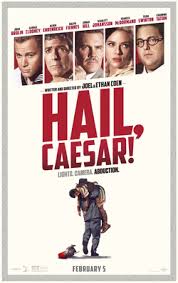
Hail Caesar(Home)…at last a funny film! Set in ‘50s Hollywood there are several plots going on but George Clooney as Baird Whitlock, the star of a Quo Vadis type movie, does steal the show at least for me. He plays a goofy and not very bright lead actor who is drugged and kidnapped by a mysterious group called The Future. They turn out to be Communists and convince Whitlock of their politics. At the same time Josh Brolin as Capitol’s Head Of Physical Production, Eddie Mannix, tries to placate everyone, from his studio boss to the gossip newspaper journalist sisters, both played by the excellent Tilda Swinton. Not all of it works, but it’s classic Coen Brothers with lots of nods and winks to Hollywood at its best and worst.
Find

night cleaners
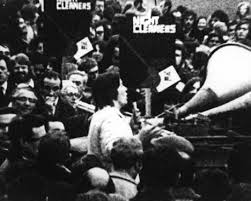
Out what feminism looked like in 1971. Was everybody posher in those days?? A little gem of a film trying to grasp at what was dubbed “the second wave of feminism”. Love it because it shows what socialist feminism is really about; how socialist women took their ideology and made it real by supporting the Night Cleaners campaign. Wonderful footage of the Nightcleaners campaign leader, May Hobbs, (find out more about her here) and, in the background having her hair styled (!!) is Bernadette Devlin McAliskey. This is what socialist feminism meant in 1971. Watch it here.

Support

women at yw
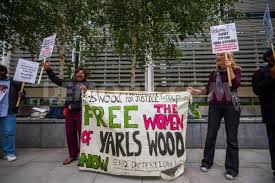
The women at Yarls Wood Prison and their protest against immigration detention. If International Womens Day means anything at all, it is about supporting some of the most vulnerable women in society and that includes women held in detention for no other reason than they have escaped war, poverty and repression in their home countries. And, as the organisers Movement for Justice say; “The demonstrations and resistance inside Yarl’s Wood have been the most important fight in Britain for women’s rights and for immigrants rights, because they have been inspiring – because the people in this struggle are fighting to win the most basic of demands as human beings.” Join them on Saturday 12 March 130pm further details see

Look

rhubarb triangle
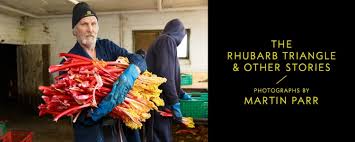
at The Rhubarb Triangle and Other Stories: Photographs by Martin Parr, Thursday 4 February – Sunday 12 June 2016 at the Hepworth Wakefield. I love Martin Parr’s photographs; they say so much about modern life and reflect his respect for the lives of working class people. His latest exhibition is about the rhubarb business in Wakefield, Yorkshire: a business that has been going on since the C19th and, looking at these photos, it hasn’t changed much. Martin’s photos show the backbreaking and dirty work that goes into producing rhubarb in the C21st. I don’t know how he managed to produce photos of rhubarb that are so vivid red. The photos of the workers are powerful and respectful of them and their trade. They are an important part of the community in the Wakefield area and this is reflected in the exhibition. Unfortunately you have to go to the Hepworth in Wakefield to see it. It must be one of the ugliest looking galleries in the country. And, like the Whitworth Art Gallery in Manchester, the Hepworth was given loads of money to set up on the dubious premise that it would regenerate Wakefield. Well, it didn’t work; have a walk around Wakefield centre. But the exhibition is definitely worth seeing.

Posted in Bernadette McAliskey, Communism, drama, feminism, films, human rights, labour history, political women, Socialist Feminism, Uncategorized, women, working class history | Tagged , , , , | Leave a comment

Book Review; Angry White People; Coming face-to-face with the British far right by Hsiao -Hung Pai

angry white people

I call this genre of book “slum lit”. Just as in the 19th century, when novelists chose to shock their readers by depicting slum life and the effects of capitalism on the poor,so  in the 21st century we have a growing number of books written by shiny-faced graduates, who go out into the ex-council estates and bring back stories of deprivation, violence and, in this case, racism.

Hsiao-Hung Pai is a bit different in that she is from a Taiwanese background and has taken issue with how she has been defined in the UK. She came to London as a student and has lived here for 20 years, in that time writing a number of books. The book was financed by Sir David Tang, whose motivation, according to the author, is that “he firmly believes in fighting racism”.

I grew up on the kind of working-class estate that Hsiao and others constantly use as the subject of their books. My family still live there and it annoys me when I read yet another story about the racism, violence and poverty that exist in these corners of our cities and towns. It seems that no-one wants to tell stories about good neighbours whatever their ethnicity: people sharing the little they have, and the general feeling of friendliness that permeates the neighbourhood.

Reading Hsiao’s travels around Luton made me laugh. I can imagine how the locals responded to this Taiwanese woman, obviously out of place with, presumably, a middle class accent, walking around the estates, and asking for coffee in the local pubs. This lack of understanding of typical working-class culture would have marked her out as yet another explorer of “darkest England”.

In the book, she delves into the growth of the English Defence League (EDL), questioning at length people like Darren, representing the disaffected working-class in areas such as Luton, who have taken their disillusionment with the actual landscape of his hometown, as well as its ethnic profile, to the EDL. She also interviews Tommy Robinson, the ex-EDL leader, but again there are no great disclosures, and I cringed when reading her tale of going into a local pub to ask the barmaid for help in contacting the local EDL.

Her conversations with the local Muslim community reflect the real problems they face. Increasingly, they are victims of racism and stereotyped by national government and the media as anti-state and outsiders.

Hsaoi does report on the campaign against the EDL and the way in which communities support each other against racist attacks. She also comments on how the new communities are organising themselves into support groups, but this is not new. The history of this country is one of individuals and communities organising themselves to deal with the problems of living in what is often a harsh environment. My background is Irish, and our history is one of being outsiders for centuries, facing racism and discrimination that was not officially acknowledged in this country until the early 80s, when groups such as the Irish in Britain Representation Group refused to put up with it anymore.

One of the big issues in this country – as reflected in the constant discourse both from governments and individuals – is the loss of empire and the subsequent loss of a national identity for many people in England. As an activist in the Irish community, I found this reflected in many of the conversations I had with people not as lucky as I was in coming from one of the more vibrant poor communities. The independence movement in Scotland, the fissures within Europe, and the political situation across the Middle East have enhanced a sense of insecurity for many people in this country.

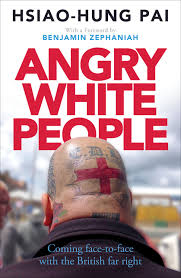
Do we need another book about racism and intolerance? I don’t think so. The EDL have come and gone, but the reasons why some poor people joined them have not. Books like Angry White People almost seem old-fashioned these days, which is reflected in its cover with the image of the white man with the EDL graffiti. What would be new and exciting is if publishers such as Zed Books allowed a right of reply for people who live in the areas mentioned by Hsiao.

If we want to defeat racism and intolerance, then those of us who believe in a fairer society need to help the people who are facing the onslaught of the austerity agenda. We need to show that we are on their side by working in those communities to create a better place to live, working with all their neighbours, wherever they come from.

Published by Zed Books £12.99


Posted in anti-cuts, book review, human rights, labour history, Uncategorized | Tagged , , | Leave a comment

Stop,Look,Listen…my weekly selection of favourite films, books and events to get you out of the house


Watch

welcome to leith
Welcome to Leith…Leith as in North Dakota USA. A documentary set in a barren, if beautiful landscape. It is a landscape that is slowly emptying of people; there are only 24 people in Leith including one black man. And maybe that is why it was chosen by white supremacist Craig Cobb to buy up land for his nasty followers to take over the town. The documentary takes place over six months as Cobb terrorises the local people and gives himself a national media profile. But the film is not just about one man but about the way in which white supremacist organisations organise and the abscence of any strategy from the national government to police them. This was shown in the interviews with the brave people who work for the Southern Poverty Law Center who say that since 9/11 the government has switched funding from white supremacist groups to Islamist groups. Ignoring the reality that the white groups have targeted and killed individuals including judges as well as Jewish and Asian people.
Cobb is a long term racist but in Leith he does come across a community that refuse to allow him to dominate the town and force them out. There is a brilliant scene where the local, (probably means hundreds of miles) communities including the First Nation people, turn up to support the townspeople and oppose the supremacists. But its the locals who are terrorised by Cobb as he buys up the cheap land, struts about with guns and is filmed by his mates, and encourages others to target the townspeople through uploading their personal details onto his white supremacist website. Welcome to Leith has parallels over here as we have seen the BNP/UKIP win elections across the country as the mainstream parties grow evermore corrupt and voters react in the only way they feel able to. Great film, shame Home have only given it a limited number of screenings.
Find

bolton museum
Out about anti-war activists during the First World War on Wed 2 March from 1215pm at the WCML. The event kicks off with Dr Ali Ronan discussing her new booklet ‘Unpopular resistance: the rebel networks of men and women in opposition to the First World War in Manchester and Salford 1914-1918’ in an illustrated talk about the intriguing networks of anti-war activists in Manchester and Salford in WW1. Followed by a specially-written ‘Living History’ performance, No Power on Earth, about the true story of Salford Conscientious Objector, James Hudson, an ordinary school teacher at the start of the First World War who finds himself at odds with the popular mood. . And it is free!!

Support

gaza women
Women of Palestine Living through Trauma; Building Resistance on Saturday 5 March 1-5pm at Cross Street Chapel. It is PSC’s International Women’s Day and one of the few events that reflects the true ethos of IWD. An event that publicises the injustice facing women and men in Palestine and expects you to do something about it!
The event includes food, talks, films and discussions and its free! Further information see
Go

the curse
To a new play by up and coming northwest playwright Jane Bradley; The Curse. She says; “Paying tribute to the best girls behaving badly in TV, film and fiction – the characters from The Craft, Foxfire, Mi Vida Loca and Sugar Rush, among countless others – The Curse celebrates girlhood in all its gore and glory”. The play starts on 10 March at that wonderful venue 3MT for tickets see

Posted in anti-cuts, drama, education, feminism, films, human rights, International Women's Day, labour history, Manchester, Palestine, peace campaigns, political women, Socialist Feminism, Uncategorized, women, working class history | Tagged , , , | Leave a comment

Stop,Look,Listen…my weekly selection of favourite films, books and events to get you out of the house


Watch

groundswell
Groundswell; A Grassroots Journey, screening  organised by Manchester Film Cooperative and Keep Our NHS Public Greater Manchester on I March at 7.30pm. It is really important that filmmakers document social movements and this was funded by many individuals, some of whom are the campaigners in the film. Groundswell is about the NHS and the campaign 999 Call for the NHS  in the run up to the General Election of May 2015. It features grassroots campaigner Joanne Adams, who organised the “Darlington Mums” march across the country to London and a massive demo in Trafalgar Square in September 2014. One of the big problems though, for the campaigns around the NHS, is that we have proven that people will come out in their thousands for a demo, but it is very difficult to get people at a local level to join campaigns; both workers in the NHS as well as users. NHS campaigns have been damaged by the politics of the Labour Party. Before the general election it was Andy Burnham and his reluctance to support opposition to the privatisation agenda and today, although Jeremy Corbyn is now leader, Labour hasn’t actually  changed its policies with the likes of Heidi Alexander  cosying up to Simon Stevens (head of the NHS). Never mind  local Labour councils now running parts of the NHS locally with little accountability to its constituents. Join the debate after the film wth the director and the 999 campaign, but more importantly join the campaign and do something!

Look

6-February-14-August-2016-Grafters-Industrial-society-in-image-and-word-@-Peoples-History-Museum.-Burlers-and-Menders-by-C-H-Wood-Scotts-Mill-1948-©-Bradford-Museums-Galleries
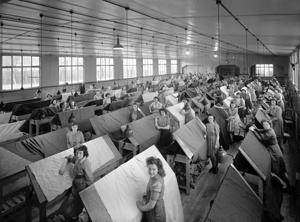
Grafters (workers, not ticket touts as in Manc lingo) at the Peoples History Museum. An exhibition that includes photographs from the archives of the north of England’s industrial towns and cities. Many of the photos seem very voyeuristic: it suited employers to use their workers as models or props in the display of their products. Most of the photos record a time that has gone forever; the world of mines, factories and mills. I particularly liked  exhibition curator Ian Beesley’s picture of a tyre fitter taken as the factory was being closed down.  The fitter did get to choose how he would be photographed and  his name was not recorded. Not sure that many of these workers got a say in whether they wanted to be photographed. But I do love Ian McMillan’s poetry which accompanies the photos. At the end of the exhibition there is an opportunity to upload your own photos of yourself at work, and I think this says something about the reality of work; do we really want to be there, is it what we want to be known for? Not surprisingly it is the happy smiley creative artists  who have sent their photos in, not  the care assistants or fast food workers.
Read

if this is
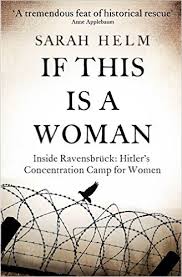
If This Is A Woman: Inside Ravensbruck; Hitler’s Concentration Camp for Women by Sarah Helm. I usually avoid books about concentration camps  because I know how horrific they are going to be,  but I was drawn to this book because I did not know Hitler had set up concentration camps  for women. Ravensbruck was in Germany, and between 1939 and 1945 over 130,000 women from 20 countries were imprisoned there. As Sarah comments in the book, few historians have been interested in researching what happened in concentration camps generally, and this is the only book written about Ravensbruck. Some of the survivors did produce their own accounts of their lives in the camp, but in post war Europe there was little interest shown in their histories for  reasons the book explains. For me, as a political activist, I wanted to know about how the communist and socialist women coped with being interned and also what relationships they had with the other women who lived alongside them.

Whilst it is wonderful to read of the courage of the political women, to oppose and undermine in any way the monstrous regime in the camp, it is sad that the names and experiences of so many vulnerable women, including the sex workers and gypsies have been lost to history. Sarah has produced a tremendous history book: one that involved her travelling across the world to find the surviving women and also delving deep into some of the worst stories of humanity in the C20th. I think the book and its history has a resonance today as we, nightly on the news, watch people fleeing the Assad regime in Syria and ending up in camps across Europe. And whilst I think that most people are sympathetic to their plight, it is the harshness of, in particular,  governments such as our own which  seek to dehumanise these people and refuse them sanctuary in our country. Highly recommended, but it costs £25 and I was lucky enough to find it in my local library.

Posted in anti-cuts, art exhibition, book review, Communism, drama, education, films, human rights, labour history, Uncategorized | Tagged , , , , , | Leave a comment

Book review; 1916 Ireland’s Revolutionary Tradition by Kieran Allen

1916 KA

It is 2016 and this year is the 100th anniversary of the Easter Rising in Dublin. It was on 24 April 1916 that a group of socialists and republicans struck a blow against the imperial power of Britain and its occupation of Ireland. In 1916 Ireland’s Revolutionary Tradition historian Kieran Allen explains why there was a Rising in 1916. He says; “it was a serious military operation that struck a blow against the greatest imperial power of its time.” Britain’s involvement in the First World War was seen as an opportune time to stage a revolt which would lead to the rebels holding at least part of the country and being able to negotiate demands for Irish independence.
Central to the book is Kieran challenging the myth, perpetuated by the Irish government and many revisionist historians, that the leaders of the Rising did it as a “blood sacrifice”, rather than a serious challenge to the British state.
In 1916 Ireland was still a unified state. The Rising involved 1,300 insurgents (men and women; I will return to this later), of whom 152 were part of the Irish Citizen Army which had been set up by socialist James Connolly in 1913 to support workers in the Dublin Lockout. British intelligence had no idea about the plot and were taken aback as the rebels seized key buildings in Dublin. Outside Dublin there was fighting in North County Dublin, Wexford, Galway and Cork.
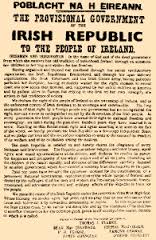
The General Post Office on O’Connell Street was the headquarters of the Rising and it is from there that Patrick Pearse, one of the charismatic leaders, read out the proclamation declaring an Irish Republic. Although the the Rising failed in its determination to kick the British out of Ireland, it did start off a chain of events which Kieran outlines in this book, leading to the partition of Ireland: the nominally independent Irish Free State, and the six counties of Northern Ireland which remained part of the UK.

irish proclamation
Over the years though the Rising has been used by reactionary politicians and historians in Ireland to denigrate its true revolutionary tradition and instead sterilise the events as “a blood sacrifice” led by small group of rebels who laid down their lives for the soul of Ireland. Desmond Greaves, Communist historian and activist, expounded on this in his 1966 essay; “The Easter Rising as History”.
In 2016 it is hard for the pro-business and pro-British Irish government to celebrate the Easter Rising and Kieran has fun in pointing out the public relations nightmare that the Irish government have stepped into by even acknowledging the event.
But, as he points out in 1916, Ireland is no longer the conservative, church ridden state that was created in 1921. Kieran points to the growing dissent in the country as shown in the anti-water charges movement and its links with the trade union movement. The link with the Rising is the role of James Connolly, the socialist republican leader, who was shot by the British. And it is Connolly’s politics of change from social movements and the people at the bottom of society that Kieran believes that can bring hope and real revolution to Irish politics.
I do not live in Ireland, but I am part of the Irish diaspora that has campaigned over the years for a united Ireland, and it’s when Kieran looks around for a radical party to take on the mantle of 1916, I feel that his analysis fails. He admits that none of the establishment parties can do take on a radical agenda, and although he points to Sinn Fein’s agreement to austerity politics in the north, he still puts them forward as a radical party. Or at least one that “would still represent a major shock for the Irish political system.” I think the last thing people in Ireland (or any country) need is yet another political party taking power on an anti-austerity agenda and then selling them out. I am of the firm belief that, whilst it is good for historians to comment on social movements, it’s best they leave the politics to the activists.
And, although I think this is one of the more interesting books being published about the Rising, I really object to the lack of acknowledgement of women as activists: not just in the Rising itself but in contemporary politics. It is just not acceptable in C21st history, and also made worse by being written by a leftwing historian.
Missing is also any acknowledgement to the Irish who, over the centuries have been forced to leave Ireland because of their politics, but who took those republican socialist ideals to mother Britain and played a significant role in organisations as diverse as the Fenian movement, the Connolly Association and the Irish in Britain Representation Group. Luckily IBRG got radical historian Michael Herbert to write up some of this history, including the role of the Irish who travelled to Ireland to take part in the Rising see

Buy 1916 at

Find out about one of the important women of 1916 see

And for a funny take on 1916 see

Posted in anti-cuts, book review, Catholicism, Communism, education, feminism, human rights, Ireland, Irish second generation, labour history, North of Ireland, trade unions, Uncategorized | Tagged , , , , | 1 Comment

Stop,Look,Listen…my weekly selection of favourite films, books and events to get you out of the house


Watch

janis
Janis: Little Girl Blue (Home) She sounded like a black woman singer but she was born into a middle class family in the conservative town of Port Arthur, Texas in 1943 – a town that had a strong Klu Klux Klan branch. Janis did not fit in, as a girl who opposed segregation and did not conform to the 1950’s narrow view of femininity. Music, and discovering she could sing, gave her an escape route out of Texas to California and the growing counterculture of 1960s America. In this powerful documentary we hear Janis’ own voice through the letters she wrote to her family and friends. And although she did find success in her short career, she died in 1970. Janis paid a high price for trying to become herself: a strong woman in a very macho music industry.
Remember

sylvia 2
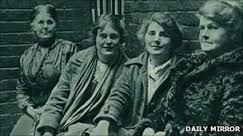
Sylvia Pankhurst: the best of the Pankhurst clan. You can find out more about her in Sylvia, a one woman play that was originally written in 1987, which is on at Wortley Hall, Sheffield on 24 February at 7.30pm. Sylvia, unlike the rest of her family, really addressed the major issues that affected working class women not just the vote but also poverty, unemployment and ill health. Her politics were socialist and she opposed the First World War, supported Irish independence and anti-fascist struggles. She lived in a free union with her anarchist lover Silvio Corio and refused to get married when she had her son Richard at the age of 45.
Further info see
Find out more about her by reading Sylvia Pankhurst Suffragette, Socialist and Scourge of Empire by Katherine Connelly. Buy it at

Support

jdw
Justice for Domestic Workers, a charity which supports domestic workers who come here on visas and work in private houses. They are slaves: suffering all kinds of abuse and often locked inside the employers’ houses for years. Support JDW’s work and donate at
Find

women radicals in English c war
out about the Levellers and Diggers at the Wakefield Socialist History Group on 13 February 1pm at the Red Shed, 18 Vicarage Street, Wakefield WF1. The speakers are Ian Brooke, Steve Freeman and Shaun Cohen. Kitty Rees is chairing. All are welcome and there is a free light buffet (plus a bar with excellent real ale). Further details about the group see

Look

chris cyprus
At Northern Life, an exhibition by Mossley artist Chris Cyprus at Tameside Art Gallery 16 January-23 April 2016. Chris works from a studio in Woodend Mill in Mossley and his wonderful evocative paintings reflect his love for his local area of Lancashire and Yorkshire. He says, “I paint what I see, and what I see is disappearing.” I love his pictures because they are not sentimental about people or places but do reflect a realistic view of local northern life. He portrays people in a respectful way and I love the vivid colours and landscapes. Further info see

Listen

martin harris centre
some classical music. This time it is the double bass played by the Halle’s virtuoso section leader Roberto Carrillo-Garcia. It’s a lunchtime concert with free entry on 18 February, starting at 13.10pm. Further details see

Posted in anti-cuts, art exhibition, Communism, drama, education, feminism, films, human rights, interesting blog, labour history, political women, Socialism, Socialist Feminism, Tameside, Uncategorized, women | Tagged , , , , | Leave a comment