My review of Malgorzata Mirga-Tas; Romani textile artist and activist exhibition and book

What is your image of a Romani woman? A woman selling the Big Issue? A group of young women wearing brightly coloured long dresses with babies begging on the street?

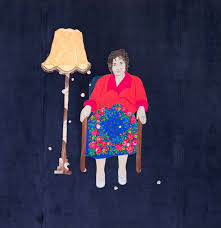
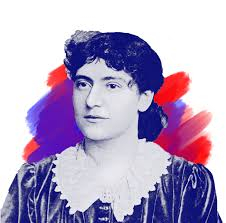
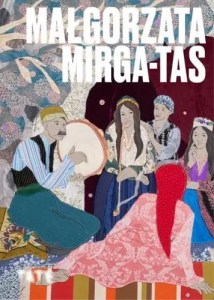
Artist and activist Malgorzata Mirga-Tas in this exhibition at the Whitworth Art Gallery in Manchester challenges western stereotypes of what it means to come from the Romani culture.

Raised in the community of Bergitka Roma in Czarna Gora near Zakopane in the Tatra Mountains of Poland she studied sculpture in the Academy of Fine Arts in Krakow.

Returning  home (and where she still lives today) Malgorzata worked on a project with local Roma children. They collected clothes and then used them to make textile portraits of famous Romani people. She says “Through art, I was able to teach them about the Roma’s story.”

She has chosen to work within her community and particularly with children to inform and educate them about their history and in “creating a new generation with different ideals.”

She  produces textiles art  which tell the story of her community but specifically promoting the lives of women. She comes from a family of strong women and that is reflected in the subjects she chooses to work on. She works collectively with women and her artwork is big, brightly coloured and although some of the  stories are heartbreaking there is a lot of joy (and fun) in the work.

Recounting the often-hidden history of the persecution of Romani people is central to her work. Some of the most stunning works in this exhibition are  her 2022 portraits Siukar Manusia (meaning “wonderful people”) which depicts first generation Romani inhabitants of the Nowa Juta district in eastern Krakow.  I loved the one of Holocaust survivor and activist Krystyna Gil.  Depicted sat in her living room, in traditional dress,  she sits looking out at the viewer: proud and strong.  It was not until 1982 that it was recognised by German Chancellor Helmut Schmidt that 500,000 Roma people were murdered in the Second World War.

Malgorzata’s work has been recognised through many exhibitions and awards and unlike many artists she has chosen to stay in her community.  In 2015  she set up a  Foundation to encourage a new generation of Romani artists and activists and to preserve and promote Romani culture and identity. Proudly, she says “We have our own voice and they cannot marginalise us.”


Find out more about the exhibition here https://www.whitworth.manchester.ac.uk/whats-on/exhibitions/ma%C5%82gorzartamirga-tas/

Read about Malgorzata in this new book. You can borrow it from Manchester Libraries or it costs £12

Artists Series: Małgorzata Mirga-Tas


Posted in anti-cuts, book review, education, feminism, human rights, labour history, Manchester, political women, Socialist Feminism, trade unions, Uncategorized, women, working class history | Tagged , , , , , | Leave a comment

My interview with Rose Hunter of the North Staffs Miners Wives Action Group

rose pic 4

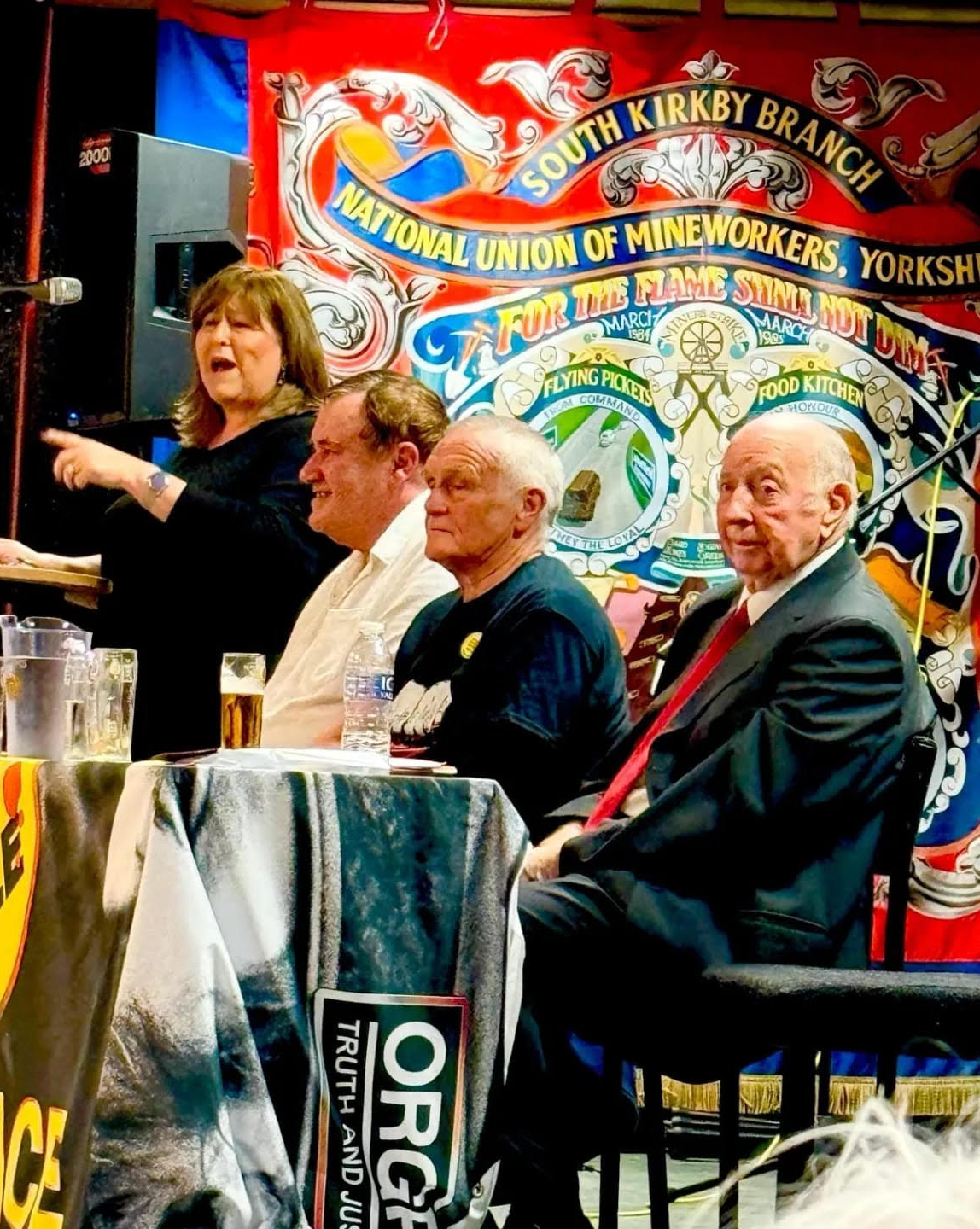
Rose speaking March 2024 40 Anniversary of Miners Strike.

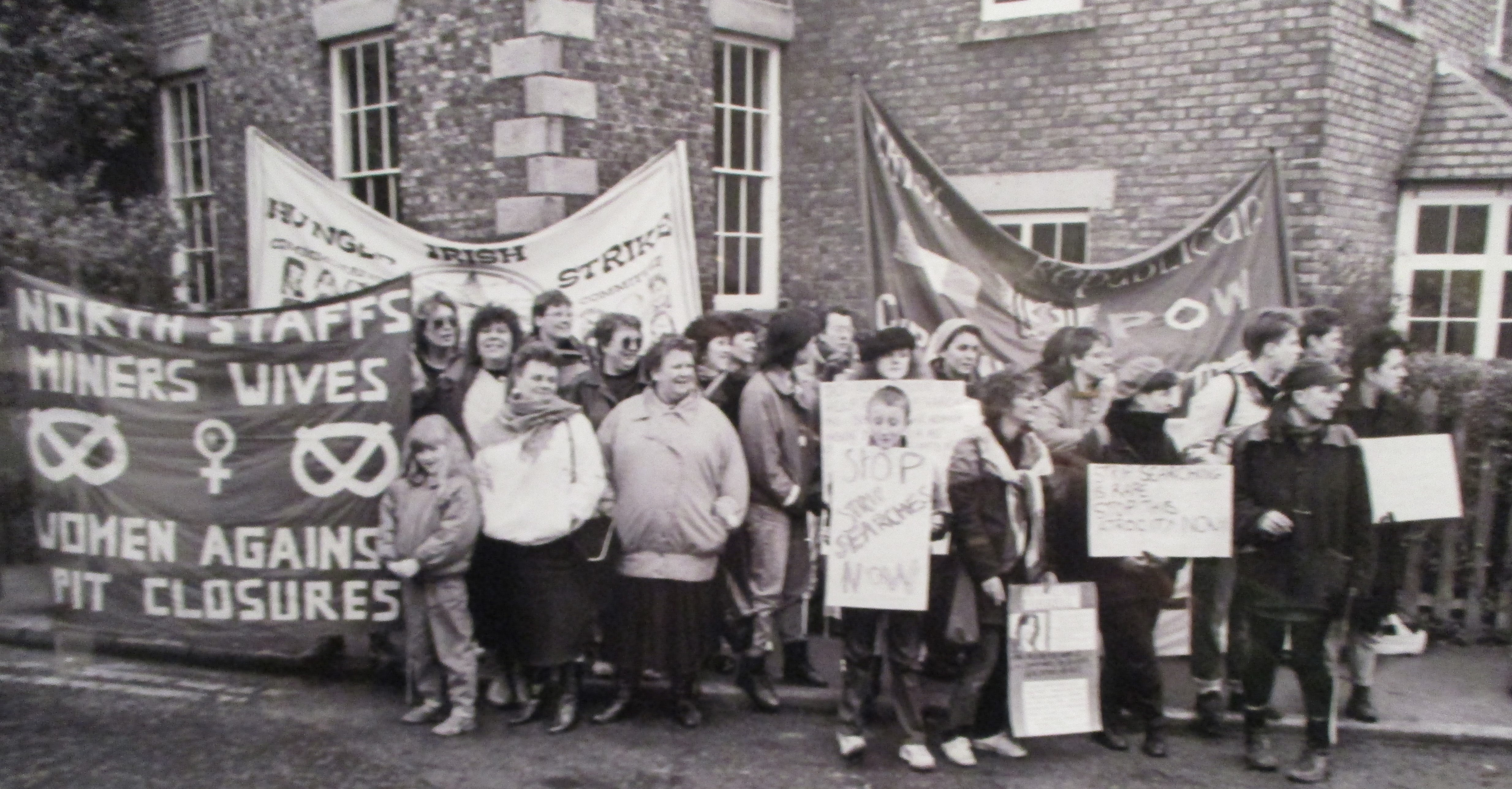
After the end of the Miners’ Strike in 1985 Rose Hunter says: “Men lost their freedom; the women gained theirs.” Rose and her sisters in the  North Staffs Miners Wives Action Group  then embarked on forty years of  raising  issues about jobs and communities and making  links with other progressive strikes and organisations.

Rose comes from a mining family. Her father, Denzil, was Indian who  went to Scotland and became a miner. Her mother, Mary, is from a Scots Irish background. The family moved to the Potteries for her father’s work in the mine and Rose was born in 1960.

She grew up in the mining village of Biddulph where the pit was 12 miles away. Her father was active in the miners’ strikes in the 1970s. According Rose the miners from Scotland  were more militant than the Stoke miners.

Rose’s first job was in a  local hospital training to be a nurse: she  was a member of the National Union of Public Employees. When the nurses went on strike in the 1970s in Stoke  the miners were the first group of workers to join their picket line.

In 1979 she married Dave,  another Scots miner living and working in the mines in the Potteries. When the strike broke out in 1984 Dave went out picketing  while Rose  looked after their two children. They had a third child during the strike.

Biddulph was a divided village.  “Most people were scabs. It was a lot higher in North Staffs than in  Nottinghamshire.”  Rose was not happy about accepting food parcels. “I said I am not queuing up for food. It was mortifying.” Never mind that once the miners brought the food parcels back to the village there was no place to store and hand them out. “The local priest, Father  Ryan offered us the church. He had been a missionary and understood the situation. But he got flak for doing it.”

They had massive support from family and friends during the strike although “we had no telephone and no car. We sent the television back – which was on hire –  and did not even have a radio to listen to the news.” She used to go to her mother’s house  to find out what was going on. “I could not believe what was going on,  particularly Orgreave. It was like World War Three.”

“I wasn’t what you’d called political – but as a family we had strong views of what we thought was right and wrong – work hard, get an education, support each other and people in our community.  So when we went on strike it was to save jobs and fight for our communities – build a better future for our children and grandchildren.”

One woman  stood out in Stoke:  Brenda Proctor. Their husbands worked at the same pit. “Brenda was travelling the country speaking at rallies and in Stoke she stood on the same platform as Arthur Scargill – his equal – talking about the strike, she was awesome.”

Rose did go to a big meeting about the strike in Digbeth, Birmingham in November 1984.There was a coach going and Dave said “it is men only” but she went anyway.  The meeting changed her life:  all the top miner’s leaders were there – Arthur  Scargill, Mick  McGahey, and Peter Heathfield. Rose remembers :“The atmosphere was electrifying. It was the first time I heard Arthur speak. It blew my mind. There was also a miner’s wife on the platform,  she was so nervous –  she wore a blue jumper and I think her name was Karen – she spoke for us all when she said the fight would go on.”

It was after this that Rose got involved in strike activity , going to a women’s event at the local Polytechnic about the strike  and Ireland. Her husband’s cousin, Lorna,  encouraged her to go. “I did go, in my high heels and skirt. I didn’t have anything else to wear. I got two buses down there and it was freezing.” 

Rose noticed Brenda there and introduced herself, explaining that their husbands worked at the same pit. ”Brenda’s response was ‘where have you been?’ I thought she was going to kill me!”

          After explaining that she had been pregnant Brenda invited her to join them:  she won the raffle and shared it amongst the women. She also met Bridget (Bell) and thought she was a stereotypical feminist; dungarees, short hair, and Doc Martins. “I was completely wrong. It was right out of my comfort zone but I never felt so welcome with a group of women all experiencing the same thing – the miners strike .”

From then on Rose became involved in the North Staffs Miners’ Wives Action Group. The following day, Sunday, instead of Rose cooking Sunday dinner as usual,  Bridget and Brenda picked her up in the Women’s Refuge van and she went to her first Women Against Pit Closure meeting.

After the strike ended the group still met every Monday,  determined to continue supporting the miners who were sacked or  in prison.   Their friends at Banner Theatre suggested they start a choir which  Rose says “lifted our spirits.” They started performing and got gigs around the country.

The women   continued to make links with other struggles; Wapping and the print workers strike, Viraj Mendis in Manchester, Asian strikers in Birmingham. They saw a similar picture of a besieged community in the north of Ireland in Belfast and Derry, visiting  Irish political prisoners in Belfast as well as Irish women political prisoners in jail in Durham. They stood on picket lines with fire fighters and opposed the war in Iraq.

In 1992 the  huge mines closure programme was announced which  the women were not prepared to let it happen without opposition. The WAPC agreed a plan of pit camps similar to those set up by the Greenham Women.

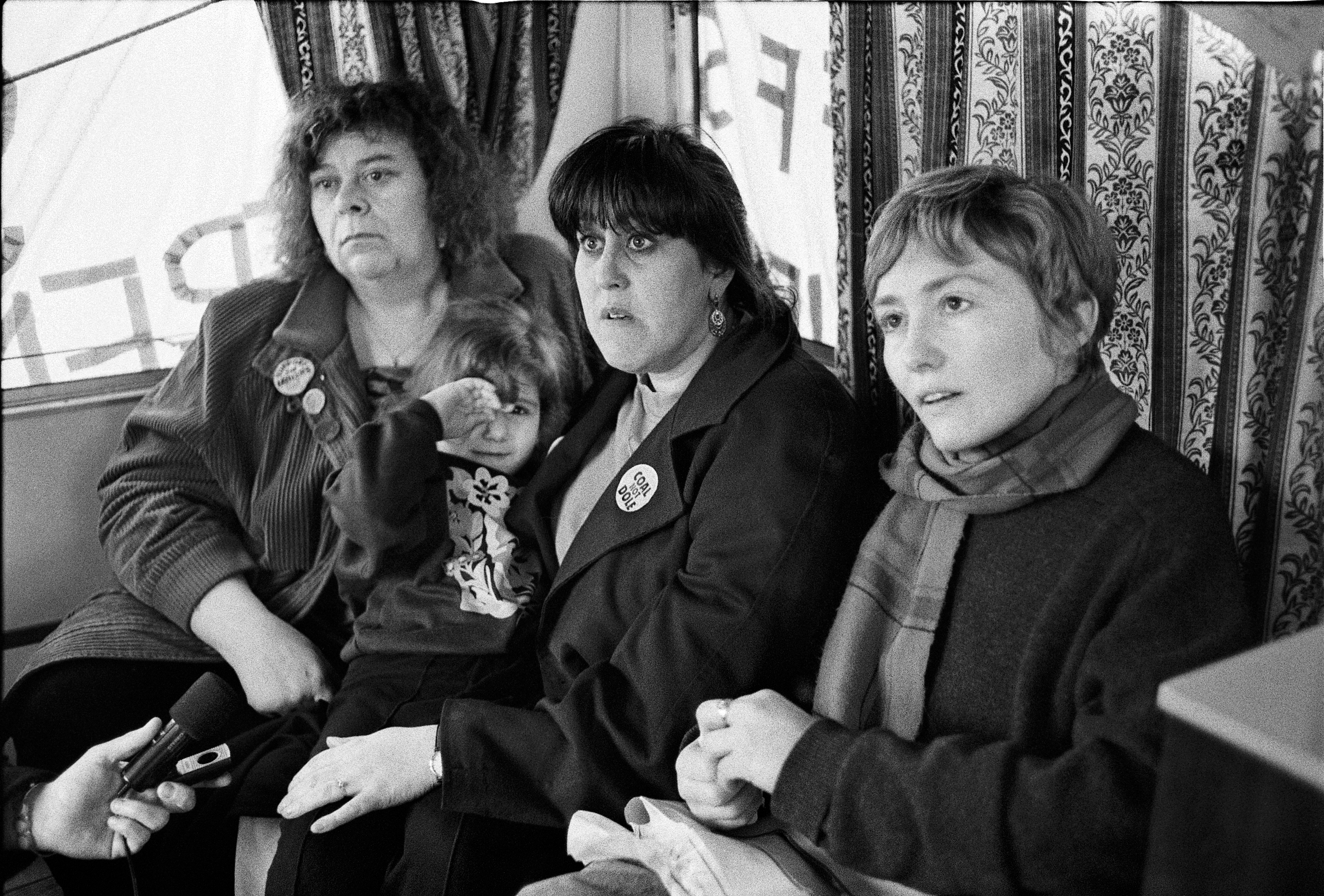
The North Staffs women set up a caravan for six months outside the Trentham Colliery, the last local deep pit in North Staffordshire, to save it from closure. Brenda, Bridget, and Gina (Earl) occupied the pit for three days with   Rose coordinating  activities from  the caravan.

NSMWAG, Pit Camp 1993

NSMWAG, Pit Camp 1993 L-R Brenda Proctor, Rose Hunter and Bridget Bell Photo: Kevin Hayes

The women left the pits with their heads held high, met by Arthur Scargill and members of the press. The local theatre in Stoke,   New Vic,  turned the occupation into a play called “Nice Girls.”

          The following year they made a one-hour documentary “We Are Not Defeated, ” charting the history of the miner’s struggle against pit closures in Stoke-on-Trent.  They have recorded songs to raise money for sacked miners, and  commissioned a sculpture commemorating the miners killed in the strike.

Rose’s husband died in 1990. She now has four children and seven grandchildren. She worked as a driver and then a worker in a dementia unit for 25 years until she was made redundant.  Over the years  the  women  were active in the Socialist Labour Party, the Labour Party, and their unions.

2024 is the fortieth year since the strike. Although three  key members of the group –  Brenda, Bridget and Hilary –  are now dead, Rose   says:  “We are holding a series of events over the year to remember them. It is not a sentimental journey,  but to remember how we worked as a group and how this continues today. I  was the youngest and they were the biggest influence on me.”

This year the events have been chosen to remind people of the links that the NSMWAG have made, and continue to make, with other people in struggle.

The events planned  include a new play called “ The Miner Birds,”;  a social bringing together the former Burnsall  Asian strikers and local groups in Stoke;  a showing of the film “Pride” to remember the support the gay and lesbian movement made to the Miner’s Strike. There is a new exhibition called “No Going Back” to mark the 40th   anniversary at the Potteries Museum, where  he archive of the NSMWAG is housed.

The NSMWAG are one of the few groups that have reminded people of the links that were made with Republican communities in the North of Ireland during the Miner’s strike. When Rose went there  she said “It felt like I had come  home.”  They have  continued over the years visiting Ireland and intend  to mark this mutual support in 2025.

The women of the NSMWAG made the links between grassroots-based community and the wider issues of defending jobs and services and making this a better world to live in.

For Rose it was the Miners’ Strike of 84/5 that led her into the NSMWAG and a lifetime  of political struggle. “This year is about the legacy of Bridget and Brenda. When I speak, I speak for them.”

But it is not about just  looking  back. She has been inspired by the young people interested in Orgreave while   one of their recent events included a young woman active on Palestine. “Our activity has got to be relevant to now and the struggles that young people  face. It is up to us to give them a platform.”  

Contact the NSMWAG on Facebook

Visit their exhibition here https://www.stokemuseums.org.uk/pmag/whats-on/events/no-going-back/

All photos are by Kevin Hayes https://progressdigital.photoshelter.com/index

Rose will be speaking in Manchester on 1 February at a Mary Quaile Club meeting with socialist feminist Sheila Rowbotham

Posted in art exhibition, biography, drama, education, feminism, human rights, Ireland, labour history, North of Ireland, political women, Socialist Feminism, trade unions, women, Women Against Pit Closures, working class history | 4 Comments

My review of “The Wearing of the Green a Political History of the Irish in Manchester” by Michael Herbert

The Wearing of the Green

Published in 2001 by the Irish in Britain Representation Group   “The Wearing Of The Green” is part of a radical tradition of history, a  history that is written by the people who make the history and one that  seeks to encourage readers to follow in their own path.

Michael Herbert had been  a member of the Labour Committee on Ireland in Manchester, a past editor  of the journal of  North West Labour History  Society, and  for a time a Trustee of the Working Class Movement Library.

In this  study he  sought to tell the story of  people who were activists in their own history and rescue them from becoming bystanders in the academic fodder of history as it is too often produced  in colleges. It is important to state that Michael produced the book whilst working fulltime and being active in his trade union.

The Wearing of the Green  is still unique in its endeavour in producing  a full-length study of two hundred years of Irish political activity in Manchester. It joins the dots of a Manchester Irish community that played an important role in the ongoing  struggle for Irish independence and freedom in political movements, while also highlighting  their role in the British radical and labour movement.

Michael points out that the relationship between Ireland and Britain was unique in the history of the British Empire. As he says: “Migrants travelled to Britain from almost every land she possessed but none save the Irish came in such large numbers from a land whose occupation, pacification and subjection proved so consistently troublesome and problematic to the politicians and civil servants in London and Dublin.”

The relationship was imperial and colonial. The Irish in Britain were conscious of and political aware of the events in Ireland and those happening to the Irish in this country , as well  Irish communities in the USA, Canada and Australia who  played significant roles in this history.

In just over 200 pages Michael paints a picture of a vibrant and highly politicised  community,  one that experienced racism alongside imperialism which is deeply embedded in British society. He shows how the Irish challenged not just the occupation of their country but the occupation of their minds and sought peace and justice,  both here and on the island of Ireland.

Michael’s knowledge of Irish history  was informed by his contacts with  socialist historians such as Desmond Greaves, Ruth  and Edmund Frow and  attending History Workshops which gave a voice to activists.

He also  took people on Irish history walks which allowed attendees to  speak about their own experiences as well as giving a context to people new to this history.

          It was a time when history meetings were not dominated by the academics but in the hands of Marxist historians such as the Frows who encouraged other trade unionists/activists to write up their own history: meetings which were accessible and inviting where you were more likely to meet a trade unionist interested in their own/union’s activity.

The first section of the book takes us from the C16th  to the  Second World War. It is a period of history that is reasonably familiar.  Less familiar is  the way that the  Civil Rights struggle  in the Six Counties in the late 1960s had an impact in Britain. Most studies of  Civil Rights , even today,  exclude the one in the North of Ireland.  

This is where the cover photo comes in.  It shows the commitment of these young Irishmen (there were women there but not photographed)  from De La Salle College to camp out in Manchester overnight  16 and 17 January 1969 to raise the issue of civil rights in the North of Ireland. Local newspaper the Manchester Evening News published the photograph.

Michael  makes the links between the Irish in the North of Ireland and in the UK. He shows the growth of new groups from Peoples Democracy in Derry and the links they made to UK based groups such as the Connolly Association and Clan na hÉireann over here. He traces  the most difficult times for Irish people from the 1970s to the 1998 Belfast Agreement and  reflects on the response of Irish people over here to the war in the north of Ireland.

The final chapter on the Irish in Britain Representation Group  shows how events such as the Hunger Strikes in 1981 sparked a whole new generation of Irish (and British) activists to campaign for a united Ireland and equality and justice for the Irish in Britain.

 It is a reminder of the key role that grassroots organisations are in changing society.  And how important it is for activists to write up their own history and not leave it down to academics.

You can buy the book from News From Nowhere https://www.newsfromnowhere.org.uk/

Read more about IBRG here https://lipsticksocialist.com/history-of-the-irish-in-britain-representation-group/

Posted in book review, education, human rights, Ireland, Irish second generation, labour history, Manchester, North of Ireland, Salford, trade unions, working class history, young people | Tagged | 1 Comment

My review of “Reasons to Rebel My Memories of the 1980s” by Sheila Rowbotham

Pic of me and SR memoir


Reading Sheila Rowbotham’s latest memoir, I feel I am inside  her  head as we spin through the 1980s  on a rollercoaster of emotions, feelings, and activities.   Sheila is a socialist feminist, historian, activist, mother, partner,  lover, comrade, friend… and this is an action packed, intense experience  of the era.

The 80s are now being examined through books, television, and social media,  but few people who are holding forth can match Sheila’s honesty (maybe too much sometimes – the episode with her coil (ouch!) I could have done without) and her razor-sharp insight into the politics (big P and small P) that she lived through.

In 1983 Sheila went to work for the radical Greater London Council  (1981-86), led by leftwinger Ken Livingstone,  who was promoting a wider debate about  how Londoners could have a bigger say in how the council and services worked.

Sheila worked in the Popular Planning Unit,  developing an alternative economic strategy which included childcare and domestic labour. In their paper Jobs for Change  she featured a GLC funded women’s cooperative in Lambeth –  whose members were  Asian and Afro-Caribbean women – which made multi-ethnic toys. This reminded me of another  London cooperative making toys set up by Sylvia Pankhurst in 1914 to give work to local women.

It was an ideal job for Sheila,  although at the time she had many doubts about her involvement in what was a large and bureaucratic organisation. But her work at the GLC  did give  her the opportunity to investigate how feminist ideas could be put into practice. It also convinced her that resources were needed so that people without power could   themselves define their own needs. It reminded her that whilst childcare was an important  economic necessity for parents and carers,  it  also involved  a much deeper issue about the emotional link between parent and child.

Sheila too  was also juggling caring for her small son Will with her partner Paul,  alongside work and political activity.  She was also travelling to  Europe, America, and Canada,  giving papers on women’s history, and making links with other like-minded feminists and socialists.  Being part of a community of activists meant that she could take Will with her and there was always another child or adult who would look after him whilst Sheila worked.


The GLC became a focus of a mass resistance to the Tory government,  promoting and supporting all kinds of grassroots movements. It was also very creative,  not just in terms of responding to the needs of people at a local level, but also organising and funding free music festivals Thus .it had an impact far beyond London, influencing  cities such  Manchester, Sheffield, and Liverpool.

 The Miners’ Strike, 1984-1985,  sparked feelings of solidarity between a wide variety of individuals and groups across the country.  Sheila became involved with new organisation,  Women Against Pit Closures. She says it threw up challenges to feminist ideas of personal freedom and liberation as the miners’ wives spoke from a different perspective of collectively and defending their  communities. I was involved in the north west miner’s support group and coming from a working- class background  it struck me at the time that the big difference between the feminists and the miner’s wives  was class.

But the defeat of the miners’ strike and the abolition of the GLC by the Tories in 1986  were seismic changes to the world that Sheila and the rest of us lived in and had hoped to change.

Over the following years Sheila continued to speak about her work at the GLC and made  links with a variety of women, groups and individuals who were still  keeping alive ideas of cooperation:  valuing work done by women and looking for alternatives to the rampant capitalism and individualism that was now everywhere in society.

Sheila published three books during the 1980s:  Dreams and Dilemmas; Collected Writings;  Friends of Alice Wheeldon and The Past is Before Us; Feminism in Action, while also  lecturing, editing, journalism, speech-making and so on. It is an exhausting life that she documents!

Her books reflect herself:  questioning, insightful and encouraging  others wanting to follow in her footsteps. Sheila  shows how important ideas of socialist feminism still are: particularly at a time when the word “class” is hardly used in feminist circles and it seems to me that  working class people are absent from most political movements.

Sheila’s historical research is inspiring,  showing  the importance of researching working class history to prove that even in the worst of times people at the bottom have got together to improve their lives,  their community, and the world. Her writing is also accessible,  and very respectful of the individuals and groups she writes about.

In conclusion Sheila  says; “My yearning is to bring a smile of recognition across the generations, revive submerged visions and strengthen the resolve of those in left movements from below to keep on keeping on.”


“Reasons to Rebel My Memories of the 1980s” is available from  my favourite women’s cooperative bookshop News from Nowhere https://www.newsfromnowhere.org.uk/

Or if you live in Greater Manchester, it is available to borrow  in Manchester  Libraries.

You  can read my review of Shelia’s memoir of the 1970s here.  https://lipsticksocialist.com/2021/07/04/my-review-of-daring-to-hope-my-life-in-the-1970s-sheila-rowbotham/


S

Posted in biography, book review, feminism, labour history, political women, Socialist Feminism, trade unions, Uncategorized, women, Women Against Pit Closures, working class history | Tagged , , , , | 1 Comment

My review of “Mistress of Montmartre A Life of Suzanne Valadon” by June Rose

MM

Suzanne Valadon, (1865-1938) born  Marie-Clémentine Valadon, was unique: as a woman and an artist. She was the illegitimate daughter of a seamstress who earned her living as an acrobat and model.  Her natural talent as an artist was spotted when she was a model for Toulouse-Lautrec who alongside Degas became a  friend  and lifelong supporter.

June Rose, in this biography, has captured not just the art of Suzanne but her battle to be taken seriously as a working- class woman and as an artist by the art world. She had no formal training and she was looked down upon because of her poor background and unconventional behaviour.

 June shows how Suzanne used her painting to express her own joy and sorrow about her life. Her great belief in humanity is shown in her paintings and drawings. With little money she used her mother and servants as life models. She was also unique as a  woman artist who painted nudes. Throughout her life she painted herself in the nude – one when she was aged 65 – again challenging society’s views of older women- that even today would be seen as controversial.

At the age of 18 she gave birth to her son Maurice who also went onto become a famous if troubled  artist. He was illegitimate and like Suzanne was brought up by her mother who lived with them all her life.  

In 1894 against all odds five of her drawings were exhibited in the prestigious Société National des Beaux-Arts. The ones chosen reflected her life; 3 studies of children and two of her mother and son.

In 1885 she tried respectability by marrying a stockbroker Paul Mousis and lived with him for 13 years. She could now give up work and concentrate on her art. Her paintings expressed this new life with ones of her husband, her child and even her maids.

In 1909 she met Andres Utter another artist, twenty- one years her junior, who became the love of her life. She married him in 1914. They stayed together until 1934 when they divorced but maintained a lifelong relationship.

This is a compelling and heartfelt story of a woman determined to live her  life on her terms. We glimpse this  through her letters and other personal documents as well as her paintings and drawings. June has produced an astounding biography of an important woman and artist.

By the late 1920s Suzanne said about her art “For me painting is inseparable from life. I paint with the same obstinacy that I use, less vigorously, in my daily existence.”

First published in 1998 I bought my copy from https://www.abebooks.co.uk/

I found out about Suzanne in Jennifer Higgie’s wonderful book The Mirror and the Palette: Rebellion, Revolution and Resistance: 500 Years of Women’s Self-Portraits. My copy was obtained from my local library in Greater Manchester.

Posted in biography, book review, feminism, Uncategorized, women, working class history | Leave a comment

“It’s to work for this new world that these women have joined the Communist Party.”: the story of Alice Bates (1920-2010).

alice 3

Alice

In 1953 the Communist Party published a booklet called “Five Women tell their story” which told the story of five working class women who joined the party to change the world. But one of them was not new to the CP; Alice Bates had been a member of the party  for over 10 years. This is her story.

Alice Bates, (nee Toal,  was born in Manchester. (The name Toal was a derivation of the Irish name “O’Toole”).  Her father  David from a Protestant family while  her mother Sarah was from a Catholic one. Unusually they married in Christ Church,  Acton Square, Salford, a fervently Protestant  church.

David was a coal hawker, selling coal around the area. Sarah worked in a cotton factory before she married. Over 18 years she had six  children; Alice was the last,  born in 1920.

Alice says she grew up in a “strict Catholic family,” attending St. Edwards’ Primary School, followed by  a convent school. It is a mystery how the family went from her parents being married in a Protestant church (a virulently anti-Catholic one at that) to the children being been baptised as Catholics  and attending  Catholic schools.

She grew up in Hulme and says that when she was four years old  the family moved to a new housing estate and “My  horizons were opened up… I was the one who was looked to, to make something for the family.” She went on to the Catholic convent school and then passed the entrance exam and obtained a job in Manchester City Council.

Alice’s politics were shaped by her own experiences and what she saw and heard around her. At her Catholic school in the 1930s support for Franco against the Spanish  Republican parties was preached: she wanted to find out more.

But at the local Platt Fields Park she could hear other voices and other opinions. “I began to read more and on  Sunday afternoons listened to the speakers. I listened closely and wanted to find out more.” Alice became interested in the Labour League of Youth – the young socialists of the Labour Party. In the 1930s they had a strong branch in Manchester  and were close to the Young Communist League.

Alice was now working for Manchester City Council in the Public Assistance Office who paid out benefits to poor people. Alice’s father had been out of work for many years and the family lived on a low income and had to go to the office for support.  “At first, I was so ashamed of my family’s poverty that I never told my work-mates anything about my family, and never asked them home. But after a while I felt a great sense of injustice that while thousands of families like ours were just existing from week to week, hundreds of others (according to society gossip) were able to spend more on one meal or one coat than we had for a whole week.”

In 1938/9 she  went to meetings and discussions and in 1940  decided to join the Young Communist League and soon  became District Treasurer.  There Alice  met her husband Norman and married him in 1942. They joined the Communist Party together. “I joined the Communist Party, because I felt that here was a party that not only understood how families like mine had to live, but saw what must be done to alter things — not just in the dim and distant future, but practical things that could be done almost from week to week.”

Her job as a civil servant  was in a reserved occupation but Alice  wanted to become involved in the war effort and industrial production so she went to work at Reynolds making chains for anchors. As an engineer Norman  was also in a reserved occupation.  

The trade union in the factory  was very active. “Everyone was in the union and the big fight politically was for a second front to be opened. I was involved in calling for this at meetings and taking around petitions.”

In 1944 she had her first baby at home. Returning to work part-time  her mother looked after the baby.  At this time there was a demand for nurseries so that women could return to work. Alice went around her local area asking women to sign petitions for nurseries. Eventually one was opened at the end of her road – a day nursery – open 8am – 6pm. It cost 15s per week and the staff were all trained.

Post-war the Government   wanted to close the nurseries. Alice set up a local Housewives Group which collected petitions outside nurseries and campaigned to prevent an increase in prices i.e. children’s clothes and shoes and basic foods.  “We had very little success. We went to our local (Tory) MP and he treated us with contempt as if we had right to raise the issue.”

One of the big issues for families was that family allowance was only paid to the second child and one of their demands was that it should be extended to the first child. “Our MP eventually raised it and it was brought in. We felt we had made an impression on him.”

Another issue they took up was that conscription continued after the war but if a young man married under the age of 21 the wife did not get an allowance. They raised this and eventually it was brought in.

Selling the CP’s paper the Daily Worker  (which became  the Morning Star in the 1960s)  was an essential  activity for Alice  throughout  the 1940s and 1950s. “The majority of our members came through reading the paper. We would sell 200-300 copies in a morning at various places from factory gates to door-to-door.” It was an activity she continued all her life.

Britain’s involvement in the war in Korea was also a big issue for the CP,  and Alice. “In 1956 the push for power in the far east led us onto the streets to show our opposition to the war – and Britain’s involvement.”

Alice organised a street meeting in Miles Platting in Manchester. This was after a local young man had been killed in action. “I stood on a stool and started talking about CP policy on the war in Korea. The family (of the young man) and their neighbours were very hostile. We were moved off by the locals – physically lifted us up and moved us on – but we stuck to it. I did three meetings in that area. They were not so hostile after a while. I think it was important that a woman spoke and it certainly brought the women out of the houses to listen.”

By the 1950s Alice was a women’s full-time organiser in Lancashire for the CP. Her work involved setting up branches and speaking at public meetings for the party. “I would go into shopping centres and hold meetings.” She concentrated on organising housewives as they were out of work, not part of a trade union, and living on low wages. “Women knew the problems of prices and nurseries and my aim was to get them to play a bigger part in the movement and to reorganise trade unions so they could take part.”

But she  makes an important point.  “Not separately from the men because we were speaking as part of the whole movement. But we were bringing forward the particular demands of the women to be settled in order that women could play a greater role in the community. Part of the demand was for different types of unions in the Trade Union  movement .“

Celebrating International Women’s Day became a key part of their activity,  creating a focus for women to meet up and articulate their demands. The Women’s Parliament was set up by several groups including the Communist Party, the Labour Party, trade unions and housewives’ groups.  Its aim was to get women delegates from all these organisations and to have an assembly:  a parliament for women.

In the mid-1950s a National Assembly of Women  was held in the Free Trade Hall,  Manchester and several hundred women took part. “The issues discussed included prices, nurseries for women to  go to work and the need for peace” and  “showed women who felt they could not do anything their own strength.”

By this time Alice and Norman had three children. Norman was on strike for higher wages and Alice, with baby in arms, joined him and spoke on the picket line in support of the men. “It was important to show the wives were behind the menfolk and show solidarity.”

In 1947 Alice stood as a Communist Party candidate locally. She only gained 132 votes but she felt it was important to get CP candidates on the local council. They were one of the first parties in the area to have  a female candidate.

Alice said that working with women she never felt separate from the rest of the movement. “Everything I was working for, even the issues that directly related to women including lower prices were all linked toward socialism for me – they were never separate.”

She said her job as a women’s organiser was to get women involved in the party and the movement.  “Many of them registered as party members and branches were 50/50 women/men.  But women only considered themselves as silent partners. ‘Only housewives’ they would say. It was important to get these silent women to come out and speak about these things and then to take the step of actually  doing something.”

Alice continued to develop her own life. At the age of 40 she qualified as a teacher and was an activist in her trade union the National Union of Teachers for most of her working life,  1964-80. In the 1970s she was NUT Chair and Teacher representative  on Stretford Education Committee .

She also worked all her life for peace in the world,  setting up a CND branch in her local area Stretford.

The 1960s saw the second wave of feminism start up with the new Women’s Liberation Movement. This  challenged not just women’s role in society but the family –  raising  issues regarding sexuality and identity – and challenging  the policies of mainstream parties such as the Communist Party.

Alice interpreted this movement as one that was anti-men. “I had worked for years with men in the CP as an equal. And I’d never thought of myself as anything but an equal in the CP,  whether I sat on a committee or just stayed at home and looked after the children. I was equal and I’d always considered that. I didn’t think I’d I have to go out and burn my bra to tell people I was equal!. My husband and I always had that kind of relationship. To me every housewife who was working for social issues and helping her neighbours in her own area, she didn’t have to prove her equality with the other men. It was there. And when you sat on a committee you were there.  To raise these issues over and above what I considered basic working-class issues of equal pay, of conditions at work for women – those were the kind of things – the question of nurseries , the question of time off when your baby was born, the allowance for women to have children and still go out to work, had always been fundamental to me.  “

It was an era where the CP was now a much smaller and less influential party.  Women like Alice were now less likely to join and if they did  there was not the grassroots movement. She saw this change as academics dominated the party. “To be able to talk about working class conditions and do it eloquently is a very good thing. To be able to analyse the class struggle is necessary. But to experience the class struggle at the sharp end is another thing, isn’t it?”

Over the years Alice held many roles in the party:   District Committee member, District Women’s Organiser, ranch chairperson and branch secretary, and Executive Member.

Like other  women of her generation for Alice  the CP was a magnet for her and her working -class background. It spoke to her views of the world, her experiences of that world and her hopes for a better future,   a better world for all.  “And we’re still talking about them- about nurseries and parental leave and so on – to me those have always been fundamental things, but they have never taken the place of the basic class struggle on wages, conditions, employment, and peace.”

Alice’s archive is held at the WCML.https://wcml.org.uk/
Read “Five Women Tell Their Story” https://www.marxists.org/history/international/comintern/sections/britain/pamphlets/1953/five_women/index.htm

Posted in art exhibition, Ireland, Manchester, Salford, Uncategorized | Tagged , , | 1 Comment

My review of “No Going Back” 40 years of the  North Staffordshire Miners’ Wives Action Group.

Brenda

Brenda Proctor (1950-2017) on the picket line.

In May 1993 as part of the Kate Magee Support Group I headed over to Stoke to meet up with the North Staffordshire Miners Wives Action Group. I arrived at Trentham colliery as Bridget Bell, Brenda Proctor and Gina Earle emerged after a 3-day protest to save the pit.  It was a protest that went on at several pits across the country.

During the 1984/5 strike links had been made by the Miners and their supporters with the communities of the north of Ireland. Embattled communities in Ireland were mirror images of pit villages over here. Miner’s wives and women supporters regularly travelled over on International Women’s Day to join in solidarity with Irish women political prisoners. Bridget Bell of NSMWAG had been detained under the Prevention of Terrorism Act with fellow trade union and Irish activists on returning from Ireland. Kate Magee, Irish working- class woman from Derby,   had been charged under the PTA and her support group was making links with groups across the country.

Later that year a  play called “Nice Girls” at the New Vic Theatre Stoke recreated the women’s experiences in  words and music . Brenda Proctor commented “We cannot praise the staff and the cast too highly for the dedication they have shown that the only way forward is to fight on.”

“No Going back” this new exhibition  at the Potteries Museum is a reminder of one of the abiding memories of the Miners Strike (and its aftermath) the strong female working class heart to its activity.

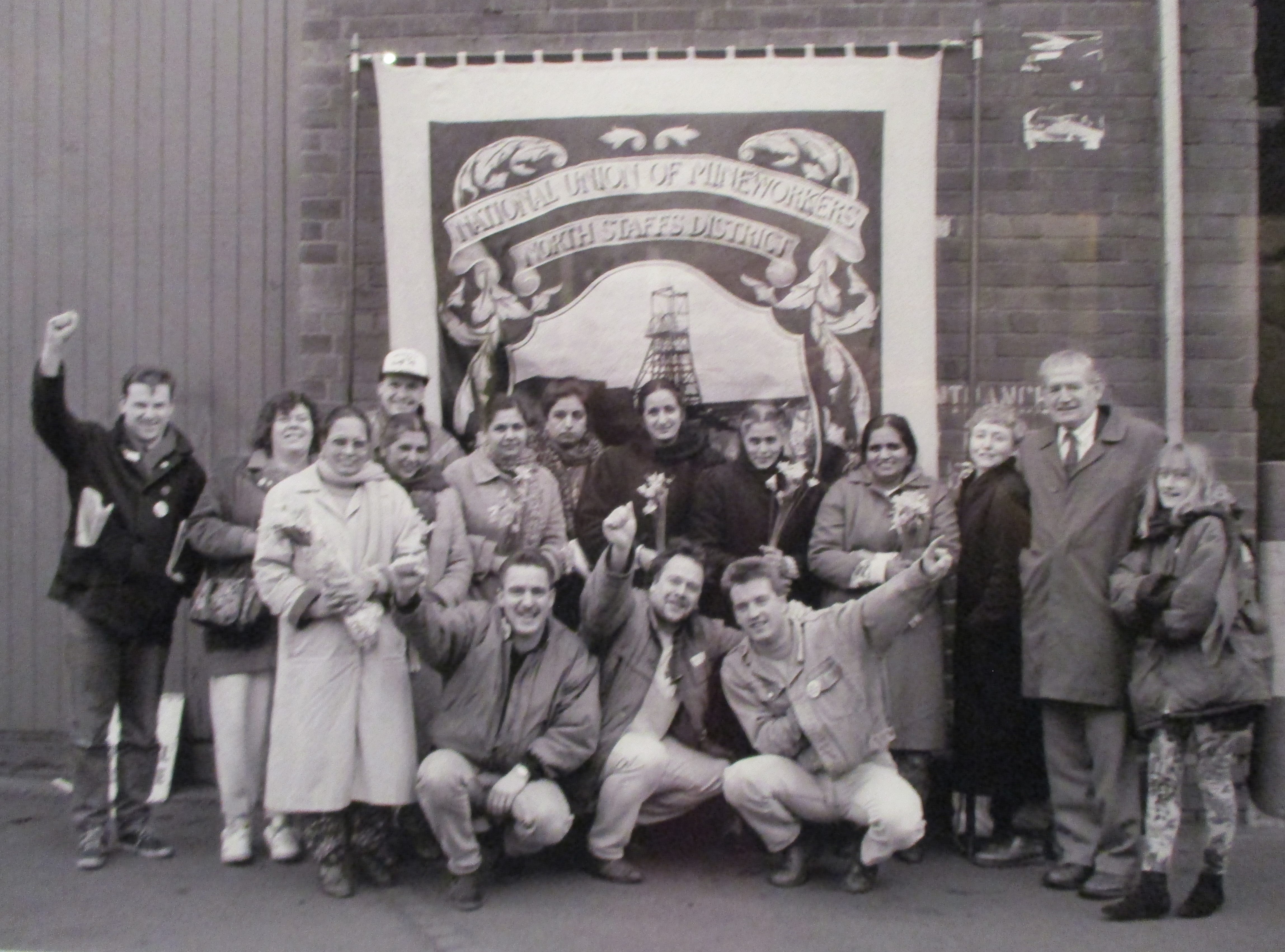
Not just about the Miner’s Strike it shows how the women’s group made links with other struggles including the Birmingham Burnsall strikers and the campaign in support of Irish political prisoners Ella O’Dwyer and Martina Anderson.

The  majority  of the photographs were taken by socialist photographer Kevin Hayes who was a good friend of the women and was part of the many campaigns they were active in.  And although there are other artifacts in the exhibition it is the photographs which really tell the story of a dynamic and determined group of women.

Burnsall

NSMWAG and Burnsall Strikers.

Irish women picket

NSMWAG supports picket of Durham Prison for Irish political prisoners Ella O’Dwyer and Martina Anderson.

Visit the exhibition at https://www.stokemuseums.org.uk/pmag/visit/

Follow the women on Facebook

More of Kevin’s photographs here https://progressdigital.photoshelter.com/about

Find out about the Kate Magee Support Group in the archive of the IBRG at the WCML https://wcml.org.uk/

Posted in book review, Catholicism, Communism, drama, education, films, human rights, Ireland, labour history, Lorenza Mazzetti, North of Ireland, novels, political women, Socialist Feminism, trade unions, Uncategorized, women, working class history, young people | Leave a comment

My review of “Eleanor Marx” BBC Television Drama 1977

eleanor 1

Jennifer Stoller and Lee Mongague

In 1977 the BBC commissioned Andrew Davies to write a three-part drama about the life of Eleanor Marx. Eleanor was the daughter of Karl Marx, philosopher,  political economist (and much more) and lived an intense, hot house life with her mother Jenny, her sisters, and the redoubtable housekeeper Helen Demuth. Frederick Engels is the other key member of the family; he is Marx’s political ally and financier of the family.

Eleanor, the youngest daughter by ten years, is her father’s favourite. Affectionately (but maybe worryingly)  he calls her Tussy and proclaims that “Tussy is me.” After her mother’s death she steps into her role as her father’s secretary and equal in promoting the cause of Marxism in his writing and becoming an activist in socialist politics.

Emarx

Eleanor Marx

The series faithfully follows Eleanor’s life. Her education, like her sisters, is in the  highly charged atmosphere of her father’s friends and comrades: a world of politics, music, and Shakespeare.

The death of her father shakes her world but Eleanor  takes his philosophy and puts it into action with her involvement with  the National Gas Workers Union: she works hard to support their cause for an Eight  Hour Day. Her personal kindness is shown in her teaching the union leader and close friend Will Thorne how to read.

Eleanor, whilst successful in politics, makes bad choices in the men she has relationships with. The phrase “new women, old men” comes to mind. Her hero worship of her father is destroyed when Engels admits that Freddy (illegitimate son of housekeeper Helen Demuth) is not  his son,  but that of Marx.

No doubt affected by her close relationship with her father she takes up with men who fail to respect her as a woman and equal. Her disastrous relationship with Edward Aveling  seals her fate.

Jennifer Stoller is brilliant at portraying Eleanor. I also loved Anne Carroll’s depiction of Manchester Irish republican and wife of Engels, Lizzie Burns;  Lee Montague is outstanding as Marx while  Nigel Hawthorne gives us an  Engels that captures the pleasure seeking but serious equal to Marx.

Watching the series made me want to read again Rachel Holmes’s “Eleanor Marx”   and Tristan Hunt’s brilliant biography of Frederick Engels.  Michael Herbert wrote about the Burn Sisters here https://radicalmanchester.wordpress.com/2010/03/15/frederick-engels-and-mary-and-lizzy-burns/

You can watch the series here https://www.youtube.com/channel/UCPsl_wi6FTf2GPjDR-XFC4A

Posted in art exhibition, Ireland, Manchester, Salford, Uncategorized | Tagged , , , | Leave a comment

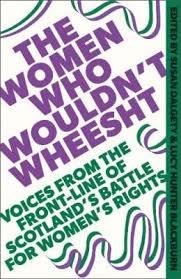
My review of “THE WOMEN WHO WOULDN’T WHEESHT. Voices from the frontline of Scotland’s battle for women’s rights.” Edited by Susan Dalgety and Lucy Hunter Blackburn.

women who wouldnt wheesht

Wheesht (Scots) (wi:ft): a plea or demand for silence(exclamation);to silence(a person,etc.) or to be silent (verb)


On 21 March 2015 the Mary Quaile Club (of which I was a co-founder) organised what we called a “real International Women’s Day event!”.( https://maryquaileclub.wordpress.com/2015/03/23/a-real-international-womens-day-event/)  Our event celebrated the true meaning of IWD and its socialist feminist origins. It reminded participants of the life of trade unionist Mary Quaile and sought to make links with present day activists.

One of those women was Sue Lyons of the Scottish Women’s Independence Movement. She spoke about how it had galvanised women  into  a powerful grassroots movement.

That was 2015 but in the years since the dream has turned into a nightmare. This book tells the story  of the events that led to the downfall of SNP leader Nicola Sturgeon and the uprising by Scottish women to stop a profound assault on women’s rights.

It shows “a grassroots movement that took on the Scottish political establishment and its supporters in civil society, breaking down barriers between political opponents, and uniting novice campaigners, experienced activists, and professional politicians in new ways.”   It is the story of activism at its best: “the story of women who were willing to risk jobs, reputations, friendships, to make their voice heard.”   

The book concentrates on the five years from 2018-2023, beginning with the events of 14 February 2018 where a hundred women met to discuss plans to reform the Gender Recognition Act (GRA) in Scotland. Groups taking part included the organisers Women’s Spaces in Scotland (WSiS) and London-based Women’s Place UK (WPUK),  a newly formed and volunteer-run organisation, established by three women trade union activists in parallel developments.

The book documents how Scotland  became home to a powerful trans movement, throwing under the bus women’s sex -based rights,  and instead pushing the agenda of a demand for self-declaration (self-id) which meant by a simple administration process that anyone  over sixteen years old could obtain legal recognition as a member of the opposite sex.

As a socialist feminist reading about the way in which progressive organisations such as the trade unions were captured by this ideology is soul destroying.  But perhaps  not that surprising,  given the way trade unions  in my experience  have over the years moved away from representing its members to a corporate mentality which has alienated those people it is supposed to represent.

Class is key to equality: working-class women experience a double burden of discrimination: promoting gender over sex leaves working class women most vulnerable. They are ones most likely to end up  in rape crisis centres, refuges, prisons etc. They are the ones most likely to be preyed on by male abusers in places where they need to be safe.

Johann Lamont in her chapter tells her story of spending a  lifetime  in the trade union movement and the Labour Party working for changes which would promote equality and understanding the barriers faced by women.

She was then shocked to find how the debate was moved from changing women’s lives to ones about what women are. She says:  “I am forced to watch as the reality of women’s lives is stripped out of our language, our health care, our personal safety.”

But this book is not a depressing read, it is  an account of how women fought back against the annihilation of sex -based rights. Relying on old and new methods of organising the women refused to accept being silenced and galvanised thousands of other women to join them in their fight.  They take their inspiration from the suffragettes who faced similar opposition; not just verbal and institutional but physical and life-threatening.

WWW

The costs of speaking out can be harsh. As Professor Sarah Pederson says: “Mockery and attacks in the mainstream media, violent crowds in universities trying to prevent women from speaking, women journalists threatened with the sack, worries about speaking out and losing family and friends.”

Social media has revolutionised the gender critical movement. The cretinous nature of the mainstream media in the debate,  and the dismissal of women who spoke out has led to a movement that has used social media as a way of communicating, promoting, and unifying with women across the country – and indeed the world. As Professor Sarah Pederson says: “Scottish women have come together organically, reaching over the barriers of party politics to identify the issues that connect sister to sister, and making themselves a very visible force to be reckoned with.”

This is  a Scottish story,  but it is relevant to women across the UK and the world. It is an important chapter in the history of women fighting for our rights.  It points to the need for a much wider discussion about what kind of society do we want to live in and how are we going to get there. As the editors, Susan, and Lucy, in their final comments say: “Grassroots campaigning is a vital part of the democratic process, but it should never be the whole story. If the Parliament and its executive, are to rediscover their democratic purpose and values, they must, once again learn to make politics work for all the people they represent. And they can start by listening.”

Buy it from women’s cooperative bookshop “News from Nowhere” https://www.newsfromnowhere.org.uk/ or if you live in Greater Manchester, it is available to loan from  Manchester and Tameside libraries.


Posted in book review, Communism, human rights, Uncategorized | Tagged , , , , , | 1 Comment

Joe Mullarkey; archive of an Irish working class activist

IMG_1180

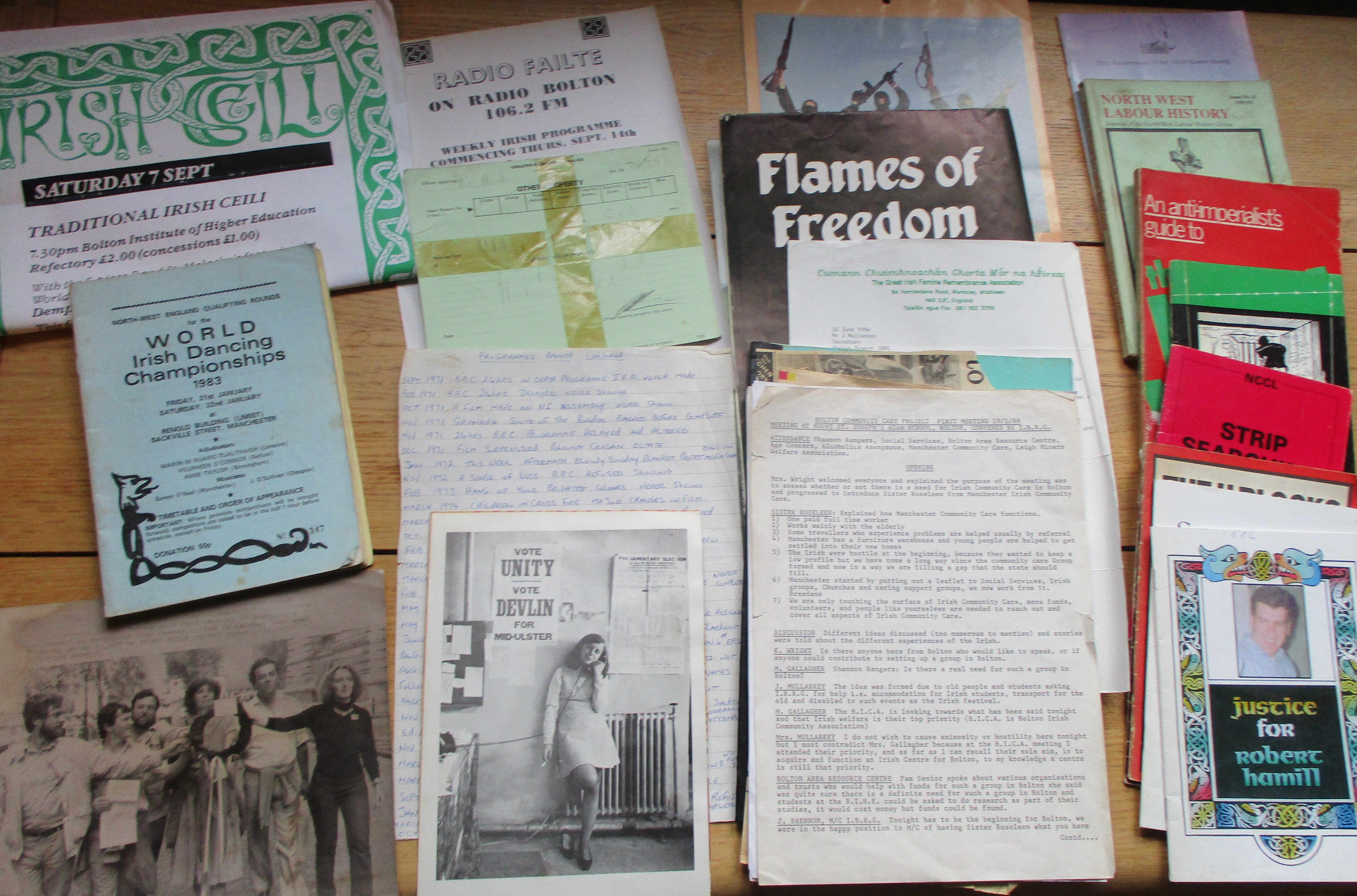
Joe’s archive

Joe Mullarkey,  (1942-2022) co-founder of the Irish in Britain Representation Group and  trade unionist, made an important contribution to the  radical history of working- class  people in this country. Joe  was  Chair of Bolton IBRG as well as national Vice President of IBRG.  He was also a shop steward in his workplace for thirty years.

After he died his daughter Nuala contributed to the IBRG archive Joe’s letters, books, leaflets, and memorabilia. Joe left school at an early age and his education was gained through a lifetime of learning, through his political activity in IBRG and his trade union.

Joe’s story is part of the radical history of working-class people in this country. It is a chapter in the history of the Irish in Britain who have  campaigned for a better society over here as well as challenging the role of the UK in the occupation of part of Ireland.

Documents shows how he worked through the local Bolton Community Relations Council urging them (and they did) take up anti-Irish racism in all its forms across the borough. They also went with Joe to retrieve his belongings at the local police station after a “burglary” at his house when he was on holiday with his family. The police had attended and seized a bag of publications from  his home. When Joe attended the interview, he noticed they had labelled his belongings as “IRA material.” In the archive is this document.

Police record crard for Joe's items

Police document

Joe and Margaret (cannot speak of Joe without her) recognised the importance of giving Irish people an understanding and love of their own culture. They set up and ran the first Bolton Irish festival.  They also lobbied for an organisation to take up issues around local Irish people providing support services.

Joe worked hard in IBRG to encourage Irish people of all generations to understand their history; past and present.

His small library  reflects the many  issues that he campaigned on as a member of IBRG. Including Justice for Robert Hamill, the shooting of children by plastic bullets, prison policy, and  strip searching.  They represent just a small number of the many campaigns he was involved with.

This archive is important in showing how working -class people can educate themselves, that they can organise and win campaigns, and make this a better world for all people to live in.

“Independence is my happiness, and I view things as they are, without regard to place or person; my country is the world, and my religion is to do good.”

Thomas Paine “Rights of Man.”

Find out more about IBRG in the archive at the WCML https://www.wcml.org.uk/blogs/Lynette-Cawthra/The-Irish-Collection-a-new-chapter-the-role-of-the-Irish-in-Britain-Representation-Group-Part-1/

Read more about Joe here https://lipsticksocialist.com/2021/04/05/my-review-of-memoir-my-early-life-by-joe-mullarkey-2021/

Posted in Uncategorized | Tagged , , , | Leave a comment