Read my weekly roundup of radical arts and politics.. Veronica Guerin, To Be Human, A Good Place to Hide

Watch

veronica guerin

Veronica Guerin (2003) on 29 May at  7.30pm at the Four Pound Film Club,  which is organised by the NUJ Manchester and Salford Branch.  Veronica was an Irish journalist who was killed by criminals in Ireland twenty years ago. She had a background in accountancy and was adept at tracing illegal drug dealing and that is why she was murdered on 26 June 1996 at a traffic lights in Dublin.  After the screening   NUJ Irish Secretary Seamus Dooley, who worked with Veronica  and was her deputy FoC (shop steward) at the time of her death, is guest speaker at the event. For more details see . Listen to Christy Moore’s song about Veronica see

Look
hen 2

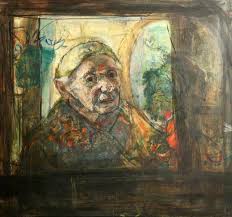
at To Be Human at Manchester Art Gallery. You do not need to spend a lot of money to create an exhibition that will engage the visitor. I was fascinated by the choice of pictures in this small exhibition which brings together a collection of  both famous and forgotten artists, all with different approaches  to  defining  what is meant by being human. Two of the pictures, by Robert McBride and David Hockney, are not really the kind of art which attracts me, but finding out that both of them were used by the artists to reflect on their love/lust for men at a time when homosexuality was banned gave the pictures a deeper meaning.  Also I was fascinated by a picture by a female artist that I have never heard of, Maire  Louise Motesiczky, who escaped with her mother from Nazi Austria in 1939.  Marie lived  with her mother most of her life and painted many portraits of her, this is one of the last (above)  and shows a woman aging, and with a sense of separateness. Brilliant.

Read

a good place to hide

A Good Place to Hide by Peter Grose. During the Second World War  5000 people (including 3500 Jews) were hidden in the Plateau Vivarais-Lignon area in France from the Nazis and their Vichy apologists. This book tells the gripping story of a   tiny Protestant farming village in the mountains of south-central France who risked everything to save peoples’ lives. The people of the Plateau were imbued with a spirit of comradeship that is awe inspiring. Many of their actions were spontaneous as people literally turned up at their door and asked for sanctuary. Central to this story is the ethos of pacificism and the role of the  pastors, Andre Trocme and Edouard Theis.   On Sunday 23 June, the day after France surrendered to the Nazis,  André Trocmé,  told his parishioners “The responsibility of Christians  is to resist the violence that will be brought to bear on their consciences through the weapons of the spirit.”  Resistance meant not just hiding people on farms and in villages across the area, but also setting up childrens’ homes and hostels, organising escapes across the border to Switzerland, and bringing in suitcases full of money to fund the rescue organisation.

The activists set up an elaborate and successful forgery operation to provide the escapees with new documentation, including  identity cards and exit visas. It was a highly efficient organisation that fooled the Nazis and their supporters.  Peter finishes the book by reflecting on the position of refugees today and concludes that the story;”offers a ready alternative to selfish indifference, to the pitiless mantra of nothing-to-do- with-me. For those of us lucky enough to live in a liberal democracy, we can vote. If we followed the example of the people of the Plateau and vowed to be part of the resistance against injustice, we could do it.

Buy it from

A documentary was made by Pierre Sauvage, one of the hidden children,  about the people of the Plateau, watch this trailer


Posted in art exhibition, book review, education, feminism, films, human rights, Ireland, Manchester, Uncategorized | Tagged , , | 1 Comment

Read my weekly roundup of radical arts and politics… The Class, The Stars are made of Concrete,Spain in our Hearts

Watch

the class

The Class ( Film 4 on 19 May)  another brilliant French film which reflects on the changing nature of French society, and the  impact of new communities from ex-colonies in Africa. Based on a book written by a French teacher François Bégaudeau  – who plays the teacher in the film – it is about his experiences working in a tough school in an  inner city and racially mixed  Paris suburb.  It’s a powerful film because it’s based on Bégaudeau’s own experiences, although I think many teachers in this country could identify with him. The film is shot in a documentary style with all the of the action taking place within the walls of the school, which adds to the tension and makes this a riveting film to watch.

Go

the stars are made of concrete

to see The Stars are Made of Concrete, a play  written by Michelle Ashton. It begins with news footage of the junior hospital doctors on a demonstration: the main character Bev (Zoe Mathews) has become one of the thousands of  workers who have lost their job in the public services over the last few years without anyone noticing. Like many people, and even  though she has a son who is unemployed, she doesn’t realise how difficult it is to get work, and even more importantly claim the benefits for which she has paid into the system over her working life. One of the funniest but also bleakest episodes is Bev’s experiences at the local Job Centre.  Carol, the JC adviser, played by the very funny Jo Dakin, has her own problems: her mother is constantly on the phone to her at work while  her life there is so boring that she flirts with the clients. Bev’s son, Adam (Jarreau Benjamin), is also Carol’s client, and is subject to her whims in order to make sure he gets his benefit every week. Carol has little to offer him except work trials which never lead to a job. It  is no wonder that Adam has been unemployed for 8 years when employers can use him as free labour. But Adam, unlike Bev, is determined not to be downcast by his circumstances and finds happiness with Sinead, a single parent, who treats him as an adult. It is Adam and Sinead who finally make Bev realise that being unemployed is not a death sentence, and that happiness is about being with the person who loves you. For  more details of performances see

Read

spain in our hearts

Spain in Our Hearts –  Americans in the Spanish Civil War 1936-1939 by Adam Hochschild. I knew that Americans had taken part in the SCW  because an American friend was archivist of the Abraham Lincoln Brigade archive. This book puts into context the amazing contribution that they made: 2,800 took part and 750 died there which, as Adam comments, was “A far higher death rate than the US military suffered in any of its twentieth century wars.” Also, unlike the SCW veterans in this country, the Lincoln Brigade veterans brought back from Spain a heightened political conscientiousness which led to them to supporting the anti-Vietnam War campaign in the 60s,  as well as many other progressive issues.

Adam also explains why Communism was such a powerful influence in the USA in the 30s, which again fuelled some people’s commitment to the Spanish cause.  Today the Left usually opposes government  military intervention in wars (eg Syria being the latest), but there are people in this country who are journeying  to fight in the many wars going on in the Middle East, driven by ideas of religion and nationalism rather than Communism and Anarchism. One thing I didn’t know was how Texaco (in the USA) covertly broke US law and sold fuel to Franco.“Spain in Our Hearts” is a fascinating book which looks back at an era that is hard to imagine today, an era  when people actually believed they could change not just national,  but world politics. Unfortunately it costs £25, so try  borrowing it your local library ( if you still have one!)

Posted in anti-cuts, book review, Communism, drama, education, films, human rights, labour history, Manchester, Uncategorized, working class history, young people | Tagged , , , , | 1 Comment

Read my weekly roundup of radical arts and politics..Johnny Guitar,Dare to be Free, People before Profit and John McGahern

Watch

joan crawford

Johnny Guitar (Home). A classic film, looks like a western but isn’t. Made in 1954 by Nicholas Ray it reflects on US society at that time, McCarthyism and the witchhunt of radicals in society. Joan Crawford, 49, plays Vienna, the owner of a saloon, who is targeted by locals because of her friendship with a local gang. There is a strong feminist theme: Joan wears a gun and engages in a gunfight with rival Emma Small. It must be one of the few scenes in a western where the women get their hands on the guns! But it is more like an opera than a western; music and photography creating a highly volatile backdrop with Vienna at the centre, determined to get her man, face down the locals and challenge all opposition. Watch this trailer for a taste of the film see
Go

play waitresses and banner

photo Steve Speed

to a play about Mary Quaile, a woman who also challenged the norms about what was acceptable behaviour for a woman in the early C20th. From a working class Irish background she left school at 12 and went on to spend a  lifetime encouraging women to join trade unions and fighting for better pay and conditions. In this new play, written by Jane McNulty, you can see how life has gone in  a circle for some women (and men). Fast food workers in 2016 might have  a better education and be more confident as women, but they are fighting the same fight as Mary.  In this play we learn about how Mary, alongside other women and men, changed society. It’s a play of hope for the future, reflecting on campaigns such as Hungry for Justice and the brilliant work done by trade unions such as BFAWU and Hotel Workers Unite. Next week there are two performances in Manchester and Glossop: see here for details

Learn

PBF alliance

about the People Before Profit Party in Ireland.  They are part of The Anti Austerity Alliance movement which  opposes all austerity and actively campaigns to defend working class people. Most notably it has been active in the anti-water charges campaign in Ireland. This week it broke new ground by winning 2 seats in the Northern Ireland Assembly in previously safe republican areas of West Belfast and Derry. PBP prove that you can build a mass grassroots campaign against austerity, a lesson that needs to be learnt on this side of the Irish sea. Celeb politicians and Guardian writers will not deliver this mass movement but the people who are really experiencing job losses, homelessness and poverty.


Read

memoir

Memoir by  John McGahern. He is one of my favourite authors, for lots of reasons. His writing is superb, but it is his insight into the lives of Irish people that make his novels interesting to me. In this autobiography, written shortly before his death in 2006, we find out about the life of a man who is considered one of the greatest novelists of the C20th. He grew up in post independence Ireland, his father had been on the winning side, as a soldier in the IRA, some  of whom went on to to take positions of power in the country, although for John’s father it was as a rural guard (policeman). In Memoir, we see the effects on men (and fathers) in particular of living in a State that had, by John’s birth,  experienced many years of violence and war.  We also  find out about  John’s relationship with his mother and the effect of her early death on his life, which I think is reflected in his insightfulness towards female characters in his novels. All his books feature  wonderful descriptions of the countryside and  a respect for the  way of life of rural folk, a life that he left  to go  to Dublin and abroad,  but brought him back to write some of his most famous novels,  including Amongst Women and That They May Face the Rising Sun. Buy his books at


Posted in anti-cuts, book review, Catholicism, drama, feminism, films, human rights, Ireland, Irish second generation, labour history, Manchester, novels, political women, Socialist Feminism, trade unions, women, working class history | Tagged , , , , , | Leave a comment

Keep a diary for the day on 12 May and make your mark on history!

History is dominated by the establishment. In books, television and radio the agenda is one of kings and queens, the First and Second World Wars, and generally the people with power. Where are the people who made this country a democracy? Where are the Levellers, the Chartists, the trade unionists and the socialists?  Where are the stories of the women in many campaigns? Even a woman such as Mary Quaile, who had important positions in her trade union, the local Trades Council, and on the national TUC Council has until recently been forgotten.

On 12 May  we can change this perception of working class history: you can write up your diary for the day and it can become part of the Mass Observation Archive. Are you standing on a picket line outside a Job Centre as part of  a campaign against sanctions? Are you writing a flyer to tell people about the latest cuts to the NHS? Are you a care assistant on a zero hour contract?  These are all important stories and need to be included in any history of 12 May.

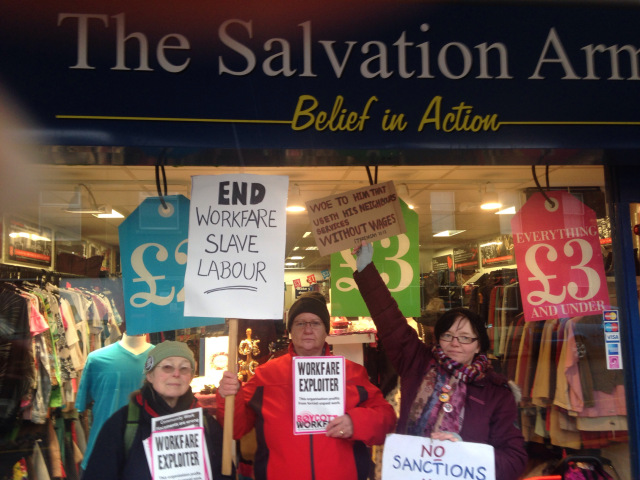
workfare demo

Mass-Observation was a  social research organisation founded in 1937,  by an eclectic group of people including anthropologist Tom Harrisson, poet Charles Madge and filmmaker Humphrey Jennings. It was funded by themselves, with the occasional donation and used volunteer correspondents.

Their  aim was to record everyday life in this country through inviting 500 untrained volunteers to keep a diary or reply to questionnaires. The weird aspect of it was that they paid investigators to record peoples conversations at work, in the street, in pubs or at public events including meetings, sporting and religious events. You don’t really need to do this nowadays as so many people use the social media as a way of constantly recording what they are doing and how they feel at any moment of the day! But what is not recorded ( or maybe it is by the State) is the real life of activists, which is important to record and promote as a vital  aspect of our democracy.

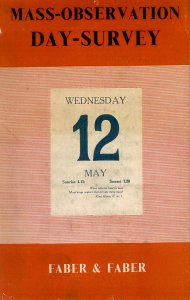
mass observation 12 May 2016

On 12 May 1937 they asked people from across the UK to record everything they did from when they woke up in the morning to when they went to bed at night. This date was chosen because it was the day of George VI’s coronation. And that is why this year we need to submit diaries of real people to ensure that when people look back on 12 May 2016 it gives a view of the real lives of people in this country.

So how do you contribute?  Click on this link see


Posted in anti-cuts, education, feminism, labour history, political women, Uncategorized | Tagged , | 1 Comment

Read my weekly roundup of radical arts and politics..new films on Joan Littlewood, Mass Observation, Nightmail and Zinky Boys

Watch

Jlittlewood


O What a Lovely War; a Tribute to Joan Littlewood   (free, click on the link). It’s hard to imagine a character such as Joan running a theatre these days. An upfront  member of the Communist Party, and committed to promoting new  left wing theatre,  she was a feisty character, just watching her taking on (Dame!) Barbara Windsor in the film is hilarious! Joan believed theatre should be like a public service, accessible to all, and reflect the lives of working class people. In this short film she talks about setting up Theatre Workshop in Stratford in London, where, ironically, she could only keep the theatre going by taking her plays to the West End and a middle class audience. One of her most famous productions was the 1963 anti-war play, O What a Lovely War, and in this film the original cast talk about their relationship with Joan, and her particular way of producing a play. Many of the actors went on to become famous in television and film. Bit of a shame, though,  that none of them carried on Joan’s  dreams about radical theatre.  On 18 May  another  documentary about Joan is being shown at the WCML, “In the Company of Joan” by Wendy Richards.

Make

MObser 2

your mark on history! On the 12th May 1937, the newly founded social research organisation, Mass Observation, famously requested day diaries written by the public from across Britain. This date was chosen to capture the public’s mood on the day of the Coronation of George VI: an event thought to be worthy of study by the organisation following the public’s and press’s reaction to the so-called ‘Abdication Crisis’ the previous year. How things  have changed!  This year, on Thursday 12th May 2016, the Mass Observation Archive is repeating this call for people from across the country to submit an account of their day to the Archive.  It would be great if as many activists from trade unions and  anti-cuts groups  could submit an account of their day so as to ensure that our radical history is not excluded from history archives.

Catch

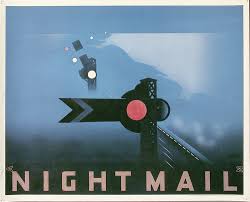
night mail

a  night of  classic British documentary  films on Monday, 16 May 2016, from 18:30 to 21:00 at the International Anthony Burgess Foundation  in Manchester . Included is  one of my favourite films, Night Mail, made in 1936 by the GPO Film Unit. We follow the nightly journey of the postal steam train which travelled from London to Glasgow to a backdrop of poetry by W.H. Auden and music by Benjamin Britten. For once we get to see the workers (all male, apart from the women serving in the canteen) doing their jobs and whose accents are very different to the clipped, very English tones of the voiceover. The second film is The Way to the Sea  (9 minutes), again featuring a train journey on the London to Portsmouth route with another collaboration between Auden and Britten. And to celebrate its 80th anniversary of both films they are going to be screened on 16mm film with a talk by Dr. Scott Anthony who has written the BFI Modern Classics book on Night Mail.

Here is a trailer
Read

zinky boys

Zinky Boys Soviet Voices from a Forgotten War by Svetlana Alexievich. I found out about this book after reading an article in the Guardian about Svetlana.  It was published in 1992 and I was amazed to find  a battered copy in my local library! War is a subject that Svetlana has written about in several books, including one about the role of Soviet women soldiers in the Second World War, and Zinky Boys which is a more controversial subject, particularly in the 1990s when she wrote it. In those days there was still (just) a Soviet Union and it had been taking part in a war in Afghanistan (sounds familiar) for 10 years from 1979-89. Svetlana’s style of writing is to make her interviewees the main focus of her books, telling their stories which makes it one of the very  powerful books about the realities of war. As Svetlana says; “I perceive the world through the medium of human voices. They never cease to hypnotise, deafen and bewitch me at one and the same time.”

What struck me reading the book is people’s dedication to the Soviet Union so they were unquestioning about the war, but censorship by the government ensured that the soldiers and their families did not understand why their country was involved, a war that had a million Soviet troops and thousands of civilian conscripts taking part. And just like Vietnam, many of the soldiers were young men aged 18-20 years who were killed, injured and then ignored if they returned home. The interviews with the young men and their mothers are heartbreaking.  One thing stands out about the interviews generally (and Svetlana’s text) is the number of references to poets and writers.  I do not think that interviewing British soldiers or writers  you would find the same cultural references. Another unusual aspect of the war is that many women went voluntarily as everything from nurses and doctors to prostitutes. For some people going to Afghanistan meant that they could buy western goods that were not available at home and could be sold for vast prices once they returned.   Sums up how war is, totally bonkers! You can find out more about Svetlana on her blog see. Buy  her books at

Posted in book review, Communism, drama, education, feminism, films, human rights, labour history, Manchester, political women, Uncategorized | Tagged , , , | 2 Comments

Stop,Look,Listen…my weekly selection of favourite films, books and events to get you out of the house

Watch

deepan

Dheepan (Home)…how much do we really know about the refugees who escape war in their country and arrive in the west? Few people know about the war in Sri Lanka and the role of militants, the Tamil Tigers, who fought a civil war lasting from 1983-2009 in order to create an independent Tamil state. In this brilliant new film Dheepan, a Tamil paramilitary, finds refuge in Paris, bringing with him a “wife” and “child” in order to ensure his escape. But in his job as a caretaker he finds himself part of a new war; a drugs war that dominates the banlieu that he lives and works on. And the war zone that he escaped, in which his real wife and children were murdered by government forces, comes back to haunt him. It is another great French film that gives an insight into the lives of refugees, of little known wars that our country has probably interfered in, and the cost to refugees of trying to find peace and security in the West. Watch the trailer here

Read

john mcgahern imagina

John McGahern and the Imagination of Tradition by Stanley Van Der Ziel. McGahern is one of my favourite authors. This is not a biography, which is what I expected, but an analysis of the way in which his fiction was shaped by other literary traditions including writers as varied as Yeats, Jane Austen and  Primo Levi . If that is all a bit academic, there are little nuggets about McGahern that are spread throughout the book which give an interesting insight to the man. I have always believed that he was a shy and self-effacing character  and that was confirmed when I found out, from this book, that when he worked as a lecturer in many universities across the world, he never put his own books on the curriculum. An act that nowadays you cannot imagine given the celebrity nature of most authors.   McGahern’s novels became very popular in Britain during the 80s with a new audience including second generation Irish such as myself. They spoke to another view of Ireland; from a writer whose family had been involved in the creation of the new Irish Republic and was not shy of referencing  IRA activists such as Ernie O’Malley, a soldier and and writer.  Reading this book  I have found out much more about  McGahern although I am not sure if it really adds much to his work and whether the term “too much introspection” is  the phrase that springs to mind. It has certainly encouraged me to return to some of his earlier novels and to read authors such as Primo Levi. Best to try and get it through your library, because, as expected,  it is a costly academic book.

My favourite McGahern novels are Amongst Women and That They May Face the Rising S

Listen

rncm 2

To some, free classical music, by some of the best performers in Manchester. On 29 April at the RNCM at 1.15pm listen to pianist,  Graham Scott. Get there early as it is really popular! Further details see

Go

manch may day

To the Manchester May Day Festival on Saturday 30 April. It starts with a traditional march and speeches followed by lots of things to see, buy and watch for free.  Take part in some of the discussions around the campaigns against the privatisation of the NHS, find out about the relevance of the Easter Rising to trade unions today and watch a brilliant play about Manchester Irish trade unionist Mary Quaile and the relevance of her life to fast food workers today. Further details see

Posted in anti-cuts, book review, drama, feminism, films, human rights, Ireland, Irish second generation, labour history, Manchester, music, novels, political women, trade unions, Uncategorized | Tagged , , , , | Leave a comment

Celebrating women of the Easter Rising; my review of We Were There 77 Women of the Easter Rising

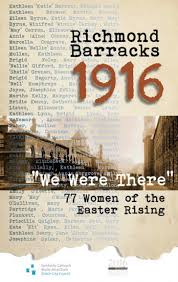
richmond barracks

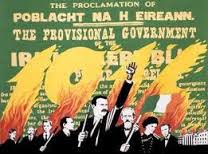
Today is the actual day of the 100th anniversary of the Easter Rising in Dublin when revolutionaries tried to kick the British government out of Ireland. Not an anniversary that the Irish government really wants to celebrate properly; it might give opposition forces such as the trade unionists, the anti-war charge campaign, the People Before Profit Alliance and the pro-choice groups a few ideas. On this side of the water it might remind people of the heroic history of Irish people in making this country a better place to live in.

easter rising

It is always worrying when the mouthpiece of the British establishment, the BBC, spends hours championing revolutionary events and this is what has happened over the last few weeks in many television and radio programmes, with some dodgy characters including Bob Geldof, retelling the story of the Rising.

But maybe it reflects the latest phase in the relationship of the two countries. Northern Ireland is now a devolved state, albeit with the British still in control of the puppet strings while the Republic is a place which the Royal family can happily visit with few people raising the issue of  a united Ireland.

Over on this side of the water the Irish community is in decline and with it any radical organisation that would give an alternative view to the events of the Rising. Instead we have nostalgic celebrations of the Rising, mostly funded by the Irish government,  reflecting the smug self satisfied response of  the well-to-do Irish listening to academics churning over the Rising,  but with no engagement either  with the present day issues of the Irish diaspora or  with the state of the island of Ireland.

Breaking this complacency is this new book; Richmond Barracks 1916; We Were There 77 Women of the Easter Rising by Mary McAuliffe and Liz Gilles. This seminal  book reminds us of the important role that women played in the politics of Ireland in the years before, during  and after the Rising.

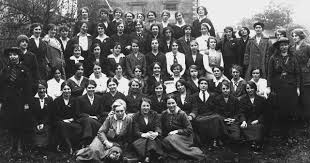
The title refers to  77 women who had taken part in the Rising, surrendered alongside their male comrades, and were then taken to the Richmond Barracks in Dublin. There were other women who took part in the Rising, some of whom who had travelled over from Britain,  and theirs is a story that still needs to be written.

The book  reminds us of the importance of the trade union movement during this period which politicised a whole new generation of women. Many of the women involved in the Rising were working class and represented the new wave of women’s public activity,  not just in trade unions but also in the campaign for the vote.  Many were young and unmarried and were  aged 16-30 years. They came from the working class urban neighbourhoods and were linked together by family and kinship ties.  Their leaders were generally older with an  average age of 30-40.

“These seventy-seven women are representative of an important minority, a group of women politicised through feminism, nationalism and trade unionism, who were determined to have their say and their place in the shaping of the future of the country.”

About 280 women in total took part in the Rising: the majority in Dublin, with others in Galway, Enniscorthy and Ashbourne. But the chaos of the Rising with its mobilisation being countermanded meant that some women did not take part on either  on the Sunday or on the Monday.

The women who did take part  marched,  assembled and worked alongside their male comrades at the main positions of the garrison. What did they do?  They took part in the fighting, delivered important dispatches whilst dodging bullets as the city turned into a war zone. Some of the women ran first aid posts or  kept the  rebel  army  going by cooking meals.

women in rising 1

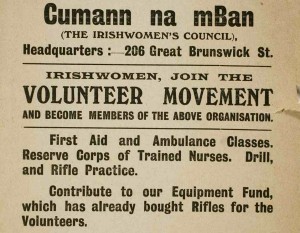
Women from organisations as diverse as the Irish Citizen Army, Cumann na mBan and  Clan na nGaedheal Girl Scouts were there alongside their male comrades in the major outposts of the Dublin Rising.

What I really liked about this book, apart from the fascinating and in depth research and its readability, is that most of it is given over to the biographies of the 77 women. As a Republican I know quite a lot about the politics of the Rising, but I was fascinated by the stories of some of the less known women activists.

Annie Norgrove came from a Protestant nationalist family in Dublin. Her father, mother and sister were involved in trade union politics and the Rising. At the time of the Rising Annie was 17, representing that group of women who had become politicised by the 1913 Lockout. She joined the IWWU and was in the women’s section of the Irish Citizen Army. After imprisonment she carried on her revolutionary politics supporting the anti-Treaty side in the Civil War.

women at richmond barracks

For me, being a second generation Irish activist, there is a big gap in the book  because of the absence of the names and stories of women who went over from the cities such as Liverpool and Manchester where they were members of Cumann na mBan.  In 2014 there was a celebratory event for the Liverpool Cumann na mBan women who took part in the Rising. They were Nora Thornton, Kathy Doran, Francis Downey, Peggy Downey, Kathleen Fleming, Anastasia MacLoughlin, Kathleen Murphy and Rose Ann Murphy. Perhaps off the back of the recent Rising events someone may follow these women up so that we can know their stories.

liverpool cmban

Liverpool Cumann na mBan

We are living through what Bertolt Brecht called the “dark times” and the Left, including trade unions and progressive organisations, are on their knees. And it’s not just on this side of the water.  But books such as this are important in reminding us of the tremendous commitment of women in particular to Irish revolutionary politics from 1913-23.  It is a history that can only encourage and inspire a new generation of activists and let us hope that the book can get beyond the usual academic circles and reach out to the new generations of women fighting in their trade unions and anti-cuts groups and show them that they are part of a rich radical tradition of working class history.

Posted in anti-cuts, book review, feminism, human rights, Ireland, Irish second generation, labour history, Manchester, political women, Socialist Feminism, trade unions, Uncategorized, working class history | Tagged , , | Leave a comment

Stop,Look,Listen…my weekly selection of favourite films, books and events to get you out of the house


Watch

public eye

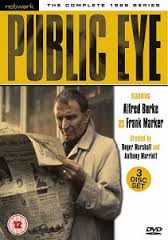
 Public Eye (DVD.) As drama on our television screens seems to be dominated by murder and violence, it’s good to remind ourselves that there was a time when stories about the seediness and smallness of  people’s lives  were seen as important subject matter for a prime time series.  Public Eye  ran for ten years from 1965-75, starring esteemed actor  Alfred Burke as  a private detective (a spin on the title Public Eye) Frank Marker alongside many other up and coming  actors.  The  1969 series, set in Brighton,   begins with Frank coming out of prison after having been framed. He is now on probation, watched over by a benign probation officer who sorts out lodgings and a job (unbelievable today) for him.  Frank gets lodgings with an Irish landlady (played wonderfully by Pauline Delaney)  and settles back into his new life. The problems faced by ex-prisoners are played out as he tries to settle into working for a construction company and creating a new life. Watching the series is looking back at another era, pre-decimal, the shabbiness of Brighton and  also Windsor where the later series were shot.   There is nothing glamorous about the series:  it’s downbeat 60s and 70s Britain with all the attitudes and mores that went with it. His landlady has to pretend  to be  a widow to satisfy 60s attitudes to women whose  husbands have  deserted them.  Early series were made in black and white, which gives Frank’s life an added layer of shabbiness, although he comes over as a decent man trying to  make a living and dodge the corruption and immorality of the times.

Watch an episode here


Support

international w m

International Workers Memorial Day on 28 April at noon  in Albert Square, Manchester. It may be C21st Britain but people are still being injured and dying in workplaces across this country. The  Blacklisting Campaign  showed that, even on multi million pound public service contracts, large companies were breaking UK and EU legislation on health and safety. Join campaigners on 28 April to raise the  importance of these issues and remember those people who have lost their lives just by going to work. Support the Hazards Campaign who are a voluntary group which  support people and their families who have been injured or lost their lives at work.


Read

the hammer blow

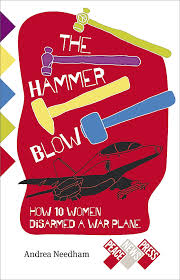
The Hammer Blow, How Ten Women Disarmed a Warplane by Andrea Needham. It’s twenty years  since ten women took direct action to try and stop a British plane being sent to take part in a war in East Timor which  was  killing thousands of its citizens. Read the account of one of the women, Andrea Needham, and find out  why she decided not just  to become an activist, but also  to face a trial and potentially  prison for her political views .

Andrea did not learn her politics from her middleclass rural Suffolk family. Instead as a young woman she joined her sister in the USA and got involved in the campaign against the US funding of rightwing groups such as the Contras in Nicaragua,  and worked in community based projects which provided food and shelter for poor people. Working with the people who had been excluded from the system led her to question the  way in which the poor were treated in one of the richest countries in the  world. From there Andrea returned to England  and became involved in non-violent direct action in the peace movement . Her involvement in opposing the war in East Timor and the campaign; The Seeds o f Hope East Timor Ploughshares action led to her arrest and imprisonment.

Much of the book is taken up with her and her comrades  time in prison, preparing for the trial and their defence case.  They are not heroes, but ordinary women who have all the weaknesses and doubts that we all have who take part in politics. Unlike most activists, they were prepared to put themselves and their politics on the line, which could have meant 10 years in prison if found guilty.  Their story shows how a small group of activists can make a difference, and reveals the reality  which is that our government is complicit in maintaining some of the most despotic regimes in the world.

Find out how to get involved through the Campaign against the Arms Trade see .Buy this book at

Posted in Blacklisting campaign, book review, drama, education, films, human rights, labour history, Manchester, peace campaigns, trade unions, Uncategorized | Tagged , , , | 1 Comment

Stop,Look,Listen…my weekly selection of favourite films, books and events to get you out of the house


Watch

ladies who do

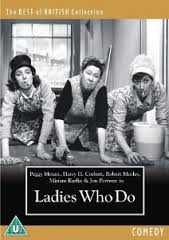
Ladies who Do (free on this link ) a fascinating comedy set in London in 1963 about women cleaners from the east end of London who use their inside knowledge to play the stock market, well, its not that different from bingo. Many of the women went onto to become regular actors on our television screens including Peggy Mount, Miriam Karlin and Harry H. Corbett. Its great seeing these feisty women trick the stockbrokers although in the end there is nothing revolutionary about the choices they make.The film is a reminder of how life has changed particularly in London. The east end of London is now a place where the rich live and cleaners are now more likely to be Latin American or African workers who travel long distances across London to get to work.


Read

girl at war

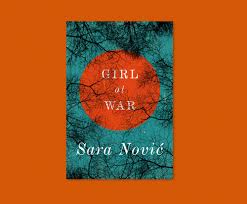
Girl at War by Sara Novic.  A fascinating novel about a girl in Croatia as the war breaks out in 1991. I have seen some incredible documentaries about the war eg The Death of Yugoslavia and read the books of authors such as Slavenka Drakulic but this book is a reminder of what the war meant to ordinary people and particularly children.. Ana is 10 years old, living in the capital Zagreb, and has the normal life of a girl with her parents, baby sister and best friend, a boy Luka. The book dramatically begins; “The war in Zagreb began over a packet of cigarettes”. This powerful statement reflects a child’s view of how she sees the world and its a world that rapidly changes for the worst as civil war breaks out and her life is turned upside down.  Normal becomes watching the destruction of her country on television as Ana comments; “The news became the backdrop to all our meals, so much that television lingered in the kitchens of Croatian households long after the war was over.”  The novel spans ten years as Ana grows up and moves to the USA but for her the war doesn’t come to an end until she returns to Croatia and confronts her own past, revisiting the friends and places that were so much about her life. It is a powerful novel and one, that once I started reading, I wanted to find out what happened to Ana, her family and friends. Buy it at


Find

9-22-March-2015-Still-We-Rise-@-Peoples-History-Museum-©-Jenny-White-01

Out about the lives of women asylum seekers in the play Still We Rise. It is a shocking play because of the way women asylum seekers are treated in this country. An example is that last week two Kuwaiti Bedouin women were “dispersed” in Manchester. They could not speak English, had no food etc. Through an informal network they were met, taken to a foodbank and reunited with friends who live in the city.Still We Rise is written and performed by Women Asylum Seekers Together   They say about the play that it ; is a window into a world of unimaginable pain and immeasurable hope, culminating in a show of resilience as their fightback begins, all told first hand by the people who felt it”. Its on in Manchester and Bury on 13 and 16 April. See more at


Celebrate

will and anne

Shakespeare’s birthday with 3MT and their unique take on his life in a new play; Will and Anne. Written by John Topliff and produced by Gina Frost it is another production from their own Manchester Shakespeare Company. Catch it 21-24 April only!


Get

manchester TUC


Together with other lefties at the Manchester May Day at the Mechanics Institute on 30 April from 1145am. There is a march and from 1pm-530pm there are lots of events in the Mechanics. One of the highlights, at 145pm in the Mary Quaile room, is a new  play about the life of Manchester Irish trade unionist, Mary Quaile and the links between her life and those of present day fast food workers. Further details see


Posted in anti-cuts, book review, drama, education, films, human rights, labour history, Manchester, May Day, political women, Socialism, trade unions, Uncategorized, women, working class history | Tagged , , , , | Leave a comment

Stop,Look,Listen…my weekly selection of favourite films, books and events to get you out of the house

Watch

marguerite

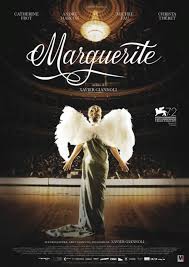
Marguerite (Home), a classy French film set in the 1920s about a rich woman who really wants to be an opera singer, even though she cannot sing. All is well while she entertains her friends at private concerts and raises money for charity, until a journalist and anarchist decide to expose her as a really bad singer.  Marguerite, it seems, goes along with their joke, whilst her husband escapes to be with his lover. Only the faithful butler, Madelbos, encourages Marguerite in her fantasy when it seems everyone else in Paris is laughing at her. Actor  Catherine Frot plays Marguerite as a humane character, making us feel sympathy for a woman deluded, not just about her own singing capability but also about  her relationship with her husband. The film scores on the grounds of the sumptuous clothes, fabulous scenes, particularly the one in a club in Paris, and the quirky characters that people the film.

Learn

scottish herring women

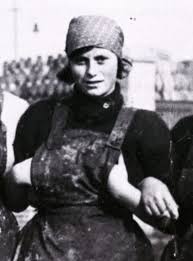
about what it means to be a migrant. The North West was built on the labour of migrant workers from across the world. Today the subject is never out of the papers and at the latest Mary Quaile Club event on 9 April at 2pm at the WCML you can find out what it means to be a migrant at our meeting which will discuss Migrant Workers: Past and Present . From the stories about the C19th female herring workers who travelled from Scotland to England to make  a living, to the lives of migrants in Manchester today. The event will  include speakers including  author Chris Unsworth of The British Herring Industry 1900-1960 to the Migrant Support Network and the radical Spanish group Podemos. Further info see

Go

cops

to a Public Meeting – Undercover policing, democracy & human rights  at Manchester University on 14 April at 5pm.  For those of who were involved in Irish community politics in the 80s and 90s we were well aware of the way our activities were watched by the State. We took it for granted then,  but many of us have been shocked at the levels to which the State has sunk in surveilling and undermining other more mainstream campaigns. Few of us realised that undercover police would assume the identities of deceased children and con women activists into having relationships with them. At this meeting you can listen to the testimonies of one of the women involved; a lawyer who represented many of the women who took civil claims against the police; and a member of the Undercover Research Group.

Book a ticket, it’s free  at

Find

letterpress

out about The Letterpress Project,  a not-for-profit organisation that wants to promote books ie the printed version. And, as they put it, the sheer joy of books and the message that books can change your life. I like the review section because I am always looking for new and different books to read. Not too sure about them putting up articles that have already been in the Guardian. I, for one, have given up with the Guardian‘s review section as it’s the same set of smug writers promoting each other’s books.It would be good to see them promoting new writing by working class authors; a real gap in the market.  But Letterpress is a site I am going to keep dipping into and  am hoping that it can get beyond the mainstream book world.

Posted in anti-cuts, films, human rights, labour history, Salford, Uncategorized, women, working class history | Tagged , , , , | 2 Comments