History of Irish in Britain Representation Group Part eleven 1991


Patrick Reynolds was one of the founders of IBRG and played a key role in its history. He is now writing up that history and putting it into the context of radical history in Britain and Ireland in the C20th.


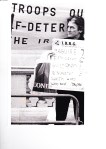
IBRG and supporters in Dublin at the 75 Anniversary of the Easter Rising 1991


On 12th January. The IBRG Ard Choiste met at the Four Provinces Club in Coventry Five delegates attended including Maurice Moore, Diarmuid Breatnach, Linda Sever, Bernadette Hyland and Pat Reynolds.

It was decided to hold a two-day Ard Fheis at the Roger Casement Centre in Islington on 9th/10th March with Margaret Ward down as Guest speaker and with Haringey IBRG showing their video Building for Ourselves along with Thames TV’s report on the PTA. Haringey, Hackney, and Camden IBRG were to hold a meeting to decide on whether to become one large branch.

PTA work

 The meeting heard that Kevin Hayes had drawn up a telephone tree for IBRG branches to raise support for people arrested under the PTA. Thames TV had shown a positive programme  on the PTA while the Evening Standard had printed a brilliant article on the PTA, the Year of Living Dangerously. Both Thames TV and the Evening Standard had consulted with the IBRG PRO on the features, and had been provided a with a wide range of contacts.

IBRG had attended two pickets of Paddington Green Detention Centre over the PTA.

The Green Ink Bookshop had set up an Irish Prisoners Book club to supply Irish prisoners with books, for which there was a huge demand mainly from Republican prisoners who all seems to be studying hard.

Spirit of 1916 events

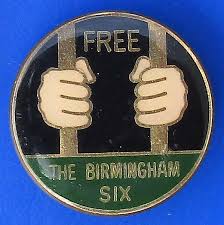
Plans were advanced in London, Birmingham and Manchester to celebrate the Spirit of 1916. London were organising a Spirit of 1916 March on 23rd March. Diarmuid Bretanach was working on 1916 badges. Birmingham was looking at putting on films and an exhibition, while Manchester were organising films and a book launch.


The 1991 TICC (Irish Census campaign) which the IBRG were part of, was discussed with all branches asked to get local Irish people to count themselves in by marking the other box and writing in Irish. The Labour Party in Ireland were to put a motion to Dail Eireann on the vote for emigrants. Dick Spring of the Irish Labour Party was involved in conducting an inquiry into the Irish community in Britain via the Inter-Governmental committee.

It was reported that Nalgo Irish workers Group, of which IBRG members were playing a leading role, were pushing for recognition within  NALGO. 

The British government had turned down the IBRG demand to have the Irish language included in the National curriculum in Britain. Anois, the Irish language magazine in Ireland, had covered the IBRG story about the Irish language in the British curriculum and covered the IBRG campaign. Increasingly IBRG were getting good publicity in Irish language outlets from LA, Anois, Irish Times Irish column and other places.

The Gulf War under John Major started on 16th January.


On 5th February Pat Reynolds PRO was the guest speaker at the Jewish Socialist Group meeting at Conway Hall where he spoke on the Irish community in Britain and on Nt Ireland, and discussed racist attacks on both communities in Britain.

On 7th February bomb mortars rocked 10 Downing St during the Gulf war cabinet meeting , and immediate thoughts of the Cabinet was that Saddam had hit them, but it was Seamus from their own little war that had hit them. Later they arrested a man called Murphy for the attack and when M15 came in to interview him, they asked him if he had been seen by the intelligence people.  No, he replied they were not in any way intelligent or I would not be here, no they were not intelligent people. He was later released without charge.

On 27th February Pat Reynolds PRO was the invited speaker at Cardiff University Student Union meeting as part of anti-racism week, where he was threatened was some right-wing students, but Black women from the student Union offered solid protection on the evening, and saw them off.

Campaign for the Irish Language in the National Curriculum

The deadline for submission on languages to be included in the national curriculum in Britain was 15th February. The IBRG and Conradh na Gaelige were the only two Irish organisations to put in submissions which was disappointing given the publicly and the public call for submission in the Irish Post. Where were the GAA, Ceoltas, Federation, Connolly Association and the various Irish projects and centres in Britain?  The IBRG got Christine Crawley MEP to ask a question in the European Parliament on the Irish language and the European Commission reminded Britain of its duty to promote the culture and language of its minority communities.

In February Anois and An Phoblacht in its Irish column and the Irish Times in its Irish column covered the IBRG campaign on the language.

The Irish Post covered it with Education chiefs set to ignore Irish plea. The Report covered the reply of the Commission to a question asked by Christian Crawley on behalf of IBRG ‘As far as the children of Irish migrants are concerned, member states  are of course required by council directive to take appropriate measures to promote the teaching of the mother tongue and the culture of the country of origin of these children’.


Success of discrimination case

A major article on the editorial page by Gabrielle Mullarkey under Case of Limited Options dealt with anti-Irish racism in the British media and covered the IBRG response to it. The article quoted Brian Hilliard editor of the Police Review which appeared in the London Evening Standard article on the PTA ‘The police  do tend to feel entitled to push just a little bit further with Irish people’ That entitlement added Hilliard  ‘was based on a perception  that the Irish are nowhere near as organised as other groups’.

On 1st March IBRG members attended the Dessie Ellis benefit at the Haringey Irish centre which drew a capacity crowd of several hundred people. The Irish community in Britain were mobilising on the issue of extradition, and wanted no more Birmingham Six and Guildford cases.

On 2nd March the Irish Post ran a supplement to its weekly paper with photographs from the Irish community over the past 21 years of the paper. It stated Rally and protest have been part of the pattern of Irish community activity throughout the past 21 years, latterly much of it organised by groups such as the IBRG, which since its foundation in the early 1980,  has provided a radical edge to Irish community politics.

Dessie Ellis picket at Irish Embassy.


In Salford Jim King was now Labour Party vice chair of Salford Equal Opportunities subcommittee and  invited the Irish community to a Friendship Day in Broughton

On 4th March the Birmingham Six appeal started at the Old Bailey. Pat Reynolds and other IBRG members attended different days of the hearing.

On 4th March Pat Reynolds and Liz Curtis were guest speakers at a day on censorship and the media Reporting Ireland at the City University post graduate journalist course of over 100 students.

 On 8th March the Irish World covered two separate letters from Diarmuid Breatnach and Pat Reynolds on the IBRG March for Justice and Spirit of 1916 March 30th. The paper also reported that the Labour Committee on Ireland had dropped their support for Irish self-determination and unconditional withdrawal.

The Irish Post also carried the same two letters from Diarmuid Breatnach and Pat Reynolds on the March for Justice and carried a photo of Breda Power and Gerry Conlon with it. In the same issue Gearoid MacGearailt had a half page letter on Bringing Humanity back to the Middle East and ended by saying ‘as it is people will tell me it is all over now, and that peace has been restored. But it is the peace of the dead. And history will tell remind us that such peace is usually of temporary duration. I fear the solution may eventually prove worse than the problem’. Which is exactly what happened there.

The IBRG Ard Fheis took place at the Roger Casement Irish Centre in Islington North London over two days on 9/10th March. Historian  Margaret Ward was guest speaker on the  Sunday speaking on Women and 1916.

Ten branches were represented at the Ard Fheis, Manchester, Camden, Harrow, Haringey, Lewisham, Coventry, Birmingham, Hackney, Lambeth, and Bolton. Twenty-three delegates attended.

Among those attending was; Bernadette Hyland, Trevor O’Farrell, Martin Connolly, Linda Sever, Nuala Eefting, Denis Casey, Maurice Cahill, Pat Reynolds, Diarmuid Breatnach, Caitriona Scanlan, Maurice Moore, Kevin Hayes, Virginia Moyles, Ann Fitzgerald, Gearoid MacGearailt, Siobhan Dwyer, Liz Fenton, Majella Crehan, Caitlin Wright, Robert Ryan, David Casey, and G Murphy.

The following officers were elected for the year

Chair Bernadette Hyland Manchester

Vice Chair Diarmuid Breatnach Lewisham

Runai Virginia Moyles Hackney

PRO Pat Reynolds Haringey.

Cisteoir Maurice Moore Coventry

Regional coordinator North Joe Mullarkey Bolton

Education officer Caitlin Wright Bolton

Women’s Officer Majella Crehan Haringey

 Membership/Internal coordinator Catriona Scanlan Haringey.

The following motions were carried on the day

A motion deploying the decision of the Dublin government in compromising Irish neutrality by allowing US war planes to refuel at Shannon

That a report on creating an Irish secretariat in Britain be written

That a total review of IBRG takes place taking submissions from branches and individuals to decide whether IBRG should reconstruct itself away from being a community-based branch structure to   individual membership of a pressure group, and whether the organisation should concentrate on two or three key issues each year.

 A motion condemning the Dublin government for extradition Dessie Ellis to Britain

A motion calling of the release of the Armagh Four wrongly convicted of murdering a Catholic in Armagh

 A motion condemning the murder of Fergal Carragher , the murder of two joyriders in Belfast and the murder of  three men at a West Belfast bookie office by Crown Forces, and calling on the UN, and other Human Rights bodies  to investigate war crimes committed by Crown forces in occupation in Ireland including the shoot to kill policy.

A motion condemning the Gulf war as an imperialist war to protect Western oil interests.

A motion condemning Fords for discrimination in West Belfast and calling for action against Fords in Britain

A motion welcoming the celebration of 1916 throughout the world, and condemning the Irish government for failing to mark the occasion in any proper manner,

A motion condemning the British government for failing to include the Irish language in the national curriculum and for withdrawing funds from Glor naNGael in West Belfast.

A motion condemning the trial of the Casement accused and calling for their release.

A motion condemning the detention of Arab people in Britain during the Guld War,

 A motion condemning the attacks on the Jewish community in Britain by right wing organisations,

A motion welcoming the Irish Labour party move to extend the vote to Irish abroad,

A motion to welcome the recent inquiry by the Irish British Inter parliamentary Body into the Irish community in Britain and call for the report be published and acted upon,

 A motion calling for the vote to be given to emigrants from Nt Ireland living in Britain,

Lewisham IBRG had produced eight new badges, four to promote the Irish language, two to commemorate 1916, one Smash the PTA, and the last one Fighting for the Irish community IBRG.


On 18th March IBRG joined the picket of Tottenham Police station for the Broadwater Farm prisoners. The same day a House of Commons Motion supported by 100 MPs called on the Queen to dismiss the Lord Chief Justice Lord Lane over the Birmingham Six case.

On 19th March Pat Reynolds PRO was speaking at Trent Park Middlesex University Students Union on the Birmingham Six case to a full House with a speaker from the Broad water Farm campaign.

On 25th March IBRG members attended a Press Conference at the House of Commons where the Directory of Discrimination in N. Ireland was launched. There IBRG pointed out at the Conference how Lambeth Council had increased the number of Black staff employed from 16% to 37% in seven years despite cuts in service, compared with N. Ireland where there had been no gain over 20 years of Direct Rule.

On 27th March fascists attacked an Irish pub in Kilburn because Ireland drew 1-1 with England in a football match.

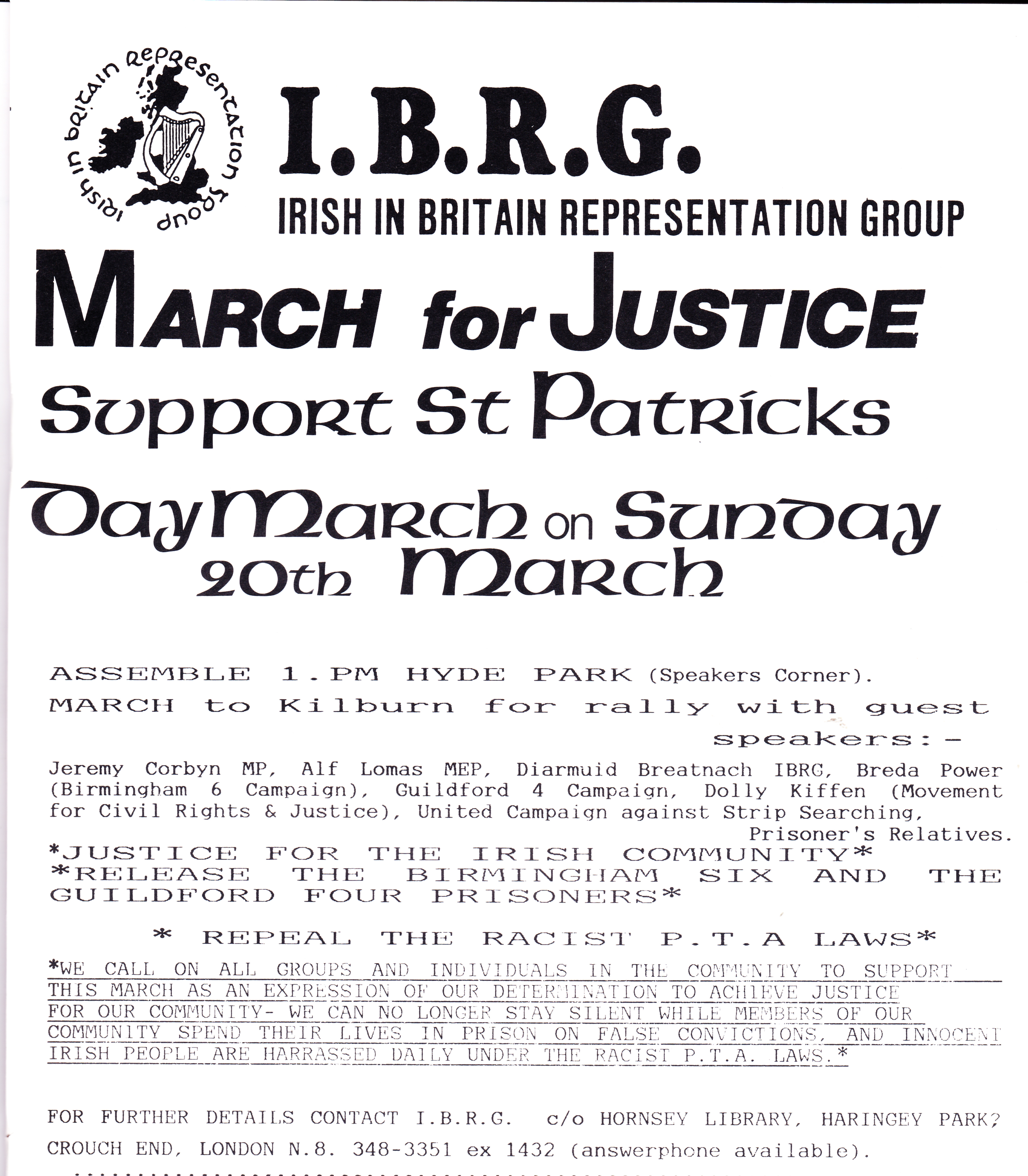
On 30th March the IBRG held their St Patrick Day March from Whittington Park Holloway to Camden Town to the Camden Irish centre where Paul Hill of the Guildford Four was the main speaker. Several hundred people attended the march which was around the Spirit of 1916. The Rally ended with a performance of the Rose Tree a celebration of 1916 in song music and poetry.

On 30th March the Irish Post editorial was on 1916 with a heading Proud Legacy which stated ‘This Saturday in London there is a march with assembly at 12noon at Whittington park of Holloway road and a rally from 2.30 at the Irish centre in Camden’.  It further stated ‘the current violence emanating from Northern Ireland does not in any way invalidate the ideals of 1916. The concept of an All-Ireland nation will simply not go away. The hope remains that over a period of time it will be achieved. It is a natural order. A united Ireland can with justice and fairness accommodate all the diversities. Not to aspire for such a happy resolutions defeatist. Worse it is to bequest to subsequent generations a continuation of the tragic events of the past 22 years. Pearce and his colleagues should be remembered with pride. They were the heroic founding fathers of an Irish nation which has still some way to go before being fully attained.’

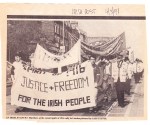
The Irish Post covered the march with a photo of the leading banner Spirit of 1916 Justice and Freedom for the Irish People carried by Kevin Hayes and Pat Reynolds with an IBRG banner straight behind it. See below.


Sadly, the Irish Post allowed letters in attacking the march and IBRG by an unknown man in Birmingham and another from Belfast with a heading What did 1916 really change.


Bolton IBRG condemned the booking of racist comedian Bernard Manning for the Lord Mayor’s annual charity ball in Bolton which was an insult to the Black and Irish people of the town.  This was covered in the Irish in Britain News with Uproar over booking of racist comedian for Mayor’s ball

 Joe Mullarkey stated ‘the involvement of Bernard Manning is offensive to minority communities and women in Britain, particularly the Irish community who have complained against racist abuse generally disguised as humour. Given the Mayor is the President of the Bolton Race Equality council, an organisation that has campaigned against racist abuse, one can only conclude that the Mayor is trying to sabotage community relations in Bolton.

IBRG were supported in their protest by the West Indian Community Association. Manning was found guilty later of discriminating against a Black woman waitress at one of his functions by telling racist offensive jokes in her presence. When IBRG picketed him at the National in London in a large Black Irish area, his audience was 100% male with not a single Black person attending.

The Minute Books of Bolton IBRG are lodged at the Working Class Movement Library in Salford.

On 6th April the IBRG marched with their banner in the 1916 Commemoration March in Dublin among those present were IBRG officers Bernadette Hyland, Laura Sullivan and Pat Reynolds. See headline photo.

On 13th April the Irish Post covered the IBRG submission to the Inter Parliamentary British Irish Body with a heading Sweeping change to emigrant provision urged.  The IBRG in its submission called for the Dion committee to be restructured to include women, and the wider community and called for a shift from welfare to community development, and called for Irish consulates in Manchester and Glasgow.  The IBRG also called for the Irish to be included in all equal opportunities’ programmes in Britain, for anti-Irish racism to be tacked, for free fares for Irish elders visiting Ireland and for a tightening of anti-racist laws in Britain to prevent abuse in the media.

On 18th– 21st April Manchester IBRG organised a series of events in Manchester as the Irish Post announced Manchester celebrates 75th anniversary with music with Poetry and songs of the Rising with also the story of Easter week plus a walk around Irish Manchester.

Manchester IBRG Easter Rising Social.

In Birmingham there was a Spirit of 1916 festival of films and music with a whole range of films put on, including, Hidden Agenda, Anne Devlin, Curious Journey Mise Eire, Hang out your Brightest Colours, Irish Rising 1916, the Cause of Ireland, Saoirse, and the Irishman. Both Conradh na Gaeilge and Birmingham IBRG were involved in putting on the program which had a bi lingual flyers.

The Ard Choiste was held in Manchester on 20th April. Eleven delegates attended included Bernadette Hyland, Linda Ryan, Siobhan Dwyer, Pat Reynolds Diarmuid Breatnach, Neil Doolin, Majella Crehan, Kevin Hayes, and Joe Mullarkey.

It was noted that Camden and Hackney had become one IBRG branch.  Neil Doolin agreed to start up a new IBRG branch in Merseyside. The idea of having a full-time organiser was debated with Majella providing a breakdown cost.

The Ard Choiste welcomed the release of the Birmingham Six and of Siobhan McKane. The meeting heard reports on the Dessie Ellis campaign which the IBRG was involved in with Pat Reynolds as Chair and Majella Crehan as Secretary.

The meeting heard back on the Spirit of 1916 IBRG March in London which was successful but received no support from TOM, Wolfe Tones, or Connolly Association. The meeting decided to affiliate to Construction Safety campaign, and the Repeal the PTA campaign. Pat Reynolds PRO had put in a submission on the position of the Irish community in Britain to the Irish British Parliamentary Body. The meeting heard of the IBRG input into the 1991 census campaign and of recent meetings with CRE over research into the Irish community. The IBRG had contributed to a meeting in London on the emigrant vote.


Irish and National Census

The National Census was held in Britain on 21st April with Trevor O’Farrell of Camden IBRG writing a major article on the issue for the Irish Post calling on the Irish in Britain to identify themselves entitled Equality for All. The same issue had another anti- IBRG letter about the 1916 March entitled Inspiring but so poorly attended which looked like it came from the left who failed to support the march, but used the Irish Post to attack the community. There was a photo of Cllr Jim King from Salford on another page on the Broughton Friendship day.

Maurice Cahill of Harrow IBRG had a letter in the Irish Post on 6th April, detaining a reply he had received from OPCS on the 1991 Census, which said the Irish lobbying had come too late to test an Irish question. Maurice called for an Irish secretariat in Britain.

On 22nd April Pat Reynolds PRO attended the Abbey National Building Society AGM and before several hundreds of people raised the issue of employment discrimination by Abbey National in N. Ireland by asking the CEO the question on his annual report. It was the first time in Britain that employment discrimination had been raised at an AGM of any major company in Britain. It showed that anyone with a mortgage could challenge any of the building societies over their discrimination in N. Ireland.

Michael Herbert had a two-page article in the Irish Post on Mna na hEireann on the neglected role of women in the making of the 1916 Rising.

IBRG called for the restructuring of the Dion committee on funding to the Irish community in Britain with a move away from welfare to community development and for Irish consulates in Manchester and Glasgow, free travel for Irish elders in Ireland, equal opportunities for the Irish in Britain, ethnic monitoring,  and the ending of the racist PTA laws, the release of Judith Ward and Danny McNamee, support for Irish studies in the submission to the Interstate body.
Gearoid McGearlailt had a letter defending the IBRG from an attack after our St Patricks Day March.

Manchester IBRG put on Poetry and songs of the Rising on 18th April along with a range of Irish events to mark the 1916 anniversary including the Story of Easter Week, plus an exhibition at the Working-Class Movement Library in Salford.

On 3rd May Troops Out Movement put out a letter calling for a network of groups working around Ireland to come together around the issue of withdrawal, and planned another meeting in Birmingham on 29th June on the same issue. They had held a meeting with LCI, Time to Go, and various trade union groups and individuals working around Ireland.

Interesting, the largest group working on Irish issues was the NALGO Irish Workers Group who were not invited. TOM also produced a paper to go with the proposed meeting. In it, they did not propose a New Broad Front but rather a linked network, but it seemed to exclude the Irish community and the British left, and were mainly Labour Party and trade union people. There was fresh hope because of the fall of the eastern bloc,  the war in the Gulf and the fall of Thatcherism that there was room to build again.

On 11th May Pat Reynolds was guest speaker at a May Day rally in Bridgewater in Somerset after a march through Bridgewater with an IBRG banner. Bridgewater was in Tom Kings’ constituency and despite several hundred people on the march there were no police present, with a traffic warden leading the march. Now if that was an Irish event, we could have provided employment for a few hundred police officers.

In his speech Pat criticised the local MP Tom King for his support for the shoot to kill policy in N. Ireland and for his wrongful intervention into the Winchester Three trial over the right to silence. Pat stated that English workers and Irish workers had no quarrel with each other but with the British government, and its army of occupation in Ireland where they sent working class soldiers to fight their dirty war. The release of the Birmingham Six and Guildford Four was a victory not just for Irish people, but for the whole working class against an unjust corrupt system of justice. He welcomed the driving from office by the workers of Britain of Thatcher and her oppressive poll tax by the greatest campaign of civil disobedience seen in Britain for generations. He called Tom King to count for his time in Ireland, for his repressive shoot to kill policy and his wrongful intervention into the Winchester Three case. 

In ending he called for an end to the war in Ireland and for talks with Sinn Fein and a political solution to end the partition of Ireland, and to end a shameful history of British colonisation in Ireland, which preceded their expansion into slavery and oppression abroad. It is in the interest of the English worker to support the Irish struggle as it is a common enemy which oppresses both groups of workers. On this international day let us begin to build this solidarity to further our struggles and for the future for our children.

On 12th May Gerry Adams was the main speaker at the Bobby Sands/James Connolly commemoration at Conway Hall which was packed out.

In another article on 18th May entitled Amazing hypocrisy of DES the Irish Post highlighted Conradh na Gaeilge submission to the British Irish Body by Liverpool Conradh na Gaeilge. When the DES was challenged, they said there was no demand for the Irish language and when given evidence that the Irish language was taught in all the cities and major towns of Britain, the DES then said it was studied for mainly cultural reason. Conradh accused the DES of double speak and hypocrisy since their own  report stated  that among the purposes of foreign modern language  are to offer insights into the culture and civilisation of the countries where the languages are spoken, to encourage a sympathetic approach to other cultures and civilisations and to develop pupils understanding of themselves and their own culture’. Thus, the DES still held shameful anti Irish colonial mentality which was oppressive and racist.

On 18th May Gearoid McGearailt had a letter in the Irish Post Record of IBRG Stands Up to answer a few of the anti IBRG letters published in the Irish Post after the 1916 march. Again, the Irish Post used a photo of the march of just individuals rather than any of the banners. On 25th May Pat Reynolds PRO had a letter in also in reply to some of the letters on the march which appeared to come from the British left.

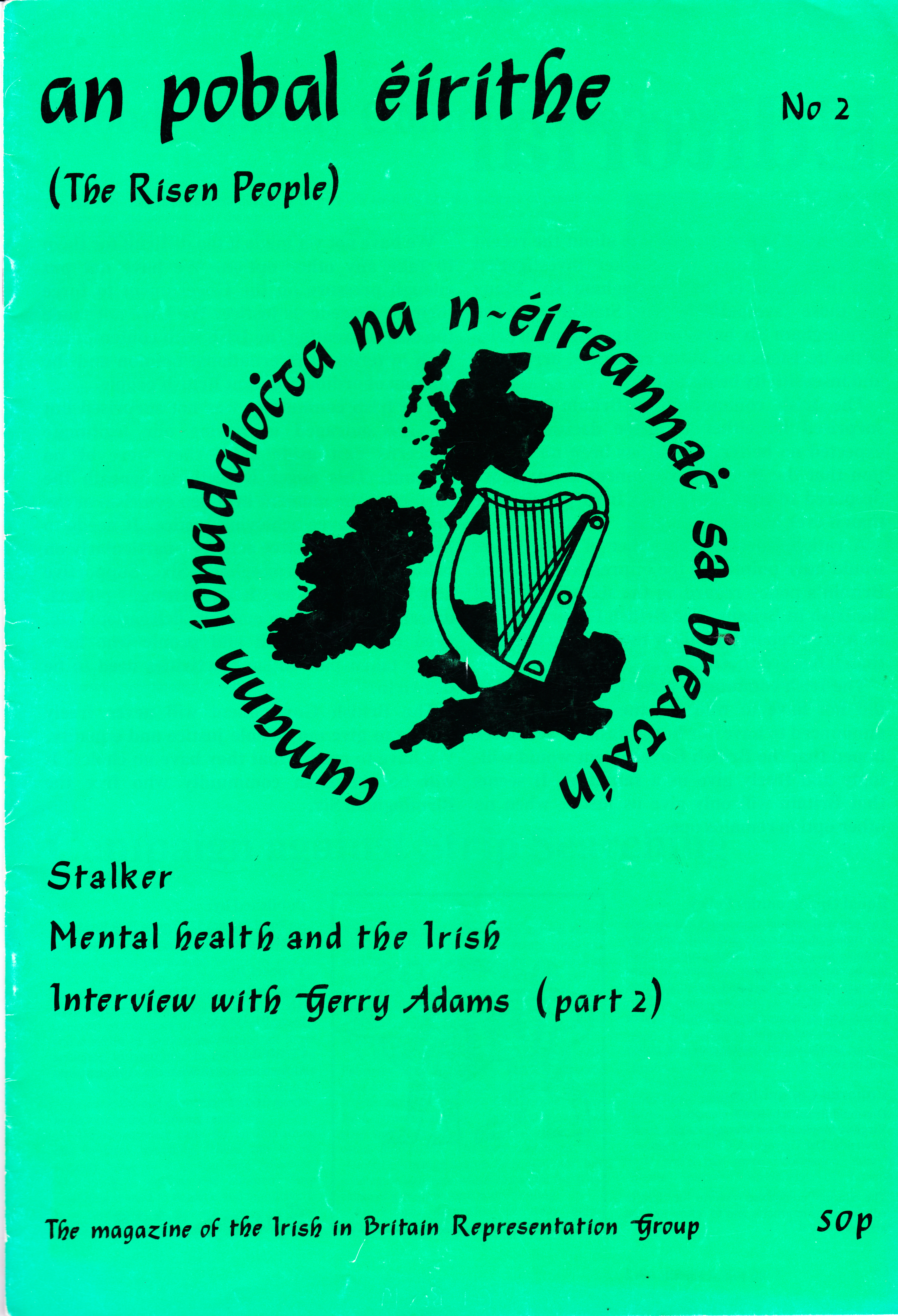
The fifth edition of An Pobal Eirithe was produced with articles ranging from the role of women in 1916, a visit to Palestine, a review of IBRG’s work in 1990 and a bibliography of the History of the Irish in Britain. See below.

Response to Mori Survey on languages

 IBRG published a statement on a London Mori Survey in Southwark South London which showed that English was the only language for 53% of the Irish population with a further 17% having English their main language. 3% of the Irish community did not use English at all, with 6% indicating that they can speak Irish with 3% as their first language.  The Southwark figures if produced nationally would give a figure of 25,00 Gaelic speakers in Britain whose first language was Irish, and a figure of some 50,00 who could speak Irish. The Southwark Survey put the Irish language question back on the education agenda, and indicates the needs for an Irish language rights body in Britain. How many more people also spoke Scots Gaelic and who spoke Welsh in England. Anois in Ireland carried the story on its front page.

On 23rd May IBRG picketed the Courts of Justice for the Dessie Ellis trial.

 NE Lancs put on an Irish Friendship Festival in Blackburn on 25th May. The Irish Post covered it with Blackburn offers lots to delight with a Ceili Mor and a street festival like a Fleadh Ceol In Ireland.

Michael Kneafsey of NE.Lancs comments about the Festival.

The festivals were a great success on many fronts. Organising them brought
us into contact with a wide range of Irish and non Irish
organisations. These included Community Art Groups, Local Authority
Culture Departments etc.
We always insisted that as a guiding principle, our festival events
would take place where possible in Local Authority premises. We wanted
to demonstrate that the Irish Community were as entitled to use those
premises as any other community. Another guiding principle was that
the festivals always include at one open air free event. Blackburn
Shopping Centre was the venue that we used for open/free element of
the festivals. One of the most pleasing aspect of those open/free
events was the number of asian women of all ages. When the wonderful
dancers the ” hairy Marys’ performed, the most enthusiastic audience
were Asian girls and young women.
I think that the early 90’s was a time when Irish people were
beginning to gain confidence about their identity, and there were
glimmers of hope that the political space was beginning to open up for
Republicans to put forward their political vision. But there was still
huge hurdles to overcome including trying to get innocent people
released from prison and political prisoners recognised.

N.E.Lancs Minute Books are lodged in the IBRG archive at the WCML in Salford.

IBRG members were involved in setting up a national Nalgo Irish workers Group to campaign on Ireland and on Irish issues in Britain, and they had a letter in the Irish Post signed by Diarmuid Breatnach, Virginia Moyles, Seamus Carey, and Pat Reynolds all IBRG members. It was letter appealing to all Irish workers in NALGO up and down the country to join the Irish workers Group.

The Ard Choiste met at the Sparkbrook Cultural Centre in Birmingham on 1st June. Nine delegates attended including Bernadette Hyland Chair, Linda Sever, Pat Reynolds, Kevin Hayes, Diarmuid Breatnach, Virginia Moyles, Neil Doolin and Maurice Moore.

Apologies from Joe Mullarkey, Majella Crehan, and Gearoid McGearailt.

The meeting heard that the first meeting of Merseyside IBRG would take place on 13th June. Haringey IBRG and Majella Crehan had produced and printed 6,000 IBRG membership recruitment leaflets.

It was agreed to affiliate to the Dessie Ellis campaign for £25. Haringey IBRG were planning to hold an Irish Prisoners Awareness Day in September to highlight all the different Irish campaigns and prisoners in Britain, along with the different issues like transfer and strip searching. There were over 40 Irish political prisoners in Britain. The meeting hear that Michael Bromell case had been referred to the Court of Appeal. Michael’s case had led to the disbandment of the West Midlands Serious Crime Squad. 

Linda Sever was elected editor of an pobal eirithe. The Commemoration of the 10th anniversary of the Hunger strikes was in Birmingham on 12th October. The meeting discussed talking up a boycott of Ford in Britain as they were discriminating against Catholics in N. Ireland in Belfast.

On 31st May the Irish World had IBRG branch for Merseyside which gave a write up for the first meeting 13th June.

The Glor na nGael Tour of Britain was staring on 5th June with Majella Crehan and Caitriona Scanlan of Haringey IBRG doing most of the work with Pat Reynolds arranging London accommodation and transport to meetings. On 5th June Noirin Ni Cealaigh started her tour of Britain by speaking at Arus na Gael in Brent as part of her tour organised and sponsored by IBRG. 18 people attended the meeting in Brent.

On 6th June Noirin was speaking at the Roger Casement Irish Centre in Islington where 40 people attended with a benefit later at the Victoria in Holloway road which raised £150 for Glor na nGael. On 7th June Noirin was guest speaker at the Irish women’s centre. A meeting was held meeting was in Manchester which drew over 40 people. The Irish Post and the Irish in Britain News covered the Tour but made no mention of IBRG who sponsored and organised it.

The Irish Post had a feature In Defence of the Language and Lords likely to decide case two articles on Glor na Gael on 15th June and on 8th June had Glor nan Gael fighting back. The British government has slapped a Public Interest Immunity Certificate on the group in their search for document which had led to a Court battle. These were often used to cover up wrong doings by the state.

On 7th June IBRG members attended the Dessie Ellis benefit at the Camden Irish centre.

On 14th June IBRG members picketed the Old Bailey for the Dessie Ellis trail and later that evening picketed the Irish Embassy where Mary Robinson Irish President came face to face with her first picket.

Newham Council and homeless Irish

On 21st June the IBRG condemned the High Court decision which stated that Newham council had no legal duty to house a homeless Irish family after they had fled sectarian violence in Belfast. In a public statement the IBRG said ‘The IBRG are alarmed and very concerned at the decision of the High Court of 21th June 1991 that Newham council had no obligation to house an Irish family on the grounds that they had made themselves intentionally homeless. The family had fled Belfast after sustained Loyalist violence and now faced being put on the street by Newham Council. The IBRG finds the decision of the High Court unacceptable and in our view morally wrong. The decision has major implications for families leaving Nt Ireland because of intimidation and violence. The IBRG have written to Newham council asking them to reconsider their decision and rehouse the family, and have raised the issue with Tony Banks Labour MP the local MP who is from Nt Ireland. The IBRG maintain that families fleeing violence in Nt Ireland should be treated as homeless and rehoused in Britain. If the British government who are responsible for policing in Belfast cannot provide safe housing for families, then they should at least be willing to provide housing for the few families who flee to Britain because of immediate violence’.

The IBRG noted the publication in June of the Consultation paper on languages in the National Curriculum had again excluded the Irish language. The IBRG expressed disappointed that only Conradh na Gaeileg and IBRG had put in submission to the DES on the matter and in a public statement said ‘If the Irish community in Britain are to effect change in any public institution then they must at once make their voices heard and their demands known. The demand for equal cultural and language rights in Britain needs the full support of all the community and we call on all Irish organisations to make their views known to their public representatives on the issue. The exclusion of the Irish language makes a mockery of the equal opportunities policy statement of the working party, and it is clear that for them equal opportunities do not extend to Irish parents and their children’.

Aldershot Labour Party had proposed a motion to the Labour Party Annual conference calling for the Irish language to be included in the National curriculum. Pat Reynolds was working with the proposer of the motion offering support.

On 21st June the Irish in Britain News carried a page long feature on Jim King who had been selected by Labour to fight a Tory held seat in Southport Lancashire, after spending seven years as a Labour councillor in Salford. Jim said that he had been involved in IBRG in the early years and was national chair for three years, and that IBRG was one of the most radical Irish community groups that came on stream this century.’ The IBRG, he said, were a catalyst for many issues affecting the Irish like the PTA and cases like the Birmingham Six and Guildford Four.

On 26th June the Maguire Seven are finally cleared by the Court of Appeal in London after serving sentences from four years to fourteen years.

On 29th June the Ard Choiste met at the Labour Club in Lewisham with eight delegates present including host Diarmuid Breatnach, Siobhan O’Dwyer, Tom Fitzsimons, Teresa Burke, Neil Doolin, Virginia Moyles and Pat Reynolds. 

Apologies from Gearoid MacGearailt, Majella Crehan and Kevin Hayes.

There were 11 active branches.

The meeting heard reports back on the Glor na nGael tour of Britain, the Dessie Ellis campaign, and the campaign for the vote in Ireland.

 IBRG in London had met with Glor na Deorai in London over the issue of votes for emigrants.  Several branches were planning activities to commemorate the 10th anniversary of the hunger Strikes.

It was reported that the report on the Irish community in Britain produced by the Inter Parliamentary Irish in Britain Body was oppressive, dangerous and inaccurate and a white wash. Branches were urged to write letters of complaints. The report was seen as an effort by the Irish government to close off any work by the CRE or others to highlight anti Irish discrimination in Britain.

Lewisham IBRG were holding a day school on Ireland.  A message of sympathy was sent to the family of Donegal Sinn Fein Member Eddie Fullerton who was murdered by Loyalists in Donegal. Eddie had spent most of his life in Birmingham before he returned home.


Diarmuid Breatnach had a long letter in the Irish weekly about organising in Nalgo and getting motions to Conference.

On 28th June the Irish World carried a feature Public Meeting to Support Jim Moher who was the Labour candidate for Brent North and the Irish Interest group had organised a meeting with Jim speaking and Pat Reynolds PRO IBRG to talk about the needs of the Irish community in Brent.

On 2nd July Pat Reynolds PRO had an interview with BBC Radio 5 and that evening was speaking at a public meeting at Aras na Gael in Brent along with Jim Moher Irish Labour candidate for Labour in the General election.

On 3rd July Pat Reynolds was speaking at a full house at a Dessie Ellis public meeting at Central Library in Islington.

On 5th July IBRG members attended a welcome home meeting at the Haringey Irish centre for the Birmingham Six. Pat Reynolds had a letter from Michael Farrell who was considering a libel case against the Sun for some of its materials about the Birmingham Six after Pat had sent him coverage from the British media on the case.

On 7th July Nesan Quinlivan and Pierce McAuley escaped from Brixton and were later seen at the Irish Festival in Brent that afternoon.

On 8th July Pat Reynolds had an interview BBC TV South East on the Brixton escape, where he advised the escaped men to head for the Wicklow Hills rather than give themselves up to British injustice.

On 9th July the British Independent featured IBRG in a piece on the escape.

On 10th July Pat Reynolds PRO gave an interview to RTE radio on After 5 show on the same issue.

Trevor O Farrell had a long letter in the Irish Post on 27th July where he noted that 37 TDs could not even be bothered to vote on a Bill proposing to give Irish emigrants the vote. Trevor pointed out that in Britain a Party winning 42% of the vote can end up with a majority of 100 seats given the British voting system. He stated  ‘If no party is willing or able publicly to pledge themselves  to the cessation of British military and political interference in Ireland, or to provide definite proposals  for tackling the impasse inherent in the Unionist veto, then on this issue it is hard to see any reason for supporting any of them’. He argued against the two evils syndrome which the community had fallen for in supporting Labour.

On 29th July Pat Reynolds was a speaker at Brent Council full meeting on the needs of the Irish community in Brent, when the Tory Council cut funds to various Irish projects.


In July the IBRG condemned the so-called Peace Train into London by reactionaries’ forces in Ireland supported by Labour Harry Barnes. The IBRG called on them to go home and stop engaging in British propaganda stunts for a servile pro-British anti Irish media. IBRG stated that the Peace Train condemned the violence of the oppressed but ignored the violence of the British state in its shoot to kill policy.

TOM stated that ‘far from being a peace movement the group is made of politicians and interest groups with a clearly partisan approach to the future of Nt Ireland’ The Repeal the PTA campaign urged the event’s organisers to highlight restrictions imposed on Irish people under the PTA. The New Consensus were clearly anti Republican and pro Unionist. It was later revealed that the so-called Peace Train had been given £8,500 by the British government

On 11th August the IBRG banner was carried on the Anti Internment march in Belfast by Haringey IBRG members with Laura Sullivan and Pat Reynolds attending. The Andersonstown News had a central photo of the IBRG banner on the parade with another one from the Basque country.

On 12th August it was announced that the case of Judith Ward jailed for the M62 Coach bombing was to be reviewed raising hopes that she would be released.

On 30th August IBRG member picketed 10 Downing St over Glory na Gael funding.

On 31st August Lewisham IBRG held their 1916/Hunger strike commemoration event. The Poster for the event featured James Connolly and Bobby Sands.

 In August Margaret Mullarkey of Bolton IBRG had an article in the Irish Weekly about the history of the Irish in Bolton with Joe Mullarkey later calling for an Irish community centre in Bolton in another article published by the Irish in Britain news.

The Mullarkey family had a whole page to themselves. Margaret Mullarkey gave a potted history of the Irish in Bolton  and how they were in radical movements in Britain like the Chartist and trade union movements, but also involved in Irish issues  such as Home Rule and the Irish struggle for independence, and then she recorded the work of IBRG in Bolton since 1983,  and their involvement with other Irish groups in running a successful Bolton Irish festival and then helping to set up  BICA(Bolton Irish Community Association).

Joe Mullarkey article’s was headed Bolton Irish to get Organised. Joe argued that the Irish need an Irish community centre in Bolton. Joe stated ‘the Irish are a community in Bolton and are entitled to receive the same level of service and support as any other community. But unless it unites and presents its needs in a very structured and documented manner using the best members of the community, those needs will never be addressed’. Another article in the Irish Post on 31st August had IBRG Input at Bolton’s festival while another article had Irish input in Manchester about the Irish input into Manchester International Festival of Arts.

Joe and Margaret Mullarkey

Michael O’Cnaimhsi  of N.E.Lancs IBRG had a letter in the Irish Post with the headline  Blackburn success about the success of Feile Cardiuil Eireannach.

 On 7th September Bolton IBRG organised an Irish evening as part of Bolton’s 200 years celebrations.

On 7th September the IBRG Ard Choiste was held in Liverpool.

The Ard Choiste welcomed the actions of Amnesty International in issuing an urgent notice on the British government over its ill treatment of a Catholic youth in Castlereagh Interrogation centre. The meeting welcomed the action of Amnesty International in issuing an urgent notice upon the British government over the ill-treatment of a Catholic teenage boy in Castlereagh Interrogation centre.

IBRG condemned the British government for its systematic abuse of detainees over the past 20 years in Nt Ireland and condemned the sheer hypocrisy of the British Prime Minister,  using an Amnesty list of prisoners to berate the Chinese government while his own government, has been involved in widespread abuse of human rights in Nr Ireland from Shoot to kill policy to the ill treatment of detainees.

On 7th September the Southwark Irish Forum held their spirit of 1916 event at Elephant and Castle in south London an evening to celebrate the 75th anniversary of 1916 in music words and song with guest republican speaker who was Gerry McLoughlin of Sinn Fein. The Irish Post covered it with a number of photos with one including John Carty, Jodie Clark, Maire Steadman, Gerry McLoughlin, all IBRG members.


 Irish Input at Bolton’s top Festival in the Irish Post had a photo of Margaret and Joe Mullarkey with Labour Councillor Pauline Spencer at the final night of the Bolton Irish Festival.

On 14th September the IBRG held their Irish Prisoners Awareness day at the Camden Irish centre. Over 50 delegates attended from various organisations attended. The main item of the day was for Irish prisoners to be transferred back to Ireland.

The cases of Dessie Ellis, Judith Ward, Danny McNamee, Nick Mullen were all raised. The Irish Post had a photo of the speakers which included Nina Hutchinson from the Danny McNamee campaign, Annette Maloney from the Desie Ellis campaign, Majella Crehan, Von McCleary from the Nick Mullen campaign and Liz Leicester from the Kilburn defendants’ campaign, with the IBRG banner draped over the table with the headline IBRG conference highlights prisoners’ rights issues.

Jennifer McCann from Sinn Fein POW Department, called for full support for all prison related campaign in particular the transfer of prisoners.  The piece stated that the strongest call of the weekend was for the transfer of Irish prisoners. A pre meeting piece in the Irish Post had Prisoners demands in focus at Camden Meeting.

On 25th September IBRG members attended a meeting at Conway Hall on Dessie Ellis where Ken Livingstone spoke with Paddy Joe Hill.

On 30th September IBRG joined a picket of the Irish Embassy over Dessie Ellis.

In Manchester  IBRG along with the NW Labour History Group launched the 16th issue of their journal devoted to the Irish input into Labour History in the Northwest.

On 3rd October IBRG members attended a public meeting in Brighton to hear Martha Ellis Dessie’s sister, Frances McNamee (Danny’s brother) and Billy Power B6 speaking. The meeting British Justice No Irish Need apply was to focus on the Dessie Ellis and Danny McNamee campaign during the Labour Party Conference in Brighton. Other speakers were Jeremy Corbyn MP, Majella Crehan IBRG, and Pat Reynolds of Desie Ellis campaign, with chair by Dorothy Macedo National Co- Chair Labour Party Socialist Group at the Brighton Centre. There was also a joint social for the two campaigns on 1st October which Haringey IBRG had helped organise.

Haringey IBRG put on a series of Irish films during the Autumn/winder months with The Irishmen and Impression of Exile  on 2nd October with a speaker from the Construction Safety campaign,  Suspect Community about the PTA on 6th November with a PTA speaker, andon 4th December  and on 29th October Silent Scream about 17 people, eight of them children, killed by Plastic Bullets in N. Ireland which was commissioned but then censored by Channel Four.

On 5th October IBRG members with their banners were on the Broadwater Farm March from Haringey Civic Centre to Finsbury Park to hear Bernie Grant MP, Jeremy Corbyn MP, and  Sharon Raghip who called for the release of Desie Ellis and Danny McNamee. Billy Power (Birmingham Six) who called for the release of Judith ward and the Bridgewater defendants. The Dessie Ellis Campaign had their banner on the march. Billy Power got a huge reception from the crowd and he gave a victory salute flanked by Bernie Grant MP and Jeremy Corbyn MP.

On 9th October Pat Reynolds was speaking at the Selby Centre in Haringey on racial harassment and the Irish community to over 100 people on a conference on racial harassment and Schools. Pat drew on the work of Dr Elinor Kelly on her work Anti-Racism After Burnage in Manchester which included the experiences of Irish children in schools which was often ignored and unrecorded.

On 10th October Pat Reynolds PRO was speaking with Duncan Campbell and Mark Wadsworth on censorship at the Cultural partnerships conference. The meeting drew a capacity crowd of students and media people.


On 18th October the Irish in Britain News ran a feature on Manchester which includes   a piece on Manchester IBRG and carried a photo of Mike Herbert’s Walk around Irish Manchester.

On 19th October the Comcomhairle was postponed because of travel problems faced by delegates from London getting to Bolton after 3PM.


On 27th October IBRG members attended the Terence McSwiney Memorial Mass at Southwark Cathedral. The Irish Post photo of 2nd November featured a number of IBRG members including Cllr Jodie Clark, Pat Reynolds, Sr Jean Marie, along with the Lord Mayor of Cork, Jimmy Doyle, Siobhan Ui Neill and others.

In Southwark efforts by Peckham Labour Party to name a housing office in Southwark after Terence MacSwiney was blocked after the South London Press attacked the idea. The IBRG attacked Labour for running scared of the right-wing press, and noted that Neil Kinnock was happy to be associated with James Connolly to win Irish votes. The issue was covered in An Phoblacht where IBRG criticised Labour for caving in to pressure from the right-wing press and drew attention to how Neil Kinnock was happy to appear with a plaque of well-known Irish pacifist James Connolly in his hands. If Neil Kinnock saw fit to be identified with  Connolly, the local Labour Party must honour another heroic Irishman from the same period.

The Irish Post had MacSwiney Row hits Southwark .IBRG member and local Labour Councillor Jodie Clark stated that the Council should recognise a nationally respected Irish historical figure. Southwark had a long historical Irish connection as far back as the 1540’s and now has an Irish population of 12,000.  Jodie Clark stated that other local minority communities had their own historical figures commemorated and it was right for the Irish to also be honoured.  MacSwiney was a cultured literary man with great insight into public housing and public services and was Lord Mayor of Cork and a member of the Irish Dail, who died in Brixton prison and his funeral mass was at Southwark cathedral. He was the only major figure of the Irish War of Independence to die in London. In the Irish in Britain News Pat Reynolds called on Southwark Council to reconsider the matter and honour MacSwiney and stated ‘The British Legion commemorate their dead, so they should show respect for our dead’.

On 30th October Dessie Ellis was acquitted of all charges. A successful campaign led by IBRG with both Chair and secretary being IBRG members which got widespread support across the community and from Irish solidarity groups. Dessie got his ticket back home paid for by the British state as he was excluded from Britain under the PTA.

On 31st October Lambeth Nalgo Irish workers group including IBRG members organised an Irish afternoon seminar at Lambeth town hall where Richard Balfe MEP and the Leader of Lambeth council spoke.

The IBRG deplored Marlow Council in Thameside which had taken the shamrock out of their two crests. The Liberal Party wanted to get rid of the crest which a former Irish Tory Mayor had included the shamrock as a mark of respect to his own father, and other Irish people who had helped to build Marlow town. The Irish in Britain news had Marlow in anti-Irish dispute. Only 370 people out of 15,000 people had signed the petition and at least 30 names had been duplicated on the list.


Virginia Moyles and Bernadette Hyland

On 23rd November the Comhcomhairle was held at the Roger Casement Irish Centre in North London. The following branches attended Manchester, Birmingham, Lewisham, Haringey, Harrow, Coventry, and Camden/Islington. Eleven delegates were present including Bernadette Hyland Chair, Kevin Hayes, Diarmuid Breatnach, Pat Reynolds Maurice Moore, Maurice Cahill, Tom Fitzsimons, Val Deegan, Siobhan O Dwyer, Robert Ryan, and Virginia Moyles.

Apologies from Linda Sever, Laura Sullivan and Majella Crehan.

Branches were asked to write to the Home Secretary demanding the release of innocent Irish prisoner Judith Ward. It was agreed to donate £100 to the Bloody Sunday Commemoration march and Rally.

The meeting called on branches to take up Judith Ward’s case. Mike Bromell had been freed while Martin Foran had escaped and had been rearrested. It was agreed that Kevin Hayes produce a new PTA leaflet.

On 30th November Lewisham Nalgo held an Irish conference.

On 30th November Pat Reynolds as a long-standing member of Haringey Ethnic Minority Community Consultative Committee was a guest at Freedom of Haringey Borough ceremony and celebration at Tottenham Town hall to Comrade Oliver Tambo and his wife Adelaide. Oliver was Vice President of the ANC, to recognise the contribution they had made to contribution the struggle for freedom in South Africa during his years of exile, and while living in Haringey that had provided an inspiration to many local residents. They were given the title of Honorary Freeman and Woman of Haringey. The evening was filled with many rebel songs from South Africa and Tottenham Town Hall felt at times to be like being in the Roddy McCorley Republican Club in Belfast with its rousing songs and music. The evening looked forward to freedom for all South Africans and in many other places where they were fighting for freedom.

On 2nd December Dolan in the Irish Post wrote in an article Linkage forged by injustice ‘In the early eighties the Irish in London learned a lot about community activism from Black organisations.  By the late Eighties, the Black community was learning from the Irish how best to campaign for the release of the Tottenham Three. How fitting that, on his release on bail, Mark Braithwaite should have singled out Billy Power for praise. At the press conference he held his hand and went on to say that this was the man who gave me hope and inspiration. But long before the Birmingham Six were released, Billy Power’s daughter Breda, was cooperating with the Tottenham Three campaign. She and Engin Raghip’s wife, Sharon, had become close friends. They first met as speakers at a rally in London organised jointly by the Broadwater Farm Defence Campaign and the Irish in Britain Representation Group. But it was while visiting the men at Wormwood Scrubs Prison that the two young women became friends. They had much in common including having experienced Lord Lane. We feel we have known each other for years. Breda Power told the Irish Post at the time. So, there was a joint campaign. And they won. Incidentally Sharon Raghip is of Irish descent, while his husband is of Turkish background’.

Manchester IBRG were involved in putting on Manchester 4th Irish film festival which started on 7th December and lasted a week.

In Manchester Bernadette Hyland met with the NW TUC Leader Alan Manning to discuss issues affecting the Irish in Britain and the situation in Ireland. The North West TUC were shortly to go on a fact-finding trip to both the 6 and 26 counties in Ireland. The Irish in Britain News covered this with Concern over Young Irish Homeless in Manchester which reported on the meeting between Alan Manning North West TUC leader and Bernadette Hyland National chair of IBRG. Bernadette called for more research and support for the young Irish arriving in Manchester

The IBRG welcomed the report by Seamus Taylor and Haringey Council entitled Equal opportunities the Irish Dimension an Agenda for Change. The report was supported by Bernie Grant MP, Kevin McNamara MP, Clive Soley MP, Harriet Harman MP and Clare Short MP. The IBRG called on the CRE to recognise the Irish as an ethnic community, and take action to address discrimination against the Irish community in Britain. The Irish in Britain News covered the event with Second Class citizens but in claiming it was the first report to show the conditions of the Irish community in Britain, it was wrong. The Greater London Council had published a number of reports relating to the Irish community in London and their social conditions and likewise had Islington Council, where Dr Michael Maguire of the Irish in Islington Project had done trojan research work on the Irish in Islington. Likewise, the IBRG conference in Camden on the mental health of the Irish and the annual Lambeth IBRG welfare conferences. The newspapers report gave the IBRG response to the report

In December the IBRG condemned Abbey National Building Society for using a ‘Paddy’ joke in their advertising feature. Kevin McNamara MP took up the issue.  The advert had a fictitious investor called Mr A Paddy from Cork Eire. This was the second time in two years that the IBRG pulled up Abbey National over their anti-Irish material. Abbey were also one of the Building Society’s which discriminated against Catholic workers in N. Ireland. The Andersonstown News gave it head billing with Abbey National gets the Paddy habit. And the Irish World had Abbey National apologise to Irish staff as Bad Habit is Blasted. Kevin McNamara was quoted ‘These people are right to be outraged. It is typical of the attitude held by certain sections of English society against the Irish It is proof if proof is needed of the hidden discrimination in our society by the use of the racist joke’. The IBRG forced Abbey National to withdraw the advert and apologise.

In December the new Press Complaints Commission turned down an IBRG complaint over the To-Day newspaper about lilywhites and the IRA claiming that Irish students were joining the IRA and that your quiet neighbour could in reality be in the IRA. So, watch you Irish neighbours.

IBRG had complained to the Press Complaints Commission over a Today front-page story of 18th November. Mr and Mrs Lillywhite who were Irish were now a danger to Britain alleging that Irish people in Britain were IRA sleepers.  The Commission now stated that they could not consider any complaints unless they were specific and identify individuals which was a clear licence to abuse the community at large. ‘They appear to be typical next-door neighbours, perhaps with a trace of an Irish accent.

IBRG stated that the new Press body was even worse than the old Press Council and that under the new regime, John Junor’s comments would not have been censured since he named nobody. Minority communities in Britain were now left without redress when under racist attacks in the British media. The Irish in Britain News took the side of the Today newspaper and the Press Complaints Commission and ended up by stating ‘We Irish should count ourselves fortunate that the English population in general is so tolerant’ probably the most shocking editorial by any Irish newspaper in Britain, which would have easily fitted into the Sun newspaper.

On 7th December Pat Reynolds Chair of the London Dessie Ellis campaign travelled to Dublin for the welcome home benefit for Dessie Ellis.

The Manchester 4th Irish Film festival was put on between 7th and 14th December and was covered in both the Irish Post and the Irish World. It had the Commitments, Pigs, Journey to Knock and The Grass Arena. The Festival was put on jointly  with IBRG and the Cornerhouse Arts Centre.  There was also a one-day event entitled Protestant and Irish with guest speakers Christina Reid and Cherry Smyth

On 11th December Pat Reynolds had an interview with BBC Radio Belfast about the CRE and the Irish community, and on 22nd December had a similar interview with BBC Radio Warwickshire Irish program.

On 20th December the Irish in Britain News ran a story Irish people innocent victims of firebombs backlash which detailed several firebomb attacks upon Irish people and Irish Centres including the Irish World Heritage site in Manchester. The report quoted Bernadette Hyland who spoke of increased police activity at ports and against students after any IRA action in Britain.

On 22nd December the papers reported Fury over Prince Andrews Irish tart crack where Prince Andrews stated at a Reception at the American Embassy in London that he had his own theory as to how Maxwell had died with some racist sexist joke about an ‘Irish tart’. Here we get Prince Andrew mocking the Irish and of course Maxwell made thousands selling racist sexist books about the Irish including the Irish joke book and the Irish Kama Sutra. Maybe Andrew got the racist sexist joke there. They say mocking is catching and both Prince Andrew and Maxwell daughter would be involved in an alleged case of the sexual abuse of minors in Britain and America. Jim King of IBRG was quoted as calling on Andrew to apologise to the Irish community for his so-called joke.

On 31st December Pat Reynolds was an invited guest at Paddy Joe Hill New Year’s Eve Party in Teddington to see in his first new year in freedom after 16 years in prison.

Listen to my talk about the IBRG in the northwest in the Irish Collection at the WCML here

An excellent history of 200 years of Irish political activity in Manchester – including Manchester IBRG read “The Wearing of the Green” by Michael Herbert. Buy it here

Read previous posts on IBRG history here

 
What do you want to do ?
New mailCopy
 
 
What do you want to do ?
New mailCopy
 
What do you want to do ?
New mailCopy
Posted in Uncategorized | Tagged , , , , , | 1 Comment

History of the Irish in Britain Representation Group Part ten 1990


Patrick Reynolds was one of the founders of IBRG and played a key role in its history. He is now writing up that history and putting it into the context of radical history in Britain and Ireland in the C20th.

Victory day for Winchester Three. Campaigners celebrate at Old Bailey 1990 after hearing verdict. Front;Majella Crehan and London IBRG members.

On 13th January 1990 the IBRG Ard Choiste was held at the Four Provinces Club in Coventry. Ten delegates were present including Chair Bernadette Hyland, Maurice Moore, Caitlin Wright, Pat Reynolds, Peter Skerrit, David Kernohan, Diarmuid Breatnach, and Virginia Moyles. Apologies from Majella Crehan and Laura Sullivan.

The Ard Choiste donated £100 to the annual Bloody Sunday march which the IBRG along with TOM and LCI organised.

Coventry IBRG reported on branch work on the PTA in both Coventry and Birmingham, holding a monthly social of song music and poetry, work with the Trades Council who had held a meeting on the Birmingham Six, and work on the local Irish Festival.

The meeting affiliated to the Nick Mullen campaign and the Martin Foran campaign while continuing support for the Winchester Three campaign. The meeting decided to push Judith Ward’s case as she had been forgotten :  the PRO had got her case into the Irish weeklies, An Phoblacht and the American Irish Voice along with some Dublin papers.

The new ILEA (Inner London Education Authority) booklets on Ireland had a number of racist stereotypes about Ireland. Despite being provided to educate children about Ireland, the booklets showed the Irish being violent and the British always being peaceful.

The meeting decided to support the new Irish National Congress being set up in Dublin. The meeting heard that the meeting had been held with the CRE and that they were taking the matter of Irish recognition to the Commissioners.

On 13th January 1990 the SAS executed three young men robbing a bookies shop in Belfast. The incident led to claims of a shoot to kill policy as two of the men were shot between 10-13 times while the third was shot from two foot away

On 17th January 1990 Dr Maire O’Shea from the Birmingham Six Campaign, and Pat Reynolds IBRG addressed over 100 students at Cardiff University on the issue of Ireland and the Irish in Britain, particularly the framed prisoners and the PTA. Later Cardiff students came down to London for the Bloody Sunday March.

Bloody Sunday March London and Derry

On 27th January 1990 over 5,000 people marched on the Bloody Sunday march from Hyde Park to Kilburn under the banner of Support the Irish people’s demand for self-determination. Speakers included Jeremy Corbyn MP, Father Des Wilson, and Dodie McGuiness from Sinn Fein.  On the march there was a 100-foot-long banner from Derry with the heading ‘We are a people of struggle, ours is a culture of change’.

Paul Hill spoke at the Derry Bloody Sunday March and went on to pour scorn on the idea that the release of the Birmingham Six would mark a turning point for British justice, because the Prevention of Terrorism Act would remain in force.

He told the crowd that there were people fifty yards away capable of taking away sons, daughters, sisters, mothers and brothers, doctoring evidence and sending them to prison for fifteen years, simply because they were Irish.

Eamonn McCann, another speaker, condemned the Labour Party for its policies on Ireland. He said until the British labour movement and the Labour leadership take a decent stand on the Birmingham Six and other issues relating to Ireland, they will have one hand tied behind their back, even in their efforts to do something for their own people’.

On 29th January IBRG members attended a House of Commons meeting on the Transfer of Irish Prisoners where Gerry Conlon of the Guildford Four spoke.

An IBRG meeting was held in Birmingham on 17th January to discuss working with other groups which was attended by five delegates and also Kevin Hayes, Eddie Caughey, Mary Donnelly,  Pat O Sullivan and Angela McAndrews,  all from Birmingham IBRG.

The meeting agreed that the focus of IBRG should around self-determination and issues affecting the Irish community in Britain.

The meeting found that non-alignment with the Labour Party was the source of much of the hostility to IBRG over the Time to Go Campaign, the PTA and other issues. It was felt that IBRG could work on single issues campaigns with other groups e.g. racism, PTA, strip searching, censorship, plastic bullets, frame ups, shoot to kill and prisoners.

It was agreed that priority should be given to Irish led initiatives. Most left groups had their own agenda and had little interest in the Irish community apart from recruitment,  work with other groups could be at IBRG expense.


On 20th January 1990 16 delegates from various groups interested in Ireland met in London to discuss setting up a broad front.  Diarmuid Breatnach and Virginia Moyles represented the IBRG. The meeting agreed to organise around withdrawal and self-determination and organise a conference on the issue. 21 people had attended an earlier meeting on 18th November 1989 on the same issue with four delegates from IBRG –  Virginia Moyles, Pat Reynolds, Laura Sullivan and Siobhan Hiers.

an pobal eirithe 1990


Irish Post and attack on IBRG

Bernadette Hyland,  National Chair of IBRG,  had a letter in the Irish Post on 13th January challenging Frank Dolan (aka Editor Brendan MacLua) of the Irish Post over his remarks that IBRG had “tremendous vitality initially , which appeared to be more about IBRG not supporting the Time to Go Charter, which he had written. In any case his argument was very false and without evidence as IBRG grew stronger from 1982 to 1989, and indeed was weak in the early years,  both in terms of policy, events and branches.

Bernadette Hyland’s letter triggered a fully-fledged attack on IBRG which went on for months.  It was proved that that a number of the letters were  bogus, and politically motivated. They were from quarters who had a vested interest in attacking IBRG with most of their claims clearly false and made up. Why Brendan MacLua should devote pages of the Irish Post week after week allowing it to be used for attacks on IBRG, the finest Irish organisation of its generation is puzzling.

He would not allow such attacks on the Catholic Church, the GAA,   Comhaltas  or the Federation. Many of the addresses used were clearly bogus and not one writer of any letter could be identified in the community, with  ten different letters appearing each week. The Irish Post had already sold out to Smurfit who moved the paper away to the right, even instructing its photographer not to photograph Ken Livingstone, as he was not held in the same esteem as he had been by “my predecessors” meaning MacLua.

It was a very nasty ongoing campaign against an Irish community organisation. The Irish Post were the only Irish papers to publish anti IBRG letters on a regular basis, and now the IBRG could get great  publicity in the Irish World, London Irish News, Irish People in USA, Irish language papers, Irish Press Sunday Press, An Phoblacht, Andersonstown News and in many other outlets, and could now get on TV and radio on a regular basis. The IBRG had secured thousands of pounds per month for the Irish Post by putting pressure on Local Authorities to advertise jobs in the Post.

The IBRG was founded in late 1981 and did not become a large organisation until 1983, and there was far more happening in IBRG in 1989 than in 1983-1985. IBRG now had two funded projects in Haringey and Lambeth and had lost Camden. IBRG pubished  a National magazine, had an annual Welfare conference and  an Eucation conference. We organised  a St Patrick Day march and  was now involved in the Bloody Sunday march. We were leading the campaign against anti Irish racism and  the campaign for Irish recognition. We were involved in campaigns including  the Dessie Ellis campaign ( including chairing it), the Winchester Three campaign,  and were heavily involved in the Birmingham Six and Guildford Four campaigns. Branches were involved in numerous activities from the language to culture, with Manchester putting on range of conferences and Film Festivals.  MacLua was also challenged by IBRG for his support for Kate Hoey a right-wing Labour Unionist, who opposed recognition of the Irish community.


The Irish National Congress was set up in Dublin in January 1990 with over 400 people attending. A message of support from IBRG was read out to the opening meeting and covered in the Irish Times on 22nd January 1990. The Congress would campaign for British withdrawal, full equality of opportunity, and full access to Irish culture.

Pat Reynolds PRO had a letter in the Irish Sunday Press supporting film-maker Bob Quinn’s  call for the Irish abroad to be given the vote.

In January 1990 the IBRG called for Limerick man Martin Foran to be released.

In January the IBRG called for a public inquiry into British forensics which had led to the conviction of several innocent Irish people like the Birmingham Six, Maguire Seven, Judith Ward and the Gillespie Sisters. The IBRG had highlighted a problem in this area after the release of Danny McBreathy after being held for three months on explosives charges.  McBreathy had been deported to Northern  Ireland after his release and the IBRG deplored this internal exile, which was contrary to the free movement of workers in Europe and called on the Irish Government to act on the matter. The IBRG called on the Irish government to stop extraditing its citizens to Britain as there was no justice for Irish people in these political show trials.

Friends of the Earth apologised to IBRG after their sponsored Irish Jokes book contained anti Irish racist jokes. It was another victory for IBRG on anti-Irish racism. The story was covered by Dublin and Belfast papers.  In a letter to Pat Reynolds PRO the Friends stated that they ‘profoundly regret the anguish this book has caused some people due to the offensive nature of some of the jokes’

On 24th January 1990 the Press Council turned down an IBRG complaint against the Sunday Express over its false story that Irish building workers on the Chunnel were collecting funds for the IRA. Channel Four Hard News had investigated the story and found not a single shred of evidence to back up the  story. The IBRG stated that it was a new low,  even by the low standards of the Press Council.

Haringey IBRG brought out a free magazine called Irish Voice. This  included articles on the Winchester Three, Judith Ward, Travellers and construction safety campaign . It was the 6th issue of the Irish Voice which had a circulation of over 1,000. On 9th February the Irish World ran a story on the magazine with a photo of its front cover.

Media and censorship of Irish cases

In the NUJ Journalist magazine  in January 1990 Liz Curtis had an article Learning from Guildford in which  she exposed the role of the British media in covering up the framing of these innocent men. In January 1977 when the Balcombe Street men refused to enter a plea at their trial, , because they had not been charged with the  Guildford and Woolwich bombs, all the media except the Guardian kept quiet on the reasons why  the men had refused to plead.  The Secretary of Justice, the British section of the International commission of Jurist,  replied to Paddy Hill ‘In a case like yours, so many reputations are at stake, that in my view, the obstacles to overcome are insuperable’.  Peregrine Worsthorne in the Telegraph actually supported imprisoning the innocent in ‘terrorism’ cases because it would have a ‘chastening’ effect on the Irish in Britain.

In 1987 when the Law Lords turned down the Birmingham Six appeal the Sun stated ‘If the Sun had its way, would have been tempted to string ‘em up’ and called Chris Mullins  MP a Falls Road “Fenian”.  When Paul Hill got married in prison and when there was public knowledge about his innocence  the Sun  wrote “IRA pig weds in prison’  and “Blood Wedding.”

In Dublin Dick Spring, Leader of the Irish Labour Party,  condemned the heading of the SunMictory “ when an Irish woman won her case against Boots at an Employment Tribunal which the IBRG had earlier taken up.

On 2nd February Pat Reynolds took part in the BBC Open Space program on racist jokes at the Hackney Empire,  on 6th February he had an interview with BBC Talkback programme in  Belfast on racism in the media, and on 7th February was the invited guest at Ealing Irish Women Group of over 50 women at Ealing Town hall,  speaking on the Irish community in Britain.

On 8TH February Pat Reynolds, an Irish community worker in Lambeth,  addressed   Lambeth Council before they passed a report giving recognition to the Irish community, thus adding to similar IBRG achievement in Islington, Manchester, Haringey, Hackney Bolton and Blackburn.

On 10th February Pat Reynolds was speaking to Lambeth Labour Party  on the Irish in Britain and Ireland. The Irish News in Belfast covered the story with a heading “Lambeth ethnic Irish ruling welcomed ‘. The article said: One of the largest Irish community organisations in Britain has welcomed the decision by a London Borough Council to recognise the Irish as an ethnic group… It is estimated that there are more than 20,000 Irish in the borough… Lambeth Council also intends to monitor the effects of the PTA on its Irish community.

Pat Reynolds addressed the councillors on the issue of job discrimination in Lambeth borough and the effects on the Irish community of the Birmingham Six, Guildford Four and other cases. It  was important for the Nationalist community in Northern Ireland to read how the Irish community in Britain were organising themselves and taking on the local authorities and winning recognition. Papers such as  Irish News, Andersonstown News and An Phoblacht and La regularly covered IBRG achievements in Britain.

On 11th February the Irish community celebrated the release of Nelson Mandela in South Africa. The Irish community in Britain had played an active part in supporting both the anti-apartheid work in Britain, but also the work of the ANC. IBRG members were active in these campaigns both in the trade unions and supporting demonstrations and pickets. In Haringey Oliver Tambo had been honoured by Haringey Council where he lived in exile for most of his life.


On 24th February the Ard Choiste met at the Working-Class Movement Library in Salford. Ten delegates attended,  including Caitlin Wright, Diarmuid Breatnach, Pat O’Sullivan, Martin Connolly, Sean Brown, David Vickers, Joe Mullarkey, Laura Sullivan, Bernadette Hyland and Virginia Moyles.

Apologies from Pat Reynolds, Joan Brennan and Kevin Hayes.

On building a broad front in the Irish community it was agreed to contact the GAA, Federation, Conradh, Comhaltas  and Glor an Deorai to meet them to discuss areas of common work. On building a broad front with the British left, it was decided that attend meetings organised to discuss this in London.

In February IBRG wrote to express concern that the London Boroughs Grant Scheme would no longer support funding the London Irish Women’s Centre.

In Harrow IBRG were approaching the local Tory Council with view to getting an Irish Centre in the Borough and the matter went to the Council’s Community Liaison Consultative Committee.


IBRG and media and new guidelines

The Andersonstown News featured IBRG in its campaign against trial  by media in Britain and around two events in Britain, one: the trial of the Winchester three and the other of five men arrested in Cheltenham ‘Thatcher Bomb Gang arrested’.

The IBRG had issued guideline to the British media on reporting PTA arrests and had sent them to the National Union of Journalists, the media and other bodies.

The CAJ (Committee on the Administration of Justice/the Northern Ireland Civil Liberties Council ) wrote to IBRG in response to the IBRG guide for Journalists and argued that IBRG could also use the Public Order Act 1986 which contained material relating to publishing material ‘which is intended or likely to stir up racial hatred, where intention need not be proved.

Racial hatred was defined as hatred against a group of persons in Britain defined by reference to colour, race, nationality including citizenship ethnic or national origins. This was very useful information and support which showed IBRG working with a range of solidarity groups across Britain and Ireland.

Challenging British media and PTA arrests

In February the IBRG launched a full-scale attack on the British media and its treatment of Irish people,  particularly over PTA arrests. The IBRG attack on the PTA had led to reduced arrests for some time  but after an IRA bomb killed  11 soldiers in Deal on 21st September 1989 a new campaign of terror was launched against the Irish community, with PTA arrests up 50% and more innocent people getting pulled in with the British media in full war cry.

IBRG responded by attacking the PTA and attacking the English media for their fabrications around arrests.  In November 1989 David Waddington, Tory Home Secretary,  continued to defy the 1988 ruling by the European Court of Human Rights by detaining suspects without charge for up to seven days when the court ruled the British government should not hold them beyond four days without charge.

The IBRG statement said ‘the release of the Guildford Four has not led to any let up of those attacks on our community, and 1989 saw an increase in media and police conspiracy in labelling innocent arrested Irish people and the ignoring of the presumption of innocence in Irish arrests’. Prejudiced and sensational accounts in the British press of PTA arrest led directly to further harassment of the Irish community, and dramatically reduce the change of a fair trial for any Irish person charged.

Haringey IBRG had responded in challenging the British media by producing two papers in support of draft guidelines on reporting PTA cases which was submitted to the NUJ. The report examined how the reporting of the arrest and detention of the Winchester Three, and the case of five innocent Irish people arrested in Cheltenham in October 1989.

The Andersonstown News on 10th February led the way with Irish group blast British trial by media with the mastheads of many of the offending press.  The IBRG had accused the British media as taking on the role of prosecutor and judge in Irish cases.

The Irish World on 9th February carried another IBRG story on the same issue with Press Council rejects Irish complaint. The IBRG had complained to the press council over the Sunday Express false story about Irish building workers on the Chunnel collecting funds for the IRA which had been made up. Channel Four Hard News had investigated the story on 2nd November 1989, and found no evidence whatsoever of what had been reported in the Sunday Express as fact. The IBRG stated ‘the appearance of malicious stories about Irish building workers collecting for the IRA, at the time of the release of the Guildford Four is no coincidence, as similar malicious stories appeared at the same time of the Birmingham Six appeal in 1987.

Louis Blom Cooper QC, chair of the Press Council, turned down the complaint from Pat Reynolds of IBRG over the story. In reply the IBRG stated that this was a new low even by the low standards of the Press Council. Blom Cooper came out later with inaccurate statements  about the Birmingham Six in a book, and was criticised by Gareth Pierce for his shoddy research.

The Press Council response to Pat Reynolds that he had not put forward a sufficiency substantial case to warrant adjudication by the Council was challenged by the Irish World who wrote to Kenneth Morgan OBE, Director of the Press Council, asking what a substantial case might be. He replied ‘I cannot respond to your question. Because it is very similar to procedure in court. The Court must first determine if it is a prima facie case. In any event the Press Council as a long-standing rule will not comment to the press’.

The London Irish News headed their story with Express Dirty tricks campaign exposed on TV which detailed how Channel Four Hard News had exposed the Sunday Express story as fake propaganda news.

Channel Four found no evidence from the police or the employers that there was any truth in the story. There was no evidence that any collection had taken place or that the crane driver who had cleared the rubble from the Deal bombing had to be moved after harassment by Irish workers.

Pat Reynolds in his submission to the Press Council stated that ‘Such false stories without a shred of evidence put many Irish building works and their families, under threat and fear of violence, and are an incitement to stir up anti Irish feelings among English workers, and lead to discrimination against Irish workers in employment.’

On 6th March 1990 Pat Reynolds attended a Home Office Conference on Racism in Prisons at Long Lartin High Security prison which was attended by prisoners and community organisations. Pat was able to challenge the judicial system in Britain which kept the Birmingham Six Guildford Four and many others innocent Black and Irish prisoners in jail. Senior Home office officials tried to dampen down the debate saying it was becoming political but the prisoners supported the issue.

Pat met with Hugh Callaghan and Johnny Walker, two of the Birmingham Six, during the break and was able to update them on efforts in the community to support their campaign. The BBC interviewed the two men at the same time which clearly showed that the Home Office did not see the men as IRA and subject to the ban on Republicans. The IBRG highlighted this point later to the Irish media. The Home Office later produced a report on the conference which included the IBRG contribution.

On 8th March IBRG attended a torch light Vigil on Waterloo Bridge  for Mairead Farrell and her two comrades murdered in Gibraltar on the second anniversary.   The event was organised by Women & Ireland group, IBRG and TOM. In Dublin over 90,000 signatures were handed in at the Department for Foreign Affairs calling on the Irish government take action against Britain in the European court over the breach of both the Geneva Convention and human rights law.  Among those signing it were Michael D Higgins later President, Bishop Eamonn Casey, Ruari Quinn and Neil Blaney.

On 8th March the Press Council turned down an IBRG complaint over media coverage of the five Irishmen arrested in Cheltenham under the PTA with the headline Thatcher Bomb Gang arrested.

The IBRG condemned the Press Council for failing to uphold an IBRG complaint against the Daily Express over its story Thatcher Bomb Gang Arrested where five innocent Irish men had been arrested under the PTA. The IBRG were joined by the West Midlands PTA campaign who stated that the judgement sets a dangerous precedent, in that the media can say anything they like about an individual as long as they do not name the individual concerned. The Express did admit that their heading should have been qualified. Meanwhile they had destroyed the lives of five men who had to leave Britain because of their experience, and would have difficulty finding work after such a public exposure of their arrests.

The London Irish News headline was Press Council No Sets Dangerous Precedent and covered the IBRG reaction to the Press Council Judgement to rule out the IBRG complaint.  The Thatcher Bomb Gang Arrested had a smaller headline which read Five IRA suspects held in swoop on hotel. Maire O Shea from the West Midlands PTA and Pat Reynolds IBRG had lodged complaints that the article failed to maintain any presumption that the Irish people arrested were innocent.   It was trial by media at its worst, and,  had the men been charged,  their right to a fair hearing would have been denied. The men were released the next day without charge.  The IBRG called on the Home Secretary to rein in the police to stop them using the media to publicly convict Irish people,

The IBRG statement was covered in An Phoblacht. The Express had given the registration number of the men’s car and their place of residence and  so the men were forced to leave the area,  the country and their employment.

The IBRG statement stated that the judgement raises serious questions about the role of the police and media in attempting to railroad Irish people into the same experiences as those of the Birmingham six and Guildford Four the Maguire Seven and the recent Winchester Three case.  Fifteen years on from the Guildford four and Birmingham Six arrests it is the same old story:  if you are Irish you are guilty, or innocent until proved Irish. IBRG called on the Irish Government, through its Embassy, to defend its Irish citizens against such abuses from the British police and media. No one in Britain would tolerate British people aboard being treated like this.  The price for being Irish in Britain remained high with the Irish government condoning the behaviour of the British police and press.

The Daily Telegraph published a story that Guinness lorries in Ireland had to put on a special message when reversing, as the Irish would not understand the English accent. Guinness confirmed that the story was completely made up and that their lorries,  like other lorries in Britain,  used a loud bleeping sound when reversing for safety reasons..


IBRG March for Justice took place on 17th March 1990. It  was sunny day of 75 degrees. It started  from Whittington Park in Holloway through Camden Town to Kings Cross calling for the release of the Birmingham Six and Judith Ward and the repeal of the racist PTA laws.

Article in press re-March for Justice


Speakers were Theresa Smalley, aunt of Paul Hill of the Guildford Four campaign, Bernadette Hyland National Chair IBRG and the Birmingham Six campaign.

The March got good publicity in the Irish weeklies,  both before and after. It started with a letter in January from the PRO in the London Irish News and a headline in the Irish Post IBRG Plan march for Justice. The Irish Post for some unknown reason had a Hands-Off Ireland photo as their main one instead of the Birmingham Six   or the IBRG.

The Birmingham Six speaker Nick Brown stated:  “We will no longer allow them the government, the police, and  the judiciary go on sacrificing the lives of innocent Irish people and their families. Your presence here today is only the beginning, we must make 1990 the year the Birmingham Six win their freedom. “

Theresa Smalley stated that the May inquiry was taking far too long. “We do not want a few scapegoats of junior officers. We want reform so that what happened the Guildford Four can never happen to anyone else. We want an independent body to look at cases like this and the ending of convictions based on confessional evidence alone.  We must keep the pressure up to get the Birmingham Six out and the PTA abolished”.

Bernadette Hyland, chair of IBRG, spoke of the distress faced by families of Irish prisoners in Britain, often spending days getting to a prison, waiting hours  to get into the prison, only to find their son or brother already moved to another prison.

On 19th March IBRG members took part in a picket of the Home Office over the Broadwater Farm prisoners who were innocent.

On 20th March Pat Reynolds was interviewed for 10 minutes in a detailed interview on the Pat Kenny shown on RTE on racism in the British media, and was able to demonstrate how banner headlines led to wrongful convictions and put innocent lives at risk.

On 26th March Pat Reynolds was speaking to Southwark Trades Council about Ireland and the Irish in Britain.

Media in Ireland and anti-Irish racism

On the same day the Irish Post heading read Anger over radio ad for racist paper which criticised several radio stations in Ireland, including RTE, for carrying ads for the Sun newspaper in Ireland, as the Sun was anti Irish and racist towards Ireland and the Irish community in Britain.

IBRG singled out RTE who were a semi state body and who had done very little to support the Irish community in Britain.

The Sun claimed to sell 90,000 copies of their paper in Ireland and it was common for them to speak with forked tongues with an anti-Irish editorial in Britain with the opposite editorial in Ireland. After the Birmingham Six appeal failed in 1987 the Sun suggested that the innocent prisoners should then be hanged. This article was taken out of its Irish edition. The Sun was happy to spread anti-Irish racism among the English and to stir up racist feelings towards the Irish in Britain. When in March a survey of school children in England showed Irish children to be performing above average, but the Sun, the IBRG pointed out,  had its own racist headline, We’re thicker than the Irish. Capital Radio director Martin Block stated that they had complained to the Sun about the way that story was presented, and that it would give serious consideration as to whether it would carry ads for that paper in future. But RTE stated that the ads did not contravene any industry regulations.

This was most shameful that an Irish semi state body would be endorsing a product which was abusive of Ireland and the Irish people, but worse was the indifferent attitude of RTE to the abuse of its fellow citizens in Britain. In this matter the IBRG had raised the debate in Ireland and exposed the Sun for what it was, and got a lot of support from the Irish people, who felt it wrong that their children in Britain should be subject to this racism and hatred. The Irish World put the story front page on 23rd March with the heading Call for end to anti-Irish racism.

IBRG and Mail on Sunday

Pat Reynolds IBRG had responded to an article by Sir John Junor in the Mail on Sunday where he called for a boycott of Irish goods and of holidays in Ireland because the Irish Supreme Court refused to extradite two Irish citizens for trial in Britain. The Mail sold 3,200 copies of their paper in Ireland each week.

John Junor,  as editor of the Sunday Express,  had a long racist record on Ireland and the Irish, his infamous racial hatred statement ‘wouldn’t you prefer to be a pig than to be Irish’ was found by the Press Council to be offensive. When President Reagan visited Ireland Junor’s racism showed again that he would prefer to visit a dung heap. It was noticed that Junor had a fixation with pigs and dung heap, and was sinking fast.

The IBRG stated that the Mail should practice what they preach, and withdraw their paper from Ireland and no longer take advertisements from Aer Lingus and Bord Failte for holidays in Ireland. The IBRG called on Bord Failte and Aer Lingus to stop advertising in the Mail and ask for a refund on their recent advertisement, as the Mail story had harmed their promotion.


New campaign against PTA

On 27th March IBRG members attended a House of Commons PTA launch of a new campaign which was broadly based,  including the IBRG. The campaign brought out a poster. Speakers at the launch included Clare Short MP, IBRG, Federation, GAA, Chaplaincy, Council of Irish Counties and the Guildford Four campaign. It was a clear example of IBRG working with a broad range of groups on a single-issue campaign in the Irish community.

Fr Paddy Smyth stated ‘We want all people concerned about civil liberties in Britain to join with us to get the legislation revoked. We want to break the silence around the Act. Concern was expressed over the arrest and detention of four miners’ wives for seven and a half hours with Kevin Hayes of Birmingham IBRG where any material with them was photocopied and Kevin had several rolls of film destroyed.

The IBRG Guidelines on Press Reporting on the PTA had gone to the NUJ, as current NUJ guidelines did not appear to relate to PTA arrest where journalists   just published what came from the police, and many of the pieces were just fake propaganda like Thatcher Bomb Gang Arrested. All just made up to spread anti Irish feeling in Britain and to silence the Irish community. This was not working as the Irish were fighting back and wining this battle with huge coverage in Ireland and abroad on the shameful behaviour of the British press.

Anti-Irish racism in student  magazine at St.Mary’s College Strawberry Hill

On 28th March Pat Reynolds was interviewed by BBC Belfast about anti Irish racism in a student magazine at St Mary’s College,  Strawberry Hill, which was used as a Catholic training college for teachers and had many Irish students. The IBRG had condemned the rag magazine at St Mary’s which included racist jokes, and an anti-Irish anti-gay AIDS letter.

The IBRG supported women at the University who made a complaint about the magazine. The IBRG objected to racism in a student magazine in a University which had many Irish students, and which prepared teachers to teach Irish children in Catholic schools. It  was shocking  to see such racism and sexism, which portrayed Irish people as stupid and ignorant about sexual matters. The author of the magazine tried to defend its racist content which was even more shocking.

IBRG called on the university to adopt an anti-racism program to tackle racism within the university. The IBRG wrote to the Principal of the University and the Students Union to take action on the racism shown in the magazine.  The IBRG stated ‘that future teachers should be involved in the promotion of such material raises serious questions about how racism is tackled within their teachers training college, and how the Union deal with the issue. To make fun of AIDS and Irish people can only be seen as sick behaviour. We are concerned that such people could soon be teaching our children and no child should have to hear such bigoted racist views and attitudes’.

On 23rd April Pat Reynolds had a reply back from the Principal of St Mary’s College who seemed more worried that students took the matter outside the college, than dealing with the racist homophobic materials in the college magazine. He then stated it led to deep division between students from Northern and what he called Southern Ireland (a Unionist term). He stated that they were starting an Irish Studies Course there in September 1990, a degree course, but he talked about the ‘mutual stereotyping of the people and culture of our two countries’ which showed him not to have a clue about England’s  colonial history  and oppression of the Irish people. Here he blames the victim instead of the culprit, like blaming Black people for racism and slavery.

Report showing Irish children progressing in London schools.

The IBRG welcomed a Report which showed Irish children did better than average in London schools. IBRG called for the Irish to be included in all ethnic monitoring of school’s performance in Britain and for the Department of Education and Science to recognise the Irish in their ethnic categories. The Irish Post headline was Irish pupils get better results.

The Report showed that Irish children attending catholic schools did much better than average in their GCSE exams. IBRG stated that the excellent results was due to a strong ethos within Irish families  to secure the best possible education for their children, allied to a strong Irish cultural identify where  many Irish children had access to holidays in Ireland, access to Irish music, song and dance along with Gaelic games, despite facing high levels of discrimination and  racism  in Britain. Because a majority attended catholic schools, they were often isolated from further racism and could find comfort in numbers. IBRG pointed out that even with good exams results the Irish were facing discrimination in employment in the public sector and called for full ethnic monitoring of the Irish across the board. It was the dedication of Irish teachers and parents that had produced these positive results. It was the IBRG who brought this study to the attention of the Irish community

On the same day the programme  Who Bombed Birmingham was shown on TV and named individuals allegedly involved with the bombing. The IBRG condemned the naming of individuals who had not even been arrested, thus giving rise to media coverage and unfair trials. Manchester IBRG put out a press release stating that IBRG were completely opposed to any such naming of alleged bombers and quoted Billy Power of the Birmingham 6 who stated ‘This program threatens to deny other people the presumption of innocence until proven guilty. That is what happened to us. Within hours of arrest it was being reported that the bombers had been caught. Our release should not depend on other people being fingered under any circumstances whether the people who did the bombing are named or not had no bearing with us. Our case stands on its own merits’.


On 31st March 1990 the IBRG held their Ard Fheis at the Sparkhill community centre in Birmingham with twelve branches sending delegates. Manchester, Haringey, Camden, Bolton, Southwark, Coventry, Lewisham, Birmingham, Hackney, Harrow, Lambeth and Leeds attended.

The following officers were elected;

Chair Bernadette Hyland Manchester

Vice Chair Laura Sullivan Hackney

Runai Virginia Moyles Hackney

Leas Runai Trevor Farrell Camden,

Cisteoir Maurice Moore Coventry

Membership Liz Fenton Camden

PRO Pat Reynolds Haringey

North regional coordinator Joe Mullarkey Bolton

Education Officer Caitlin Wright

Youth Officer Stefan Hannigan Camden

Women’s Officer Majella Crehan Haringey

Prisoners Officers Pat Sullivan Birmingham

It was agreed to raise annual membership to £5 for waged and £1 for unwaged. The Post of President and Vice President were deleted and the posts of Women’s Officer and Prisoners Officer were created and filled.

The following motions were passed;

That the IBRG prioritise two to four issues to work on each year,

That the IBRG welcome the release of the Guildford Four and demand the release of the Birmingham Six Judith ward, Martin Foran and the Winchester three,

That the IBRG calls again for an end of strip-searching,

That the IBRG welcome the release of Nelson Mandela and call for sanctions to be increased until apartheid is defeated,

That the IBRG condemn the killing of three young men at a bookie office in Belfast by Crown Forces

That the IBRG condemn the Irish government for its failure to tackle emigration and called for policies and programs to combat emigration.

Congratulate PRO on his work in combatting anti Irish racism in the media and ask the Ard Choiste to investigate the possibility of producing a pamphlet based on his work,

That IBRG seek meeting with Home Office to persuade them that the migrant Irish community be granted s11 funding.

That IBRG seek a meeting with the European Parliament Socialist Bureau in Dublin to obtain funding for the vital work IBRG does on behalf of the migrant Irish community

That IBRG meet with Alex McDonnell of Migrant Training Scheme and the MTS executive to discuss how all migrant Irish groups can work together so that we can have a combined strategy for the migrant Irish community.

The Irish Post covered the Ard Fheis with a photo of Bernadette Hyland, Laura Sullivan,  Majella Crehan and Virginia Moyles,  four leading lights of the IBRG. In February the Irish Post had covered the IBRG Ard Choiste meeting at the Working-Class Movement Library with a photo of those attending with Edmund Frow and showed Virginia Moyles, Caitlin Wright, Laura Sullivan, Bernadette Hyland,  Diarmuid Breatnach, Tracy Welling and Michael Connolly.

A photo from the Ard Fheis in the Irish World showed Laura Sullivan, Bernadette Hyland, Virginia Moyles, Pat Reynolds, Joe Mullarkey, Diarmuid Breatnach, Denis Casey, Majella Crehan, young Kevin Reynolds, Jodie Clark, Trevor Farrell and about six others but the quality of the photo with time is too poor to identify them.

The Andersonstown News on 21st April covered Pat Reynolds  to the Ard Fheis in full.  Changing Times for the Irish in Britain  which reached the Nationalist community in Belfast, and it covered all the major events of the previous year, the release of the Guildford Four, events in Northern Ireland on human rights and issues affecting the Irish community in Britain. ‘The release of the Guildford Four marks a historic point in the history of the Irish in Britain in that the prisoners, their families and the community have fought back and defeated British injustice against our community. We should not be grateful to the media and politicians for their support for their release, for if they were doing their rightful work, these innocent people would not have ended up in prison in the first place. The roots of this fightback by the Irish community lies in the heroic struggle of Bobby Sands and his nine comrades in 1981. And just as the struggle of Sands from his prison cell gave new energy to the struggle of the Irish people, the struggle of the Guildford Four and their release has uplifted our community in Britain. Not only was it a victory for Irish people, but a victory for all working-class people in Britain against   unjust laws and a corrupt legal system.’

The London Irish News also covered this speech with Irish people urged to take Pride in their Opposition which described the welfare money of half a million pounds  given by the Irish government for welfare in Britain as conscience money, when they were spending millions more supporting a colonial border in Ireland that forced its young to emigrate.

The three Irish papers in Britain covered the Ard Fheis and gave a list of elected officers plus the motions which were carried along with a photo.

Picket of Jim Davidson’s show in London

On 30th March the London Irish News headline  was “Comics show picketed over anti Irish humour”. The Campaign Against Racism in the Media had picketed   Jim Davidson’s show at the Theatre Royal in central London. It hit out at Thames TV for broadcasting the shows, which was watched by about 10 million views.

Trevor O’Farrell of Camden IBRG had an excellent letter in the Irish Post headed Time to bury the hatchets in response to the Irish Post editor using the letters pages to run bogus letters against IBRG each week in his paper.

The Irish Post, to its shame, had become an Irish community public laundry where the editor allowed individuals doing nothing for their own community to attack those working day and night to create better life for Irish people in Britain. It was a most shameful chapter in the history of the Irish Post, and appeared like a deliberate campaign, since there was a clear duty on an editor to ensure that letter writers were genuine, many papers often asked for a phone number to confirm identify, and checked the addresses to see if they existed at least.

On 3rd April the IBRG led a picket of the High Court in the Strand for the Winchester Three.

On 7th April Pat Reynolds was speaking at a public meeting at the Haringey Irish Centre on Black and Irish racist stereotypes at which Michael D. Higgins, future President, spoke.

On 21st April IBRG members attended an Irish Consultative Meeting on the Irish community at Camden Town Hall. Over 200 people attended the conference which came up with a range of recommendations including recognising the Irish. They later brought out a report on the conference entitled The Voice of the Irish. It was estimated that 15% of Camden population was Irish. Why did it take Camden with its Camden Irish centre 8 years to raise the question of recognition of the Irish community, when Islington and other places had raised it?  The IBRG had had their Mental Health Conference there a few years earlier.

Winchester Three Released

On 27th April the IBRG were picketing the Old Bailey on the day the Winchester three were released. An editorial in the Andersonstown News  on the verdict  on 5th May stated ‘ The most telling comment on the Winchester Three case  came not in the reams of esoteric legal considerations in the bewildering verbal volleyball that passes for legal debate, but rather on the T-shirt of an overjoyed young Irishman outside the Old Bailey which sported the legend ‘Innocent until Proven Irish’ That young man was the IBRG PRO, Pat Reynolds. See headline photograph.

The IBRG called on Tom King to resign because of his public comments at the time of the Winchester Three trial on the right to silence, since he was the alleged victim. Tom King the alleged victim stated during the trial ‘It is a very old saying by a distinguished jurist that innocence plead for a change to make its case, and it is silence that is offering an opportunity for the guilty’.  Lord Denning, ex Master of the Rolls, chipped in ‘It’s only the guilty person who says Oh I claim my right to silence, am not going to say anything’.

Following the decision to free the Winchester Three Lord Denning criticised the appeal court for being most unfair. Denning was known for his bigoted views on Irish cases, and appeared to condone the hangings of innocent Irish people.  The IBRG condemned the British media for their role in the case saying their collusion with injustice marks another shameful chapter of trial by media.

The IBRG asked the DPP to investigate whether there had been a direct attempt to pervert the course of justice in the case.   The Winchester Three should have been free to leave but were again arrested under the racist PTA and served with deportations orders.

The Andersonstown News in its editorial stated ‘the Three were convicted in the first place on the most circumstantial of evidence which would not have stood up in any court in the world. They were convicted on the new discredited charge of conspiracy which seems reserved for cases involving Irish people, in which no other evidence can be unearthed to warrant other charges. The Birmingham Six the Guildford Four and Judith Ward all stand testament to the crushing inhumanity of British justice in its dealing with Irish people and that is why it is incumbent upon all of us who believe in the inalienable right of every human being to a fair trial when accused of an offense to strive to keep as many people a possible out of the hands of this unjust system by vigorously opposing extradition’.

The IBRG called for action on a report which showed the Irish in Britain had the highest levels of mortality at an early age of life.

On 30th April Nick Mullen’s trial started at the Old Bailey. The IBRG sent an observer to the trial.

The Southwark Irish Forum had their AGM in April with IBRG members Diarmuid Breatnach, Steve Brennan, Jodie Clark and Maire Steadman elected to the Management Committee.  The Irish Post carried a photo of the gallant crew.

Haringey IBRG launched their Spring season of Irish videos with the Irish In England parts 1 and 2 being shown at the Haringey Irish Centre over two weeks.

The Dolan column in the Irish Post  had an article asking why more Irish did not stand in local elections like other ethnic communities.  IBRG has several who did; Jim King in Salford, Jodie Clark in Southwark, Seamus Carey and Brian Miller in Haringey, Arthur Devlin in Bolton, Sally Mulready and John Fahy of the Federation, and Gerry Lawless and others.  In addition, you had an Irish councillor group in London and Irish in Britain Parliamentary Group, the question is “what did they deliver to the community at any stage”.

Many of the best people on Ireland and the Irish community were not Irish, Ken Livingstone, Corbyn, Benn and others. As Islington IBRG found out all you needed were Irish constituents to persuade local councillors to do the right thing. Bernie Grant did more for the Irish in Haringey than George Meehan of the Federation who was leader of Haringey. Jim Murphy’s regular feature in the Irish Post that the Irish in each constituency should host a meeting before the   the General election, had no evidence behind it as such meeting did little to affect the local vote. In Vauxhall, Kate Hoey did not even turn up and still won with a landslide, despite over 100 turning up for a public meeting.

The voting system in Britain worked against communities having any power and Operation Black vote could not even manage this. It was another red herring without any evidence as IBRG showed late when IBRG won ethnic recognition in over 90% of local authorities in Britain.

There were far more effective ways of winning battles than public meetings. For example, why not attend another republic meeting and raised the question of Ireland as Dennis Healey’s father did when he floored his son when he asks what Labour would do about Northern Ireland.

Pat Reynolds, one person, attended an Abbey National Share Holders meeting of over 1,000 people and raised the question of employment discrimination in Northern  Ireland in the meeting, which had a tremendous effect and got media coverage. Most Irish people live in large majority constituencies where their vote has   little power. Best idea would be in each election to target marginal constituencies and  attend meetings organised by others and raise the question of Ireland.

In May two members of Bolton IBRG (Arthur Devlin and Noel Spencer) were standing in the local elections for Labour. The Irish Post asked “where are all the other Arthur Devlin’s in Britain”. Arthur was chair of the NW Birmingham Six Campaign. The Irish Post noted that very few Irish people were standing in local elections in Britain.

On 6th May the IBRG held a joint event with the Working-Class Movement Library on the Official Opening of the Irish Collection there which included the Desmond Greaves and TA Jackson library and collections, comprising thousands of items.


Birmingham Hunger Strike March

On 12th May IBRG branches took part in the Birmingham Hunger Strike March with Pat Reynolds being one of the Platform speakers. He described the 1981 Hunger Strike as the most significant event in Ireland since 1916 in terms of its impact upon Irish consciousness worldwide. He further called for no extradition to Britain where the dice was loaded against Irish people in political show and media trails.  The Sinn Fein speaker Brendan O Caolain stated that despite all the repression used in Northern  Ireland the Irish people remain unbowed, unbroken and undefeated. The photo in the Irish Post included the IBRG banner.

On 18th May IBRG member stood part in a picket of the Irish Embassy for Brian Keenan.  The Irish Post photo showed Pat Reynolds on the picket line there. On the same day Pat Reynolds heard back from the Home Office on IBRG representations on the Birmingham Six. The letter stated ‘as you may know the Home Secretary has recently received further detailed representations about the safety of the convictions, which he is examining. As a part of this examination, the Home Secretary has asked the Chief Constable of the West Midlands Police for a report on a number of specific points about the convictions, and the Chief Constable has asked the Devon and Cornwall Constabulary to carry out further inquiries. It will be in the light of the result of these inquires, that the Home Secretary will consider whether his further intervention in the case is justified’.

On 19th May the IBRG Ard Choiste met at the Roger Casement Irish Centre in Islington (which was largely an IBRG initiative) with 13 delegates present including Caitlin Wright, Gearoid McGearailt, Diarmuid Breatnach, Stefan Hannigan, Aine Fitzgerald, Pat O’Sullivan, Liz Fenton, Trevor O’Farrell, Pat Reynolds, Majella Crehan, Laura Sullivan, and Virginia Moyles.

Apologies from Joe Mullarkey, Jodie Clark, Bernadette Hyland, and Maurice Moore.

Condolences were passed to Caitlin Wright on the death of her husband Reverend  David Wright who had been a hard-working member of Bolton IBRG for many years and  who went on one of the Dublin delegations. Condolences were also passed to the relatives of Cardinal O’Fiach who was a great language and human rights defender, who had intervened in the Hunger strikes to try an end it in a positive way.

The meeting welcomed the release of the Winchester Three which Haringey IBRG were involved in. Pat Reynolds reported on the campaign to have the Irish language recognised in the British school curriculum. John Bruton had written to the English Ambassador in Ireland on the matter, while the Irish Labour Party was supportive.  The European Bureau for Lesser Languages, the Irish Women’s centre, the Brent Irish centre, LACE, Cairde na Gael, Green Ink, Irish in Islington project and the Socialist teacher group supported the IBRG campaign.  The Irish Times, the Irish Post, the Irish World, the London Irish News, the Irish News, Andersonstown News, and An Phoblacht had given the issue full coverage for IBRG. The meeting decided to write to the five main Irish community organisations in Britain in terms of establishing a community broad front.  The left broad front on Ireland had broken down as expected.

On 24th May IBRG members attended  a public meeting of over 300 people in Haringey on the EEC report into racism and Xenophobia in Europe to which the IBRG had made a submission on behalf of the Irish in Britain outlining the racism and discrimination the Irish faced in the media, in employment, housing and in health.

IBRG also raised the issue of the Birmingham Six framed  because of their Irishness and the racist PTA laws. Paddy Cooney MEP one of the EEC party stunned the audience by trying to defend the racist British PTA laws, and got some boos.

On 22nd June the London Irish News carried the headline IBRG seek European Help on Racism and Discrimination. The report covered the IBRG submission to Europe which called for the repeal of the racist PTA laws, the release of the Birmingham Six and Judith ward, the ending of strip searching, the end of exploitative conditions on building sites which led to deaths of workers,  and for action on employment, health, housing, prisoners, language and culture education and judicial policies in the UK which led to many innocent Irish people being wrongly jailed.

The IBRG submission stated The IBRG pledge itself to fight against all forms of racism and discrimination and to campaign for equal rights for all communities. The political voice of the Irish in Britain must be heard in Europe as the Irish government would appear to restrict their interest in Europe to only those living in Ireland and have denied the Irish living abroad the votes as citizens of Ireland and of Europe. In Nt Ireland the IBRG wanted the European parliament to support the McBride Principles to end employment discrimination there, the use of plastic bullets the Diplock Courts, shoot to kill policy, and to support a political settlement there.

On 25th May the IBRG helped to organise a benefit at the Roger Casement Irish centre for the Falls Road Women’s Centre.

The Irish Post continued in May to run a sectarian letter writing campaign against the IBRG including   ’Not another IBRG empty threat on the question of recognition of the Irish language which was clearly nonsense, as there was a clear record of achievement there including holding a conference and gathering supporters in the community.  Another letter stated IBRG was anti catholic which was clear nonsense and made up. A third letter attacked a photo of in the Irish Post of four IBRG women’s officers as four pretty young girls wondering where the children were. This was clear nonsense as many parents and single parents were in IBRG, and this nonsense would not be spoken about regarding men. Why the Post published such sexist rubbish was shameful.

On 23rd May Pat Reynolds received a letter from the Managing Director of the Sun newspaper after the Press Council had sent  them the IBRG complaint about their Editorial on the Winchester Three. The Sun admitted and stated ‘I accept without equivocation that there was an error in our editorial of April 30th 1990.’

The Irish Liaison Unit of Haringey Council invited IBRG members to the launch of their report on the Social situation of Irish elderly in Haringey at the Haringey Irish Centre. A research Report which highlighted the discrimination suffered by Irish elders, and suggested ways of addressing it including special group housing for Irish elders. The speakers were Gurbut Singh, CEO Haringey, and later Head of the CRE, Paul Cullen Irish Embassy, Sr. Joan Kane who ran the Irish Welfare Centre in Haringey, and the Deputy Mayor of Haringey Frederick Knight. IBRG member  Maureen Higgins chaired the meeting.

Report on mortality of Irish

In May the Irish News covered a story Group urges more cash for the immigrant Irish. It covered the CPCS report on Mortality and Geography which showed that the Irish had the highest early death mortality rate of any immigrant group in the UK. Irishmen between 20 and 69 had twice the rate of the Italian community and Irish women were more than double that of Spanish or Portuguese women. The Scottish, many of whom were Irish, also had higher rates.

The IBRG in response called on the Irish Government to become more proactive in support of the Irish community in Britain with Pat Reynolds stating that the position of the Irish in Britain was compounded by poor employment, dangerous work on building sites, and as dinner women and home helps, poorer housing and much homelessness. Problems with mental health and alcohol misuse were added to by the social conditions, and the discrimination and racism faced by many working-class Irish in Britain.

At the end of May Pat Reynolds had a letter in the Irish Post as IBRG PRO to mop up all the anti IBRG letters published by the Irish Post over the preceding weeks. The letter stated ‘there has recently been a number of letters in the Irish Post from individual personal viewpoints on the IBRG. While we welcome that many recognise our efforts in terms of the cultural, welfare and Irish consciousness work that the IBRG engage in, we are surprised that some have sought to misrepresent the nature of our work. Constructive criticism is always welcome, and we are able to take it on board. However exaggerated claims and cheap innuendos without a shred of evidence to back it can hardly be taken seriously’.

It went on later to state”The 1980’s was a historical period of community building by the Irish community in Britain of which the IBRG were part of…. The IBRG reflects the struggle of the Irish community, it is part of that community. It is the combined efforts of all the community which is effective in achieving change…Contrary to claims of my imminent canonisation, my role within the IBRG has been a very minor one. It has been an honour to represent a hard-working team of officers and member throughout the country. The support given to the IBRG by the Irish community has been tremendous and it has been a humbling experience to receive their warm support. Cheap labels and anti-Catholic jibes are no substitute for political debate. The Irish people have shown little patience for such labels. The challenge of the1990’s is to build a better future for our community and other struggling community sin Britain, to continue the fight of all peoples for self-determination.”

The letter was successful in killing off the vicious anti IBRG letter writing campaign. Here the PRO referred to a support network which he did not go into. On every issue there was a network of support from IBRG officers and members,  branches,  other organisation and member of the public.

On anti-Irish racism,  Liz Curtis of Information on Ireland, carried out brilliant work and was supportive of IBRG, Sean Sexton of Waltham Forest ran a successful campaign for Irish representation in the media getting thousands of signatures, Green Ink performed a huge cultural role via the bookshop, its stalls at events and festivals and by the London Irish Bookfair which had the biggest political meeting of the year,  and the PRO had the support of two projects Haringey and Lambeth IBRG along with the Irish workers groups. On the Homelessness campaign in Camden Laura Sullivan and Diarmuid Breathnach supported it plus Camden IBRG and Brian Miller. Majella Crehan and Trevor Farrell and Caitriona Scanlon all worked wonders.

Individuals members of the Irish community volunteered out of their own pockets to monitor different papers, but no one would volunteer to buy the Sun, so one individual promised to visit the local library every day to scan it. Irish journalists helped out at times and were supportive. Without that supportive community the IBRG would have been a fish out of water.

Fleadh and challenge to Police over filming event.

On 3rd June Pat Reynolds challenged the Metropolitan  police uniformed officers who were filming inside the Fleadh in Finsbury, and despite threatening to arrest him, he challenged under the law that they were breaching the civil rights of the people attending. They were forced out of the Fleadh with a flea in their ear.  Other people present defending his right to challenge them included Sr Joan Kane.   They took out their little evidence notebook but had to put back in their little pocket without any names. The IBRG had a stall at the Fleadh with the banner and books for sale. The matter got huge coverage in the media.

The IBRG in a statement said ‘the enjoyment of Irish culture would now appear to be a subversive activity in Thatcher’s Britain. We would suggest that if they want to video festival they should start with Ascot where some frequent who were involved in judicial crimes against Irish people’. The Commissioner of the Met Police, later in writing, apologised to Pat Reynolds PRO for the conduct of his officers on the day.

The IBRG had made a formal complaint to the Commissioner of the Metropolitan Police over this infringement of Irish civil liberties, when the police were videos and taking photos of the Birmingham Six and IBRG stalls and Green Ink bookshop and the Irish Chaplaincy stall.


On 7th June Bolton IBRG screened the video by Phil Donnellan The Irishmen for the local community. Bolton IBRG were represented on Bolton Council’s Race Equality committee and the Ethnic Minorities Joint Consultative Committee. The video charts the experiences in Britain of Irish emigrants who worked on the construction of the Victoria Tube line in London and on motorways by Philip Donnellan.  Joe Mullarkey of Bolton IBRG stated There must be in Bolton, many who emigrated in the 1950’s, who will find it interesting and who would like to contrast their experiences with those of the Irish people featured in the film. The IBRG is doing extremely good work for the Irish in Bolton and have been accepted onto the local Race Equality Council and the ethnic minorities Joint Consultative Committee. The branch is keen to hear from new members who they have something to contribute to both of these bodies.


On 8th June IBRG members supported a Winchester Three benefit at the Brent Irish Centre with speakers from the Birmingham Six, Winchester Three and Tottenham Three campaigns. Haringey IBRG were involved in organising the Benefit and designed a poster for it.

On 12th June North London IBRG met with Virginia Moyles, Majella Crehan and Pat Reynolds present with apologies from Laura Sullivan and Catriona Scanlan. The meeting discussed producing a pamphlet on the Media and the PTA.

On 14th June the Home Office announced that the convictions of the Maguire Seven cannot be upheld because of the irregularities in the scientific evidence. Later on, 12th July the Maguire family case is referred back to the Court of Appeal.

On 23rd June the IBRG Ard Choiste met in Birmingham at Sparkhill Community Centre.

On 23rd June Nelson Mandela, when asked about the IRA  in a press conference in New York   stated that every community is entitled to fight for its right to self-determination, later in Dublin on 2nd July he states that there should be talks between British government and the IRA.

In Southwark the IBRG defended the exhibition Ireland the Right to Know which was attacked by the right-wing Tory press and was under threat from the Labour Party. In the end the Borough Solicitor had to vet every single picture going into the exhibition, and he had no knowledge of art.

Pat O’Sullivan, Pat Reynolds (30 posters from Irish community Campaigns) Joanne O Brien, Peter Moloney and Laoi Minto all put on materials. Southwark Borough Solicitor arrived, looked at all 88 items of art work very carefully, saying nothing. He decided not to remove any art work but wanted major changes to the catalogue explaining the work. The only reference left in to socialism was Oscar Wilde ‘the soul of man under socialism’, the Borough solicitor stating, I don’t want to go down as the Borough Solicitor who cut down Oscar Wilde’. Because of a small article in the South London press about IRA film show taken up by the right-wing tabloids and Labour panicked. The exhibition went on later at the Brixton Recreation Centre.

In June Trevor O’Farrell had a letter in the Irish Post advocating Votes in Ireland for the Irish abroad. His letter was headed Voting Rights Campaign Vital. Trevor challenged Jim Murphy on his idea of holding constituency meetings on Irish issues and its value, he argued that having the vote in Ireland would give the Irish in Britain much more power as the constituents in Ireland were much smaller and based on PR. It would give the Irish in Britain a bigger voice in Ireland and on N. Ireland and also in Europe and on Irish foreign policy. The Irish Civil Rights Movement had stood in the 1970s in a number of constituencies and only received a tiny number of votes in strong Irish areas. The voting system in the UK needs to be changed to a form of PR voting before any minority communities can wield any kind of power.

In July the Federation of Irish Societies had their annual conference in Limerick and highlighted a shopping trip for the ladies to Limerick during the   main conference session, where no doubt the men were taking the big decisions.

In July the IBRG welcomed  a Lambeth Council  Report on a review of their  Equal Opportunities Policy 1976-1989. Pat Reynolds IBRG community worker in Lambeth stated  ‘Its recognition of past failures to address the expressed needs of the Irish community, and its proposals to integrate  the Irish into all levels of their new Equal opportunities represents a step forward’. Lambeth IBRG had made a detailed written and oral submission to the review team and felt that many of the issues raised by IBRG were now included in the Review. The new proposals would include the Irish community in all Equal opportunities provision with specialist Irish staff, along with Irish representation on advisory committees by April 1991.

The Irish News in Belfast carried the story Lambeth’s ruling on Irish may help homeless.  A major London boroughs decision to make its Irish community an official ethnic group may make significant inroads towards alleviating the homeless crisis facing many Irish immigrants The Irish were four time over represented in Lambeth’s homeless figures with an Irish population of some 30,000 in the borough which included the notorious cardboard city on the South bank.

London Irish Festival and Birmingham Six protest

In July despite the ban on the Birmingham Six the IBRG took a Free the Birmingham Six banner made the night before on the Park Counties Parade of the LIF  carried by Diarmuid Breatnach and Pat Reynolds, and got a great reception from the crowd. Outside the gates the Birmingham Six protested with their banner. The Irish Post put the photo of the banner on its front page.

The IBRG criticised the Irish Ambassador and Gerry Collins , the Irish Foreign Minister,   for lending their support to the Festival in its official programme. ‘The IBRG expresses deep concern that the Irish Foreign Minister and the Ambassador Andrew O Rourke should endorse and congratulate  the Festival committee  of the London Irish Festival, at a time when it has denied the Birmingham Six  a stall to publicise their campaign. While the Festival is in its 16th year the Birmingham Six are in their 16th year in prison. It is insulting of the Irish government to be unaware of the festival committees offensive and deplorable stand on the Birmingham Six. The IBRG feel strongly as do the community that the Irish Foreign Minister and the Irish Ambassador should not be endorsing this event but should be calling for the release of these innocent Irishmen.  The endorsement of the festival Committee is incompatible with the Irish government new support that the Birmingham Six case be examined’.

The Irish Post carried a photograph of the Free the Birmingham Six banner which was placed outside the main entrance by the Birmingham Six campaign Group. There were hopes that the case of the Birmingham Six would reach the floor of the Labour Party Conference for the first time. People had forgotten that it was the Labour Party who brought in the racist PTA to police the Irish community and Labour were in power when they put away the Birmingham Six ,Guildford Four, the Maguire Seven and Judith Ward, part of Labour’s shameful record on their treatment of Irish people in Britain. Now trade union support was coming behind the Birmingham with COHSE backing the campaign along with others.

Meanwhile John Morison a former deputy governor of Wormwood Scrubs Prison in London was ordained a priest and kept six seats empty at his ceremony in Edinburgh for the six men who,  having met,  he   believing to be innocent.

Southwark Irish Festival

On 14/15th July the IBRG members took part in the Southwark Irish Festival- the biggest festival outside of the London Irish Festival – but the Southwark one was free and sponsored by the Council to celebrate Irish culture in Southwark and raised funds via its programme  which carried local and Council advertisements. IBRG members Steve Brennan and Jodie Clark were involved in organising the Festival with Jodie just elected as a Labour councillor in east Dulwich.

It opened on Friday evening with Currachs on the Thames at Surrey Docks. Southwark was an old Irish settlement place and here the Irish Literary society was founded which later led on to the Gaelic renaissance. Here too Ronald Reagan family rested before going on to America in 1851 and here Liam McCarthy after which the All Hurling Final Cup is named after, is buried. Here too is Southwark Cathedral where Terence MacSwiney’s body came to before its journey to Ireland, and which Ho Chi Minh witnessed, and remarked that a nation with such brave people could never be defeated. The Irish too ran the docks on the river before they were closed in the 1960’s when it moved to Tilbury with containerisation.

In July Bernadette Hyland had a major article in the Irish Post on the Irish writer Kate O’Brien.

In July Coventry IBRG put on three evenings of traditional music in Coventry with Colmtas where Kevin Hayes was playing in one of the groups. In December 1988 Coventry City Council Leisure Services commissioned an audit of arts services in the city and their final report stated ‘Greater recognition is needed for the flourishing culture of the Irish community, which represents some 15% of the population of Coventry’.

 In July Pat Reynolds PRO took on Joe Haines of the Daily Mirror over a shocking article on the Birmingham Six it was headed,  Don’t say it, prove it   The article was accompanied by a cartoon with the heading ‘The Birmingham Six might be guilty OK.. This was shocking coming from the Daily Mirror and Joe Haines so associated with the Labour and yet Labour staying silent on the matter.

The London Irish News headed the story Mirror condemned on Birmingham Six issue. The IBRG had complained to the Ombudsman at the Mirror British Labour MP Peter Archer who rejected the IBRG complaint Pat Reynolds condemned these two Labour Party people as being living in a colonial age. He called the decision a ‘home town refereeing decision’.

The article was ill-informed, distorted and made several insinuations about the campaign for justice without a shred of evidence to back them.  It ignored all the established facts which favour the six men such as the forensic evidence of Dr Skuse. Haines tried to link six innocent men with the IRA in the article when he stated that the IRA maintained  the six were innocent ‘But they would do that wouldn’t they’ said the ignorant Haines who would have known the men to be innocent. Peter Archer was protecting his Labour mate rather than dealing with complaint. Haines also drew attention to George Davis campaign where an East End man had been released after a campaign only to be later  arrested  for a robbery.

The article ended by calling on the Six to prove their innocent. Pat Reynolds pointed out that this was a reversal of the presumption of innocence and it was for the state to prove guilt, not for the men to prove their innocence. It seems in Britain that when it comes to Irish people the onus is reversed and the Irish time and again have to prove their innocent not just in the court but in the media. Meanwhile Dr Skuse was being let go at work on grounds of limited ability, after his work on the Birmingham Six and Maguire cases, Judith Ward and the Gillespie sisters.

 On 30th July IBRG members attended a Public Meeting on British Justice  What Justice at the Haringey Irish centre. It raised the cases of the Birmingham Six and Tottenham Three. Speakers included  Breda Power, daughter of Billy Power, Sharon Raghip, wife of Engin Raghip,  of Tottenham three, Paul May Chair of B6 campaign, Bernie Grant MP and Paul Foot. The meeting was organised by Haringey Trades Council.

On 30th July the IRA killed  Ian Gow MP,  a personal friend of Thatcher.

On 31st July the IBRG received a letter back from Ray Burke TD Minister for Justice to say that the Irish government would not issue any stamps for the 75th anniversary of the 1916 Rising as they had in 1966. The IBRG earlier had asked the Irish community in Britain to come together to celebrate 1916 in 1991 and to start planning now, with the idea of putting on a month series of events.

On 30th July the IBRG received a report from Pauline Green,  MEP for London North,  which included the 77 recommendations of the European parliament work on Racism and Xenophobia to which IBRG had made a submission. The Parliament was due to debate the report on 10th September and Pauline wanted feedback from IBRG. The report and recommendation were very generic and did not mention any individual state just set out recommendations about rights for migrants from voting to language and culture, so very useful for Irish community. It also talked about far-right organisations and how to combat them.

In August Diarmuid Breatnach of Lewisham IBRG paid tribute to local member Kathleen Henry in the Irish World on her passing and her contribution to the Irish community, entitled Behind the scenes a tribute to Kathleen Henry, a page long article, on her lifelong contribution to the community. The Irish Post covered the tribute as a letter from Diarmuid Breatnach. In August the Irish Post ran five photos of a joint Lewisham IBRG/Greenwich Irish project lunch and Ceile at the local Amersham Arms

On 24th August Brian Keenan was  released after 1,600 day as a hostage in Beirut.

On 29th August the Home Secretary announced that the case of the Birmingham Six is to be sent back to the Court of Appeal on the grounds that fresh scientific evidence suggests that a crucial part of the evidence leading to the conviction of two of the men may have been fabricated.

The IBRG had a major success in its battle against anti Irish racism in the British media when the Independent (British) Ombudsman ruled that a report carried in the Independent on the London Fleadh was ‘clearly exaggerated and insensitive’.

The article claimed everyone at the Fleadh was drunk, with 15 different references to drink. Two other articles in the Independent by Stan Gebler Davies ‘clearly risked giving offense’ according to the Ombudsman for the Independent. This was an important victory which sent a signal to the quality press that anti Irish racism in the media would be challenged. The article on the Fleadh ‘thirst among equals’ and the IBRG found the article to be racist stereotypical insulting inaccurate, biased misleading and exaggerated’.

Stan Gebler Davis was well known for his anti-Irish material, and in this he  says “the easier way to learn Gaelic is to murder someone for the IRA’ and  ‘The Irish have decided to re-join the world, they are going to quit violence and murder No more bombs or slaughter. The IBRG called it anti Irish propaganda and that anti Irish propaganda in the media aligned with British and Irish censorship serves the purpose of promoting British political policies in Ireland.

IBRG condemned the Irish Government  for its silence and ineffectiveness  in challenging this anti Irish propaganda in the British media which was an insult to the Irish at home and abroad, and it is sad  that the defence of the Irish people and Irish identify and culture  has been left entirely to the  voluntary efforts on individuals and organisations in the community. The issue got huge coverage in Ireland from An Phoblacht to the Andersonstown News.

Funding cut to Haringey IBRG

Councillor  Seamus Carey of Haringey Council confirmed in a letter to the Irish Post that the decision by Haringey Council to cut funding to the IBRG project was political and was to reduce Tory scope for criticism. Fifteen councillors voted against the cuts to IBRG with 20 voting for the cuts,  including Irish councillor George Meehan and member of the Federation.

In the same month Haringey IBRG praised Haringey Council for its employment policies towards the Irish community with 10% of the Town Hall staff coming from the Irish community. The IBRG drew attention to the success of Local Authorities in London in recruiting minority staff compared with the situation in N. Ireland where nothing had changed in over twenty years of Direct Rule.

Mitchell McLoughlin of Derry Sinn Fein used the Haringey example to demand changes on equality in N. Ireland. Mitchell stated that the Haringey case study showed what could be done with political will power, but this was missing in N. Ireland.

In this  case the IBRG , by using equality issues in Britain, had an input into equality issues in N. Ireland where the story got good coverage. Haringey had increased the number of minority staff working with the council from 21% in 1985 to 39% by December 1989, which showed what could be done with determination even at a time in Britain of public cuts under Thatcherism. The IBRG statement said’ The British maintenance of a division of labour based on supposed racial characteristics of the two communities is geared towards the political control of both communities and to upkeep British colonial policies in Ireland.”

On 3rd September Pat Reynolds PRO had an interview with BBC  Belfast on the 1991 census and the exclusion of the Irish. The Irish Independent in Dublin carried story Irish seek ethnic status which covered a new campaign for Irish recognition led by Seamus Taylor of the Haringey Irish Liaison Unit where although excluded from the 1991 census, was urging Irish people to tick other and write in Irish. The CRE had stated that there is strong evidence of Irish disadvantage in Britain. There were over one million people in Britain who consider themselves as Irish.

On 12th September Pat Reynolds was speaking at Conway Hall at a public meeting on Irish culture in Britain.

On 15th September the IBRG Ard Choiste was held in Brighton at the Unemployed centre. Eleven delegates attended including Caitlin Wright, Diarmuid Breatnach, Pat Reynolds, Pat O Sullivan, Martin Connolly, Siobhan Hiers, Majella Crehan, Virginia Moyles and Kevin Hayes. Apologies from Bernadette Hyland, Laura Sullivan, Maurice Moore, Maude Casey.

Condolences were passed to Virginia Moyles on the death of her mother and to the relatives of Kathleen Henry in Lewisham.

The meeting decided to go ahead with a St Patricks Day March in 1991, and heard that the Comhcomhairle would take place on 20th October, the Haringey IBRG education conference on 13th October,  and the Lambeth Welfare conference on 3rd November.

It was decided to support the 1991 Bloody Sunday march with £50 and for Virginia Moyles and Majella Crehan to join the organising group, and to support the six demands of the Irish prisoners in Nr Ireland, on the Irish language and to support the O’Fiaich Principles on the Irish language which was launched in Belfast.

The meeting heard of the campaign on the Irish language and that Irish classes were ongoing in Haringey, Lambeth, Harrow, Bolton and in other areas and of plans for IBRG Irish language badges. The meeting heard reports from London Birmingham and the North West of plans to commemorate the Spirit of 1916 next year.

The meeting heard that the CRE had not been responsive to the Irish community at the last meeting. It was noted that Southwark IBRG had folded.

Diarmuid Breatnach has designed badges for the Irish language, 1916 anniversary, and the IBRG which he was having produced.

The meeting supported a Haringey motion demanding an end to the British ban on correspondence in Irish for prisoners and the ban on Irish being spoken during visits, the ban on the fainne, the non-recognition of Irish names, the censorship on Irish language publications, and the ban on Gaelic sports. These  were clearly racist and discriminatory.

Another motion from Haringey  was passed calling for the right of every Irish person to an education through the medium of Irish, the establishment of an Irish language TV station and radio station, the right to deal with public bodies in Irish, for all prisoners to be allowed full rights in the Irish language, that the ban on street signs in Belfast on Irish names be repealed,  that the ban on Irish in the City Hall be lifted,  and that the grant aid to the Irish language in N. Ireland be provided on a par with the English language and arts support.

On 18th September Pat Reynolds had an interview with BBC Radio Belfast.


Irish Language and funding of Glor na Gael in West Belfast

In September the IBRG condemned the withdrawal of £90K funding from Glor naGael in West Belfast and made representations that it be restored immediately. Roger Stott,  Labour’s spokesperson on N. Ireland,  also asked for a full explanation and for the money to be restored.  Glor na nGael had seven junior schools, in West Belfast and had 19 employees who were continuing to work without wages for the children. Mary O’Rourke the Irish Minister for Education had also raised the issue with the British.

On 29th September the Irish Post carried a major story Irish language schools win more support based on a motion from Aldershot Labour Party a constituency which had strong military bases. The motion deplored the decision to cut £90K from Glor na Gael in Belfast and called on Kevin McNamara to step up support for the Irish language.  The article wrote up the forthcoming IBRG Education Conference in Haringey which was featuring La, the Belfast Irish language paper.

Christine Crawley MEP, raised a question in European Parliament on behalf of IBRG on the Irish language being excluded from the National Curriculum of modern European language in Britain given the size of the Irish community in Britain. Pressure from IBRG also led to the Irish language question being put on the intergovernmental conference. The question read ‘ What is the Commission’s  response to the concerns expressed by many European citizens that the Irish language, which is a European Community treaty Language and one included in the Lingua program, is not, at present, included in the British Government’s  list of languages for the national school curriculum’

The Irish community in Britain are being denied equal rights in the recognition of their language, when all the major communities in Britain have their language recognised except the African and Irish people’.

The Department of Education and Science  had written to Pat Reynolds to state ‘Irish does not appear on the list of languages eligible to be on the National Curriculum modern foreign languages foundation subject in England and Wales because for this purpose, a modern foreign language has been assumed to exclude languages found only within the British Isles. It is also rarely if ever studied as the first modern foreign language in schools. This colonial view of Ireland being in the British Isles was never accepted by Irish people as Ireland is not British, but they can claim the Isle of Wight.

On 30th September the British army shot dead two teenage joyriders in Belfast and are accused of running a shoot to kill policy. Later in 1993 Private Lee Clegg was found guilty of murdering Karen Reilly,  one of the kids and was sentenced to life imprisonment. A second member of the parachute regiment was sentenced to 12 years  for perverting the cause of justice in the case. Within a short time, both would be released.

On 1st October Haringey IBRG put on Mother Ireland at the Haringey Irish centre the first of three weekly video showings. The Irish Question was shown on 29th October, and Moving Myths on 26th November, The London Irish News covered it with End of Myths and Censorship and earlier Film season devotes its theme to censorship.

On 6th October the IBRG won a victory against the News of The World over the figures it used over deaths in N. Ireland where it stated the IRA were responsible for all the deaths in N. Ireland and refused to correct it. The News of the World and Murdoch were forced to publish the verdict in their papers and  at last the PRO got his name into the News of the World. The IBRG stated ‘Far from being impartial on the issue of violence the British and Irish media often condones violence against the Nationalist community and uses propaganda to shift the responsibility for the primary violence from the British state onto the nationalist community’.

On 11th October the first meeting of the London Reclaim the Spirit of 1916  group was held at the Roger Casement Irish Centre. It followed on from a letter in the Irish weeklies calling on the Irish community in Britain to organise events all over the country to commemorate 1916.

On 12th October the Irish World covered another IBRG victory with Abbey National drops anti Irish advert “Back in a tick, Mick with a workbench, wood and a shovel”.

On 12th October the Irish World ran an editorial on trial by media in which it asks. Where is the voice of the Irish in Britain? The IBRG have protested but have others? They will tell you that they have protested. Silence is no good. Silence is consent’. Later it stated ‘Sections of the Irish community are quick to decry terrorism but they should realise that continued injustice is the incubator that produces all terrorists. Fairness evolves from strength of character and the leaders of the Irish community must unswerving loyalty and commitment to their own’.

Arrest of two Irish people at Stonehenge and IBRG response

An Phoblacht carried an article Trial by Media which covered the IBRG response to the British media over the arrest of two Irish citizens at Stonehenge. The IBRG stated that the British media had driven a coach and horse through any concept of subjudice. The Sun had IRA seized in Stonehenge with ‘a deadly IRA cell was captured in a dramatic ambush by armed police last night,’ while Today had 3 Held for Gow Murder IRA showdown at Stonehenge. The Star had Irish held in terror swoop, the Express proclaimed IRA cell trapped by police Armed police in IRA swoop.

Pat Reynolds stated that the presumption of innocence is not given to Irish people arrested in Britain. The Sun followed up by College Kids who kill for the IRA which put Irish students at risk in Britain. The alleged interview by the Sun had never taken place, and the story was invented.

Kevin Hayes of the West Midlands PTA campaign stated that anti Irish hysteria in the British media was responsible for the arrest of three students at Staffordshire Poly who were released after seven hours. Kevin Hayes called the Sun report irresponsible and unfounded. The National Union of Students had complained to the Press Council over the Sun article as did the Student Union in Ireland as Queens University Belfast  had been named as a  hotbed of recruitment.


On 13th October Haringey IBRG hosted the IBRG National Conference on Education at the Haringey Irish centre. Speakers included Dr Elinor Kelly author of Anti-Racism after Burnage which included racism against Irish children, and Eoghan O Neill of the Irish language paper La.

Over 80 people attended the conference which was later drafted into a report with  1,000 copies circulated. The report had some twenty recommendations regarding the Irish community and Education.

Siobhan Ui Neill led a seminar as Gaeilge on the Irish language, Maude Casey ran a workshop on Our censured Voice, while Catriona Scanlan ran a workshop in English on the Irish language,  Anne Rossiter ran a workshop on Irish women and British education, with Mike Carroll running one on Youth provision for a Positive identity, Brian Foster on Travellers a Right to education, Irish History Alan Clinton, and Brigid Loughran on Anti Irish racism. The report covered all the keynotes speakers and the workshops with all of the recommendations plus included at the end the IBRG Education policy, the IBRG Irish Language Policy and the IBRG Policy on Anti Irish Racism.

The Conference got huge coverage in the Irish weeklies with the Irish World headline  Conference calls for Irish Language support stated ‘resolutions calling on the British government to immediately restore its funding to Glor nanGael in Belfast and to give recognition  to the Irish language in the national curriculum were passed unanimously at the conference on Irish Perspectives on British education’.. The London Irish News had Irish language issue to dominate IBRG conference which was a preview of the conference. The Andersonstown News had London Irish Hear Gael which had also covered a preview of the conference.

The N. Ireland Office had responded to IBRG over its letter on the funding for Glor na Gael to say that ‘Irish language and culture continue to receive very substantial governmental support both through educational system and the voluntary sector’ but yet failed to explain why they had cut the funding to Glor naGaeil.

On 19th October the IBRG marched with the National Union of Journalists  over censorship on Ireland and the ban on Sinn Fein to the Dominion Theatre where Tony Benn was the main speaker. What a difference from Roy Hattersley of last year.

On 19th October the Irish World had a headline Embassy protest for Murray Two with a photo which showed Majella Crehan and Trevor O’Farrell of IBRG picketing the Embassy.


On 20th October the IBRG held their Comhcomhairle in Birmingham with 16 delegates. Among those attending  were  Diarmuid Breatnach,  Pat Reynolds, Majella Crehan, Bernadette Hyland, Maurice Moore, Caitlin Wright, and Kevin Hayes.

The meeting was given over to discussing the Spirit of 1916 and how IBRG could commemorate this in Britain by staging events in many parts of Britain. The meeting decided to campaign on getting a system of PR in Britain which would enhance the Irish vote, as the present system in Britain worked against minority communities

In the afternoon the meeting discussed recruitment and membership and a review of priorities

On 26th October the IBRG held their first picket of the Irish Embassy over the extradition of Dessie Ellis to Britain. This was the first of four pickets held weekly. Over 500 people had attended an anti-extradition rally in Glasgow to campaign against extradition of Irish people to Britain on political changes.


On 28th October IBRG members attended the Terence MacSwiney mass at Southwark Cathedral.

On 31st October Pat Reynolds was speaking to students at the North London University in Kentish Town, at a meeting organised by Irish students.


The IBRG in the North West organised a series of meetings on the PTA in Blackburn on 23rd October, Bolton on 24th October and Manchester on 25th October under the Repeal the PTA banner.  Speakers were Father  Bobby Gilmore and Kevin Hayes. An IBRG statement said The PTA has little to do with terrorism but everything to do with intimidating the Irish community. The Act does nothing to solve the problems of N. Ireland and should be abolished’. A photo in the Irish Post from Bolton Town Hall showed Kevin Hayes, Arthur Devlin, Caitlin Wright, Bobby Gilmore, Joe Mullarkey and Neil Duffield President of Bolton Trades Council.


Dessie Ellis Campaign

Ten MPs in Britain placed a letter in the Irish Post No Guarantee of a fair Trial doubting whether Dessie Ellis would receive a fair trial in Britain. These MPs included Bernie Grant MP, Jeremy Corbyn MP, Dave Nellist MP, Ken Livingstone MP, and Tony Benn MP. Above the letter was a photo of the IBRG picket of the Irish Embassy on Dessie Ellis with both Majella Crehan and Caitriona Scanlon in the photos with IBRG placards. The letter ended with ‘we appeal to the Irish people not to hand their citizens over to this system. You have a responsibility to protect your citizens’ rights as it has become clear time and again that the British legal system will not. Dessie Ellis will face such injustice unless you refuse to hand him over. Don’t extradite Dessie Ellis. Don’t risk becoming party to yet another injustice’

On 2nd November the IBRG led a picket of the Irish Embassy over Dessie Ellis.

At the beginning of November, the Education and Cultural committee of the Intergovernmental Conference met to discuss the Irish language which Mary O’Rourke of Fianna Fail had submitted.


On 3rd November Lambeth IBRG hosted their national Welfare Conference. Over 70 people attended. Speakers included Raymond Crotty who called on the Irish abroad to boycott Irish companies and Irish goods until the Irish abroad got the vote, Paul Cullen from the Irish Embassy, Liam Greenslade from Liverpool University, Traolach Brugha, grandson of Cathal Brugha on Mental Health,  and others speakers on AIDS, Travellers, Housing, Women, Construction Safety and Challenging racism.

The Conference was well covered in the news with An Phoblachtreporting Conference call for action on Irish vote where Raymond Crotty had called on the Irish abroad to boycott Irish goods until they were given the vote in Ireland. The Irish in Britain News had Boycott Irish goods Crotty urges the Irish in Britain.

On 5th November IBRG members joined the picket on Plastic bullets outside the Home Office.

On 9th November IBRG members led a picket of the Irish Embassy over Dessie Ellis.

On 9th November Mary Robinson is elected President of Ireland, the first female President, while on 6th November Cathal Daly was appointed Cardinal of Ireland.

On 9th November Peter Brooke states that Britain has no strategic or economic interest in N. Ireland and would accept the unification of Ireland if consent existed for it. He does not deal with the vote in Ireland the general election of 1918 which voted for a Republic.

On 10th November Pat Reynolds was speaking at a Public Forum in Brixton for the Terence Macswiney Commemoration lecture along with Peter Beresford Ellis.

On 12th November IBRG members joined a PTA picket of Paddington Green Police station which was probably the first picket of the PTA Interrogation centre.


Trade Unions and representation for Irish Workers

On  12th November IBRG put out a statement  calling for a strong voice in the new Union with COHSE, NALGO and NUPE joining to become a super union:Unison.  IBRG were concerned that their new union white paper  Equal Opportunities and Fair Representation made no mention whatsoever of the Irish in Britain.  Such an  omission was totally unacceptable.

All available evidence in Britain from the 1981 census, the GLC Irish in London documents,  Irish women in London,  Town hall staff surveys in Brent, Haringey, Islington and Hackney all showed  that the Irish faced institutional disadvantage an discrimination in employment in the public sector using any criteria of equal opportunism or the Race Relations Act the Irish qualify to be included  within the new union Equal Opportunities  programme. The IBRG argued that the Irish should be included in the Race Equality  policy of the EOP.  The deadline for submission on the document was 7th December and the IBRG urged all Irish trade unionists and community organisations to put in submissions.

On 13th November the Irish Times carried a large photo of Dr Maire O Shea protesting in Dublin against the extradition of Dessie Ellis.

On 14th November IBRG members led a picket of the Irish Embassy over Dessie Ellis.

On 15th November Pat Reynolds was speaking at the Central Library in Islington to over 100 people on the night Dessie Ellis was extradited to England. Dessie’s father spoke at the meeting that Dessie would not be going on hunger strike but would politically fight his case in Britain. Pat Reynolds was Chair of the Dessie Ellis campaign in Britain.


On 16th November Manchester IBRG in conjunction with Cornerhouse Arts Centre  put on a series of seven Irish films in their third Irish Film Festival. The aim of the Festival was to celebrate the work of Irish film makers in Britain and Ireland and to use some of the work shown as a starting point for discussion about the nature of Irish identity and contemporary social and political problems. There was massive publicity in the papers for the film festival which had its own programme;  Out of Ireland. The Irish World had Irish Film Festival expected to draw crowds. The Irish Post had Irish Film Festival in Manchester, the Irish in Britain News had After a sense of Ireland comes a sense of Irish Film and. The Irish Post’s headline was  Big screen delights in Manchester.

Manchester IBRG and Irish Film Festivals


On 18th November Pat Reynolds was guest speaker at the National NUS anti-racist conference at Newcastle University speaking to over 100 students on two different days. The conference agreed to oppose the PTA, support free speech on Ireland and organise conference for Irish students in Britain. The Irish Post covered the story with NUS agrees to lobby on behalf of Irish students to challenge anti Irish racism in Britain

On 27th November Thatcher is defeated in a vote by Tory MPs and John Major takes over as Prime Minister.

In November a substance motion was put in to Lewisham Nalgo  AGM  calling for the repeal of the PTA, calling on the council to recognise the Irish community, calling on Nalgo to recognise IBRG as an organisation of the Irish community in Britain, and to make donations towards the IBRG St Patricks day march and the Terence MacSwiney rally in Brixton.

On 30th November Pat Reynolds was speaking to Social Work and Community Work students at Goldsmiths College in South east London.

In November Trevor O’Farrell had a letter in the Irish Post advocating a vote for the Irish abroad.


The Ard Choiste was held in Manchester on 1st December. Virginia, Maurice Moore, Linda Ryan, Kevin Hayes, Joe Mullarkey,  Martin Connolly, Denis Casey, Linda Sever, Virginia Moyles Bernadette Hyland and Pat Reynolds were among those attending.

Apologies from Majella Crehan, Laura Sullivan, Diarmuid Breatnach.

The meeting heard that Kevin Hayes had set up a PTA telephone tree which could be activated when an Irish person got arrested under the PTA to get people to ring the police station asking about the missing person. The NUJ had come back over the IBRG media guidelines to say they were not practical. The meeting discussed plans for commemorating 1916 and Women in IBRG were planning pamphlet on women’s involvement in 1916

On 10th December IBRG members attended a picket of Paddington Green PTA interrogation centre.

On 13th December Haringey IBRG put out a statement on Haringey Council cutting their funding describing the decision as unfair, discriminatory and politically motivated. Haringey Council had created unwritten criteria to politically vet IBRG. While the Council had the right to cut funding it had to be according to set criteria and had to be fair to all. Haringey had also disbanded the Irish Liaison Unit which  was a big blow to the Irish community. Haringey IBRG were represented on the Council Ethnic Minorities Committee, the Irish Forum, the Irish Centre and the Travellers Group.

Bernadette Hyland had an article in the Irish World on the election of Mary Robinson in December.

The IBRG condemned proposals from the DES on languages in the curriculum which excluded the Irish language. Both Conradh and IBRG had made submissions on the Irish language to get a  Department of Education and Science working party. On 8th December  Tony Birthill in an article in the Irish Post entitled Exclusion of Irish in schools unfair put the IBRG position in reply to the DES claim that they were only including languages outside the British Isles, that Ireland is a sovereign country separate from Britain and her Isles and its citizens were the largest minority community In Britain. The DES then stated that the Irish language was practically non-existent. Conor Foley from the Connolly Association stated ‘they won’t acknowledge the fact that we have a language and literature that is far older than English., and their failure to recognise Ireland as a separate nation.

It was confirmed in December that Haringey IBRG Irish Project would lose its funding of £34k from 1st April 1991. Because of redundancies the project would close early in the New Year.

Haringey IBRG put up a great fight back against the cuts, but they still went ahead. Trevor O’Farrell and Majella Crehan had both worked for Haringey IBRG which had supported  a number of Education conferences, the St Patricks day march, the Irish Voice magazine,  had published  the Survey into Irish culture in schools and Irish Perspectives in British education They had organised a number of video festivals, had supported the Haringey Irish centre and provided its first Chair, organised Halloween and other cultural events for the Irish community, were on the Ethnic Minorities Consultative Committee, got Irish books into Haringey libraries, got Haringey to recognise the Irish community, organised  the Ireland/South Africa exhibition which panicked Labour who ran when the Tories  put pressure on them. Fought anti Irish racism in the media , supported campaigns  such as the  Winchester three, and supported the Irish Prisoners support group, held a Conference on prisoners,  had produced the PTA guidelines for the media and had monitored the British press coverage on the Winchester Three case.  Highlighted cases of Irish welfare neglect, and supported the Sinn Fein Tour of Britain which came to Haringey and organised the Hornsey Town Hall public meeting for Gerry Adams.

The local Branch did the political work, the project focused on education, welfare, employment, travellers, prisoners, and other issues.

Lambeth Nalgo Irish Workers’ Group chaired by Pat Reynolds criticised Nalgo, Cohse and NUPE’s  paper on Equality for the new super Union Unison  which excluded the Irish from their Equal Opportunity programme.

On 23rd December 1990 the IRA announced a three-day truce over Christmas for the first time in 15 years.

 

Listen to my talk about the IBRG in the northwest in the Irish Collection at the WCML here

An excellent history of 200 years of Irish political activity in Mancheser – including Manchester IBRG read “The Wearing of the Green” by Michael Herbert. Buy it here

Read previous posts on IBRG history here


What do you want to do ?

New mailCopy

What do you want to do ?

New mailCopy

What do you want to do ?

New mailCopy

What do you want to do ?

New mailCopy

What do you want to do ?

New mailCopy

What do you want to do ?

New mailCopy

What do you want to do ?

New mailCopy

Posted in Uncategorized | Tagged , , , , , | 1 Comment

History of the Irish in Britain Representation Group Part nine: 1989

Patrick Reynolds was one of the founders of IBRG and played a key role in its history. He is now writing up that history and putting it into the context of radical history in Britain and Ireland in the C20th.

Third edition of an pobal eirithe 1989


The IBRG Ard Choiste took place on 14th January 1989 hosted by Harrow IBRG in Middlesex. Eleven delegates and officers attended including Bernadette Hyland, Maurice Moore, Laura Sullivan, Gearoid McGearailt, Henry Harron, Dennis Casey, Caitlin Wright Nuala Eefting, Diarmuid Breatnach and Pat Reynolds.

Apologies from John Martin, Maire O Shea, and Virginia Moyles.

The meeting heard that Manchester IBRG had had  had a regional meeting with the CRE in Manchester. The meeting deplored the CRE for omitting the Irish from the 1991 census proposed ethnic grouping, which meant we could not find out, where the Irish were in terms of employment, health and housing. In a press release the IBRG stated that ‘it found it disturbing that given the disadvantage and discrimination faced by the Irish community in Housing, employment and other areas that the CRE should deliberately ignore the needs of the largest minority community in Britain’.

All branches were asked to write to the CRE regarding giving recognition to the Irish community for the 1991 Census in Britain. On the year of Action Haringey Brighton and Hackney were involved with other solidarity groups with public meetings planned for Brighton and Haringey. The Ard Choise agreed to sponsor the Bloody Sunday march which was jointly organised by TOM, LCI and IBRG and urged branches to support with banners flying in the cold January wind.

The Ard Choiste agreed a Haringey motion welcoming the ILEA education document and recommendations on the Irish dimension in the Education system, and urged IBRG branches outside of ILEA to use it, and seek meetings with their local education authorities. 

A second motion from Haringey welcomes the new Construction Safety Group set up to protect the lives of men in the construction industry and to improve working conditions. All IBRG were asked to support this initiative as so many Irish men were killed every year on building sites, and no one was held accountable. They often left partners and children behind often without support.

 It was agreed that Laura Sullivan attend the Sinn Fein Ard Fheis in Dublin as IBRG observer. The meeting deplored the production of mercury soap in Ireland in a government sponsored factory. The soap used as a skin lightener caused damage to women in Africa often affecting their unborn children.

On 21st January 1989 Pat Reynolds, PRO, was the speaker on Ireland at the Socialist Conference in Hounslow in Middlesex near Heathrow Airport, and on 25th January he spoke to the students at the Middlesex Poly (now University) on Ireland and the Irish in Britain.

On 25th January 1989 the video Off Our Knees was shown in the House of Commons as a  build up to the Bloody Sunday March.

On 28th January 1989 IBRG members marched on the Bloody Sunday March from Grange Park, Kilburn to the Bridge Park Centre in Brent. It was one of the coldest and wettest days of the year, and the longest ever Bloody Sunday March, through the wilds of Harlesden and Willesden. The march got attacked by the National Front as usual and the rally was also attacked later on.  The speakers were Ken Livingstone, Francie Molloy and Emma Groves.

In January 1989 Douglas Hurd Home Secretary referred the case of the Guildford Four to the Court of Appeal in London as hope grew for their release, and light at the end of a long campaign for justice.

In January Brighton IBRG organised an Irish ceilidh and drew a large crowd.

In February 1989 IBRG produced  the third issue of an pobal eirithe  with its famous cover British Justice which included the Birmingham Six, Guildford Four, the Winchester Three and also the Gibraltar Three and three victims of British “Shoot to Kill” policy  in a photo collage The edition had articles on the Civil Rights and the Irish community in Britain, IBRG Policy on Anti-Irish Racism, No Time for Love in the Morning (PTA), Irish lesbians and Gay men in Britain, Lifers, Women of Ireland Eva Gore Booth, the Banned Community, Mental Health and the Irish Community part 2 of Dr Maire O’Shea article, the Song Speaks, Irish Youth in Britain Squatting in London, activities in Bolton and a piece of Poetry by Deasun McGearailt.

On 4th February 1989 Hackney IBRG held a Housing Advice Day in Hackney for the Irish community and that evening took part in an Irish ceilidh at Hackney Town Hall which drew over 500 people.

On 8th February 1989 London IBRG members attended the unveiling of a plaque in Lewisham to the great Irish socialism and Republican Jim Connell.

Gordon Brown spoke and unveiled the plaque but had to be prompted to say Connell was Irish. Voice from the crowd came in ’And He was Irish’ until Brown at last mentioned it.  Lewisham IBRG had their bright banner there and, in the photo, taken for the Irish Post you can see Diarmuid Breatnach, Steve Brennan, Jackie Jolly, Del Thorogood, Pat Reynolds, Seamus Campbell and others. When Brown had finished and went off Diarmuid Breatnach jumped on the fence, and addressed the audience in Jim Larkin style, where he told the audience who stayed the Irish side of Jim Connell, that Brown ignored that Connell wanted freedom for Ireland as well as freedom for the working class. The event ended with the singing of the Red Flag.

Gordon Brown running away from IBRG….


On 12th February 1989 IBRG members attended the Sean MacBride Memorial lecture at Hackney Town Hall. The connection here was that Gerry Lawless, a Labour Councillor in Hackney, had been defended by McBride back in the 1960’s.

On 12th February Patrick Finucane a solicitor was murdered by Loyalists at his home in front of his wife and children the murder followed comment by Home Office Minister Douglas Hurd criticising’ a number of solicitors who are unduly sympathetic to the cause of the IRA’.

On 12th February 1989 IBRG members, mainly from Midlands branches including Birmingham, attended the 60 strong picket of Wakefield Prison to commemorate the 13th anniversary of the death of  hunger striker Frank Stagg.

On 15th February 1989 Pat Reynolds PRO was interviewed by Cork radio on the Irish in Britain and on 16th February was the IBRG speaker at the ALA (All London Authorities) Conference on Irish Women in London, where he spoke on anti-Irish racism in the media and the impact of discrimination on Irish families in Britain, including the deportation  of Irish families.

On 18th February 1989 Pat Reynolds was the opening speaker at the Haringey Year of Action  meeting to bring together Irish self-determination issues with issues affecting the Irish in Britain. An Phoblacht  attended and wrote it up under the title  Injustice the Price of Britain’s Rule.  Over 50 people attended.

Other speakers were Janet Clark of Broadwater Farm Campaign , Michael McDonnacha Editor of An Phoblacht and of Sinn Fein, Errol Smalley from the Guildford Four Campaign. The Video Off Our Knees was shown alongside workshops on the Irish war and British politics, Discrimination and the Irish in Britain, Guildford Four and Construction Safety.  Janet Clark welcomed the coming together of the Black and Irish community on the issue of civil rights and justice and called for support for the joint Broadwater Farm and  IBRG Justice March the following month.

On 18th February 1989 the IBRG delegation headed for Ireland where they had meetings in Belfast, Derry, Armagh, Dublin and Cork. The members of the delegation were Gearoid McGearailt, Virginia Moyles, Bernadette Hyland, Laura Sullivan, Diarmuid Breatnach and Pat Reynolds.

The IBRG got a Civic reception in Derry City Council, and met both SDLP and Sinn Fein in Derry including Mitchell McLoughlin and Dodie McGuiness. In Ireland the IBRG met with Belfast Trades Council, Falls Road Community Centre, NUPE, SDLP, IDATU, NATE, Anti-Apartheid, ICCL, ITGWU, Combat Poverty, ICPO, USI, EETTU, IMETU, Ceoltas, Labour Party, Fine Gael, Fianna Fail, Women’s Groups in Dublin and Belfast.

The issues raised included the PTA, Birmingham 6, Guildford 4, Maguire 7, Judith Ward, Irish self-determination, votes for emigrants, anti-Irish racism in media, anti-Irish discrimination, housing, employment, emigration, extradition, divorce, abortion, free travel for elders, Irish language, culture, transfer of prisoners, and travellers. The IBRG met with Peter Barry and Ruari Quinn.

The delegation produced a 20-page document on issues affecting the Irish community in Britain.

The delegation was huge success and a learning experience in that it was an all-Ireland delegation  and we met all the major parties in Ireland along with all the trade unions and the pressure groups.

The delegation organised a well-attended press conference while in Dublin which got press and radio coverage.  Pat Reynolds was able to give a talk on Racism in the English Media to media students at Rathmines College of Commerce, and later gave an interview on Both Sides Now a program for emigrants in Britain on RTE on Saturday evenings.

“Mother Ireland” screenings and Gibraltar Three

On 25 January  1989 Manchester IBRG put on a showing of Mother Ireland in Manchester which drew over 150 people, Bernadette Hyland Vice National Chair of IBRG spoke alongside Granville Williams of the Campaign for Press and Broadcasting freedom. Mother Ireland had been banned by Channel Four because it had interviews with Máiréad Farrell of the Gibraltar Three.

Mairead Farrell speaking in “Mother Ireland”.


On 27th February IBRG members put on a showing of Mother Ireland at the Brent Irish Centre.

On 6th March 1989 IBRG London members attended the Kilburn Square protest in memory of the Gibraltar Martyrs. Pat Reynolds spoke for IBRG at the rally along with Terry Moore of Sinn Fein. Birmingham IBRG members joined a similar vigil in Birmingham.


On 7th March 1989 Pat Reynolds was speaking with Jake Ecclestone General Secretary of the NUJ at a student union meeting at the University of North London and in the evening was speaking at a public meeting on Lifers at Deptford town hall.

On 16th March 1989 the RTE programme the Pat Kenny Show was at the Haringey Irish Centre and IBRG members attended and Pat Reynolds was able to send a St Patrick’s day greeting to the Birmingham Six before the show ended. Bernie Grant the local MP also took part in the show.

On 17th March Lewisham IBRG joined in with Greenwich Irish Project to put on some events at the Albany at Deptford. The Irish Post covered it under the title Putting the Green into Greenwich with the Lewisham IBRG banner displayed.

Joint March for Justice; Irish and Black community

On 18th March 1989 the IBRG led the Irish community in a Civil Rights march for Justice from Whittington Park Holloway to Duckett’s Common at Turnpike Lane North London where we were joined by a Black community march from Broadwater Farm. A joint Rally then took place  where Breda Power and Sharon Raghip met and spoke together. The march was to link up with 1968 anniversary of civil rights and the Black civil rights movement in the USA and to bring together issues affecting the Black and Irish communities in Britain including framed prisoners and hostages taken from both communities , oppressive policing from PTA to stop and search, to death in police and prison custody. Fergal O’Hara was the guest speaker from Ireland.

On 19th March 1989 Pat Reynolds was guest speaker at Seven Sisters Labour Ward in Tottenham to speak on Ireland.

On 21st March 1989 IBRG member took part in the House of Commons Press conference on the PTA with Maire O’Shea the IBRG speaker with Bobby Gilmore.

In March the London Irish News printed Dr Maire OShea’s second article on Mental Health which they had copied with permission from an Pobal Eirithe, they also covered her first article in an earlier edition.

In March Diarmuid Breatnach had the headline letter in the Irish Post calling for the Irish to be included in the 1991 Census

IBRG challenged British Telecom  over an anti-Irish advert in their phone directories. The advert to promote display adverts had Blaney & Sons Builders at Paddy Fields Avenue. BT withdrew the advert and apologised.  Credit for chasing BT is due to Majella Crehan of Haringey IBRG who chased them up with two letters until she got the withdrawal of the advert and an apology. Majella had a letter in the Irish Post urging other people to write to BT at their head office.

Death of Donall Mac Amlaigh

Donall MacAmhlaigh, the Irish building worker and  writer died and Diarmuid Breatnach expressed the sympathy of IBRG through the Irish Post. Donall was a member of IBRG and wrote some fine articles in Irelands Own on the early work of IBRG. He wrote many of his books in Irish which described the conditions for Irish building workers in Britain and capturing a history that might have been lost.

Pat Reynolds remembers;  Donall was a very decent man. I knew him via Green Ink and IBRG. I came across a number of letters from him in my files. He wrote a number of important articles on IBRG in Ireland’s Own huge selling Irish magazine at home and here around 1983. He was more than willing to help out and we should have used him more for conferences and that. I think he was in the Connolly Association as well and lived in Northampton. He died young enough.He worked all his life as a labourer. To be fair he did speak out on the Birmingham Six and on Irish prisoners. He was a very humble unassuming man, but a good writer on ordinary Irishmen working in Britain and the conditions they worked under.

On 1st April 1989 the IBRG Ard Fheis met at Manchester Town Hall with 35 delegates and officers attending. Twelve branches were present namely Lambeth, Derby, Harrow, N.E. Lancs, South Yorkshire, Bolton, Manchester, Leeds, Birmingham, Haringey, Hackney and Coventry.

Gearoid McGearailt stood down after three years as chair and was thanked by the meeting for his service to IBRG.

The following officers were elected Chair Bernadette Hyland Manchester, Vice Chair Laura Sullivan Hackney, President Gearoid McGearailt Lambeth, Vice President Joe Mullarkey Bolton, Runai Virginia Moyles Hackney, Midlands coordinator John Martin Derby, Education Officer Caitlin Wright Bolton, Cisteoir Maurice Moore Coventry and Pat Reynolds PRO Haringey.

IBRG Ard Feis Manchester Town Hall


Other delegates included, Denis Casey, Nuala Eefting, Nigel Cook, Mary Marken, David Wright, Noel Spencer, Jim McCarthy, Mary Donnelly, Pat O Sullivan, Robert Ryan, Sean Brown, Marcella Cronogue, Paul Sheehan, Deasun McGearailt, Mairin Carlin, David Kernoghan, and Jim King with apologies from Maire OShea and Eddie Caughey.

The following motions were passed

A Haringey motion calling on the Irish government to give emigrants the vote,

A motion condemning the high death rate on building sites in England and also discrimination against Irish building workers which left the majority of Irish men as labourer

A motion welcome decision of the European Court of Human rights to condemn Britain for its abuse of human rights inholding Irish people for 7 days without access to the courts,

 A motion condemning the Labour Party for colluding with the Tories in supporting racist and anti-Irish laws,

 A motion condemning Tom King British Minister intervention in the Winchester three trail over the right to silence, and also condemning the media for their treatment of the case,

A motion condemning the continued incarceration of the Birmingham Six, and Guildford Four and the failure of the Irish government to tackle the British government over the issue, the motion called on Amnesty international to treat these prisoners as prisoners of conscience, because the sole reason for their imprisonment was their racial and ethnic origin,

 A motion welcoming the stand taken by Irish teachers against discrimination in pay and conditions

A motion welcoming increased Dion funding calling for Dion to be reconstituted to represent the wider Irish community

A motion deploring the Irish government for failing to provide jobs for its young people and for failing to deal with emigration, and calling on the Irish government to take action along the line of the IBRG document on emigration

The Irish Post reported the Ard Fheis IBRG Rap for Dion Committee which gave out half a million in welfare grants each year.  The Dion committee had no women members despite Irish women being more involved in provided Irish welfare in Britain but also as the main carers for children, thus needed welfare services more. The Irish Government was still tied to Maynooth and the Catholic Church in trying to control Irish welfare in Britain. Thus, they had created a job for a priest to work with Irish prisoners, and the majority of Irish welfare centres were controlled by the church.

The London Irish News had The IBRG Makes History Irish in Britain get First Woman Leader. It went on to profile Bernadette Hyland IBRG chair and gave a list of the motions which were passed. The Irish World story ran IBRG Successful Ard Fheis and stated the 1989 Irish in Britain Representation Group had a most successful Ard Fheis at Manchester Town Hall on Saturday last.

In London Steve Brennan addressed a workshop on Ireland at the Green Party national Conference and raised the issue of the PTA, Birmingham Six and Guildford Four.

On 7th April 1989 IBRG members joined a picket in the London during the visit of Gorbachev, Russian leader to Britain. Nine people with the Birmingham Six banner were arrested while another group with Pat Reynolds and Catherina Scanlon who waited for Jeremy Corbyn MP to arrive at the station, arrived later and escaped arrest, and then went on to Snow Hill police station to seek the release of the others. They got Gareth Pierce Solicitor in to see those arrested. They were released at the end of the Gorbachev visit without charge and all successfully sued the Met police for wrongful detention

On 8th April 1989 IBRG attended the Construction Safety meeting at Kingsway’s College, Kings Cross London.

On May Day Pat Reynolds was one of the speakers for the May Day Workers Rally in Oxford which drew many car workers and public sector workers plus students.

On 6th May 1089 IBRG branches marched on the annual Hunger Strike Commemoration March in Birmingham

On 7th May 1989 Pat Reynolds PRO was speaking at the James Connolly/Bobby Sands Commemoration meeting at Conway hall which had over 500 people. His speech drew attention to the treatment of the nationalist community in N. Ireland and to the treatment given to the Black and Irish communities in Britain. Bernadette McAliskey, Jeremy Corbyn MP, Errol Smalley from Guildford Four Campaign, Niall Farrell brother of Máiréad Farrell and Francie Molloy Sinn Fein were the main speakers.

On 13th May 1989 the IBRG Ard Choiste met at Manchester Town Hall where nineteen delegates and officers attended. Among those attending were Bernadette Hyland Chair, Pat O Sullivan, Denis Casey, Mary Donnelly, Nigel Cook, Pat Reynolds, Laura Sullivan, Joe Mullarkey, Joan Brennan, Noel Spenser, Michael Murphy, David Kernoghan, Trevor O’Farrell, and Diarmuid Breatnach.

Apologies from Eddie Caughey, Virginia Moyles, John Martin, Gearoid McGearailt, and Janice McKnight.

The Ard Choise dealt with motions which were left over from the Ard Fheis.

The first motion called for an Irish unity Conference of all progressive Irish groups in Britain to pursue a common programme for the progress and wellbeing of the Irish community. Other motions were that contact be made with the GAA, Conradh na Gaeilge , Colmtas and the Federation of Irish Societies  to formulate a common programme  of priorities that we  all could work on and support each other on,  a motion condemning the British and Irish governments for censorship of Sinn Fein which had been extended to IBRG and other groups who voice any concern about justice or human rights in N. Ireland or Britain. The motion condemned the ending of the right to silence and viewed it as another Kitsonian racist device in their conveyor belt of injustice.

A motion condemning the horrific and wide scale searching of nationalist homes in the Six Counties which led to comparison with early Nazi Germany. The motion also condemned the new PTA which would institutionalise those searches and imprison whole communities for hours on end, a motion calling for the closure of mercury soap production factory in Arklow, and for the creation of alternative employment in the area. The production of this soap can only be seen as a racist and hostile action against Black countries and black people, a motion to welcome the proposed new Race Relations Act in Ireland but notes that travellers are now to be included within the remit of the Act.

The motion also welcomes the outlawing by the European Court of bigoted legislation against gay men in Ireland which was based on old colonial laws.

Further motions included -one calling on the Irish government to stop all extradition to British jurisdiction, since the British government has clearly shown that it has contempt for international standards of justice, and that Irish people charged with political offences are used as pawns in a British policy where the end always justifies the means, from Bloody Sunday to Gibraltar, a motion supporting the Lifers campaign and calling for an end of indeterminate sentencing. The motion condemned the Irish government for failing to facilitate the transfer of Irish prisoners and for their slavish obedience to the British Home Office.

Another motion condemned the murder of solicitor Patrick Finucane and noted the remarks of a junior minister which created a context and atmosphere for the killing, a motion noting the evidence given to the Gibraltar Inquest and the information withheld, and that the total picture would appear to indicate that the murders were premeditated. The motion called on the Irish government to take an interstate action against the British government for the judicial murder of three Irish citizens and for an international enquiry into the illegal death squads practices of the British government, a motion that IBRG should take part in the Time to Go march but march within the anti-imperialist contingent on the march, the meeting also decided to support an IFM march on Ireland in August.

Janice McKnight was re-elected Membership Secretary, and Stefan Hannigan was elected Youth officer.  A new branch was planned for Corby on 20th May and a new one in Peterborough on 17th June. There were currently 16 branches functioning but Derby was not running and Southwark was struggling.

The meeting had a report back from the very successful delegation to Ireland which including visits to Belfast, Derry, Cork and Dublin for meeting with political party’s trade unions and pressure groups. It put IBRG on the map in a real way where people in Ireland could put a face to the organisation they read about in the Irish papers. The meeting heard a report back on the St Patricks Day March for Justice and Civil Rights with a joint rally with Black community. The British left did not support the march yet expected  IBRG to support their marches.

Events planned for coming months included on 10th June a Justice conference in Manchester, and an Irish Language conference in Haringey on 1st July and a Sinn Fein tour of Britain in July.

Bolton IBRG put forward a motion calling on the NI Office to fulfil its obligation to education in Belfast by funding the 123 projects. The motion condemns the inflammatory statements about the project made by the British government which endangers the lives of people doing voluntary work in the area.

The Irish Post reported on the meeting with a headline IBRG Calls for Unity Conference with a major article which reported on the other motions passed.

The Irish Post reported on efforts by the Haringey Irish Liaison Unit led by Seamus Taylor to push the CRE to recognise the Irish which the IBRG had supported strongly. The Post reported that the arguments for inclusion had prompted some bitter exchanges with groups such as the Federation of Irish Societies who were opposed. Later the Irish Liaison Unit criticised the CRE for not including the Irish.  Seamus Taylor played a major role in getting the CRE later to recognise the Irish and he was also involved with Action Group for Irish Youth  and was able to bring the centre of the Irish community with him with most of the London projects supporting the demand. A detailed submission was sent to the OPCS from all Irish groups including IBRG drafted by Seamus Taylor of the Haringey Irish Liaison Unit arguing for the Irish to be included in the 1991 Census. While the Federation did not support it many of its affiliates did and Bernie Grant MP also supported it. AGIY Irish chaplaincy, BIAS, Cara, all supported it.

In May Pat Reynolds PRO had a leading article in the Troops Out Magazine entitled Racism, the Irish and Class Struggle a two-page article, which set out the issues around anti-Irish racism and the British state. The article traced the history of anti-Irish racism as being founded in the history of imperialism and colonisation and the appropriation of lands culture and language. It had a similar history with racism against Black people who had experienced slavery and the destruction of their languages and culture. The Irish struggle was part of the same struggle against all forms or racism and supremacy. ‘Anti-Irish racism has to be seen within the context of racism against all colonial people, and to fight anti-Irish racism means taking on all forms of racism. The effects of racism are there  for these communities, poorer housing, employment, health, welfare, education, political policing, racism in the media, discrimination and disadvantage, The Black and Irish struggles should be at the heart of the class struggle in Britain, as they are the communities who are in direct front line resistance against the institution of the British state’.

On 18th May 1989 Pat Reynolds was speaking at public meeting in Camden against the Poll Tax with Jeremy Corbyn MP and  Cllr. Angie Birtill


On 20th May 1989 Pat was in Corby for a meeting with John Martin to try and start up an IBRG branch in Corby. The house where the meeting was due to take place was fire bombed the night before along with the family car by right wing fascists. The town with its steel works had a strong Scottish Unionist community there.

In May the Irish Post had a heading Blackburn Irish an Ethnic Group which reported that Blackburn Borough Council had agreed to recognise the Irish community in ethnic monitoring. The N.E. Lancs IBRG had lobbied for this.

On 3rd June the members of the  IBRG delegation to Ireland members met in Birmingham to try and pull together a report on their journey to Ireland.

On 10th June the South London Year of Action had a Day School on Ireland at Lambeth Town Hall with speakers Mary Mason of  Troops Out on the Solidarity Struggle, Diarmuid Breatnach IBRG on Politics and Irish Culture, Geoff Bell on James Connolly The lessons for today, Pat Finnegan on Colonisation and Emigration and Bill Hamilton NALGO on Solidarity work in British trade unions.

On 10th June Manchester IBRG held their Justice for Irish People 20 Years on Conference at Manchester Town Hall. Over 80 people attended. The conference was introduced by Bernadette Hyland National chair of IBRG with Formal Opening by Graham Stringer Leader of Manchester City Council. Speakers included Michael Mansfield barrister on Irish People, British Justice, Tommy Walsh on the PTA, Virginia Moyles Secretary IBRG on Irish women in Britain, Joan O’Flynn on New emigration, Fr Des Wilson on Justice in Ireland, Fr Joe Taaffe on the Birmingham Six and Tony O’Brien on Construction Safety.

The Conference was sponsored by Andrew Bennett MP, Eddie Loyden MP, Bob Clay MP, Dawn Primarolo MP, Dennis Canavan MP, Alfred Morris MP, Christine Crawley MEP, Bob Clay MP, Dawn Newman MP, Michael Hindley MEP, Leslie Huckfield, MEP NALGO, AEU, and BETA.

The Irish Post ran a story on the conference entitled Britain to scrap trial by jury and focussed on the talk by Michael Mansfield at the conference. He stated at the meeting that the Irish in Britain were being used as ‘a testing ground for means of control that would ultimately be used against the rest of the population’. Fr Wilson was quoted as saying ‘If you find decent good people taking up arms against the government there must be a good reason for it’.

In a letter, dated 7/5/89, he wrote to Bernadette Hyland confirming his presence at the event ,Tom Walsh expressed his own concerns about the use of the Prevention of Terrorism Act at the port of Liverpool. “There is no doubt there is need for great concern about the level of justice for Irish people in Britain at the moment. It has been an extremely busy year so far, for detentions under the P.T.A. in Liverpool, with disturbing trends by Police in their treatment of families. They are regularly denying they are holding people so causing unecessary suffering for relatives.” The full letter can be read here…


On 13th June IBRG hosted a Vauxhall by- election public meeting called Britain in Ireland the Irish in Britain. at the White Horse in Brixton which drew over 100 people and was chaired by Diarmuid Breatnach of Lewisham IBRG. The meeting in Brixton was at the heart of the  London Black Community and scene of the 1981 Uprising against the British state.

Sharon Atkins, a Black candidate, was pushed out by Neil Kinnock and Kate Hoey was forced upon the constituency which greatly angered the Black and Irish community. Whereas, Sharon Atkins was great on Ireland, Kate Hoey was Unionist and hostile to the Irish community even opposing Irish recognition in London.

All candidates were invited including Black preacher Rev Hewie Andrew, Henry Bewley Green Party, Kate Hoey who refused to face the community, Michael Keegan Tory Party, Don Milligan RCP, Rudy Narayan Radical Black Barrister, and Michael Tuffrey Liberal.

Dolan who was Brendan MacLua, editor of the Irish Post, called it wrong and  criticised  IBRG for not backing Kate Hoey, saying Kate Hoey had stood up for the Irish community after Bloody Sunday, and was one of those charged after Bloody Sunday. This was when she was young and was into the British left but she moved very quickly to the centre and to the right of British and Irish politics.

The Guardian stated that ‘The Irish in Britain Representation Group has also condemned Ms Hoey’s candidacy in a constituency with a large Irish community’. The original favourite to stand was Martha Osamor a Haringey Councillor and a great friend of Ireland, who often spoken on Irish platforms, but she was excluded by Kinnock. Years later her daughter became a Labour MP in North London while Corbyn put Martha into the House of Lords while Leader of the Labour Party. Rev Andrew stated ‘If the Labour Party is serious about Black people it should make its candidate stand down and let the black representative stand’.

Pat Reynolds in his letter in the Irish Post took Dolan to task stating ‘the front line is always there for Irish people no  matter where individuals retreat from it.’ Kate Hoey opposed ethnic recognition for the Irish community, Irish sections in the Labour Party, supported the Anglo-Irish agreement, and where would she stand on the PTA and the framed prisoners.  How can Dolan criticise the Federation of Irish Societies over their position on Irish recognition and then support Kate Hoey who has the same position. In London at the GLC Irish conference every single Irish organisation in London supported the Irish right to recognition of their culture history and their position in British society. The IBRG were also taking a stand with the black community at their racist treatment by the labour Party in deselecting good Black candidates in a large Black constituency. There were over 14,000 Irish people living in Lambeth where Vauxhall was situated. Later in 2020 Boris Johnson Tory Leader would send Kate Hoey to the Lords where over 90% of N. Ireland members were Unionists.

In June an IBRG delegation met with the Labour Party in Lambeth to press their demands for ethnic recognition which was supported by Fred Taggart and Linda Bellos. Lambeth had been sitting on a report on the Irish community since 1985 on Irish recognition.

In June Diarmuid Breatnach had the top letter in the Irish Post on emigration where he stated ‘We don’t pay taxes in Ireland because we pay taxes here, to which country we are effectively exiled. We have been disestablished, disinherited, and since we have been disenfranchised, they think we can also be dismissed’. Diarmuid called for emigrants to be given the vote in Ireland

On 16th June Gearoid McGearailt spoke at the Family Service Unit Conference at the Camden Irish centre on the Irish community in Britain.

On 17th June Pat Reynolds was in Peterborough to try and start an IBRG branch there and on 22nd June he was speaking at a Celtic League meeting in London.


On 24th June Brighton IBRG held a conference in Brighton on Irish Culture with speakers Diarmuid Breatnach, Maude Casey and Jonathan Moore with a showing of Mother Ireland and a benefit at the Pavilion Theatre with the Hairy Marys and Jacket Potatoes.


On 24th June 1989 the IBRG had their Ard Choiste meeting at the Roger Casement Irish Centre in Islington in North London where   only seven delegates attended probably because there were too many others events on in June. Among those attending were Maurice Moore, Bernadette Hyland, Denis Casey, Pat Sullivan, Kevin Hayes, Virginia Moyles and Trevor O’Farrell with apologies from Pat Reynolds, Diarmuid Breatnach, Joe Mullarkey and Laura Sullivan.

The meeting heard that the Manchester Justice conference had gone very well and had got good publicity.

The meeting discussed the two marches on Ireland being organised for August, and about the Sinn Fein Councillors tour in July along with Haringey IBRG Irish language conference in July.

Birmingham IBRG stated they were working on issues around the PTA.

On 1st July 1989 there was an Irish Consultative Forum held by the Association of London Authorities which was chaired by Gerry Lawless from Hackney. Cllr Angie Birthill, Fred Taggert, and Mick Brenan from Southwark attended. The meeting identified the issues which needed to be addressed; Emigration, Housing and exploitation, employment and training opportunities, position of young Irish student, ethnic classifications, equality issues and Irish community, position of Irish women education issues, travellers, along with health and safety in industry.


On 1st July 1989 Haringey IBRG hosted a Teanga agus Cultur Conference at the Red Rose Club in Islington, North London. Over 30 people attended. The Conference decided to campaign for recognition of the Irish language in Britain, and called on the British government to give recognition to the Irish language as being the official language of a member state of the EU. It also called for all major community languages in Britain to be given equal recognition alongside European language.

The Conference called on the Irish government to recognise its consular responsibility for the cultural needs of the Irish community in Britain, and to recognise the damage the Irish government did to its own language   by their position with the EU in having Irish not as a working language. Dr Ken McKinnon of Hatfield Poly outlined the history of Scottish Gaelic and accused the British Government of language racism, and of trying to impose English on everyone, and he noted that English was now a minority language among 300m in the EU.

Liz Saville from the Welsh Language Society detailed the struggle of the Welsh language, and stated that it was essential for parents as well as children to be involved in any language struggle.

Dodie McGuiness spoke about the struggle in the Six Counties for language and culture, where the language was seen as subversive and a weapon against British domination. She talked of the street sign campaign, the street murals, Gaelic preschools, and Irish Language paper LA in Belfast. The Irish language had been taken into the prisons, and a battle for prisoners to receive and write letters in Gaelic. The workshops held during the conferences were bilingual.

Roundwood Park Irish Festival and clash with Young Irish

On 2nd July 1989 there was a major clash between the Met Police and Irish youth at Roundwood Park Irish Festival, where the police used dogs and horses to close down the Festival. The pitched battle went on for over an hour as the police tried to take the hill over the bandstand with horses, but the youth fought back and retook the hill a number of times. The police made 55 arrests and laid serious charges against the young arrested. Pat Reynolds who was present at the event witnessed it first-hand. The festival had no beer tent for the first time but the crowd had smuggled in large crates of beer and drink. It started with a simple dispute between a young man and a police officer where the youth had sprayed a police man with beer and he tried to arrest him. Within minute the police panicked and asked for horses to be brought in which led to horrible scenes with horses flying through families with little children and Irish elders.

It was a complete overreaction and uncalled for. The police were oppressive and excessive and police and dogs should not be used as a first option in policing. The IBRG called on Brent Council to conduct an inquiry into the police action on the day. The Festival Committee had denied IBRG a stall for the fifth year running and had also denied the Birmingham Six Committee a stall. In 1988 the GAA had boycotted the festival and refused to field teams because of this. In September Pat Reynolds received a letter back from Dorman Long Leader of Brent Council where he noted that ‘the Council shares your concerns, and to this end we are currently in discussion with the local police. After the conclusions of these discussions, we hope to convene a meeting of all interested parties to discuss the matters arising from the policing o this year’s Irish festival and clearly the demand for a public enquiry would form part of such a meeting’.

The British tabloids had a field day fed by police lies about the use of alcohol at the Festival which had run for 15 years without incident and where drinking on the day was very limited to small groups because of the lack of a beer tent. The IBRG suggested that the tabloids should go to Ascot or Henley if they wanted to see real drinking.

Sinn Fein councillors visited British cities in July on a speaking tour. On 3rd July Pat Reynolds spoke with Lily Fitzsimons and Cllr Angie Birtill at the Camden Irish Centre, on 6th July he spoke with Cllr Jim McAllister at the Albany in Deptford and on 7th July he spoke with Bernie Grant at Tottenham Town Hall.

On 12th July Pat Reynolds travelled to Oxford for a meeting to set up an IBRG branch in Oxford.


The IBRG called on the incoming Irish government of Fianna Fail/PD to publicly call for the release of the  Birmingham Six and Guildford Four, and to call for the repeal of the PTA, give the vote to the Irish abroad, end extradition at once, end forced emigration,  and get the Irish language recognised in Europe, and transfer Irish prisoners home.


On 5th August 1989 IBRG took part in the Irish Freedom Movement Anti-Internment march from Islington Town Hall to Whittington Park at Archway. After the march Pat Reynolds and Diarmuid Breatnach got attacked by 30 fascists near Archway while the police stood idly by.


On 12th August IBRG branches took part in the Time to Go march to Finsbury Park under the Irish self-determination Banner.


On 19th August 1989 IBRG had a banner on the Dublin FADA march with both Bernadette Hyland and Pat Reynolds present, Speakers were Gerry Adams MP Neil Blaney, George Galloway, MP. FADA (Forum for a Democratic Alternative) was set up to organise the march on the theme For a New United Ireland for British Withdrawal.


On 2nd September 1098 the IBRG Ard Choiste met at the Sparkhill Centre in Birmingham with eight delegates present including Virginia Moyles, Kevin Hayes, Denis Casey, Maurice Moore, Diarmuid Breatnach, Maire O Shea Padraig Mac Rannall and Mary Donnelly, with apologies form Bernadette Hyland, Laura Sullivan, and Caitlin Wright.

The meeting nominated Pat Reynolds to be the IBRG delegate on the Free Speech on Ireland committee. The meeting discussed the Winchester Three campaign and how IBRG could support it. The Ard Choiste heard a report back on the Language and Culture Conference hosted by Haringey IBRG, and Haringey IBRG were leading a campaign to have the Irish language recognised as one of the modern European language within the British education system.  Haringey had raised it with Department of Educational and Science and LACE were also taking up the issue.

The Terence MacSwiney March would be held on 28th October and the IBRG Countrywide Irish Welfare conference would be held at Lambeth Town Hall on 30 September. An IBRG member represent outlined their recent experience under the PTA where they were held for over 7 hours before they saw a solicitor who knew nothing about the PTA. Branches were asked to write to the CRE and the OPCS demanding ethnic recognition for the Irish. It was agreed to donate £50 to the PTA Research and Welfare Association in Birmingham.


On 30th September 1989 Lambeth IBRG held their 3rd annual Irish perspective on British Welfare at Lambeth Town Hall. Speakers were Bernadette Manning on Child abuse and the Irish community, Bobby Gilmore on the Catholic Church and Irish Welfare, Breda Gray on Alcohol use within the Irish community, Padraic Kenna on Homelessness  and the Irish community, Bronwen Walters on Irish women in British society,  Frank Harrington on the Irish and Mental health, Dave Murphy on Emigration and Irish Youth, Gearoid McGearailt on Needs of Irish elders in Britain, Nolliag O Gadhra on Europe after 1992  and Paul Cullen Irish Embassy on the role of Dion.

At first the Irish Embassy claimed they were too busy to attend the  Welfare conference of the Irish in Britain and Pat Reynolds the organiser contacted Gerry Collins office in Dublin, and the Embassy changed their minds.  The Irish Post, the Irish World, the London Irish News, the Longford Leader, and the Sunday Press in Dublin covered the conference in some details.

Gearoid McGearailt,  President of IBRG and local Lambeth IBRG member, opened the conference. The London Irish News gave heading to Nollaig O Gadhra and the expected changes in Europe who would make the Irish in Britain citizens of Europe with a number of rights. The Irish Post gave the heading to the Irish Embassy representative Paul Cullen

In a statement on high emigration from Ireland the IBRG stated that if one Irish politician had to leave with every 1,000 Irish young people leaving, then emigration would be top of the agenda. An Phoblacht covered the story in some details and the statement ended by stating ‘We want our rights not charity, we want the vote now and we want a government that is not afraid to speak out for the rights of its citizens abroad. Its abysmal failure can be seen over 15 years in its lack of response to the Birmingham Six and Guildford and the PTA. It is time for the Irish government to get off its neo-colonial knees and start acting as responsible independent government’.


In September the TUC at long last called for the repeal of the PTA after 15 years silence on the abuse of Irish workers in Britain which included deportations.

Starting on 2nd October 1989 Haringey IBRG put on a weekly series of videos at Haringey Irish Centre including the Irishman, Suspect Community and Irish News, British Stories.


On 14th October 1989 the IBRG held their Comhcomhairle in Bolton where 14 delegates attended with four other delegates could not make it because of a serious car accident on the journey. Eight branches were present namely Manchester, Lewisham, Haringey, NE Lancs, Camden, Harrow, Bolton and Birmingham.

Among the delegates attending were Bernadette Hyland, Diarmuid Breatnach, Majella Crehan, Pat Reynolds, Michael Cnaimhsi, Trevor O’ Farrell, Denis Casey, Maurice Cahill, Joe Mullarkey, Caitlin Wright, David Wright and Mary Donnelly.

With apologies from Virginia Moyles Laura Sullivan, D Stewart and Stefan Hannigan all involved in a car accident, Maire O’ Shea, Gearoid MacGearailt and Maurice Moore.

A workshop was held on the idea of having a Unity Conference for the Irish in Britain. Bolton had suggested a secretariat for the Irish in Britain, but how would it be funded. There was a discussion around IBRG relationships with other groups and if we should meet the GAA, Comhaltas and the Federation and Conradh.

There was an Irish language workshop which discussed how we could promote the Irish language in Britain from adult education to the curriculum. Discussion was had on having an Irish studies pack.

There was also a discussion on N. Ireland and how we could work on issues such as self-determination and civil rights. Discussion also on working with different groups on the left like LCI, TOM, IFM and also with single issue campaigns like strip-searching and plastic bullets.  Discussion also on the B6 and G4 campaigns, in the North West IBRG were involved in the B6 campaign while in London Tom Baron of IBRG was involved in the G4 campaign.

The Guildford Four were released on 17th October 1989 to a huge crowd outside the old Bailey where Gerry Conlon told the world I was an innocent man, my father was an innocent man, the Birmingham Six are innocent men.

The Court of Appeal held that the convictions were based on confession fabricated by the police. Sir John May was appointed to look into the convictions of the Guildford Four and the Maguire cases which were linked together and for which Gerry Conlon’s father died in prison an innocent man.

The British State knew they were innocent all along, and the Balcombe St siege men gave a detailed account of their bombings of Woolwich and Guildford, but the matter was covered up for years. All involved in the Guildford Four trial were all promoted to the highest levels of British legal and policing systems.

Gerry Conlon of Guildford 4 and his sisters.


On the same day the IBRG marched with their banner on the Censorship March to the Dominion Theatre in Tottenham Court Road where Roy Hattersley was shouted down in a protest which started with IBRG members, because of his attack on Sinn Fein, who were not present at the rally to defend themselves. It was a shameful performance by Hattersley when he stated in his racist way ’No decent person would vote for Sinn Fein or be associated with them’. It was a most shameful statement about the nationalist people of N. Ireland. Why did Hattersley use a Free Speech on Ireland platform and one on Ending censorship to attack Sinn Fein, and the right of the Irish people to vote for a party that represented their views.

Pat Reynolds who attended the Rally and protested against Hattersley wrote a reply to the Guardian, which was not published. In it  he  drew attention to several recent events, one where Southwark Council got the Borough Solicitor to vet every single picture in an exhibition on Ireland the Right to Know,  and Town Halls where Black and Irish speakers were banned

On 20th October Pat Reynolds went on the program Time and Place on TV to discuss the release of the Guildford Four and that evening spoke at Lambeth Town Hall with Cllr. Sean McKnight of Sinn Fein and Martha Osamor over Ireland and free speech.

On 27th October for Halloween Haringey IBRG held a children’s  Party which drew over 100 children to the Haringey Irish centre all with an Irish theme.

On 28th October 1989 IBRG branches marched with their banners on the Terence MacSwiney March from Kennington to Brixton prison with a rally at St Mathews hall near Windrush Square in Brixton. Over 500 people attended the march and rally which IBRG helped to organise mainly Lewisham IBRG and Diarmuid Bretanach.

In October IBRG challenged the Daily Express over its story Thatcher Bomb Gang Arrested the story of five innocent Irishmen arrested in Cheltenham. The IBRG also took up the story in the press of Irish labourers on the Channel Tunnel collecting funds for the IRA when they were collecting funds for an Englishman who died working on the tunnel.

On 2nd November 1989 Pat Reynolds was on Channel Four Hard News programme  on racism in the Media speaking on anti-Irish racism in the media and how the media covered PTA arrests.

On 3rd November IBRG members took part in the Regents St Picket on Plastic Bullets to coincide with Guy Fawkes night.

On 4th November Pat Reynolds was speaking at the LACE Conference at London University.

On 6th November Haringey IBRG showed the video Suspect Community on the PTA to 15 people at the Haringey Irish Centre.

On 19th November Pat Reynolds was guest speaker at Selly Oak College in Birmingham to social work students talking about the Irish community in Britain and their needs.

On 24th November IBRG members in London attended the Guildford 4 benefit at the Haringey Irish Centre to welcome the Guildford Four home again.

On 25th November the IBRG Ard Choiste took place at Lambeth Town Hall with six delegates including Bernadette Hyland, Pat Reynolds, Laura Sullivan, Caitlin Wright and Gearoid MacGearailt with apologies from Maurice Moore, Trevor Farrell, Virginia Moyles, Joe Mullarkey, Maire O Shea and Majella Crehan.

The Ard Choiste decided to affiliate to the Winchester Three campaign,  to support it in every way and gave a donation of £25. The meeting heard back from the very successful IBRG Welfare Conference in Lambeth which got wide publicity before and after. The meeting also heard back from the Terence MacSwiney march held in Brixton. Manchester IBRG reported that they had an input into the Manchester Irish  Film Festival and held a ceremony at the Manchester Martyrs memorial.

The Ard Choiste welcomed the release of the Guildford Four and decided to give £100 to the St Patrick’s  Day March for Justice. Haringey IBRG were drafting PTA guidelines for the NUJ in how to report PTA arrests. Branches were asked to support Nick Mullen who had been arrested abroad and taken back to Britain.

In November Bernadette Hyland chaired a meeting with Bernadette MacAliskey at History Workshop Conference in Salford University. Maude Casey was also speaking at this meeting. The Irish Post had photo of the two Bernadettes and one of Maude Casey from the event at which Steve Fielding also presented a history lecture on the Irish in Manchester.

Two Bernadettes


On the 15th anniversary of the PTA the British government introduced permanent legislation on the PTA which IBRG condemned. Neil Kinnock asked the Labour Party to abstain rather than vote for it. The Labour Party introduced the PTA and were in power, when they took hostages from the Irish community back in 1974 the Birmingham Six, Guildford Four Judith Ward and the Maguire seven. Eighteen innocent Irish people in total taken away from their families and communities including trade unionists were  taken away, and put away for no other reason than their Irishness. Peter Barry who claimed the Winchester Three got a fair trial appears to live in cloud cuckoo land, when they were tried in a British garrison town in the middle of the Tory Party conference, and when Tom King  equating silence with guilt in the middle of their trial, given they were charged with conspiracy  to kill him, they never had a change and got savage sentences of 25 years which Barry thought were a bit long. Defence barrister Michael Mansfield called the Winchester Three trial  the most unfair trial he had ever been involved in.

The IBRG statement on the PTA stated that the cornerstones of the PTA were the cases of the Birmingham Six, Guildford Ford and Maguire Seven and Judith Ward -18 innocent Irish people taken away in the night. The PTA was based on the systematic intimidation and harassment of the Irish community on its way to and from Ireland, and had made anti Irish racism a functioning weapon of the state, in controlling and abusing our community, to silence its voice on British abuses in Ireland.

The PTA created a Berlin wall of silence around the war in Ireland. The European Court had condemned the abusive PTA laws in holding Irish people incommunicado for up to seven days without access to the courts. Kevin McNamara stated last year that Labour would continue to oppose the PTA, and the TUC had since come out against it, yet now the Labour Party stabbed the Irish community in the back by abstaining.  IBRG stated that the new PTA would enshrine anti Irish racism into British policing, and that Irish people can now be arrested even without reasonable suspicion, they can be arrested now just because they are Irish.

In November the National Union of Journalists  brought out a new code of conduct for journalists which the IBRG found to be lacking in dealing with anti-Irish racism in the media, and how the media covered PTA arrests.

IBRG responded to the new code of conduct by stating that only Royalty could defend themselves against the British media. The new code would not protect Irish people from abuse in the British media and from headlines like Thatcher Bomb Gang arrested Five IRA suspects held, all five were released without charge but had to leave England for their own security.  Another heading IRA man in Chunnel cash swoop when they were collecting for an English man killed on site.

In November Peter Brooke N. Irish Secretary admitted that the British Army could never defeat the IRA and stated that if the ‘violence’ stopped the British government would talk to Sinn Fein.

On 2nd December 1989 Pat Reynolds PRO had an interview with RTE Radio in Dublin on media coverage on Irish cases.

On 4th December Diarmuid Breatnach and Pat Reynolds attended a meeting with Seamus Taylor and the CRE: the first of a long series of meetings which was to lead over time to CRE recognition of the Irish and the Report on Discrimination and the Irish Community in Britain.

On 8th December Pat Reynolds spoke on the history of the Irish community in Britain since 1945 to the Irish pensioners group in Lewisham, which led to a lively discussion afterwards as most has lived during this time.

On 9th December the IBRG Ard Choiste met at the Sparkhill community centre in Birmingham with ten delegates present including Kevin Hayes, Angela McAndrews, Denis Casey, Mary Donnelly, Eddie Caughley, Pat Reynolds, Laura Sullivan, Maurice Moore, and Caitlin Wright.

Apologies from Diarmuid Breatnach, Majella Crehan, Bernadette Hyland, Virginia Moyles, and Gearoid McGearailt.

Caitlin Wright was elected Chair for the meeting. The purpose of the meeting was to discuss the IBRG position on a possible broad front movement on Ireland. There was a wide-ranging discussion on our work within Bloody Sunday, the lack of support from British left groups for our St Patricks Day march, and how all the groups wanted our support but gave nothing back. Were the IBRG using their scare resources supporting the British left, and ignoring our own community e.g. time spent around Time to Go debate at the expense of community issues.

The decision of the meeting was a) that concentration on British left organisation should not be at the expense of community organisations, b) work together on specific issues where policies coincide rather than blank cheque, and c) focus on Irish self-determination and the Irish community. Diarmuid Breatnach had drafted a detailed account of solidarity work including an analysis of the Time To  Go campaign.  There were many divisions between groups on the left with TOM blocking IFM from the Bloody Sunday organising committee, Sinn Fein opposing IRSP speakers, and SWP backing the Time to Go campaign.

On 11th December IBRG members attended a public meeting on Democratic Rights where Lily Hill, Bobby Gilmore, Pat Reynolds and Maire O’Shea spoke to over 50 people. Bobby Gilmore stated that while one of the framed prisoners was left inside, all our freedoms are diminished. Lily Hill, Paul Hill’s mother,,got a standing ovation from the crowd. She said her son paid a heavy price for being Irish and asked the British media where were they 15 years ago. Her son was moved over 50-times in prison and spent five-year in solitary confinement all for being an innocent Irish man.

In December the Irish World covered the Judith Ward story in full with information provided by IBRG, An Phoblacht also covered this. The Irish World also carried a full page IBRG Reviews 1989 which detailed all the work IBRG had carried out during the year.

In South London Lambeth councillors had been on a delegation to the Six Counties in September 1989 and when they came back, they put a report in December to Lambeth police committee and affiliated to the United Campaign against Plastic Bullets.

On 14th December IBRG members attended a Birmingham Six benefit at the Camden Irish centre.

Editor of the Irish Post, Brendan MacLua in the Dolan column, reflected on the 1980s and stated ‘the effects of the Hunger strikes were profound. Soon the IBRG emerged a new Irish community organisation in Britain. Initially it had tremendous vitality’

This is not just the case. IBRG started off in a disastrous way  set up in October 1981  it modelled itself on the SDP and took ages to get to London, them messed up London completely with a  London  Regional council, and never got going properly until 1983 and took a long time to get a policy on N. Ireland.

IBRG’s  first position being: we condemn violence on all side without any explanation of where violence came from in Ireland. It was felt in IBRG that MacLua was annoyed because IBRG failed to join the Time to Go campaign whose manifesto he had drafted, and IBRG had clashed with him over Kate Hoey as well. History on Hoey shows IBRG to have been right about her Unionist politics. However, MacLua was right about Thatcherism when he stated that the lies about Gibraltar and then the Stalker exposure ‘confirmed the extent to which our policies and our legal system have been corrupted by Mrs Thatcher’s  obstinate determination to defend the indefensible division of Ireland’.

IBRG spoke out about employment discrimination against the Irish in Britain after two cases of discrimination by employers, one against  Boots which was found to have unlawfully discriminated against an Irish woman who was awarded £1,800 and another case where an Irishman was asked at his interview with Royal Mail whether he had a drink problem.

During 1989 Sinn Fein councillors in several parts of Ireland backed the IBRG campaign to make the Dublin government accountable for mass emigration.  In Monaghan Council Caoimhglin O Caolain put the motion to his Council and warned of the major crisis which the IBRG had identified in London and called on the Irish Embassy to become more responsive to the needs of the newly arrived Irish. The motion was later circulated to all county councils and Urban District councils in Ireland during them to support the motion, to tackle emigration and to provide better services for those forced to emigrate.

Looking back on the1980s the rising of the IBRG coincided with the Brixton Black uprising of 1981 and the rising of the GLC under Ken Livingstone, where you had both the Black and Irish communities on the move along with the Women’s movement and the Gay and Lesbian movement.

With the Guildford Four release, it felt like Fainne Geal an Lae. Bright ring of the day.

Listen to my talk about the IBRG in the northwest in the Irish Collection at the WCML here

An excellent history of 200 years of Irish political activity in Mancheser – including Manchester IBRG read “The Wearing of the Green” by Michael Herbert. Buy it here

Read previous posts on IBRG history here

What do you want to do ?

New mailCopy

What do you want to do ?

New mailCopy

Posted in anti-cuts, Bernadette McAliskey, education, feminism, films, human rights, Ireland, Irish second generation, labour history, Manchester, North of Ireland, political women, Salford, Socialism, trade unions, Uncategorized, women, working class history, young people | Tagged , , | 1 Comment

After the end of the Miners’ Strike in 1985 Rose Hunter says: “Men lost their freedom; the women gained theirs.” Rose and her sisters in the  North Staffs Miners Wives Action Group  then embarked on forty years of  raising  issues about jobs and communities and making  links with other progressive strikes and organisations.

Rose comes from a mining family. Her father, Denzil, was Indian who  went to Scotland and became a miner. Her mother, Mary, is from a Scots Irish background. The family moved to the Potteries for her father’s work in the mine and Rose was born in 1960.

She grew up in the mining village of Biddulph where the pit was 12 miles away. Her father was active in the miners’ strikes in the 1970s. According Rose the miners from Scotland  were more militant than the Stoke miners.

Rose’s first job was in a  local hospital training to be a nurse: she  was a member of the National Union of Public Employees. When the nurses went on strike in the 1970s in Stoke  the miners were the first group of workers to join their picket line.

In 1978 she married Dave,  another Scots miner living and working in the mines in the Potteries. When the strike broke out in 1984 Dave went out picketing  while Rose  looked after their three  children. They had a fourth child during the strike.

Biddulph was a divided village.  “Most people were scabs. It was a lot higher in North Staffs than in  Nottinghamshire.”  Rose was not happy about accepting food parcels. “I said I am not queuing up for food. It was mortifying.” Never mind that once the miners brought the food parcels back to the village there was no place to store and hand them out. “The local priest, Father  Ryan offered us the church. He had been a missionary and understood the situation. But he got flak for doing it.”

Rose was quite isolated during the strike. “We had no telephone and no car. We sent the television back – which was on hire –  and did not even have a radio to listen to the news.” She used to go to her mother’s house  to find out what was going on. “I could not believe what was going on,  particularly Orgreave. It was like World War Three.”

“I wasn’t what you’d called political – but as a family we had strong views of what we thought was right and wrong – work hard, get an education, support each other and people in our community.  So when we went on strike it was to save jobs and fight for our communities – build a better future for our children and grandchildren.”

One woman  stood out in Stoke:  Brenda Proctor. Their husbands worked at the same pit. “Brenda was travelling the country speaking at rallies and in Stoke she stood on the same platform as Arthur Scargill – his equal – talking about the strike, she was awesome.”

Rose did go to a big meeting about the strike in the West Midlands. There was a coach going and Dave said “it is men only” but she went anyway.  The meeting changed her life:  all the top miner’s leaders were there – Arthur  Scargill, Mick  McGahey, and Peter Heathfield. Rose remembers :“The atmosphere was electrifying. It blew my mind. There was also a miner’s wife on the platform,  she was so nervous –  she wore a blue jumper and I think her name was Karen – she spoke for us all when she said the fight would go on.”

It was after this that Rose got involved in strike activity , going to a women’s event at the local Polytechnic about the strike  and Ireland. Her niece, Lorna,  encouraged her to go. “I did go, in my high heels and skirt. I didn’t have anything else to wear. I got two buses down there and it was freezing.” 

Rose noticed Brenda there and introduced herself, explaining that their husbands worked at the same pit. ”Brenda’s response was ‘where have you been?’ I thought she was going to kill me!”

          After explaining that she had been pregnant Brenda invited her to join them:  she won the raffle and shared it amongst the women. She also met Bridget (Bell) and thought she was a stereotypical feminist; dungarees, short hair, and Doc Martins. “I was completely wrong. It was right out of my comfort zone.”

From then on Rose became involved in the North Staffs Miners’ Wives Action Group. The following day, Sunday, instead of Rose cooking Sunday dinner as usual,  Bridget and Brenda picked her up in the Women’s Refuge van and she went to her first Women Against Pit Closure meeting.

After the strike ended the group still met every Monday,  determined to continue supporting the miners who were sacked or  in prison.   Their friends at Banner Theatre suggested they start a choir which  Rose says “lifted our spirits.” They started performing and got gigs around the country.

The women   continued to make links with other struggles; Wapping and the print workers strike, Viraj Mendis in Manchester, Asian strikers in Birmingham. They saw a similar picture of a besieged community in the north of Ireland in Belfast and Derry, visiting  Irish political prisoners in Belfast as well as Irish women political prisoners in jail in Durham. They stood on picket lines with fire fighters and opposed the war in Iraq.

In 1992 the  huge mines closure programme was announced which  the women were not prepared to let it happen without opposition. The WAPC agreed a plan of pit camps similar to those set up by the Greenham Women.

The North Staffs women set up a caravan for six months outside the Trentham Colliery, the last local deep pit in North Staffordshire, to save it from closure. Brenda, Bridget, and Gina (Earl) occupied the pit for three days with   Rose coordinating  activities from  the caravan.

The women left the pits with their heads held high, met by Arthur Scargill and members of the press. The local theatre in Stoke,   New Vic,  turned the occupation into a play called “Nice Girls.”

          The following year they made a one-hour documentary “We Are Not Defeated, ” charting the history of the miner’s struggle against pit closures in Stoke-on-Trent.  They have recorded songs to raise money for sacked miners, and  commissioned a sculpture commemorating the miners killed in the strike.

Rose’s husband died in 1990. She now has four children and eleven grandchildren. She worked as a driver and then a worker in a dementia unit for 25 years until she was made redundant.  Over the years  the  women  were active in the Socialist Labour Party, the Labour Party, and their unions.

2024 is the fortieth year since the strike. Although three  key members of the group –  Brenda, Bridget and Hilary –  are now dead, Rose   says:  “We are holding a series of events over the year to remember them. It is not a sentimental journey,  but to remember how we worked as a group and how this continues today. I  was the youngest and they were the biggest influence on me.”

This year the events have been chosen to remind people of the links that the NSMWAG have made, and continue to make, with other people in struggle.

The events planned  include a new play called “ The Miner Birds,”;  a social bringing together the former Burnsall  Asian strikers and local groups in Stoke;  a showing of the film “Pride” to remember the support the gay and lesbian movement made to the Miner’s Strike. There is a new exhibition called “No Going Back” to mark the 40th   anniversary at the Potteries Museum, where  he archive of the NSMWAG is housed.

The NSMWAG are one of the few groups that have reminded people of the links that were made with Republican communities in the North of Ireland during the Miner’s strike. When Rose went there  she said “It felt like I had come  home.”  They have  continued over the years visiting Ireland and intend  to mark this mutual support in 2025.

The women of the NSMWAG made the links between grassroots-based community and the wider issues of defending jobs and services and making this a better world to live in.

For Rose it was the Miners’ Strike of 84/5 that led her into the NSMWAG and a lifetime  of political struggle. “This year is about the legacy of Bridget and Brenda. When I speak, I speak for them.”

But it is not about just  looking  back. She has been inspired by the young people interested in Orgreave while   one of their recent events included a young woman active on Palestine. “Our activity has got to be relevant to now and the struggles that young people  face. It is up to us to give them a platform.”  

Contact the NSMWAG on Facebook

Visit their exhibition here https://www.stokemuseums.org.uk/pmag/whats-on/events/no-going-back/

All photos are by Kevin Hayes https://progressdigital.photoshelter.com/index

Rose will be speaking in Manchester on 1 February at a Mary Quaile Club meeting with socialist feminist Sheila Rowbotham


What do you want to do ?

New mailCopy


What do you want to do ?

New mailCopy

 
What do you want to do ?

New mailCopy

 
What do you want to do ?

New mailCopy

Posted in book review, Catholicism, education, feminism, novels, TV drama, Uncategorized, women, working class history, young people | Tagged , , | 2 Comments

History of the Irish in Britain Representation Group Part eight: 1988


Patrick Reynolds was one of the founders of IBRG and played a key role in its history. He is now writing up that history and putting it into the context of radical history in Britain and Ireland in the C20th.


an pobal eirithe 88

1988 was the 70th  anniversary of the Irish Peoples vote for a Republic and in each decade since then the Irish abroad have raised this banner high.

The IBRG policy on immediate withdrawal of British forces of occupation was not the first time that this  demand had been made.  In 1971 Senator Edward Kennedy brought a motion before both House of Congress  calling for the British to withdraw from N. Ireland and for an united Ireland as he stated  ‘The heart of the solution we offer today is to call for the immediate withdrawal of British Troops  from Nt Ireland and for the establishment of an United Ireland. Without a firm commitment to that withdrawal and unification there can be no peace in Ireland. The killings will go on and the intolerable violence will continue. Ulster is becoming Britain’s Vietnam Indeed it is fair to say that Britain’s stance towards peace in Nt Ireland today is where America was in SE Asia in the early 1960’s.’ What a tragedy that it took the British a generation to realise this.

On 13th January 1988 IBRG members Maude Casey, Diarmuid Breatnach, Brid Dooley and Pat Reynolds met with Hilda McCafferty of ILEA (Inner London Education Authority) to push for Irish recognition across the board in ILEA, ethnic monitoring of staff and students, an Irish dimension in literature, history and politics,  recognition of anti-Irish racism and steps to challenge it.

On 15th January 1988 Sean McBride dies. Both Jim King and Pat Reynolds had met him at the Irish American Unity Conference back in 1985 where Sean McBride got a standing ovation from the packed Conference.

On 20th January 1988 Pat Reynolds spoke at Cambridge College of Arts & Technology to several hundred students on Ireland and the Irish in Britain.

On 23rd January 1988 the IBRG Ard Choiste met at the Trade Union Club in Blackburn with 11 delegates and officers present including Joan Brennan, Michael O Cnaimhsi Jim King, Joe Mullarkey, Bernadette Hyland, Pat Reynolds and Virginia Moyles with apologies from Gearoid MacGearailt, Maire O Shea, Diarmuid Breatnach, Maurice Moore and Caitlin Wright.

The meeting heard that two meetings had taken place in Brent to restart Brent IBRG. It was reported that IBRG had challenged Camden Council over deporting Irish homeless families and that Laura Sullivan, Diarmuid Breatnach and Pat Reynolds were working on the matter. Brent Council had agreed not to deport Irish families. Camden were being taken to court on the matter.  Islington and Manchester were looking at the situation.

It was felt that IBRG needed a housing policy, but IBRG were leading the fight against the deportation of Irish families.

IBRG had made a response to Lord Colville for his review into the PTA. In London the IBRG had acted over Christmas to protect several Derry young men who had been arrested including standing bail for one of them. The call had come from Derry to try and help them and get them a good solicitor. Pat Reynolds found hostility at Wood Green police station when he went to record the bail money, where the police tried to mislay his passport.

The meeting heard that IBRG had sold 650 copies of the first edition of an pobal eirithe and that it was on sale in community bookshops in London.

The Ard Choiste heard that an American High Court judge had described the Danny Gilbert McNamee case ‘an abomination of justice’. Branches were asked to take up the case of Martina Shanahan who was being strip searched on a regular basis.  Haringey IBRG would be holding an Education Conference in April 1988.

The meeting heard that NALGO head office had apologised for publishing in the Nalgo Insurance magazine  “Asset” –an anti-Irish article. The Manager of Nalgo Insurance based at Nalgo HQ at Kings Cross had written to Pat Reynolds PRO to say regarding  “What’s in a Wogan “an article on Terry Wogan which went on say  No potato head is he, that ‘We agree that the comments contained in this article were most unfortunate  and should not have been published. Certainly, Nalgo Insurance agree with equal opportunities and it is intended that any future issue of Asset will contain an appropriate apology’. 

Terry Wogan also made it known to the IBRG via his agent that he was disgusted with the article and disassociated himself from it, indicating that he was a proud Irish man. Manchester IBRG had taken up the issue through Manchester Nalgo who had passed a motion condemning the article as anti-Irish.

The meeting decided to send an IBRG delegation to Belfast to meet Sinn Fein and to look at cultural projects in the city. The meeting held a minutes silence for the late Sean McBride and acknowledged his fight across generations for Ireland’s  freedom.

The meeting agreed to get involved in the 20th anniversary year of action to mark 200 years of the Irish Civil Rights movement. Virginia Moyles reported back on her  attendance at the Sinn Fein Ard Fheis in Dublin. The meeting agreed that all branches should write to the Home Office and to Brian Lenihan over the racist PTA laws in Britain.

Failure of Birmingham Six Appeal

On 28th January 1988 IBRG members picketed 10 Downing St over the Birmingham Six case and  their appeal being rejected. The British State knew these men to be innocent but decided to keep them in prison for longer. Lord Lane Lord Chief Justice ruled the convictions safe and satisfactory after the then longest appeal of seven weeks in British history. Lord Denning summed up the view of the British judiciary when in retirement he stated ‘if the men meaning the Birmingham Six had been hung, we would have none of this trouble’.

The next day IBRG members attended a Birmingham Six benefit at the Camden Irish centre. After a seven-week appeal hearing the Appeal Court rejected the Appeal with Lord Lane stating ‘the longer this trail has gone on the more convinced this court has been that the verdict was correct’ which says much for Lord Lane. The Labour MP Chris Mullin stated ‘it is a sad day for British justice’. The Irish Justice Minister says he is amazed and saddened by the decision, which had soured British Irish relations because the Irish government was under massive pressure at home on the issue, and the Anglo-Irish Agreement could not even deliver Irish hostages back to the community.

The IBRG in their statement on the Birmingham Six appeal being turned down restated Lord Denning 1980 verdict on the case the appalling vista view of British justice, it is so terrible to contemplate that it could not have happened, but it did happen. ‘If the six men win, it will mean that the police were guilty of perjury that they were guilty of violence and threats, that the confessions admitted were involuntary and were improperly admitted in evidence and that the convictions were erroneous.’

The Birmingham Six remain incarcerated because the British judiciary system acts totally in accord with British colonial political policy towards the Irish people.  The Birmingham Six is not a miscarriage of justice, it is the only kind of justice that the British colonial state has ever given the Irish people, and until the Irish people are free from British colonial rule, we will continue to receive the same kind of treatment. The Guildford Four, the Maguire Seven, Judith Ward, McLoughlin and McNamee cases all testify to the same political truth.

The British state strategy for policing the Irish community in Britain to render it inactive and silent, and to take political hostages from our community, to harass and intimidate the entire community under the racist PTA laws, and to use the judiciary to rubber stamp their political control. But we not be silenced or broken, we will speak out for our civil and political rights. Our sense of freedom is intertwined with the oppression of the nationalist community in Nt Ireland, and the only way forward is to fight politically for the total victory of the Irish people over British imperialism.

The IBRG will continue to fight British injustices and call for a fresh and vigorous campaign for the release of all Irish prisoners falsely convicted by the British state. While they stay in prison, we as a community are all imprisoned and our political rights shacked. We demand their release and for an end of the racist PTYA laws. The IBRG call on the Irish community to become politically active, to make their voices heard, and to resist the injustice and oppression of our people.

Bloody Sunday March January 1988

On 30th January 1988 there was a huge crowd on the Bloody Sunday March -a reaction to the decision on the Birmingham Six case. The route was from Whittington Park in Holloway to Islington Town Hall with several IBRG banners on the March. Haringey IBRG had their banner smashed outside of Islington Town Hall when the National Front attacked the march as they entered the Town Hall. Ken Livingstone was the key speaker.

The Guardian covered the march and quoted the IBRG PRO  who  stated that TOM had 1,200-members and that IBRG had 5,000 members.

Ken Livingstone stated that any politician allowing an Irish republican to be extradited to Britain would be denying every fibre of Irish nationhood. Livingstone condemned the decision of the Appeal Court on the Birmingham and sated that it was of the most shameful week in Britain history with Ireland.

Mitchell McLoughlin spoke for Sinn Fein, Jeremy Corbyn MP and Diana Abbot MP also spoke along with Emma Groves a plastic bullet survivor. The March and rally were the biggest in a decade, with between 5-7000 people taking part.

Diana Abbot stated there would be no peace in Ireland until British troops were removed. 27 members of the National Front were arrested for disorder after attacking the March.

It was noted that there was a sizable young Irish crowd on the March due to heavy immigration from Ireland in recent years. The Bloody Sunday March was again organised by TOM, LCI and IBRG with Virginia Moyles being the IBRG delegate to the committee.

In the USA the Irish People newspaper covered the IBRG statement PTA Review a Sham and covered the statement in full with the further headline of Racist and Anti Irish.

New Irish joke book disgusting was the Irish Post headline on 1st February 1988 about the IBRG challenge to the publication of racist books about the Irish.  Futura Publications owned it, and with Chair Robert Maxwell who owned the master company :MacDonald & Co. The company was based at Maxwell House in London.  In two years alone Futura had sold over 485,000 of the Official Irish joke books.

Liz Curtis and Information on Ireland joined IBRG in their protest. Futura published three anti-Irish books with the main purpose to denigrate and treat the Irish people in a very racist derogatory way. The books were the official Irish Joke Book, the Irish Perfumed Garden and the Irish Kama Sutra all vile and mocking of the Irish portraying them a stupid and ignorant.

The books contained virulent racist anti-Irish material and Pat Reynolds challenged Maxwell as to why as a well-known member of a minority  community, he should be making money out of racist abuse directed at the Irish community. Futura described their racist books as harmless fun. The books were on sale in Smiths and Menzies.

On 5th February 1988 John Stalker stated that he had been taken off the Shoot to Kill inquiry because his investigation was about to cause a political storm which would lead to resignations. He said his investigation showed that trained RUC squads had shot dead six unarmed republicans and then made up stories to cover up for their deaths.

On 6th February 1988 IBRG members attended a Conference on Emigration at the Brent Irish Centre.

IBRG Delegation meets Irish Embassy

On 12th February 1988 the IBRG sent a delegation to the Irish Embassy to meet the Irish Ambassador Andrew O ‘Rourke. The delegation members were Gearoid McGearailt Chair, Virginia Moyles Runai, Caitlin Wright Education and Pat Reynolds PRO.  Pat O’Connor Minister Plenipotentiary and Briefni O’Reilly  Third  Secretary and Ted Smith Press Officer attended for the Embassy. The meeting lasted three hours.

The IBRG statement after the visit stated ‘The IBRG express deep disappointment   with the meeting with the Irish Ambassador in that on every major issue affecting the Irish community in Britain which was raised with the Embassy, they appeared to have no clear policy for effective action.’

The issues raised include the Stalker Report on the British shoot to kill policy, Extradition, Transfer of Irish Prisoners, PTA, Emigration, Dion, Deportations of Irish families, Abortion, Anti Irish racism in the media,  and anti-Irish discrimination, free travel for Irish elders,  Manchester consulate, Irish lottery grant, and Irish nationality changes.

The Ambassador in response stated that Charlie Haughey would be making a statement to the Dail on the Stalker report, and on the Birmingham Six and Guildford Four Case the Irish government would not comment,  until after the case had been to the House of Lords, and refused to state publicly that they believed the Birmingham Six and Guildford Four were innocent. In this matter they were acting like provincial governors for the British government and lacked the bottle of an independent nation.

On the transfer of Irish prisoners, the Irish Government could give no indication as to when they would ratify the transfer agreement, probably wait until the British told them it was ok to do so.  The Irish Ambassador did state that the Irish government would soon be funding a full-time worker to deal with Irish prisoners in Britain. Again, they went to the Catholic church to do this, in an effort to head off the work the IBRG were doing in this area.  The Catholic church had a record of colluding with the British government and keeping silence over Irish  issues in prison like deaths in custody and their silence over Gerry Conlon being at a Catholic Church run hostel in Quex Road on the evening of the Guildford bombing, where they keep silent for 14 years on the matter, and then jumped on the bandwagon when the prisoners were close to release.

On the PTA the Irish Government wanted reform rather than repeal despite the fact that Haughey in opposition wanted it repealed. On Emigration the Irish government had no policy at all except to encourage it and keep it going.

The IBRG drew attention to Dion being all male and that it did not represent the wider Irish community.  On the deportations of Irish families, the Irish Embassy saw nothing illegal nor discriminatory in it, despite the clear evidence that it was anti-Irish discrimination as the Irish were singled out for deportation, and Ireland was treated as a provincial colony of Britain.

On abortion the Irish government had no comment until after the supreme court decision in Dublin. On the question of anti-Irish racism and discrimination and the various reports of the GLC and others the Irish government and Embassy had taken no action.

The Irish Embassy sems to think that the Irish in Britain were doing fine, but had no evidence to back up their fake claims.  On the question of anti-Irish racism in the media the Irish Embassy were out at sea and in a heavy fog, being clueless and ignorant.

Working towards Justice Key worker to press case of prisoners was the headline of the The London Irish News on 20th February 1988. It  covered the IBRG visit to the Irish Embassy in a large article. The Irish Post on the same day had Embassy not Doing Enough. The story was also covered by the Irish News in Belfast.

On 12th February 1988 Paul Hill of the innocent Guildford Four got married in prison, and the Sun headline read IRA pig weds in prison – despite them knowing that he was innocent.

On 14th February 1988 IBRG members attended a large conference on Strip Searching at Hackney Town Hall.

On 16th February 1988 the IBRG held a Press Conference at the House of Commons on the PTA at which Clare Short MP and Pat Reynolds PRO spoke. Afterwards Pat had interviews on the PTA with LBC and BBC radio, and later that evening he attended the debate in the House of Commons. What he found out at the debate was revealing is that the majority of Tory MPs who spoke in favour of the PTA all had financial links with companies supplying arms/equipment for use in N. Ireland, but none declared their interests.

On 20th February 1988 the IBRG Ard Choste took place at Birmingham Community Association building in Birmingham with 20 delegates and officers present including Michael Herbert,  David Wright,  Pat O Sullivan,  Mary Donnelly, Denis Casey,  Eddie  Caughey,  Liz Fenton, Trevor O Farrell, Jerry Osner, Bernadette Hyland, Pat Reynolds, Caitlin Wright, Diarmuid Breatnach, Gearoid McGearailt, Virginia Moyles, Maire O Shea, and Maurice Moore.

The Ard Choiste agreed a Haringey IBRG motion that the IBRG organise support and sponsor a St Patrick’s Day March on 19th March for Justice for the Irish Community over the framed prisoners and the PTA.  It was agreed that Pat Reynolds coordinate the march with help from Diarmuid and Lewisham IBRG.

The Ard Choiste condemned the harassment of members of Comhaltas because of their Gaelic names and would take the issue with the British and Irish governments.  A report back on the delegation to the Embassy was given. The upcoming delegation to N. Ireland was agreed. The meeting supported the ongoing IBRG campaign against the deportation of Irish families back to Ireland. It was agreed that IBRG co-ordinate a campaign on the transfer of Irish prisoners back to Ireland and on prison conditions.

The Ard Fheis would take place at Lambeth Town Hall on 5th March 1988. The Education Conference run by Haringey IBRG would take place on 25th June in Haringey. It was agreed to proceed with plans to send a delegation to Ireland and to the European parliament.

The Year of Action to commemorate 20 years since  1968 Civil Rights campaign  was discussed, and the meeting rejected the idea of having a front of famous English people. The point was made that the oppression of Irish people in Britain was part and parcel of Britain colonisation of Ireland.  It was agreed that the aim of the year should be self-determination for the Irish people and equality for the Irish in Britain.

In Community Care social work magazine in February 1988 Angela McAndrews of Birmingham IBRG had  challenged those who denied that the Irish suffered from racism . The middle classes in Britain, whilst prepared to accept that black people suffered from racism, always wanted to deny the Irish experience of racism and to deny them access to the Race Discrimination Act in employment and housing.

On 22nd February 1988 Pat Reynolds PRO was speaking with Ken Livingstone and Mrs Hill, aunt of Paul Hill, at the Marion Centre in Brent to a huge crowd. There was nearly an incident when an ex British undercover officer spoke up at the meeting but Livingstone defused the matter.

On 22nd February 1988 the Irish Government announced its own inquiry into the shooting dead of Aiden McAnespie by machine gun fire the previous day on the border.

On 25th February 1988 the Socialist Workers Party wrote to the Bloody Sunday organisers asking to   take part in building for the 20th anniversary in 1989 of the troops going into Ireland. Their letter stated ‘This year’s Bloody Sunday demonstration was both the largest and the most representative in terms of widespread labour movement support since the demonstration in August 1979 marking the 20th anniversary of the troops going in’.

On 28th February 1988 Pat Reynolds PRO had an interview with RTE about the Star newspaper being printed in Ireland given their racial abuse of the Irish in Britain.

Following a 1968 commemoration conference at Coalisland on 7th February 1988 a 68 Committee was set up to organise events to commemorate the 20th anniversary of the Civil Rights movement with Bernadette McAliskey as Chair and Tom Hartley as Organiser. The 68 committee wrote to IBRG to advise them of the committee, and to inspire people in Britain to set up their own committee to hold events in Britain.

On 5th March 1988 the IBRG held their Ard Fheis at Lambeth Town Hall in South London with 34 delegates attending from11 branches. These branches were Hackney, Lambeth, Harrow, Lewisham, Camden, Brighton, Birmingham, Manchester, Haringey Coventry and Bolton.

Among those attending were Laura Sullivan, Deasun MacGearailt, Tom Fitzsimons, Seamus O Coillean, Virginia Moyles, Denis Casey,  Nuala Eefting, Maurice Cahill, Maire O Shea, Maire Stedman, Aine bean Ni Gearailt, Seamus Clerkin, Tom Kane, Harry Bourne, Mary Donnelly, Pat O Sullivan, Eddie Caughey, Bernadette Hyland,  Joan Brennan,  Diarmuid Breatnach, Janice McKnight, Maurice Moore, Kathleen Henry, Pat Reynolds, Kathleen Horan, Margaret Coffey, Brain Millar, Caitlin Wright, David Wright, Trevor O Farrell, Frank Downing, Seamus Campbell, Marie McLoughlin,

Press attending included: Paul Griffin Irish Post Una McGrory Irish World, and Rachel Downey London Irish News.

The following officers were elected: Chair Gearoid McGearailt Lambeth, Vice Chair Bernadette Hyland Manchester, President Maire O Shea Birmingham, Vice President Joe Mullarkey Bolton, Runia Virginia Moyles Hackney, Leas runai Laura O Sullivan Hackney, Cisteoir Maurice Moore Coventry, PRO Pat Reynolds Haringey, Education officer Caitlin Wright Bolton, Regional Co-ordinator Diarmuid Breatnach Lewisham, Membership Janice McKnight Haringey.

The Chair Gearoid MacGearailt recalled a year of much activity and campaigning by the IBRG giving the cases of the Birmingham Six and Guildford a higher profile, the campaign against racism in the media and noted three successes in the past year when  Staedtler apologised for a racist anti-Irish advert, as did Nalgo Insurance and London Transport.

He highlighted IBRG’s continued opposition to the PTA and the 59,000 computer checks done on the Irish in the last year, the IBRG campaign against Irish emigration, the conferences in Manchester Lambeth and Haringey on different issues, and promised IBRG another busy year ahead in fighting for the rights of the community. Motions included, to set up a single Irish Secretariat in Britain to represent the entire community, one on trade union rights and one on conditions facing Irish prisoners in Britain.

Gibraltar executions

On 6th March 1988 three members of an IRA Active Service Unit  were executed on the orders of Margaret Thatcher the British Prime Minister contrary to the Geneva Convention. The ASU were clearly unarmed but were still executed by the British colonial state in their colonial territory of Gibraltar.

IBRG took up the matter with Charlie Haughey, Taoiseach, Neil Kinnock, Leader of the Labour Party, George Robertson Labour Foreign affairs, and the Spanish Ambassador. George Roberson congratulated British Crown forces for the executions and the Geneva Convention violations.

Haughey was asked to  seek an independent enquiry into these events, and a review of the instructions given to British soldiers in such situations.

IBRG asked Neil Kinnock  whether the Labour party felt it was acceptable for unarmed people to be shot dead, on suspicion of having committed a crime in the light of the British Parliament  consistently opposing  the reintroduction of the death penalty, and to George Robertson in view of his statement in the Commons congratulating the security forces on the shooting of three unarmed  people contrary to the Geneva Convention, whether it was now Labour Party official policy to accept that unarmed people can  be shot dead in a shoot to kill policy.

On 10th March 1988 Hammersmith Nalgo passed an emergency motion condemning the Gibraltar executions, and agreed to send a message of support and sympathy to the relatives and community in West Belfast. The Branch motion noted that it was Branch policy to campaign for Irish self-determination and for the immediate withdrawal of British troops as the only basis for peace.

Hammersmith Nalgo on 10th March 1988 wrote a letter to the Sinn Fein Centre on the Falls Road with a copy of the motion passed by the branch. The letter went on to state ‘We salute you for the fortitude you have displayed throughout the longest war ever waged against the British state, waged in such desperate circumstances against such overwhelming odds. The courage and resilience you have shown for all time to those throughout the world, who want to struggle against tyranny and oppression. We want you to know that there are trade unionists in Britain who are not prepared to remain silent in the face of the sort of state terror which Gibraltar saw this week, and which Northern Ireland sees every day. We know despite the lying hypocrisy of the British government that there is indeed a war going on in Ireland. We are committee to campaigning for the immediate withdrawal of British troops as the only basis for a peaceful end to that war. We support you in your fight for national self-determination. Your fight is our fight and our day will come’.

The Sun newspaper on 28th March 1988 went ballistic over the  Hammersmith Nalgo motion and letter and Nalgo HQ followed the Sun loyally.   John Daly, General Secretary of Nalgo, issued a letter to all branches secretaries, claiming  falsely that only one member of Hammersmith Branch had taken this action, when in fact the motion was passed by the Branch.

IBRG condemned the actions of Nalgo on being dictated to by the racist Sun and wrote to John Daly General Secretary on the matter.

The IBRG statement ran Sun dictates Nalgo Policy on Ireland. And stated ‘The IBRG condemn the pandering of Nalgo NEC to the racist Sun newspaper and Nalgo failure to condemn the shooting dead of three Irish workers and citizens in Gibraltar, and condemn the divisive tactics of moving the focus from British state terrorism back upon the Irish people. The IBRG condemns the Nalgo support for the Unionist veto in Ireland, and of hiding behind the Nt Ireland Committee  of the Irish Congress of Trade Unions, which had no right to dictate to Irish or British trade unions  what to do when they themselves were part of the problem in N. Ireland, in a long history of racial and sectarian discrimination against Irish citizens and Catholics. The IBRG deplored how Nalgo NEC at the 1987 National Conference blocked the Irish workers group motion on self-determination for the Irish people, by giving their own NEC pro Unionist motion priority and forcing the Irish workers motion to be put as an amendment. Pure racism in action, afraid to let their own membership decide on a motion put from the heart of the Irish community in Britain. Nalgo NEC fear an open debate on Ireland and have always interfered with any democratic debate on Ireland trying to stifle any Irish debate.

The N. Ireland Committee’s position, which Nalgo support, is nothing but meaningless verbiage, the fact being that they have done absolutely nothing on employment discrimination in N. Ireland, and use their vote to block any debate on an United Ireland.  IBRG pointed out that in the setting up of the sectarian statelet of N. Ireland British military might had been used to put the Catholics down. Out of 93,00 Catholics in Belfast 11,00 were driven out of their jobs because of their racial and religion origins, with 23,000 Catholics burned out of their homes by Orange state sponsored mobs, over 450 dead the majority of them Catholics and over 500 catholic business shops destroyed. In 1988 Catholics were still two and a half times more likely to be unemployed and that is the system that Naglo supports in N. Ireland.

IBRG accused Nalgo of distorting the issue which was one of British state violence which was the primary source of the conflict, and accused Nalgo in a racist way of trying to blame the Nationalist community, for the violence instead of trying to educate their members on the racist nature of the Sun, claiming for its boycott and ending Nalgo policy of supporting British interference in Ireland.  Nalgo had no problem supporting the struggle in South Africa, or the struggle in Chile or Nicaragua but when it came to Ireland Nalgo supported British imperialism and the Unionist veto.

Pat Reynolds, PRO, wrote to John Daly General Secretary in protest at the Nalgo attack on British trade unionists showing solidarity with the Irish people, over a brutal shoot to kill policy in Gibraltar contrary to the Geneva Convention.  Nalgo should be calling for a full inquiry into the shooting of these Irish workers and citizens, who were unarmed in Gibraltar Does Nalgo now support a shoot to kill policy despite passing a motion on 1987 conference for a full inquiry into the Stalker affair and the publication of that report.  Nalgo should not be taking their instructions form the racist Sun newspaper, if the Sun is wrong about trade unionist how much more wrong are, they on Ireland. The Irish Post covered the IBRG statement with IBRG slams National Executive of NALGO

On 10th March 1988 Dr Noel Browne opened the London Irish Bookfair run by Green Ink at Camden Town Hall.

On 11th March 1988 Gearoid McGearailt and Pat Reynolds appeared on Thames TV show Time and Place to condemn the Gibraltar executions.

On 16th March 1988 Pat Reynolds, PRO, gave the Terence MacSwiney lecture in London on the topic of Building the Irish Community 20 years after the Civil Rights Movement. Over 100 people attended the lecture.

On 17th March three people were killed by Loyalist killer Michael Stone at the Gibraltar funerals at Milltown cemetery.

On 19th March 1988   during a republican funeral two British Intelligence officers were trapped by the people who thought they were under another loyalist attack, and the two disarmed agents were later executed by the IRA.

On 20th March 1988 the IBRG March for Justice went   from Hyde Park to Kilburn with over 1,000 marchers. The speakers at the rally were Conor Foley from the Guildford Four campaign, Paul May from the Birmingham Six campaign, Diarmuid Breatnach from the IBRG, and Teresa McCann from the Strip Search campaign. Alf Lomas sponsored the march as did TOM, LCI, IFM, Labour Party Irish sections, Irish republican POW, SWP and the Irish Women’s Group. L’asociation Irlande in Paris sent a message of solidarity.

IBRG March for Justice

The March called for the release of the Birmingham Six Guildford Four and for the repeal of the PTA, the release of Judith Ward, and the exoneration for the Maguire Seven.

Diarmuid Breatnach speaking for IBRG at the Rally opened his speech in Irish and noted the huge contribution the Irish community in Britain had made to the rebuilding of Britain after the war. Irish nurses had made a huge contribution to building the NHS in Britain, and   the Irish had built up the Trade union movement in Britain giving it much leadership, from the Chartist movement down to the present times. He spoke of how the voice of the Irish in Britain had been silenced, ignored, ridiculed and imprisoned because it challenged Britain colonial policies in Ireland and ended his speech by calling on the   labour movement to listen to the voice of the Irish community.

The IBRG called on the International Irish community to make the theme of their St Patricks day Parades all over the world, the release of the Birmingham Six and Guildford and to carry their banners on their parades. The IBRG reminded the international Irish community that in one year alone 1974 18 innocent members of our community in Britain were framed by the British judicial system as political hostages to silence the Irish community in Britain. On the PTA over 6,500 Irish people had been arrested  under the racist PTA laws for no other reason than their Irishness and the fact that they were travelling to or from Ireland, over 300 Irish people had been internally deported under these racist laws to internal exile away from their families and communities, and 4,000 women had been striped searched in Armagh and Brixton prison because they were Irish.

The message from L’Association Irlanaise in Paris read ‘The Irish Association in Paris in solidarity with the Irish in Britain Representation Group calls for freedom for the Birmingham Six, Guildford Four and Judith Ward and for exoneration for the Maguire Seven. We view with special concern the British government’s introduction of increasing repressive legislation aimed at the Irish community, in particular the introduction of the new permanent PTA laws in direct contravention of a recent ruling by the European Court of human Rights.’ IBRG branches with banners on the march were Birmingham, Camden, Hackney, Haringey and Lewisham but members marched also from Brighton, Bolton, and Lambeth. It was however the first time IBRG organised a march on his own, but as usual the British left while expecting the Irish community to support their marches did not support the community marching.

There was in addition an international outcry by the international Irish community over the British government  rejecting the appeal of the innocent Birmingham six and holding them as hostages from the community. Protests took place  in New York, Dublin London Manchester and Birmingham with vigils prayer meetings and protests.

The Irish News in Belfast quoted Pat Reynolds PRO as saying “We can no longer stay silent while members of our community spend their lives in prison based on false convictions, and daily see innocent Irish people being harassed under the racist PTA laws. As the international Irish community, we must stand up and seek the freedom of these innocent and victimised Irish people.’

In Dublin there was a picket of the British Embassy with Ulick O’Connor reading poems by Richard McIlkenny and  with relatives of the Six travelling to Dublin for the event. The Dublin based Birmingham Six  Committee was holding a meeting at the Mansion House with Chris Mullin  who had written Error of Judgement on the case, Gareth Pierce solicitor for the Birmingham Six, Alistair Logan solicitor for the Guildford Four and Michael Farrell.

,
Manchester IBRG was accused by the Council of Irish Associations Officer Tom McAndrews of offering covert support for Sinn Fein in the Manchester Evening News. Joe Mullarkey replied and accused McAndrews of trying to smear IBRG for cheap publicity. Shamefully McAndrews in the Manchester Evening News article of 10th March 1988 had accused the IBRG of holding a debate on the Birmingham Six case and the role of the British Press. McAndrews stated ‘debates on the Birmingham Six and the role of the British press formed no part of the festival’ and added that IBRG gave covert support to Sinn Fein and ‘I don’t want our festival tainted’. Bernadette Hyland responded by stating that the McAndrews and his clique had tried to exclude Irish women andthe innocent Birmingham Six from the Festival.

Read more about Manchester IBRG vs the C.I.A. here

Mna 2
One of the events that really upset the C.I.A.

N.E. Lancashire IBRG in March 1988 brought out a very professional four-page newsletter giving details of Irish activities in that area. One story in it slammed Blackburn College’s  rag magazine for publishing  a number of racist anti-Irish jokes/insults, and had raised the issue with Blackburn Community Relations Council. Rag magazines in Britain were notorious each year for publishing anti-Irish material which was offensive to the community and put pressure on Irish students to be silent. It was a national virus in Britain which needed to be rooted out from the National Media to rag Magazine to children comics to army magazines. The Lancashire Irish News gave many  details of Irish culture, music ,dancing ,language and GAA plus Comhaltas news in the area.

The IBRG Internal Coordinator brought out Cogar a six-page internal Bulletin for IBRG which covered the IBRG march for Justice, and highlighting the successful Manchester Hearts and Minds conference, and how it was organised with good tips for other branches attempting similar events.

On 15th March 1988  IBRG were invited to attend the Socialist Conference meeting in Sheffield on 11/12 June 1988 to take part  in a discussion of the Irish community and the  struggle for self-determination. It was   based on a paper drawn up by Nadine Finch.  The aim  being to bring forward a comprehensive policy around the  issue of Irish self-determination and  the rights of the Irish community in Britain.

IBRG Delegation to Belfast

The IBRG sent a delegation to Belfast to meet Sinn Fein and to visits cultural and community groups there for five days from 31st March -6th April 1988.  Nine members attended including Virginia Moyles, Laura Sullivan, Sean Brown, Seamus Cronogue, Neil Duffield, Pat O Sullivan, Paul Salveson, Del Thorogood and Pat Reynolds. Delegates came from Manchester, London, Birmingham and Blackburn.

The group stayed with local families in Belfast. The delegation met with Tom Hartley, Alex Maskey, Mairtin O Muilleoir and ex IBRG member now back home Brid Keenan.

The delegation took part in the Easter Parade to Milltown cemetery, where Martin McGuinness spoke.  As this was after the Gibraltar executions, the attack on the funeral as at Milltown and then the execution of two British undercover agents, there was still an air of tension around with people on their guard against any further attacks.

The delegation visited the Davis flats, Bunscoil NaBhfal, the Falls Road Women Centre and had discussions on housing, education employment culture, prisoners and Irish self-determination.

The delegation were able to see at first hand the  effect of the British military occupation of Belfast Nationalist areas with big forts and regular armoured Lorries with guns pointed at civilians.Shocking housing and the effects of employment discrimination and poverty, but also observed the fighting spirit of an unbroken people in their fight for equality and justice.  The visit also showed how two border economies had ruined Ireland and whilst  the Irish Republic were now paying millions to support a British border in their own country, and thousands of Irish people had been driven out by these divided failed economic states.

Cllr Alex Maskey and Gerald McGuigan spoke about how Sinn Fein were engaging in political life at Belfast City Hall, where they had to overcome Unionist opposition to their presence there. Sinn Fein had a twin strategy one of support for the armed struggle, and the second one of engaging in local politics. Danny Morrison quote sums it up ’with a ballot in one hand and an armalite in the other’.

Sean Keenan spoke about housing in Belfast and how despite Planning for Poleglas  having plans for 6,000 houses only 3,000 were built as it might affect the Unionist majority in Lisburn.  Housing planning was subject to military planning and control, and was based on British military control of areas.

Tom Hartley spoke of Sinn Fein broadening their activity since the 1981 Hunger Strikes to take on political representation including going into Dail Eireann – a new departure for the republican movement which had led to a split. Martin McGuinness, in a rousing speech, rejected the rabid Fleet St venom against the people of Belfast who had been portrayed as savages in old colonial style, they were a brave people and had every reason to be proud of their identity and their resistance to British occupation and oppression.

Martin O Muilleoir spoke about cultural imperialism and the role of language in that. England had realised in their colonial oppression that they had to break the Gaelic language and culture to break the people, but they always met with Irish resistance. Anti-Irish racism was part of this to portray the Irish and their language a culture as inferior and to attempt to destroy it.  He notes that the Irish in Britain knew the value of culture for their children.

Jimmy McMullin of the Prisoner’s Department spoke of the campaign for transfer back to N. Ireland and for a repatriation transfer treaty to the Irish Republic, and about conditions suffered by Irish prisoners in Britain. The families were active in these campaigns.

Brid Keenan, ex Haringey IBRG, stated that Colleges of Further Education were always put in Unionist areas and West Belfast had 150,000 people without one college.  While 39% of children got A levels there was a 34% illiteracy rate in West Belfast. The ethos of state schools was Unionist and it would be difficult to have integrated schools because the ethos was Unionist.

The Women’s  Centre on the Falls Road was independent of Sinn Fein and they stated that the Women’s movement in N. Ireland had not bridged the  loyalist/ republican  divide, and it was still a male dominated culture across the board, including the political parties, where women were now raising their voices in Sinn Fein and in other movements.

Gearoid McGearailt had a letter in the Irish Times on 6th April challenging Irish Minister Des O Malley on his perception of the Irish in Britain. Des O Malley Leader of the Progressive Democrats argued that ‘In Britain Irish people had reached the pinnacle of success in every walk of life.’ Gearoid proceeded to demolish this claim completely by pointing out the recent research, which showed huge problems in housing, health, employment homelessness, social conditions and earlier death, and for good measure threw in the racist PTA laws and anti-Irish racism in the media.

On 23rd April 1988 the Ard Choiste met at the Telegraph Hill Centre, New Cross,Lewisham where 15 delegates and officers attended including Gearoid McGearailt,  Denis Casey, Pat O Sullivan,  Henry Barron,  Tom Kane,  Jackie Jolley, Treasa de Burch Laura Sullivan, Jodie Clark, Diarmuid Breatnach, Pat Reynolds and Caitlin Wright with apologies from Bernadette Hyland, Virginia Moyles, Eddie Caughey, Arthur Devlin and Maire O Shea.

The meeting heard a report back on the successful St Patricks Day March for Justice which was the first march in years to be organised by the Irish community itself.  There were discussions on new branches in Islington, Brent, Southwark, Bristol, Oxford, Preston and Liverpool.

Year of Action/Time to Go

The year of action regarding  1968 was discussed. The meeting heard that an undemocratic House of Commons Committee had been set up without any consultation with the Irish community and that they had drawn up a charter again without any consultation with the community, who were now supposed to become cannon fodder for their campaign. The LCI ,LWI, TOM, Irish sections and the Wolfe Tones had decided to join the Committee. The IBRG decided to draft their own position paper and circulate and called for the present undemocratic committee to be disbanded to be replaced by a democratic structure accountable to its constituents.

The IBRG statement on the Year of Action read ‘The IBRG cannot take part in a process which has no basis in democracy and no accountability to the Irish community and IBRG cannot endorse the Charter produced by the House of Commons committee. The undemocratic nature of the current working arrangements for the Year of Action was noted. The IBRG called for the House of Commons committee to be disbanded and a democratic structure set up to organise the Year of Action. If a democratic structure is not established, the IBRG will have no alternative but to withdraw from involvement in the Year of Action recognising it, as being organised by the British left with no basis in the Irish community.

The proposal for a Year of Action was first discussed on 29th November 1987 at a National Labour Committee on Ireland meeting which IBRG attended as observers. A further meeting was held on 13th January 1988 where there was discussion on how it would be set up, and what activities would carry out. On 13th February 1988 at another meeting IBRG was informed by LCI that a steering  committee had already been set up in the House of Commons, and that it included John McDonnell, Clare Short, Peter Hain Liberal MP and others, and were called the House of Commons committee.

On 7th March 1988 another meeting was held which IBRG did not attend but the meeting took no notice of any of the concerns raised by the IBRG.

At a further meeting of 21st March 1988  which IBRG attended  and at which John McDonnell MP was present, IBRG tried to reinstate democracy into the group  but were unsuccessful. John McDonnell told the group that Brendan McLua of the Irish Post had drawn up a charter for the Year of Action based on the vague title of Time to Go. John McDonnell said he had talked with Clare Short MP who agreed that equality for the Irish in Britain should be included in the charter.

At a meeting of 11th April 1988 John McDonnell informed the meeting that the Charter now included the word “equality” and had been signed by over 70 people. It was clear to the IBRG that House of Commons Committee was still operating autonomously without any accountability to the Irish community with Clare Short now Chair of the Year of Action.

On 18th April 1988 the Strip-Searching Campaign expressed similar views to the IBRG around the lack of accountability.

On 23rd April 1988 the IBRG Ard Choiste took the view that the undemocratic House of Commons Committee was trying lend Irish credibility to what was in reality a British Labour solidarity-based event. It was a failed opportunity to build a solid year of action on democratic lines.

Manchester IBRG on 18 March took part in the Manchester Irish Week and in a co-promotion with arts venue Green Room they put on a performance of “Kavanagh of Inniskeen” by Sean O’Neill and Company. It was an evening poetry, prose and songs based on the work of the poet and devised by the Company.

Hackney IBRG were to host an IBRG conference on Anti-Irish racism on 4th June at the Centreprise Bookshop in Hackney.

Haringey IBRG were hosting an IBRG Education Conference on 25th June 1988 in Haringey.

Lambeth IBRG were hosting their annual IBRG Countrywide Conference on Welfare and the Irish community on 9th July at Lambeth Town hall.

The Ard Choiste decided to affiliate to the United Campaign against Strip Searching with a £15 donation and to sponsor the Irish Hunger Strike Commemoration march in Birmingham with a £15 donation, and to affiliate to the 68 Civil Rights 20 years on committee with a donation of £25.

The Ard Choiste condemned Exeter City Council for sponsoring the William of Orange celebrations which was linked to anti-Catholic hatred and abuse. The meeting welcomed the Amnesty International response to the Gibraltar executions of three Irish volunteer soldiers who were unarmed. The IBRG agreed to support the March for Palestine on 15th May in London.

A campaign of letter writing had started in the Irish Post against IBRG in April 1988 led by Tom McAndrews and a ‘Mary Henry’ in Manchester. These letters were clearly politically motivated and encouraged by the Irish Post, and were not in the interest of the Irish community to have the right wing of the community, who were doing very little, attacking Irish people who were standing up for their rights in Britain.

On 28th April 1988 the Foreign Secretary failed in an attempt to ban a Thames TV documentary on the Gibraltar executions  “Murder on the Rock”. On 4th May Maggie Thatcher also failed to prevent BBC N. Ireland documentary on the Gibraltar inquests.

The Bobby Sands/James Connolly Commemoration took place at Conway Hall, London on 8th May 1988.

On 10th May 1988 IBRG leafletted the Riverside Studios in Hammersmith at which Bruce Anderson of the Sunday Telegraph was speaking. He was challenged in the meeting by the IBRG over his anti-Irish articles in the Telegraph including a shocking one on the death of Sean McBride entitled Death of an Evil Man when McBride had won both the Nobel Prise for peace and the Lenin Prize. Anderson represented a classic hangover from the days of the evil British Empire which they though the sun shone out from their imperial posteriors.

On 14th May 1988 IBRG branches took part in the Hunger Strike March in Birmingham. The March was organised by Birmingham IBRG and Cumann Cabrach. The March commemorated the 12 hunger strikers including Frank Stagg and Michael Gaughan.

On 19th May 1988 IBRG members joined the picket of 10 Downing St over the deadly use of Plastic bullets being used in N. Ireland which had led to the death of several children.

On 20th May 1988 IBRG members attended the Birmingham Six Benefit at the Haringey Irish centre.

On 21st May 1988 Pat Reynolds PRO had a letter on the Birmingham Six in the Irish People paper in the USA. In it he stated ‘The British state knows well that these men are innocent, but it arrogantly used the methods of colonial repression to intimidate the Irish community on Britain. The arrest beatings and incarceration of these men indicate the extent of Britain’s barbaric methods of political control used to silence the community. The British Justice system is an integral part of Britain’s war effort against the Irish people, where the ends justify the means, whatever the consequences.  The IBRG once again calls on the Irish government to get off its knees and start defending the civil rights of Irish nationals against vindictive British policing and political control. The IBRG calls on the Irish government to demand the release of the Birmingham Six and Guildford Four and to publicly state their belief in the innocence of these prisoners.’

On 5th May 1988 the Irish People also covered an IBRG letter attacking an agreement between the Dublin government and the British authorities that people with Irish Gaelic names would not be harassed if they could produce a passport with their Irish names. The IBRG class this shameful and allowed the British authorities to target Irish citizens who might us their Irish names as many were bi lingual, and the Irish constitution allowed Irish people to us their own language. Later in the year the IBRG had another letter in the Irish People on Britain’s Shoot to Kill policy in Ireland.

In May Joe Mullarkey, Michael Herbert, Gearoid MacGearailt, Paul Sheehan and Bernadette Hyland all had letters in the Irish Post defending the IBRG from attacks from the right wing of the Irish community. Bernadette Hyland replied  and listed some of the things that Manchester IBRG had done, a successful Hearts and Minds Conference which drew over 150 people to Manchester, joint work with Green Room venue to put on Irish cultural events,  putting on an Irish Film Festival in Manchester,  take up civil rights issues like the Birmingham Six and PTA supporting issues around Irish travellers, speaking at  the Culture and resistance  conference on anti-Irish racism, working to set up an Irish studies course, campaigning against anti-Irish material in books and in the media  and much more.

Gearoid McGearailt, in his reply in challenging John Fahy of the Federation stated ‘John Fahy urges us to condemn violence. What he means if course is that we should join the British propaganda machine and indulge in selective condemnation of violence. He wants us to condemn republican violence regardless of the causes of that violence. He would like us to attack the symptoms instead of the cause of the problems in Ireland’. Gearoid went on to say that Manchester IBRG was a source of pride to the organisation and to the Irish community.

The IBRG Ard Choiste took place on May 28th 1988 at the Socialist Club in Bolton with twelve delegates and officers attending including Maire O Shea, Maurice Moore, Virginia Moyles, Pat Reynolds, Bernadette Hyland, Michael O Cnaimhsi, Joe Mullarkey and Laura Sullivan with apologies from Gearoid McGearailt, Caitlin Wright, Pat O Sullivan and Diarmuid Breatnach.

The meeting agreed to donate £10 to the Strip Search campaign, £15 to Cuman Cabhrach for advert in their annual magazine, £50 to the West Midlands PTA research and Welfare Project, and £15 to affiliate to the Birmingham Six Campaign in Birmingham.

The Ard Choiste heard that the Mental Health Forum in London had a successful AGM and that a new Irish Social Workers Group had been set up in London, with the aim of making local authorities more aware of the needs of the Irish community.

The meeting heard that the Bolton Irish Festival was taking place from 8-12 June with input from IBRG. Plans were discussed for a delegation to the European Parliament in the autumn with support from Christine Crawley MEP.

The meeting heard that IBRG had to withdraw from the Year of Action campaign as it was not representative of the community, but had been set up in the House of Commons who then expected the community to back it without question.

On 1st June 1988 Pat Reynolds PRO had an interview with BBC Radio in Belfast on the effects of the PTA upon the Irish community in Britain.  Over the years the PRO had to get coverage for IBRG activities in the newspapers in the Republic  and in  N. Ireland from An Phoblacht, to the Irish times Irish Press, Irish News Belfast, Andersonstown News  and in the Irish People in the USA. Also in Irish language papers, while in Britain we had the Irish Post, the Irish World, and for a number of years the  London Irish News.

Internal Conference on Anti-Irish Racism

On 4th June 1988 Hackney IBRG hosted an internal IBRG conference on anti-Irish racism to develop up a policy on the issue which could go out to branches and to the community. It was held at the Centreprise Bookshop in Hackney ,east London. It produced a powerful document in setting how Irish people are affecting by racism and set out a strategy for challenging it. Anti-Irish racism was thus part of racism against many minority and ex colonial minorities in Britain.

The document states ‘Racism is a practise which assumes innate superiority by a dominant people or nation towards a subject or formerly subject people of nation, and also assumes the innate inferiority of the subject people. Racism can be seen as system based on power relationships between the oppressor the oppressed groups’. IBRG recognises that the imperialist and colonial policies of Britain have been and continue to be the primary determinant of racism in the country. In Britain this racism is endemic and is interwoven into the culture, history and traditions of Britain. The structures arising from this ideology have been created by Britain both at home and in its colonies, to maintain its colonial domination, and have developed forces intended to divide and thereby rule those subjected to its colonial ambitions.  This racism and division are also reflected in the policies and practices of the labour and trade union movements in Britain from whom oppressed groups should be able to expect complete support in their struggle for equal rights’.

IBRG campaign against new PTA Bill

On 4th June 1988 the Irish Post front page covered the newly launched IBRG campaign against proposals in the new PTA bill which would make it permanent. The IBRG statement stated that the PTA is a direct threat to every Irish traveller going to or from Britain, because of their Irishness and their destination being Ireland. The IBRG called on the Irish government to insist that its citizens be allowed to travel unhindered between Britain and Ireland as guaranteed by the Irish passport promise. The new PTA was proposing searches of Irish home which would unleash untold level of harassment in the early morning of innocent Irish families.

The IBRG quoted Lord Ferrers a Home Office Minister who refused to introduce a random breath test despite there being over 1,000 deaths a year from drunken driving, stated ‘we must be careful not be to be seen as  carrying out a witch hunt against drivers We will be stopping delaying and infuriating ordinary law abiding citizens going about their business. What effect is that going to have on them and their attitude toward the police’.

IBRG pointed out that the Irish in Britain had not caused one single political death in Britain yet was singled out for this very treatment. The IBRG urged Lord Ferrers to inform his colleagues Douglas Hurd and Lord Colville of his sensible views on these matters. The IBRG further called on the Irish government to get off the fence, and start defending the rights of its citizens to travel unhindered to and from Britain and for its citizens abroad, to be able to live without fear of harassment under the   PTA. The IBRG statement was covered by An Phoblacht and the London Irish News.

On 8th June 1988 the IBRG held a picket of the Irish Embassy in London over the Irish government’s policy on extraditing Irish citizens to Britain.

In an IBRG press release issued it stated ‘The British judicial system has a long- and well-established history of meting out injustice to the Irish people. It cannot be right to extradite anybody to a country which allows the Birmingham Six and Guildford Four to remain in prison, with the sole purpose of hiding the corruption within its own judicial system.  That judiciary acts as hangman for the British establishment where the end always justified the means. The judiciary lacks any independence and is deeply rooted in a biased colonial racist class structure, and acts as a consistent weapon of injustice against Irish people. The Birmingham Six and Guildford Four had spent over 140 years in prison when the Britain establishment at its highest level knew that they were innocent, when the Balcombe St siege men  gave a very detailed statement of their involvement in Guildford and Woolwich, and a Catholic priest and nun knew that Gerry Conlon was at an Irish government sponsored hostel in Quex Road, on the evening of the Guildford bombing and could not have done it. The IBRG statement went on ‘Extradition to Britain is a complete betrayal of the Irish people and their history, it reduces the Irish courts to mere district courts serving the interests of British imperialism, and once against makes the Irish judiciary subservient to the British Crown.  It taints Irish justice with evils perpetrated by the British courts and colludes with the shameful cases of Human Rights abuses such at the Birmingham Six and Guildford Four, Maguire Seven and Judith Ward. As it stands the Irish government decision will be seen internationally as a vote of confidence in the British judicial system, and is rubber stamping the continued imprisonment of the Birmingham Six a Guildford Four’. TOM also supported the picket of the Embassy.

On 25th June 1988 Haringey IBRG hosted an IBRG Education conference at the Red Rose Club in N. London where Maude Casey and Michael O Riabaigh spoke. There were seminars and workshops on Language and Culture, Youth Service and the Irish Community, the Oral History and Video Project, developing local strategies on education, delivering Irish teachers’ groups, Irish equal opportunities and Catholic schools and Irish culture. The Irish Post reported on the Conference which stated that a working group had been set up from the conference to promote Irish studies in Britain.

Maude Casey from Brighton stated that the Irish in Britain must publicly declare pride in their identity and cultural background, and detailed her own childhood and how she felt the British education system denied her an Irish identity.

Micheal O’ Riabaigh, a probation officer, from Liverpool called on British schools to incorporate Irish history and traditions into the curriculum, and outlined the large number of Catholic run schools with the potential to do this.

In June the Tory government published their proposed new PTA bill which the IBRG condemned and called for a full campaign against it. The Government planned to make the temporary act permanent.

In June the IBRG again called for the release of Judith Ward who had been wrongly convicted for the M62 bombing. Her case was often neglected because she was a single person without a campaign but the IBRG raised her case at every opportunity.

In June the Letters Page of the Irish Post continued to be used by the right wing in the Irish community to attack the IBRG with John Fahy of the Federation leading the pack. Paul Sheehan and  Seamus O Coillean responded defending the IBRG. Shamefully John Fahy of the Federation and one time Labour Councillor and full trade union officer should attack IBRG again in the Irish Post, he stated  that the IBRG ‘should abandon its role  of giving the IRA credulity, it should condemn violence’ which was a shocking libel on an Irish organisation, and simply felon setting. Here Fahy is acting like the British racist media in linking anyone who speaks out on Ireland with the IRA. Fahy left himself with an appalling record on this matter and a very shameful one.

London Irish Festival refuse stalls to framed prisoners

The IBRG condemned the Organising Committee of the London Irish Festival in Brent for refusing stalls to the Birmingham Six Campaign, the Guildford Four campaign, and the IBRG. Both Paul May of the B6 and Gearoid McGearailt of IBRG had letters in the Irish Post condemning this pro-British censorship.

Paul May of the B6 campaign deplored the keep your heads down of the Festival committee, as the B6 campaign was a welfare issue, the release of six innocent men to their families. The London GAA board also expressed its concern at the ban on the B6 campaign as they supported the B6. Ironically the MC at the festival was Senator Pascal Mooney from Leitrim who had called for the release of the Birmingham Six and Guildford Four and had attended much of the B6 appeal last year. The AGM of the Irish Counties Association had condemned the refusal of the B6 appeal, yet their Chair Seamus Troy was Chair of the festival committee. Fr Bobby Gilmore who was in the USA raising the case of the Birmingham Six called on Mr Troy and his Committee to reverse their decision, while the B6 campaign had written to all the Chairs of the 32 counties calling on them to reverse the decision.

On 2nd July 1988 IBRG members attended a conference on Broadwater Farm on Justice for the Black Community.

On 8th July 1988 IBRG members attended a benefit at the Haringey Irish centre against Strip Searching.

On 9th July 1988 Lambeth IBRG hosted a Countrywide Irish Welfare Conference which drew a large attendance. Speakers were Mary Connolly on Homelessness, Clare McElwee on the Abortion Trail, Sr Joan Kane on Irish Travellers, Liam Clarke on Community Care and the Elderly, Clare Doherty on Mental Health and the Irish, Nuala Kelly on the transfer of Irish Prisoners, Eamon Summers on Clause 28 and Pat Reynolds on Irish children in the care system.

Simon Hughes MP stated in his key note speech that Irish people were unjustly singled out under the PTA and stated there was no justification for this. Tom O Connor author of the Irish Youth in London was a key note speaker on the young Irish abroad.

Gearoid McGearailt in his remarks stated that social services departments in Britain did not in most cases recognise the Irish, with the result that Irish needs went unmet very often. Mary Connolly called for recognition of the Irish in housing, and Simon Hughes promised to lobby the Housing Corporation on the issue.

The Irish Government came under sustained attack from delegates at the conference,  on the lack of adequate funding for the Irish in Britain, the denial of the vote to the Irish in Britain, the extradition of Irish citizens to Britain, while the Birmingham Six and Guildford four were being held as political hostages, and the lack of any concession for Irish elders form Britain travelling in Ireland.

David Donoghue Press officer at the Embassy came under sustained fire from the audience after his speech. Diarmuid Breatnach stated that the only choice open to the vast majority of Irish people was between unemployment at home, and emigrating to make a living. Diarmuid described Ireland as an open shopping market for multi nationals, who repatriate their profits leaving Ireland poorer and emigration had deprived people of their right to live in their own country, disenfranchised emigrants of the rights to vote in their own state, and disinherited Irish children of their nationality. This in relation to the Irish government ending the automatic right of Irish children born in Britain to Irish passports.

The Irish Government was also criticised for their failure to ratify the Transfer of Prisoner’s international Agreement and Nuala Kelly of ICO stated there would be about 25 transferred in the first year with it falling to 15 per year afterwards.  There were 1,055 Irish born prisons in Britain but only a few would want to transfer home because of the shame in Ireland around imprisonment.

Liam Clarke   stated that racist attitudes in institutions compounded the problems facing many Irish elders who were afraid to ask for services, due to a mistaken impression that they might be deported like the homeless families in Camden.

Irish are singled out unjustly was the  Irish Post headline which covered the conference and focussed on the speech by Simon Hughes Liberal MP.

The Conference was also carried in the Andersonstown News in Belfast. The London Irish News gave a whole page in reporting on the Conference with Government under fire for poor response to emigrant problems.

On 16th July 1988 the IBRG Ard Choiste met at the Unemployed Centre in Birmingham where 18 delegates and officers attended including Maire O Shea, Pat Reynolds, Maurice Moore, Caitlin Wright, Joe Mullarkey, Diarmuid Breatnach, Denis Casey, Pat Sullivan, David Wright, Margaret Mullarkey, Henry Herron, Eddie Caughey, Maureen Carlin, Gearoid McGearailt, Virginia Moyles and John Martin. 

Diarmuid Breatnach stood down as internal coordinator and John Marin was elected as internal coordinator for the Midlands. Discussion was had on setting up branches in Brent, Southwark, Bristol, Oxford, Preston, Liverpool and Wolverhampton.

Bolton Irish Community Association wanted to terminate Bolton IBRG membership because Bolton IBRG were selling Birmingham Six badges, which they called “collecting for the IRA”.  The meeting had a discussion on how the right wing in the Irish community were doing the work of the British colonial  service, by internally trying to police the Irish community with same weapons of oppression right wing attacks in the media, and felon setting and putting Irish people at risk by deliberately  falsely accusing them of links with the IRA.

B6 badge

While it was mainly Manchester and Bolton IBRG who were under attack it could happen to any branch as John Fahy had attacked Brighton IBRG.

It was agreed that Diarmuid Breatnach, Gearoid McGearailt and Pat Reynolds should comprise the editorial board of an pobal eirithe which had now produced a second edition.

It was agreed that IBRG support the Lifers campaign and that IBRG oppose the Poll Tax. The meeting heard of the very successful Lambeth Irish Welfare Conference.

On 17th July 1988 IBRG members marched with their banners flying high on the massive Anti-Apartheid march from Finsbury Park to Hyde Park with the IBRG bring up the rear. The front of the march was entering Hyde Park before the end of the march left Finsbury park at least half a million people spread out the length of London. The music was great and the atmosphere was electric as people felt that there would be movement on South Africa soon.

On 22nd July 1988 Hackney IBRG held an Irish night at Chat’s Palace in Hackney to raise some funds.

At the end of July IBRG members including Virginia Moyles, Laura Sullivan and Pat Reynolds went to Glencolmcille in Donegal of the Language and Culture week run by Liam Cunningham who was active in Ireland on the issue of emigration.

The Irish Post letter space continued to be used to attack IBRG. Bernadette Hyland, Chris Walsh and Paul Sheehan had replied to defend IBRG against these right-wing attacks. Steve Brennan a former GLC Irish Policy Office took John Fahy to task over the GLC and the Irish Cultural Committee which had split down the middle.

Meanwhile Pat Reynolds PRO had the leading  letter in the Irish Post relying to Maurice Barnes on the report on the Irish homeless in Camden which the IBRG described as whitewash.

IBRG were to the forefront in defending the right of Irish people to housing in Britain without discrimination. The letter stated IBRG policy ‘The IBRG takes serious issue with the report over their position on intentionally homeless, which we consider to be a whitewash. The IBRG does not accept that a person who leaves his or her country because of economic, political or social pressure can be deemed to in any way to be intentionally homeless.  We deny the right of British authorities to exercise British laws beyond Britain, after a history of transporting people to various colonies and maintaining intentionally homeless armies in these countries for centuries’ the report fails to look at the colonial relationship between Ireland, Africa, India and the Caribbean, and Britain and how  people were encouraged to come to Britain after the second world war, and are now being made scapegoats for Britain’s economic ills, and are subject to deportations. The IBRG calls for the abolition of intentionally homeless for overseas persons, and a for a move away from the traditional White British first policy to an equal opportunities policy in housing based on needs.’ We call on Camden and on all local authorities to implement an equal opportunities policy to tackle and redress the institutional racism and discrimination which has left the Irish community in Britain among the worst housed in Britain’.

It is of interest here that the IBRG were aware of institutional racism and discrimination many years before the British state recognised it even among the Metropolitan police.

The IBRG welcomed the London Housing Forum report Speaking Out which pointed out that up to 120 young Irish men arrived every day in Camden from Ireland and a similar number of young Irish women, many were living in hostels or in squats or sleeping rough or with friends. The Group called on the ALA to start implementing the report as policy that Local Authorities ensure that no one is regarded as intentionally homeless, or without local connection who has come from abroad. Irish people should not be sent to Ireland nor anybody else to any other country.

ILEA (Inner London Education authority) published their account on Working Party report on Irish Perspectives in Education in July 1988. The working party was made up of the IBRG, the Federation, Irish teachers/Parents, Irish Commission for Culture, BAIS Irish studies in Britain and Irish women In Wandsworth, and attending members were  Diarmuid Breatnach for IBRG  Dr Alan Clinton N. London Polytechnic Irish Studies and member of IBRG, Mary Hickman North London Poly Irish studies, and member of IBRG,  Brendan Mulkere,  John Fahy, Ivan Gibbons, and was chaired by Hilda McCafferty.

The report gave examples of practical work carried out in ILEA school’s on Irish issues and included various individual strategies  by teachers and schools plus people like Dipak Basu who was supportive. One example cited was Diarmuid Breatnach giving a talk on aspects of Irish music.

The Working party was set up after a report by the Education Officer of 5th December 1986 and this working report was put before the Education Committee Policy Sub Committee Equal Opportunity section. The report ended up with a wide range of recommendations to be put to various ILEA committees, Equal opportunities Committee, Staff committee, school’s subcommittee, Youth further and higher education and General Purposes. The proposals included recognising the Irish community as a minority community, for both staff and children to be included in ethnic monitoring and an Irish input into a range of subjects including history and literature. The report was a significant achievement although ILEA was due for closure. Why did it take ILEA seven years to agree what Ken Livingstone and the GLC agreed in 1981?

On 10th August 1988 Pat Reynolds PRO had an interview with RTE radio on the Irish in Britain.

On 12th August 1988 IBRG members attended a Benefit for the Guildford Four at the Haringey Irish Centre.

On 30th August 1988 the SAS killed three IRA volunteers in Co Tyrone.

In September 1988 the IBRG welcomes the Appeal Court in London to recognise that Travellers are a distinct racial group as defined by the Race Relations Act.

In response  IBRG called for the total elimination of the No Travellers signs displayed in many pubs in London and elsewhere. The IBRG called for an active community campaign to end the display of these racist signs and for such cases to be actively pursued. In many cases IBRG had taken down these signs from pubs and called for a boycott of these places and taken the matter up with the owners, and the local Community Relations Councils.

On 2nd September 1988 IBRG members picketed 10 Downing St on the 40th anniversary of the United Nations Declaration on Human Rights. 15 people attended the picket. The picket called for the release of the Birmingham Six, Guildford Judith Ward and the Winchester three plus the exoneration of the Maguire Seven.

On 3rd September 1988 the IBRG held their Ard Choiste with 9 members attending in Brighton. There was only one member beyond London which because of the double journey Brighton was difficult to reach.  Diarmuid Breatnach, Pat Reynolds, Pat O Sullivan, Siobhan Hier, Margaret Coffey, Maude Casey, Gearoid McGearailt, and Virginia Moyles were among those attending.

The meeting heard that there was a lot of harassment around Brighton in the lead up to the Tory Party Conference.

On 9th September 1988 IBRG members picketed 10 Downing St over the Gibraltar executions to co-inside with the opening of the Gibraltar inquiry on 6th September.

On 21st September 1988 Pat Reynolds challenged John Hume at the Brent Irish Centre about his expressed views on the British being neutral on N. Ireland, and this time he agreed that the British were not neutral in Ireland which was later picked up by the media.

In his question Pat quoted the 1949 British cabinet paper which stated ‘So far, as it can be foreseen it will never be to Great Britain’s advantage that Northern Ireland should form part of a territory outside Her  Majesty’s jurisdiction. Indeed, it seems unlikely that Britain would ever be able to agree to this, even if the majority of people in N. Ireland wanted this’.

On 30th September 1988 the results of the Gibraltar Inquiry were 9-2 for ‘lawful killing’ even though it broke the rules of the Geneva Convention.

At the end of September 1988, the IBRG slammed the Labour Party document ‘Towards a United Ireland because it enshrines the British/Unionist veto and was a rehash of their peace by consent policy. The Federation welcomed the new document. The Irish World headed the story Towards an United Ireland The IBRG slams the Labour Party’s latest Irish policy.

The IBRG stated that the new Labour policy offered nothing and this was just a rehash of their peace by consent. The IBRG noted that the Labour Party Black sections, Irish sections, Women in the Labour party, LCI, TOM, IBRG the London Labour Party and the Irish communities in the USA, Australia and worldwide supported the right of the Irish people to self-determination and Irish unity, and called for the withdrawal of British troops from Ireland.

It was a missed opportunity by Kevin McNamara and the Labour Party to put something constructive forward. Constitutional nationalism could not even get the Birmingham Six or Guildford Four released and the Labour Party document only supported the British war machinery in Ireland and the attacks upon the Irish community in Britain.

Fr. Ryan of Conway House attacked Cara Irish Housing Association over their Homelessness Report where they stated the Irish should be an ethnic group.  Fr Ryan did not believe that the Irish were an ethnic group. It was the clergy who had kept quiet for 14 years on the fact that they knew that Gerry Conlon was at Quex Road hostel on the evening of the Guildford bombing, and could not have been involved, the Church kept quiet on this for 14 years.

John Martin had a letter in the Irish Post in September calling for the promotion of the Irish language and for Irish centres to become cultural centres, and on the idea of setting up a Gaeltacht in Britain.

In October Camden IBRG felt that their grant funding had been put under threat because of their opposition to Camden’s policy of deporting Irish families which Camden IBRG had opposed vigorously.

At Camden Race Committee meeting the Chair, in ignorance, equated sending back families to Birmingham with Ireland as if Ireland was a province of Britain. She claimed that Irish people got better treatment. Councillors at the meeting called for a special meeting to examine Camden’s policy.

Ken Livingstone MP attacked Camden’s policy of deporting Irish families and said they we were turning on a group of people with no justification, and described their policies as outrageous. According to Camden they only issued nine travel warrants to send families back to Ireland but families were vulnerable in such situations without knowing their rights in law.

Later it was disclosed that Camden were seeking 20% cuts in funding to voluntary organisation and threats to IBRG the Irish centre, Conway House, Camden Irish youth Group and Camden Irish pensioners groups would all lose some or all of their funding. The inquiry into anti-Irish racism at Arlington House was also axed somehow convenient for Camden around their own racist policies towards Irish families. Both Angie Birthill and Kate Allen opposed the cuts. Lucky enough, Camden Council had recently given £15k to the Guildford Four campaign a few weeks before the cuts were announced.

On 2nd October 1988 the Evening Standard attacked Brent Nalgo for their trip to Belfast and their motion on Gibraltar. The Standard condemned Brent Nalgo for calling for the release of several convicted IRA bombers namely the Birmingham Six and Guildford which the branch had called for.

On 14th October 1988 Pat Reynolds PRO was speaking at the Haringey Irish Centre at Civil Rights meeting before 500 people on a platform with Bernie Grant MP, Michael Farrell ,and Bernadette McAliskey, Theresa Smalley, aunt of Paul Hill. The meeting was organised by the Haringey Irish working party made up of TOM, LCI and IBRG and the event was to commemorate 1968: 20 years on.

On 19th October 1988 IBRG members attended a picket of 10 Downing St re the government ban on Sinn Fein. Many attending wore gags to protest at the media ban. Douglas Hurd, Home Secretary, announced a ban on Sinn Fein and others in the House of Commons with actors now speaking the words of Adams and others. The next day Tom King announces the end of the Right to Silence.

A new IBRG branch had been set up in Derby on 15th October, and they had called on Derby City Council to recognise the Irish.

Laura Sullivan resigned as Leas Runai and Bridgit Loughran of Camden IBRG was elected as Training Officer.  Haringey IBRG proposed a motion condemning the British government gag on Sinn Fein and the ending of the Right to Silence in the Six Counties.

The Ard Choiste agreed a policy on homelessness. The anti-Irish racism policy drafted at the internal conference in June was agreed as IBRG policy, and urged that it be circulated widely. The meeting sent its condolences to the Connolly Association on the death of Desmond Greaves, father figure to their organisation, who had made a huge contribution including writing a life of James Connolly.

On 25th October 1988 the London Evening Standard attacked the IBRG exhibition on Ireland South Africa One Struggle. The rest of the English media followed in a frenzy. The exhibition was closed before the Standard found out about it, and Haringey Council had not received one single complaint about it. The exhibition was by Derry Camera Workshop and had been sent to two libraries over five weeks.

Haringey and the IBRG got attacked across the media from Daily Telegraph, Mail, Sun Evening Standard, Hornsey Journal, and the Express. Bernie Grant local MP stood up for the Irish and stated He knew it was right to treat Irish culture and traditions with dignity.

Most of the attacks by the media was about Haringey IBRG getting 27K funding each year for two workers. The IBRG hit back at the bigoted Tory Press who got their facts all wrong on the story in their rabid attack. The Hornsey Journal, in its political ignorance, stated that had the Haringey crowd been in power they would have welcomes EOKA and the Mau Mau, without seemingly knowing that the English Queen had indeed welcomed both of these to London. Mararios of Cyprus and Jomo Kenyatta were honoured by the English Queen. The storm of protest the rabid Tory press talked about was all in their own minds, as not one single complaint had been received in Haringey over the five weeks of the exhibition.

IBRG pointed out that the vast majority of comments left in the daily log were positive as it opened people’s eyes to what was happening in South Africa and in N. Ireland and the similarities between the two on funerals, censorship and on civil liberties. The exhibition sponsored by Haringey IBRG was part of their contribution to 20th anniversary of the N. Ireland Civil Rights movement, which had huge support in Haringey with over 500 people attending a public meeting on the issue in Haringey.

Contrary to Tory Press reports the exhibition had not been closed down but had finished before they found out about it. An Phoblacht Irish Post London Irish News and other Irish papers covered the IBRG response to the rabid Tory press attack, which was about censorship on Ireland. The exhibition was a major success and the IBRG stated that it should be put on in every Town Hall in Britain to educate the people about Ireland and South Africa. During the exhibition Haringey IBRG put on a range of videos including Building for Ourselves, PTA, media censorship, and the use of plastic bullets which many people stayed and watched.

On 27th October 1988 Martina Anderson, Finbarr Cullen, and John McCann are found guilty of conspiracy to kill Tom King and given 25 years each. They became known as the Winchester Three and were released on appeal.

On 27th October 1988 Brent Nalgo Irish Worker Group led a delegation from Brent Nalgo to visit N. Ireland. The Evening Standard tried to attack the visit because Brent Nalgo had passed a motion stating this AGM condemns the murder of three IRA volunteers by the SAS in Gibraltar earlier in the year. According to the Standard the Branch also called for the release of several IRA bombers meaning the Birmingham Six and Guildford Four. Brent Nalgo felt close to the Guildford Four because three of the Four had local links to Brent and were living in Brent at the time of their arrest.

On 28th October 1988 IBRG members attended the Plastic Bullets demonstration in Regents St. in London.

On 30th October 1988 IBRG members in London attended the Terence MacSwiney memorial mass at St George’s cathedral in Southwark. The Cathedral was rebuilt after the Second World and large sums of money were collected in Ireland for it. The reason Southwark was set up as separate from Westminster diocese was that in the 1800 the English Catholics of Westminster did not want the Irish in their diocese.

Diarmuid Breatnack took part in Slogadh in Dungarvan Co Waterford with a session in the Irish language on emigration.

Manchester IBRG won an apology from Manchester Equal Opportunities Commission over the use of anti-Irish material to illustrate equality for women. Bernadette Hyland had raised the complaint over the depiction of ‘two ignorant Irish labourers’ in a cartoon.  The Irish Post ran the story IBRG wins slur apology. The cartoon featured a woman seeking a job on a building site and as Bernadette pointed out, the Commission were using racism to challenge sexism. The Commission stated that the cartoon was a most regrettable instance.

Camden IBRG funding was under threat because of their criticism  of Camden Council over the racist deportations of Irish homeless families.

Lewisham IBRG organised an Oiche Shamhan for children in Lewisham with Irish dance music games and dressing up. Lambeth IBRG organised a Failte Eireann evening in West Norwood with a ceili band and folk music.

On 2nd November 1988 Pat Reynolds PRO was speaking in Brighton at  a Civil Rights meeting to over 200 people, a meeting the Tory Party wanted banned, at the Pavilion Theatre organised by the Brighton Year of Action on Ireland group. Cllr Geraldine Richie from Sinn Fein was also speaking along with the People’s  Democracy. The meeting was entitled Civil Rights in Ireland the Long March. IBRG, TOM, LCI and Women and Ireland organised the meeting to expose Thatcher propaganda about Ireland. The Irish community had as much right to speak in Brighton as did the Tory Party.

On 12th November 1988 Manchester IBRG with Cornerhouse Arts organised the first Irish Film Festival in the city. It promoted new community and commercial Irish films, invited speakers and opened a debate on Irish issues.

Films shown included Building for Ourselves a video made by Haringey IBRG about the Irish community and its new Irish Centre. Pat Reynolds PRO spoke about how the film was made and the community and people behind it. Mother Ireland was also shown with a debate on Ireland.  The film had been banned by Channel Four.

Authors of a new book on Irish women took part in the Festival. A unique history of the role of Irish women in Britain was published  in  1988: Across the Water Irish Women’s Lives in Britain.  It was produced by three women, none of whom were academics, all of them had been  born and brought up in Dublin, and came to London in the mid-70s: Mary Lennon, Marie McAdam and Joanne O’Brien. At the Festival Mary and Marie spoke about the book and the lives of Irish women in Britain. Read more here

across the water


On 16th November 1988 Pat Reynolds PRO was keynote speaker at the Family Service Unit Residential Conference in Swanwick in Derbyshire where he also ran a workshop on anti-Irish racism and how it impacted in social work practice.  The Conference had their own small group of Irish language speakers. Family Service Units were involved in poorer areas of Britain and often worked with Irish families.

ON 19th November 1988 Southwark Council held their own Consultative Conference on the Irish community which was later put into a report, and put before the various communities to try an improve services for the Irish community.

Steve Brennan IBRG member and ex GLC Irish officer was one of the key note speakers at the meeting. Pat Reynolds led a workshop on Irish children in the care system, and how they were not recognising in child protection or their culture recognised, and it was wrongly assumed that the Catholic church catered for all their needs.

Jodie Clarke, an IBRG member and later Labour Councillor, was also involved as was Nina Hutchinson from TOM who was also an activist in the Irish community.

The Failte Report  was published by Southwark Council Race Equality Committee. Anne Mathews, Leader of Southwark Council ,expressed her concerns that the Irish community suffers the oppression of the state which allows strip searching, loss of the right to silence, a shoot to kill policy and the PTA.  She said that the Irish community in Britain not the House of Lords should be encouraged to discuss and have an input into the Constitution and the Bill of Rights.

John McDonnell Chair of the ALA Irish subcommittee spoke about the need for an independent forum for the Irish community in Southwark, with a right to input recommendation to the council. He repeated his call for the withdrawal of troops from Ireland.

The report made recommendations to the Personnel Committee to recognise the Irish, to the Housing committee, community Rights committee, Health and Community Affairs committee Women’s Committee which later called their own Irish women’s conference, Social Services Committee, leisure and Recreation committee which led to the famous Southwark Irish Festival, an the education committee plus  had recommendation from the Travellers workshop, which later led to Southwark setting up their own Travellers sites.

People at the conference were reminded that it was in Southwark in the 1880 that the Irish Literary society was set up which later led to the Gaelic revival and much more. Liam McCarthy, after which the All Ireland hurling Final cup is named, is buried in Southwark and was a leading Irish figure there during the war of independence. Terence Mac Swiney died on Hunger strike in Brixton prison and his remains passed through Southwark cathedral in 1920, and where Ho Ch Minh observed his funeral, and remarked that no people with such brave people could ever be defeated.

Southwark was one of the original Irish settlement areas after the Great Hunger in Ireland. Southwark Council had also supported the making of Now We are Talking an oral History Project of Irish elders in Southwark along with an exhibition which IBRG members Mary Hickman and Cas Breen were involved in. Ronald Reagan family settled for a few years in Southwark before leaving there for the USA around 1851.

The Irish were involved in building Southwark cathedral because the English Catholics of Westminster did not want the poor Irish south of the river to be part of their diocese. Later money raised all over Ireland after the 2nd World war helped rebuild it with its now St Patricks chapel, where every year people say the Gaelic prayers for McSweeney.

On 26th November 1988 the IBRG Comhcomhairle was held at the Four Provinces Coventry where 18 IBRG delegates and officers attended representing 11 IBRG branches namely Bolton, Coventry, Harrow, Camden, Haringey, Leeds, Manchester, Lewisham, Lambeth, NE Lancs, and Hackney.

Among those attending was Caitlin Wright, Peter Skerrett, Maurice Cahill, Denis Casey, Maire O Shea, Brian Miller, Pat Reynolds, David Kernoghan, Noirin Riordan, Bernadette Hyland, Diarmuid Breatnach, Gearoid McGearailt, Aine Fitzgerald, Michael Cnaimhsi, Joan Brennan and Virginia Moyles.

A motion from Hackney called for support for the Broadwater Farm picket of Wormwoods Scrubs Prison on 11th December, and stated the IBRG belief that the men had been framed.

A motion from Haringey called for pickets of Downing St during Gorbachev’s visit to Britain to draw attention to Britain’s’ record on Human Rights in Britain and N. Ireland.

Four workshops were held on organising the Irish community, IBRG the way forward, Education, the Irish community and class politics, and human rights which looked at the Birmingham Six Guildford Four and the PTA and strip-searching.

There was a motion from Haringey IBRG about Fr Ryan being on hunger strike for 22 days in a Belgian prison and called for his release, but as Fr Ryan had been flown to Ireland avoiding British’s airspace, the motion was noted.

The delegation to Ireland was agreed with 8 delegates going, Gearoid MacGearailt, Pat Reynolds, Laura Sullivan, Caitlin Wright, Diarmuid Breatnach, Maurice Moore, Bernadette Hyland and Virginia Moyles. The delegation would have a total of 56 meetings in Belfast Derry, Cork and Dublin.

On 29th November 1988 Pat Reynolds PRO was speaking at a meeting at The Camden Irish centre on the Irish and Housing. He stated again that no Irish family should be deported back to Ireland and that Camden should fulfil its duty to the Irish community. The Irish, he stated, had made the greatest contribution to building homes in Britain, yet because of racism were the most likely to be homeless or living in poorly rented accommodation. In health, it was the same, mainly Irish  women had made the largest contribution the NHS yet often endured the worst health conditions which was linked to their poor employment and housing conditions. It was time for Britain and Camden to recognise this Irish contribution with a real effort to provide equal opportunities to the Irish in Housing, health and employment.

On 29th November 1988 the European Court of Human Rights condemned the PTA as a violation of Human Rights as  people were detained without reason,  held incommunicado without access to legal aid  their relatives knowing where they were. The breach was for holding four suspects for four days without charging them. Britain then on 2nd December derogated from the Convention and retained their seven-day detention operations.

On 6th December 1988 Clare Short MP resigned from the Labour Party front bench over the second reading of new PTA legislation.

On 7th December 1988 Southwark IBRG was relaunched with Gearoid McGearailt,  Pat Reynolds and Diarmuid Breatnach attending.

On 7th December 1988 the CRE published their recommended ethnic classifications for the 1991 census which excluded the Irish community.

IBRG expressed their deep concern at this exclusion. The IBRG restated their 1984 demands that 1) the CRE recognise the Irish as specific ethnic group 2) that the CRE recognise the disadvantage suffered by the Irish in Britain based on existing research in employment housing and other areas 3). That they draw up a report on the Irish in Britain based on existing research  4)  that they include the Irish in any further research 5) that they investigate areas of discrimination suffered by the Irish 6) that they support the Irish community demand to be included in the 1991 census as an ethnic group and 7) that their officers take on board issues affecting the Irish community in Britain.

IBRG pointed out that the CRE was out of touch with the major authorities in Britain including the GLC, Birmingham, Manchester, ILEA, Islington, Haringey, Southwark, Lambeth, Brent, Leeds, Bolton and many more had recognised the Irish community as a distinct racial and ethnic group.

IBRG took part in a lobby protest during Gorbachev visit to Britain to highlight the cases of the Birmingham Six and Guildford and had briefed the Soviet Embassy in London on the matter and took part in the picket of Downing St on the issue.  Chris Mullin stated “I welcome the news that Gorbachev may raise with Thatcher the case of the six innocent men wrongly convicted for Birmingham and a total of 11 people wrongly convicted over the Guildford /Woolwich bombings.”

On 11th December 1988 London IBRG members attended the Broadwater Farm picket of Wormwood Scrubs prison over their framed prisoners.

On 13th December 1988 the Irish Attorney General, John Murray refused, Britain’s request for the extradition of Fr Patrick Ryan on the grounds that he would not receive a fair trial. Maggie Thatcher called the decision a great insult to the British people.

On 14th December 1988 Pat Reynolds PRO was speaking on the Kilroy ITV programme about civil liberties including the PTA.

On 15th December 1988 The British government brought in their new Fair Employment Bill for N. Ireland which made compulsory the religious monitoring of workforces in N. Ireland. Catholic Male unemployment in Nt Ireland was double that for Protestants and that Catholics were over represented in the low skilled jobs, despite 12 years of the earlier 1976 fair employment legislation. The campaign in the USA for the McBride Principles and its impact on investment in N. Ireland drove this new bill. The IBRG had also taken up the issue in Britain and were putting pressure on building societies and others over discrimination in employment.

On  21st December 1988 the IBRG condemned the conduct of a British trial where an English man had murdered an Irish woman where the defence barrister stated ‘The sense of public outrage at the loss of this particular life will be a very great deal lower down the scale than other cases, and the prosecuting barrister stated’ there might indeed have been some sympathy towards the killer and none for his victim’.

The killing was a racist killing, where the killer used the killing of two English undercover armed soldiers at funeral in Belfast as an excuse to murder an Irish woman. The murdered woman was Marie Kane (52) and the husband was also stabbed in a second murder attempt near Birmingham. The Crown accepted a plea of guilty of unlawful killing rather than going for murder which it was. Even stranger was the fact that the murderer an ex British soldier had given evidence in the Birmingham pub bombing case where six innocent Irishmen were wrongly convicted.

Around the same time a Galway man, James Connolly, was murdered on 20th March in Camberwell which the local police believed to be a racial killing linked with the death of the two British agents in Belfast the day before on 19th March. The English media which had called the people of West Belfast savages and animals, and at least two Irish people in Britain were murdered because of this media coverage. Irish lives did not matter then.

The IBRG press statement said ‘the case raises serious questions about the standards of justice given to Irish people, that an Irish life in Britain would appear to be of lessor value than an English one’. The killing was political and racist, and we find the remarks of both barristers to be offensive and racist, and remarkably similar. Such Irish deaths are invisible without any media coverage, and become silent deaths. Even in death Irish people are deemed responsible for provoking their own deaths.’ Irish trials which are deemed suitable by the British state for propaganda purposes are given the full works, while trial exposing the vulnerable position of Irish people in Britain are censored.

On 28th December 1988 Pat Reynolds PRO had a letter in the Irish Times putting the case against the PTA. In the letter the PRO challenged Brian Lenihan over his changed position on the PTA as when in opposition he stated ‘this Act is absolutely indefensible by reference to any national or international canon the Convention of Human Rights because of its discriminatory nature’.

The IBRG said Full marks to Brian Lenihan on anticipating the European Court recent decision on the Act, but why didn’t Lenihan publicly call for the repeal of the Act now. The flagships of the PTA were the arrests of the Guildford Four and Maguire Seven.

The Irish Government concern at the implementation of the Act was pure tokenism, and  IBRG asked why the Irish government had kept silence for 14 years on the abuse of its nationals abroad. The Irish community in Britain was now depending on the European Courts to protect its rights rather than the British or Irish governments and were now calling on other governments to assist the release of the Birmingham Six and Guildford. It was never too late for the Irish government to redeem itself.

In December 1988 Virginia Moyles had a letter in the Irish Post defending  Ken Livingstone who had come under attack from Annie Maguire of the Maguire Seven who came over as being anti-republican.

Listen to my talk about the IBRG in the northwest in the Irish Collection at the WCML here

An excellent history of 200 years of Irish political activity in Mancheser – including Manchester IBRG read “The Wearing of the Green” by Michael Herbert. Buy it here

Read previous posts on IBRG history here

 
What do you want to do ?

New mailCopy


New mailCopy


What do you want to do ?

New mailCopy


What do you want to do ?

New mailCopy


What do you want to do ?

New mailCopy

 
Posted in education, feminism, films, human rights, Ireland, Irish second generation, labour history, Manchester, North of Ireland, peace campaigns, political women, Socialism, trade unions, Uncategorized, women, working class history, young people | Tagged , , , , , , , , , | 1 Comment

History of the Irish in Britain Representation Group Part seven: 1987


Patrick Reynolds was one of the founders of IBRG and played a key role in its history. He is now writing up that history and putting it into the context of radical history in Britain and Ireland in the C20th.

APR 1987-1

First edition December 1987

On 3rd  January 1987 the Unionist leaders launched a petition in Belfast against the Anglo-Irish Agreement which got over 400,000 signatures and was handed in to Buckingham Palace on 12  February.

Anti-Irish Racism and Community Care Magazine

On 7th January 1987 Gearoid McGearailt, chair of IBRG,  had a letter in Community Care the social work weekly headed Hierarchy of Oppression. He was responding to a black Social worker in Brent who  had attacked Irish travellers, and placed them in opposition to her own community.

In the same issue  (and in the previous issue)  two Irish  social workers  had letters in which they   denied that the Irish suffered from racism, arguing that that they may only be discriminated against, and that racism was  fundamentally a black and white issue, that it is  the colour of a person’s skin which is the main constituent upon which racism is built.

This limited view of racism would completely ignore the Irish and Jewish experiences, and showed total ignorance of the history of racism, imperialism and colonisation. When Pat Reynolds, also a social worker, wrote a letter in reply to Community Care, they refused to publish it.

In it he stated: ‘The history of racism is the history of imperialism colonisation and slavery and the history of Ireland is such a case. The Irish experience does not negate the Black experience nor does the Black experience negate the Irish experience, neither does it collapse the Black and Irish experience into the same thing. The liberal multi-cultural approach has moved away from the state to having individuals takes responsibility for institutionalised racism. This approach denies the role of Britain as an imperial power and offer no analysis of the economic, political; and ideological origins of racism. In this matter the rights of oppressed community to self-determination is vital, and it is for each community to define their own resistance. The struggle of the Irish community is an anti-racist and an anti-imperialist struggle which is supportive of all other communities and nations in similar struggles.

The IBRG Ard Choiste met at the Van Zult centre,  Arlington Road, Camden North London on 10th January 10987 (1) where 12 delegates and officers attended including Gearoid McGearailt Chair, Virginia Moyles, Pat Reynolds, Peter Murray, Kathleen Henry, Jacqueline Jolly, Maurice Moore, Peter Millar, Steve Brennan education officer, Trevor O’Farrell, Tom Barron,  Brian Millar and Diarmuid Breatnach. The following branches were present: Islington, Haringey, Lewisham, Coventry, Lambeth, Camden, and Hackney.

The Ard Choiste agreed that Diarmuid Breatnach (Lewisham IBRG)  would be the IBRG speaker at the Bloody Sunday rally in Sheffield. Diarmuid  was voted in as new Internal Co-ordinator for the IBRG. It was agreed to produce a quarterly IBRG internal newsletter.

lewisham mag Nua Gael

Lewisham IBRG Magazine

The Ard Choiste agreed to book a room via Clive Soley MP at the House of Commons to mobilise opposition to the PTA,  and also agreed that the Prisoners Subcommittee meet on a regional basis because of travel difficulties. It was agreed to take up the case of Danny McNamee who was held in Brixton prison.

The Ard Fheis would be held in Coventry on 21 March 1987.

The meeting noted that the first Irish Mental Health Conference organised by Camden IBRG would be held the next day in London with over 150 delegates booked in for it. (Arising from the conference  Camden IBRG were to set up an Irish Mental Health Forum)

The meeting agreed that Steve Brennan arrange a meeting with ILEA (Inner London Education Authority) to discuss education issues relating to the Irish community.

Gearoid McGearailt reported back on his policy document on Emigration which had been sent to all TDs in Dublin.

Diarmuid Breatnach proposed,  and the meeting agreed , that IBRG write to the British Home Office calling for the Irish community to be included in the 1991 ethnic census question and to lobby MPs on the issue.

It was reported to the meeting that the Bank of Ireland had investments of over 31 million invested in South Africa, but Allied Irish were not involved there.

Virginia Moyles created an action sheet of all the decisions made at the Ard Choiste something Nessan Danaher had proposed some years earlier.

Camden IBRG and first Countrywide Irish Mental Health Conference

Camden IBRG held the first ever Countrywide Irish Mental Health Conference at the Camden Irish centre on 11th January 1987. The Conference got media coverage from the Observer with an article on the day entitled A Suitable case for Treatment which stated that over 80 delegates would be attending.

The paper quotes Raymond Cochrane who stated that the Irish were more likely to suffer from mental ill-health than any other community in Britain, and that there had been little interest because the Irish are not really seen as immigrants. Indeed, the Irish community were totally unaware of the Irish mental health figures until they were discovered by the IBRG a couple of years earlier.

Another speaker Ronald Littlewood stated that:  Nobody is examining the problem because the Irish do not have the exotic appeal of other immigrants, and there is the English block about Ireland. The lack of research is a case of singular neglect.

The Observer seems to go for an explanation that lay  in the traditional Irish culture and Irish Catholicism but adds in Dr Cochrane’s  remark that English colonisation  may have played a part.  It is present day English prejudice that accounts for today’s  neglect the IBRG believe. Dr O’ Shea stated ‘we hope to campaign for more resources and encourage more specific research into the mental health problems of Irish immigrants and their children’.

On 17th  January 1987 the Irish Post had an article on Emigration and Mental Illness, a report on the IBRG conference. They quoted speaker Father  Bobby Gilmore of the Irish Chaplaincy that  ‘emigration uproots people placing them in an alien environment where they find it difficult to cope. Many do so successfully, but numerous others find the strain of forging a new life for themselves too much.’ Dr Ronald Littlewood stated ‘traditional neglect and misunderstanding of Irish people, and the widespread use of stereotypes to help cope with a large minority group, caused much of the distress and mental ill-health in the Irish community.

The Irish Press stated Irish exiles more prone to mind disorder. The Kilburn Times column   Irish Scene headed the story Break through which focussed on the Brent Irish Mental Health Group, who were active locally on the issue, and had a speaker at the conference.

Diarmuid Breatnach had a letter in the Irish Post in January setting out issues over emigration and life in Britain,  stating that  our poverty in Ireland is a direct result of centuries of colonisation with the Irish economy being stifled or moulded to British advantage. “Irish people have in this country been victims of racism and exploited for their labour, and our elderly are largely uncared for. Our children are denied access to their culture and history and constantly subjected to attempts to make them ashamed of being Irish. Now in organisations like IBRG we are standing up as a community and beginning to take some ground’. In the same issue the Frank Dolan column praised Lewisham IBRG for their Greetings from Derry London Christmas card.

On 20th  January 1987 Douglas Hurd, Home Secretary, referred   the case of the Birmingham Six back to the Court of Appeal. On the same day the Irish government of Garrett Fitzgerald fell because Labour Party  withdrew its support. A feud broke out between the Irish National Liberation Army and a breakaway group which led to 13 deaths,  including the wife of Dominic McGlinchey.

Complaint by IBRG Rejected On 24th January 1987 the Irish Post carried this  heading.  The notoriously  right-wing Press Council rejected a complaint by the IBRG against the Sun for identifying the nationality of homeless Irish family of 13 who were dependent of welfare services.

IBRG complained that the Sun improperly mentioned the family’s ethnic background in a manner likely to stir up anti-Irish feelings. The Press Council ruled that the Sun had no case to answer.

Pat Reynolds PRO in response stated ‘the Press Council’s  own annual report condemned newspapers which encourage racial prejudice by referring to the race or colour of people in news report. It is ironic that the Council has now itself condoned such behaviour towards the Irish community’.

Kenneth Donlan, second generation Irish man and Managing Editor, replied to Pat Reynolds stating that  the Sun ‘believes in the best possible relations between the Irish and the British. The best contribution to that would be an end to the Fenian activities that sickens all decent people in Britain and Ireland’. Pat wrote back to state ‘I was born a Fenian, live my life as best I can as a Fenian and hope to die an unrepentant Fenian’.

IBRG called for a boycott of the Sun for its racist reporting against Black and Irish people, and noted bias against Irish complaints from the right-wing British press council.

On Saturday 31st January 1987 the IBRG took part  in the Bloody Sunday demonstration and Rally at the City Hall in Sheffield. The March was organised by the Committee for British Withdrawal from Ireland made up of LCI,  TOM,  IBRG and the  Women and Ireland Network.

Meeting and lobby on P.T.A.

On 11th February 1987 IBRG organised a public meeting and lobby in the House of Commons to oppose the PTA with a showing of the PTA Video Suspect Community made by Haringey IBRG. Speakers were invited from NCCL, West Midlands PTA Research and Welfare Association, Irish Commission for Prisoners Overseas (ICPO), Joan Maynard Labour Party NEC, Jeremy Corbyn MP, SWAPO and Sikh community representatives because of the arrest of recent delegations.

haringey video porject

Suspect Community was made by Haringey Irish Video Project

The Haringey IBRG flyer quoted Michael Holden PTA detainee ‘The police were more interested in my trade union activities and my political activities. They  knew as well as I did that it was an information gathering exercise’.

Haringey IBRG had sent a letter out to all MPs with large Irish constituents in Britain while Lewisham IBRG/Diarmuid Breatnach had also sent a letter out to IBRG branches inviting them to attend.

Irish and Education Conference ; from Irish Dimensions in British Education to Anglo Irish Education

On 14th February 1987 Nessan Danaher held his 4th National Conference on Irish Dimensions in Britain Education at Soar Valley, Leicester.  While the Conference was started off by IBRG Education Officer Nessan Danaher he had moved away in 1986 from IBRG and in 1987 held the Conference in conjunction with BAIS (British Association for Irish Studies) with its emphasis that the British bit comes before the Irish bit, and was set up  by the British and Irish government, to move away from any radical approach to the teaching of Irish culture and history in Britain.

Many IBRG people called it the new Anglo-Irish Education conference as it reflected this duality and more revisionist than addressing anti-Irish racism and discrimination in Britain, and moving away from the colonial agenda in education that the Empire was good as was the British presence in Ireland.

The central issue promoted at the conference was that all the problems between Britain and Ireland were due to unhappy misunderstandings, and a new level of understanding would sort it all out. The theme which ran through the 1986 and 1987 conferences was to  oppose the idea that British imperialism was the cause of Irelands problems and to see this as a myth, which needed to be destroyed. The power relationship between Britain and Ireland was never examined, and no challenge to the existing order.

The second lecture of the day was by Roy Foster who concluded that it would be difficult to find an acceptable form of government in Ireland, but he failed at all levels to explore the impact of British imperialism and the unequal power relations between British and Ireland.

The central theme was total revisionist but the plenary question and answer led to problems for the organisers who were challenged from the floor.  Dr Austin was told by a member of the audience, that he should call  his University “The New University of British Occupied Ireland”, which the audience seem to agree with.

The workshops were led by Sean Hutton and Jonathan Moore.  The Conference organisers were now dominated by revisionists who were in direct opposition to IBRG yet the audience rejected much of this revisionism from the floor. The revisionists had most of the power since they were all teaching in universities and well supported by the establishment, while the IBRG represented the grassroots of the community and had little resources.  There was a need for alternative Education Conferences which would more reflect IBRG and the community’s position.

On 19th February 1987 a Fianna Fail minority government led by Charlie Haughey was elected.

On 2th  February 1987 the Irish Post reported the Sinn Fein President Gerry Adams MP would be attending a ticket only meeting at Hornsey Town Hall on 4th  March which was jointly organised by LCI, IBRG and TOM although Haringey IBRG had booked the hall.  Adams was due to speak at the Oxford Union the following evening at the Oxford Union debate but Lady Jane Ewart Biggs had withdrawn, so much for free speech when she would not appear with a Member of her own Parliament.

Lambeth Nalgo call for British withdrawal from N. Ireland

On 14th  March 1987 the Irish Post reported that Lambeth NALGO at their AGM had passed a motion calling for British withdrawal from Northern  Ireland and the right of the Irish people to self-determination, the repeal of the PTA,  the disbanding of the Diplock Courts and the ending of super grass trials and strip searching. The resolution also called for the release of the Birmingham Six and Guildford Four, and a publicity campaign by the union to highlight the true situation in Northern Ireland.

The meeting was addressed by Sean O’Murchu of Lambeth IBRG and the resolution was carried by a two to one majority. We see here, like in Brent, Irish workers beginning to organise within British  trade unions to raise issues around Northern  Ireland but also about issues affecting the Irish community in Britain.

The 5th  IBRG Ard Fheis was held on 21st March 1987 (2) At the KoCo centre,  Spoon End, Coventry. 14 branches attended from Bolton, Birmingham, Bristol, Camden, Coventry, Haringey, Harrow, NE Lancs, Manchester, Hackney, Islington, Lambeth, Leeds and Lewisham. 

Ten officers, four of them women,  were elected,  with Gearoid McGearailt elected Cathaoirleach, Leas Cathaoirleach Jackie Jolly, Uachtaran Maire O’Shea, Leas Uachtaran  Joe Mullarkey, Runai Virginia Moyles, Leas Runai, Trevor O’Farrell, Cisteoir Maurice Moore, Membership Marie Wynne, Internal Coordinator Diarmuid Breatnach, PRO Pat Reynolds.

Forty two delegates,  officers and observers attended the Ard Fheis  including Joe Mullarkey,  Tom Barron, Pat O’Sullivan, Tom Kane, Maurice Cahill, Denis Casey, Virginia Moyles, Pat Daly, Michael O’ Cnaimhsi, Trevor Farrell, Seamus O’Coileann,  Caitlin Wright, Elaine Scott, Gearoid Mac Gearailt, Maurin Higgins, Janice McKnight, Diarmuid Breatnach, Bernadette Hyland, Tom Fitzsimmons, John Martin, Eddie Caughey, David Kernoghan, Maurice Moore,  Pat Reynolds, Jackie Jolly, Michael Herbert, and Marie Wynee

Policy motions passed included regionalisation into  five areas : southern, midlands, Northern England,  Scotland and Wales, the holding of an IBRG Education conference,  and one on prisoners to highlight  issues affecting Irish prisoners,  the publication of an IBRG bulletin, a motion calling for the  Irish government to demand the repeal of the racist PTA laws, the release of the Birmingham Six and Guildford Four, the ratification  of the international treaty to repatriate Irish prisoners, and that the Irish government implement a Race Relations Act to outlaw the publication of racist material in Ireland.

Policy motions passed included congratulating Manchester IBRG on their actions in contesting and opposing the use of anti-Irish materials in local schools, and instructed the Ard Choiste  as a matter of priority to activate the IBRG anti-racism subcommittee.  Congratulating Haringey IBRG in the production of their excellent education document, and request them on behalf of the whole organisation and with all branch support, to circulate this document as widely as possible throughout educational and local government authorities in Britain. This motion refers to the Haringey IBRG A4 printed document Survey into the Promotion of Irish culture within Haringey School Curriculum including Travellers’ children.

Haringey Survey into Irish Culture

It was a major document which drew on the work of  Professor Mary Hickman and Dr Philip Ullah. The document referred to Dr. Ullah’s  study of 800 British born pupils in British secondary schools where the Irish were perceived as the least liked group of all children of seven racial groups including English, West Indian, German, Indian, Jewish, Irish and Pakistani. The Irish were seen in negative terms with no positive attributes.

What was shocking was that other ethnic minority pupils had negative views of the Irish with 56.4% of West Indian pupils seeing the Irish as violent, as did 48.6% of Indian pupils, and 52% of the English group.

The report stated ‘What they are faced with therefore is an ongoing problem,  a negative portrayal of their cultural identity due to racism, which itself springs from the original denial of a culture for indigenous people in the colonial relationship. Thus, Irish children in Britain, in fearing rejection are forced to assimilate, outwardly denying their Irishness, while inwardly feeling alienated from the host culture. What often follows is that the child renounces its Irishness in public, while maintaining an Irish identity within the family circle’.

It further states in its section on Catholic schools that Catholic education has advocated the integration of Irish children into British society   at the cost of sacrificing an Irish identity.

The document placed the teaching of Ireland within the context of anti-racist policy. The report had 11 sections including; anti-Irish racism, travellers, History and politics, Literature, Language, Art, Music, Sports/games and dance /Theatre.

The report had a major section on Travellers and issues affecting Travellers’ children in schools. It had been  assumed that Catholic schools, because they educated the majority of Irish children, would have a more Irish based education, which was not true, the emphasis at these schools was on Instilling Catholicism rather than Irishness, which was left to the home and family and community.

The report of the survey and the recommendations had been approved by Haringey Education Authority on 18th June 1985 Irish studies within the Curriculum and on 19th November 1985 Educational Needs of the Irish Community.

Other motions passed at the Ard Fheis included congratulating London branches on their initiative in challenging ILEA policies towards the  Irish community and instructing  the IBRG Education officer to convene an education working group to draw up proposals for an organisation wide strategy to further the objectives of our education policy as a matter of urgency. Facilitate the implementation of IBRG education policy over the broadest possible area, and work in conjunction with the PRO for maximum publicity for and promotion of IBRG initiatives in this field.

That IBRG set up an Education Subcommittee to pursue IBRG education policy, that the Education Officer as a matter of priority organise a seminar, primarily for northern and midland branches, and to exchange information within the organisation as a whole on the following, the theory and practise of equal opportunities, definition of racism, sources of funding, extracting and using statistical information, and approaching and negotiating with statutory bodies.  That the education officer revive  the IBRG Education Conference entitled Irish Dimensions in British Education with the same format and style as our 1985 conference, and for the Education Officer to schedule the conference for January 1988 and in advance of any other conference of a similar nature, and that the conference highlight IBRG policies on Education.,

That IBRG set up an IBRG journal  to be published  four times a year, that the IBRG organise a conference to highlight issues affecting Irish prisoners in Britain, congratulated the Ard Choiste for setting up the Women’s subcommittee, and instructed the Ard Choiste to assist the Women’s subcommittee in providing material which can be used to inform women both inside and outside the organisation of the existence of the women’s subcommittee.

That IBRG build on the recent response to the PTA, by actively campaigning  throughout the year by lobbying MP’s and getting a commitment from them, to vote against the renewal of the Act, given the recent elections in Ireland  that IBRG put pressure on TD’s to raise this in the Dail,  and having it included in future negotiations with the British government, looking at future strategies to bring this Act to the attention of the public at large, and building links with other minority groups who are now suffering under the Act.

That IBRG produce a policy booklet outlining IBRG policy in various areas e.g. N. Ireland, education, PTA and that this booklet be used to promote IBRG aims and objectives throughout the  wider community.

That the term, “British Mainland,”  when used in an Irish context, is a propaganda term and in direct contradiction to the full title of the UK, and gives rise to the preposterous notion that the six counties of  Northern Ireland are not part of the Irish mainland, but somehow relegated  to an offshore British status.

The Ard Fheis recognised the right of the Scottish and Welsh people to self-determination and self-government, that IBRG recognises the close historical links between all Celtic peoples and that IBRG have discussion with the SNP and Plaid Cymru to establish common ground for future progress.

That the Irish Government draft and implement a Race Relations Act to ban the printing of racist literature in Ireland which is being distributed in Britain and Europe.

IBRG branches give full assistance to Camden IBRG to make available a digest of the IBRG Mental Health Conference held in London in January 1987.

The Ard Fheis heard reports from its officers of a year of hard work and progress and an increase in membership, clearly emerging as the leading Irish community organisation in Britain in taking up all the vital issues affecting the Irish community. IBRG had held successful conferences on N. Ireland, Education, and on Mental health and the Irish community.  The IBRG document on Emigration started a debate on emigration, and the IBRG lobby of the House of Commons over the PTA showed that on the big issues affecting the IBRG community in Britain, the IBRG had successfully represented the interest of the community.

Success of IBRG’s campaigns was how The Irish Post wrote up the Ard Fheis, stating  ‘There is a new air of confidence amongst the Irish community in Britain in social cultural and political issues, IBRG chairman Gearoid McGearailt told his organisation’s Ard Fheis at the weekend in Coventry.

He said that “Irish people are now prepared to speak out publicly on matters on which, a few years ago, they preferred to stay silent.  Furthermore, the Irish in Britain are now rightfully calling for recognition throughout the country as an ethnic group.  He attributed much of this to the IBRG’s campaigning since its formation in 1981 and he reaffirmed reorganisation’s commitment to representing Irish interests at all levels. We have recognised that the priorities of our community change rapidly , and we have developed the ability to change our priorities similarly, all of the time keeping our eyes fixed on our long term objectives, namely to have the Irish community in Britain free from oppression and discrimination, and participating as equals in a multi-cultural society’.

The article went on to give the Chair’s list of achievements by IBRG,  tackling anti-Irish racism in the media and in shops,  calling for British withdrawal and Irish unification, condemning the Anglo Irish agreement as being worthless towards sorting out a political solution in Ireland,  lobbying the Irish government on emigration, opposing the PTA, taking up issues from education to mental health, putting on Irish language classes all over the country, organising sean chairde groups,  taking up strip-searching and issues re- prisoners, the Birmingham Six and Guildford Four cases,  and being the progressive side of the Irish community in Britain.

An Phoblacht covered the Irish in Britain Ard Fheis with the IBRG logo on top of the story which was important for the nationalist community in Ireland to know that the largest Irish community organisation in Britain were taking up issues around their oppression including the repeal of the PTA, repatriation of Irish prisoners,  release of  the framed prisoners, ending of strip-searching and the call for a new Race Relations Act in Ireland.

Census and the Irish

On 31st  March 1987  Runai, Virginia Moyles, had written to Douglas Hurd MP via her MP Brian Sedgemore regarding the inclusion of the Irish in the 1991 Census as a separate ethnic group.

The letter stated:  ‘The lack of accurate, reliable and detailed statistics on the true size of the Irish community in Britain, including British born children of Irish parents and grandparents, is currently presenting the Irish community with great difficulty in identifying and meeting the needs of their members. The Irish are a sizeable part of our community. There is much evidence to indicate that the Irish community suffers disadvantage in housing, education, employment, health and social services. The extent of this disadvantage is unclear because of the lack of reliable data and disadvantage among second and third generation Irish people is virtually unrecognised.’

Irish Mental Health Forum

The first meeting the Irish Mental Health Forum took place on 4th April 1987 as a follow on to the successful IBRG Mental Health Conference held in January 1987. The meeting attracted 50 people,  mainly Irish professionals working in the fields of mental health and social welfare.

The meeting discussed some controversial points made by the speakers at the Conference about the mental health figures of the Irish in Britain. It was felt that  the research done in Britain was minimal, superficial and carried out by academics unfamiliar  with Irish history and culture, and concentrated on incidence and diagnosis, and failed to understand the cultural and historical roots of mental problem e.g. the colonial aspects of Irish life and the impact of over 800 years of oppression  and imperialist racist  domination.

It was decided to get a research student to draw up a bibliography of research undertaken in Ireland, USA and Australia, and that identification of service provision and funding needed to be sorted out.

It was agreed to set up a steering group making up of all the interested parties and individuals to take the group forward. The next meeting was planned for 9th  May 1987 at Caxton House North London.

ILEA and the Irish

On 6th  April 1987 Virginia Moyles, Runai, wrote to Councillor Hilda McCafferty at the  Inner London Education Authority  in response to a request to join in a consultative party on Irish affairs within ILEA. One of the issues flagged up was that in London IBRG had several branches and represented several different Irish communities.

IBRG set out their demands for the recognition of the Irish as distinct  ethnic/racial group, and as targets of anti-Irish racism within this society, the need for equal opportunities  monitoring of Irish employees and students, and the need to effectively counter anti-Irish racism including re-evaluating the curricula for this purpose.

She asked for details of any steps which ILEA has taken or is planning to take in the near future to put these policies issues into effective implementation. We would be interested in any ILEA documentation intended to ensure a recognition by all staff and students that anti-Irish racism is included within the terms of ILEA Equal; Opportunities policy.  The results of various conferences which the Irish community has organised over recent years to articulate its needs provide a sound foundation on which to base the work of the consultative group. The IBRG looks forward to sharing this information with ILEA and to working productively with you as part of the consultative group.

On 8th April 1987 there was a huge confrontation between police and mourners at the funeral of Larry Marley who ha been killed by the UVF and who had organised the 1983 Maze escape.

Haringey Teach In on Ireland

On 11th  April 1987 there was a one-day Haringey Teach in on Ireland organised by LCI, TOM and IBRG.   Bernie Grant chaired the morning session.

The purpose of the day school was to launch a Haringey Delegation to Northern  Ireland of Labour Councillors and community people and  to find out at first hand what it was like to live in British occupied Ireland.

Speakers from Sinn Fein and IBRG attended as the day wanted to look at issues affecting the Irish community in Britain, such as the PTA framed prisons the Birmingham Six and Guildford Four, strip searching and plastic bullets which were stock piled at Wood Green Police station and were brought to Broadwater Farm  but not used during police storming of the estate.

On 23rd  April 1987 Peter Archer, Labour spokesperson on Northern  Ireland, expressed his support for the McBride Principles which were themselves based in the Sullivan Principles based on Amerith can investment in South Africa.

On 25th  April 1987 Lord Justice Gibson, the second highest judge in N. Ireland, was killed by a IRA bomb to face a higher court based on his own controversial judgement on army killings.

On 1st  May 1987 Camden IBRG along with Camden Rights Unit and LSPU opened an exhibition on the PTA with speaker Gareth Pierce Solicitor and John McDonnell on Surveillance and the PTA and on Saturday 2nd  May showed the video Suspect Community and had a workshop on the PTA.

On 8th  May 1987 the British Colonial army in breach of the Geneva Convention executed eight IRA volunteers when they had the capacity to arrest them at Lough gall. 40 members of the SAS were involved in a pre planned execution plan. The incident was the highest IRA casualty in one single incident in the recent war.

The Ard Choiste met on 9May 1987 (3) at the Socialist Club in  Bolton with delegates and officers attending including, Diarmuid Breatnach, Gearoid McGearailt Pat Reynolds, Maire Wynne, Laura Sullivan, Arthur Delvin, Bernadette Hyland, Joe Mullarkey, Caitlin Wright, David Wright and Maurice Moore.

The Ard Choiste held a minute’s silence for the  volunteers who lost their lives at Loughgall.

The Ard Choiste heard that Haringey IBRG were holding an open Prisoners Conference in Haringey on 19th  September 1987. The Ard Choiste donated £20 to the Anti Strip Search Demo to be held in Durham on 13h June 1987. Notice was given of the James Connolly/ Bobby Sands Commemoration at Conway Hall on 16th May 1987.

The editorial committee of an Pobail Eirithe (The Risen People) was agreed, Virginia Moyles, Pat Reynolds, Diarmuid Breatnach, Del Thorogood, Kevin  Campbell, Caitlin Wright, and Peter Murray. The Ard Choiste were informed that Brighton wanted to set up an IBRG branch and that Maude Casey was helping to organise a first meeting. Pat Reynolds and Diarmuid to oversee the setting up of this new branch.

Southwark IBRG took out an advert supporting Southwark’s Council 10 days of action against Apartheid from 16-16 June 1987.  Southwark IBRG wished  to assert their whole hearted support and solidarity with the people of South Africa in their struggle for self-determination and majority rule.

Maurice Moore had a letter in the Irish Post in support of  Dave Nellist, Labour candidate in Coventry and exposed that an  Irish man Frank Devin was standing for the SDP whilst  the SDP voted for the use of the racist PTA laws against the Irish in Britain.

Festival Committee censors In June 1987 the Irish Post carried this story in relation to the London Irish Festival on 5th  July 1987 which had refused stalls to the Brent Nalgo Irish Workers Group and the IBRG. Both organisations condemned the organisers for their political discrimination which was a breach of Brent’s Equal opportunities policies.

On 11th June 1987 the Tories led by Thatcher won the British election. Bernie Grant got elected in Tottenham and in the run up to the election the IBRG were involved with other groups on organising a support rally meeting for Bernie Grant which drew in  over 300 Irish people. Bernie had given the Irish community their Centre and they would repay him with a huge vote. Bernie Grant was committed to Irish unification and supported civil rights for the Irish community in Britain.

The Irish Post also stated that the IBRG were writing to the three SDLP members of Parliament, led by John Hume, asking for their support on the PTA, strip-searching and plastic bullets. The IBRG were also contacting Labour MPs in strong Irish areas asking for their support on these issues and other issues affecting the Irish community in Britain.

The Ard Choiste met in Coventry on 20th June 1987(4) with delegates and officers attending including Tom Barron, Pat Reynolds, Caitlin Wright, Gearoid McGearailt, Brian Miller, Maurice Moore, and Kevin Campbell.

The Ard Choiste noted that Labour had lost the General election but that Bernie Grant, Jeremy Corbyn, Dianne Abbott, Clare Short and Ken Livingstone and many other had been elected who were good on Ireland.

The Ard  Choiste heard that the first issue of an Pobal Eirithe would be out by December 1987.

The meeting noted that Lambeth IBRG were hosting a National IBRG Irish Welfare Conference on 4th July at Lambeth Town Hall.

The London Irish Festival again had turned down IBRG for a stall as they were afraid of us being able to reach the Irish community.

The Labour Party Irish Sections had asked to meet IBRG which was agreed,

The Ard Choiste heard that Lord Colville was conducting another review of the PTA for the British state, and the PRO would  draft an IBRG response and all branches were  asked to write  in opposing the Act. The meeting heard  that the IBRG prisoners conference’s main focus would be on Repatriation of Irish Prisoners. The IBRG had a letter back from Brian Lenihan on the issue stating that the Department of Justice was responsible for drafting any ratification agreement on the matter. The meeting noted a large meeting had taken place in Dublin on the Birmingham Six case with Tony Benn and Chris Mullin speaking.

An Emergency Ard Choiste meeting was held at Green Ink Bookshop North London on 29th June 1987 to discuss the issue of the Mental Health Steering Group which was set up following the IBRG Mental health Conference. Delegates attending  included Laura Sullivan, Pat Sullivan, Brain Miller, Pat Reynolds, Gearoid McGearailt, Diarmuid Breatnach, Trevor O’Farrell, Tom Barron, Noreen Donoghue, and Virginia Moyles.

The issue was whether the Mental Health Forum should be independent of IBRG or whether it should have an IBRG chair. The problem being that IBRG had only five members present when 50 attended the first meeting of the Forum. The Ard Choiste could not take a decision as Camden branch had not met to discuss the situation and the matter was put off until the next London Ard Choiste on 1st August 1987.

Conference on An Irish Perspective on British Welfare

On  4th  July 1987 the IBRG held a conference on An Irish Perspective on British Welfare which was the first countrywide conference to look in-depth at the various needs and problems of the Irish living in Britain.  More than 125 people attended.

Topics covered included: Irish government welfare policy, emigration, the effects of racism, the role of the catholic Church, the needs of Irish elderly, Irish women and disadvantages, Young Irish offenders, Double disadvantage and Irish Travellers, and Welfare work and the Catholic Church.

Speakers included an  Irish Government representative from the Irish Embassy, Fr Des Wilson of West Belfast, John McDonnell ex deputy GLC, Tom Connor research worker at LSPU, Alison Norman for Policy Studies on Ageing, Mary Lennon Grainuaile Collective, Michael O Riabhaig Merseyside Probation Service, Tony Lee Outreach worker at LSPU, Liam Clarke Lecturer in Social Work and Elderly, Clare Keating of the IPA and Maire Higgins of Irish Prisoners Support Group. The conference was oversubscribed and had full workshops.

Read Gearoid’s account of the conference below.

The IBRG Ard Choiste met on 1st August 1987 (5) at Centreprise Bookshop in Hackney East London with delegates and officers attended including Gearoid McGearailt, Maire Wynne, Denis Casey, Nuala Eefting, Maurice Cahill, Tom Barron, Elaine Scott, Jackie Jolly, Virginia Moyles, Laura Sullivan, Diarmuid Breatnach,  Deasuin MacGearailt and Pete Millar.

The Ard Choiste congratulated Lambeth on the great success of their Welfare Conference. The meeting heard that the Birmingham Six appeal was coming up in November. It was noted that a new Irish Ambassador had been appointed and the meeting agreed to seek a meeting with him.

It was reported back that the IBRG, despite their ban, had taken a banner on the Roundwood Park Parade.  Carried by Diarmuid Breatnach and Pat Reynolds they were very well received by the thousands of people attending.  It was agreed that the IBRG raise the ban on IBRG and the Irish Workers Group with the Chair of Leisure in Brent. The Ard Choiste heard that the Women’s Sub committee had met a few times and had held successful meetings, and had decided to create their own banner for marches and meetings.


IBRG on TOM Delegation to Belfast 7-10 August 1987

IBRG members joined the Troops out Delegation to Belfast from 7-10th August 1987 and took  part in the Anti-Internment march. There were 120 people from Britain on the delegation which included TOM, LCI, IBRG, AUEW, Welsh Language society, Durham miners, Broadwater Farm Youth Association, Leicester Asian Youth Project and various trade unions bodies. Laura Sullivan was quoted in the Irish Post report on 23rd August 1987 ‘We were shocked to have guns pointed at us while being questioned, but it made us all the more determined to go on. On the day itself the march was a powerful experience and with so many people on it we didn’t feel intimidated’.

Read Laura and Virginia’s report on the delegation at the bottom of this post

On 14th  August 1987 Margaret Mullarkey of Bolton IBRG received a reply from Barbara Castle MEP who wrote a supportive letter,  but stated she could not agree with IBRG policy of immediate withdrawal of British troops from Ireland.  She supported the Anglo Irish agreement, but stated that she believed in the reunification of Ireland and the withdrawal of troops as soon as possible, and had opposed the use of plastic bullets and strip searching. She  will always fight for justice for Irish people and will be happy to help the IBRG meet the needs of Bolton Irish including their cultural needs.

IBRG urges Express Boycott was the headline on 29th  August 1987 in the Irish Post story in which the IBRG called on Irish trade unionists not to print the Express newspaper in Ireland given their anti-Irish racism in Britain. They said the paper were openly racist and anti-Irish, and continually denigrate Ireland and the Irish people. The IBRG called on the Irish print workers to support their brothers and sisters in England in fighting anti Irish racism. We do not believe that they will accept 50 pieces of silver and betray their own people by printing newspapers, that call them pigs and their country a dung hole. Even when Stephen Roche won the Tour de France the Daily express printed a racist cartoon on the victory.

First meeting of Brighton IBRG

On 3rd September 1987 Gearoid McGearailt and Pat Reynolds went down to Brighton to speak to the first meeting of Brighton IBRG. The meeting was around the many issues affecting the Irish community from PTA Framed prisoners to anti Irish racism in the media. One of the new Brighton IBRG members, Maude Casey, brought out a new children’s fiction book in September called Over the Water dealing with the experience of a young second generation Irish girl growing up in Britain. It was published by the Women’s Press and was widely welcomed by the Irish community.

over the water

The IBRG Ard Choiste met on 12th September 1987 (6) in Manchester where delegates and officers including, Laura Sullivan,  Michael Cnaimhsi,  Joe Mullarkey Bolton, Caitlin Wright, David Wright, Bernadette Hyland, Majelle Barr- Kamkar, Kevin Campbell, Michael O Riabhaig, Maurice Moore, Maire O’Shea, Pat Reynolds, Gearoid McGearailt, Diarmuid Bretanach, Seamus O Coillean and Virginia Moyles.

Laura Sullivan was elected Leas Runia and Caitlin Wright was elected Education Officer. Laura and Caitlin would give the organisation greater strength.  The Ard Choiste heard that Brighton IBRG had now been set up. It was agreed that IBRG meet with TOM and LCI. It was decided to send two delegates to the Sinn Fein Ard Fheis in Dublin. It was agreed to hold the Comhcomhairle in Leeds on 24th October 1987. The Ard Choiste was interrupted for an hour and a half by a bomb hoax. Ard Choiste  agreed to support the Broadwater Farm march on 3rd  October and to make a donation of £20.

The issues to be raised with the new Irish Ambassador were agreed, extradition, repatriation of Prisoners, Birmingham Six and  Guild ford Four, PTA, trial by media, Racism in the media, Travel concession for elderly, Emigration, Dion and lack of funding, Abortion trail, 26 countries Race relations act, Schools and culture, qualification discrimination.

The Ard Choiste agreed to write to Charlie Haughey and Brian Lenihan urging them to state publicly that the Birmingham Six are innocent. The Ard Choiste agreed to sponsor and support the LCI Conference on Discrimination in Employment in N. Ireland Conference on 28 November in London.

The Ard Choiste condemned the interference of the American Ambassador to the UK for his political interference and his attack on the McBride Principles, and condemned his silence on discrimination in Northern  Ireland and for allowing himself to be used as a small pawn in a British propaganda exercise.  The Ard Choiste condemned the Irish government for their conspiracy of silence over the years on the framed innocent Irish hostages held in Britain.

The Ard Choiste further condemned the hysterical and racist manner that both the British police and media threated three Irish people alleged to have being involved in a conspiracy.

The Ard Choiste  stated that they did not believe that any Irish person charged with a political offence could receive a fair trial in Britain at the present time. Irish people arrested are publicly tried by the British media in direct contravention of the sub judice laws and noted the difference with British football supporters charged with serious offences in Belgium. The assumption of being presumed innocent until proved guilty is not extended to Irish people in Britain, it is innocent when proven Irish instead. The story referred to the three young Irish people Martina Shanahan, John McCann and Finbar Cullen, who became known as the Winchester Three. They  were arrested camping near Wiltshire and the estate of, Secretary of State for N.Ireland Tom King’s.

The Irish Post also reported that the IBRG had challenged Professor  Davies to a debate after his total failure to see the difference between racism and humour. The IBRG statement said: Racist jokes like sexist jokes are about the power relationship and domination of one group by another. Jokes on race colour and ethnic background are based on racist stereotypes that have their origins in British and European colonisation of Black and Irish people. They attack the self-identity and self-definition of a people and are a direct attempt to marginalise and render them powerless.

IBRG pointed out that  Professor Davies had also attacked Islington Council for funding an  Irish welfare project in the borough. IBRG had sent Professor  Davies a copy of Liz Curtis book “The Same Old Story; the history of anti-Irish racism” to try and educate him out of his ignorance.

US Envoy slammed by IBRG on 19th  September 1987 the Irish Post ran this story. IBRG slammed the American Ambassador for supporting the British government in opposing the McBride Principles and of ignoring the discrimination faced by Catholics in employment in N. Ireland. The argument that the McBride Principles would prohibit American investment in N. Ireland was nonsense and without evidence as American companies should not be funding racist and sectarian discrimination in employment. Americans were far more likely to invest in companies with equal opportunities programmes. The IBRG in addition were sponsoring a conference in London in November on employment discrimination in Northern  Ireland.

Haringey IBRG Conference on Repatriation of Irish Prisoners

On 19th  September 19876 Haringey IBRG put on a countrywide Conference on repatriation of Irish Prisoners in order to put pressure on both the Irish and British government on the issue. Key note speakers were Gareth Pierce and Harry Fletcher of NAPO. Over 100 people attended.

Harry Fletcher stated there were over 1000 Irish born prisoners in British jails including about 45 category A political prisoners. He stated that NAPO supported repatriating prisoners as it would improve contact between the prisoners and their families, as it costs a fortune to travel from Ireland to Britain and get accommodation and food for the trip, He also argued that Irish prisoners should be transferred to N. Ireland when  they were born there which was allowed under Home Office rules. He cited the European Repatriation of Prisoner treaty which the Home office had endorsed and only discrimination was stopping transfer of the Irish prisoners.

Gareth Pierce spoke about Frank Stagg who died in Hunger strike in 1976 for the right to serve his sentence in Ireland. At the time of the hunger strike the British government took out adverts in Belfast papers stating that Stagg could be transferred to a prison near his home and wife in Coventry,  implying that the only reason that he could not go to Ireland, was that he could not prove it was his  home at the time of his arrest.

The afternoon session was opened by four women from the Relatives Support Committee. They  spoke of their experiences of travelling to Britain for visits and the extreme hardship involved, which included the PTA and strip searching being used against them. At the end of the day, a motion was passed called on the Dublin government to ratify the convention for the repatriation of sentenced prisoners and that the British government adheres to its own prison policy and transfer Irish prisoners from N. Ireland to prisons near their homes.

The Conference was given full coverage  in An Phoblacht and in Hands off Ireland  which carried interviews with the women speakers. The London Irish News highlighted Gareth Pierce’s talk  on how Irish prisoners were often ghosted before visits, and how many relatives were held up under the PTA when trying to visit their relatives in prison in Britain.

Haringey IBRG puts case for prisoner transfers was how the Irish Post covered it and reported how Haringey IBRG had written to the Home Office Minister for prisons arguing that Irish prisoners born in N. Ireland should be transferred home. The report stated that Ken Livingstone MP had also written to the Minister who replied ‘There is no element of unfair discrimination in our policy on these transfer…Our experience has been that prisoners who retain links with paramilitary organisations are unlikely to satisfy this condition’

It was clear that Irish political prisoners were being penalised for their politics. Marie Higgins of IBRG pointed out that Britain soldiers convicted of crimes were given the automatic choice of serving their sentence in Britain. It was clear that the British government was racially discriminating against Irish prisoners because of their racial origins and their politics and the rest was lame excuses without merit.

On 1st October 1987 Haringey IBRG  presented an evening of Irish Culture at Hornsey library in North London. The Haringey IBRG Video on the Irish in Haringey  was shown which had been made by Haringey IBRG and included material on the new Irish Centre in Haringey., Taking part also was Green Ink Writers Collective, The Hairy Marys  plus traditional music with a Green ink bookstall and an exhibition on Guildford Four. The event was free and packed, and was part of Haringey multi-cultural bookfair.

hARINGEY 1987

On 2nd  October 1987 the IBRG received  a letter from TOM outlining recent discussions between TOM, LCI and IBRG and Sinn Fein which agreed that the CBWI(Committee for British Withdrawal from Ireland) would be made up of TOM, IBRG and LCI and their main responsibility would be the organisation of the annual Bloody Sunday March in Britain and other activities it decides on regarding British withdrawal from Ireland.

On 15th  October 1987 the Irish Post gave Maude Casey a full page in the Irish Post on her new book Over the Water where she was able to explain the thinking behind the novel based on second generation experience. Maude was one of the founding members of Brighton IBRG.

The Comhcomhairle was held at the Woodpecker Public House, Leeds on 24th October 1987(7). Delegates and officers attending included Kevin Campbell,  Bernadette Hyland, Maurice Cahill, Caitlin Wright, David Wright, J McCarthy, Diarmuid Breatnach, Pat Reynolds, Gearoid MacGearailt, Elaine Scott, Virginia Moyles, Maurice Moore, Deasuin McGearailt, and Sam Stewart.

It held  workshops on the Education system and the needs of Irish People led by Education officer Caitlin Wright, Internal Education/Training led by Runai Virginia Moyles, Emigration arrival in Britain led by Gearoid McGearailt. The minutes of the meeting included full reports on these workshops with a large number of recommendations.

On 26th  October 1987 the Rev Martin Smyth, Unionist MP, released a press release to Southampton Orange Lodge headed Undermining the Integrity of the Nation How public funds Finance terrorist Sympathisers. The press release would seem to libel the IBRG which is why no news agency would touch it, but a copy was forwarded to the IBRG by a journalist.

The press release stated: One of the first things I intend to do when Parliament resumes is to probe government ministers about public funds which are flowing into republican groups and left-wing organisations who act as apologists for terrorism… One of the main organisations involved is the Irish in Britain Representation group or IBRG which obtains funds from several left-wing London boroughs including Haringey, Hackney, Islington and Camden. They recently sent groups from five of their branches in London to a Bobby Sands commemoration march organised by the Booby Sands commemoration Committee… IBRG member took part in the internment commemoration in Belfast in August along with the Troops Out movement Gerry Adams and the Labour Committee on Ireland. IBRG also promotes the cause of Irish sections within the Labour Party and the teaching of Irish in schools. The organisers of an Irish Festival in Brent during the summer banned the local IBRG from taking park along with a number of Irish political prisoners’ groups. I believe this was because of the consistent apologies for republican actions. 

In fact  Islington IBRG never received one penny from Islington Council. Martin Smyth was lucky this statement was not published as he might have ended up a much poorer man as he fails to evidence any connection between IBRG and IRA military actions. Indeed, the London Evening Standard had to retract a similar false allegation. Martin Smyth does not indicate his own position as regards Loyalist Terrorism, nor does he condemn British state terrorism in Ireland like the Bloody Sunday massacre and the Ballymurphy massacre, nor the killing of children by plastic bullets. He represents a colonial mindset.

IBRG had a meeting with Sinn Fein at the Sinn Fein Ard Fheis in Dublin on 31 October 1987 on the issue of Irish prisoners in Britain along with TOM, Labour Party Irish Society, IPA and London Armagh Women.

The meeting noted that much work was done in Britain on prisoners but that it needed to be better coordinated and focused to be more effective. The meeting noted the success of the recent IBRG conference on repatriation.  Groups were asked what they thought their involvement in a coordinated campaign should be how it could be organised, and what resources were required.

Groups were asked to write to Sinn Fein Prisoners Department with responses who would collate the responses into guidelines, for a possible strategy which could be put to the groups involved as a way of mounting a concerted campaign.

There was a difficulty in running political prisoners together with the framed prisoners and the ODC (ordinary decent prisoners), there were a lot of different issues like transfer to N. Ireland was already there under Home Office rules but transfer to Republic would depend on ratification on Prisoners Transfer Treaty.

There were also separate issues like the use of PTA against visitors to Britain, strip searching, the criminal justice system and  its racism and discrimination plus the racism of the media regarding  arrested persons. There were also the  separate organisation Cumann Cabrach for Republican prisoners.

Solidarity with Black Marches was the Irish Post headline on 1st  November 1987.  The paper reported that a number of Irish organisations had sponsored the Broadwater Farm March from Tottenham to Hyde Park  via Downing St – a huge distance of over 12 miles which was called under the Civil Rights banned on the second anniversary of the death of Cynthia Jarrett.

The wrongly convicted prisoners from Broadwater Farm echoed what happened the Irish community in the Birmingham Six and Guildford cases. In the police raid on Broadwater Farm, similar to N. Ireland, over 400 were arrested and over 271 homes raided. 69 people were charged but in the process many of their human rights were abused where they were kept for days without a solicitor. TOM, LCI and IBRG brought a large Irish contingent on the march with their banners. It was noted that the Labour Party Black sections had recently visited N. Ireland as guests of Sinn Fein and that Broadwater Farm Youths had visited Belfast as part of the August Delegation.

The Birmingham Six Appeal started at the Old Bailey on 2nd  November 1987 and Pat Reynolds was able to observe some of the appeal which went on for days.

On 8th  November 1987 an IRA bomb in Enniskillen killed 11 people at the annual Remembrance Day ceremony and was a disaster for the Republican movement and caused real damage in Ireland and abroad. Gordon Wilson, father of one of the dead,  nurse Marie Wilson, came out of the incident with a forgiving mind and hopes for a better future.

Manchester IBRG Hearts and Minds Conference

On 14 November 1987 Manchester IBRG held a countrywide conference entitled Hearts and Minds the Irish in Britain held at Manchester Town Hall which was opened by Cllr. Eileen Kelly Chair of Manchester City Council. The morning keynote speaker was communist and historian  Desmond Greaves and the key note afternoon speech was by Gearoid McGearailt chair of IBRG.

Manchester IBRG with Eileen Kelly, Mayor of Manchester, 1987

Manchester IBRG with Eileen Kelly Chair of Manchester City Council

The morning seminars were  on; Irish Politics in Manchester 1890-1914 by Steven Fielding, the Work of the Irish in Manchester History Group, Aspects of Irish women’s emigration by Mary Lennon, The needs of Irish Elderly by Liam Clarke, Working with Irish Travellers by Sister  Anna, and Members of Frontline Culture and Education discussed a new play No Irish Need apply. The afternoon seminars were; Fighting anti Irish racism by Pat Reynolds, Irish Dimensions in British Education by Mary Hickman, The Irish and Mental Health by Dr Maire O Shea, Growing Up Irish in Liverpool Moy McCrory and Tiochfaidh Ar La and Then What by Michael O Riabhaigh.

The Conference was sponsored by Barbara Castle MEP, Eddie Newman MEP, Christine Crawley MEP, Bob Parry MP, Eric Heffer MP, Alf Morris MP, Cllr Jim King, Cllr.Mary Kelly, Cllr Luke Kearns Irish in Britain History Centre, UCATT NW Region, MnaNhEireann,  Manchester City Council, Merseyside Irish Studies, Centerprise and Green Ink Bookshop.

The Conference received much publicity in the Irish papers in Britain with the Irish Post carrying photos and a large write up. The Post reported that 140 delegates had attended the Conference from all over Britain and particularly the North West, Midlands and Central Britain.

The Chair of Manchester City Council,  Cllr Eileen Kelly in opening the Conference stated ‘The City Council shares basic policies with the IBRG. We are seeking to defend the rights of the Irish people in Manchester and elsewhere and we are working towards redevelopment of a multi-cultural city’. She said one of her own priorities was combatting anti Irish racism in the city’s schools.  It quoted Bernadette Hyland ‘We are absolutely delighted with the way the conference went. It was a most successful day and it is bound to make a significant contribution to the development of the IBRG and the pursuance of Irish community interest in the North West.’

The London Irish News carried Gearoid McGearailt’s speech quoting it at length. He described the long term aims of IBRG was to have an Irish community which was free from repression in Britain and participating equally in this society. Britain has given us many things one of which was racism, we were one of the first people to suffer from deliberate derision of our morals and intelligence so that the British could justify the invasion of our country. Structured  integrated  racism has been one of its roots from  the time of the Anglo Normans of the 12th century. They knew what they were doing to justify invasion and expansion in Ireland. Colonial repression in the British Empire was the direct result of their invasion of Ireland. Part of the stereotyping of the Irish was that this racism was ignored. Because of the absolute belief in superiority of British intelligence this racism became part of the civilising process for the Irish people who were made out to be violent stupid and dull. The Irish in Britain were given a choice, defend your Irishness or assimilate.

Gearoid spoke of the No Irish No Blacks need Apply which faced the parents of today’s children. The oppression of the Irish community left it introverted. Today there was a new spirit around and the IBRG was a key component of this new drive for respect and recognition, and were sending out a clear message that we would no longer tolerate being second class citizens, and no longer tolerate the racism for the sake of our children and future generations. The Irish government had a problem because we told them they had a clear duty of care to the Irish in Britain as their citizens. The race relations environment in Britain had been built by the  sweat and tears of the Black community and we should ally ourselves with them against British oppression.

On 21st November 1987 the IBRG Ard Choiste met in Coventry (8) where delegates and officers included Diarmuid Breatnach,  Maurice Moore, Bernadette Hyland, Majella Barr Kamkar, Caitlin Wright, David Wright, Denis Casey, Laura Sullivan, Pat O Sullivan, Pat Reynolds, Maire O Shea, Gearoid McGearailt, Seamus O Coilean, and Eddie Caughey with apologies from Joe Mullarkey and Maire Wynne.

Bernadette Hyland was elected Leas Cathaoirleach as Jackie Jolly had stood down for health reasons. The Ard Choiste heard that the Northern region of IBRG had held a public meeting on Birmingham Six and Guildford Four and had raised over £500 for the Birmingham Six Appeal. Maria Higgins had resigned from IBRG taking the correspondence of the Irish Prisoners Support Group with her.

Lambeth IBRG had launched a leaflet on the new Nationality Act and had received over one thousand letters from Irish members of the public on the issue.  In 1981 the British government passed an Act which had an effect on every Commonwealth citizen or Irish citizen who settled in Britain before 1st January 1973 who had until the 31st December to register for British citizenship. The problem for Irish people was whether to register as British citizens or retain their Irish citizenship.

The Irish Embassy had replied over the Winchester Three stating they would only intervene or act if approached by a relative of these detained.

The meeting expressed concern and condemned Camden Council for deporting 11 homeless Irish families back to Ireland in clear cases of discrimination in that checks were made in Ireland which were not made in relation to emigrants from other countries. A motion from Haringey IBRG was agreed stating “that this meeting deplores the racism of Camden Council in deporting Irish families back to Ireland and demand that they stop immediately their racist policies against Irish people and implement their housing policies without racial bias’.

The meeting heard  of an invite from Sinn Fein for an IBRG delegation to visit Belfast on their own without the pressure of being part of a large British delegation, and being seen as a foreign delegation.

A motion from Haringey IBRG was passed which stated ‘This meeting congratulates Manchester IBRG on their successful conference Hearts and Minds held recently in Manchester. Their conference set a leading example to other branches in their organisation and presentation of important issues within our own community”.

Another motion from Haringey IBRG was passed which read’ This meeting deplores the political and media attacks on Ken Livingstone for speaking out for Irish unity and support his stand on Irish self-determination and unity and British withdrawal’.

The Ard Choiste decided to donate £200 to the Bloody Sunday March which IBRG were part of the organising committee. Laura Sullivan was nominated to be the IBRG rep on the organising committee. The meeting was told of upcoming events: picket of the  Home Office in Friday 27 November on the PTA, Sat 28 November Conference in London on Employment Discrimination in N. Ireland and on Saturday 5 December 1987 LSPU Conference at Lambeth Town Hall on Strip searching.

On 28th  November 1987 IBRG delegates attended a trade union conference “Ireland the Cause of Labouron employment discrimination in N. Ireland at the Camden Centre Camden Council Building at Kings Cross London which the IBRG had sponsored. The conference  included a full discussion of the McBride principles and have key note speakers along with workshops to look at how trade unionists in Britain could support the battle against employment discrimination in N. Ireland.

On 2nd December IBRG published the first edition of an Pobal Eirithe with over 1,000 copies published which could be sold in branches and at Irish community events.

The IBRG ARD Choiste met on 12th December 1987 (9) at the Haringey Irish Centre in North London. Delegates and officers included the following Laura Sullivan, Pat O Sullivan, Nuala Eefting, Denis Casey, Pat Reynolds, Deasun MacGearailt, Marie Wynne, Gearoid McGearailt Chair, Maurice Moore, Diarmuid Breatnach , Brian Miller, Siobhan Hier, Virginia Moyles Runai, Kevin Campbell. Apologies Maire O Shea, Bernadette Hyland and Eddie Caughey.

The Ard Choiste agreed the delegation to the Irish Embassy as Sam Steward Leeds, Caitlin Wright Bolton, Maurice Moore Coventry, Gearoid McGearailt Lambeth, Virginia Moyles Hackney and Kathleen Henry Lewisham to include three women and three men with Pat Reynolds as a fall back if needed.

The meeting noted that decision on the Birmingham Six was reserved until the New Year. The case of Danny McNamee was discussed and support offered. A motion from Hackney That IBRG work with other groups to mount a concerted campaign for the repatriation of political and non-political prisoners who wish to be repatriated to the 26 countries and for prisoners who want to be moved to the Six Counties under Home Office  rules was passed and for the abolition of strip searching.

Another motion from Hackney was passed That IBRG accepts Sinn Fein invitation to send a delegation to the 6 counties, that we learn all we can about Sinn Fein, including spending some time on cultural issues such as language and dance, and that we arrange a broader based  visit to meet other groups in 1988.

The Ard Choiste discussed the racist deportation by Camden Council of homeless Irish families and agreed to send a delegation to Camden’s  next Race Relations Committee to raise the issue, that Pat Reynolds Brian Miller and Laura Sullivan prepare a  submission to the ALA on the issue and that along with Diarmuid Breatnach they would form a London steering group on the issue, that Shelter be asked to take a test case to the European court, and that IBRG meet with Shelter on the matter.

The Ard Choiste  rejected the recommendations from Lord Colville on his review of the PTA. His main recommendation was for exclusion orders to N. Ireland be dropped as it was like South Africa with Internal exile, and his second; to make the PTA permanent rather than temporary provisions. The Government turned down his recommendation on exclusion orders.

IBRG condemned the PTA with its main aim to terrorise and intimidate the Irish community with its primary function being to politically neutralise and harass the Irish community. The IBRG calls on the Irish government to stand up for the Irish community in Britain and publicly condemn the PTA and called for its appeal.  The PTA is a totally discredited piece of legislation, a relic of vindictive colonial policing methods, based on punishing a whole community. The IBRG will continue to fight the PTA with every means available. The IBRG called the report a cosmetic smokescreen to cover up the injustice of the act. The PTA was a blatant piece of political engineering designed to silence any political views or activities around Irish unity or Britain’s role in Ireland. To make the PTA permanent is to entire anti Irish racism into British law, and as a permanent feature of British police to harass Irish citizens travelling to and from Ireland. The extension of embarkation cards was a George Orwell 1984 approach designed to target the Irish and reflect early Nazi system in Germany where they recorded minority communities. Colville exercise was a sham propaganda exercise and to increase detention times from 12 hours to 48 hours was dangerous as people were held incommunicado and without legal help.

Notes.

  1. Ard Choiste 10/01/1987
  2. Ard Fheis 21/03/1987
  3. Ard Choiste 9/05/1987
  4. Ard Choiste 20/06/1987
  5. Ard Choiste 01/08/1987
  6. Ard Choiste 12/09/1987
  7. Comhcomhairle 24/10/1987
  8. Ard Choiste 21/11/1987
  9. Ard Choiste 12/12/1987

1.

Gearoid’s speech from the “Conference on an Irish Dimension to British Welfare 1987” – note not 1984.

IBRG Welfare Conference 1987

Laura and Virginia’s report on the TOM  Delegation to Belfast 7-10 August 1987

Troops Out 1987

What do you want to do ?

New mailCopy

What do you want to do ?

New mailCopy


What do you want to do ?

New mailCopy

What do you want to do ?

New mailCopy

What do you want to do ?

New mailCopy

Listen to my talk about the IBRG in the northwest in the Irish Collection at the WCML here

An excellent history of 200 years of Irish political activity in Mancheser – including Manchester IBRG read “The Wearing of the Green” by Michael Herbert. Buy it here

Read previous posts on IBRG history here

What do you want to do ?

New mailCopy

What do you want to do ?

New mailCopy

What do you want to do ?

New mailCopy

What do you want to do ?

New mailCopy

What do you want to do ?

New mailCopy

Posted in education, feminism, films, human rights, Ireland, Irish second generation, labour history, Manchester, North of Ireland, political women, Socialism, Socialist Feminism, trade unions, Uncategorized, women, working class history, young people | Tagged , , , , , , , , , | 1 Comment

My review of “Threads of Life. A History of the World Through the Eye of a Needle” Clare Hunter

threads of life

I found this book in a charity shop and it opened my eyes to a different world; the world of sewing and the important place it has in all of our memories. As a socialist I have marched behind and stood next to many banners over the years. Including those of my trade union, CND, miscarriage of justice cases …it is a long list. But I never thought about who made the banner and why banners are an important part of the political history of this country and across the world.

In “Threads of Life” Clare Hunter has brought together many examples of women and men using the language of sewing to express their lives, their hopes and dreams. Clare is a banner maker, community textile artist and textile curator. This is a fascinating history of sewing which unravels an art that has been undermined and forgotten. As Clare reminds us the process of sewing “has become separate from the object, the maker from what they have made, and with it we have lost its emotional and social potency”.

Clare traces her own love of sewing from her mother and how the whole process changed her life. She says “The absorption of needlework encouraged me to be stiller, quieter. But it also gave me another way to express myself.” Over the years she has taken that love of needlework and worked in some fascinating projects. I loved the story about Leith and working as part of a community to sew a banner to promote their community and dreams of a better life.

In this very short, but packed with history, book Clare shows how needlework was and is very important to all kinds of people from the disabled servicemen of the First World War who were taught to sew so they could make a living to the life of communist Ruth First who took up sewing in prison when she was refused the means to write.

Needlework and the production of banners has been one way that many people have used to show their anger and opposition to injustice. It is also one way  of showing comradeship and the unity of people who sometimes cannot speak the same  language. One banner I am thinking of is the one given to Mary Quaile and her comrades from the women and men of the Soviet Union in 1925.

Soviet banner given to TUC women's delegation in 1925

Mary Quaile was a working class woman who through organisations such as the Manchester and Salford Women’s TUC worked hard to help recruit some of the poorest women workers (which included Jewish tailoresses) into trade unions to improve their lives. Her life changed because of her trade union activity and by 1925 she was leading a delegation of trade union women to the Soviet Union. The aim of the delegation was to investigate the changing lives of women under socialism and over four months they travelled widely across this vast and changing political landscape.

One of the few pictures that remains of the delegation is Mary and her sisters sitting with a group of Soviet women and men. Mary looks quite different – even wearing what looks like the dress of a local woman –and with a utilitarian bob hairdo.

Mary Quaile in the Soviet Union 1925

Mary is fifth from the right on the second row from the front.

The delegation was given a beautiful banner as a present – but like many of these works of art – we do not know the story behind it – was it the  women that Mary and her comrades met who wanted to thank her for reaching to them as women and comrades?

The power of banners is very important – not just in making a statement about the life of an organisation or cause – but sometimes reflects how the sewer wants to contribute to a particular cause. In 1994 I was involved with the Kate Magee Campaign – she was an Irish women, a single parent – who was arrested Following the shooting of an Army Careers Officer in Derby. Kate was arrested and charged with offences under the Prevention of Terrorism Act.

Many people were outraged with the way Kate and her children had been treated and the campaign brought in people from across the UK and the world to support her. Film maker Phil Donnellan and his wife Jill  became involved, they put up the bail for Kate, took her and her kids into their home and hearts. Jill sewed this wonderful banner which was displayed outside Sheffield Crown Court during her trial and one around supporters would gather as the trial took place and Kate was found not guilty.

Kate Magee banner

Jill is third from the left. Photo by Kevin Hayes

In this wonderful book Clare brings to life an important aspect of our history; needlework. As she says “ Sewing is a way to mark our existence on cloth; patterning our place in the world, voicing our identity, sharing something of ourselves with others and leaving the indelible evidence of our presence in stitches held fast by our touch.”

Buy it from here


What do you want to do ?

New mailCopy

Posted in book review, Communism, education, feminism, Ireland, Irish second generation, labour history, North of Ireland, political women, Salford, Socialism, Socialist Feminism, trade unions, Uncategorized, women, working class history, young people | Tagged , , , , , | 3 Comments

History of the Irish in Britain Representation Group by Patrick Reynolds.Part six; 1986


Patrick Reynolds was one of the founders of IBRG and played a key role in its history. He is now writing up that history and putting it into the context of radical history in Britain and Ireland in the C20th.

IBRG Mems CARD edited-3

IBRG Membership Card 1980s

 Islington IBRG in early January 1986 wrote to all the national and local radio stations in London asking them to provide the Irish community in London with a radio programme. The Irish were then the largest minority community in London with 235,782 Irish born people living in the capital, and an estimated half million second and third generation. The IBRG stated  ‘we understand your charter includes making provision for London’s various Minority communities, and we would like to know what you are planning for London’s Irish community.’

The second campaign by Islington IBRG was on “Fair Employment in N. Ireland” where they wrote to all the major companies who were discriminating against Catholics there, in particular they targeted the Building Societies who also had branches in Britain who were guilty of discrimination.

IBRG stated:  ‘ there is an estimated five million  people Irish born or of recent Irish descent living in Britain, and we will give serious considerations to the organisation of a boycott against any British building society which continues to discriminate against Catholics in Northern Ireland, and in this matter would urge our trade unions, Black and Asian communities and labour organisation to take action in solidarity with us. As with discrimination in South Africa, it is evil and has no place in a democratic society. In considering future action we seek an urgent end to employment discrimination in Northern Ireland’.

Irish American organisations had taken up the McBride Principles:  this was the first known action in Britain on the matter.  Later Nalgo Irish worker groups would take the matter to Nalgo national conference in Bournemouth. Later too, Haringey IBRG would take it to the AGM of Abbey National Building Society, and raise the matter from the floor during the AGM with over 1000 people there. To the IBRG discrimination was also political and needed to be challenged as the statelet of Northern Ireland was created out of discrimination when it was founded.

On 9 January 1986 Islington IBRG had a speaker address the Race Relations Committee of Islington Council regarding the use of Plastic bullets in Northern Ireland and their stockpiling in Britain for use here. The meeting was told that 15 people had been killed by plastic bullets including seven children with many more blinded or  injured.

The following motion was carried: This committee calls for the complete banning of Plastic Bullets. That Brocks fireworks be banned from all council displays, all displays funded by the council, or by council funded groups, and all displays on council property. That this committee organises the showing of the video Plastic Bullets the Deadly truth made by the United Campaign against Plastic Bullets, and invite a member of the UCAPB to address a public meeting, meeting any reasonable fares and expenses. That this committee purchase copies of They Shoot Children and distribute them to all councillors.

Greater London Council  had previously asked all London local authorities to investigate the paradoxical role played by Brooks Pyrotechnics in the production of fireworks:  an essential element of plastic bullets. Again, IBRG were sending out a message both to the community in Northern  Ireland that they stood with them, but equally a message to oppressors in England that they could not get away with what they were doing in Northern Ireland.

On 11th January 1986 the Irish Post carried the headline,  ‘Building societies jobs bias in North’, which showed that seven of the nine building societies in Northern Ireland did discriminate against Catholics in employment. The seven who discriminated were Abbey National, Gateway, Halifax, Nationwide, Leeds, Progressive and the Woolwich. Ironically the President of the Building Societies in England  was the Catholic peer the Duke of Norfolk.

Other Belfast companies like Shorts employed only 3% Catholics. Aer Lingus wrongfully supported Shorts and claimed they were not discriminating, and posed a photo of the Irish Taoiseach, Gareth FitzGerald, getting out of a Shorts plane. The Irish Post carried the IBRG threat to start a boycott of building societies unless we got a plan of action from them to address discrimination in Northern  Ireland. The IBRG were also letting the Irish community in Britain know they could take up the matter with their building societies  as by their nature they were all savers and shareholders.

Maire O’Shea Case

On 13 January 1986 the Irish Times reported on ‘Petition supports O’Shea” when  a 4,000 petition was  handed in to the Home Office in London  by Clare Short MP, to coincide with public meetings on her case  in London, Liverpool, Manchester  and other cities on the eve of her trial at Manchester Crown court. Peter Lynch, Peter Jordan, Billy Grimes, and Patrick Brazil were also on trial with Maire O’Shea.

Maire O’Shea had been released on bail because of her age and health,  but  the other four had spent a year in custody. PRO Pat Reynolds was called as a character witness for Maire O’Shea, and was asked by the judge how many members were in IBRG. He talked about the number of branches and possible number of members in each branch remembering he was on oath when the helpful Judge said, “can I assume you have 4,000 members,” to which he replied “Indeed your Honour you can assume that’.

Maire’s trial lasted 17 days and she was found not guilty of both charges. Her case was a significant victory, the first time that a defendant had mounted a public, political campaign in which she was frank and open about her support for a united Ireland.

Bloody Sunday March

At the end of the month IBRG called on ‘all Irish organisations and individuals to stand together with the struggle of the Irish people by being present for the Bloody Sunday march and rally.” Kenneth Baker, Home Office  minister, replying to the committee about  the ban on Trafalgar Square, stated it would be’ both inflammatory and offensive for permission to be granted in light of continuing violence in Northern Ireland’.

Lord Gifford, addressing the Bloody Sunday rally, stated that nothing had changed in Northern  Ireland since 1972 and that ‘People are still being gunned down in Northern Ireland, not only in open demonstrations, but also by undercover tactics of the SAS’. The march went from Hyde Park to Kilburn and was attacked by National Front, who threw bottles and sticks at the marches.The  police arrested 13 people.  Francie Molley of  Sinn Fein stated at the rally that the purpose of the Anglo-Irish agreement was to smash Sinn Fein, but he reminded the crowd that their rise was inevitable.  Caitlin Wright speaking for IBRG at the rally stated that one of the main effects of the British occupation in the Six Counties was virulent anti-Irish racism in Britain. The IBRG had a large contingent on the march flying  several banners and were joined by  the Maire O’Shea campaign and their banner.

Lambeth IBRG in January 1986 advertised for two workers for their new Irish welfare project in Brixton called Curam. On 25 January 1986 Deasun McGearailt responded to John Dromey, PRO of the Federation of Irish Societies, who had attacked IBRG in a reply to a letter from Jim Murphy from Brent.  Dromey talked about ‘so-called representation groups which seek to control minds and bodies for political reasons.”  Deasun ended up by stating ‘the greatest disservice any organisation can render its people is to insist on staying on stage when their part of the play is over. History should have taught us that’.

The ongoing hostility from the Federation from the foundation of IBRG was most irrational, from John Fahy, when PRO, a Labour Councillor, plus a trade union manager in USDAW to John Dromey,  now PRO, to Father  Claude Malone to Sally Mulready and others.

Anti-Irish Racism

On 8 February 1986 the Irish Post reported ‘Books chain rejects criticism’ . WH Smith’s Managing Director stated in a reply  to IBRG that Smiths would not be withdrawing anti-Irish joke books from their stores. He had stated the same to Bernie Grant, Leader of Haringey Council, who wrote to them on behalf of Haringey IBRG. Smiths went on to state that the sales of these books indicated that there was a public demand for them, and that their role was to make books available where there was a public demand, and suggest IBRG tackled the publishers instead. IBRG accused Smiths of promoting racist material by continuing to stock anti-Irish joke books, where the community had protested again and again about them.

When Pat Reynolds asked them why they did not have for sale Liz Curtis’ book Nothing but the same Old Story the History of anti-Irish Racism, which had gone into several runs and was popular in the Irish community and beyond. Smiths stated they had no knowledge of this book. Ignorance is bliss. The PRO  challenged Smiths’ claim that they could not set themselves up as censors, and accused them of promoting racist filth and of being partial to books which denigrate Irish people, while they ignored the great classics of Irish literature and did not sell one single Gaelic book even in Irish areas. The IBRG stated they would step up their campaign, and called on the Irish community to boycott Smiths until they withdrew their anti-Irish materials.

Bolton IBRG with Raymond Halliwell, Senior Officer of  the Bolton Racial Equality Council (BREC), visited a number of book shops in Bolton selling Irish Joke books and requested the management to cease selling and stocking such racist offensive material. All the shops visited complied. He said of IBRG: “Representatives of the local Irish community have campaigned vigorously on this question and theirs has been a lone voice raised against an increasing volume of jokes that have escalated from the ridiculous fun-poking to a degree of malign denigration of the Irish race”. BREC in 1984 had launched the “Campaign on Racial Abuse in Public Places”. Halliwell commented: “The IBRG were the first local community organisation to recognise and respond to that initiative.”

“The ousting of IBRG president” On 22 February 1986 the Irish Post had a long letter from John Martin,  ex-President of the IBRG under this title.  John Martin sought to justify his role as a working miner during the miners’ strike because his pit voted to stay in, and no national ballot for the strike took place.

The letter was way off the mark,  however, as IBRG was a democratic organisation with no set privileges for any member, and the election of Dr Maire O’Shea was done because the British state had attacked the IBRG through the use of informers and touts, and the organisation took steps to protect Dr O’Shea and our other members. Every Ard Fheis elected different officers every year, that is the nature of democracy.

John Martin founded IBRG in the sense that he wrote the first letter and called the first meeting, but Michael Sheehan who wrote the second letter played a far more important role in developing IBRG. Indeed John Martin must take much of the blame on how he set up the organisation, which nearly destroyed it, by modelling  it on the right wing SDP, and failing to set up branches in London, which gave rise to the London Regional Council, which had no constitutional base in the organisation.

IBRG members were concerned about his role during the miners’ strike when a number got arrested for collecting for the miners, and were heavily involved in supporting the miners. The IBRG made its decision in that no British organisation has ever split on the question of Ireland, and no Irish organisation was going to split on the question of British unions, and why they did not hold a national ballot.

IBRG had a duty to the majority of its members who were to a person supportive of the miners, and John Martin should have understood this issue. He should also have respected Dr Maire O’Shea role as President when she spoke at over 30 meetings in one year, and gave IBRG a huge profile on a national level in taking forward the IBRG’s PTA campaign, and stepped up the role of President.

Gearoid McGearailt replied to John Martin in the Irish Post with ‘there’s still a role in the IBRG for John Martin’. He set out the position of IBRG and the close links between the Irish community and the miners and where similarities were drawn to how, the police treated the mining communities with how they treated the Nationalist community in Northern Ireland. Much education on the issue of Ireland had gone on. The NUM had a history of supporting the Bloody Sunday March each year, and had thousands of Irish born and following generations working in the English mines.

But the main issue of the day was that IBRG had been attacked by the state and sought to defend itself by standing with our people under attack, and by electing Dr Marie O’Shea gave  a clear message to the  British state, that the IBRG and the Irish community of this generation would not be intimidated. It was not a vote against John Martin but a vote of defiance against the British state who had sought to terrorise us.

Editor’s note. Judy Peddle disagreed with the way John Martin was treated and replies;

I have to take issue with the unfair downgrading of John Martin’s role in the IBRG in the 1986 report.
John did much more for the organisation then write the first letter and call the first meeting.
He contacted people from all over the UK and travelled to convene inaugural meetings when he was satisfied there were enough people interested in forming a branch.  He always kept in touch about the progress of branches afterwards.
Bear in mind also that in 1984 he was prepared to cycle round Ireland to raise funds for the IBRG.
I don’t think he had any particular branch structure in mind and he certainly did not nearly ruin the organisation; he could not have caused London members to fight among themselves and in the pre social media and mobile phone days he could not have resolved their problems, especially when he lived a good 3 hours away from London.
He was in an extremely difficult position at the time of the miners’ strike when his own NUM branch did not support it.  He even told me that some miners in his area who did strike fully appreciated his predicament.  It is easy for people to moralise but they can never be sure of how they would react in a particular situation.
John was not even thanked for all his work at the 1985 Ard Fheis, was given no position of any kind and was cruelly ignored by large sections of the attendance.  Many people in the Irish community – by no means confined to the Federation – were angry at his treatment.
 Brendan MacLua called it appalling.  Is it fair or necessary after 35 years to not alone open old wounds but to give just one side of the story?  It could simply have been mentioned in passing that there was some controversy over the issue.

Antagonistic relationship On 1 March 1986 Gearoid McGearailt had a long letter in the Irish Post in which where he took to task Father  Claude Malone of the Camden Irish Centre over his Irish Post letter of 15 February 1986. Mr Claude Malone was later to marry Orla O’Halloran from the Irish Embassy in London.

Malone had attacked the GLC Irish Unit making the claim that ‘the record of grants awarded and refused to Irish groups is evidence of the GLC  falling victim to the nasty political game of fractionising the Irish community, and thus placing in antagonistic relationship  Irish groups whose only strength lies in unity and solidarity for example  groups like the IBRG versus traditional organisations,  such as ourselves, the Council of Irish Counties and the Federation of Irish societies’.

Gearoid went on to challenge this view and stated ‘any suggestion or inference that IBRG fared better than other groups or at the expense of other groups, in their dealing with the GLC is grossly misleading. Considering the GLC now has but weeks to run before abolition, should we not be praising it and its workers for allocating upwards of £3M to the Irish community in London, instead of attacking them. What other local authority has had the much courage to match its conviction?’

Gearoid went on to list the many ways IBRG had been opposed by the Irish establishment in Britain and the Federation. Malone had failed in his letter to show how the Irish centre or any other traditional group had been overlooked in any way.

Vital that Irish attend Manchester meeting On 1 March 1986 the Irish Post carried the story which invited the Irish community to attend a meeting on 11th March at Manchester Town Hall, where Manchester City Social Services committee were setting up a working party concerning race and social services. ‘It is vital for a range of Irish representatives are present at this meeting so that we can convey the specific needs of the Irish community’  said Jim King. ‘Manchester has a high proportion of elderly Irish born and many of them are in need for various reasons not being reached. but with social services, we have to establish more effective means of communicating with them’.

Earlier in the year Manchester City Education department made a firm commitment to include an Irish dimension in the curricula of the city’s schools. That too was the result of last year’s IBRG submission. The Council has accepted that children from an Irish background have a right to know about their own culture and that the fostering of respect for Irish identity is a useful antidote to anti-Irish racism.

Two Irish projects were set up  in Manchester and Lee Hankin had been seconded for a year to work full time on the development of Irish studies. A series of seminars and workshops were to be arranged and the Education Department has set about developing links with the Irish community involving consultation on a regular basis.  Leeds, Birmingham,  Islington Haringey and Lambeth. had followed the GLC in recognising the Irish.

John Martin also had a letter in the same issue on the matter. John stated ‘The IBRG is a relevant organisation. Town hall support is an IBRG achievement. It needs to be emphasised that the IBRG did not come into existence to compete against another Irish organisations. Its purpose was and remains to stand up for the Irish community, and pursue its interests whatever they may be. I do hope that on reflection Father Malone realises he erred in attacking the IBRG. His letter of 15 February was unnecessary divisive’.

“Lambeth aid to Irish to continue”. This headline in the Irish Post in March detailed the fact that Lambeth Council had taken over GLC funding for IBRG of £38k a year for an office and two workers. Gearoid McGearailt stated that ,while they had made gains in Lambeth,  the Race Relations department were still refusing to recognise the Irish as a minority community, subject to racial abuse and harassment. A fresh report was now going to Lambeth Community Affairs committee setting out the demands of the Irish community The Council had already taken a position on the PTA and on strip-searching, but needed to go further and include  the Irish in ethnic monitoring of its workforce and of its service provision in the borough, so that it could more effectively address the needs of the Irish community, particularly Irish elders and address areas of discrimination in employment and housing

In early March 1986 Gearoid McGearailt addressed the London Labour Party Annual Conference at County Hall,  London, where he stated that Labour party official policy towards the Irish people was one of patronisation and dismissal. At the same meeting Seamus Carey of Islington IBRG addressed the meeting on a motion, calling for better provision for travellers in London which was carried. Two motions on Ireland: one calling for an end to strip searching in Brixton and Armagh jails, and another calling for a commitment to open discussion on British withdrawal from Northern Ireland, with invites to Sinn Fein, and it attacked the bipartisan approach of the Labour Party in accepting the Anglo-Irish Agreement. Both motions were deferred to the first NEC meeting on 10 March.

In mid-March for  St Patrick Day  the Irish Club put on a dinner at the Hilton where they invited Tom King as guest of honour, and the IBRG and the London Armagh Women’s’ Group called a picket of the event to protect at the strip searching of Ella and Martina in Brixton prison, and the strip searching of women in Armagh Jail.  40 demonstrators turned up with loudhailers. The event was covered in An Phoblacht and the Irish Press.

At the dinner Tom King attacked Articles 2 and 3 of the Irish Constitution and its claim to a united Ireland. He ruled out any kind of joint authority in Northern Ireland and a United Ireland ‘Neither, despite all the nonsense being put about by some in Northern Ireland is implied by the Agreement. Neither would it be tolerated by most of the people in N. Ireland’.  In saying so King gives total support to the Unionist veto, yet wanted Ireland to drop all claims to her national territory stolen by an imperial and colonial power.

On the PTA renewal debate, at the House of Commons,  IBRG in a statement called for a mass lobby of MP’s of all political parties demanding the repeal of the PTA. The IBRG urged all concerned organisations and individuals to express the strength of feelings within the Irish community against this obnoxious act, by writing to their MP, or visiting them in the House of Commons, to demand their presence to vote against the renewal of the Act. ‘The Irish community will take note of how many MPs this year vote against the Act. MPs who don’t seek its repeal are not deserving of a single Irish vote’ the statement said without mincing its words.  The Irish Post stated later: ‘The IBRG is right. The Irish community owes it to itself to note what happens in this year’s renewal debate and remember this when it comes to polling day.’

The  IBRG Ard Fheis took place on 22nd March 1986 in Leeds at the CAB office (1). The following branches sent delegates:  Birmingham, Bolton, Brent, Bristol, Camden, Coventry, Haringey, Harrow, Lambeth, Leeds, Lewisham, Manchester, N.E. Lancs, Southwark, and Wigan, 15 branches in all. The following outgoing officers attended: Jim King, Alan Wallace, Caitlin Wright, Pat Reynolds, Marie Wynee, Gearoid McGearailt, Maire O Shea and Joe Mullarkey.

The following Officers were elected;

Cathaoirleach, Gearoid McGearailt Lambeth,

Leas Cathaoirleach, Jacqueline Jolly Southwark.

Uachtaran, Maire O’Shea, Birmingham,

Leas Uachtaran,  Joe Mullarkey Bolton

Runai,  Eamonn de Faoite Lambeth.

Cisteoir,  Maurice Moore Coventry.

Internal co-ordinator,  Caitlin Wright Bolton

Runai ballraíochta,  Marie Wynee Haringey

PRO, Pat Reynolds Islington

Youth officer,  Barry O’Keefe

Nessan Danaher was thanked by the Ard Fheis for all his hard work for IBRG in the field of education.

The following policy motions were passed:

That the Ard Fheis calls on Irish Banking and insurance companies to disinvest from South Africa and make resources available for further economic development of the Irish in Britain (Haringey),

That IBRG recognises the right of the Irish people to choose for themselves the methods they see fit to resist the British occupation of the six occupied counties of north eastern Ireland.

That IBRG call a Northern Ireland Policy Conference within six months of this Ard Fheis and invite motions and delegates to attend with a view to developing and defining IBRG policy on Nt Ireland

That all IBRG press for funding to help meet the social and welfare needs of the Irish community

That this Ard Fheis agrees that the IBRG nationally should submit its Northern Ireland policy document to the Labour Party NEC by personal delegation, and to present it to any other national political party.

That the Ard Fheis agrees that all IBRG request the views of parliamentary candidates during elections as regards Ireland and take steps to publish these views.

That this Ard Fheis condemns in the strongest possible terms strip searching as used in British prisons and police stations against Irish people and reject British government statements that this is necessary for security reasons.

That IBRG should reiterate its position on strip searching in the light of the visit of Dublin Trade Unionist to Armagh prison and should encourage IBRG to take up the issue in their trade unions.

That this Ard Fheis agrees that IBRG condemns the strip searching of Martina Anderson and Ella O Dwyer in Brixton prison and calls for an immediate end  to this harassment, and to the harassment of any other women in British controlled jails, and agrees  to send a message of solidarity and support to the two women in Brixton prison, and to lend support  including financial to the campaign on behalf of these two women.

That this Ard Fheis agrees that the IBRG press ahead with its campaign against the PTA launched in January 1985.

That this Ard Fheis agrees in relation to the campaign against the PTA, the IBRG investigates the feasibility of calling a national demonstration and rally against the PTA

That this Ard Fheis rejects the Anglo-Irish agreement as a vehicle for the just ending to the war in Ireland. The IBRG condemn it as an attempt to reintroduce British rule in Ireland, to maintain the division of Ireland, to further repress the National aspirations of the Irish people, and to undermine the gains made by the Republican Movement.

That all branches take up the discussion about the Anglo-Irish agreement in order to explain to the community and people in general the reasons for rejecting the accord

That the IBRG be seen as more prominent at major demonstrations concerned with Ireland and that the IBRG should press for the 1987 Bloody Sunday demonstration to be held in Birmingham and that all future demonstrations be held in rotation through the principal cities of Britain.

That this Ard Fheis agrees that the IBRG supports the actions of the PRO in expressing deep concerns about recent research which shows that leading British building societies discriminate against the Nationalist community in their employment policies. Therefore, it is proposing that the IBRG Ard Choiste investigates the most appropriate method of campaigning for equality of opportunity among companies operating in the Six Counties.

The Irish Post covered the Ard Fheis with “IBRG gets new chairman” and reported that Gearoid McGearailt from Lambeth had replaced Jim King from Manchester who had stood down after three years as chair. Jim was now a Labour councillor in Salford and had led the early years of IBRG expansion. Dr Maire O’Shea was re-elected President as a show of support for her courage and resolve while held under the PTA. Dr O’Shea had addressed the meeting about her experiences under the PTA and called for the PTA to be attacked with new vigour. The Ard Fheis heard that new branches were being set up in Hammersmith, and Ealing in London.

On 29 March 1986 the Dolan Column in the Irish Post,  written by editor Brendan McLua, devoted his column to Ken Livingstone in which he gave the history of Livingstone’s  position on Ireland and his support for the Irish community in London. He recalled how Livingstone called together at the Irish communities in London, but the chair of the Federation dismissed the GLC Leader as Red Ted Livingstone mixing him up with Ted Knight Leader of Lambeth. The older traditional Irish organisation did not consider themselves ethnic and found the word pejorative. The IBRG understood. ‘But other Irish organisations in London fully understood and fully subscribed to Livingstone’s caring socialist philosophy. Foremost among these was the IBRG, which was then in its infancy. It represented mainly the young and largely British educated second generation. They understood the language being spoken. So did too London’s radicalised women most of them by contrast Irish born’.

IBRG would dispute that the organisation was mainly second generation, it was both. In London you had Irish born people like Seamus Carey, Pat Reynolds, Brid Keenan, Marie Wynee,  Margaret O’Keefe, Bridgit Gavin and many more and then the second generation like Gearoid McGearailt, Steve Brennan, Alex McDonnell, Virginia Moyles, Laura Sullivan, Mary Hickman, Maude Casey, and many more. It was the politics of the individuals rather than the generation or age. The IBRG were, like many Irish before them,  a radical working-class leadership born into a culture of resistance at home and in Britain, and like the Bob Marley song were ‘fighting on arrival’ for survival.

N.E. Lancs IBRG had their Ard Fheis on 30th March 1986 where they looked back on a successful year including the publication of a report entitled the Irish in Lancashire, which they had circulated widely to local authorities, MPs, libraries, councillors and community relations councils. It had a history of the Irish in the county and set out their current needs. They had been involved in the Blackburn Irish Festival and the Mayor of Blackburn, Michael Madigan, had joined the IBRG. Michael OCaimhsi stated ‘The IBRG have a very exciting program for the coming year. We plan to form a Sean chairde club for Irish elders and as well as groups for women and youth people.’

Blackburn 2

In April 1986 Diarmuid Breatnach of Lewishham IBRG had a letter in the Irish Post, Strip Searching Principle of civil liberty involved,”  in which  he reported on Lewisham IBRG attending a march against strip searching from Kennington to Brixton Prison on 5 April 1986. Dr Maire O’Shea had spoken and stated that ‘Defending our prisoners, those who are victimised  because of their aspirations to see Ireland free, is an integral part of standing up for ourselves as a community. Diarmuid ended by calling on the Irish community to support the Saturday morning picket of the prison.

Seamus Carey of Islington IBRG had a letter in the same issue stating that IBRG was not just a second generation organisation but a broad based organisation across the generations   ‘to assert vigorously the rights and interest of the entire Irish community.

On 12 April 1986 Gearoid McGearailt had a letter in the Irish Post entitled “Unjustified Unwarranted Smear” in reply to a John Dromey’s, PRO Federation, letter on 22 March. John Dromey was looking for a small share of GLC grants for himself but Gearoid pointed out ‘No one ever was nor ever should be automatically entitled to their share of public money, because it is ratepayers’ money and should be the subject of careful and frugal management”. Gearoid went on to question the donations the Federation got without competition from Aer Lingus, Allied Irish Banks, Bord Failte, Sealink B&I, Guinness and the Dept of Foreign Affairs which were not scrutinised in any way.

On 26 April 1986 the IBRG Ard Choiste met at the Haringey Irish Centre in North London. Twenty-four delegates and officers attended including Eamonn de Faoite, Gearoid McGearailt, Sean Cross, Eddie Caughey, Maurice Cahill, Nuala Effting, Fionbarra O Cuillin, Marie Wynee, Pat Reynolds, Tom Barron, Seamus Carey, Thomas McEoin, Brian Miller, Diarmuid Breatnach, Elizabeth Cassidy, Maurice Moore, Maire O’Shea, Sean Hone, Maura Cassidy, Kate Bruder, Alex McDonnell, and Pat Daly.

This Ard Choiste was mainly taken up going back over all previous motions to the Ard Fheiseanna, to see what progress had been made on each. The Trade Unionists for Irish Unity and Independence (TUIUI) had invited IBRG to their AGM in Dublin and it was agreed that Maurice Moore should attend this. An invitation to the Fianna Fail Ard Fheis had come in too late to be actioned. It was agreed to provide a speaker for the Wolfe Tone Hunger Strike Commemoration at Conway Hall on 10 May 1986. The Labour Committee on Ireland had invited an IBRG delegate to attend their meeting with a view to creating links and facilitating communication with the IBRG.

It was agreed that a review of the  Northern Ireland Policy at a Conference would take place on 20 September 1986 and that it would include discussion on the Anglo-Irish Agreement passed in 1985.

On the issue of fair Employment in Northern Ireland it was agreed that that Ard Choiste contact the Fair Employment Agency for information on the issue, that branches raise the issue within their trade unions, that branches raise the issue with their MP and MEP, and that the Ard Choiste compile a factsheet on the matter. This had been proposed by Maurice Moore and seconded by Diarmuid Breatnach.

On Strip Searching it was agreed to support the Saturday morning pickets of Brixton Prison to support republican prisoners, Ella O’Dwyer and Martina Anderson. On being informed, that Pat Reynolds PRO was attending the NCCL monthly meetings on the PTA, it was agreed that the Minutes of these meetings should  be sent on to the branches, and that Birmingham and Haringey bring back proposals re- their motion on holding a national demonstration against the PTA.  It was learned that Neil Kinnock Leader of the Labour Party had spoken out in parliament against the PTA recently.

The proposal from Lambeth on holding a Welfare conference for the Irish in Britain was referred back to Lambeth for future proposals. The proposal that IBRG resolve to organise a campaign to demand effective legislation against anti-Irish and other racist propaganda in any form including jokes and articles of merchandise, which are being widely disseminated by the media and by many commercial establishments was referred to a subcommittee for further active proposals.

The meeting heard that plans were in hand to set up an IBRG branch in Nottingham and it was decided to write to the 60 plus members who belonged to the previous branch there. Maurice Moore and Maire O’Shea were tasked with setting up the Nottingham branch. In the  early days of IBRG the Ard Choiste were held in Nottingham many times.

There was discussion about setting up a second branch of IBRG in Birmingham and Maire O’Shea was asked to come back with proposals as to how the city could be divided for this purpose. Pat Daly informed the meeting of a new campaign being set up for Peter Jordan, but it must be borne in mind that Daly was likely to be working for M15.

 “British media and the North” a story in The Irish Post in April 1986 told its readers  that Liz Curtis, the writer, was organising an evening course in Hammersmith on the British media coverage of Northern  Ireland . Her speakers would include Pat Reynolds PRO, Ken Lynam of the Irish Video project and Joanne O’Brien from Format Photography.  Liz  was the author of a new book called  Ireland the Propaganda War.

liz curtis 2

 “IBRG list election issues”a story in The Irish Post on 1 May 1986  about how  IBRG had set out its manifesto for the local elections on 8 May  in London. It stated that the Irish vote could determine the result in nine London boroughs,

The IBRG Manifesto listed seven issues which the voters should take up with any candidates standing. These were; to recognise that Irish people Irish or British born are frequently the victims of racism in areas such as housing and employment, as well as in the development of their culture and identity;  that boroughs councils should support positive steps  at countering anti-Irish discrimination; that councils undertake research in order  to identify and analyse the needs of the local Irish community; that councils should  include the Irish in equal opportunities programs; that councils recognise the special needs of Irish elders and provide more services for them, as well as providing resources for the children of Irish parents  so that they can maintain and develop their cultural identities; that  the relevant council employees be educated in understanding the social and cultural problems and needs of the Irish community: and finally  and that councils recognise that the PTA is a racist weapon used unjustifiably and indiscriminately against the Irish in Britain, to stifle their political development.

IBRG stated that the Irish were a determining vote in Brent, Ealing, Hounslow, Waltham Forest, Richmond on Thames, Camden, Hammersmith and Fulham, Lambeth and Tower Hamlets as the Irish vote was larger than the majority of the leading party. In several other boroughs like Islington Haringey and Lewisham the Irish were a sizable community but Labour easily won these Councils.

After the London local elections and ILEA elections the IBRG issued a statement welcoming the return of Town Hall administrations which were supportive of the Irish in Manchester, Birmingham, Leeds, Leicester, Coventry, Haringey , Islington, Newham, Greenwich, Camden, and Lambeth Changes  in  administration in Brent, Waltham Forest, Hammersmith and Ealing offered the Irish community new opportunities to push for recognition in these area.

IBRG also took good notice of the new ILEA (Inner London Education Authority) who controlled all the schools in the Inner London boroughs. The outgoing authority had  refused to recognise the Irish and had discriminated against the community in terms of recognition, resources and curriculum.  The IBRG noted that ILEA were out of step with the London Labour Party in its policy towards the Irish community, and IBRG demanded that the new ILEA administration immediately take on board recognition of the Irish. IBRG would be putting their demands to ILEA and would await their response. ‘Recognition of our culture and identity is a right, we want them to be educated that they may be free, rather than be forcibly assimilated. The IBRG view education as a top priority for the Irish community in Britain today, and will act to demand that Britain’s multi-cultural society gives equal recognition and rights to Irish culture within Britain.’

On 6 June 1986 the Irish Post ran the story from IBRG that ILEA were refusing to recognise the Irish as an ethnic group and were making no provision for the Irish.  The IBRG accused them of having racist approach to the Irish and because the Irish did not fit into the black/white perspective, they ignored the Irish despite the Irish history of colonial oppression. ILEA  then responded to say that the Authority were concerned about the experiences of Irish children and recognised that anti-Irish prejudice existed, and that their policy documents have emphasised that discrimination affects not only black groups by also some white ethnic minority groups. In Leeds the Irish community were facing the same problem in not being recognised in any way.

On 3 May 1986 the letters page of the Irish Post was taken up with replies to Sally Mulready’s earlier letter of 12 April where she had attacked IBRG. Her principal charge against the IBRG was that ‘I get the strong impression that many of the IBRG members are young, educated people who are not here essentially for economic reasons. As one reader replied, ‘ Naturally, they are not in Britain for economic reasons. They happen to have been born here.’ Mulready attacked the Irish Unit at the GLC and falsely raised the claim that  the Irish centre did not get funding because it was led by Catholic priests. Steve Brennan as GLC Irish officer replied to Mulready stating the facts of the case which was very different. One reader replied I do wish that Father  Claude Malone, John Dromey and Sally Mulready would stop using the Irish community as a pawn in their little power games.

In the same issue of the Irish Post another story ‘Haringey committed to Irish’, showed that Haringey Council had committed £65K to fund Irish community projects which were previously funded by the GLC with Haringey IBRG getting £23k for their two-worker project.

Marie Wynee, Finbarr Cullen and Pat Reynolds represented the IBRG at the meeting while Councillor  George Meehan, Bill Aulsberry and Donal Kennedy represented Irish Community Care Project which was run by Sister Joan Kane. Earlier that year Bernie Grant, now leader of Haringey Council, had given over a surplus school  to be converted into a centre for the Irish in Haringey. In addition, the Council,  like the GLC,   had created an Irish Unit with Seamus Taylor leading it with four full time staff. The new Irish Centre was chaired by Maria Higgins of Haringey IBRG. In the same issue the Post reported that Green Ink Bookshop funding had been taken over by Greater London Arts from the GLC.

“Your Vote on the London local electionsA story in the Irish Post in the Dolan Column on 10 May 1986responded to ICRA (Irish Civil Rights Association) led by Jim Curran, who took out an advert in the Irish Post,  which stated that ‘until Irish Unity is official party policy, no Irish person should join, vote or give support to any British political party.’ In this they repeated their 1981 claims.

IBRG strongly disagreed with them on this matter, as it would mean Irish people not voting for Ken Livingstone, John McDonnell, Tony Benn, or Jeremy Corbyn who were supporters of Irish Unity and Independence.

Dolan stated ‘I put the Irish community first. We and our offspring are as numerous as the population of Ireland. We are entitled to our own perspective not just on partition, but on the welfare of our community’ Partition and Irish reunification is the supreme issue. But withholding your vote this Thursday will not solve that ingrained problem. What it may do is deny recourses to our children in growing up proudly Irish’. Dolan went on to quote John Martin ‘Town hall support is an IBRG achievement”.

He is partly correct. It was the street activism of the IBRG which consolidated the Town Hall response to our disfranchisement debate. We, Irish here, must function at two complementary levels. Ireland’s cause is one level and the other level is the sustenance and development of being Irish in Britain. If we fade away or fail to develop our potential as Irish in Britain, then we can make no contribution to Ireland. The Town Hall is materially and psychologically an important source of being proudly and effectively Irish in the country’ he went on to state that Ken Livingstone gave far more money and moral support to the Irish in London than have Irish governments since 1922. There are hints of similar developments in Manchester, Leeds, Birmingham, Leicester and Bradford.  Thanks to the GLC Irish activism in London culturally, politically educationally  and in caring for our aged is now an effective level of performance.

On 28 May 1986 Gearoid McGearailt sent a letter out to IBRG branches setting out the discriminatory and sectarian way the Irish Embassy/Government were acting towards IBRG. One example was the composition of the Dion Irish Welfare Committee which had two Federation members on its committee, one of whom  Seamus McGarry who had no social work experience.

Gearoid stated ‘The policy of the present Irish government is to contain IBRG as best they can and to use finances and the Federation,  the media and anything else they can to achieve this purpose. It would make sense therefore for IBRG to recognise this and to gauge each and every contact with the Government, or the Embassy, whether official or unofficial on the basis that it will be used by Dublin to undermine or curtail our development… It would be far more appropriate and sensible  for us to adopt a more long term approach to this problem, by firstly recognising that Dion was never intended to fund genuine welfare in Britain, but was instead intended to be a vehicle for transferring funds from the Irish government to the Federation, the strategy being to avoid the situation  which the Embassy in America now faces. They have become a lone government voice crying in the wilderness of an Irish community which sees them for what they are’… It is surely no coincidence that sponsorship of the Federation grew from £2750 in March 1984 to £13,480 by March 1985 and the sponsors included Aer Lingus, Bank of Ireland, B&I, Bord Faillte, Dept of Foreign Affairs, Guinness Irish Distillers and Sealink.

These were largely  the same companies which were sponsoring anti-Irish racism in the British media in the Sun and Express and other papers were now sponsoring the Federation. The IBRG would be punished for their principled stand against anti-Irish racism in Britain, while the Federation who largely stood idly by would be rewarded for their silence.

On 31 May 1986 the IBRG Ard Choiste (3) met at the Unemployed Centre in Birmingham when 24 delegates and officers attended with Gearoid McGearailt in the Chair and Eamonn de Faoite as Runai. The following attended Sean Cross, Eddie Caughey, Maurice Cahill, Joe Mullarkey, Marion O’Brien, Marie Wynee, Jean Somers, John Martin, Pat Reynolds, H McIntyre, John O’Neill, Elizabeth Cassidy, Maurice Moore, Maire O’Shea, M Cassidy, Sean Hone, Gearoid Elliot, Steve Brennan, Antoine MacLean, Joe Murphy,  Mark O ‘Sullivan and Celia McGarron.

The Ard Choiste heard that Steve Brennan had spoken at the Hunger Strike Commemoration meeting at Caxton House London, and that Maurice Moore had attended the AGM of TUIUI in Dublin. It was agreed that Maire O’Shea attend the Labour and Ireland committee meeting as an  IBRG delegate.

The Ard Choiste agreed to complain to the Daily Mail over an article by Mary Kenny which had been extremely detrimental in its comments on Northern Irish people. The Irish Commission for Prisoners Overseas had been in touch requesting information and possible support in helping relatives out when coming to Britain.

The Ard Choiste elected Steve Brenan as Education Officer and agreed to hold an Education day in Haringey where Steve could present his plan and strategy.  The Swan Report needs to be included in our strategy. On the issue of South Africa Maurice Moore reported back from the TUIUI conference, and stated that Irish Anti-Apartheid movement had information around Irish banks being involved in St Africa but no information was available on insurance companies.

The Ard Choiste heard that the IBRG picket of Brixton Prison on Saturday 24 May for Ella and Martina drew over 50 people with a number of branches present. Islington IBRG reported back that it would be better to organise a National lobby around PTA renewal than any national demonstration.

The Ard Choiste met on 5 July 1986 (4) at St Finbarr’s Club in Coventry at which 19 delegates and officers attended including Gearoid McGearailt, Eamonn de Foite Runai, Sean Cross, Pat O’Sullivan, Denis Case, Marion O’Brien, Marie Wynee, Pat Daly,  Mick Cole, Brian Millar, Mary Donnelly, Dave Kernaghan, Maurice Moore, Maire O’Shea,  Nora Doyle, Aine bean Ni Gearailt and Antoine MacLean.

IBRG badges 3

The Ard Choiste agreed to affiliate to the Guildford Four Campaign and to send a representative  to their meetings, to buy packs to send them out to branches and send to  other parties and groups.  Tom Barron from Islington IBRG was already involved in the campaign which used the Islington Irish centre which the IBRG had set up as their base.

Birmingham Six Group Campaign in North West. On 16 July 1986 Arthur Devlin of Bolton IBRG wrote a long letter to Pat Reynolds of Haringey IBRG setting out what the newly formed Birmingham Six Campaign Group were doing in his area, while London IBRG were planning to set up a London campaign on the case. The Bolton Group had written to over 120 MPs and had only got eight replies so far: from Kevin McNamara, Seamus Mallon, Neil Kinnock, Harry Cohen, Ron Brown and others. There was also a Birmingham Six Group within NCCL in Manchester.  The letter is an indication of how different IBRG branches were working on differing issues and supporting each other.

IBRG Policy  Document on Emigration A Positive Action Plan was launched In July 1986.

Gearoid McGearailt, Chair of IBRG ,said the document   addressed the  mass immigration from Ireland to Britain and other countries in the 1980’s while the Dublin Government as usual stood idly by.

The policy document set out the IBRG strategy for tacking mass emigration from Ireland, and stated that the action around emigration must be directed into two areas.  One: measures  and policies  aimed at reducing unemployment in Ireland, and two: adequate information and support for those  forced to emigrate by economic necessity to adjust to British society,  as well as support and encouragement to return home.

IBRG stated that the appalling economic and social situation in Ireland was as much the result of continuing neo colonial domination by Britain of Ireland as well as years of Dublin’s mismanagement. The accepted use of Emigration as safety release valve for the declining social /economic situation in Ireland has been proved by past example to be short sighted and damaging to the long-term development of the Irish nation. Britain benefits by millions of pounds from the training and education given to Irish young people, before they emigrate to the British State without paying one penny has the total benefits for educated workers for their system. Ireland loses that financial investment by accepting the re-emergence of emigration but also loses the skills and intelligence of its young and life blood, putting in jeopardy its own potential economic an industrial development.

The Dublin Government should see emigration as a social and moral embarrassment and monies saved by emigration, should be put into schemes aimed at helping young emigrants abroad, and at alleviating socio economic condition in Ireland. The Dublin Government should prioritise the welfare and needs of the people above that, of maintaining a security role in Britain’s intervention policies in N. Ireland.

The Irish people did not want the war in Ireland, the Irish people did not cause the war in Ireland, and the Irish people should not have to pay for the war in Ireland. The Dublin Government should stop subsidising foreign multi nationals, who show no allegiance or commitment to the Irish people, and  who take all their profits out of Ireland

IBRG stated that the Irish Government should not abrogate its responsibilities toward Irish people, who have been forced to leave and should consider every instance of emigration, as a failure to support its own people.  In that context the Irish Government should maintain the right of Irish emigrants to participate, in all elections and referenda taking place in Ireland This would be a clear acknowledgement that Irish emigrants are still considered to be an important and integral part of the Irish nation.

IBRG called on the Irish government to redirect the massive financial outlay incurred because of ‘’border security’, be redirected back into the infrastructure of the Irish state, and providing support for Irish industry. The Irish Government should at all times give priority to schemes, aimed at overcoming the root cause of emigration unemployment, aimed at negating the popular myth of success through emigration and be aimed at encouraging Irish people abroad, to return home with their skills to assist in rebuilding a successful, caring and enterprising Irish Nation..

The IBRG policy document was sent to the Irish Government and to all political parties, trade unions and social and cultural bodies in Ireland and to the Irish media, where it received much attention and received much support from trade unions and ordinary Irish people. It received much media attention in the Irish press in Britain and at home and in America.

‘IBRG call for action on exodus Irish Post  headline on 15 August 1986, which detailed the  Emigration policy document drawn up by IBRG Chair Gearoid Mc Gearailt, and listed the ten proposals put forward by IBRG, a campaign to discourage emigration,  the provision of financial assistance  whereby first time emigrants can return home within a year,  The Irish Embassy in London to take responsibility  for the provision of advice guidance and assistance to those wishing to return home, with the Embassy required to keep statistical records  of all such request for assistance,  Irish  people who leave  as part of the present wave of emigration, to retain the right to vote by postal ballot in all elections in the Irish Republic, the production of an information kit for those  who insist on coming to Britain. This would include a briefing as to their rights as EEC citizens, a list of all Irish community organisations in Britain in the field of welfare and information on various aspects of life in Britain including advise on accommodation and employment.

The IBRG Ard Choiste met on 16th August 1986 at Pinner Road, Harrow, West London where nine branches sent delegates, namely, Lambeth, Lewisham, Camden, Islington, Haringey, Harrow, Southwark, Birmingham and Coventry.  The minutes of this Ard Choiste are missing so  the list of officers attending is not known.

The Ard Choiste decided  to investigate the feasibility of the IBRG of producing an IBRG journal to reflect the work of the organisation, set out the terms of the Women’s subcommittee, to ensure all women play a full part in all IBRG activity, at all levels of the organisation, terms for the prisoners subcommittee to coordinate all IBRG activity on behalf of the welfare legal  and civil rights of all Irish prisoner in Britain, and to campaign on issues such as Irish political prisoners, framed prisoners, Strip searching,  and for the repatriation of Irish prisoners. The Ard Choiste called  all Irish political parties to respond to the IBRG  Emigration policy document and to seriously tackle the issues  raised by the document.

The Ard Choiste  agreed to send the following motion on the Birmingham Six and Guildford Four to the All Party  delegation which recently visited Britain on the issue, and Fianna Fail  urging them to put the motion before Dail Eireann after the recess  “That the Irish government demand the release of the innocent Irish citizens jailed for the Birmingham and Guildford bombings, and for a public acknowledgement  of their  innocence along with that of the Maguire family.  That Peter Barry make a detailed and public statement on the kind of representation that he and his government has made to the British government, on their behalf and the British responses to them.”

The Ard Choiste urged all IBRG branches and members to take up the issue of the Birmingham 6 and Guildford 4 by writing to their MP,  TD Peter Barry,  the Home Office, and the Irish Embassy.

Manchester  IBRG In August 1986 wrote a letter of protest to the Equal Opportunities Commission over an EOC booklet entitled Do Girls Give Themselves a Fair Chance? It included a cartoon in which a young woman bricklayer on a building site is shown as being smarter and more hardworking than two male operatives who are, of course, Irish and are shown speaking in “Oirish”. In reply, the EOC’s Ann Godwin said that she very much regretted it had caused offence and that it would be revised in a new edition.

IBRG held their first IBRG Education Policy Conference on 30 August 1986 at the Haringey Irish Centre in North London in order to set out IBRG demands around the Irish and education in Britain. This would differ from the open IBRG Education conferences which were held by Nessan Danaher at Soar Valley Leicester who had key note speakers and raised several issues, but did not create any policy document or framework.

The Conference in Haringey set out an IBRG Policy document on education. The preamble stated IBRG recognises that the imperialist and colonial policies of Britain have been and continue to be the primary determinant of racism in this country, and that racism is not and never has been based exclusively on perceived differences between racial groups. Racism is a practice which assumes innate superiority by a dominant people or nation towards a subject people or nation, and which also assumes the innate inferiority of the subject people. In Britain this racism is endemic and is interwoven into the culture, history and traditions of Britain. The structures and institutions arising from this ideology have been created by Britain both at home and in its colonies to maintain its colonial domination, and have developed forces intended to divide and thereby rule, those subjected to its colonial ambition. IBRG therefore recognises that the colonial domination by Britain of Ireland has underscored and dictated the educational policies and practices in Britain towards the teaching of language, history, and culture in British schools. This has led to the suppression of Irish culture within the educational system and has reinforced anti-Irish racism.

The IBRG therefore callsed for; the recognition of ethnic/colonial minority status for the Irish community in total, equal opportunities monitoring of all Irish staff at all levels within the education service, monitoring of the numbers, performance and achievement of Irish students in schools, the monitoring of texts and other teaching materials and the revaluation of curriculum to eradicate anti-Irish racism, the adoption of a policy and effective procedures to deal with anti-Irish racism in language and behaviour of staff and pupils, the provision of an Irish prospective throughout all subject areas, especially British Irish history and the introduction of Irish language, music and dance as optional subjects in schools with a significant  number of Irish pupils, the provision of Irish studies courses in schools with a significant number of Irish students,  the introduction of training to acquaint staff with the needs of the Irish. This to include day schools and courses to raise the awareness of anti-Irish racism and to include appropriate staff secondment for these courses.  This to include Irish studies courses up to degree level and courses for Irish games, dance, music and language teachers with staff secondment as appropriate. The commissioning of teaching packs, videos and exhibitions, that could be developed and used in schools to help combat anti-Irish racism. The promotion of existing resources and their distribution or availability to all teaching staff. The provision of funding for adult and community education initiatives by Irish community groups, and for all education authorities to appoint an education Officer with responsibility for Irish curriculum and Irish students, and who will be accountable to the Irish community with responsibility for implementing these policies within the local education service.

On 19 September 1986 the Universe newspaper  covered the IBRG demand Put Irish in the time table which was important given the Catholic Church ran most of the schools in Britain that Irish children attended.  The report was based on the demands which came out of the IBRG Education Conference which was held at the Haringey Irish Centre and hosted by Haringey IBRG. The Conference produced an Irish Education policy document setting out  all the demands  calling on local and church education authorities to provide Irish studies course in schools, where there are significant number of Irish children, that an Irish perspective be taught in such school on Irish/British history that the performance of Irish children be monitored  in school, and that school curricula be examined to ensure that anti-Irish racism, was removed and the each local authority in Irish areas have a specific office, who could liaise with the Irish community on these issues. The report also called for degree courses in Irish studies and demanded that Irish children have equal access to their own heritage and culture. ILEA (Inner London education Authority) stated they were given the policy document very serious consideration.

IBRG’s Northern Ireland Policy was discussed at a National Conference on 20 September 1986. Its aim to update its earlier Policy  which was agreed in 1983 at Brent Town Hall. The Policy with a preamble which stated that ‘the lives of Irish people living in Britain are underscored and structured by Britain’s relationship to Ireland, and further recognises that this relationship has historically been one of intervention on the part of Britain. It is this intervention which has resulted in the situation in Ireland and the disadvantaged position of the Irish community in Britain…. The IBRG recognises that the statelet of N. Ireland was deliberately created by the 1920 Government of Ireland Act and maintained against the wishes of the majority of the Irish people.  The IBRG recognises that the war in Ireland is a direct result of British colonial policy and therefore maintain that any just and lasting solution must include the recognition of the island of Ireland as a single independent and sovereign political unit. The IBRG recognises that this continuing war has led to attacks on the civil liberties and political rights of Irish people living in Britain and see the ending of the war in the Six Counties and a political solution as apriority for all Irish people living in Britain.

The new  policy  was updated by adding that the IBRG ‘condemn the Anglo-Irish agreement which has led to increasing attacks on the Nationalist community and the reinforcement of Partition, undermining the principle of self-determination enshrined in the Irish Constitution. IBRG call on all democratic people to oppose this agreement and continue to assert the right of the Irish people to a United Ireland.  IBRG demanded the immediate release  of this Irish prisoners wrongly convicted as a result of the war in Ireland and called on all government on Britain’s withdrawal from Ireland  to release immediately and grant an amnesty to all Irish political prisoners, and demanded that adequate compensation be paid by Britain  for the damage and hardships caused by its interference in Ireland.

In September 1986 the Irish Post covered  the story Committee elected to run Haringey Irish centre where Maria Higgins of IBRG was elected chair over Federation member and Labour Councillor George Meehan, which showed that the IBRG had the support of the Irish community in the strongest Federation area in Britain, as Meehan had previously been the Leader of Haringey Council.  The Irish community had not forgotten that Meehan failed to deliver an Irish Centre to the Irish community but Bernie Grant did when he became Leader.

Eight Sinn Fein councillors toured Britain In October 1986 and visited a number of local authorities including Manchester. Sinn Fein councillors Caoimghin o’Caolain  from Monaghan and Lily Fitzsimmons from West Belfast visited Manchester.  The visit was organised by the Labour Committee on Ireland and supported by the leftwing Manchester Labour Council. Manchester IBRG organised a meeting for the Irish community in the Town Hall for Irish people to meet the councillors and hear their views on the current situation in Ireland.

The Economist on 11 October 1986 ran the story “Two dimensions of History” which reported that Britain now had an Irish studies unit staffed by two “Brits Out supporters” in reporting on the new Irish studies unit at the Polytechnic of North London. The Economist reported that the newly formed British Association of Irish Studies which had been set up in Oxford the year before with the education secretaries from London and Dublin present, and who were hoping to get a grant of £30k from the Irish government. The IBRG at the time felt that this was set up to counteract the success of the IBRG Education Conference which had been set up by Nessan Danaher of the IBRG.

The Economist stated that over 400 academics were interested  in Irish Studies,  On the North London initiative which was seen as rival to BAIS the paper stated  ‘These studies are unlikely to  fit the mould revisionist to it republican critics, open minded  inquiry  to those who work within it, that British or Irish officialdom might prefer.  The research fellowship advertised in the Irish Post the voice of the Irish in Britain, attracted more than 80 applicants. The winner was Alan Clinton a research officer at the Institute of Housing, labour historian and in public life deputy leader of the local far left Islington borough council. Mr Clinton earned some local fame for his support for a meeting due to be addressed by Sinn Fein leaders in the Town Hall. Time may have greyed his views, but has not essentially altered them. His research assistant Mary Hickman is a sociologist active in Irish in Britain causes, the history group, notably but also the Irish in Britain Representation group which demands total withdrawal from Northern Ireland’.

On 18 October 1986 Trevor O’Farrell of Haringey IBRG sent a letter signed by over 25 IBRG members to Douglas Hurd at the Home Office regarding  the cases of Birmingham Six and Guildford Four. It  complained about the delays in reopening the case. On 24 July 1986 Hansard revealed that Hurd was considering points raised in the recently published  book on the Birmingham Six by Chris Mullin, and Hansard also showed that Clare Short MP in the same day asked Hurd,  whether it is true that the Home Office repeated the forensic tests, and found that the tests that were used were totally unreliable, which Hurd refused to answer. Mr Duffy M.P. on the same day noted that it was a year since the Home Secretary ordered an investigation following the Granada Reports  programme on the Birmingham Six. He  ended by asking ‘how long must these wrongly convicted wait before you reach the decision which will give them the chance to be vindicated and compensated’.

The Home Office responded back on 24 November 1986 to Trevor O’Farrell  saying that the Home Secretary was still looking at fresh evidence which had come in on the Birmingham Six including the World on Action programme , and the fact that Chris Mullen had identified four other men whom he alleged were part of the bombing team.

In terms of the Guildford and Woolwich case the Home Office stated they were also looking at fresh evidence from Yorkshire TV First Tuesday programme of 1 July and a feature in the Observer of 29 June plus Robert Kee’s new book which came out on 13th October which were all being looked at. The letter ended,  ‘The Home Secretary is fully aware of concern which has been expressed in various quarters about these cases and is anxious to reach a decision as quickly as possible, as to whether there may be any action he should properly take with regard to the convictions.  The Home Secretary at the time had powers under Section 17 of the Criminal Appeal Act 1968 to refer a case where there was fresh evidence to the Court of Appeal.

The letter shows how local IBRG branches were taking on the British establishment and pushing them towards reaching decisions on outstanding matters affecting the Irish community.

On 2 November 1986 the IBRG PRO Pat Reynolds put in their submission on the Prevention of Terrorism Act to Lord Colville at the British Home Office,  listing 20 different objections to the PTA;

 The Act is racist in concept and in practise, the fact that it now extends to other minority groups as well as the Irish does not make it any the less racist.

 6,155 people had been detained under the Act since 1974 and a mere 173 had been charged with any offence under the Act mainly minor charges.

 In 1985 55,328 Irish people were stopped, searched and questioned use the PTA at ports in England and Wales a 16% increase on 1984, about 150 Irish people a day were being stopped searched and examined.

 The European Commission on Human Rights on 12 July 1986 judged that Britain had a case to answer in respect of s12 of the PTA contravening the European Convention on Human Rights Art 5, which states that no person should be arrested or deprived of their liberty, except for the purpose of bringing them before a court. Contrary to the European Convention the vast majority over 97% were detained solely for the purpose on interrogation are not brought before any court, and are not able to challenge the lawfulness of their detention, are denied a right to compensation and have no effective remedy in respect of their complaints.

 The European Parliament voted to investigate the harassment and infringement of human rights of Irish nationals’ resident in or travelling to Britain in January 1985.

 Dail Eireann passed a motion expressing its concern at possible abuses of the act and its application in a discriminatory manner to Irish citizens, and deplored the regular practise of denying legal advice to detainees and information to relatives for up to 48 hours and beyond.

 Fianna Fail the largest political party in Ireland condemned the Act in it provisions and implementation as clearly discriminatory against Irish citizens and being in violation of the European Convention in human rights and called for its abolition.

The British Labour Party, which introduced the Act in 1974, now wants it repealed. Roy Hattersley Deputy Leader noted that law abiding Irish visitors feel threatened and harassed at ports, and the Irish community in Britain feels that it is under constant suspicion.

 The NCCL states that by giving the Home Secretary and police powers that cannot be challenged in court, the PTA has destroyed at a glance the edifice of safeguards,  built  up in this country’s legal system to protect the citizen against wrongful arrest, detention and that all the people  detained under the Act,   and later charged with criminal offences could have been arrested  questioned and charges without using the powers of the act

The victims of the PTA have been the entire Irish community and in particular those arrested for no good reason.  The Act gives the police an open season to harass the Irish community and deprive many of their liberty and civil rights. The Guildford Four and the Maguire Family are clear examples where the PTA was instrumental in the arrest interrogation and conviction of totally innocent Irish people.

The IBRG regards the PTA as a racist and discriminatory weapon of repression used almost exclusively against the Irish community to stifle lawful and legitimate political activity, and which has institutionalised anti-Irish racism into policing policy and the legal system in Britain.

 The PTA includes the power of exclusion and internal exile. The individual has no right to know or cross examine the evidence on which the Home Secretary   had made that decision, or to appeal against it in any court or tribunal. The Home Secretary is not even responsible of accountable to parliament for his decision.

The power of exclusion violates article  8 of the European Convention on Human Rights and art 12(1) of the International Covenant in Civil and Political Rights.

 The Greater London Council study of PTA victims showed that all these arrested were denied access to a solicitor, and effectively disappeared because neither family nor friends were informed of their detention. Detainees complained of physical ill-treatment threatening behaviour on the part of police and sever mental pressure. The after effect of their arrest on neighbour’s employment and personal security were enormous. 

 The PTA has attempted to criminalise an entire community with the label of terrorism. Christine Crawley MEP stated that it creates an invisible line over which Irish people dare not cross. The IBRG view its apolitical breathalyser which view any Irish person holding genuine political beliefs as being over the limit defined by the British police.

Detainees were denied access to legal advice contrary to the European Convention on Human Rights and relatives are denied knowledge of their arrest or where they are being held’ This practise of holding detainees incommunicado is the most serious threat to lawful questioning by the police.  The practise was linked with ill-treatment /torture by the European Court of Human Rights in 1974 after British agents used this method of detention in N. Ireland. In the  early 1970’s. the holding of detainee’s incommunicado has been linked with beatings, ill treatment, torture false confessions, and wrongful convictions.

 The PTA prevents the detainee or their  legal advisors from applying for Habeas Corpus, or the opportunity to challenge their detention of ill treatment. The treatment of Irish citizens held in police custody for up to seven days has meant a complete denial of basic human rights, such as access to food, sleep and washing facilities.

The Irish Press editorial of 2/01/1985 stated that the incidence of detention under this particularly oppressive law would indicate that the British police seem to think all Irish people a terrorist or a political terrorist.

The Irish Post in its editorial of 12/01/1985 stated “Our community is beyond reproach.  It has acted responsibly in a law-abiding fashion throughout the last 15 years of violence emanating from N. Ireland. But it has suffered by way of intimidation and at times harassment”.

The PTA has not prevented IRA military action in Britain but has been used to politically police the Irish community, and to control any expression of legitimate political activity around the question of Ireland and the ending of British interference in Ireland.

IBRG calling  for the repeal of the PTA clearly views the PTA as a racist weapon, geared toward the intimidation of innocent Irish citizens in Britain, which had led to a 97% victimisation rate against innocent Irish citizens, and the remining less than 3% could have been arrested under the normal law in Britain.

The abolition of legal safeguards and normal policing and administration of justice for the Irish community is extremely dangerous for other minorities in Britain. The lessons of Hitlers’ Germany should not be forgotten. Where the defence of minority rights is abused, democracy ceases to be, and we are left with a sham of democracy

The IBRG urge you to call for the repeal of this despicable piece of legislation whose main purpose and practise has been to terrorise the innocent and alienate an entire community.

IBRG’s  press release called on the Irish government to make public  their submission on the PTA It called on Foreign Minster, Peter Barry  who  shortly before in Vienna  took a very strong line on  abuses of human rights in Russia contrary to the Helsinki Final Act, yet  his own Government in Dublin supported the British government in their abuse and 97% victimisation rate against their own citizens in Britain. The IBRG called on Barry to condemn the racist PTA and demand its abolition, as it was contrary to the European Convention on Human Rights which the Irish government had signed up to. The IBRG condemned the collusion of the Irish government in the abuse of Irish citizens in Britain and called on Barry to demand the release of the innocent Birmingham Six and Guildford Four. The IBRG reminded Barry that justice like charity begins at home.

The Irish Post covered the press release with Repeal PTA IBRG Demand. The Sunday Press also carried the story with Barry is attacked over Act on 30 November 1986 and went over the main point as the Irish Post did over Barry’s public statement over Human Rights abuses in Russia compared with his stance over abuse of Irish human rights in Britain.

On 29 November 1986 the IBRG Ard Choiste met at the Old Co-op in Bristol (5) where 17 delegates and officers attended from NE Lancs, Harrow, Lambeth, Lewisham, Coventry, Haringey, Birmingham, Camden, Hackney and Bristol. Among those attending was Gearoid McGearailt Chair, Michael O Cnaimhsi, Maurice Cahill and Dennis Casey, Steve Brenan Education Officer, Diarmuid Breatnach, Del Thorogood, Pat Reynolds, Maurice Moore, Maire O’Shea, Virginia Moyles, Pat Daly and Seamus O Coillean. The meeting heard there were 15 registered branches with 9 attending.

The Comhcomhairle had been cancelled because the branches had dealt with two conferences on Education and one on Northern Ireland in quick succession.

The Ard Choiste heard that the next Bloody Sunday March would be in Sheffield on 31 January 1987 and IBRG were part of the organising group. The meeting agreed to donate £100 for the event and ask branches to try and contribute too. Virginia Moyles agreed to be the IBRG representative on the organising committee.

The Runai was standing down as he was leaving Britain, and Caitlin Wright also stood down for family reasons. Tom Jones from  Camden took over as Runai with Virginia Moyles as Leas Runai.

On the PTA the Ard Choiste heard that the PRO had put in a submission to Lord Colville who was reviewing the Act and the submission had been sent to all branches. The IBRG agreed to support an anti PTA lobby of the House of  Commons on 28 January 1987. The IBRG agreed to affiliate with Irish anti-apartheid movement and support their actions re South Africa. The Education Officer had produced a 20-page Document on Education and the Irish which he was sending to all the branches. It was noted that the Chair, Runia and Cisteoir of the Guildford Four campaign were all IBRG members.

The Ard Choiste heard a report back on the successful Education and Northern Ireland Policy conferences which were held by IBRG and also of a successful Sinn Fein tour of Britain where IBRG had worked with TOM and LCI. The IBRG decided to affiliate to the West Midlands PTA campaign.

On 2 November 1986 Sinn Fein voted by two thirds majority to take their seats in Dail Eireann.  Ruari O Bradaigh and Daithi O’Connell and about 100 delegates walked out of the meeting and  set up Republican Sinn Fein.

On 15 November 1986 up to 200,000 Unionists attended a rally at Belfast City hall to protect on the first anniversary of the Anglo-Irish Agreement.

In November 1986 on the first anniversary of the Anglo Irish Agreement IBRG called for it to be scrapped, and noted that nothing of any substance  had been delivered to the Nationalist people during the last year, and the agreement had been exposed as a dangerous cul de sac for the Irish people. The Anglo-Irish Governmental Conference had been a complete sham and the failure of Barry and Fitzgerald to be able to get anywhere showed them to be obedient servants of Thatcher.   IBRG drew people’s  attention to  the cover up over Britain’s policy of shoot to kill, the silencing of John Stalker on the matter,  the  killing of Sean Downes by Plastic bullets, the strip searching of women prisoners,  the continued harassment of the Irish community in Britain under the racist PTA laws and the continued detention of the Irish political hostages the Birmingham Six and Guildford Four. The IBRG deplores the Irish government ceding to British pressure on the Unionist veto, and the British attacks on Articles 2 &3 of the Irish Constitution.  The IBRG condemned the use of Irish taxpayers’ money to police the border and British war in Ireland, while thousands of Irish young people are forced to emigrate.

‘Opposition by IBRG to Accord’,was the headline in The Irish Post about the Northern  Ireland conference which,  whilst  reaffirming  the new policy also included fresh demands on  equal opportunities in employment, and an end to discrimination in Northern Ireland. IBRG held their Northern Ireland policy Conference in Birmingham. The conference also called for the release of the innocent prisoners, the  Birmingham Six and Guildford Four

Accord of little or no value. The Irish Post covered the IBRG and LCI response to the Agreement anniversary . The Irish People in the USA covered the full IBRG statement. In November the Irish Post reported on a Leeds exhibition which Leeds IBRG had helped put together with the Councils’ libraries on the history of the Irish in Leeds. It traced their history back to An Gorta Mor around 1850, when over 10,000 Irish came to Leeds. Enda McCarthy had helped to put the exhibition together to show not just the Irish but the general public the contribution the Irish had made to Leeds.

In early December 1986 PRO Pat Reynolds sent a letter to a number of newspapers in Ireland and abroad on the cases of the Birmingham Six and Guildford Four pointing out that they had served over 120 years between for something they had nothing to do with.  The IBRG pointed out that the evidence used to convict was uncorroborated, unconvincing and flimsy, with over 100 discrepancies in the police evidence.  They were convicted because they were Irish in Britain, and for that crime they remain in prison., and while they remain in prisoner, we the Irish community in Britain remain unfree. The IBRG asked readers, as they prepared to enjoy Christmas with their families and friends to remember these innocent people, and that they join the campaign for the release of these 10-innocent people.  The letter was carried in An Phoblacht, the Sunday Press and the Irish People in America.

On 7 December 1986 IBRG were quoted on the front page of the Sunday World where Mrs FitzGerald, partner of the Taoiseach, had gone shopping in London at a time the Irish government, were telling the Irish people to Buy Irish and thousands were forced to emigrate. IBRG were named as the biggest Irish community organisation in Britain and the IBRG pointed out when the Irish went abroad to shop the Irish economy lost out over £25M a year.

In November and December 1986, the row over the ending of BBC Manchester’s Irish Line went on with a flurry of letters in the Irish Post . Tom McAndrew, the presenter, of the new toned-down entertainment programme “Come Into the Parlour”   had a go at Michael Herbert (Manchester Irish History Group) for his letter. The letters appear orchestrated with three letters in one week attacking the IBRG Irish Line radio programme as having been too political. Read more about it here

Notes

  1. Ard Fheis 22/3/1986
  2. Ard Choiste 26/04/1986
  3. Ard Choiste 31/05/1986
  4. Ard Choiste 5/07/1986
  5. Ard Choiste 29/11/1986

Listen to my talk about the IBRG in the northwest in the Irish Collection at the WCML here

Read Part 1, 2 and 3 of IBRG history here

An excellent history of 200 years of Irish political activity in Mancheser – including Manchester IBRG read “The Wearing of the Green” by Michael Herbert. Buy it here

What do you want to do ?

New mailCopy

What do you want to do ?

New mailCopy

What do you want to do ?

New mailCopy

What do you want to do ?

New mailCopy

Posted in education, human rights, Ireland, Irish second generation, labour history, Manchester, North of Ireland, political women, trade unions, Uncategorized, women, working class history, young people | Tagged , , , , , , | 2 Comments

My review of “Breaking Ground: the story of the London Irish Women’s Centre” ( Michelle Deignan 2013)


LIWCOn 26 November 1989, as the first woman chair of national Irish  organisation, IBRG, I spoke at the 5th London Irish Women’s Conference. Other speakers represented organisations as diverse as pensioners, adult education, Troops Out Movement, Open Line Counselling, and the  Falls Road Women’s Centre.

LIWC report 5

The London Irish Women’s Centre (LIWC) was unique across the country. The Centre in Stoke Newington was opened in 1986 at the tail end of Greater London Council funding as  any committment by local and national government to funding such centres was fading away.  In this documentary the story of the centre and the women who made it possible is told. An important story  – of radicalism and  feminism – with at its heart the determination to create a place  for generations of Irish women to find a safe space (it was women only) and to enjoy companionship, comradeship and craic.

London  in the 1980s had the biggest Irish community in the country, and within that a sizeable number of them were women of all generations.  Irish women left Ireland  for many reasons: just to live a different life from small town Ireland, to come out as gay, to find a job, to have an abortion and maybe stay… Over the years more Irish women than men came to this country.  At the same time second generation Irish women were exploring what being Irish meant to them and were looking for organisations in which to express that identity.

Irish women have over the centuries been activists in all kinds of organisations : trade unions,  suffrage, republican organisations and so on. In the 1980s there were plenty of organisations that had women involved in radical politics. In the history of IBRG   women were at the meetings nationally and locally from the early days, following in the footsteps of earlier activists in organisations such as the Connolly Association and Sinn Fein.

The LIWC was set up originally as a cooperative that paid all workers the same rate for the job. At a time when many Irish women felt unwelcome at the traditional Irish centres it welcomed in women and provided the services they needed. When groups like the Travelling community were not using the Centre but obviously needed their services they went out to them. They made the Centre open to all different groups of women from pensioners to groups taking up issues including strip searching, abortion and sexuality.

Unlike many other radical groups of the era the LIWC recorded and photographed many of the events that took place.  In the film Joanne O’Brien, who photographed many of the events in the Irish Community which included the LIWC,  talks about her work. Angie Birtill, one of the key members of the LIWC, reflects on her own experience as a second generation Irish woman and the contradictions involved. Brid Boland, Rita Dowds and Ann Rossitor, founding members recount their stories of setting up and running the Centre.

The Centre continued until 2012 but during the 90s the radical edge was blunted  by the changing political environment. They were lucky, they owned the building, but funding was now more difficult to get and the idea of it being a community centre retreated as it became more of an agency for women to access who had specific needs.

This film records not just an important chapter in the history of Irish women in London, it allows the women themselves to tell their story. It will  hopefully encourage other women to hope and believe that they too can make history.

You can buy the DVD here

Read about women in IBRG here

What do you want to do ?

New mailCopy

What do you want to do ?

New mailCopy

What do you want to do ?

New mailCopy

Posted in Catholicism, education, feminism, films, human rights, Ireland, Irish second generation, labour history, North of Ireland, political women, Socialist Feminism, trade unions, Uncategorized, women, working class history, young people | Tagged , | 1 Comment

History of the Irish in Britain Representation Group by Patrick Reynolds.Part 5; 1985

Patrick Reynolds was one of the founders of IBRG and played a key role in its history. He is now writing up that history and putting it into the context of radical history in Britain and Ireland in the C20th.

New mailCopy

maire 2

Maire O’Shea Defence Campaign Leaflet

This year started early for the IBRG when Peter Jordan was arrested in Liverpool on Christmas Eve 1984, while IBRG member Peter Lynch was  arrested on New Year’s Day 1985,  along with others following  joint Gardai raids in Dublin.

On New Year’s Day an Irish Press editorial in Dublin covered the case. It reported a Dublin man had been arrested in Liverpool on Christmas Eve at the same time as the Gardai had raided the family home in Dublin the same evening, without informing the family where the missing man was.

The Editorial stated: ‘this is not the first time that the Prevention of Terrorism Act has been used in Britain to humiliate and degrade innocent Irish visitors. Indeed, so common has it become that Irish people feel justifiably nervous when arriving at British ports or airports. There seems to be an attitude among the British Special Branch to Irish people visiting Britain, which owes more to the old caricatures of the dangerous Paddy in Punch than to any real information. The incidence of detention under this particularly oppressive law would indicate that the British police seem to think of all Irish people as terrorists or potential terrorists…. The whole Liverpool episode highlights the almost racist nature of the way in which the Prevention of Terrorism Act is implemented’.

On 5 January 1985 the Irish Times covered a major IBRG statement condemning the recent arrests of six people including three IBRG members under the PTA under the heading ‘Group Condemns Arrests’.

The  Birmingham home of IBRG member, Dr Maire O’Shea, who was Ireland at the time,  had been searched on Christmas Eve. The IBRG noted that the arrests followed a week after the IBRG announced the start of a public campaign in Britain and Ireland against the racist PTA laws, which had created a suspect community of the Irish in Britain.

After Maire O’Shea was arrested Joe Mullarkey of Bolton IBRG remembers: “ Following Maire O’Shea detention in Liverpool,  myself, Jim King, Arthur Devlin, Kathleen and David Wright went to Liverpool and picketed the police station. Cannot remember the date only it was a Sunday night. Arthur Devlin visited Peter Lynch on a few occasions when he was moved to Manchester. I also visited Peter.”

The Irish Times covered in full our long and detailed statement setting out our demands in relation to the PTA. IBRG called on the Irish government to end their subservient role they had with Britain over the PTA, and stand up and defend their citizens abroad and their citizens travelling to and from Britain. They reiterated  our call to the Irish government to publicly condemn the PTA and call for its repeal, to monitor each and every arrest under the PTA and to provide a solicitor in Britain to assist those arrested under the Act.

During the week, while Pat Reynolds was working on the case with Maire O’Shea’s daughter who lived in St Albans, and Irish journalists, his phone was cut off by the Special Branch and he had to leave his house to go to a safe place to continue his work. Ten hours later the phone was restored after the house in St Albans had been raided.

On 8 January 1985 the Guardian covered the arrests. Pat Reynolds was quoted: ‘the PTA is a political breathalyser. If an Irish person expresses political views, he is considered above the limit’.

Clive Soley, Shadow Home Office spokesperson, stated: ‘I regard it as one of the most serious infringements of the democratic rights of British people’. The Guardian article was headed “Opponents of anti-terrorist act renew campaign”.

In a letter to the paper Christine Crawley MEP wrote: ‘It is particularly used to intimidate those people who are active in voicing their anger and frustration at the troubles in Northern Ireland, and it creates an invisible line over which Irish people dare not step in the articulation of their concern. The problem for Irish people is that the position of the invisible line continually changes…The Act should be torn to shreds.’

On 10 January 1985  Gearoid McGearailt  and Pat Reynolds met with the Irish Ambassador in London. They  expressed  IBRG concerns over the arrests and the fact that the Embassy  would not provide any kind of legal support for those arrested under the Act, and  would not even ask that the British government to  inform them of every arrest under the Act.

Watch two films about the Maire O’Shea campaign here

and here

After the meeting they put out a statement  expressing the concern of the IBRG  at the inability of the Irish government ‘to recognise the PTA as a racist weapon of repression used unjustly and indiscriminately against Irish citizens living in or visiting Britain’.  The IBRG called on the Irish Government  to demand that international practice be adhered to, and that the Irish Embassy be informed every time an Irish citizen is arrested under the Act. The IBRG asked Ambassador Dorr to attend a public meeting in the Irish community to hear the views of the Irish community on the use of the Act against them.

On 12 January 1985 the Irish Post ran an Editorial entitled “PTA Victims”. It started by stating that ‘The PTA is a despicable piece of legislation.” It ended by stating ‘Irish community organisation should in no way curtail their activities. Indeed, they should accelerate them.  When this business has passed, the IBRG will emerge strengthened by recent events and from its mature and effective reaction to them’. Our community is beyond reproach, and in a law-abiding fashion throughout the past 15 years of violence emanating from N.Ireland, but it has suffered, both by ways of intimidation and at times harassment.’

On 12 January 1985, PRO Pat Reynolds went to the BBC studio in London to do an interview with RTE over the PTA. When he found that Seamus McGarry, of the Federation of Irish Societies,  was on directly after him, hewaited in the studio to have a chat with McGarry after his interview. Pat was shocked to hear the interviewer from Dublin state over the line before the interview  that the Irish Ambassador had asked RTE to put on Mr McGarry. Seamus went on to do the interview but sadly took the Irish Government line on the PTA, that they were faults with it and how it was used, but failed to call for its abolition.

Just as during the Hunger strikes, the Federation had again let down the Irish community, and betrayed them when a show of unity was required against the PTA. It also showed how the Irish Embassy was interfering with the lawful rights of the Irish community in Britain and supporting British oppression of the Irish community

On 13 January 1985 the Sunday Tribune in Dublin carried a full-page story on the operations of the PTA with headline “London Embassy is attacked for inaction over PTA arrests.” The Department of Foreign Affairs in Dublin had been forced for the first time to brief Irish journalists on the role of the Irish Embassy in London. The response was very defensive and did not address any of the concerns raised by  IBRG.

The Embassy stated that their primary function was to safeguard the welfare of Irish citizens abroad, but failed to mention that the highest welfare is for a person wrongly arrested under racist laws. The paper reported that three of the arrested people were IBRG members: Peter Jordan, Peter Lynch and Dr Maire O’Shea, who were all member of the IBRG Prisoner Subcommittee, who had recently announced that they were setting up a public inquiry into the Birmingham Six case. The Ambassador stated that the recent PTA bill was better than the previous one. This was a most shocking statement for the Ambassador to make of such a racist piece of legislation which targeted the Irish community in Britain.

On 13 January 1985 (1)   the IBRG Ard Choiste met at St Finbarr’s Club, Coventry where 20 members attended, as delegates or officers. This included: Jim King Chair, Judy Peddle Runai,  John Martin,  Joe Mullarkey, Alan Wallace,  Pat Reynolds,  Gearoid McGearailt, Fionbarra Cuillin, Nessan Danaher, Caitlin Wright, John Stanley, Seamus O Coileain,  Denis Casey, Vincent Johnson, Pat Keane, Sean Cross, Martin Collins, Arthur Devlin and JP McCabe, Maurice Moore and Mick Burke from Coventry were observers and  Mary Ann and Angela Lynch, daughters of the arrested man, Peter Lynch, attended part of the meeting.

The first part of the meeting was held as an emergency Ard Choiste on the PTA and  the arrests with the main Ard Choiste held after lunch. The PRO outlined the situation to the meeting, with six arrests on Christmas Eve, of these two men were from Dublin, and Peter Jordan from Bristol were charged.

Peter Lynch and Pat Daly (Bristol) (later identified  in the press as an  MI5 agent) were arrested on New Year’s Eve with Peter Lynch charged and Pat Daly released.  Maire O’Shea’s house was   searched.  She returned from Ireland on 9 January and was later arrested and charged. There were problems with the situation as it involved Christmas and the New Year.

Pat Reynolds, PRO,  had completed a number of interviews with the Irish Times, Irish Independent, Irish Press, BBC World Service and a Radio station in New York where he had argued against the PTA and called for its repeal. The meeting heard back from the meeting on  the previous day where the Ambassador would only say the Irish government were concerned.


The Ard Choiste heard of IBRG plans to launch the campaign  against the PTA at the Commons with Clare Short MP and Christine Crawley MEP on 22 January 1985. Caitlin Wright and her partner Rev David Wright had been to see Peter Lynch on remand.  A defence campaign had been set up for Dr Maire O’Shea in Birmingham made up of IBRG, Troops Out, Trades Council and ASTMS, and there had been a picket of Birmingham police station. Pat Daly had been questioned over a firearms offense but had been released on police bail.

Gearoid  brought a new PTA leaflet to the meeting which could be circulated widely and be used as a campaign leaflet.  The meeting heard from the two daughters of Peter Lynch about the arrest and house search that went on.  A fund was set up to help out the families of those arrested.

The Ard Choise agreed to arrange a delegation to Dublin within the month to raise the issue in Ireland. The Chair, PRO, Leas Runai, Caitlin and David Wright would go on the delegation.

The Ard Choiste main meeting heard from Nessan Danaher, Education Officer, who told the meeting he was planning a bigger and better Education Conference in February this year and that he had printed over 700 copies of the Conference report from last year which had all gone out.  He had an article in the Times Educational Supplement last Friday on the conference.

The PRO informed the meeting that the new branch in Camden looked very promising and that new branches were planned for Hackney, Stratford and Brent. He informed the meeting that the CRE believed John Junor’s article in the Sunday Express to be a possible breach of the Race Relations Act, but they had no power to prosecute, and that the police or Attorney General would have to consider that.

He informed the meeting that a broad-based Irish community organisation had been set up in London to combat racism in the media and that branches should work with it. He had prepared a Media Monitoring leaflet which was going out to branches outlining actions to take over any offending article.

The Ard Choiste decided to hold at the Ard Fheis on 30th March 1985 in London.

On 14 January 1985 Maurice Hearne in the Irish Independent wrote a piece defending the Irish Ambassador who had been forced on the defensive. The piece was extremely one sided and unbalanced. It included a paragraph which stated ‘while the Act may have been operated unfairly in some cases against members of legitimate Irish organisations in Britain, it is fair to point out that the supporters of violence have been able to infiltrate those organisations and shelter behind their legitimacy’. It was very clear that the IBRG had the Irish Embassy and the Irish Government rattled and had put them on the defensive. The IBRG would challenge the Irish Ambassador on this dangerous false story.

Christine Crawley MEP, and IBRG member, took the PTA Campaign into the European Parliament with her motion which stated that ‘the European Parliament condemns the continued use of the PTA by the UK, expresses its deep concern at the erosion of civil liberties under the arbitrary use of the powers of the PTA, calls on the British Government to stop the renewal of the Act, and instructs its President to forward this resolution to the British Government, the Council of Ministers, the European Commission and the Secretary General of the United Nations”.

The preamble stated ‘having regard to the abuse of the UK PTA during the months of December 1984 and January 1985 in which several people have detained in Britain without access to any of the rights afforded to detainees under normal criminal law. The motion lost by only 11 votes. Mary Bonetti of Fine Gael representing the ruling class in Ireland presented her counter motion which stated “The European Parliament  calls for an investigation of the recent assertions of harassment and infringement of human rights of Irish nationals resident in Great Britain under the PTA, and instructs its President to forward this resolution to the Commission and to the governments of the Members sates.” This was passed.

Here you get the Dublin government coming to the rescue of their colonial masters and acting like a provincial government of a colony. Shame on them, and their support for the racist targeting of their own citizens by a colonial government.

The Labour and Ireland magazine in January 1985 covered the story with “New Terror Act Row Government uses law against Irish”. It stated:  ‘The IBRG is active in supporting Irish prisoners in British jails, campaigning against anti-Irish racism in the media and in defence of the democratic rights of Irish people. The promotion of national pride by the IBRG runs directly against the silencing of the community engendered by the use of repressive legislation like the PTA, so it is no wonder that the use of the Act should come to be directed against organisations like the IBRG’. It quoted Roy Hattersley  ‘Irish visitors feel threatened and harassed at the ports, and the whole community feels under constant suspicion’.  Niall Andrews, Irish politician, stated ‘Nothing surprises me about the British police and Special branch and the paranoia they have about Irish people. They have the general feeling that every Irish person is a terrorist’.

City Limits in London stated: ‘this recent spate of arrest was targeted at the IBRG. This was formed four years ago and had attracted over 2,000 members. It aims to act as a social, cultural and welfare organisation for Irish people living here, but its members are not averse to speaking out and campaigning on political issues’.

On 19 January 1985 the Irish Post ran a headline “IBRG Campaign to Repeal PTA” which set out our planned House of Commons launch of the Campaign planned for 22 January 1985.  On 19 January IBRG took part in an Irish day in Hackney east London which drew a huge crowd.

On 21 January 1985 the IBRG attended a meeting at Conway Hall on the case of Giuseppe Conlon’s case,  one of the framed Irish prisoners.

On 21 January 1985 Manchester IBRG held a joint meeting with Labour and Ireland at Manchester Town Hall on the PTA at which Christine Crawley spoke.

On 23 January 1985 the Irish Times ran its headline “Terrorism Act repeal campaign launched” which reported on the launch of the campaign at the House of Commons. Jim King, Chair of  IBRG, spoke and described the PTA as an iniquitous piece of legislation, and said the Irish community in Britain was overshadowed by fear because of it. Christine Crawley MEP said the campaign would be a disciplined nationally co-ordinated campaign in Britain designed to tear the Act to shreds. She mentioned her Resolution to the European Parliament had only failed by 11 votes but the Parliament had still voted for an inquiry into the PTA with a second Resolution by Mary Banotti of Fine Gael:  Ms Crawley hoped the investigation by the European Parliament would be a very hard hitting one.

Clare Short MP stated that the PTA is seen as a measure ‘used to harass and intimidate Irish people and in a particular any Irish person who has the gall to become politically active”. Joan Maynard MP stated that the PTA had nothing absolutely to do with terrorism and everything to do with collecting information and intimidating the Irish community in Britain.

In January 1985 Richard Greenwood, English Rugby coach, had come out with a racist comment about the Irish rugby team needing a brain transplant. The Irish Press stated that the ‘remark betrays a state of mind which lies at the root of the anti-Irish joke, so offensive to our emigrants in Britain. That attitude is a throwback to the old days when Irishmen were depicted  in Punch cartoons as ape like  creatures, treats all Irish people a being of less intelligence than those of other races’, and  ‘Anti Irish jokes  are a  different matter  for the Irish living in post Brighton Britain, where the PTA and scribes like John Junor combine to create a hostile environment’, and   ‘the prospects of Irish youngsters chasing scarce jobs in Britain are unlikely to be enhanced  by this continued portrayal of the race of being less than bright, and Irish children at school in Britain face a similar ordeal’.

On 4 February 1985 Pat Reynolds gave a talk on the Irish community in Britain to sociology students at Goldsmiths College in south east London.

On 5 February 1985 a public meeting was held at County Hall London on strip searching where Ken Livingstone spoke and  focussed on the cases of Martina Anderson and Ella O’ Dwyer in Brixton Prison. IBRG also had   a speaker on the platform which was organised by Irish Prisoners Appeal who used the Lambeth IBRG office as their mailing address.

The debate on the PTA in Dail Eireann took place on 6 February 1985 with Fianna Fail putting a motion which  condemned the  PTA as a racist piece of legislation.  Fianna Fail had spoken about the work of the IBRG during the debate. The motion was defeated by only 7 votes, as Fine Gael and shamefully Labour, brought forward their motion criticising some of the uses of the PTA, same as in the European parliament.

Within   a month the IBRG had forced both the European Parliament and the Dail to consider the racist PTA and how it was being used to abuse the rights of Irish citizens living in or visiting Britain. It was a remarkable performance by an Irish community organisation in Britain to stand up and call out the PTA for what it was.  It was the beginning of serious fight back by the community which would in the end force the British government to release the Birmingham Six, the Guildford Four, and the Maguire Seven.

Without this PTA fight none of this would have happened. It was the cutting sword of the IBRG that paved the way for future progress in the community by creating a safer environment for Irish people to come out and speak about these injustices.

On 8 February 1985 IBRG attended a Greater London Council  meeting on Penal Institutions to ensure material on the rights of Irish prisoners was included e.g. strip searching and transfer of prisoners.

On 13 February 1985 the first meeting of Hackney IBRG took place at Centreprise Bookshop, it followed on from the successful one-day event which 80 people attended.

On 14 February 1985 an IBRG delegation went to Dublin to launch their PTA campaign directly to the Irish people.  On the delegation were Jim King Chair, Gearoid  McGearailt Leas Runai, Pat Reynolds PRO, along with David and Caitlin Wright.

Charlie Haughey was very impressed when he found what he thought was a Catholic priest on our delegation, but when Rev David Wright mentioned “my wife Caitlin here”,  Haughey eyes rolled up to heaven. Haughey seemed to think that the IBRG were ahead of their time with a married catholic priest, but Martin Manseragh, his advisor, realised that David Wright was an Anglican priest.

The meeting with Haughey raised the question of the PTA and anti-Irish racism in Britain and the fact that semi-state bodies were still sponsoring these racist papers with advertising. Haughey agreed with us and promised help, apparently, he would be playing a round of golf with the top Aer Lingus man, and would raise the issue with him.

When Pat Reynolds raised with Haughey the cases of the Birmingham Six, Guildford Four and Maguire Seven, Haughey asked if IBRG thought they were all innocent, meaning all the republican prisoners, as well. The framed prisoners were not volunteers but innocent members of the Irish community who had been taken hostage by the British government as a warning to the Irish community.

The IBRG stated there was a difference between the framed prisoners and political prisoners who were volunteers, who got huge sentences and were not allowed to transfer nearer to home. Haughey promised to continue his opposition to the PTA should he get back into power. This did not fact happen as Fianna Fail failed to oppose the PTA when they came to power. The IBRG met Matt Merrigan , President of the Irish Congress of Trade Unions, Tom Hartley Sinn Fein, and many others.

IBRG held a Press Conference at Buswells Hotel opposite the Dail which was well attended and got two interviews with RTE, and  one with Caitlin Wright on Women’s Hour.  The IBRG also met the National Union of Journalists  in Dublin who were supportive on both the PTA  and anti-Irish racism in the media.

In Manchester the IBRG announced that the Irish Line radio programme  would be going weekly from 1 March 1985. It had started as a monthly show.  The programme  had recently interviewed Tony Lloyd M.P. who was also an IBRG member. The show had over 25,000 listeners each time and had being broadcast since December 1983.

On 15 February 1985 the Irish Times headline said  ‘Emigrant group to meet Haughey on PTA’, and on 16  February a follow up “Fianna Fail  talks to Group over Terror Act”.

On 16  February 1985 Nessan Danaher held his Second National Conference on Irish Dimensions in British Education at Soar Valley Leicester  which over 200 people attended from all over Britain. This included  Coventry, Liverpool, Hounslow, Northampton, Milton Keynes, Birmingham, Manchester, Stafford, Humberside, Nottingham, Burton On Trent, Loughborough, Leeds, Worchester,  Sheffield, Bolton, Bradford, Rugby, York, London and  many more places, from Universities, adult education, convents, colleges, secondary and primary schools, community organisations, cultural and youth groups.

Among the Universities  present were Leicester, Nottingham, Manchester, London, Sheffield, Birmingham and other institutes and Polytechnics. Among the speakers were Dr Philip Ullah , Dr Ita O’Donovan from Birmingham,  Brid Keenan IBRG, Mary Hickman IBRG and Nessan Danaher IBRG. It was a huge success, and probably the largest gathering on Irish Education in Britain since the days of St Columba.

Mary Hickman  looked at issues around identity and racism in education, Dr Philip Ullah talked of the psychological aspects of identity among second generation Irish, Brid Keenan on the areas of cultural production and reproduction in terms of the multi-cultural and anti-racist debate and the relevance of  culture to the Irish in Britain and in Ireland. Dr Ita O’Donovan spoke  of the concepts of ethnic identity and patterns of adjustments that immigrants will adopt in the host society, with reference to the first and second generation Irish, while Nessan Danaher  looked at why the Irish community only lately  sought official recognition within the education system and  looked at some of these in Local Education Authorities and the Catholic Church system.

The Irish Post in writing up the conference with two double spreads of photos over two weeks stated ‘our community is moving onto a new level of discernment and professionalism.  There is a cutting edge to it and much of it is being provided by the second generation.  Five or ten years hence, we are going to be a very effective community.’ The paper also included a big spread on Nessan Danahers’s ten-week Irish studies course which had just finished in Leicester over 60 people attending.

On 21 February 1985 both the Irish Times and  the Irish Independent carried a report of the IBRG press conference in Dublin listing our demands and included a list of the people we had met in Dublin.

On 22nd February 1985 Gearoid McGearailt and Pat Reynolds met with Peter Barry at the Irish Embassy over the issue of the PTA.  The IBRG rejected Barry’s stated position that the Irish government had a  ‘a gentleman’s agreement’ with the British government over  an acceptable level of PTA arrests, and informed him that the Irish government had an international duty to protect their own citizens abroad  and those visiting British,  and to protect them from the racist and discriminatory PTA harassment. Seamus McGarry and John Fahey of the Federation of Irish Societies met Barry also at the Embassy and never even mentioned the PTA during their discussions with Barry.  Barry in his Dail speech referred to 600,000 Irish citizens living in Britain,  thus ignoring those from Northern  Ireland who claimed the right to Irish citizenship, and the second generation Irish in Britain who also had the same rights.

On 23  February 1985 the Irish Post ran a major story entitled “Phantom interview with Ambassador” after the IBRG had raised their concerns about the story which stated that Irish organisations in Britain had been infiltrated by supporters of violence. The Irish Ambassador had denied ever giving Maurice Hearne of the Irish Independent any interview, after Hearne had stated in his article that the Ambassador ‘had assured him’ clearly giving the impression that he had talked directly with the Ambassador in the article of 14 January 1985.

While the IBRG after writing to the Ambassador for clarification on the matter, noted his response, it further noted that the Ambassador did not ask Mr Hearne son of a former Ambassador,  or the Independent to withdraw the remarks, or indeed even write to the Irish Independent to correct the falsehood. It was the second time Dorr had come under fire over his alleged remarks. Earlier he was quoted as stating that ‘there will always be a British dimension in Ireland’ which Charlie Haughey took up in the Dail when he asked Dr Fitzgerald if this was now government policy. The Department of Foreign Affairs then claimed Dorr had been misquoted.

The IBRG drew attention in this case that the Ambassador was not asking the Irish Independent to withdraw their dangerous allegation about Irish community organisations in Britain. The Department of Foreign Affairs failed to act in this matter and Hearne never withdrew the remarks. The community was left with a view that he could have been briefed by the Embassy on the matter before he wrote the article, given the failure of Foreign Affairs to challenge him.

In the same issue of the Irish Post in the Letters page there were letters from the USA and Ireland saluting the Irish community in Britain for standing up to the racism of the British media and particularly to  John Junor. From the USA ‘I applaud the  young Irish in Britain standing up so proudly, not alone against invective but in articulating the shortcomings of eth Irish government and its agencies’ and ‘we here  will stand and respond to the brave Irish in Britain on this issue and any other issue of its kind which may come up’. From Dublin the top letter stated ‘To the Irish in Britain, I say keep right on. An extraordinary number of people here are following with interest and pride your stand against the John Junior insult’ and so hold firm. The rapidly wising up Irish in Ireland are with you too’.

In an Irish Post Editorial of the same day under reassurance. It stated that: ‘The Irish in Britain are not for misinterpreting by the Donnybrook set’ and ‘Meanwhile it would seem essential that Irish organisations in Britain with the assistance of the Department of Foreign Affairs insist on Maurice Hearne withdrawing his scandalous allegation of 14th January 1985.

On 23 February 1985 the Irish Post headline “IBRG and Haughey in fruitful talks” gave a report of the successful IBRG delegation to Dublin. Haughey had promised IBRG that when returned to office Fianna Fail will take whatever steps can be considered reasonable in support of the Irish community in Britain, and also promised that when back in government they would maintain their opposition to the PTA

On 23 February 1985(2) The IBRG Ard Choiste met at the Irish Club in Liverpool  when 18 officers and branch delegates attended including Jim King Chair, Judy Peddle Runai, John Martin, Joe Mullarkey, Pat Reynolds, Caitlin Wright, Gearoid McGearailt, Finonbarra O Cuillin, Michael O Cnaimhsi, Seamus O Coileain, Maurice Moore, Arthur Devlin,  and Maire O’Shea.

Two daughters of Peter Lynch attended part of the meeting to talk about their father in prison. Dr Maire O’Shea, who was  now out on bail, attended the meeting and talked about the campaign, and spoke about a national meeting in Birmingham on the cases on 16 March 1985.

The meeting heard a report back on the launch of the PTA campaign in the House of Commons which had been successful, and had been covered in the Irish and British national press along with Irish weeklies like the Irish Post.

It was agreed to hold a one-day conference on the PTA in the autumn of 1985. It was noted  that the Federation were now contrary to their own policy going along with Fine Gael and the Irish government, by claiming the PTA was not that bad and splitting the community voice.

IBRG agreed to lobby the House of Commons before the PTA renewal debate on 6 March 1985.

The meeting got  feedback from the meeting the day before with Peter Barry at the Irish Embassy by Gearoid McGearailt and Pat Reynolds.  All Barry would say on the PTA was that the Irish government had “a gentleman’s agreement” with the British government over the PTA, while  the IBRG made it very clear to him that this was worthless and not acceptable. The meeting heard that members of the Irish Campaign against Racism in the Media (ICARM) had visited John Junor at his home address on a Sunday morning to protest at his violent racism towards the Irish, and it seemed to shake up him up a bit.

The meeting heard of the huge success of Nessan Danaher’s  Education Conference in Leicester from members who attended. The meeting congratulated Nessan for both his hard work and his successful conference.

The Ard Choiste set the 23 March 1985 for the Ard Fheis in London.

The meeting heard of the delegation to Dublin which had met Charlie Haughey, Brian Lenihan, Michael D Higgins (future President), Tomas MacGiolla, Fine Gael TD’s, Enda Kenny (future Taoiseach) Sinn Fein, Ruari Quinn, Neil Blaney, Tony Gregory, Dean Griffin, the Bishops Commission, Sean Redmond, Mary Harney and others.  They had 17 meetings and held a press conference.

On 26 February 1985 IBRG members attended a large meeting at the Camden Irish Centre on the PTA where Gareth Pierce spoke. Pat Daly spoke to the meeting from the floor  about his recent experiences under the PTA. (Daly was later to be found out as a MI5 agent within the IBRG and later the IRSP/INLA.) It was noted that Daly left the meeting early on his own.

On 26 February 1985 the Irish Press covered the IBRG condemnation of British MP Joe Ashton in ‘Condom remarks Racist”. Writing in the Daily Star the Labour Party MP made great a fun of the Irish whom he called “thick Micks and Paddies” in the article.

IBRG PRO Pat Reynolds stated: ‘The time has come for this type of stereotyping and propaganda and abuse to stop. Instead of these stupid and ignorant insults Mr Aston should be trying to help his constituents understand what Britain is doing in N. Ireland. The offending articlewas  entitled “French Letters They’re all Greek to Paddy” in response to a Family Planning bill in Dail Eireann.

Liz Curtis from the Campaign for Free Speech on Ireland described the right-wing MP as “horrible macho imperialist pig, his remarks were nasty unpleasant and supercilious This piece of work illustrates the ignorance and condescending attitude of right-wing Labour MP’s. They can’t do anything positive about the situation in Ireland’.

 On 2 March 1985 the Irish Post headline “IBRG strengthens Fianna Fail links” which described the meeting with Fianna Fail and other political parties in Dublin. The article quoted the IBRG statement issued after the IBRG London meeting with Peter Barry ‘We registered a strong protest on the Irish government’s stance of the PTA and its unwillingness to condemn and call for the repeal of this un reformable piece of legislation. We expressed our disapproval of the inference of an acceptable level of PTA arrests in Peter Barry’s recent Dail statement on the act, and we criticised the restrictive parameters placed by the Irish government, on the Irish Embassy’s ability to represent adequately the needs of PTA detainees. It was conveyed to the Minister that the IBRG considers as inadequate the Dublin’s reliance on the goodwill of the British government or a gentleman’s agreement on the PTA and we urged that, according to international practise the Irish Embassy should be informed every time an Irish citizen is arrested under the act. Our organisation is gravely concerned that the vast majority of these arrested under the Act receive no help because the Embassy is never informed of their arrest, and that they are prevented from contacting their Embassy. Peter Barry was asked that the Department of Foreign Affairs issues a statement on the dangerous allegations made by the Irish Independent writer Hearne on Irish community organisations in Britain.”

On 15 March Pat Reynolds was one of the main organisers of a very successful Irish Bookfair held at the Royal Festival Hall on the South Bank with the help of the GLC. Neil Kinnock turned up at the Bookfair as Leader of the Labour Party. The Fair sold over £10k worth of Irish books and Green Ink got a further order from Haringey libraries for £3k..

On 16 March 1985 Lambeth IBRG held a successful St Patrick’s night event in Norwood, South London. Lambeth IBRG also announced the opening of an IBRG welfare project with two workers in Brixton following funding from the GLC.

On 16 March 1985 the Irish  Post headline was “Islington IBRG put pressure on.” The story was about a meeting of Islington Social Services on 19 March 1985 which was due to hear a commissioned report on the Irish community in Islington. The report showed that the  Irish were seriously under represented among social services staff.

IBRG wanted the needs of Irish elders in the borough taken on and wanted a drop-in centre and a luncheon club for them. It was wrongly assumed that the Catholic Church looked after the Irish when in fact the Catholic Church did nothing for the Irish, and in any case many Irish people had moved away from the church or were not members.

On 23 March 1985(3) the IBRG held their Ard Fheis at Brent Town Hall, Wembley. With the following officers present Jim King, Seamus Carey, John Martin, Pat Reynolds, Judy Peddle, Gearoid MacGearailt, Caitlin Wright, Fionbarra O Cuillin Nessan Danaher, Alan Wallace and Michael Cnaimhsi.  Delegates were present from Coventry, Cardiff, Leeds, Bolton, Haringey, Islington, Harrow, Lambeth, Waltham Forest, Southwark, NE Lancs, Wigan, Birmingham Brent and Lewisham some 16 branches.

The following Officers were elected

Chair Jim King Manchester

Vice Chair Geraroid  MacGearailt Lambeth

President Maire O Shea Birmingham

Vice Presidents Joe Mullarkey Bolton and Peter Lynch Birmingham

Runai Judy Peddle Cardiff

Leas runai  Colm O Floinn Lambeth

PRO Pat Reynolds Islington

Internal Co-ordinal Caitlin Wright Bolton

Cisteoir Alan Wallace Leeds

Education officer Nessan Danaher Leicester

Membership Marie Wynee Haringey

Youth Officer John Doyle Haringey.

The following motions were passed by the Ard Fheis.

To set up a Women’s Committee

To elect a Trade Union liaison officer

To create a PTA bust card

An end to strip searching in Armagh and affiliate to the Stop the Strip Search campaign

Condemn Section 31 and called  for its Repeal.

That the RUC and UDR be disbanded as a part of a prerequisite to withdrawal and add to Northern  Ireland Policy

That the Prisoner’s Sub-Committee Campaign for the release of the Birmingham Six, Guildford Four, and Maguire Seven

That  IBRG work with other groups to oppose the new British police bill

Condemned the recent arrest of IBRG members and called for the charges to be dropped and for an inquiry into their arrest.

Condemn David Owen for rescinding the SDP conference decision to ban plastic bullets.

To congratulate workers at Dunnes Stores in Dublin for their actions against selling South African produce.

Calls for a sustained campaign against the PTA in all branches, including holding public meetings collecting petitions, leaflets, posters, conferences etc

Support the creation of preschool language nurseries

Jim King, elected as Chair for his third term, criticised Irish Foreign Minister Peter Barry for ignoring that part of Ireland which was occupied against the wishes of the majority of the Irish people. He said there was a renewed sense of national pride among the Irish in Britain and that the IBRG had contributed greatly to this.  He deplored the recent arrests under the PTA and the attitude of the Dublin government and said that our work on the PTA and for a united sovereign Ireland must continue unabated.

On 30 March 1985 the Irish Post reported that IBRG acted as catalyst in its report of the IBRG Ard  Fheis at Brent Town Hall.  Jim King was reported saying: ’There is a new mood of assertiveness and the IBRG has acted as a catalyst demonstrating that the heads down approach is unproductive and unnecessary. The IBRG has made an immense contribution to the renaissance of all things Irish in Britain which we are now enjoying’

In 28 March 1985 Pat Reynolds spoke with Jo Richardson MP at a public meeting on Strip Searching in Newham.

A conference in Newham entitled Racism and the Irish Community was organised by the Stratford Irish Community Association in East London in early April at which Gearoid McGearailt  IBRG and Brid Ni Chainin  IBRG spoke at.

The Conference passed a resolution condemning Bord Failte and Aer Lingus for refusing to give assurances that they would discontinue advertising in the Express newspapers including the Evening Standard, because of these paper’s anti- Irishness. The GLC exhibition the Invisible Irish was on show at the Conference.

On 20 April 1985 the Irish Post reported on “Significant victory in Wigan” where the chair of the Wigan  IBRG branch, Michael Gallagher, standing as a Labour candidate,  had beaten the Tories in a Council by election. In the campaign the Tory leaflet suggested that voters should ask Michael Gallagher if he were a supporter of the IRA. He immediately issued a writ for libel claiming damages and was granted an injunction in the High Court in Manchester restraining the Tories from such slanders. The Tories were also required to publish and distribute to every household an apology to Michael Gallagher and withdraw the inferences made against him.

On 13  April 1985 IBRG along with ICARM (Irish Campaign against Racism in the Media) picketed the offices of Bord Failte and Aer Lingus in central London.

On 20 April 1985 IBRG members attended a GLC Conference on the PTA at the Camden Centre. Over 100 people attended the Conference.

Dr Maire O’Shea, IBRG, spoke on her arrest and detention and on the other prisoners arrested. Dr O’Shea stated:  ‘The PTA is a kind of terrorism in itself, it hasn’t stopped terrorism in this country. It has separated families and friends and has caused anguish to people closest to those arrested’.

Gearoid MacGearailt gave a wide-ranging speech setting out the background to the Irish community in Britain in housing, health and employment, and stated:  ‘the PTA is institutional racism. Its purpose is to intimidate and to stifle lawful and legitimate political activity. He also led one of the workshops.

Both of these detailed speeches and others are available in the GLC document Consultative Conference on the effect of the workings of the PTA upon London’s Irish community published later in 1986.

On 21  April 1985(4) the IBRG Ard Choiste met at the Crown Pub in Bristol at which the following attended Gearoid MacGearailt Chair for the day, Maire O’Shea, Judy Peddle, Colm O Floinn, Marie Wynne, John Doyle, Denis Casey, Pat Keane, Seamus O’Colileain, Enda McCarthy,  Mairin Higgins and Jim McCarthy.

The Ard Choiste heard that Haringey IBRG had set up a Prisoners support group to work with non-political prisoners and had recently a meeting with Sister Sarah Clarke who worked with Irish prisoners in Britain.

On 24 April 1985 Pat Reynolds was the speaker on the PTA motion at Brent Nalgo AGM at Brent Town Hall which carried the motion condemning the PTA.

On 25 April 1985 Pat Reynolds was speaking at an Irish Awareness day for staff in Islington Council.

A support group for Maire O’Shea was set up in Manchester and on 27 April a meeting was held in the Town Hall basement to launch the campaign.

In May 1985 the Press council ruled against John Junor and the  Sunday Express over his anti-Irish racist remarks. The complaint was brought by Luke Kearns of Bradford IBRG and Damien Price of Green Ink with Pat Reynolds assisting him.  The Irish Post would claim that this was its greatest victory in some 15 years history while ignoring the role IBRG had played in it.

On 11 May 1985 the Irish Post reported that Michael O’Cnaimhsi and IBRG in Blackburn  had got a local store not to sell Punch magazine as it had contained anti Irish material. John Stanley, from Leeds IBRG,  in the same issue drew attention to  W.H. Smith’s who  were selling the Official Irish Joke Book which was full of racist jokes and stereotypes.

The complaint was sent to Smiths in London who replied; ‘Were we to withdraw the Irish joke book the effect would be to draw a lot more attention to them with the result that more would be bought’.

One IBRG member in London also protested by filling a trolley full of books, which after they had put them through the till, just happened to come across this Irish joke book, and was so offended, that he cancelled his entire large order and walked out.

Donal Kennedy in the same issue remarked on Joe Ashton’s claim that it was an Irishman’s ability to take a joke that stopped  the English from automatically thinking him connected with the IRA. Amazingly Ashton seemed never to have heard of Brendan Behan, Frank O’Connor and Sean O Faoilean.

bernard manning

On 12 May 1985 Jim King, Gearoid MacGearailt and Pat Reynolds met Jim Delaney of the Irish American Unity Conference at London airport to discuss join community interests. IBRG got invited to come to America late that year for their conference in Washington DC.

On 14 May 1985 IBRG members picketed the George Robey Pub  in Finsbury Park North London over Frank Carson’s  appearance there. Ironically the Gaelic football team South and O’Hanlon’s used to use that pub as their HQ in the 1970’s.

On 15 May 1985 IBRG met with Alf Lomas MEP and  Father Bobby Gilmore,  head of the Irish Chaplaincy,  over anti Irish racism and Sean Sexton’s amazing media campaign which called for more Irish representation in the media.

In May 1985 Green Ink were awarded £33,000 to set up an Irish bookshop in North London including  subsidising  the difference between sales and salaries.

In May the Federation withdrew from the NCCL research on the PTA which led to a huge storm. The Federation wanted total control of the project while the NCCL wanted to keep the research independent. The Federation were caught out over their position on the PTA where they sided with Fine Gael  against their own community in Britain to their great shame, following on from their eternal shame of their stance during the Hunger Strikes.

On 23 May 1985 Clare Short and  IBRG were honoured by the Massachusetts House of Representatives for her works on Irish self-determination for the Irish in Britain. The citation mentioned the work of the IBRG to quote:  “Whereas the committed Ms Short has participated in meetings and conferences  with members of the Labour Party , which would put forth a platform for British withdrawal and unity and independence, and has discussed with  the Irish in Britain Representation Group, which works on behalf of Irish people living in England, who are subjected to continuous detention and imprisonment, and denial of human and civil rights by the British government’.

Here we see IBRG making an impact from the European parliament to the Dail to the USA and to the British House of Commons within a few months, raising the question of the civil liberties of the Irish community in Britain. The document was signed by Marie Howe and signed by the Speaker in Boston where Clare Short MP was given a special reception along with a Press conference to highlight her visit her campaign on Ireland and the Irish in Britain.

On May 1985 the radical Dublin Magazine Phoenix outlined the growth of the IBRG and the Embassy attempts to curb the new militancy of the IBRG and the Irish in Britain. It  praised Brendan MacLua, editor of the Irish Post, who refused to play ball with the Embassy.   It seemed that  being on the Embassy guest list meant nothing to IBRG who boycotted these events, given the failure of the Embassy to protect Irish citizens in Britain. The Irish in Britain were no longer for sale for the sake for cheap wine at the Irish Embassy.

In 18 May 1985 the Irish Post covered the story where the London Irish Festival at Roundwood Park had refused IBRG a stall at the park because the IBRG would display political materials.

Pat Reynolds IBRG stated: ‘the conditions they wish to place upon us having stand would require us to deny our nationality, and betray those who are being killed by plastic bullets, humiliated by strip-searching and harassed under the PTA.  The organisers blamed the GLA and Brent Council for their stance. IBRG finds it incredible that either body would indulge in such political censorship as a prerequisite to allowing a charity day’.

The organisers tried to blame the GLC and Brent Council for this imaginary ban, yet could produce no evidence of any such condition. Ironically Pat Reynolds worked for Brent Council and knew this claim by the organiser to be nonsense as his colleagues at the Council provided the facilities for the festival.  Later they would even ban the Birmingham Six from having a stall,  clearly not even recognising welfare issues and supporting British extreme censorship on their own community.

On 1 June 1985 IBRG members in London attended the GLC conference on Policing the Black and Irish Communities.

On 9 June 1985 (5) the IBRG Ard Choiste met at the Unemployed Centre in Birmingham with 19 officers and  delegates attended including Jim King Chair, Judy Peddle Runai, Maire O‘Shea, Gearoid MacGearailt, Joe Mullarkey, Pat Reynolds, Alan Wallace, Marie Wynee, Caitlin Wright, Nessan Danagher, Maurice Moore,  Seamus O Coileain, Mairin Higgins Arthur Delvin and David Wright.

The meeting heard that a new IBRG branch had been set up in Strathclyde. Gearoid McGearailt was working on  setting up a new branch in Lewisham. The meeting agreed to give £150 towards Nessan Danaher producing 1,000 copies of his 1985 Education Conference report.

On 15 June 1985 the Irish Post covered Islington IBRG story “No to Islington deplorable” where the Department  of the Environment had turned down Islington council application to fund a local Irish centre.

The Department  stated; ‘It is considered that there is no justification for treating the Irish as an ethnic minority, and therefore no reason why they should not use facilities provided for the population generally’. The IBRG stated that this decision was discriminatory, political, and racist as the Irish were clearly  a racial group under the terms of the Race Relations Act, and the House of Lords judgement on this matter.

The decision would effectively block the Irish community from any central government funding. Brent Irish Advisory Service had also been refused funding and John Ryan, Labour councillor in Brent, stated: ‘the Tories are opposed to the funding of any Irish project. I would go further and say that they are opposed to the very concept of there being an organised Irish community in Britain which endeavours to promote its own culture and sense of identity’.

On 22 June 1985 IBRG members in London attended a GLC Homelessness Conference to ensure an Irish dimension was included as the Irish suffered much from being homeless.

On 26th June 1985 Dr Maire O’Shea spoke at the Red Rose club Islington at a public meeting with Jeremy Corbyn MP and Chris Smith MP.

There was a row in June 1985 when the letters pages of the Irish Post were filled with criticism of the Federation and their manner of withdrawing from the NCCL research into the PTA, because the Federation wanted total control of the project despite their own confused position on the PTA, which was aligned to the Fine Gael position on the PTA.  The GLC responded in the Post to say they had every faith in the NCCL,  despite the criticism of John Fahy, PRO of the Federation, who had attacked both the GLC and the IBRG for no reason.

On 28 June 1985 Pat Reynolds PRO issued a press release in response to several arrest of Irish workers in seaside towns in Britain. It stated: ‘The IBRG condemns the continuing harassment of the Irish community under the racist PTA laws, and the abuse of the civil and legal rights of Irish citizens in Britain. A coach and horses has been driven through the sub judice laws in Britain by the police media and politicians on the last week, what chance has any Irish person getting a fair trial in Britain with the current whipped up hysteria, if you are Irish, it sems  you are guilty once you are arrested, and that you have no rights under the law, to be afforded ordinary civil liberties, and the right to a fair hearing. The IBRG condemn the racist selective targeting of Irish workers in sea side towns, and demand that this racist witch-hunt is called off, and condemn the use of conspiracy charges against member of our community. The PTA main objective is the political policing of the legitimate political activity of the Irish community in Britain’.

On 1 July 1985 Dr. Maire O’Shea addressed a large public meeting at the Cricklewood Hotel in West London along with Ken Livingstone on the PTA.

On 6 July 1985 PRO Pat Reynolds had a letter in the Irish Post ‘Independent research vital in bid to repeal PTA’ in which he took John Fahy PRO of the Federation to task for his attack on the IBRG, NCCL and the GLC over the PTA research project, from which they had withdrawn.

He stated: ‘the position of the IBRG in this matter is quite clear. We had urged the GLC to provide funding for such a project and when the NCCL began their research we offered them our full support. Last year we met with the NCCl to convey our particular concerns about the PTA, and how it affects the Irish community. As an independent organisation ourselves, we respect the independence of the NCCL and regard independent research to be vital to accompany any campaign seeking the repeat of the PTA We have no reason to change our support for the NCCL’s research, nor have we found any sustainable evidence to indicate that this research is not in the interest of our community.  For John Fahy to refer cynically to ‘platforms’ is insulting to any organisation which campaign on the PTA issue. It is also insulting to the thousands of Irish people held under that vile legislation. The Irish in Britain are a politically aware people and from its founding, the IBRG has been open and honest in its work in education, research, politics, culture, media and welfare. We urge the Irish community throughout Britain and especially the young to join with the IBRG in its fight to have the PTA abolished, and also to participate with us in our various activities which give expression to Irish life in Britain’.

The Federation were closely aligned with the Irish Embassy, being used as their mouth piece in the PTA debate, and were closely aligned with the Fine Gael government’s stance on the PTA, and failed to call for its abolition.

On 14 July 1985 (6) the IBRG Ard Choiste met at the Unemployed Centre in Birmingham. 16 officers and delegates attended with Doris Daly from Islington attending part of the meeting. The following were present Jim King Chair, Judy Peddle Runai, Maire O’Shea, Gearoid McGearailit, Joe Mullarkey, Colm O’Floinn, Marie Wynee, Nessan Danagher, Caitlin Wright, John Doyle, Sean Cross, Maurice Moore, Eddie Whyte, Michael O Cnaimhsi and David Wright along with Elizabeth and Maura Cassidy from Coventry.

The Ard Choiste decided that the Comhcomhairle should be held in Birmingham on 26 October 1985. Haringey IBRG were planning a local public meeting on the PTA in September. The meeting had a long discussion on the PTA campaign.

On 23 July 1985 a meeting was held at Peckham Town Hall to restart Southwark IBRG and on 24 July a similar meeting took place in Brent to restart Brent IBRG. On 28 July 1985 there was a GLC Race Awareness day where Pat Reynolds chaired the Irish workshop.

In Leeds over 100 people turned up to launch the Anti PTA campaign which Alan Wallace chaired. Dr Maire O’Shea was unable to make it as her car broke down. Councillor  Sheena Clarke gave the meeting a graphic description of her recent detention under the PTA at Manchester Airport on her return from a housing conference in Belfast where she was questioned for 55 minutes.  She stated ‘I got the impression that if you favour a united Ireland, you risk being labelled a terrorist subversive and somebody, whom they are entitled to pick up and harass.’ She describes it as being one of the most terrifying experiences I have ever had. And ‘what happened to me happens to thousands of people travelling backwards and forwards between Britain and Ireland’.

In July 1985 Manchester City Council recognised the Irish community, the first local authority outside of the GLC and Islington to do so. The IBRG had made a major submission to Manchester City Council and lobbied for the recognition. The report had dealt with housing, social services, culture and education. The report also dealt with anti-Irish racism, the effects of the PTA and N. Ireland upon the local Irish community.

1984 report

Jim King IBRG chair welcomed  this development as fit and proper, and stated ‘The IBRG in Manchester has put a lot of work into winning this recognition and the results should be of considerable long-term benefits to the local Irish community’. Two Irish representatives could now sit on Manchester City Council’s Race Committee. The same weekend Manchester Labour Party held a Conference on Ireland at the Town hall.

Ruari Quinn, the Irish Minister for Labour, had a letter in the Irish Post defending giving votes to British citizens in Ireland that nobody had asked for, nor was there any lobby for this. Yet, Irish citizens in Britain were denied a vote in Ireland despite strong voices that they be given the vote.

Quinn talk of the enfranchisement of EEC citizens in a reciprocal basis was nonsense as he ignored the fact that British citizens living abroad, like the vast majority of other European citizens living abroad, retain the vote in their country, this was denied to the Irish abroad in a very discriminatory way. There was no evidence whatsoever that British citizens living in Ireland suffered any discrimination whatsoever, unlike the Irish in Britain,  who were daily subjected to anti Irish vile in the British media, and had the racist PTA laws to deal with, and were disadvantaged in housing health and employment.

Gearoid McGearailt took Ruari Quin to task in a detailed response in the Irish Post, and showed how the Irish government had ignored the needs of its own citizens abroad on the PTA on travel conditions, Northern Ireland, transfer of prisoners, on the framed prisoners such as the Birmingham Six, Guildford and Maguire Seven. He pointed out that the amount given to Irish welfare in Britain by the Dublin government amounted to the cost of running one ministerial car in the government. The policy of the Irish government had always been that once you leave Ireland, you are no longer the responsibility of the Irish government who will do as little for you as they can get away with.

On 30 July 1985 the BBC, after pressure from Leon Brittan, the Home Secretary, banned the television programme  At the Edge of the Union because it included a speech by Martin McGuiness. Two weeks later Thatcher stated that that the Republican movement should be starved of the oxygen of publicity. (Make your own mind up about the programme here) 

At the beginning of August 1985, the IBRG took on the Daily Star  over a ‘pig in the kitchen’ article in reference to Ireland. On 2  August 1985 the Evening Press Dublin front page story headline was ‘Star brings Irish pigs’ line into the parlour’.  The headline in the Daily Star article was ‘bejasus, your clever swine’ telling some fake story about an English tourist in Ireland taking tea in a remote cottage in the West of Ireland, being surprised when a pig wanders into the kitchen.

Earlier in the same paper Joe Ashton, the racist anti Irish labour  MP,  had another racist article denigrating the Irish. The Irish Independent ran the story ‘Another of Fleet Street’s rasher pieces.  Pat Reynolds told the newspaper ‘It is part of an insidious campaign of anti-Irish bigotry with the article stating ‘In Ireland the kitchen is often shared by all sorts of friendly livestock’.

Within days the Daily Star was running another anti Irish story with a story entitled ‘the Blarney Clone’ in which it referred  to the Irish ‘using a shocking new system  to improve the pedigree of their stock.  The genetic characteristics of both partners are fed into the computer, mating takes place and hey presto a new Irish master breed is born.’ Only in the last sentence of the article does it indicate that this is for Irish livestock on the farm.

On 3 August 1985 the Irish Post had the headline ‘Press Council No to IBRG complaint’.  The story stated that the British Press Council –  which had a notorious reputation of protecting newspapers rather than the public –  had rejected an IBRG complaint about the racist anti Irish MP Joe Ashton article in the Daily Star on 25th February 1985.

The Press Council letter stated: ‘the complaints committee of the Press Council; sitting under the chair Sir Zelman Cowen has carefully considered your complaint against the Daily Star. After taking full account of your comments the committee decided that you had failed to establish a case warranting adjudication by the Council’. The wording of the complaint was that the Star had ‘published an article which was racist and insulting to Irish people portraying them as ignorant and backward, and neither the editor nor the author was willing to acknowledge their distortion’. The PRO stated in reply ‘recently Fleet Street newspapers have driven a coach and horses through the subjudice  laws and acted as judge and jury over Irish people arrested under the PTA. What Standards is the Press Council defending. Its failure to take up this complaint shows it to be as much part of the problem as some Fleet St newspapers. We call for an end to the Press Council’s collusion with Fleet st in abusing the Irish community.’

The Evening Herald in Dublin on 2 August 1985 covered this story with ‘Insult claim is lost’ which covered the IBRG statement in full.

On 3 August 1985 the Irish Post ran the story ‘Breakthrough by IBRG in Lambeth’. The article stated that ‘The Lambeth branch of IBRG in south London has achieved a major breakthrough in having the local Borough Council accept its seven-point plan for assisting the Irish community. The detailed plan covers a wide range of services and extends to the local Irish community special treatment in areas of welfare, housing and cultural needs as well as a recognition that the Irish have been victims of racism and discrimination.

Ted Knight leader of Lambeth Council and the majority Labour group had met IBRG and agreed to progress the proposals. Lambeth now had an Irish welfare project with two workers funded by the GLC the deal also included Lambeth declaring itself an PTA free zone and recognising the PTA as racist. Here Lambeth was following the GLC, Islington and Manchester City Council in recognising the Irish.

On 8 August Pat Reynolds and other IBRG members joined the Troops Out delegation to Belfast where for the first time the IBRG took part in the Anti Internment March in Belfast where the crowd gave us a huge reception, as the Anderstown News regularly were covering IBRG activity in Britain. It was important to the community in Belfast that the Irish in Britain were standing with them, and sending out a clear message they were not alone.

On 10 August 1985 the Irish Post headline had ‘Storm over ‘pigs in kitchen’ story.  IBRG PRO Pat Reynolds responded by stating ‘The Press Council’s unwillingness to reprimand racist newspapers gives publications like the Star a licence to print such vile material. The Star the Sun and the Daily Express seem to have a fixation with pigs and piggeries. Its time they came out to breathe the fresh air of truth and reality. Their anti-Irish propaganda stinks and speaks volumes about their colonial mentality towards the Irish. We reject their racist definitions and rejoice in our Irishness’.

On 10 August 1985 Manchester IBRG had a letter in the Irish Post setting out  their differences with BBC Radio  Manchester  over their Irish line programme. In it Eileen Murphy, Declan O’Neill, Tony Farrell and Peter Ledwith gave a full history of the programme, and how they had been thrown off the programme by the BBC management  in Manchester. The programme  was targeted after the arrests of Dr Maire O’Shea and others when they had interviewed over time Peter Barry, Ken Livingstone, Jim King, and Father Raymond Murray over the Birmingham Six.

The BBC started to cut out any reference to the IBRG being associated with the programme  and then started  to censor interviews. The final straw was when the BBC cut an interview with Bernadette Hyland of IBRG who had been a recent delegate on the International Woman’s day delegation to Armagh with the interview focusing on strip searching.  The delegation also included Women Against Pit Closures, Labour Women and Ireland, Women Trade unionists. (Read full story here)

Women's delegation to Ireland

IWD Delegation to N.Ireland March 1989.

It was another example of the BBC censoring anything to do with Ireland or the conflict or even innocent Irish prisoners in Britain. Later the BBC were to ban Shane McGowan’s song about the Birmingham Six.

On 17 August 1985 the Irish Post reported that ‘Haringey showing of banned BBC programme ’ called “At the Edge of the Union” which Haringey council put on a public showing on 19th August 1985 with speaker on censorship on Ireland.

Steve King, Deputy Leader of Haringey,  stated ‘We believe that the people of Haringey are quite capable of making up their own minds about the situation in Ireland. We don’t need the government to decide what views we are to hear. This council is committed to defend the right of local people against all attempt by government to take on the role of Big Brother’.

The Irish Post further reported than over 70 people including Jeremy Corbyn MP attended the IBRG picket of the BBC HQ in London at Portland Place to protest over their banning of the programme  on Northern Ireland. Pat Reynolds had helped to organise the picket.

The IBRG stated: ‘We condemn years of silence and self-censorship ion Ireland by the BBC and the British media. This media had never been impartial on Ireland. It supports and promotes British interference in Ireland without question, and suppress and censors any challenge to that position. The IBRG especially condemn the cancelation of the program at the Edge of the Union and deplores the hypocrisy of this governments talk of democracy, while it suppresses the views of democratically elected representative of the Irish people’.

Haringey Council was led by Bernie Grant,  the first Black leader of a Local Authority in modern times. (Many forget that that John Archer who was Black and Irish was the Mayor of Battersea back in 1913.) The film, “Edge of the Union” was shown at Haringey Civic Centre.


On 7 August a national one day strike was  called by the  NUJ following the decision by the BBC Board of Governors to ban the Real Lives documentary on Northern Ireland “At the Edge of the Union”.  In Manchester  at UMIST the  Manchester Campaign for Press and Broadcasting Freedom and the local NUJ branch organised a meeting about  the censorship of the documentary. Bernadette Hyland of Bolton IBRG spoke from the floor about censorship and the Irish community relating to the BBC’s closure of their radio programme “Irish Line”.

On 21 August 1985 Pat Reynolds IBRG was the speaker at Brent Nalgo Irish Workers Group, the first of its kind in the country. Pat was working with Brent council at the time running their Community Home with Education (CHE), and was also a founding member of the group.

Later John Tymon, a member of the group, would become Brent Branch secretary, and later the group became part of the National Nalgo Irish Workers Groups with a view, to get motions to National conference and supporting the Irish community locally.

In 1986 ten of the group took St Patricks Day off work to organise a St Patrick’s day celebration in Brent for the Irish community at the Brent Irish centre. The council who threatened to dock the pay of the 10 workers backed down, and the following year Brent Council took over the running of the festival which had continued to run to this day.

On 24 August 1985 the Irish Post reported on ‘Leeds Irish centre and IBRG clash’ where Leeds IBRG accused the Leeds Irish Centre of discriminating against it, and refusing to allow the IBRG to put on Irish language classes at the centre. Leeds IBRG had also asked the centre to hold a cultural evening with Donall  MacAmhlaigh the Irish writer to speak but were refused. The local Polish Centre then had to help out  IBRG. It was a shocking story on ongoing discrimination against both the IBRG and members of their own community by the Centre and the suppression of Irish culture in Leeds.

On 24 August 1985 the Irish Post covered a story ‘Bolton Irish join the Festival’. It highlighted the Bolton Irish Festival  24-31 August 1985 which included a concert, an Irish traditional music workshop and an Irish crafts display including stalls with Irish goods for sale plus Irish dancing on the streets.

On 31 August 1985 the Irish Post covered the story ’Too few Irish council officers’ in reference to Islington Council in North London. The Irish community make up some 11% of the local population yet only 5.2% of the non-manual workforce. The study had been carried out by the Council’s own Personnel department. Of the 181 employed at officer level only two were senior managers out of 83 such senior positions. The council came up with various excuses as to why the Irish figure was low, claiming that some Irish may not identify as being Irish, despite there being no evidence of this. For example, if only two senior officers identified as Irish, they would know if there was more of them

IBRG stated: ‘the truth of the matter is that Irish ability is being overlooked by Islington council. There is no positive policy of recruiting Irish people to ensure that they are proportionate to their number in the borough, represented among the council’s officer workforce.’

The Irish were often kept in the low paid manual type jobs, in 1970 over 50% of Irish males worked in construction whereas the figure in Ireland was about 15%. Irish women worked in the local hospitals but in local authorities tended to have manual type jobs as dinner women or home helps which paid poorly.

On 3 September 1985 Tom King became Secretary of State for Northern Ireland.

Maire O’Shea had been a member of the Connolly Association and its newspaper the “Irish Democrat”  covered the campaign.

Maire 4

On 6 September 1985 a new IBRG branch was set up in Wigan.

The IBRG Ard Choiste took place on 7th September 1985 (7) at St Lawrence Hall, Manchester.  14 officers and delegates attended including Jim King chair, Judy Peddle Runai, Michael O’Cnaimhsi Pat Reynolds Marie Wynee, Eddie Whyte, Gearoid MacGearailt, Caitlin Wright Joe Mullarkey, Alan Wallace, Maurice Moore, Sean Cross, Anthony McFarrell, Maire O’Shea and Paul O’Brien.

The meeting agreed to send delegates to the American Irish Unity Conference   from 31 October -2 November 1985 in Washington DC, and that Jim King Chair and Pat Reynolds PRO should go to represent IBRG. The meeting heard that Southwark and Newham IBRG had been set up in London, and that Haringey IBRG had received GLC funding for two workers for a welfare project of £26K. John Doyle has resigned as Youth officer. Nessan Danaher had been speaking at an Education Conference in Oxford.  Haringey IBRG had referred an article in the Mail on Sunday to the Press Council over its attack on Sr Sarah Clarke who worked with Irish prisoners.

The Comhcomhairle would have workshops on the Media by PRO, Education by Nessan Danaher, Welfare by Caitlin Wright,  Northern Ireland  by Alan Wallace,  PTA/Civil Liberties by Gearoid McGearalit, Political Prisoners by Prisoner’s Subcommittee and IBRG Image by Michael O’ Cnaimhsi.

It was agreed to set up new branches in Lewisham and Leamington Spa. The Ard Choiste agreed to set up a working party to identify ways of convening a conference on withdrawal from Ireland and that Joe Mullarkey, Michael O’Cnaimhsi and Paul O’Brien be part of this group.

Islington IBRG proposed that the Ard Choiste endorse the demonstration called to support Maire O’Shea and the repeal of the PTA which was agreed and that Gearoid speak. The meeting agreed to donate £40 to the Maire O’Shea Defence Fund. Pat Reynolds had secured £100 from Brent Nalgo for the PTA Campaign.

There were 20 active registered IBRG branches. Judy Peddle Runai resigned after the Ard Choiste meeting in Manchester because of ‘a clash of personalities between herself and a number of London based members of the executive.’ She had been Runai for three years and a member of the NEC for over four years. She was thanked for all her work on behalf of IBRG. The Irish Post ran the story on 21st September 1985 ‘IBRG secretary quits after row.’

On 10 September 1985 the Irish Press covered the story ‘Tories challenged on emigrant claim’ when they claimed that Irish emigrants were a crippling burden on the welfare state and that over 20,000 Irish were coming to Britain each year. The Tories had based their false claim on a  report by Action Group for Irish Youth that had prepared a special report on emigration for the Dublin government.

Pat Reynolds, PRO, responded ‘Irish people coming to Britain do not cause unemployment. In fact, Irish born people are more economically active than the British born population.  More people leave Britain every year than enter it, and we regard this as an attempt to make the Irish a scapegoat for the Thatcher’s government’s failure to tackle high unemployment’.

On 18 September 1985 John Stalker submitted his report of his inquiry into a cover up of a shoot to kill policy by members of the RUC.

On 21 September 1985 the Irish presenters of Manchester IBRG Irish line had a letter in the Irish Post with heading ‘BBC dodging the Irish line issue.’ It notes the Sunday Press of 11th August 1985 stated that most of the production team of the regular Irish show have been fired because they attempted to transmit political interviews and features.

They stated that John McManus the Radio Manchester programme  controller was more honest.” He admitted to us that the BBC had been pressurised by people outside the corporation over its content and approach. In the light of recent revelations about political and M15 interference on the running of the BBC, we suppose that it is hardly surprising’.

The IBRG Ard Choiste took place at the Battersea Arts Centre on 5 October 1985 (8) with 20 officers and delegates present  including Jim King chair,  Marie Wynee, Sean Cross, Colm O Floinn, Denis Casey, Gearoid MacGearailt, Pat Reynolds, Paul O’Brien, Steve Morris, Joe Mullarkey, David Wright, Caitlin Wright, Maura Cassidy, Elizabeth Cassidy, Eddie Whyte, Michael O Cnaimhsi and Maire O’Shea with observers Peter Murray Islington, Steve Brennan and Alex McDonnell both from Lambeth.

The meeting heard reports from the various officers.  The Ard Choiste gave £40 to Leeds branch to support Peter Lynch and donated £25 to the Committee for British Withdrawal. Brent Nalgo Irish Group wanted to affiliate with IBRG but the rules did not allow it. The Ard Choiste called for an ending of strip-searching of Ella and Martina in Brixton prison

On 12 October 1985 the Irish Post carried the story ‘IBRG slams Labour Policy’ in which the IBRG stated ‘Trade Unions and  the Labour Party continue to support repression in Ireland while they hypocritically shout about similar suppression in South Africa.  The IBRG must ask if the Irish community is willing to continue to support the party which maintains its colonial position on Ireland. The IBRG will continue to endorse candidates who publicly state their support for a United Ireland and an end to the British presence there’.

The report also stated that Haringey IBRG expressed concern that plastic bullets had been made available for use at the weekend disturbances at Broadwater Farm, but not used, as the Home Office  feared using them in Britain, while still prepared to use them in their last colony of occupied Ireland.

On 12 October 1985 the Irish Post covered the founding of an Irish Workers Group within Brent NALGO, which had been recognised at Brent Nalgo AGM at Brent Town Hall. They  gave the group £250 for its activities to support Irish workers within  the council and activities in the Irish community.

Pat Reynolds seconded the motion for recognition, while Mike Trant the Branch secretary proposed it. Pat Reynolds stated this is a significant development within our union. It is also an acknowledgement of a new awareness of the Irish community in Brent and of the need for Irish workers to organise themselves within trade unions to work on issues affecting the Irish community in Britain and with issues affecting N. Ireland such as the PTA, the use of Plastic bullets and strip searching.

On 19 October 1985 the Irish Post carried the story ‘IBRG irate at Star acquittal’, which stated that the Press Council had rejected two complaints from the IBRG regarding items which had appeared in the Star newspaper on 2 and 8  August 1985.

The first one on 2 August was entitled ‘Bejasus your clever swine’ a Victorian pig in the kitchen story. The IBRG had agreed with the Press Council ‘That the newspaper published a racist and offensive diary item which was insulting to Ireland and the Irish people, tending to reinforce negative stereotypes about the Irish’.

The second one published on 8 August entitled The Blarney clone which claimed the Irish were using a shocking new system to improve the pedigree of their stock so a new Irish master breed is born. Generic engineering at its worst.  When PRO Pat Reynolds complained to the editor, he replied treating the matter as some kind of joke and stated I hope you can accept my assurances that there are no anti Irish feelings here at the Star. I do not feel that a little bit of fun hurts anyone’.

In reply to the Press Council rejection of the IBRG complaints the IBRG stated ‘the refusal of the Press Council to condemn the racism of the Star for the second time confirms that it condones and by silence supports this racism. The denigration of Ireland and its people are an essential part of the British media propaganda war on Ireland. There are close links with Britain’s role in Ireland. The Press Council is acting as an apologist for the anti Irish racism of Fleet St, as witnessed by its failing to uphold complaints regarding the infamous JAK cartoon, and the column by racist labour MP Joe Ashtons which was s also in the Star. The IBRG for its part will continue to campaign against anti Irish racism in the media and will broaden its campaign to Ireland and the USA.

On 6 November 1985 the Guardian reported ‘Sun’s report on fire not racist’ in which they reported the Press Council findings on the IBRG complaint by PRO Pat Reynolds.  The Press Council created new history and a new departure in order to rule against the IBRG complaint. Previously newspapers could not refer to the race of a person unless it had a relevance to the story. Indeed, they had ruled so earlier that year in another case involving a Black person.

The IBRG complaint against the Sun regarded a 36-year-old man who had been jailed for five years for manslaughter. In May 1985 the Press Council censored four daily newspaper for mentioning the colour of a 17-year youth who was convicted of murder and five rapes. The Press Council has consistently held that a person’s race or colour should only be introduced into a newspaper report, where it is relevant to the story being told. In that case the Press Council pronounced that the youth’s colour was irrelevant and should not have been mentioned by the four newspaper, the Sun, the Daily Express the Star and the Standard. Of interest these were also the papers the Irish community were battling with.

In this case the Press Council changed its own regulations and rules to rule out the Irish case and now in a major departure from its previous judgements stated that newspaper could now mention a person race or colour  as long as it was not pejorative or prejudicial to describe a defendant in court case as Irish.  Of interest, the Sun even use the word “Swine” in their heading on the case. How could any complainant now have a case where he could prove that the mention of the person’s race or colour was pejorative or prejudicial as this was extremely subjective with no examples given in either case. This case showed the extremes the racist Press Council were prepared to go to deny Irish people any access to redress in Britain from the vile racist of that media.

The IBRG Ard Choiste met In Birmingham on 26 October 1985 with 13 branches represented and where the workshops took place as planned on the various issues identified at the last Ard Choiste. The Comhcomhairle did not take place as it required two thirds of branches to be present, and there was not clarity as to how many branches were fully functioning at this stage.

At the end of October 1985 Jim King and Pat Reynolds headed off to Washington DC for the American Irish Unity conference where Jim King got a standing ovation for his speech on the Irish in Britain which included our work on the PTA, anti Irish racism in the media and the cases of the Birmingham Six, Guildford and Maguire Seven. Pat Reynolds also brought in material to the USA on Dr Marie O’Shea case which was subjudice in Britain but not in the USA. The only other person to receive a standing ovation that weekend was Sean McBride.

The IBRG met Sean McManus of Irish Caucus Group in America based in Washington DC, where they made a trip to his office where he ran a very powerful Irish American lobby. IBRG also met Paul Dwyer, Michael Flannery, Sean MacBride, Thomas Gallagher the writer, Rona Fields the writer who wrote on children in Northern Ireland, whose book was banned,  and Des Wilson from Belfast, and met with all the Irish American groups with whom we exchanged details for further cooperation AOH, Irish Unity, Noraid,  along with trade unions and cultural groups.

In New York City IBRG joined the picket of the British Consulate. On 7  November the PRO  got a number of interviews on the Birmingham Six case and that of Dr Maire O Shea where he could say more than he could in the UK. The PRO got an immediate piece in the Irish People in the USA on Press Bigotry in England which they lifted mostly from the Irish Post. The IBRG delegates paid their own way and got put up by delegates they met at the Conference. They  were invited to a Christy Moore concert in Washington DC where the audience went totally silent for the song The City of Chicago.

The Anglo-Irish Agreement was signed by the British and Irish Government on 15 November 1985 by Maggie Thatcher and Gareth Fitzgerald. Despite pressure from the Irish Embassy and Orla O’Halloran to give it a fair wind the IBRG rejected it.

The IBRG statement stated that ‘The IBRG condemn it as an attempt by the Irish government to deny the nationalist communities any political expression of nationhood, other than thorough those political parties considered acceptable or alternately through a Dublin representative over whom they had no control. The IBRG condemn it as a vehicle whose primary function is to allow Dublin to concede to Britain’s consistent demands for closer co-operation insecurity with all the political economic and security implications that such joint activity holds. The IBRG condemn the Irish government for implicating itself in the criminalisation policy of Britain with regard to the security and  judicial machinery of the statelet, and for not addressing  itself directly to the problems of harassment under the racist PTA, the humiliation of strip searching, the injustice of the Diplock Courts and of supergrasses and the dreadful hardships suffered by the Nationalist people since the 1922 treaty. The IBRG accuse both government of deliberately creating a framework for treating the symptoms of the struggle in Ireland and not the cause, and of intending to draw public attention away from the real situation, and towards controlled but false media type break through and solutions. The IBRG accuse Dublin of sell out of the sufferings and hardship of the Nationalist people over the last 60 years by  participating in such a shambles and note  that the only gains the Nationalist communities,  are to  have  is Dublin putting forward  views and proposals over which they have no control; and the possible attainment of the normal civil and cultural rights which are a minimum  expectation in any civilised county. The IBRG support the continue demand for and United Ireland and a British withdrawal as the only formula for lasting peace. This agreement only postpones any settlement of the   real problem of the British presence in Ireland. the agreement falls far short of the minimum expectations of the Forum report and seeks an internal solution within a British defined context, thus denying an All-Ireland prospective on peace and unity.

The IBRG reject the proposed facile changes in security and justice, in its ignoring of the history of British security and justice in Ireland, and its evasion of the fact that the central issue in N. Ireland is political and not criminal. The IBRG notes that this agreement gives credence to the view that the British government stands to gain more from the Irish government’s terms of cross border security, extradition and border maintenance, then the corresponding Irish views and proposals on the internal structures of N. Ireland. Indirectly this agreement gives the British government an influence upon the Irish government and Ireland through cross border security and extradition. This agreement is not the way forward, it is a stumbling block to any aspiration of Irish Unity’.

Prior to the debate on 27 November in the  debate on the Agreement in the House of Commons Joan Maynard of the Labour Committee on Ireland called the agreement an attempt to head off the rising support for Sinn Fein, and the Labour Committe on Ireland described it as another attempt at an internal settlement within the Six Counties.  As such, it would founder against the rock of partition, and will suffer the same fate as previous attempts to reform the Northern state.  Tony Benn MP stated there can be no peace while Britain denies the Irish people their right to unity and independence, the real problem was partition.

On 18 November 1985 Senator Mary Robinson, future President of Ireland, resigned from the Labour party in protest at the Anglo-Irish Agreement because it is unacceptable to all sections of Unionist opinion. And ‘I do not believe it can achieve its objectives of securing peace and stability within Ireland or on the island as whole’.

The Agreement under Article 1 reiterates the British guarantee to the Unionists, but at the same for the first time ever, added a rider to say if eventually the majority wanted Irish Unity the British government would not stand in its way. It was in its way the first time in an  international treaty,  that the objective of Irish Unity had been put on the table, and that Britain had declared  that they had no ulterior motive, strategic or otherwise  for remaining in Ireland, and the Irish government were claiming to  advocate  the views of the minority community at the highest level. To many republicans and Nationalists there was still a Unionist veto on progress. When Fitzgerald went to Thatcher after the signing of the Treaty to seek her backing for the International Fund for Ireland from the EEC Thatcher’s reply said it all. ‘More money for these people. Why should they have more money’.

On 21 November 1985 the Dail approved the Anglo-Irish Agreement by 88 votes to 75.

On 23 November 1985 over 100,000 unionists marched against the Agreement.

At the end of November 1985, the IBRG condemned the arrest of several Irish people under the notorious racist PTA law,  including Conor Foley and Brendan O Rourke. The IBRG called it a propaganda exercise to give the impression the police were doing a job. The Labour Committee on Ireland protested at the arrest of their National Student Organiser Conor Foley. The LCI stated ‘this is a dangerous and insidious undermining of civil liberties and cannot be tolerated by a democratic society The PTA is a piece of legislation blatantly designed to intimidate Irish people and organisations campaigning on Ireland into silence The LCI demand its repeal’. Read Conor’s own story here

The Irish Press covered the story with ‘Irish angry at arrest in Britain’. The IBRG ‘condemned the arrest under the notorious PTA laws during a police trawling exercise. Brendan O’Rourke was a member of Lambeth IBRG one of the arrested.  These arrests were an attack upon the democratic political work of the Irish community in Britain. The IBRG called for an end to state organised terrorism against the community and called for freedom of speech for the Irish in Britain. In this case the Irish Embassy did help out over the arrested persons.

In November Marie O’Shea and Caitlin Wright spoke at a public meeting in Leeds along with the Black community and called for joint Black and Irish solidarity against the PTA and the conspiracy laws.  Caitlin Wright welcomed  the recent Granada World in Action programme  on the Birmingham Six which should open up the case to the British and Irish public.

world in action 1

On 9 November in Birmingham a national demonstration took place to promote Maire’s case. This highly policed demo showed the support for her from across the labour movement and the Irish community locally and nationally. ( Watch a video of the demo here )

On 26 November 1985 in the Commons debate on the Anglo-Irish Agreement John Hume stated ’The unionist parties have consistently sought to protect the integrity of  their heritage in Ireland-the Protestant heritage-and no one should quarrel with that. A society is richer for its diversity. My quarrel with the Unionist parties has been that they have sought to protect their heritage by holding all the power in their hands, and by basing that that on a sectarian solidarity. This is an exclusive use of power which is inherently violent because it permanently excludes a substantial section of the community from any say it its affairs’.

On 1st December 1985 IBRG members in London attended the GLC Youth Conference to have an Irish input into the meeting.

On 3 December 1985 Tom King speaking in Brussels stated ‘We have signed an agreement in which the Prime Minister of the Irish Republic has in fact accepted for all practical purposes and into perpetuity that there will never be a United Ireland.’ The Irish Minister for Justice, Michael Noonan, stated ‘In effect we have been given a major and substantial role in the day to day running of N. Ireland’.

In December 1985 the Green Ink Bookshop founded by Pat Reynolds and the Green ink Writers opened their doors in Archway, North London.  It sold books in Irish and in English, music and supplied  libraries,  schools and colleges and the Irish community with Irish literature and poetry.

Notes

1.Ard Choiste minutes 13/01/1985

2.Ard Choiste minutes 23/02/1985

3 .Ard Fheis minutes 23/03/198

4. Ard Choiste minutes 21/04/1985

5.  Ard Choiste 9/06/1985

6. Ard Choiste minutes 14/07/1985

7. Ard Choiste minutes 7/09/1985

8. Ard Choiste minutes 5/10/1985

Listen to my talk about the IBRG in the northwest in the Irish Collection at the WCML here

Read Part 1, 2 and 3 of IBRG history here

An excellent history of 200 years of Irish political activity in Mancheser – including Manchester IBRG read “The Wearing of the Green” by Michael Herbert. Buy it here

What do you want to do ?

New mailCopy

What do you want to do ?

New mailCopy

What do you want to do ?

New mailCopy

What do you want to do ?

New mailCopy

What do you want to do ?

New mailCopy

What do you want to do ?

New mailCopy


What do you want to do ?

New mailCopy

What do you want to do ?

New mailCopy

What do you want to do ?

New mailCopy

Posted in education, human rights, Ireland, Irish second generation, labour history, Manchester, North of Ireland, political women, Salford, Socialist Feminism, trade unions, Uncategorized, women, working class history, young people | Tagged , , , , , , , , , , | 1 Comment