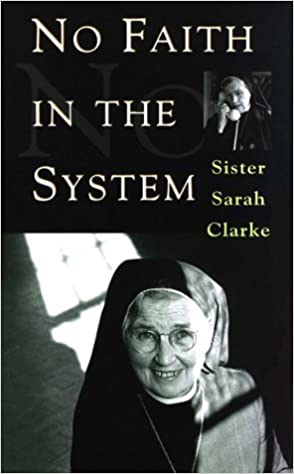
My review of Seeing Ourselves Women’s Self-Portraits Frances Borzello


First published in 1998 Frances Borzello’s “Seeing Ourselves Women’s Self Portraits” has never been out of print. And reading it I know why. It is not only very well written, it is a unique story of the history of women’s self portraiture which is demonstrated with 200 pictures as well as extensive notes and a bibliography.

Frances not only takes us through the history of self portraiture from the C16th and shows that  it is a genre in its own right,  but also that  through looking at the portraits we can understand the lives of the individual women and what it meant to be a woman artist in a man’s world.

Self portraits are popular  with all artists but Frances believes, and shows in this fascinating book, that women’s self portraits are quite different from that of their male equivalents. She asks the question; why have you chosen to look the way you do in your self portrait?

Often they were reflecting the struggles they had to go through to become an artist. It was not until the second half of the C19  that art schools allowed women to enrol.

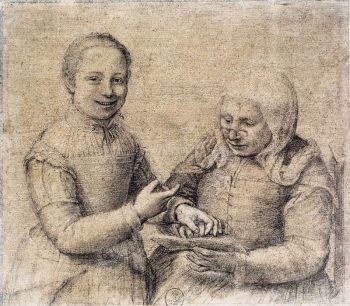
The story begins in the C16C when women artists appear in art  histories. One of my favourite images in the book is this  chalk sketch by Sofonisba Anguissola from 1545 when she was 13 years old. She grins out at us and points to her elderly companion who is looking at a book she is holding.


She was one of the lucky women of that era as she was able, with her sister, to go and work with artist Bernardino Campi to learn the principles of painting. She had a long and successful career.

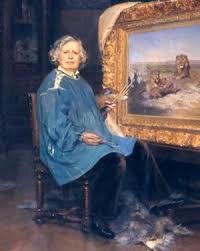
By the C19th not only are women pushing through the doors of art schools but they are asserting themselves as artists in their own right in their self portraits But they still had to  promote an image of respectability alongside their artistic ability. Frances gives the example of successful French artist Rosa Bonheur (see below) who ensured that she was never interviewed in the male clothes which she wore to paint in.


In the C20th  women artists no longer had to hide behind conventional views about their sex. As Frances comments; “As they set up their easels next to the men in the art classes, they began to feel – or at least some of them did – that they could put their concerns, their way of seeing things into their paintings without the disguise and defences of previous centuries.”

It was still not easy for many women as they challenged the views of the men they were close to and the men who were in positions of power in the art world.

Frances charts the highs and lows of some fascinating  women artists, many of them unknown to me, coupled with  fabulous examples of their work. In this book I came across the American artist and former communist  Alice Neel.  Her  life spanned the C20 and in her use of portraiture she reflected  her own activity in politics including the 1970s and the women’s movement.

In 1980, at the age of 80 she was confident enough to paint herself nude as an artist. I wanted to know more about her and found this documentary online https://www.aliceneelfilm.com/watch

Alice Neel

Reading this book is inspiring and is a reminder of how women artists in the past are role models for women today. As Frances reminds us:

“Expected to fit in with whatever contemporary notions of femininity held sway, they nonetheless managed to come up with striking images that boasted their talent, spoke of their beliefs and displayed their grasp of the standards of the day.”


Buy the book from women’s cooperative News from Nowhere here

Posted in Uncategorized | Tagged , , , , | 2 Comments

My review of Twyford Rising Land and Resistance Helen Beynon with Chris Gillham

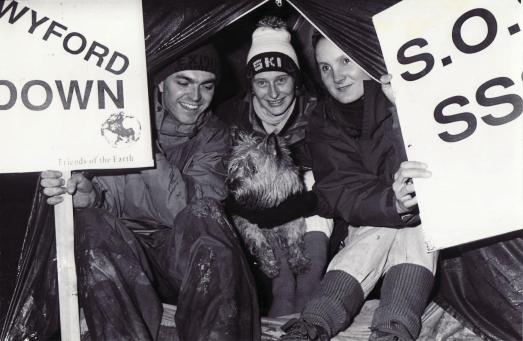
Twyford Down was  the birthplace of ecological direct action in the UK and environmental campaigns of today have been shaped by the events that took place there. In this new,  and inspiring history of the Twyford Rising,   it is the activists who tell their story through words, photographs and leaflets. It is the best kind of history.

As co-author and activist Helen Beynon says “”What happened at Twyford Down was one of many beginnings for an enviromental movement that now takes confidently to the streets on issues of climate change and the extinction of species. The  people who stopped the bulldozers there, who camped on the route of the road, who developed tactics for blockading and locking themselves to machinery, see the legacy of their actions now in a growing  chorus of voices demanding to be heard.”

Twyford Down is in southern England, near Winchester, which  was designated as part of the  area of South Downs Area of Outstanding Natural Beauty (AOOB). Much of it  was in the South Downs Natural Park,  recognising its unique landscape and wildlife.

Over the years successive governments refused to acknowledge this significant environmental landscape and put forward plans to extend the M3 through the Down to cut seven  minutes (!) off the journey from Southampton to London.

The government  rubbished campaigner’s alternative proposals including a tunnel under the hill or for improvements to the existing road. Instead they proposed a  drive a deep cutting through Twyford Down itself.

A Twyford Down Association was established In the 1980s to oppose these plans made up of local residents, local councillors and even members of the Conservative Party. It went down the legal road,  undertaking an expensve judicial review. But after four  public inquiries, endless lobbying and judicial reviews permission was given to build the road and  on  Monday 23 January 1992  work began on the M3 extension through Twyford Down and the Itchen water meadows.

Faced with the reality of the destruction of Twyford Down a former Conservative local councillor and TDA activist David Croker arranged a meeting with a new radical environmental group,  Earth First!

Earth First! is  the opposite of traditional political organising.  Originally started in the USA in the late 1980s it works through  small groups and is a network that takes direct action to oppose environmental destruction. It was a challenge to the more established environmental groups who were using political lobbying to change the policies of governments and international organisations.

One of the first actions by the TDA and Earth First!  was to try to stop the destruction of two railway bridges which  showed not only  what they were up against from the government  but  the different approaches by the two groups.

Both groups occupied the bridges but,  as  Jason, one of the Earth Firsters,  was attached to a crane by a D-lock, the crane carried on working. Chris, a local TDA activist, was horrified. “I remember begging several police to do something about protecting Jason from the movement and the diesel fumes, but met with a refusal that bordered on the callously amused. This was my first experience of the policing of Twyford Down.”

Political differences between the two groups continued as Friends of the Earth set up a camp but were not happy about the involvement of the Earth Firsters. Chris challenged FoE as he was concerned about what would happen once the major work by bulldozers started. He said “Robin told me not to worry, that when the bulldozers came in Jonathon Porrit (director of FoE) himself would be there, standing in front of them…but nobody was there from national FoE when the bulldozers trashed the Dongas of Twyford Down.”

From the beginning the proposed destruction of Twyford Down brought together people who had been involved with other campaigns,  including women from Greenham Common,  with  new activists, But as Chris comments in his protest “where Greenham centred on the protest itself, the Dongas camp centred on the land itself.”

Winchester College, the public school that owned the land, which was known as the “Dongas” named by a schoolmaster who recognised the erosion of the land as similar to that seen in Africa and known in Matabele as “dongas”.

The story of the protest at Twyford Down is told by the activists. Helen explains “I began Twyford Rising with dates and events gleaned from yellowing press cuttings and leaflets, from minutes of meetings, fragments in diaries and a chronology passed to me by Chris Gillham.”

It is a great example of how to preserve the history of a campaign. Helen got people to send her  their memories through emails and pieces of paper as well as  speaking to people on the phone or Skype. Included in the book are copies of leaflets used to promote the actions as well as some fantastic photographs and poems.

Central to the protest is how much people loved the land and the price they paid for that  in terms of serving jail sentences, and suffering  physical attacks and intimidation. Many of the activists went on to take part in other environmental campaigns, as well as working on the land, and  involvement in cooperatives.

Helen sums up the Twyford Rising:  “Twyford Down became a byword for environmental protest, for the strength of the connection that can be forged between people and place.I have been to meetings and gatherings since where I hear people tell others of what happened at Twyford Down, even though they have only read of it, or heard tell. It seems presumptuous in those moments to step in and say “I was there” and stake a claim on a legend.”


Buy it here https://www.octoberbooks.org/blog/twyford-rising-book


Posted in Uncategorized | Tagged , , | 4 Comments

The Spirit of the Irish in Britain Representation Group continues …..

IBRG as a functioning organisation did not exist after 2005.  Pat Reynolds did continue to be active in campaigns such as Christy McGrath and  put out statements from time to time in the name of IBRG. He continued both personally and politically to assert the rights of the Irish community in Britain to justice and equality and for the community to have a right to a say in the future of the island of Ireland.

IBRG members including Pat Reynolds, Maude Casey,  Jodie Clark, Harriet Grimsditch, Kevin Heyes,  Bernadette Hyland, Ann Rossiter and Laura Sullivan,   in England and Diarmuid Breatnach, Michael Kneafsey,   Joe  and Margaret Mullarkey, Maurice Moore and  Judy Peddle in Ireland  took their political activity into other organisations. This included political parties,  trade unions, history groups, community groups, anti-fascist work and refugee support amongst others. IBRG activists have never stopped!

Spirit of IBRG. Photo T.Shelly.

What follows here is a log of some of the activities that IBRG members particpated in.


2006

On 7th January the anti-Irish racist newspaper The Sun had a story ‘IRA song blast for 2 Celtic players”. According to the Sun propaganda sheet, two Celtic players had been slammed after being caught up in an IRA singsong.

The song they were singing according to the Sun was the Fields of Athenry, which  the Sun clained is an IRA song. In reality  the song has nothing to do with IRA but is about the Great Starvation of the Irish people, and which is sung at Irish international matches.

According to The Sun, campaigners and MSPs were calling on Celtic to launch a probe. An ignorant  Lib Dem MSP stated ‘the club should make it very clear to the players this behaviour is not acceptable, and should take internal disciplinary action.

A Celtic spokesperson stated ‘these suggestions are laughable and without foundation.’  IBRG members  condemned this repeated racism by the Sun and the Lib Dems and their ignorance of Irish culture.

Christy McGrath Campaign

On 17th January IBRG members attended a Christy McGrath planning meeting at Camden Irish centre. And on 28th January attended a successful Race Meeting at Finnegan’s Wake public house in London for the campaign.

On 11th March IBRG members attended an Irish Bookfair at the Hammersmith Irish centre and on 12th March staffed a Christy McGrath stall in Leicester Square for Christy McGrath, getting signatures, getting donations and giving out leaflets.

On 17th March Pat Reynolds spoke at a benefit/meeting at the Red Rose Club in Islington with John McDonnell MP on the Christy McGrath campaign.

In March Pat Reynolds was lobbying MPs by letter for Christy McGrath where 22 MPs had signed the Early Day Motion for Christy. In the end Pat wrote  to all 650 MPs in Britain on Christy’s case and to every TD and Senator in Dail Eireann.


Death of campaigner for justice for Gypsy and Traveller communities

In March IBRG members  expressed their sorrow at the death of Patrick Delaney aged 49, who died early. He had been a fearless campaigner for justice for the Gypsy and Traveller communities in Britain after the brutal racist murder of his 15-year-old son in Liverpool.

The racial killing of this Irish teenage Irish Traveller had similar features to the death of Stephen Lawrence in South London. He was murdered by two 16 years boys who stated after the murder ‘he deserved it, he’s only a fucking Gippo’ after they had kicked and stamped him to death. Despite the killers clearly shouting racist abuse, the Judge in the case at Chester decided that the attack was not racist. What would this ex public schoolboy know about racism to Irish Travellers?

Again, the IBRG saw British justice at work where the two killers were only given four years for manslaughter rather than murder and would be out in two years. The value of an Irish Travellers life in Britain was very low. There were over 50,000 Gypsy and Traveller children in Britain, who every day face racist abuse and discrimination in services and provision, and vile racism in the British media mainly in the Tabloids. Young Johnny Delaney was murdered because he was an Irish Traveller child with an Irish accent.

The Cheshire Police had recorded the murder as a racially motivated incident, under the definition given by the Lawrence inquiry because of the comments made at the time of the murder. The Liverpool Irish Community Care centre had supported the family. The deceased father was co-chair of the Pride not Prejudice, an annual conference involving Travellers the Criminal Justice agencies.

On 4th April an alleged British spy who worked for Sinn Fein was shot dead in Donegal.

On 13th April IBRG members  attended a Christy McGrath meeting at the Camden Irish Centre.

On 6th May IBRG members  attended the James Connolly/ Bobby Sands rally at the Camden Irish centre on the 90th anniversary of 1916 an the 25th anniversary of the Hunger strikes.

Irish make vote count in London local elections

On 8th May the IBRG put out a statement, Irish make vote count in local elections in London on 4th May. In Southwark the IBRG supported an Irishman who had won his case with the Local Government Ombudsman against Southwark Council, in challenging the then Liberal controlling party in Southwark. The IBRG supported the printing of a leaflet to be given out in marginal wards where the Liberals were standing. The liberals lost the election and the Liberal Leader lost his seat.

In Islington the Irish turned out in great numbers to hammer the Liberals for taking away their community centre. The Liberals  lost power in Islington and the Irish had their revenge. In Haringey the Irish again refused to vote Liberal, because of what the Liberals did in Islington and the Irish felt their community centre in Haringey would be lost if the Liberals won. The Irish vote ensured Labour held on by one seat in Haringey. Thus, the Liberal Party, had they shown some respect for the Irish community, could have won three more local authorities in London. The price of racism was costly for the Liberals.


On 4th June the IBRG challenged the History Channel on its showing of the Burning of Bridget Cleary in 1859 in Ireland, in which the History Channel described the incident as the murder trial, in which the superstitions of old Ireland, were pitted against the modern rationalism of the British authorities, and was a pivotal moment in Irish history.

The IBRG in response stated ‘while the trial of Bridget  Cleary was used by the then British regime in Ireland as an argument against self-rule for the Irish at the time, it is hard to believe that they now bring out the same old propaganda.

It was stated by the IBRG ’the modern rationalism of the British regime in Ireland that created wholesale Genocide against the Irish people during the Great Starvation, when the potato crop was less than 25% of the total agricultural produce of Ireland, and they using the military stole all the grain and cattle of the Irish people. For Irish people the Great Starvation was the pivotal moment of Irish history and not one isolated murder. The ordinary people of Ireland had far more rationality and dignity than the whole rotten combined imperial arrogance put together. This is not history but the same old reworking of the ’white man’s burden’ and it is time it was buried along with the rest of the rotten to the core British imperialism.

On 2nd July the IBRG had a bookstall at the Southwark Irish festival.


2007.

On 7th February Pat Reynolds had a long interview with RTE TV on the Christy McGrath case which was later shown on RTE TV on Prime Time on 1st March.

On 17th March IBRG members marched with their banner on the St Patrick’s day Parade in London. The Parade organisers tried to ban IBRG from marching, and asked the Chief Police officer there, if he had heard of IBRG, he replied that he knew everything about the IBRG. It appeared the Parade organisers were vetting who could march on the Parade or not.

On 30th April the IBRG publicly condemned the arrest of an Irishman in a rape case because of a DNA mix up Again, like the case of Kevin Reynolds, the case raised concerns in the community as the Irishman did not fit the description or age of the suspect and had a medical condition. The IBRG further condemned the searching of his house.

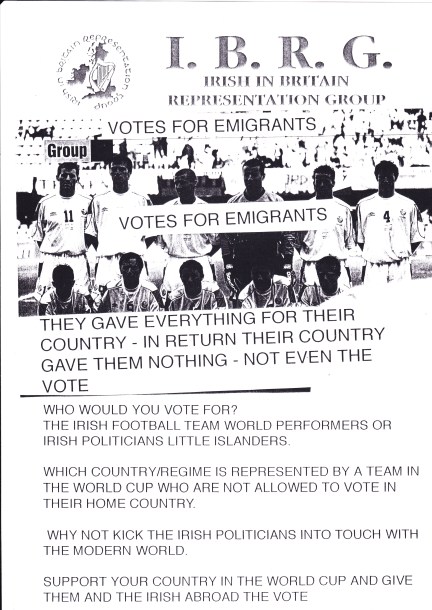
On 2nd May Senator Mary White wrote a letter to the Irish Times stating that the Irish abroad should be allowed either vote in Irish elections, and drew attention to the ease in which French citizens abroad were allowed to vote. She stated that the argument that Irish citizens living abroad ‘should have no say in the country’s future seems churlish at best’.

A new campaigning group Progressing Prisoners Maintaining Innocence (PPMI) had been set up in London made up of prison chaplains, support groups, prison lawyers, journalist  and academics to assist prisoners, who maintain their innocence to progress through the prison system.

Their leaflet showed two cases the IBRG had helped Frank Johnson and Susan May. There had been a new European court ruling in 2002 that every prisoner was entitled to an oral hearing at tariff expiry, when the Parole Board considers release and its risk. Up to ten prisoners claiming innocence where not presented to the Parole board and just rotted in Prison. Frank Johnson was one such case  where he spent seven long years in prison over his tariff, all because he claimed rightfully his innocence. The chair of the group was Bruce Kent.

On 1st July the IBRG had a bookstall at the Southwark Irish Festival and on 27th August had a bookstall again at the Crawley Irish Festival.

On 12th September the papers reported on a village magazine editor in Cornwall who had to resign after using the magazine for anti-Irish jokes portraying Irish people as stupid in a very racist fashion.

On 15th September the Irish Post reported that the Camden Irish Centre had to pay out £50,000 to the first female Director of the centre, after she had suffered a sustained campaign of sex discrimination and bullying. All previous directors had been male priests. Margaret Murnane had successfully sued the centre for sex discrimination and unfair dismissal. Senior people at the centre could not accept that there was now a woman in charge of the centre which was heavily funded by the Irish government.

2008

Kevin Reynolds seeks and wins justice

On 22nd February Mark Dixie was convicted of the murder of Sally Ann Bowman which allowed Kevin Reynolds to progress his case. On 5th March Kevin Reynold’s story was in Private Eye and what happened to him over his unlawful arrest in 2005, and how  serious questions were now being asked as to why he was ever arrested given the police already had his DNA.

Kevin had an interview with BBC London on 26th March and Lynne Featherstone local Liberal MP was due to be interviewed as well, but pulled out at the last moment.

On 8th April the BBC had a programme on the Sally Ann Bowman case. Kevin could now put in his complaint over his arrest to the Independent Police Complaints Commission where there was only a 2% chance of any success, but it allowed the family to challenge the Met Police for their unlawful arrest and search.

Kevin Reynolds forced the Metropolitan Police  to delete his DNA and finger prints from their records for the second time, the only man in Britain to have his DNA taken off the system twice.

On 6th July the IBRG had a bookstall at Southwark Irish Festival.


Death of Frank Johnson

On 24th October Frank Johnson who spent 27 years in prison   for a crime he did not do, died an early death. Frank should have been released after 18 year of  his tariff. The Judge at his Appeal asked why he was not released after he had served his sentence.  The judge was told the truth, the reason why he was not released was because he was an innocent man, and the system will not look at any prisoner who claims innocence.

Most of the Irish papers covered his death, The Irish Post, the Irish World, Irish Times and The Nationalist. Pat Reynolds was interviewed by Tipp FM radio about his death, and called for a change in the system where innocent prisoners should not be further penalised, if they are in prison at the end of their tariff.

A number of IBRG members including Pat Reynolds, Chair of his campaign, attended Frank’s funeral in Leyton on 7th November where Gareth Pierce and Billy Power attended with many others from the Irish community.


On 11th November three men were found guilty of the murder of Baby P(Peter) an Irish child in Haringey who had been murdered by his mother’s partner. On 1st December George Meehan, the Donegal Leader of Haringey Council, had to resign over the death of Baby P while the Irish Director of Children Services Sharon Shoesmith was sacked.

The end of the year’s release of public documents showed that Queen Elizabeth’s dislike of the Irish caused anxiety among British foreign office officials, examining the possibility of a state visit by the Irish President Dr Patrick Hillary. A British civil servant wrote ‘I wonder whether in the light of the queens’ alleged dislike of the Irish’ but the details of the Queen’s dislike of the Irish were missing. The proposed visit was put off until Mary Robinson came to London.

2009.

Death of Brendan MacLua;  founder and editor of Irish Post

On 13th January Brendan MacLua founder and former editor of the Irish Post died. He had set up the Irish Post in 1970 and in the late 1980’s sold it on to Smurfit, when it moved sharply to the right of centre, and away from the grass roots of the Irish community, thus losing much of its readership.

There was an EDM Early Day Motion in the House of Commons on 28th January signed by 29 MPs. He was supportive of IBRG in the early years but the claim in the American Irish Central newspaper  that he had helped found IBRG was wrong, as he was equally supportive of the other two groups which formed around the same time, the Irish National Council and the Irish Interest Group, and was always supportive of the Federation of Irish Societies.

Speaking of it later he stated I preferred a two-horse race and the Federation was a one Embassy sponsored Irish horse. He had hoped that the appearance of the IBRG would put the Federation on to do things. Sadly, despite massive Embassy support they failed to ever raise their game. This was largely due to their struggle making up the hierarchy of mainly Irish social clubs in Britain, who were limited in their capacity apart from running social clubs.

The Irish Post occupied a unique spot at the heart of the Irish community until the Irish World was set up in the mid 1980’s which provided a good two horse race in itself.  The claim in many areas that the Irish Post had campaigned for the Birmingham Six and Guildford Four was wrong, as part from reporting doubts at the time of the convictions, the Irish Post did little to raise the case until the IBRG came along. Very few people in the Irish community were even aware of the Birmingham Six and the Guildford Four in 1981.

On 14th April the British press revealed that fourteen staff were suspended In Lancashire for circulating an anti-Semitic joke on email.  The Council leader stated Investigations of this nature may result disciplinary action, or in some cases termination of employment. I am sure you will understand the need for us to adopt a stringent approach to this issue’.

On the same day another headline in the Daily Mail read Senior council worker disciplined for sending racist Irish joke email.  This was in Sheffield where their staff member sent it to a councillor who was second generation Irish who challenged it. The email had been sent far and wide in Sheffield.  According to the Mail the council officer was being ‘disciplined for having a sense of humour.

 The contrast between Lancashire and Sheffield is striking and also how the Mail treated both stories. In Lancashire the story was treated with great seriousness, and taken seriously with the leader of the council involved, and 14 people suspended, and the comments in the papers were all supportive. In Sheffield it was left up to the individual Irish councillor to complain, and only one member of staff was disciplined, and the Mail treated it as non-racist when it clearly was racist. All the comments from the public were also anti Irish.

In Britain this showed that there was an acceptance of anti-Irish racist jokes and behaviour which was condemned with other communities. There was however much anti-Semitism in the British press and much anti-Black racism and anti-Muslim hatred which was often sponsored by the tabloids.

On 5th July the IBRG had a bookstall at Southwark Irish festival.

Beresford Ellis takes on distorted Irish history book

On 13th August Peter Beresford Ellis debunked the book The Irish in Post War Britain by Enda Delaney. He tokk  Mr Delaney to task over his denial  of the existence of the “No Irish No Blacks No Dogs” signs. Of interest here is that a Professor in the USA claimed the same things over the “No Irish Need Apply” in the USA, and went unchallenged for several years, until a young  student found compelling information  in a variety of newspapers at the time.

Delaney represents a revisionist brand of Irish historians. In the book there is no mention of the Connolly Association and its work in the Irish community in Britain for several decades nor of the IBRG, Ellis states that there is ‘no mention of the Irish in Britain Representation group founded in 1981, which was certainly one of the strongest and the most active groups among the Irish emigrant population. It was founded to promote a more positive Irish identity, fight anti Irish racism and seeks more representation for the Irish community’.  Neither are the Irish Post and the Irish World mentioned. Ellis endsed his review by stating the history of the Irish in Britain still  needs to be written corrctly .  There were of course the two related histories  by  T.A. Jackson and  John Denvir but nothing on the modern history post war.

On 15th October IBRG members attended the First Brendan MacLua Memorial lecture given by Dr Martin Manseragh TD whospoke  on the Peace Process from 1987-2009.

On 21st October it was revealed in the Irish Times that the Irish Embassy in London had spent over £250,000 on taxi and limousines in the past two years which was absolutely shocking, with Leo Varadkar describing it as clear evidence of squander. It was he said ‘further evidence that the Government were squandering millions during the boom, and were spending more for less’. The IBRG condemned this waste of the Irish taxpayer’s money when the community in Britain and at home were struggling to make ends meet.

In Scotland it was reported that a former Loyalist hitman stabbed a man after being called an Irish p….. and later admitted the stabbing in court. Meanwhile Rangers had offered 1.200 British soldiers a free entry to a Rangers match where they were photographed showing scarves, with Orange feet on the Garvaghy road. Along with an assortment of UDR banners. This bigotry in the   army of anti-Catholic and anti-Irish sentiment was shocking.

2010.

On 20th February Martin Doyle interviewed Seamus Taylor   in a two-page spread in the Irish Post. Seamus who had started his career as social worker at the Camden Irish Centre for three years from 1984-1987, and set up Action Group for Irish youth.

Seamus later headed up the Haringey Irish Liaison Unit from 1987 – 2001, where he pioneered a number of reports on the Irish community, including one on Irish elders and discrimination from 2001-2004.  He worked as Head of Public policy for the CRE and then from 2004-2009 worked Director of Diversity at the Crown Prosecution Service (CPS) and from 2009 went to lecture at Maynooth University.

Seamus led the main campaign to get the CRE to recognise the Irish, where  the IBRG joined the Irish Equalities Group. Seamus was a bridgehead between the more radical end of the Irish community and projects across to the more conservative and insular federation and Church based welfare centres.


Sinn Fein – Lack of Unity Conference

On 27th February the Irish Post had an article Irish community in Britain must increase its influence which was a report on a Sinn Fein held conference on Irish Unity held in London which drew over 100 people. Lord Alf Dubs and Jeremy Corbyn MP spoke at the meeting and Pat Doherty for Sinn Fein.

The Conference had ignored key speakers from the Irish community like Angela Birthill, Bernadette Hyland, Mary Mason, Pat Reynolds and others who had campaigned in Britain for over 40 years and ended up with the Federation, Irish Counties Association and an unknown trade union speaker.

The meeting noted that at the 2001 census there were 642,000 people living in Britain who identified as being Irish, yet it was felt the Irish had no political power in Britain in terms of political representation.

It was pointed out that the Unionists made up only 2% of the population of the UK whereas in Ireland they would represent 20% of the people in a United Ireland. The heyday of Irish political influence in Britain in recent times was in the period 1982-1997 when the IBRG along with Livingstone and other radical groups, TOM, LCI and the Irish workers groups, PTA groups, prisoners’ campaigns, and Irish Women’s groups were fighting back against the PTA, fighting to free all the framed prisoners, fighting for equality and equal rights, for ethnic recognition, for language rights and much more.

Sadly, what was left now was Dublin politically funded right of centre groups who lacked the ability to give any leadership or direction to the community. The earlier call years ago by the Irish in Britain Parliamentary group for an annual Irish conference of the Irish in Britain was abandoned because it did not suit the powers that be. The Federation have yet to organise a community country wide conference of any kind, to address any of the issues affecting the Irish community. Much that had been pioneered by Ken Livingstone with his consultative conference who set markers for the Irish community, followed up by several education and welfare conference by the IBRG highlighted at each stage, where the community was at.

Now we have a conference organised by those who know nothing about the Irish community in Britain, and who have yet to make clear its policy of giving the vote to the Irish abroad in all Dail elections.


On 6th May there was a General Election in the UK after which the Tories and the Liberals formed a Coalition government which was to bring in 10 years of austerity. There was an immediate pay freeze for two years on benefits and in the public sector wages.

On 15th June the Saville report into Bloody Sunday came out with a fresh verdict on the events of that massacre in Derry.

On 1st July Kevin Reynolds a second-generation Irishman from North London won a case against Tory Kent Council over maladministration where they were forced to apologise to him and offer him compensation.

2011.

On 15th January the Irish Post reported that the Hanratty family had called for the case to be reviewed by CCRC a position the IBRG supported. The Appeal hearing some years ago ruled that the Hanratty was guilty beyond doubt, which was total nonsense as over 20 witnesses placed him in North Wales over 200 miles away at the time of the murder.

The Appeal Court relied too much on contaminated DNA evidence as all the exhibits in the case were lost for several years and not secured. The IBRG was always disappointed that Cardinal Hume who visited Hanratty for half an hour before he was hanged maintained his silence in the case, and could not be bothered over the hanging on an innocent Irish man, but Hume was a loyal servant of the English Crown as he showed during the Hunger strikers.

On 25th February there was a General Election in Ireland with Enda Kenny of Fine Gael as the new Taoiseach.

On 13th March IBRG  members attended the St Patricks Day Parade in London

On 26th March IBRG members joined the TUC sponsored one a half million marchers in the TUC march for jobs and against austerity.

On 6th May the SNP won the election Scotland and the same day on which the British public voted against an alternative vote system which the Liberals had put forward. Only one constituency in Britain voted for it, Hornsey Wood Green where Pat Reynolds lived.

On 17th May the English Queen visited Ireland the scene of many atrocities organised by her predecessors including the Starvation of Ireland.

On 22nd July a fascist murdered 91 young people in Norway one of the worst individual attacks in history but because it was done by the right rather than any nationalist group the media played down its impact and the growth of the far right.  There were no anti-terror laws brought in against the right, these were reserved for the Irish and ex colonial minorities.

Murder of Mark Duggan

Early in August a young Black Irishman, Mark Duggan was killed by the police in a hard street stop in Tottenham. The man who ordered the hard stop was Stuart Cundy who in 2005 had ordered the unlawful arrest of Kevin Reynolds and the ransacking of his father’s house for two days.  Serious rioting took place in Tottenham following the police killing which led to rioting all over the country.

On 9th September Pat Reynolds attended the funeral of Mark Duggan in Wood Green and expressed the sorrow of the Irish community to his Irish mother at the funeral.  He was later buried locally in Wood Green.

On 19th October the Irish Post was back on sale after finding a new buyer after the Cork Examiner group had closed it down. There had been a campaign in the Irish community to get the Irish Post back for the community. On 22nd October the Irish Post published the list of MPs who supported the campaign to bring back the Irish Post. Some 75 MPs signed the EDM. Again, Kate Hoey whom Maclua supported so much, stuck to her Unionist credentials and did not sign it.

On 20th October Ghaddafi the Leader of Libya was murdered in a West inspired war that destroyed the country.

On 27th October Michael D Higgins Labour was selected the new President of Ireland and he went on to serve two terms. He was a good friend of the Irish community in Britain and had been over to Haringey to speak about his Channel Four programme on the Irish in Monserrat.


Manchester Irish Community Care gives dignity back to Irish

On 26th November the Irish Post reported Forgotten Irish saved from paupers’ graves which showed that Manchester Irish Community care had helped to give some seventy Irish people who died without any know relatives a dignified burial. A further 14 were repatriated on death back for burial in Ireland.  The story and issue should have been in every national paper in Britain and Ireland if this had been any other community in Britain, yet again the Irish government, the church and others keep this quiet how many in our community die lonely isolated deaths without anybody.

In December   a book written by Tommy Walsh of Liverpool on Being Irish in Liverpool was brought out after he had died. It had a chapter on the Federation of Irish Societies of which he was a member.

Biography by Tommy Walsh.

In his politics Tommy was far closer to IBRG than the non-political Federation and he was supportive of the miscarriages of justice and of prisoners and fought against the Prevention of Terrorism Act. Tommy spoke at several IBRG conferences in Manchester and was interviewed for an pobal eirithe (IBRG magazine) in issue number 4. He was close to Brendan MacLua of the Irish Post.


2012.

On 3rd January two men were found guilty at long last of the murder of Black youth Stephen Lawrence. The failure of the police in the early investigation led to allegations of corruption and racism and the murders were allowed to run free, despite evidence coming in from the community.

On 21st January the Irish Post   had a story Sally Mulready appointment is recognition of the Irish Diaspora when Michel D Higgins appointed her to the Council of State the first-time person from abroad had been appointed.

The only problem with it, while it is  an honour for the individual concerned, it made no difference whatsoever to the lives of Irish people in Britain, as there was no feedback mechanism, and the person chosen was hostile to the Irish in Britain having a vote in Dail Eireann elections.

It was a token appointment with no feedback whatsoever to the Irish abroad, and no way for the Irish abroad to have any input whatsoever to the role of the Irish President.

On 24th January Gerry Lawless died. He was a former Sunday World journalist and a former Labour councillor in Hackney and a former member of International Marxist Group, but was not active in the Irish community.

In November the IBRG challenged the anti papist torchlight parade through Lewes with burning crosses like something from a Klu Klux Clan gathering the town had a big banner No Popery across its street. To the local Irish communities in South East England, it was a vile sectarian racist parade which was clearly anti Catholic and was an incitement to hatred of Catholics and the Irish who were perceived as all catholic.

In 2012 the Irish Government were to politically fund the Federation of Irish Societies to the tune of £475,000, for which the Irish community saw nothing, not even one Irish conference held in Britain, not even one open day.

Likewise, the Irish Chaplaincy was funded to the tune of £225,800 again with the Irish community have no access to any consultation or representation.

The London Irish Centre also got £448,500 and again they offered the Irish community very little by way of any conference or consultation. The Irish community saw nothing for the money spent and there was no accountability to the community.


2013

Irish on Blacklist

On 2nd March the Irish Post highlighted story Blacklist probe into alleged police collusion where thousands of building workers had been blacklisted over the previous 30 years including many Irish workers. The Consulting Association had a list of over 3,200 people that they had blacklisted and shared this information with building contractors. It was believed that the Special demonstrations Squad shared information with this company, the man leading the company stated that there was a two-way exchange of information between the company and the police for many years.

Bernadette Hyland interviewed Blacklist campaigner Steve Acheson for the Morning Star newspaper read it here

Earlier in February over 100 construction workers picketed the Crossrail project alleged that the Company were blacklisters and getting rid of workers, who were raising health and safety issues. John McDonnell MP had called for an independent inquiry into organised victimisation of workers by British companies the most common names on the blacklist were, some 20 named Kelly, 16 named Gallagher, 15 called Murphy, and 59 with names beginning with an O, which showed the number of Irish workers had been victimised. The list was discovered in 2009 after a raid on the company by the Data Commissioner.


Plaque to Jack Kennedy

On 16th March IBRG members attended the opening of a plaque to Tipperary man Jack Kennedy opposite the Arsenal stadium at which Jeremy Corbyn MP and Pat Reynolds spoke. Jack had been part of the Birmingham Six Campaign  and Frank Johnson campaigns plus the Construction Safety campaign

In April the former British Prime Minister Margaret Thatcher died and was buried and did not rise again.  She was remembered for the brutal war in the Malvinas and the war crime sinking of the Belgrano which it was returning home, her refusal to defuse the Irish 1981 hunger strikes, and her brutal unemployment policies of the 1980’s which left millions unemployed.

Over 30,000 people including many Irish people attended a Trafalgar Square celebration wake for Thatcher and on the day of her funeral protested outside the Royal Courts of Justice, turning their backs on the military funeral given her persecution of Republican funerals in Ireland. Her funeral cost over £10 million.

On 22nd May a British soldier was killed in Woolwich   South London in a street terror attack which shocked the British public.

In June Ruari O Bradiagh of Republican Sinn Fein died after a lifetime of voluntary activities and former Sinn Fein President before he split with Gerry Adams and Sinn Fein over going into Dail Eireann.


Success of Pat Reynolds against Haringey Council

In June Haringey Council settled an Employment tribunal claim in full brought by Pat Reynolds which included a claim of £10,000   for racial discrimination and back pay of £13,000.

Haringey Council had wrongly claimed that Pat Reynolds had historical links with the INLA, and reported him to the then professional body the old Social Work Council. This allegation was false and showed what Irish workers had to put up with in Britain with hidden records held against them. Pat only discovered the claim when he requested his data file off the Social Work Council.

It would appear that Haringey lifted the material from a Google search of the internet, and linked the murder of Garda Patrick Reynolds a distant cousin of the family by the INLA in Dublin back in 1982 in Tallaght Dublin.

Pat Reynolds had served as an Irish community representative on Haringey Ethnic Minorities Committee for over 15 years, and even had been awarded anti-racist award for his cross communities work in Haringey where back in 1989, he led a Black Irish march for Civil Rights and Justice, and led the campaign to support Bernie Grant to become MP in 1987. The Bernie Grant Centre in Haringey recorded Pat Reynolds tribute to Bernie Grant’s life work along with other tributes including one form Tony Blair on its website.

Pat was also a long-term member of Haringey Fostering and Adoption Panel. He  had worked as a Manager in Haringey Children and Families team, with a case responsibility for over 120 young people in care, including working with gangs in the borough to make Haringey a safer place to live.

His case highlights what often happened to Irish workers in Britain where secret records often false were held against them, in secret files and passed on to professionals and in this case the registration body.

Despite the war being over in Ireland 15 years ago the British state and its agents were still discriminating  against Irish people in Britain who stood up for their rights and the rights of their community.

Federation of Irish Societies attempts to become Irish in Britain

In June the Irish Post reported that the Federation of Irish Societies were rebranding themselves as the Irish in Britain. One might think that they should have consulted with the real Irish in Britain Representation Group on the issue. It was as if they were trying to steal all the excellent work done by the IBRG over the past 30 years and claim it as their own. Perhaps they were learning after 30 years finding out how the Irish community viewed themselves “In Britain” but not British.

The claim of the Federation now that they were the sole representative’s body of the Irish community in Britain was clear nonsense as the organisation was not open to the Irish community, nor was it accessible. They have failed for over 40 years to hold even one consultative conference with the Irish community or allow that community to have any voice. They are mainly made up of the hierarchy of the Irish social clubs in Britain mainly bars, and cannot say they represent any community.


Death of Seamus Heaney

In August the Nobel winner Seamus Heaney the Irish poet died. People will remember him for his poem ‘no glass of mine was ever raised to toast an English Queen’ when the British tried to claim him as British after he won the Nobel prize.

In September an Irish Innocence Project was set up in Ireland and the IBRG wrote to them offering them support and asking whether they would take on Irish cases in Britain.

On 10th September IBRG members attended the House of Commons for a public meeting on the Ballymurphy Massacre and to hear relatives speak of the brutal murders caried out by Crown faces in Belfast in the early 1970’s.

IBRG challenge Citizens Assembly and voting rights for Irish

On 11th September IBRG members attended a public meeting in London where Tom Arnold Chair of the Citizens Assembly in Ireland on the Vote for emigrants was speaking. Pat Reynolds challenged the Chair over the brief given to him and the Assembly to restrict any discussion of the vote for emigrants to just a token vote for the Irish president.

The exercise was a mechanism for blocking the Irish abroad from getting the vote in Dail Eireann and should be referred back to the Irish government for a broader reference to include votes for Dail Eireann election, so the People assembly could make a proper decision on the issue

On 19th September the IBRG put in a detailed submission to the People’s Assembly in Ireland calling for the Irish to be given the vote in Dail Eireann.

Martin Foran still trying to clear his name

On 19th October the Irish Post carried the story of Limerick man Martin Foran a case the IBRG had supported years ago. Martin while out of prison was still trying to clear his good name after he was wrongly convicted in 1985. Marin was one of many ordinary Irishmen in Britain who were routinely wrongly convicted because of racism discrimination and because of their class.

On 2nd November the Irish Post ran a story Author’s living history CD highlights shameful lack of emigration museum.  Historian Ultan Cowley and author of The Men who built Britain: A History of the Irish Navvy (2001) lamented the lack of an emigration museum in Britain detailing the lives of Irish people in Britain.

On 5th December the great man Mandela leader of the South African freedom movement and the ANC and first Black South African leader died. IBRG members were part of the anti-apartheid movement in Britain throughout the 1980’s and marched in London for an end to apartheid. Parties in London by South African exiles always had a number of Irish people attended, and their parties were similar to Irish parties with house singing and the playing of musical instruments, and where Irish songs of resistance were welcomed. A popular poster at the time was of Ireland/ South Africa One struggle.

Haringey IBRG had put on an exhibition linking the Irish struggle with South Africa which incurred the hatred of the Tories and the racist tabloids. Pat Reynolds recalled how in the million strong anti apartheid march in London, where the IBRG banner was bringing up the rear and was leaving Finsbury Park when the first of the march was reached Hyde Park.

2014.

On 11th January IBRG members attended the Vigil outside of Tottenham police station on the Mark Duggan killing by the police.

On 14th March Tony Benn died. Tony was a wonderful supporter of Irish freedom and independence over many years, and often spoke at the Bloody Sunday rallies.  He had intervened in the Kate Magee case and the McNulty’s by ringing up the governors of Durham and Belmarsh Prison to ensure that they got their rights.

On 16th March IBRG members attended the St Patrick’s day Parade in London.

On 24th March IBRG members attended Bob Crow, leader of the RMT’s funeral in East London,where the streets were lined with people there to remember his life.

On 27th March IBRG members attended Tony Benn’s funeral service at Westminster which Martin McGuiness and Gerry Adams attended.

In March IBRG members attended the Stand up to Racism and Fascism rally in London which drew 7,000 people. Austin Harney was also there with others protesting at current politics in Britain which were anti-immigrant. Later Diana Abbott MP addressed the rally.

On 7th April President Higgins was in London to meet the English Queen.

MacLua’s collection donated to Liverpool University
On 17th May the Irish Post ran a story MacLua library starts a fresh chapter in Irish Studies, which stated that a new Library of over 6,000 books had been opened at Liverpool University, to which the Maclua family had donated a full archive of the Irish Post which had belonged to Brendan Maclua, and which had every Irish Post from its beginning in 1970 to Brendan’s death. There is a second archive at the Metropolitan

Victor Nealson case
On 31st May the Irish Post covered the story of a Dublin man Victor Nealson who spent over 17 years in prison for a crime he did not commit. The former postman had his case turned down twice by the CCRC before he had his conviction quashed. It was based on the same issue as happened with Frank Johnson, where the police again withheld information, that would have led to his release. The CCRC also made big mistakes in his case for which they apologised. Again, like Frank Johnson he was denied release because he continued to assert his innocence, and was further punished.

Death of Gerry Conlon

Gerry Conlon and sisters.

On 21st June Gerry Conlon of the Guildford Died at a young age. On 12th July Alex McDonnell had a letter in the Irish Post detailing the campaign to free the Guildford Four, and praised the work of Theresa Smalley, Paul Hills aunt and her partner Errol Smalley, along with St Sarah Clarke and the IBRG, and to Ken Livingstone and John McDonnell. The campaign to free the Guildford Four was based at the IBRG founded Irish in Islington centre and led by IBRG member Tom Barron. Jeremy Corbyn also gave his full support and attended Paul Hill’s wedding in prison.

On 3rd July Pat Reynolds and other IBRG members picketed the Irish Embassy in London over the Tuam babies’ scandal to give support to their campaign.

On 21st August Albert Reynolds the former Irish Taoiseach died in Ireland and was given a State Funeral. He was a second cousin to the father of Pat Reynolds.

On 12th September Ian Paisley died in N. Ireland.

On 18th October IBRG members joined the TUC march for decent wages in London.

On 10th December IBRG members joined the picket of the Irish Embassy over the Water Charges in Ireland and late the same day attended a picket of 10 Downing St over the Historical cases. There was a street exhibition of many of the shoes worn by the victims of British murders in Ireland, which attracted much attention from Londoners and tourists from little children shoes to those of Irish elders who had lost their lives. That evening

IBRG members attended a meeting at the House of Commons on the Historical cases calling for justice for all.

2015

Picket of Channel 4 over “comedy” on Great Starvation in Ireland
On 17th January IBRG members took part in a picket of Channel 4 over their proposed comedy on the great Starvation of Ireland. Pat Reynolds spoke at the picket. Graham Linehan of Fr Ted had a go at the protesters in an ignorant way.

John Ryan a stand-up comedian in a more balanced view stated ‘if they are making a programme based on the Potato Blight and the policy of Famine, and thereby using comedy to raise awareness of an appalling act of genocide, and dark period of Irish history then good luck to them’, adding, ‘However I fear a romp along the lines of Fr Ted and Mrs Brown and fiddley dee dee let’s mock the Irish. Will the Irish habit of ridiculing ourselves along the stereotypical lines that are always churned out ever end? I do not recall any Jewish comedy set in the gas chambers nor Black comedy on the slave ships. But maybe they don’t have our humour, or maybe they have more respect for their history’.

On 20th January Pat Reynolds attended the funeral of Mike Marqusee who was part of the leadership of the anti-war coalition. Pat had known Mike for several years from various political events. Jeremy Corbyn MP was speaking at his funeral. The contributions made at his funereal went towards Medical Aid for Palestinians.

On 19th February there was a debate at the Comedy Club on the Channel Four and the Great Starvation where Pat Reynolds spoke from the floor on anti-Irish racism in Britain.

On 15th March IBRG took part in the St Patricks day parade in London.

On 22nd April IBRG members attended a lecture given by Geoff Bell on 1916 and the Irish d to deliver on his promise of a vote on Europe. Miliband the Labour Leader resigned.

In Manchester Bernadette Hyland published “Northern ReSisters Conversations with Radical Women”. The book reflected on Bernadette’s own history including her involvement in IBRG as well as a trade unionist. It contained interviews with Bernadette McAliskey and other northern women activists.
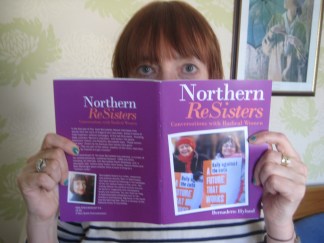
Northern ReSisters


“Struggles for a past: Irish and Afro-Caribbean histories in England, 1951-2000” by Kevin Myers was published.  Kevin interviewed Bernadette Hyland for the book and used the Irish Collection at the Working Class Movement Library in Salford.

Another book The Irish in the Troubles in London included material on the IBRG but was revisionist in outlook in trying to play down the role of the Prevention of Terrorism Act without any evidence for this.

Ruan O’Donnell’s  book on IRA prisoners in Britain included some material on the IBRG.In 1998 he had taken part in Manchester IBRG’s conference on celebrating 1798.

On 20th June the Irish Post had an article entitled “Dromey I will ensure that the voice of the Irish is always heard’. The only problem is that the Irish community could not recall Jack Dromey doing anything for Irish people at any stage of his political career. He claimed in his article ‘I will be the champion of the cause of Ireland’ which again no one in the community could recall him ever doing anything for Ireland or its cause.

When the election came up years ago for the Secretary of the T&GWU  the IBRG advised Irish people to vote for Bill Morris , rather than Jack Dromey.

Bill Morris helped several Irish workers who were injured whilst  working in Britain. Bill Morris was generous in his approach to helping injured Irish workers, who were forced onto the lump system in Britain, and in one case which Pat Reynolds supported, Bill accepted the Irish worker’s previous membership of union in Ireland, as evidence that the Irish workers would have joined a union in Britain if given the chance, and were entitled to support from their trade union brothers and sisters.

On 12th September Jeremy Corbyn, former member of IBRG, got elected a leader of the British Labour Party. The IBRG had supported Corbyn’s election as MP back in 1983. He had supported the local Irish community, and was also strong on support for a United Ireland, and was involved in supporting many of the miscarriages of justice like the Guildford Four and others.

The IBRG put out a statement welcoming the election of Corbyn, and noted that the Blairite Labour Party has now lost two elections in 2010 and 2015 despite the worst austerity programme in Europe imposed by the right-wing Tory government. The IBRG noted that Scotland had gone SNP and would never come back to Labour. The IBRG also pointed out that Labour would never regain power in Britain with loss of Scotland without a system of PR. The IBRG noted that many members of the Irish community had paid the £3 fee to join Labour to vote for Corbyn.

IBRG application to join Undercover Inquiry

On 17th September the IBRG applied for status in the Undercover Inquiry set up in Britain to look into how police infiltrated community organisations in the 1970-2000. The Inquiry Judge turned down the IBRG application leaving no Irish representation within the inquiry.
There was clear evidence that Sinn Fein in London and Troops Out movement had been infiltrated. That  MI5 agent Pat Daly had infiltrated IBRG and set up the 1985 cases involving Maire O’Shea and Peter Jordan, and later set up McGonigle and Heffernan who received heavy sentences. Daly was set up for life with tax payers’ money and paid off for his criminal activities within the Irish community.

On 27th November the English Times had an article on John McDonnell which covered a public meeting In Lewisham back in the 1980’s, which had a photo of the platform speakers which included Diarmuid Breatnach.

The two-page article entitled McDonnell gave his backing to IRA’s bombing campaign included photo of John McDonnell with Gerry Adams and Corbyn. The meeting referred to was on 23rd October 1986 at the Amersham Arms pub in New Cross, and the platform names with a photo were Francie Molloy Sinn Fein, John McDonnell, John O Brien of the Irish in Britain Representation Group, and Diarmuid Breatnach secretary of the Lewisham Irish in Britain Representation group.

The Times quoted McDonnell as saying at the meeting that the ‘ballot, the bullet and the bomb’ could all be used to unite Ireland, in a newly discovered speech in welcoming Sinn Fein to London. The Times stated that there were over 100 people at the meeting. The Times quoted Diarmuid Breatnach as follows’ Diarmuid Breatnach, Secretary of the Lewisham branch of the Irish in Britain Representation group, which organised the meeting, sat on the panel with Mr McDonnell at the pub meeting. He said last night’ I do recall him making some throwaway but unfortunate remark about knee capping, in the context of the rate capping that the Conservative government was introducing at the time’. The Lewisham IBRG banner was shown in the photo as backdrop to the panel speakers.

On 23rd October Pat Reynolds had a letter in the Guardian over their feature article which claimed that the No Irish No Blacks No Dogs signs did not exist as they claimed, there was no photographic evidence of this. Pat Reynolds challenged this by pointing the oral history within the Black and Irish communities of this.

This was a similar campaign like this one in America by an unknown Professor who claimed the same thing there, until a young female student several years later demolished his fake fabrication, by showing reams of evidence for a number of papers in the USA which cleared stated No Irish need apply. Indeed, The Clancy Brothers had a folk song on the matter. Pat Reynolds had a letter in his collection from an employer in the Midlands after the 2nd World war which clearly stated in writing This company does not employ Irish people.

2016.
In January the Photographers gallery in London had a 1916 exhibition which included many of Sean Sexton’s photos.
On 26th February there was a General Election in Ireland with no overall result.
The 100th anniversary of 1916 was on 27th March.
On 26th April the verdict of the Hillsborough inquiry was unlawful killing.
On 6th May Enda Kenny of Fine Gael became the new Taoiseach of a minority government in Ireland.
On 4th June Mohamed Ali the great boxer died.

On 4 June Bernadette Hyland and Michael Herbert of the Mary Quaile Club launched a history of Manchester Irish trade unionist Mary Quaile called and in Mary’s own words “Dare to Be Free”. Alongside a history of Mary the book included short histories of present day women trade unionists. More details here

Mary Quaile

On 23rd June the Brexit vote was held in the UK with the slim majority voting to leave the EU. Both Scotland and Nt Ireland voted to stay in Europe.

On 27th June Pat Reynolds attended a London conference on the Hunger Strikes at Notre Dame University Campus at which Fr.McVeigh and Lawrence McKeown were speaking. The conference was very academic with many students there with few from the Irish community. The event was entitled Rethinking the 1980/81 Hunger Strikes Symposium and included Cathal McLoughlin who was involved in Activision in London in the 1980’s.

On 27th June IBRG supported a demo at the House of Commons to support Corbyn who had come under attack from within the Labour Party who were mounting challenge to his leadership.
On 6th July the Chilcot report came on the Blair war on Iraq and the man with no shame tried to defend himself.
On 13th July Cameron resigned as Tory Leader after the Brexit vote with Theresa May later elected leader of the Tories. He later went on 12th September.
In August many IBRG members went to see the film Booby Sands 66 days which was on in London.
On 24th September Corbyn won the Labour leadership election for the second time by a huge majority.

On 9th October IBRG members attended the Battle of Cable Street  80th anniversary rally and demo in east London in commemoration of the Irish dockers who took part in the amss mobilsation to stop  Mosley and his fascists from attacking the Jewish community in the East End.

The Irish community had fond memories of the Jewish community feeding their hungry children during a number of docks strikes years earlier in the East End, and would now stand with the Jewish community in fighting the fascists and stopping their march. In the 1960’s the docks were closed with the opening of Tilbury and containerisation. Much of the old history of the Irish in the East End was lost, and also happened on the other side of the river in Bermondsey.

In October Michael Holden, former secretary of Hemel Hempstead IBRG died, while at home on holidays in Ireland. He had been involved in the Tepublican movement all his life and in later years in the Political Status campaign.

On 23rd November Pat Cullinane of Harrow IBRG died after a difficult and hard life after he was wrongly evicted by the Inland Revenue over an alleged tax bill. It was shocking that a man could be driven from his home over an alleged small tax bill, when Pat was an ordinary working man. His eviction and loss of his homestead impacted upon his mental and physical health and led eventually to his early death. His case is shocking case which was covered by the Guardian and other papers.


2017.

On 25th January IBRG members attended the Camden Irish centre for a meeting on the N. Ireland Troubles in Britain.

In April Paddy Armstrong of the Guildford Four brought out a book called Life after Life.


Launch of MSWTUC Minute Books website

On 29th April Bernadette Hyland was a key note speaker at the Mary Quaile club event at the NWTUC’s May Day Manchester Mechanics Institute. The event was to launch the website containing the Minutes of the Manchester and Salford Women’s Trade Union Council 1895-1919 which Bernadette had transcribed from hand written originals. Present day activist, Lisa Turnbull of the Durham T.A.’s Campaign formally switched on the website.

One of the pages of the Minutes Book


In the run up to the General Election the Sunday Times ran a scurrilous article on Jeremy  Corbyn claiming that he arranged a job for an IRA bomber at the Irish in Islington project. The story was a pack of lies as Corbyn had nothing to do with anybody getting any job. This was total propaganda by the Sunday Times. Corbyn did not even know the name of the worker appointed.

The story on 28th May was headed Jeremy Corbyn secured a salary for convicted IRA terrorist by Andrew Gilligan. The article was nonsense and a poor reflection on the journalist involved. He also claimed the project was raided by the police under the PTA which was a total lie. It never happened. The claim that Corbyn knew McLoughlin before he was employed was made up, as Corbyn only met McLoughlin after he was appointed as Sinn Fein representative in London which had nothing to do with the project. McLoughlin was never charged let alone convicted of being in the IRA.

The letter of support for the Irish Welfare Project was a standard MP letter of support before the project was funded. Margaret Hodge Leader of Islington Council wrote a similar letter so why did Gilligan not mention this.

Gilligan of course knew full well that Corbyn had nothing whatsoever to do with the appointment of the workers at the project, as this was done by the Management committee of the project who did the short listing and interviewing under equal opportunities.

Gilligan knew all this because he had access to extensive files from the state and from archives, so why did he make up this propaganda story for the Sunday Times. His story was abusive of the project and of the management committee and he made no attempt to talk to anybody from the Irish community about his story.

On 8th June there was a General Election in the UK with Theresa May going for a bigger majority did worse and had to do deal with the DUP to survive. Labour and Corbyn did extremely well.
On 19th June IBRG members attended a meeting at the Camden Irish Centre on the vote for emigrants.

On 11th August Bill Aulsbury a leading figure in Haringey’s Irish community died.

On 28th September IBRG members attended the Brendan McLua lecture at Hammersmith Irish Centre on the links between Nationalism in Ireland and Germany in the 1800’s. The title of the lecture and book launch was Ireland and Europe History and Nationalism by Shane Nagle

On 26th October IBRG members attended the launch of a book by Ivan Gibbons about the Labour Party and Irish Nationalists around 1900. The title of his book was The British Labour Party and the establishment of the Irish free State 1918-1924. Ivan was sone of the pioneers of Irish studies in London and used to publish the booklet Irish Studies in London back in the 1980’s.

On 29th October IBRG members attended the Terence McSwiney Commemoration at Southwark cathedral. Sadly, only small numbers now attend.
On 28th November IBRG members attended a House of Commons meeting to hear Sinn Fein speaking on Brexit.

2018.
On 19th February the Irish History Collection at the London Metropolitan University contacted the IBRG to seek permission to digitise the IBRG material in their files which would bring IBRG to far more people on line.

On 24th March IBRG members attended the Irish Unity Conference called by Sinn Fein at the TUC HQ Congress House where Gerry Adams and Mary Lou were speaking. Over 500 people attended. Adams spoke about trying to set up a campaign for Irish Unity in Britain but appeared clueless as to how this could happen. What is happening now is big Sinn Fein meetings with big name speakers but nothing at all on the ground to affect any change in Britain. The title of the meeting was After Brexit the prospects for a United Ireland which had a range of speakers including Geoff Bell, Professor Mary Hickman and Matt Carty MEP

On 27th March IBRG members attended the House of Commons for a meeting on the film No Stone Unturned on the Loughinisland massacre during the World Cup.

On 17th April IBRG members again attended a meeting at Portcullis House on the Good Friday Agreement where Francie Molloy, Paul Bew and Michelle Gildernew were speaking. The title of the meeting was 20 years on Defending the Good Friday Agreement.

On 2nd May IBRG members stated the Hammersmith Irish centre to hear the revisionist historian Bernard Canavan speak about 1918 and Conscription. He made some offensive remarks about the Great Starvation of Ireland being an act of nature, which Pat Reynolds openly challenged him on.

170 Commemoration of Great Starvation
On 13th May a 170th commemoration meeting was held outside the TUC Congress House to remember the Great Starvation at which Pat Reynolds spoke .

He said that  what happened during the Great Starvation was the English Government had conducted a war of starvation against the Irish people by using garrisons all over Ireland to forcibly remove cattle and grain from Ireland when the potato crop was only 25% of the agricultural produce of Ireland. Despite the Blight affecting much of Western Europe only in Ireland were the people deprived of alternate food and died from hunger and disease caused directly by English action and inaction. The TUC is in the St Giles area of London where many the emigrants Irish lived in slums.

On 17th May IBRG members attended a meeting at Congress House on Irish politics where ex IBRG member Maire Doolin was speaking as a trade union representative along with Orla Orfhlaigh Begley the new Sinn Fein MP from N. Ireland.

On 21st May Pat Reynolds attended a meeting at the Camden Irish centre to discuss organising a meeting around Irish unity at the Labour Party conference. This was a follow on from the Unity conference.

On 26th May IBRG members attended a meeting in Ladbroke Grove on the history of the Irish in North Kensington and the area. The lecture was entitled the Lost World of Irish London by Patrick Joyce from Manchester University who produced a written an eight-page summary of his talk complete with old pictures.

On 16th June IBRG members attended Conway Hall to hear Gary Younge of the Guardian speak to a packed house on Civil Rights in Britain and the USA.

On 11th October IBRG members attended the Hammersmith Irish centre on the anniversary of the Civil Rights movement to hear Marianne Elliot speak on the issue and her experience of it at the time. The title of her lecture was Why 1968 still Matters Northern Ireland at the Cross roads.

On 15th October Pat Reynolds attended a London meeting of People Assembly which the panel were recommending it as the answer to everything. But, Pat from the floor, pointed out that this mechanism had totally failed the Irish abroad on the question of the vote, because the system behind it was deeply flawed. The Government could dictate the limitation on any question as the Irish government did over the votes for the Irish abroad, and the Irish abroad got a tokenistic vote in a seven year presidential election, which is meaningless and without any power or purpose. The meeting held in the Constitution Unit of University College London was entitled Citizens Assemblies How can the UK learn from Ireland

A second lecture on the same evening raised the same question again. This was held at the Commercial Law centre at the Queen Mary College and was entitled Winning the Right to Vote which was based on the Irish abroad getting the vote in Ireland.

On 19th October IBRG members attended the Hammersmith Irish centre for the showing of the new film Black ’47 with questions afterwards to the Director. Pat Reynolds was able to raise a question of the Great Starvation from the floor.

On 25th October IBRG members attended the Hammersmith Irish centre for the Launching of small book on the Border by Ivan Gibbons, which he had rushed out to coincide with the Brexit debate on borders. The title of his small book was Drawing the Line the Irish Border in British politics.

On 26th October President Higgins got his second term in office for another seven years.
On 28th October IBRG members attended the MacSwiney commemoration at Southwark cathedral.
On 12th November IBRG members attended St Marks Church near Euston to hear John McDonnell speak on his economic vision for socialist future in his talk Transforming the State.
On 13th December IBRG members attended Somerset House in London to hear a BAIS lecture on the Irish in the American Civil war.

2019

On 22nd January Pat Reynolds had an online Guardian reply on the People’s Assemblies which the Guardian was promoting, again raising the issue that even this was flawed because Governments could dictate what was debated.
On 12th March IBRG members attended a debate at the London School of Economics on Brexit.
On 1st May IBRG members attended the Hammersmith Irish centre to hear Roy Foster speak mainly on the Irish revolution and he spoke about the role of women. He had been criticised in the past for leaving women out of his Irish history. Pat Reynolds asked him about the 1918 Irish election, a real Brexit of its own, and a huge majority vote by the Irish people which had been ignored and both communities in N. Ireland had paid the price for this ever since.

On 8th May the Irish writer Martina Evans was speaking to a full house at the Hammersmith Irish centre where she paid tribute to the Green Ink bookshop as resource in her early writing.

On 23rd May the Euro elections were held for the last time in the UK

On 3rd July the Minister for the Diaspora was in Camden where Pat Reynolds challenged him on the vote for emigrants. Most of the groups attending were all clients of the Irish state in that they were all receiving funding from the Irish government.


On 26th June Martin Ferris was at the Camden Irish centre where he was launching a new book “Ireland’s Hunger For Justice”. In discussion with Pat Reynolds, he spoke highly of Maurice Moore now back home in Co Kerry.

On 22nd August IBRG members were at the Camden Irish centre to hear Eamonn McCann speak about the Troubles and Bloody Sunday. Over 200 people attended.

On 26th September IBRG members attended the Hammersmith Irish centre for the Brendan McLua lecture which had the author of Unfinished Business speaking of Republicans who were fighting on after the Good Friday agreement.

On 20th October IBRG members attended the Terence MacSwiney commemoration at Southwark cathedral where only 15 people attended.
On 27th October IBRG members attended the Terence McSweeney commemoration outside of Brixton prison with the police turning up just as we finished. The meeting was called by Sinn Fein supporters in London.

On 5/6th December the Daily Mail ran a large-scale feature story over several pages attacking Corbyn over a made-up story over the Irish in Islington Project, and a false allegation that Corbyn had got a job for an ex-IRA bomber, and secured the job for him.
The story was totally made up and total nonsense without one shred of evidence to back it up. It was just propaganda. The Mail even claimed that Corbyn shared an office with an IRA bomber despite the Corbyn office being over two miles away at the Red Rose club. Pat Reynolds as former Chair of the Irish in Islington project put in a complaint to IPSO over the story, which is still awaiting adjudication.


2020
On 28th January IBRG attended the Grand Committee Room at the House of Commons to hear the new Sinn Fein MP John Finucane son of the murdered solicitor Pat Finucane.

On 31st January the UK left the EU for good.

On 8th February there was an Irish General Election in which Sinn Fein emerged as the largest party ahead of Fianna Fail and Fine Gael. In the end Fianna Fail and Fine Gael did a deal to keep out Sinn Fein and create a coalition government, with Michaël Martin as Taoiseach reverts back to Fine Gael after two years.

On 9th March Pat Reynolds attended the launch of the digital version of the Irish archives at the Metropolitan University where as the Irish Ambassador was speaking the projection was showing up many images of the history of the IBRG.

COVID-19 locked down Britain in March and ended public meetings and events in Britain for the rest of the year.


Black Lives Matters was to dominate politics in the USA and Britain for much of the year.
In June Jim Curran made headlines in the media including the Daily Mail for his support for Black Lives Matter and he was featured on ITV and on the social media all over the world for his stand against racism in the Black Lives campaign.

On 15th July the Haringey Irish centre closed for good. The IBRG had been involved in setting it up back in the 1980’s and its first chair was Maurin Higgins of IBRG.

On 4th September Brendan Mulkere Irish music teacher died.
In October Paddy Cowan founder of the Irish World died and Pat Reynolds paid tribute to him in the Irish World the next week.

On 3rd November the USA election took place with Joe Biden of Irish descent winning over Trump of German descent.

On 17th December Pat Reynolds had the top letter in the Irish Post on votes for emigrants in response to the Irish government published policy towards the Irish aboard, where it falsely claimed to have the best relationship in the world with the Irish abroad of all nations. This was clearly nonsense as the Irish Government was one of the most backward governments in the world, when it came to the vote for its citizens aboard and there was a democratic deficit in Ireland.

During 2020 Pat Reynolds wrote up a year-by-year history of the IBRG which Bernadette Hyland blogged on line. It now means that the history of the IBRG will be there for future generations to read and learn from. Bernadette has also given over her archive of IBRG history – including the Minute Books of North West IBRG branches – to the Working Class Movement and the Irish Collection there- and students and activists will be able to access it.

What do you want to do ?

New mailCopy

Listen to my talk about the IBRG in the northwest in the Irish Collection at the WCML here

An excellent history of 200 years of Irish political activity in Manchester – including Manchester IBRG read “The Wearing of the Green” by Michael Herbert. Buy it here

Read previous posts on IBRG history here

More IBRG history on the website (now defunct) here

What do you want to do ?

New mailCopy

What do you want to do ?

New mailCopy

What do you want to do ?

New mailCopy

What do you want to do ?

New mailCopy

What do you want to do ?

New mailCopy

What do you want to do ?

New mailCopy

What do you want to do ?

New mailCopy

What do you want to do ?

New mailCopy

What do you want to do ?

New mailCopy

What do you want to do ?

New mailCopy

What do you want to do ?

New mailCopy

What do you want to do ?

New mailCopy

What do you want to do ?

New mailCopy

What do you want to do ?

New mailCopy

What do you want to do ?

New mailCopy

What do you want to do ?

New mailCopy

What do you want to do ?

New mailCopy

What do you want to do ?

New mailCopy

What do you want to do ?

New mailCopy

What do you want to do ?

New mailCopy

What do you want to do ?

New mailCopy

What do you want to do ?

New mailCopy

What do you want to do ?

New mailCopy

What do you want to do ?

New mailCopy

What do you want to do ?

New mailCopy

What do you want to do ?

New mailCopy

What do you want to do ?

New mailCopy

What do you want to do ?

New mailCopy

What do you want to do ?

New mailCopy

What do you want to do ?

New mailCopy

What do you want to do ?

New mailCopy

What do you want to do ?

New mailCopy

What do you want to do ?

New mailCopy

What do you want to do ?

New mailCopy

Posted in Uncategorized | Tagged , , , , , , , , , , , | 1 Comment

History of Irish in Britain Representation Group, part twenty five, 2005


Patrick Reynolds was one of the founders of IBRG and played a key role in its history. He is now writing up that history and putting it into the context of radical history in Britain and Ireland in the C20th.


Christy McGrath’s story written in prison 2005


On 9th January Pat Reynolds and Andy Parr took British Times journalist Steve Baggins into Gartree Prison for a meeting with Christy McGrath. In the end the Times did not cover the story despite the journalist making the trip to see the prisoner.

On 11th January James Gillespie Secretary of Faraday Ward Labour Party in Camberwell South London, wrote to Sports England, having been referred to them by Harriet Harman MP and Tessa Jowell MP Minister for Sports, Culture and Media, to set up a meeting with the GAA in Britain, to develop a working relationship in terms of supporting the GAA, via funding coaching and training.

James copied Pat Reynolds IBRG, Noel O’Sullivan Vice Chair London GAA, and the two MPs into his letter. The IBRG had last year put in a submission to the Irish in Britain Parliamentary Group on this same issue about Irish games and culture.

The Irish community were unique in many ways in not adopting the colonial games apart from Soccer and rugby, but the Irish did not play these in large number nor did they play cricket much. Many of the colonial minorities in Britain played cricket the West Indies, Pakistani, Indians while many of the Africans had adopted to soccer. This left the Irish in Britain in an isolated position, in that they and their children could not take part in much of British sports, as their primary games were Gaelic football for both men women and children, hurling and camogie, while in culture it often followed the same lines with Irish dancing and Music, being outside the mainstream in Britain, unfunded and unpromoted.

In an earlier letter from Tessa Jowell to Harriet Harman on the same issue on 25th December 2004, Tessa stated ‘Sports England has the strategic lead for sports in England and is responsible for working with others to create opportunities to get involved in sport, to stay in sport, and to excel and succeed in sport at every level. This involved making focussed investments though partners, providing advice, support and knowledge to partners and customers and influencing the decision makers and public opinion on sport’.

The question is why did Sports England never reach out to the Irish community and to Gaelic Games. It was the same question Pat Reynolds had asked of the BBC and the Guardian over their row about Pat Canavan of Tyrone and Johnny Wilkinson, where clearly Gaelic games had far more support than rugby and more players.

On 12th January IBRG members attended a meeting at the House of Commons at which Pat Rabbitte TD spoke. He was challenged over the rights of the Irish abroad to vote in Ireland, but he flunked the question and did not answer it.

On 18th January IBRG attended the Christy McGrath meeting at Kings Cross London to plan for the year ahead at a pub owned by a Tipperary man.

Unlawful detention of nine prisoners in Belmarsh

On 20th January IBRG members supported the picket of Downing St over the unlawful detention of nine prisoners in Belmarsh under the PTA, the so called new Anti-Terrorism Crime and Security Act 2001, which the IBRG had warned about at the time.

The House of Lords had ruled on 16th December 2004, and granted the appeal of the men against detention, and quashed the derogation under Article  5 of the European Convention on Human Rights, and noted that their detention was incompatible with the ECHR.

Lord Hoffman put it well when he stated’ the real threat to the life of the nation…comes not from terrorism but from laws such as these. It calls into question the very existence of an ancient liberty of which this country has, until now, been very proud-freedom from arbitrary arrest and detention’.

The Law Lords ruled there was no state of emergency in Britain, and therefore no sufficiency rationale to justify the UK dropping out from Article 5, which guarantees the right of habeus corpus.

Charles Clark, the Home Secretary, was still refusing to release the men until Parliament had time to review the law. Here we get laws first used on the Irish now being extended to other emigrant communities.

Votes for Irish Emigrants

At the end of January, the IBRG drew attention to how Iraqis living abroad could still vote at home despite the war .  There were over 1M Iraqis living abroad and they had to register at their Embassies to be able to vote, some 237,704 did register to vote about 25% of the total.  In Britain of 150,000 Iraqi living here only 27,839 registered to vote, and they could register in London, Glasgow and Manchester.

There were lessons for the Irish government here to see how a war-torn country could still allow their citizens abroad in many countries of the world, the right to vote and they did in large numbers in Britain, USA, Germany, Iran, Jordan, Syria, and Turkey.

On 10th February An Phoblacht covered a letter from Pat Reynolds PRO IBRG on Votes for Emigrants around the elections in Iraq. The letter stated ‘No Dublin government has given any rational explanation argument, as to why they continue to deny the Irish abroad the vote. Yet, no country’s Diaspora has been more loyal to their homeland than the Irish, provided money during difficult times in Ireland, from the Great Starvation to the economic recession in the 1980s, they return yearly to Ireland for holidays and bring their children, they promote the Irish name abroad, and carry Irish culture abroad’.

If the Iraqi government in a war-torn country could organise a vote for its 1M citizens abroad why can’t the Irish government do so in peacetime. Why is there such a democratic deficit still in Ireland in the rights of their citizens abroad having the vote? The Irish government had failed its emigrant community time and again. By 1961 because of the failure of successive Irish government there were 780,000 Irish citizens living in Britain the largest emigrant and racial group in Britain.

In that year alone, 1961 the Irish in Britain, sent home £13.5M pounds to help their families at home, it was the equal that year to the amount that the Irish government spent on both its primary and secondary education in Ireland. In a way the Irish abroad were paying for the education of its people the whole nation at home. Yet they denied that community the vote. Even using the bogus taxation argument, the Irish abroad were entitled to the vote in Ireland and were earning it.

At the end of January, the IBRG criticised “ The Scattering” a history of the Irish centre in Camden for its very limited portrayal of the Irish in Camden.

Christy McGrath meeting at House of Commons

On 2nd February Pat Reynolds was speaking at a House of Commons meeting on Christy McGrath with John McDonnell MP and Leabras O Murchu Irish senator and Seamus Healy TD.

The meeting was well attended and reported in the Irish Post, Irish World, Racing Post, Morning Star, the Nationalist and other papers.  The meeting was to launch Christy’s own story about his arrest and his conviction. On 21st February the IBRG sent out 20 copies of Christy’s booklet to some 20 national dailies in Britain and Ireland, but with no response due to the racism of the British media towards the Irish.

Despite Christy having the support over 180 parliamentarians in Britain and Ireland, not one single British daily or Sunday paper would cover the case, yet the same papers regularly ran stories where only one MP was supporting a case.

It showed the uphill struggle for Irish people trying to get justice in Britain. Likewise, not a single Irish death in custody was ever covered by the British media. When it came to came to the Irish there was complete silence and censorship, to let Irish families and communities suffer on their own.

Even when the rabid anti Irish racist John Junor knighted by Thatcher stated ‘Wouldn’t you rather be a pig than be Irish’, not one single British journalist or media outlet from papers to radio covered it, or defended the Irish community, and all the churches stayed silent including the English Catholic Church to their great shame.

Bloody Sunday Rally

On 6th February IBRG Members attended the Bloody Sunday rally Time for Truth at Conway Hall with speakers Jeremy Corbyn MP, Raymond McCartney Sinn Fein and Jean Hegarty from the Bloody Sunday Relatives and an Iraqi speaker, but no speaker from the Irish community in Britain.

Murder of Irish people

On 9th February the Guardian covered the story of another 42-year-old Irishman kicked to death by two teenage girls He had over 50 injuries to his body and they left him to die, but came back to steal his wallet and mobile phone. The man’s father from Co Antrim had been murdered by Loyalist many years earlier. The 42-year-old was murdered in his own home.

Then on St Patrick day a 41-year-old Dublin man was kicked to death in Willesden in West London. The IBRG highlighted these cases as a regular occurrence where there was a high homicide rate against the Irish, because of racism and their position in poor communities often being the innocent victims of serious crimes.

Apology for Conlon and Maguire Families

On 9th February Kevin McNamara sponsored an Early Day Motion on the Government Apology to Conlon and the Maguire Families which stated ‘This House welcomes the statement of apology  made by the Prime Minister to the Conlon and Maguire families, ….greatly regrets the miscarriage of justice in the case of Gerald Conlon and all the Guildford Four, as well as Giuseppe Conlon and Annie Maguire and all of the Maguire Seven, recognises the trauma caused these families and the stigma attaches to them to this day, expressed sorrow that the families were subject to such an ordeal and such an injustice, wholeheartedly agrees with the remarks of the Prime Minister, and believes that the families deserve to be completely and publicly exonerated’.

He could also have mentioned that the Labour Party facilitated all of these wrong convictions, while in power and the taking of political hostages from the Irish community. He could also have mentioned how the Catholic Church covered up for over 14 years the fact that Gerry Conlon spent the night of the Guildford bombing, at one of their Catholic run hostels in Ques Road in Kilburn.

On 23rd February IBRG members attended a Christy McGrath meeting in London.

Also, on 23rd February IBRG members attended a meeting at the Camden Irish centre on Peace Process in Crisis chaired by Dodie McGuiness, Sinn Fein rep in Britain, with Jeremy Corbyn MP and Alex Maskey MLA Sinn Fein.

On 27th February the IBRG challenged the BBC programme Panorama over their presentation of Rangers v Celtic matches as being racist on both sides without looking at the colonial legacy behind the match, and the difference between a supremacist ideology and a culture of resistance. There was a complete failure to examine British racism and the racism shown in Scotland over many generations towards the Irish from the Church and the state.

On 13th March the IBRG helped run the stall at the St Patricks day Parade and celebrations in London for Christy McGrath.

On 21st May the IBRG put out a statement on the Home Office response to the Christy McGrath case which was covered in several Irish papers here and in Ireland. On 22nd March Pat Reynolds had an interview with Tipp FM on the Christy McGrath case

On 24th March Pat Reynolds was speaking at a public meeting at the Red Rose Club on Christy McGrath along with Jeremy Corbyn MP for North Islington.

On 31st March Pat Reynolds and Andy Parr took Eamon Wynne from the Nationalist newspaper in Tipperary in to see Christy McGrath in Gartree prison. This led to a huge write up in the Nationalist paper in Tipperary.

In March the IBRG drew attention to the position in Zimbabwe where Prime Minister Mugabe had banned their exiles from voting. It had parallels with Ireland in that there were nearly as many people living outside the country as inside it . There were five million living abroad and they were taking the government to the Supreme Court in Harare to challenge the Prime Minister.  Human Rights lawyers stated that the challenge would highlight constitutional abuse by Mugabe and the action taken by a London base group Diaspora Vote Action Group, seeking to overturn the ‘illegal and unconstitutional decision to bar citizens abroad form voting.

Where are the Human Rights lawyers challenging the Irish government over their illegal and unconditional actions against their emigrants abroad?

Call for end of ban on Gaelic sports

On 14th April the IBRG put out a statement Irish in Britain call for end of British ban on Gaelic sports. The statement followed an IBRG survey of coverage of sports within the UK of all sports ranging from TV Radio and newspapers, and based on the numbers playing, and the number supporters following the sport.

The IBRG discovered a total institutional ban on any mention of Gaelic sports by the British media, which could not be explained by the numbers playing or the number of followers. Thus, only British sports in Ireland were reported. Thus, rugby matches in Ireland even club matches were reported. The same with soccer. For example, the BBC sport results on Saturday evening would give results of games where only couple of hundred attended, while the Ulster Gaelic football final attracting thousands would not even be mentioned.  You can get the results of Longford Town playing a soccer match, but not the Longford Gaelic football playing an inter county match. Other sports like golf and horse racing follow similar lines.

The IBRG called for a level playing field and for equal coverage of Gaelic games. It would appear that the British media do actually apply Norman Tebbit’s cricket test to Irish games and culture.

On 26th April, the Chrity McGrath  campaign leaders Andy Parr and Pat Reynolds, asked the Irish Embassy to visit Christy in prison, and to take up his case with the Home office with their concerns, as over 180 parliamentarians were now supporting in case. The press release got covered in a number of papers on the visit to the Embassy.

On 5th May there was a British General Election where Tony Blair and Labour won a third term in office. It was his third and last term during which he would hand over to Gordon Brown just before the collapse of the economic markets worldwide in 2008.

On 19th May IBRG members attended a Christy McGrath meeting in London.

On 11th June IBRG members attended a benefit for Christy McGrath at the Black Horse pub in Camden.  Jeremy Corbyn MP and Pat Reynolds spoke at the benefit on the case which got a full house.

On 20th May Pat Reynolds Chair IBRG got a letter back from the Irish Labour Party Chief Whip on the issue of free travel for Irish pensioners form abroad while on holidays in Ireland. His reply stated ‘I am extremely frustrated with Government inaction on the issue, the Government has been examining the issue for long enough. If Minister Brenan were to start the process of free travel by granting it to Irish pension holders abroad, he will find that there are no legal constitutional or treaty provisions hindering its implementations. This simple matter is being kicked to touch by a Government that pays lip service to the diaspora but fails to implement the policies, it says it has to help them’.

With the letter the TD enclosed a Progress report on implementing the recommendation of the Task Force on policy regarding emigrants, of specific relevance to the Department of Social and Family affairs.

Much of the document was about many of the issues raised by Geaorid MacGearailt in his Emigration document back in the 1980’s, so 20 years later the Irish government are beginning to address these issues which IBRG raised with them 20 years ago.

Christy McGrath meeting in Ireland

On 26th June Pat Reynolds was speaking at the Carrick Hotel in Carrick on Suir in a public meeting on Christy McGrath in his home town. John McDonnell MP, Seamus Healy TD and Labras O’Murchu Irish Senator also spoke. The meeting drew a huge crowd. The meeting got an editorial and a huge write up in the Nationalist.

On 27th June Pat Reynolds was speaking with John McDonnell and the family at a packed Press Conference at Buswells Hotel in Dublin opposite Dail Eireann, A large number of TDs attended including Sinn Fein. Diarmuid Breatnach, now back in Dublin, turned up for the meeting as did Michael Holden. There were at least six IBRG members at the meeting in Dublin. The meeting got great publicity in Ireland in the press and radio. Christy’s parents were present on the platform and his mother spoke to the meeting.

On 3rd July the IBRG and Christy McGrath campaign had two stalls at the Southwark Irish festival and were supported by the Tipperary Association on the day.

On 7th July bombs on the London underground killed some 37 people including one Irish person. The bombs were relating to Tony Blair’s war in the Gulf. The government went on to use the bombing to bring in more draconian laws to police Britain.

On 16th July IBRG and Christy McGrath campaign shared a stall at the huge Rise festival in Victoria Park in East London part of the anti-racist festival supported by all the big Trade unions. About 80,000 attended the events put on by the TUC, GLA and the National Assembly against Racism. The Workers Beer Company organised the stalls, and the beer for the Festival.

On 22nd July a panicky police force shot dead an innocent Brazilian man, Jean Charles de Menezes  at Stockwell tube station and the lies started straight away. The Irish community was used to this from the Diarmuid O’Neill case in London.

On 28th August IBRG members attended an IBRG and Christy McGrath stall at Crawley Irish festival.

On 4th September IBRG member attended the St Bridget’s Irish Festival in Greenford along with the Christy McGrath campaign. John McDonnell attended for most of the day as it was his constituency.

On 24th September IBRG marched in the anti-war huge demonstration In London against the Iraq war.

Death of Seamus O’Coillean

In October the IBRG learned of the sad death of Seamus O’Coillean of Lambeth IBRG who was living in Cardiff. He was also a member of Conrad na Gaeilge and the Celtic league and used to teach the Irish language classes for Lambeth IBRG. He was a sad loss at such an early age.

On 21st October IBRG members attended a benefit at the Black Horse pub in Camden for Christy McGrath.

IBRG calls for inquiry into Southwark Council’s treatment of an  Irish tenant

On 6th November the IBRG put out a press statement IBRG calls for Inquiry into Southwark Council after the Ombudsman gave a judgement Maladministration causing injustice against an Irish tenant. Southwark Council had accused and targeted an Irish tenant of causing racial abuse without one shred of evidence. The Irishman himself was married to an Asian woman.

The Ombudsman in finding the Council guilty of discrimination causing injustice awarded the Irishman only £1k in compensation. The Irish community in Southwark were shocked and alarmed at the actions of Southwark Council, who lead the charge against the Irishman without one iota of evidence. The Council had given their staff a blank cheque to carry out acts of discrimination against the Irish community, and were out of control. The Irishman had been a lifelong anti-racist campaigner adding further insult to the Council’s false claims. The Council basically tried to frame up this Irishman with a malicious allegation which was clearly made up. It was blatant attempt to get the Irishman, but they picked the wrong man who exposed their corruption and anti-Irish discrimination.

Neither the Irish Post nor the Irish World would cover the case, despite been given the details which was shocking as it was in the South London press. Again, Jodie Clark and Pat Reynolds had supported this man in his case.

On 12th November the IBRG Ard Choiste met in Manchester with Bernadette Hyland and Pat Reynolds attending.

Pat Reynolds fed back on the Christy McGrath campaign which had had the written support of 50 British MPs and 134 Irish TDs and Senators.

Yet the British media which often ran campaigns where just one MP was supporting a case, were refusing across the board from the Guardian to the Daily Mail to cover Christy’s case. It showed the level of racism in the British media and the high bar to get any recognition in the British media for Irish case of injustice.

Basically, the British media will supress any case where there is an injustice against Irish people. It was only towards the end days that the British media covered the cases of the Birmingham Six Guildford Four or the Maguire seven.

Pat reported that the Barry George campaign was slow because the family were divided over any campaign, with his sister running the main campaign while the uncle was trying to run a campaign too. The case was getting lot of media coverage not because of Barry but because of Jill Dando, and her public profile while alive. Barry was innocent and the likely killer was probably a Serbian hitman after the British bombed the Serbia TV station.

The IBRG were considering a cross community campaign for the vote in Ireland next year as there was a general election due in Ireland in 2007. Bernadette reported that there were plans in Manchester to celebrate the 60 anniversary of the Spanish Civil War, which Manchester IBRG would support. Pat raised the case of an Irishman in Southwark who had won a case against Southwark Council. The case was shocking where officers of the council framed up an innocent Irishman in public housing over a case of racial harassment. The IBRG were supporting the man and his family an Irish Asian family with their case. There had been a number of Irish cases in Southwark over the years which had been referred to the Ombudsman and where Jodie Calk had helped the families get justice.

On 5th December the IBRG put out a press release on the Health of the Irish in Britain.

On 8th December Pat Reynolds was on a Christy McGrath delegation to Dublin where they met Bertie Ahern Taoiseach, and Enda Kenny Leader Fine Gael, and Tom Hayes Chair of Fine Gael in Dail Eireann along with other TD’s. Over 130 TD now supported the campaign after a letter lobbying campaign by Pat Reynolds. Given that Ministers could not sign petitions as in Britain nearly every TD in Dail Eireann supported Christy.

Pat Reynolds targeted by the Police

Pat and Kevin at Easter Rising commemoration Dublin 1991

On 12/13th December Pat Reynolds had his house raided and occupied by police for two days in a false arrest of his son Kevin. Kevin  was wrongfully arrested and held for 36 hours for no good reason other than he was Irish, and that his father was a political activist involved in miscarriages of justice campaigns.

This appeared to be a sting operation, a frolic of their own by the Met Police, to disrupt the work of the work of the IBRG and the justice campaigns for Christy McGrath, Barry George and others.  The arrest purported to be in relation to the murder and after death rape of teenager Sally Ann Bowman in South London.

There was no reason under the law as to why Kevin Reynolds was arrested as the Met Police knew from the Australian Police that the man, they were looking for was 15 years older than Kevin Reynolds. Furthermore, this was a DNA related murder inquiry and the Met Police already had Kevin’s DNA on their system from a previous incident, where he had been wrongfully arrested. Two police officers made false statements about him, which were shown to be complete lies, after the family got CCTV evidence to show both officers to be lying, yet neither the Courts or CPC did anything to deal with the corrupt behaviour of the two officers involved.

The issue related to a late night after club event where English supporters on a day that England had won were celebrating, but Kevin supports Ireland. He was accused of throwing a lighted cigarette at a police officer below in a tunnel. Kevin was a non-smoker and the video evidence showed the officers to be lying and that both officers had fabricated the story.

The incident raised concerns about how many other students like Kevin had been wrongly arrested and sometimes given a conviction. Lucky, he had an aware family, who sought the withheld video evidence on the police evidence list which showed him to be totally innocent.

In the Sally Anne Bowman case, Kevin Reynolds should never have been arrested as the Met Police had his finger prints and DNA already on their system, this was confirmed by the Forensics people, so the Met had no excuse. The Live scan also showed that his fingerprints were also already on their system.

In the early part of their investigation the Met police were given over 50 names by members of the public in relation to this murder, but yet the Met never arrested one of them, only requested them to provide DNA for elimination purposes.

So why was Kevin Reynolds arrested. Because of his job he has to have an enhanced CRB clean record as indeed has his father Patrick.   BBC Crimewatch on 13th December identified a further 30 names given to the police, with again not a single person arrested.

So why was Kevin Reynolds arrested. Out of 80 persons named they only one arrested just happened to be an Irish man already eliminated by his DNA, where the police already had his DNA and could eliminate him without arresting him. The police raided the home of his father but refused to say who was in charge of the operation, and never asked his father one single question.

You might think that a murder inquiry, might want to know where an alleged suspect was on the night of the murder, and ask the person he was living with. This shows this to be a bogus raid, a frolic of their own, to get back at a civil rights campaigner, and to disrupt his work.

For two days they tore his father’s house apart. Even when Dixie, the real murderer, was arrested the police released him after taking his DNA and only arrested him for the murder days later.

The arrest was unlawful and both father and son told the police this during their 36-hour ordeal, that the police had his fingerprints and DNA, and that there was diary evidence that Kevin was at home on the night of that incident, and you are looking for a man 15 years than Kevin Reynolds.

The Met police have yet to give any explanation for the arrest of Kevin Reynolds and why they detained him for 36 hours. There was clear evidence that the Met Police were tapping the house phone of the Reynolds family right up until 2007 and beyond for political purposes. The Met response to clear evidence of phone tapping revealed in data disclosed was. ‘we can neither confirm nor deny that your phone is being tapped’.

Three Special branch detectives attended the house for several hours during the prolonged search over two days with some 30 forensic officers involved at a cost of over £100,000 pounds. Patrick Reynolds found that many files had been tampered, with particularly the files around miscarriages of justice including Barry George and Christy McGrath.

The real reason as to why the Police raid and arrest was carried out was given later in the Independent Police Complaint Commission inquiry, where one of the officers involved in the raid stated in writing,  ‘His father (meaning Patrick Reynolds) was an old IRA man who was of interest to the Special Branch’.  This was totally untrue but clearly the officer had been told this in the briefing before the house raid and search. The raid was a political inspired raid on an Irish family for no good reason.

The story was covered in the Morning Star, Private Eye, the Irish Post and the Irish papers. Paul Donavan writing in the Irish Post stated that there would be disquiet in the Irish community until there was an inquiry into this arrest, the 36 hours detention, and the 2-day house search of the Reynolds household.

Years later the case came back to haunt the British police when they started their campaign to set up a National DNA base in Britain, and their argument that if you were innocent, you had nothing to fear. The case of Kevin Reynolds showed that a person had everything to fear, even when innocent and even if your DNA was on their system. Kevin’s case was raised at The Greater London Assembly and in the papers, to challenges the police campaign for a DNA data base.  The police had no answer to this day as to why Kevin Reynolds was arrested.

The Officer in charge who gave the order to arrest Kevin Reynolds and ordered the two-day search of the house was Stuart Cundy, despite there being clear forensic evidence available to him that Kevin Reynolds could not have been involved.

This was not the last Haringey case where Stuart Cundy was involved. Later on, 4th August 2011, he gave the order to hard stop a car where a Black Irishman Mark Duggan was shot and killed on the street, which gave rise to concerns in the Haringey Communities of a shoot to kill policy.

Mystery surrounds the killing of Mark Duggan and how an alleged gun ended up in a field well away from the Taxi. Some years earlier Harry Stanley was shot in Hackney when the police believed him to be an Irish man.

Stuart Cundy would later head the Met Police response to the Grenfell disaster in London.

During 2005 Maurice Moore returned to his native Kerry after many years working in the vineyards of the Irish and working-class communities in Britain and in Coventry. Maurice had put in some solid 20 years work for IBRG in Coventry.

He was for most of this time Cisteor/Treasurer of IBRG. He left behind him a great legacy of defending the rights of the Irish community, from Irish prisoners to Irish language rights, death in custody like Leo O’Reilly, campaigns like Kate Magee, the anti PTA campaign, to the rights of the local working-class community in Coventry. The IBRG loss is Kerry’s gain.

The IBRG had lost many of its leaders over recent years with most moving back to Ireland.  Virginia Moyles, Diarmuid Breathnach, Joe and Margaret Mullarkey, Maurice Moore, Majella Crehan, Siobhan O’Dwyer and Michael Kneafsey had all moved home.

80% of the IBRG branch leadership were now back in Ireland which left a branch-based structure in Britain very weak with only Manchester and North London operating and with many members across Britain. The IBRG would now become a membership-based organisation rather than having a branch structure, as the Internet was opening up a new world for organisations to adopt to.

During 2005 the IBRG had focussed on the campaign to get justice for Christy McGrath and to speed up his campaign to get him released. The IBRG had also supported the Barry George campaign as best it could.

Listen to my talk about the IBRG in the northwest in the Irish Collection at the WCML here

An excellent history of 200 years of Irish political activity in Manchester – including Manchester IBRG read “The Wearing of the Green” by Michael Herbert. Buy it here

Read previous posts on IBRG history here

More IBRG history on the website (now defunct) here
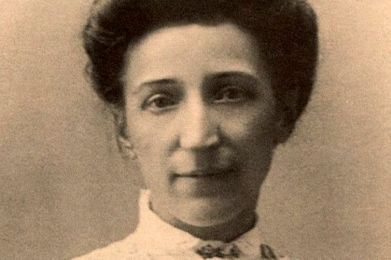
What do you want to do ?

New mailCopy

Posted in Uncategorized | Tagged , , , , | 1 Comment

History of Irish in Britain Representation Group, part twenty four, 2004


Patrick Reynolds was one of the founders of IBRG and played a key role in its history. He is now writing up that history and putting it into the context of radical history in Britain and Ireland in the C20th.

On 17th January Pat Reynolds went to Gartree Prison in Leicestershire to see Christy McGrath to plan the year ahead in term of campaigning.

On 25th January IBRG members attended the Bloody Sunday Rally at Conway Hall and had a stall there.

In mid-February the Christy McGrath Campaign got a real boost with coverage in the Sunday World, a two-page spread, the Irish Independent, the Irish World, the Irish Post and Waterford Today.

On 25th February Pat Reynolds attended the Christy McGrath campaign meeting at Kings Cross

On 28th February the IBRG Ard Choiste met in Manchester with Bernadette Hyland and Pat Reynolds present.

The meeting heard of the work in the Christy McGrath campaign with 20 British MPs now backing the campaign. The campaign had met with Noel Lynch Greater London Assembly member for the Greens who gave the campaign his full support.

The meeting heard about the campaign on deaths in custody and the fight to get justice for the families. The IBRG had taken part in the silent march to Downing street on 25th October, to protest over the high number of Black and Irish deaths in custody.

The meeting thanked Diarmuid Breatnach for all his hard work for IBRG and the Irish community, and wished him every success in his new endeavours in Dublin in work and in activism.

The meeting heard that Pat Reynolds had resigned as Chair of the Irish Equalities Group in London. The meeting heard that elections in N. Ireland which had been delayed for months by Blair were held on 26th November with Sinn Fein and the DUP making gains. However, they were all elected to a non-sitting Assembly, which was an exercise in surreal democracy.

14 March The IBRG had a stall at the St Patricks Day Festival on the South Bank and also supported the Christy McGrath stall on the day. Despite the wet day there was a lot of interest in both the Christy McGrath campaign, and the IBRG literature mainly from students and London visitors.

30 Anniversary of Troops Out Movement

On 24th April TOM were celebrating their 30th anniversary at the Haringey Irish centre, set up in 1974 they had campaigned consistently for Troops out of Ireland and for a United Ireland. Their annual delegation to Ireland was planned for 12-15th August this year.

Launch of Jockey’s Petition for Christy McGrath

On 27th April Pat Reynolds spoke at the House of Commons on the launch of the Jockeys Petition for Christy McGrath. Labras O’Murchu Fianna Fail Senator from Tipperary, Seamus Healy Independent TD from Tipperary and John McDonnell MP all spoke. The meeting generated much publicity in the Irish media including the Irish World and the Irish Post.

On 11th May Pat Reynolds was speaking at a Civic Reception at the Town Hall in Clonmel on behalf of the Christy McGrath campaign and later interviewed by Mid Tipp radio. The event got good media coverage in Ireland and in the Irish weeklies in Britain. The Tipperary Association in London came over with the campaign to Clonmel this time. Over 40 British MPs were now supporting this campaign.

On 21st May the IBRG Ard Choiste met in Coventry. Maurice Moore, Tim Logan and Pat Reynolds attended with apologies from Bernadette Hyland and Sean Hone.

Pat Reynolds reported back on the successful trip to Clonmel on the Christy McGrath campaign where they had a civic reception on11th May. Over 40 MPs were now supporting the campaign and the Tipperary Association from London came over to Clonmel for the event. They had also launched a Jockeys Petition at the House of Commons with John McDonnell MP, Seamus Healy TD, and Lauras OMurchu Senator speaking.

The report back from the Deaths in Custody campaign noted that another Irishman had died in custody in Wormwoods Scrubs in West London. John Boyle from Donegal who was reported to have hung himself under stress. The Government had paid out large sums of money at that prison because of brutality from the warders.

The election for Mayor of London was coming up on 10th June and Livingstone was likely to win it again, there were also European elections on the same day and Sinn Fein were expecting their first seat in Europe.

Maurice Moore raised a case in Coventry where the Dion funded worker had been treated poorly by their management committee, and Pat reported he had dealt with a few similar cases in London. He identified a lack of training of many management committee members, who had little material experience outside their voluntary role. It was up to the Dion committee to set up training and a good complaints system for their workers.

On 26th May the IBRG attended the Christy McGrath campaign meeting at Kings Cross.

On 30 the May the IBRG had a stall at Woking Irish Festival bringing Irish literature to the community. The IBRG also supported the Christy McGrath staff on the day as both stalls were set up beside each other.

On 10th June Ken Livingstone won his second term as Major of London and Sinn Fein won their first two seats in Europe.

Exclusion of Irish at conference  Creating Confident Communities 

On 17th June there was a conference entitled Creating Confident Communities put on by the London Criminal Justice Board Building Trust & Confidence with London’s Black and Minority Ethnic Communities. It did not have single Irish speaker despite the huge numbers of Irish deaths in custody, the large number of innocent Irish prisoners, the high number of Irish stop and searches and the operation of the PTA.

It was a case NO Irish need Apply again where the Irish were excluded deliberately again and again.

On 20th June the IBRG had a literature staff at the Finsbury Park Fleadh where we also campaigned for Christy McGrath.

On 4th July the IBRG had a stall at the Southwark Irish Festival along with a stall for Christy McGrath.

Concern over verdicts in Irish Cases

In early August the IBRG took up the case of a Monaghan man kicked to death at Christmas 2003. The issue was s covered by the Irish World and later Shannonside Radio interviewed Pat Reynolds on the issue, The IBRG highlighted the fact that even in death Irish people did not get any kind of justice in Britain for the families left behind. Irish life in Britain was always cheap and went unnoticed.

On 8th August the IBRG put out a statement entitled Concern over verdicts in Irish cases. The case was local to Pat Reynolds where the Irishman was homeless and begging in Wood Green. His flatmate in a squat had beat him to death, and he had 17 different injuries to his body and facial wounds to indicate he had been stamped on, and the perpetrator waited hours before calling an ambulance. Yet he was only convicted of manslaughter and given seven years when it was clearly murder. There were now several cases in Britain where even in death the Irish person and his family will not get any kind of justice from the system.

Pat Reynolds stated ‘His death is one too many at the edges of the Irish community, and one in which parts of our community in its smugness wants to ignore and forget, without asking why? Sean would have come to Britain with the same high hopes of every emigrant to better himself and make a living, but he fell by the wayside. When he needed help and support it was not there. The question needs to be asked and answered, as to why there are so many homeless Irish on the street of Britain, without any kind of support or services to get them off the streets. There was a clear need for a specialist outreach service to reach them. The Irish World had on 13th August IBRG concerned over killer’s sentences.

On 5th September the IBRG attended the St Bridget’s Festival in Greenford in West London which John McDonnell was hoping to develop into a bigger Irish festival.

Exclusion of Irish Sports

On 17th September James Gillespie a Labour Councillor in Southwark and part of the Southwark United Irish community Group, which included Jodie Clark ,wrote to Tessa Jowell Minister for Sports to try, and set up a meeting with her, the London GAA and the wide Irish community including IBRG. Tessa Jowell went on to support the London bid for the 2012 Olympics and win it. Ironically both Tony Banks and Kate Hoey Unionist had Irish connections but did nothing to bring sport to the Irish community. Irish sports were excluded in Britain because it was Irish for over 120 years since the GAA was set up.

On 23rd September there was a Conference on Britain Irish Travellers in central London to launch their report Room to Roam at which John McDonnell spoke

Memorial for Jack Kennedy

On 24th September Pat Reynolds was speaking at a Memorial meeting for Jack Kennedy held at the Camden Irish centre where Jeremy Corbyn MP and Billy Power also spoke. Jack was a member of the Labour Party, the Birmingham Six campaign and the Frank Johnson campaign and was a republican socialist from Tipperary, who had spent years in Australia. He  was a leading member of the Construction Safety campaign along with Andy Higgins who gave the Oration to Jack on the night. Andy was also a fine singer. Mick Gilgun, an IBRG member, also spoke as did Mick Dooley from UCATT. There was a benefit later with music by Sean Brady.

On 27th September Pat Reynolds was speaking at the Labour Party Irish Society fringe meeting at the Charterhouse in Brighton along with the Leader of the SDLP Mark Durkan, Liz McManus of the Irish Labour Party and John McDonnell MP. Pat spoke on behalf of the Christy McGrath campaign and got a good response from the mixed audience. Billy Bragg started the evening by singing Raglan Road the great Paddy Kavanagh song first sung by the Dubliners.


On 9th October IBRG members in London attended the Innocence meeting at Conway Hall on miscarriages of justice which showed a huge number of families seeking justice.

The European Social Forum met in London from 15-17 October to discuss issues around racism, discrimination, equality and diversity at the Ally Pally in North London to try and link up struggles across European on social issues. It had its first meeting in Florence in 2002 and Paris in 2003 and now London.

On 19th October The Irish in Britain Parliamentary Group had a meeting in the House of Commons after John McDonnell the Secretary had put out a proposal to have an annual Conference of the Irish in Britain.

In his letter of invitation to the IBRG, The Irish Counties Association, the Irish Embassy AGIY, and the Federation he stated ‘I raised the idea of the need for the Irish Community to come together at least once a year to discuss the issues facing our community, and how we can work together to tackle these issues’ So far I have received nothing but positive comments. Hence, I would like to try and progress this initiative’. It was hoped to launch the event in February 2005.

On 24th October IBRG members attended the Terence McSwiney mass at Southwark cathedral.

On 27th October Jim Gillespie had a letter back from Harriet Harman on getting Tessa Jowell to meet with the GAA. As usual the task was put down to some employee in the department to look at the idea. In terms of supporting Christy McGrath, she stated that as Solicitor General she could not get involved in the campaign as she had to supervise the Crown Prosecution Service.

On 10th November AGIY put forward a proposal for an Irish Criminal Justice Forum in London to address issues on how the criminal justice system affects the Irish community in London. They were inviting Irish organisations in London to become part of this Forum. The concept while good raised some questions, why not a National organisation, and would it leave the Irish working in a parallel way to the mainstream, whereas the recent London Conference about BAME and the Criminal Justice completely left the Irish out.

IBRG challenge over voting rights for Irish in Britain

On 12th November the Irish World had an article entitled FG seeks voting rights for British Passports holders. It involved Fine Gael Senate Leader Brian Hayes asking the Irish government to grant voting right to British passport holders in Ireland, some 36,000 who were already on the electoral lists in Ireland, but could not vote in referenda.

He was arguing that Irish citizens in Britain could vote in all elections in Britain and in any referendum. Pat Reynolds wrote to Senator Hayes on 22nd November challenging him, that he had sidestepped the issue of Irish citizens in Britain, not having the right to vote at home, while British citizens in Ireland retain the vote in Britain for 20 years. The Irish in Britain would dearly love to have the same voting rights as the British in Ireland. The letter also drew attention to the Good Friday agreement, which the Irish government had signed up to, and yet were not prepared to give their own citizens the same rights, as those guaranteed under the Good Friday agreement, in that emigrants from N. Ireland retained their votes at home for 20 years. Ireland remains the odd one out in Europe, in how it treats its citizens abroad.

On 14th December Brain Hayes replied to say he supported extending the franchise to the Irish abroad.  His only proposal however was ridiculous, in that he suggested that a number of Senators be elected by the Irish abroad. Clearly a man more interested in the well represented British citizens living in Ireland with full voting rights than his own emigrants, and him the Leader of the Irish Senate. British citizens could vote in local and European elections in Ireland.

On 13th November the IBRG Ard Choiste took place in Coventry with Bernadette Hyland, Pat Reynolds, Maurice Moore, and Tim Logan present.

The meeting noted the Diarmuid Breatnach had returned home to work in Dublin, he had been a very active member, and officer of IBRG for several years and held the Lewisham branch of IBRG together, and was involved in several other Irish organisations including prisoners support groups, Irish worker group and the Lewisham Irish centre. He was chair of the Lewisham Irish centre and of the Irish Political status group, and held many officer posts in IBRG and in the Irish workers group. He was particularly strong on the Irish language Irish music and Irish culture along with Irish politics and history.

There was a discussion on the Travellers Bill going through Parliament, which had been meant to replace the old Travellers Sites Act that the Tories had abolished in 1994.  The IBRG gave £200 to the Working-Class movement Library film project. £50 to the Ruan O’Donnell conference, and £75 to the Irish Prisoners support group.

Maurice Moore was thanked for his hard work for IBRG over the years and in keeping the books. He was Cisteoir for so many years, but also kept Coventry IBRG  active. He was soon returning to his native Kerry. Maurice had made a huge contribution to IBRG and to the Coventry Irish community and to the labour movement

Their meeting welcomes the second Harry Stanley inquest verdict of unlawful killing and called for the police involved to be prosecuted for their actions.

The meeting condemned the recent hold up and recent arrest of the famous Irish folk singer Christy Moore, and condemned the racism behind his arrest and detention by the police at the port.

In 2021, Joe Mullarkey of Bolton IBRG and P.R.O. of the Birmingham 6 Northwest Campaign comments   “I remember when the B6 campaign was short of funds, Christy came over to London, did the concert with a bad dose of flue and  took no fee or expenses”.

The meeting also called on the British and Irish governments to grant political status to all Irish political prisoners held by both governments.

The meeting condemned the British Government for holding prisoners without trial at Belmarsh prison, and called for their release. The meeting also called on the government to protect the rights of Travellers in Britain, including access to planning law. Sean Hone was prepared to take over as Cisteoir when Maurice left.

Conference for the Irish Community excludes IBRG

On 16th November IBRG members attended the House of Commons meeting for the Irish in Britain Parliamentary group to discuss setting up a conference for the Irish community. John McDonnell proposals for the conference left out completely Employment and Training, and while he included Criminal Justice with AGIY/Bias Women by the London Irish Women’s centre, Education by Professor Mary Hickman, Culture by the Counties Associations who had no experience in this area, Travellers by AGIY/ITM, Housing by Cara/Innisfree and Health by the Federation clearly leaving out IBRG completely, part of the ongoing marginalisation.

Yet the IBRG had enormous experience in many areas Like Gearoid MacGealrailt, Steve Brennan, Pat Reynolds with a Masters in Social Policy, Bernadette Hyland, Maude Casey on Literature, and many more. Both in terms of Education and Welfare the IBRG had put on several conferences and a number on health conferences including the first ever mental health conference.

On 30th November the IBRG attended the Christy McGrath campaign meeting at Kings Cross.

In November Pat Reynolds had a letter published in the Irish World on vote for emigrants

In December Pat Reynolds circulated the British media with details of the Christy McGrath campaign and the British Times and Private Eye expressed interest in his case.

Health Needs of Irish ignored again

In December the IBRG put out a statement entitled Health Needs of Irish ignored again, in which the Irish challenged the General Practise Assessment Questionnaire which only included, white, Black, Asian, and Chinese but No Irish. Yet the health needs of the Irish in Britain were many and ignored.

The IBRG stated that it was very ironic given the contribution the Irish had made in building the hospitals in Britain, and in staffing them, that the NHS should disrespect our community and ignore our needs. It was another example of deliberate and targeted discrimination by the NHS who were even going against CRE recommendations and  the National census ethnic groupings to exclude the Irish. Yet one of the key indications around health in the Irish community had been the reluctance of Irish people, to seek help at an early stage from a GP. This survey gives another clear indication as to why the Irish have low confidence in the health system in Britain addressing their needs.

Listen to my talk about the IBRG in the northwest in the Irish Collection at the WCML here
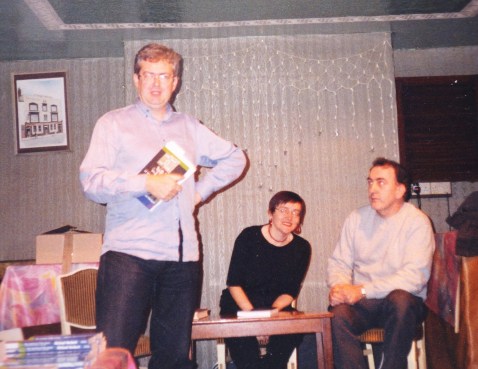
For an excellent history of 200 years of Irish political activity in Manchester – including Manchester IBRG,  read “The Wearing of the Green” by Michael Herbert. Buy it here
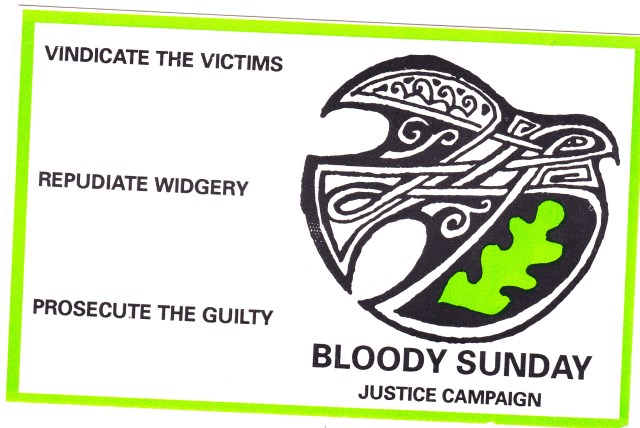
The IBRG website  (now defunct) can be accessed here

Read previous posts on IBRG history here
What do you want to do ?

New mailCopy

What do you want to do ?

New mailCopy

Posted in Uncategorized | Tagged , , , , | 1 Comment

History of Irish in Britain Representation Group, part twenty three, 2003


Patrick Reynolds was one of the founders of IBRG and played a key role in its history. He is now writing up that history and putting it into the context of radical history in Britain and Ireland in the C20th.

IBRG Website


In January the IBRG attended the Irish in Britain Parliamentary Group meeting at the House of Commons on the Travellers Reform bill.
On 26th January IBRG members attended the Bloody Sunday Rally at the Camden Irish centre where Tony Benn was the main speaker.
On 15th February IBRG members attended the anti-war march against the USA/British war on Iraq with over one million people.
On 17th February the Miscarriages Of Justice Organisation  had a meeting in the House of Commons with Paddy Joe Hill, John McDonnell MP and Don Hale speaking.

Lewisham IBRG and fight to keep Irish Centre open

Lewisham IBRG were involved in a major fight to keep the Lewisham Irish centre open in the early months of 2003 as the Labour Council sought means to close it. On 21st February Lewisham IBRG had the top letter in the Irish World entitled Will Lewisham Irish show Pride and detailed by fight necessary to keep funding for the Irish centre and for the Lewisham Irish festival.

Christy McGrath Campaign

On 16th March IBRG members helped out on the Christy McGrath stall at the St Patrick Day festival in London on the South Bank. The McGrath family came over for the Parade and Festival.
In 17th March St Patrick Day Pat Reynolds was speaking on Tipp FM radio on the Christy McGrath campaign.

On 29th March the IBRG held their Ard Fheis at Caxton House in North London.
Diarmuid Breatnach was elected Chair with Pat Reynolds as Vice chair and PRO Bernadette Hyland as Membership Secretary and Maurice Moore as Cisteoir.

Branches were represented from North London Lewisham and Manchester, and the following officers attended Bernadette Hyland, Diarmuid Breatnach and Pat Reynolds, with apologies from Maurice Moore (in Ireland), Michael Holden, Laoise de Paor, Danny Burke, and Myra Butler.

The outgoing Chair Pat Reynolds reported on activities during the year including two main campaigns, the Christy McGrath campaign and the campaign over deaths in custody. The campaign for votes for emigrants had got wide scale publicity in Ireland during the General Election there.

Joe Mullarkey had now retired home to Ireland after many years’ service to both Bolton IBRG and to the national IBRG. Manchester IBRG had taken part in a radical conference in Manchester, and Coventry IBRG had been involved in supporting Travellers’ rights, while Lewisham IBRG had worked on political status, and in defending the Lewisham Irish centre from closure. North London IBRG had worked on the Christy McGrath campaign, on deaths in custody, on Irish equalities group and the Irish in Britain Parliamentary group, as well as the vote for emigrants. The IBRG had got a few TV appearances and several radio interviews on votes for emigrants and deaths in custody along with Christy McGrath. Coverage in the Irish media in Britain had declined.

The returns on the 2001 census were disappointing in that few Irish from the second generation included themselves as Irish. The number of Irish in Britain had declined by about 30% since 1991, and the IBRG like other organisations would have suffered those one third loss of members and support. Many of the Irish, even in IBRG, were returning to Ireland and fewer Irish were coming to Britain. It was also more difficult for IBRG with the new alignment of politics in Britain and Ireland and the move to centrist politics, although the million strong anti-war demonstration showed there was room for progressive politics in Britain.

The following motions were passed;
This Ard Fheis congratulates the Lewisham Irish Community on their successful struggle to save their Irish community centre from closure by the local authority.

This Ard Fheis also commends the Lewisham branch of IBRG for their prominent role in that campaign.

This Ard Fheis calls for an end to the war on Iraq. We condemn the Anglo-American coalition flouting of international law and the direct contravention of the UN Charter. We call for an immediate withdrawal of Angle American forces and call for the UN to step in to negotiate an end to the military adventure. We further condemn the bombing of Iraqi civilians by British and American bombers.

This Ard Fheis welcomes the release of Frank Johnson after 26 years in prison for a crime he didn’t commit. This Ard Fheis condemns the police investigation into the murder of Irishman Jack Sheridan and the withholding of evidence from the trial which would have vindicated Frank Johnson. This Ard Fheis further condemn the length of time it took the British Home Office to release the withheld evidence and calls for a full inquiry into the whole episode.

The priorities  for 2003-04 were;
Developing the website
The Christy McGrath campaign
“Ceart “Irish deaths in custody Campaign
Barry George Campaign
Free travel for Irish elders from Britain in Ireland
Political status
Votes for emigrants in Ireland.

Death of Eddie Loyden MP
On 5th April the death of Eddie Loyden former MP for Liverpool was announced. He had been a great friend of Ireland and of the Irish in Britain and of working-class communities in Britain He was of Irish descent and always supported a United Ireland. He was at Hillsborough on the day of the great tragedy there and supported the victim’s campaign fully.

Victory at  Lewisham Irish Centre
On 12th April Lewisham IBRG had a letter in the Irish Post with a photo of a protest outside the Lewisham Irish centre to save the centre. The letter entitled Listening to the needs of Lewisham Irish stated that the Council had reconsidered their decision, and would now continue to fund Lewisham Irish centre, which was a notable victory given the cuts across London to Irish centres.

In Islington there was a very strong campaign with huge support but it was a right-wing Liberal Council in Islington which made the cuts.

On 15th April Channel Four showed a programme  on Jill Dando which raised many questions about the conviction of Barry George. The IBRG were supporting Barry George in his campaign to prove his innocence.

On 17th April the Stevens Report on Collusion between the British state and the Loyalist deaths squads came out. It raised serious questions about the death of Patrick Finucane and others at the hands of these British deaths squads which were used as a Kitsonian tactic to intimidate the Nationalist community.


On 17th April IBRG members attended a Ceart meeting at the Camden Irish centre on Irish deaths in custody.
In April the Wolfe Tones Society in their newsletter stated ‘Over the last year Sinn Fein have made some ground breaking and important breakthroughs both on the reunification of Ireland and achieving equality and human rights for the Nationalists in the North of Ireland.’ No one in the Irish community knew what they were talking about. Later they stated ‘Unionism is dying like the apartheid regime died in South Africa it only needs a real push by people who support a United Ireland to see it topple.’


IBRG condemn Blair’s postponment of N.Ireland elections.
In early May the IBRG condemned the postponement of the N. Ireland elections which exposed the sham of the Good Friday Agreement, where Tony Blair can decide whether the people of the occupied territories can vote or not. British democracy in action, you can only vote when I decide you can vote.
On 5th May the IBRG issued a statement IBRG calls for Democratic Elections in Northern Ireland, condemning Tony Blair for postponing the elections, as symbolic of a colonial and military dictatorship. The Hypocrisy of the Labour government condemning other governments usually military rulers for postponing elections is now clear as they postponed the election without any reason. The people’s right to representation under international law has been broken by Blair. This Labour ruler in Britain had entered an unlawful war with Iraq on the made-up false pretence of there being weapons of mass destruction, when both he and Bush has all the weapons of mass destruction themselves. Democracy belongs to the people not Blair. Every rule in the constitutional rule book has been torn up by Blair without even a debate in Parliament.

Picket of Brixton Prison over number of Irish suicides

On 9th May IBRG members attended the Ceart picket of Brixton prison to protest over the number of Irish suicides there. Over 40 people attended the picket. Seven Irishmen had died there in the last few years. The Heavens report into the deaths in Brixton was a complete whitewash, and the IBRG demanded a public inquiry into the high death rate in Brixton.

On 10th May Pat Cullinane, former Harrow IBRG member, was featured in the Guardian Saturday money section on the front page. It detailed his long fight with the Inland Revenue and the article showed that the Inland Revenue had a case to answer. Pat lost his house and was made homeless because of a disputed tax bill and he was only an ordinary working-class man. The IBRG argued for a change in the law that no person should lose their home, and be made homeless because of a small tax dispute.

Christy McGrath Campaign delegation to Ireland

On 15th May Pat Reynolds and Andy Parr led a large delegation from Britain and from Tipperary to Dail Eireann to raise the case of Christy McGrath. The delegation met 18 TD’s including Minister Eamon O’Cuiv and Brendan Smith Chair of the British Irish Parliamentary Group. The delegation spent all day in the Dail meeting TDs in political groupings. Many TD’s signed up to Christy’s campaign and Lauras O Muirchu and Fintan McGrath raised the case in the Dail and in the Seanad. Delegation met Eamon O’Cuiv Minister of State, Willie O’Dea, Senator Lauras O Muirchu also head of Celotas, Tony Gregory, Seamus Healy, Marion Harkin, Joe Costello Labour person for Justice, Kathleen Lynch, Dan Neville, Brendan Smith, John Deasy Fine Gael person for justice, Paudge Connolly, Tom Hayes, Michael Collins, Caoimhin O’Caolain of Sinn Fein, James Breen, Joe Higgins, Fintan McGrath and Paddy McHugh.

Pat Reynolds spoke on Tipp FM on the case, and it was covered in most of the Irish papers including the Irish Times, Irish Post, Irish World, Nationalist and the Star. The delegation was successful in putting Christy’s campaign on the political map in Ireland and raising the profile of the campaign. Seamus Healy, the socialist TD from Tipp, organised most of the Dail schedule for the campaign.

On 16th May Pat Reynolds attended the Irish Equalities Group meeting with the CRE. Pat chaired the productive meeting which dealt with Travellers, deaths in custody, Census results, new CRE policy strategies on health, education, and criminal justice. The CRE investigation into prisons would be out later in the year.

Report on Irish families and Social Services

On 17th May IBRG members attended the House of Commons launch of Irish children and Social Services Report about how Irish children and families are treated by British Social Services. This was the launch of Paul Garrett’s study of Irish children and social services which he later published. Pat Reynolds had met with him and Pat’s observations on how social services don’t meet the needs of Irish children were included in the book.

On 21st May IBRG members attended a public meeting at the Red Rose Club in Islington organised by the local Labour Party to highlight the Bloody Sunday inquiry. Pat Reynolds was asked to speak around the history of Bloody Sunday and relatives gave details of the public inquiry at Westminster. Jeremy Corbyn was the local MP.

Bobby Sands/James Connolly Rally
On 24th May Pat Reynolds was speaking at the Bobby Sands/ James Connolly Rally at Conway Hall on the Christy McGrath campaign.
The IBRG had two banners at the rally and their banners were on the front page of the Irish World in a photo. IBRG members from London and Coventry attended the rally  in good numbers. Speakers included John McDonnell MP who praised the struggle. Martin Ferris of Sinn Fein, Paul O’Connor from the Pat Finucane campaign, Terry Stewart from Ceart, and the Palestinian Solidarity campaign.

On 31 May the IBRG Ard Choiste met in Manchester with delegates from Manchester, Lewisham, Coventry and London attending. Diarmuid Bratnach, Bernadette Hyland, Maurice Moore and Pat Reynolds attended.
The issues discussed included political status and prisoners at Belmarsh, Christy McGrath campaign and its successful delegation to Dail Eireann, deaths in custody, PTA now used against Muslims, defending John McDonell against the press, and the Working-Class Movement library in Salford were happy to include IBRG material in their Irish collection.

On the case of Christy McGrath, the IBRG drew attention to the case of the two McGraths, where one was a victim in Coventry where his killer only got 18 months, while Christy got life with a tariff of 16 year minimum. It showed the difference between the Irish as victim and as alleged perpetrator as Christy disputes killing the man in his case with evidence. On Construction Safety it was noted that there were 14 construction deaths in the last six weeks, and the IBRG would be raising this with the British Government and at local level with their MPs.

At the end of May IBRG members in London and Coventry defended John McDonnell MP in the press, after he was attacked in the Sun, after his speech at Conway Hall praising the IRA volunteers in their fight for Irish freedom.

On 1st June the IBRG issued a statement IBRG Deplores attacks on John McDonnell MP. The IBRG condemns the Sun and the Guardian with the Guardian calling Martin Ferris a convicted IRA gun runner. The Guardian like the Sun tried to link John McDonnell with the mortar attacks at Heathrow airport which was despicable. John McDonnell’s speech was warmly applauded for several minutes with not one single objection to his speech The IBRG upheld John McDonnell right to free speech on Ireland, and his right to oppose British imperialism in Ireland. Irish people have always honoured those who resisted British terrorism in Ireland. The British media had no problem supporting the Blair Bush war and the bombing without warnings of hotels with civilians. The morality of the British press is to paraphrase Brendan Behan that big bombs are great but little bombs are bad. The Guardian above all papers should know that the war in the six Counties was due to a clear lack of democracy there, and the lack of free speech on Ireland.

Both Maurice Moore and Tim Logan of Coventry IBRG wrote in to the Sun, but they refused to publish any letter in support of McDonnell, thus showing total censorship. As Maurice Moore put it ‘the truth is that the IRA came into being to defend homes and communities in nationalist areas against Loyalist atrocity and attacks, aided by sectarian police (RUC), and bolstered by the presence of the British army. Wherever there is injustice those who fight will be heroes, and deserve to be honoured’.

On 9th June Pat Reynolds went on BBC Radio London about the Irish deaths in Brixton prison.

Relaunch of Malcolm Kennedy Campaign

Patrick Quinn

Malcolm Kennedy

On 12th June Pat Reynolds was speaking at Polish Centre in Hammersmith to relaunch the campaign for Malcolm Kennedy, who had been wrongly convicted of the manslaughter of Patrick Quinn in Hammersmith Police station. The meeting got front page story in the local Hammersmith newspaper. John McDonnell MP also spoke at the meeting along with Graham Smith author of Who killed Patrick Quinn, the framing of Malcolm Kennedy, Mark Metcalf and Malcom Kennedy. Patrick Quinn was an Irish republican who was murdered in Hammersmith police station but not by Malcolm Kennedy. There had been complete cover up as to how Patrick Quinn had been murdered while in police custody and Malcom Kennedy was framed to cover up the truth.

Read article by Mark Metcalf and links between undercover cops and Kennedy case here

On 24th June Pat Reynolds was speaking for the Christy McGrath campaign at the launch of the Jockeys Petition at the House of Commons. The Telegraph and the Press Association sent photographers. John McDonnell MP chaired the meeting.
A number of leading jockeys attended including Grand National winner Richard Guest. Pat Reynolds went on Dublin radio with Christy’ s mother to speak about the campaign.
On 27th June Pat Reynolds met with Niall Quinn of Ireland and Arsenal fame with Gareth Pierce to discuss the case. Niall had been in to see Christy in prison. Niall was to help with press coverage.

On 6th July IBRG members helped with the Christy McGrath stall at Southwark Irish Festival. This contrasted with the London Irish Festival who refused to allow the Birmingham Six a stall. Here at Southwark, you had the Tipperary Association and others like the Meath Association helping us on the day and providing free tea and food for the stall volunteers.

Death of Jack Kennedy

John “Jack “Kennedy plaque.

Jack Kennedy of UCATT and the Birmingham Six Campaign sadly passed away in August. He had also supported the Frank Johnson campaign. Some years later a wall plaque was put up on a gable end wall opposite the Arsenal stadium to commemorate Jacks’ life after he won a local vote on which local person should be so honoured in Islington. Winning from beyond the grave.

On 24th August IBRG helped with the Christy McGrath stall at Crawley Irish festival in Sussex.

On 3rd September IBRG members attended a by election meeting in Brent to launch the campaign for the McBride family to stand in Brent. The IBRG mailed out various Irish organisations and individuals with leaflets on the by election.

Diarmuid Breatnach went back to Dublin in September to start a new job after spending over 30 years as an activist in Britain on socialist and Irish issues. The IBRG wished him well in his new venture and to activism in Dublin.

On 4th October the Coventry Evening Telegraph front page story had Sinn Fein anger over Soldier’s Posting. It involved a young 17-year soldier who was found guilty of using an imitation firearm to steal a motorbike had been allowed by the Judge to walk free. Coventry IBRG highlighted the story and called into question the absurd light sentence, and to the fact that this soldier could be on duty in N. Ireland soon.

On 25th October IBRG members attended the annual Deaths in Police Custody rally and silent march to Downing St over the number of Black and Irish deaths.


On 20th November IBRG members attended the Christy McGrath Race meeting at Mabel’s tavern at Euston to raise funds for the campaign.

On 26th November the IBRG attended the CRE Irish Equalities meeting in London. Pat Reynolds stood down as chair due to work commitments in London.

On 26th November the Assembly elections were held in the Six Counties where Sinn Fein improved their position and became the leading social democratic party there.

On 2nd December the IBRG attended the Irish in Britain Parliamentary Group meeting at the House of Commons on sports, arts and culture. The IBRG made a submission to the group on the issue and later circulated the submission around the community. The IBRG divided their submission into Sports, Language Music, Dance, Literature Film and Video Theatre and in each area made recommendations.

The general recommendations included that funding bodies consider their approach to funding Irish arts and culture. That all arts centres consider rather approach to the Irish community in terms of content put on, and in terms of access by the community. That the Irish be included in all ethnic monitoring of staff employed, and users of all arts and cultural centres. That local authorities support local Irish festivals in the summer, and the St Patricks day festival. That a review of funding takes place to identify, what funding if any goes to the Irish community, that lottery funding be made available to fund an Irish arts centre /Irish museum /Irish History archives along with European funding., that consideration given to an Irish TV/radio station in Britain. Over 22,000 people signed the Irish media campaign petition for this that Sean Sexton organised. That the Irish Government reconsider their welfare only approach to funding, and recognise that culture is also part of our community.

On 6th December Pat Reynolds had a letter published in the Guardian on Gaelic sports being ignored by the British media. The Guardian carried a story Gaelic footballers fans try to topple Jonny Wilkinson by rigging sport poll.

Pat Reynolds in his reply pointed out that Peter Canavan, captain of the Tyrone team which won the All Ireland, had far more supporters than Wilkinson’s Newcastle rugby team, and that the GAA had far more supporters and match attendance than rugby. The All Ireland had 80,000 at the match with millions watching it worldwide, and Gaelic football in Nt Ireland had far more players and supporters than rugby. The BBC in N. Ireland ,by not broadcasting the All-Ireland final, were indeed rigging the poll towards Wilkinson in its discrimination against Gaelic games.

On 9th December the IBRG attended a meeting with Noel Lynch, a GLA member, to discuss the case of Christy McGrath.
On 11th December IBRG members attended the Ceart meeting at the Camden Irish centre on Irish deaths in custody.

Irish Language and Europe
On 15th December Conradh and IBRG member Tomas Macstiofan wrote to a number of Irish organisations on the question of the Irish language in Europe He noted that in May 2004 10 other countries were to join an enlarged EU with the extension of 10 new community languages, and yet the Irish language was not included, mainly because the shameless Irish government failed to ask to have it included. Tomas drew attention to the fact that Maltese was included which had the same number of native speakers as native Irish speakers. Tomas set out a number of recommendations for organisations to write to the Irish government and to other bodies on the matter.

During 2003 the IBRG made a major contribution to the Christy McGrath campaign and the Irish deaths in custody campaign. The IBRG also took up the case of Barry George and Malcolm Kennedy. The IBRG took part in the Irish Equalities Group and the Irish in Britain Parliamentary Group. The IBRG supported the Travellers Reform Bill and Lewisham IBRG defended the local Irish centre from closure.

Listen to my talk about the IBRG in the northwest in the Irish Collection at the WCML here

For an excellent history of 200 years of Irish political activity in Manchester – including Manchester IBRG,  read “The Wearing of the Green” by Michael Herbert. Buy it here

The IBRG website  (now defunct) can be accessed here

Read previous posts on IBRG history here

What do you want to do ?

New mailCopy

Posted in Uncategorized | Tagged , , , , , , , | 1 Comment

History of Irish in Britain Representation Group, part twenty two, 2002


Patrick Reynolds was one of the founders of IBRG and played a key role in its history. He is now writing up that history and putting it into the context of radical history in Britain and Ireland in the C20th.


Christy McGrath Campaign leaflet

IBRG attend Irish Equalities Group Meeting

On 10th January IBRG officers Diarmuid Breatnach and Pat Reynolds attended the Irish Equalities Group meeting at the Camden Irish Centre to plan for the next meeting with the CRE. Pat Reynolds was elected Chair of the group for the coming year. The Irish Equalities Group was made up of all Irish community groups in London.

First campaign meeting for Christy McGrath

On 11th January the Christie McGrath Campaign had its first meeting. Five IBRG members from London attended and Pat Reynolds was elected Chair for the campaign. The Irish Post and the Irish World attended the meeting which was attended by twenty people from different organisations in London. The Irish Post had given Christie case the front page and had visited Christy in prison. The Tipperary Association in London had agreed to back his campaign which was a major breakthrough.

On 14th January IBRG members attended the picket of 10 Downing St over the Loyalist attacks on Holy Cross School in the Ardoyne area of Belfast, and the recent murder by Loyalists of a young postal Catholic postal worker in Belfast.

IBRG condemns former N. Ireland Office Minister for anti-traveller comments

On 15th January the IBRG issued a statement in response to a Tory MP and former N. Ireland Shadow Secretary who described Travellers as ‘scum’, and stated that they were not entitled to civil rights. The IBRG condemned his statements and called for Travellers Rights to be upheld. How could such a bigot be appointed Shadow Secretary in N. Ireland.

 The IBRG condemned Tory MP Andrew Mackey, former shadow Minister for N. Ireland, for his anti-Travellers remarks, and stated that these remarks could lead to further attacks upon Travellers, and their way of life. Mackey was not fit to be an MP, and as an MP he should be defending the rights of the more vulnerable in society, instead of trying to scapegoat them. Mr Mackey should be calling on the Government and local authorities in Britain to provide sites to accommodate Travellers, and restore the public duty on local authorities to provide sites, which his party had taken away.

The Tories having created the problem in the first place now want to punish the victims of their creation. To suggest as Mackey did that Travellers do not merit the same human rights as other citizens is deeply offensive, and is reminiscent of Germany in the early 1930’s and their attitude to the Jewish community. The IBRG called on the Tory Party and its leader to condemn these remarks and dissociate themselves from them. The issue of accommodation for Traveller can only be addressed by government action.

Irish deaths in Police Custody Meeting

On 17th January IBRG member attended the Irish Deaths in Custody campaign meeting at the Camden Irish centre which BBC South East TV covered for its news on 18th January.

On the same day Pat Reynolds Chair IBRG went head-to-head with Toby Harris Chair of the Metropolitan Police Authority over Irish deaths in custody and inquests on BBC Radio London. Toby Harris later to become Lord Harris was the former leader of Haringey Council, and was well known to Pat from attended Council meeting in Haringey, and meetings of the Ethnic Minorites JCC.

The IBRG raised questions over the recent inquest into the ‘suicide’ of Michael Barry in Brixton prison, the fourth Irish suicide in the same prison. The Irish family were not present or represented at the inquest, which made a mockery of any concept of justice.

Bloody Sunday Rally

On Sunday 27th January IBRG members from Coventry, Lewisham and N. London attended the Bloody Sunday Rally at the Hammersmith Irish Centre where Eamon McCann gave an inspiring speech. Other speakers included Michael McKinney a relative, John McDonnell MP and Gerry O’Hara of Sinn Fein, who was challenged over Sinn Fein’s position on Irish political prisoners, who were arrested since the Good Friday agreement.

The main leaflet for the Rally was one without any politics and just stated Bloody Sunday 1972-2002 30th anniversary One World Many Struggles which was a real betrayal of what people were marching for on Bloody Sunday, and the 30 years of struggle in between.

Not even a demand for justice. The leaflet sent out for support and sponsorship was the same devoid of any politics, a sort of amnesia like one reads in a thousand years of solitude, where the people had forgotten their past. The new No politics had been put upon the Irish community in Britain from Ireland. It was a shameful sell out of the politics of struggle, and marked new levels of depoliticization of the struggle. The Political Status for Prisoners Group attended the Rally and drew attention to post Good Friday prisoners and how they were denied political status. In Manchester Bernadette Hyland was featured in an article on Bloody Sunday in the Big Issue entitled Bloody Sunday Families just want Justice.

In Derry the people invited Joy Gardner’s mother over to speak linking up with the position of Black people in Britain.

In January Tom Hayden, American civil rights fighter, was going in the opposite direction and rediscovering his Irish roots, and had published Irish on the Inside in Search of the Soul of Irish America. He talked of whitewashed assimilation in an era of globalisation It was a welcome relief to whitewashing that had gone on this year over the London Bloody Sunday rally.

IBRG and other Irish Groups meet with CRE

On 28th January the IBRG joined other Irish groups for a meeting with the CRE Chair Gurbix Singh previously CEO of Haringey Council, Danny Silverstone CEO CRE and Seamus Taylor now Head of Public Policy at the CRE and Chris Myant press officer.

Pat Reynolds chaired and led the Irish community side in the discussions. Among the issues discussed were the recent deaths in Brixton prison, and how far the CRE were going addressing the needs of the Irish community within their expressed briefs in terms of employment, discrimination housing health and other area.

In reply the CRE stated that were conducting an inquiry into racism in prison, with Brixton and Feltham the youth detention centre included, they would do a stock take of the Irish community once the results of the 2001 census were known, and would commission a profile of the Irish community then.

It was announced at the meeting that the Department of Employment and Education had agreed to include the Irish as a specific ethnic category within their monitoring of school performance, and among teacher group classifications. This is something that the IBRG had fought hard for over the past year, including making direct representation into the consultation process and the Chair Pat Reynolds wrote to the Education Secretary David Blunkett on the matter, including using the recent Camden performance of Irish children to justify the need for such monitoring.

Death of Sr. Sarah Clarke

On 4th February the IBRG were saddened by the death of Sr Sarah Clarke a courageous Irish woman who stood up for the rights of Irish prisoners for over 25 years. On 11th February IBRG attended her removal service at our Lady of Halle Church in Camden at which Helena Kennedy gave the oration. Sr Sarah was always there for Irish prisoners, and when the IBRG delegation was on its way to Ireland, to meet the Irish government and opposition she rang Pat Reynolds to update him on prisoners’ issues, and when he came back wanted to know immediately how the meetings had gone with Haughey and other Irish politicians.

Sr. Sarah opened the London Irish Bookfair one year and her book No Faith in the System, was an honest account of her work for Irish prisoners, where she exposes the knowledge that the Catholic Church knew, that Gerry Conlon was at Quex Road the night of the Guildford bombing and could not have done it. She condemned this church silence. Cardinal Hume’s later efforts can be seen as damage limitation given this knowledge was hidden from the Irish community for over 14 years.

It was because of her pioneering work that the Irish government decided to fund the Irish Chaplaincy Prisons Officer  and a full-time worker with Irish prisoners in Britain, but still left it with Catholic Church. When the scandal emerged of Irish suicides in British prisoners the Catholic Church would stay silent and it took the IBRG to expose what was happening in the prisons around Irish prisoners.

On 12th February Pat Reynolds spoke at the School of Oriental and African Studies along with member of the Asian community, on the need to create broad based anti PTA movement in Britain to stop the criminalisation of minority ex colonial communities.

On 15th February IBRG members attended a presentation to Seamus Taylor Head of Public policy at the CRE, on the implementation of the new Race Amendment Act 2000 for the Irish community.

On 28th February Pat Reynolds chaired the Irish Equalities Group in Camden. North London and Southwark IBRG attended the meeting.

In Southwark Jodie Clark was fighting to have an Irish dimension in the educational plans. The Department of Health have agreed to include an Irish category in their ethnic groups for children in care. The Teachers Council have also agreed to include the Irish in their ethnic monitoring,

Coventry IBRG and TOM and meeting re-Holy Cross School and right to live free from harassment

On 7th March Coventry IBRG helped to organise a public meeting at the KOKO centre for the Holy Cross School speaker, to highlight conditions for the children and parents there. The meeting was hosted by Coventry Trades Union council and jointly sponsored by IBRG and Troops Out Movement.

Elizabeth Murphy, a mother of Holy Cross School Children, spoke at the meeting and the meeting was held under the Title The right to live free from Harassment which had been taken from the Good Friday Agreement.

Maurice Moore the MSF rep on Coventry Trades Council stated ‘Coventry’s Civic Leaders have a relationship with Belfast City Council and should express their concerns about the ongoing harassment of school children and their parents. Ms Murphy met with the Deputy Mayor, representatives the NUT, Irish community church representatives and city councillors during the visit.

Watch BBC documentary here

The Christy McGrath campaign got a two-page spread in the News of the World on 10th March. The Morning Star and the Racing Post also covered the story. The fact that Christy and his brother Larry were jockeys in Britain, and that Christy had the support of Richard Guest the Grand National winner was important.

On 12th March IBRG members attended the London Civic Forum for a meeting which focussed on the Arab and Irish communities in London, and were able to make solid contribution to the evening. The IBRG had affiliated to the London Civic Forum.

On St Patrick Day IBRG members helped out with the Christy McGrath campaign stall in Trafalgar Square which collected thousands of signatures and nearly £300 for the campaign. The family came over from Ireland with his father and mother there and got both Ken Livingstone and Shane McGowan to back the campaign for their son.

Lewisham IBRG were involved in the South London Irish Parade on 16th March and the St Patrick Day parade in central London on 17th March, where the Lewisham float was the best cultural float on parade. On 1st March the Irish World had Seventh St Patrick’s day Parade for south London by Donal Mooney, which gave a preview of the Parade and the Festival in March. It stated the Parade was coordinated by the Lewisham Irish Centre and Lewisham IBRG.

In March the IBRG heard of the death of Oliver de Brun, a lifelong Republican in London, and former member of IBRG and member of the Dessie Ellis campaign. The IBRG attended his funeral in Watford on 18th March. His ashes would be scattered in both Palestine and Ireland.

The IBRG website went public in March a wonderful addition to IBRG, it covers the history of IBRG, policies and issues affecting the Irish community. Read it here

The IBRG Ard Fheis took place on 6th April at the Friends Meeting Place in central London. The following officers were elected. Among those attending were Bernadette Hyland, Maurice Moore, Pat Reynolds, Michael Holden, Laoise de Paor, Danny Burke and Marie Casey.

Apologies from Sean Hone, Tim Logan, Tomas MacStiofan, Jackie Vance, Jodie Clark, Joe Mullarkey, and Diarmuid Breatnach.

Chair & PRO Pat Reynolds North London

Runai & Membership Bernadette Hyland Manchester

Cisteoir Maurice Moore Coventry

Vice Chair Donal de Burca North London

Prisoners Officers Tim Logan Coventry

The following motions were passed;

A motion condemning the occupation of Palestine. This Ard Fheis condemns the Israeli occupation of Palestinian lands which has led to many civilian deaths. This Ard Fheis supports the right of the Palestinian people to self-determination and calls for the full establishment of a Palestinian nation. This Ard Fheis calls for total Israeli withdrawal from all Palestinian lands.

A motion supporting MOJO plus £50 donation. This Ard Fheis recognises the important work undertaken by MOJO and offer our continuing support to the organisation.

A motion supporting the Christy McGrath campaign plus £50 donation. This Ard Fheis supports the campaign to secure justice for Christy McGrath who was the victim of the British judicial system. This Ard Fheis believes Christy to be an innocent man who was ambushed by the judicial system without a proper trial. This Ard Fheis calls on the Irish government to raise this case and the implications of this case, in how Irish people are treated by the judicial system with the British government.

A motion condemning Irish deaths in custody, This Ard Fheis condemns the high number of Irish deaths in prison and in police custody, and calls on the British government to protect the right to life of Irish prisoners and those in police custody in Britain. This Ard Fheis calls on the Irish government to protect the rights of Irish nationals in British prisons and in police custody, and that they demand that the British government safeguard these lives. This Ard Fheis pledges IBRG support to the current campaign to highlight Irish deaths in prison in police custody and in arrest situations.

A motion welcoming the new IBRG website. This Ard Fheis welcomed the setting up of the IBRG website now available and thanks Bernadette and Manchester IBRG for the hard work put in while setting up site, which also contains a history of IBRG.

A motion congratulating Manchester IBRG on publication of the Wearing of the Green

A motion calling once again for votes for emigrants. This Ard Fheis condemns the Irish government for denying the vote to Irish emigrants, the only EU country to deny its citizens the right to vote in home elections. This Ard Fheis pledges to continue the fight for the vote for Irish emigrants, and to seek legal clarification on the position under Irish constitution law and European law particularly Art 39 of the movement of workers, with a view to bringing a test case.

Pat Reynolds as Chair addressed  the meeting, outlined many of the issues IBRG had been involved in within the past year.  The IBRG had been involved in and chaired the Christy McGrath campaign which had a good year in advancing his case, with a monster meeting held in Carrick and a Benefit at the Galtymore plus getting the support of the Tipperary Association.

The IBRG had played a key role in setting up and supporting the new Irish deaths in custody campaign, and had chaired the Irish Equalities Group in London in its meetings with the CRE.  The IBRG has only issued six press releases last year probably the lowest in many years, and these were about the General Election, deaths in custody, Labour Party recognition, Irish children’s performance in school and racism against Travellers.

The IBRG had spoken at a number of public meetings from Carrick on Suir to the House of Commons. The IBRG had also put in submission to the British government on the Race Amendment act and to the Deaths in Custody Tribunal. We had held meetings over school children being racially abused by Loyalists in Ardoyne and held pickets in London on the issue. The IBRG had done TV and Radio interview on Christy McGrath, the British General Election, deaths in custody and attended meetings of the Irish in Britain Parliamentary Group.

Last year the Irish, were presented with their own category in the British National Census due largely to the battle fought by the IBRG, and our strategy of winning over the vast majority of local authorities to our cause. For the first time ever , a second-generation Irish community have had the opportunity, to identify as being Irish, despite the almighty pressure on them to assimilate in Britain.

The General Election was held last year with a Labour landslide, despite 40% of the public not voting at all. Following 9/11 Britain had moved to the right and it was now more difficult to organise on issues affecting the Irish community. The Irish Post had been dumbed down and lost its community grassroots support.

Sinn Fein too had moved to the centre and were trying to stifle any political protest in Britain from cancelling the Bloody Sunday march, to closing down Saoirse, to closing down the Diarmuid O Neill campaign, dropping all demands for Irish self-determination and dropping any demand from the Bloody Sunday rally.

London was still the centre of much activity form the Irish in Britain Parliamentary Group, the Irish Equalities Group, deaths in custody, Irish political status, and the Christy McGrath campaign.

Manchester IBRG had done the IBRG proud with its publication of the Wearing of the Green the history of the Irish in Manchester.

Maurice Moore was returning to Ireland soon after a lifetime of work promoting the Irish language and culture in Coventry, standing up for the rights of Irish people and standing up for Irish self-determination, and of standing up for worker rights in Britain. He will be sorely missed.

Maurice Moore

Joe Mullarkey is 60 this year and has given a lifetime of dedication to Irish culture and community activities in Bolton ably assisted by his partner Margaret. They have together put-on Irish festivals, concerts, Irish language, Irish exhibitions and have always stood up for the rights of Irish people in Bolton.

Joe and Margaret Mullarkey

Last year we saw the sad passing away of Sr. Sarah Clark who was fearless in her campaigns for justice and fair play for Irish prisoners, whether political or the framed hostages 18 stolen from our community in 1974. The IBRG salute her bravely and her example which we will try and follow. We also lost Mary Crofton in Cardiff and Oliver de Brun in Watford both lifelong republican and fighters for justice.

Both the 9/11 kickback and the Good Friday agreement had made it much harder to fight for human and civil rights in Britain.  The new status quo in Britain and Ireland wanted to control everything from the centre and to control grassroots movements. The Dion funding operating along similar lines, politically funding right of centre and Embassy supported groups. The voluntary sector was controlled now with vetting going on and only those politically approved would now be funded.

There was still an urgent need for organisations like IBRG to speak truth to power, to speak out about wrongly convicted prisoners, to continue to seek political status for Irish prisoners, to speak out about deaths in custody, to speak out against racism in the media and racism against Travellers.

There will be a General Election in the Irish Republic coming up in May and we will be speaking up again for the right of Irish emigrants to vote in all elections in Ireland. Likewise, our campaign to get the TUC and other trade unions to recognise the Irish. We will continue our fight for these basic rights as long as the IBRG exists.

Irish Deaths in Police Custody

IBRG members attended the inquest into the death of Kieron O’Donnell at St Pancras Coroners Court where the jury went for lawful killing. The IBRG condemned the killing by police and the use of lethal force. When it came to the Irish in London the police were trigger happy with the unnecessary deaths of Kieron O’Donnell, Diarmuid O’Neill, Harry Stanley and another Irish man in north London. Why did the Irish make up 50% of all killings by police when they only make up 10% of the population? There were in all these case alternatives to lethal force and this matter was not properly explored with the juries.

The IBRG had become aware of another Irish death in custody Martin Ward a 23-year-old Roscommon man at Woodhill Prison. The jury verdict in his case was ‘death by natural causes contributed to by neglect’. This was another avoidable death. No doctor was called to see Martin Ward before he died despite his deteriorating condition.

The IBRG stated how many more deaths do we need. The community needs to mobilise on this issue and stop these deaths. We have a clear duty to insist that the state protect the lives of these men and their right to life. We condone their deaths if we remain quiet about them like the Catholic Church.

On 18th April Pat Reynolds spoke at public meeting on Christy McGrath at the Camden Irish Centre with Jeremy Corbyn MP, John McDonnell MP, and Billy Power. The Irish World gave their front-page story to Pat’s exposure of the police investigation, where the police were still looking for witnesses even after charging Christy.

On 22nd April Pat Reynolds joined Billy Power and others for a meeting with the Irish Embassy organised by the Irish deaths in Custody campaign.

On 25th April Pat Reynolds was interviewed at 7AM outside Brixton prison by BBC Radio London on the Irish deaths at Brixton. At 6.45PM on the same day Pat had another head-to-head with Toby Harris Chair of the Metropolitan Police Authority on the question of Irish deaths in custody, and the lack of representation for Irish families at inquests.

In April the IBRG undertook a major campaign to highlight Irish deaths in custody with a press release and background information going out to 50 new signatures including TV Radio and newspapers.

In April the IBRG made representation to the UN Committee for the Elimination of Racism, the European Convention committee for the Prevention of Torture and Degrading Treatment, Amnesty International, the Prison Service, The Home Secretary David Blunkett, Tory Shadow Home secretary Oliver Letwin, Liberal Shadow Simon Hughes, Bishop Cormac Murphy, Cardinal Sean Brady Armagh, Brian Cowan Irish Foreign Minister and to John McDonnell Secretary of the Irish in Britain Parliamentary Group.  John McDonell MP put down an early day motion on the issue and asked a question in Parliament on Irish deaths in custody. The IBRG were mentioned in Hansard as having made representations to the British government on the issue.

Six of the last nine suicides at Brixton were Irish. Irish lives needed protection in the British prison system and the IBRG were campaigning to have system within Brixton improved for all prisoners in terms of medical care for vulnerable young men, many with mental health issues often on remand away from their families.

On 29th April IBRG members attended a meeting with the CRE as part of the Irish Equalities group where the issue of Irish deaths in custody was pursued. The CRE were doing their own investigations into racism in Brixton, Feltham and Park prison. IBRG members also attended a Conference on the Irish and Policing held by AGIY in London during April.

Pat Reynolds had a letter in the Irish Times on 29th April regarding the vote for Irish emigrants drawing attention to the fact that Pakistani residents in Ireland could vote in the Pakistan general election, while Irish emigrants in Britain could not vote in the Irish General election.


On 2nd May in the local elections Brian Miller an IBRG member got elected as a Labour Councillor in Haringey while Tomas MacStiofan standing as an independent lost in Brent.


On 11th May Bernadette Hyland and Pat Reynolds were both speaking at the Conference on the Roots of Radicalism at Manchester University. Over 120 people attended the conference which Manchester IBRG supported. Other speakers included Lawrence McKeown and Sheila Rowbotham

On 15th May the IBRG put out a statement British Government and British media cover up Six Irish deaths in Brixton prisons. Six Irishmen had died in Brixton prison in the last two years.

The IBRG condemned the conspiracy of silence by the British authorities and the British media on the matter. Could you image if six British citizens had died in one foreign prison within two years, what the outcry in Britain would be. The Irish make up only 5% of the prisoners in Brixton yet make up six out nine deaths or 66% in the last two years. Thus, an Irish man was 13 times more likely to die in a British prison than any other prisoner.

Brixton prison the scene of the Hunger Strike of Terence MacSwiney has now become the most dangerous place in Britain for an Irishman, and the IBRG called for no Irish person be sent there, until these deaths are investigated. John McDonnell had put down an early day motion on the issue, and the IBRG had met with Harriet Harman MP on the issue.

The only conclusion the IBRG reached is that Irish lives were cheap in Britain, and had little value the Irish are not part of Britain despite the Labour government talking of an inclusive Britain. The IBRG calls for a public inquiry into these deaths. The Irish Right to Life appears to be much lower than that of an English person at home or abroad.

On 16th May Pat Reynolds was interviewed by BBC TV South east over Irish deaths in Brixton prison and over the recent death of Terry Doyle there. On the same day Jodie Clark and Pat Reynolds attended the Irish Deaths in Custody Meeting at the Camden Irish centre where relatives of three families attended, Fegans, Sheridans and O’Grady families to talk about their cases.

The Irish General Election was held on 17th May with Fianna Fail and the progressive Democrats again forming a Coalition government. Fine Gael had their worst performance in history. Sinn Fein made progress winning five seats, a gain of four seats. The Greens also did well.

The IBRG had put out a statement before the election entitled Votes for Irish Born citizens living abroad demanded stating ‘On May 17th the Irish government will once again discriminate against its Irish born citizens living abroad in the Irish General Election. In denying its citizens abroad the vote the Irish government are breaching its own constitution and European law, and the UN Declaration on Human Rights. Mary Robinson President of Ireland stated in 1990 ‘There is no impediment in the Constitution to extending voting rights to emigrants’ while   the Irish Council of Civil Liberties stated ‘In its treatment of its own emigrants, this country is out of line with international democratic practices in Europe’ The Universal declaration of human rights Article 21 and the International Covenant on Civil and Political Rights Art 25 guarantees all Irish citizens the right to vote. Dr Joseph Ryan of Freedom House New York stated ‘Ireland is one of the least advanced democracies on the question of absentee voting rights. And it is compared unfavourably with countries it might consider itself far advanced of politically’.

The IBRG believe that the Irish government denial of the vote to emigrants in Europe contravenes European Law, Art 39 of the Free Movement of workers in that the restriction of the vote, can be interpreted as an impediment to the free movement of workers, in that all other European workers can move abroad and retain the vote except the Irish.

Dick Spring TD stated ‘We in the Labour Party see no reason Irish citizens should be deprived of one of the most basic rights of any citizen, because they have been forced to live abroad.

The IBRG drew attention to the Irish World Cup team the only team playing in the World Cup, who were denied a vote in their home country, a question now asked in pub quizzes. Liam Kavanagh TD stated ‘the least we can do is to say to them, if we cannot give them a job, is that we can give you a vote, if they cannot come home, which will allow them to pass judgement on the administration who may be the cause of their being emigrants’.

IBRG Votes for Emigrants Leaflet.

Why is Ireland so far behind the democratic world, the whole of Europe, the USA, Australia, Pakistan, Brazil, South Africa Estonia and many more. Yet in the Good Friday agreement the Irish government agreed to create no impediment to equal rights for anybody within the Republic. If N. Ireland were to join the republic final All Ireland structure they would lose the vote too once they moved abroad.

The Irish World on 17th May had No votes for soccer heroes and the Longford Leader on 17th May had Vote demanded for immigrants, with a photo of the Irish soccer team with the IBRG Votes for Emigrants across it.

The IBRG had sent out a statement of votes for emigrants to over 40 different news agencies including TV Radio and newspaper. On the day of the election in Ireland Pat Reynolds had an interview with the BBC World Service at Bush House in the Strand, drawing attention to the fact that Ireland was the only EU country which denied its citizens aboard the vote. The Longford Leader, the Irish World and other papers covered the story and reprinted the IBRG collage of the Irish soccer team, the only team playing the World Cup who were not allowed to vote for their country of origin. They could bring honour and glory to Ireland but could not vote in the country. Later Highland radio in Donegal, Kerry radio, and Radio Anan Livia interviewed Pat on the subject.

In May the IBRG welcomed the settlement out of court by the Metropolitan Police to Richard O’Brien family his widow Alison and children. Richard was unlawfully killed when police officers held him down despite Richard saying time and again ‘I can’t breathe, I can’t breathe, let me up, you win’. He died whilst being held down by several officers in front of his wife and children outside a Catholic club minding his own business waiting for a cab to take his family home.

Jodie Clark in Southwark IBRG had supported the family, while both Jodie and Pat Reynolds helped the family early on in making contacts with Inquest and good solicitors. The family and the Traveller community had picketed the police station over his death.

On 14th May the IBRG put out a statement O’Brien Family win six-year Battle on compensation. The pay out of £324,000 did not bring any apology from the Met police for the behaviour of their officers, which led to the unlawful killing of Richard O’Brien, who was brutally killed in front of his wife and children, suffering numerous injuries in the process which led to his death.

The IBRG saluted the courage of Alison O’Brien and her family in fighting for justice. For generations the police had been allowed to kill Irish people at random and never be held accountable for their actions.

The IBRG believed that had Southwark Council and Southwark police taken on board the finding of the report on Policing and the Irish in Southwark, the death could have been avoided. The Labour Leader at the time stated that the report would be published and actioned. In the end they suppressed the report and the issues around policing of the Irish was hidden. The IBRG leaked the report to the Irish Times who published it. Ten years later the Met Police are now beginning to look at the Irish community in other ways than their PTA tainted racist vision. The O’Brien have set an example for other Irish families fighting for justice over deaths in custody

The IBRG had drawn attention to the high numbers of Irish deaths both in police custody and in prisons cells on remand, where Irish prisoners were likely to be neglected and their mental and mental conditions ignored. The point of arrest was in some case like Richard O’Brien and Leo O’Reilly a death experience.

The Irish Government need to take on board this issue and stop acting like a colonial province of Britain.  When there was a Nigerian death in custody the Nigerian High Commission went out on Christmas day to see that grieving family. No Irish Ambassador has been to visit a single family of any Irish death in custody. The Irish government bury their head in the colonial sands.

The IBRG bring to mind the murder of Patrick Quinn within a police station in Hammersmith and how the Irish government kept silent. The IBRG believe there is a racist attitudinal problem with how the police and prisons officer view Irish people, which has been a factor in all these cases. Irish lives are not valued. The Irish in such case are denied any respect dignity or humanity and that extends to the relatives of the dead men. At a recent conference the police stated they did not really know the Irish community, somewhat strange given the workings of the PTA. They know the community well going back to Fenian days, but are not prepared to change the canteen culture which view Irish lives as being of lessor value.

The five Irish deaths in Brixton Prison points to a huge problem but the Irish government and the British media stay silent even the Liberal Guardian will not mention the Irish. An Phoblacht covered the story on 16th May. They noted that Richard O’Brien had suffered injuries in 31 areas of his body including 12 cuts to his head. He was put on the ground with officers holding him in a position which can only be described as dangerous and after 15 minutes of so on the ground with officers applying their weight to his body he died’. Despite the unlawful killing verdict from the inquest jury the Met Police refused to apologise to the family.

In May the IBRG condemned the verdict in the James Hanratty Appeal which upheld the verdict against him, a judgement based mainly on contaminated DNA. This evidence had gone missing for 30 years and had mysteriously reappeared.

Hanratty had 14 witnesses who placed him over 250 away at the time of the murder. The IBRG believe Hanratty to be a totally innocent Irishman and like John Lennon believed he was murdered by the British state.  The British government have never once accepted that they ever hung an innocent man, and even with Bentley only regretted the sentence.


During May the IBRG mailed out over 70 trade unions in Britain demanding that they recognise the Irish community as the CRE had recommended. The TUC came back with its usual ignorant No Irish Need Apply response. 

However, the National Union of Journalists (NUJ) and the Fire Brigade Union (FBU) and a number of other unions did agree to recognise the Irish. Later, Unison stated that they recognised the Irish. The following unions also agreed to recognise and monitor the Irish, AEP, TSSA, AUT, and the T&G already recognised the Irish. Unison and T&G were the two largest unions in Britain.

On 20th May Jodie Clark attended a meeting with members of Ceart (Irish deaths in Custody campaign) with Harriet Harman Solicitor General; on the issue of inquests and Irish deaths in custody.

Sands/Connolly March

On 25th May IBRG members took part with banners in the Bobby Sands/James Connolly march through Tottenham to the Irish Centre there where Pat Reynolds spoke at the rally on behalf of the Christy McGrath campaign.

IBRG members from North London, Lewisham and Coventry attended and marched under the political status banner. There was no band on the march which was poorly attended. The march had support from the local Kurdish community, the Palestinian community and the Turkish community. The days of big Irish marches in London were gone and had been silenced after the Bloody Sunday march was cancelled.

On 8th June Diarmuid Breatnach had a letter in the Irish World headed Noble and Painful sacrifices, on the lessons to be taken from the Hunger Strikes.

On 24th May Diarmuid Breatnach had a letter in the Irish World from the Irish Political Status Committee setting out the aims of Bobby Sands for political status and why both Connolly and Sands gave their lives for Ireland.

On 8th June the IBRG had a stall at the Fleadh in Finsbury Park in North London which gave out leaflets on Christy McGrath and other campaigns and displayed their banners.

On 13th June the Justice for Harry Stanley Campaign had a public meeting in Bethnal Green in east London with speakers Irene Stanley, Marian Fegan from Ceart, Brian Sedgemore MP and chaired by Terry Stewart. The inquest on Harry Stanley was opening on 17th June at St Pancras Coroners court at Kings Cross.

The Ard Choiste took place in Manchester on 15th June to plan priorities for the year. Bernadette Hyland, Maurice Moore, Diarmuid Breatnach and Pat Reynolds attended.

On Deaths in Custody the meeting heard that Cardinal Sean Brady had replied. He had circulated it to his bishops and had put it on agenda for the next Bishops meeting in Maynooth.

The Frank Johnson appeal is on 25-27th at the Royal Courts of Justice. He was very likely to be released after spending over 26 years in prison nearly as long as Mandela. Ken Livingstone and Shane McGowan are now backing Christy McGrath.

The meeting heard that 34% of Trade Unions now recognise the Irish after IBRG lobbying. The GMB the MU and the CWU said no to recognition of the Irish. Only 12 Unions had replied to IBRG with the T&G, TSSA, NUJ, AEP, AUT, FBU and unison now recognising the Irish but the TUC still refuse to recognise the Irish.

The programme for 2002-2003 was, Christy McGrath campaign, Deaths in Custody campaign, Trade union recognition, Travellers, Political Status, Votes for emigrants, Irish Equalities group and IPPG plus website and membership. The meeting heard that the IBRG had raised the issue of votes for the Irish abroad, during the Irish General election linking it in with the Irish soccer team none of whom had a vote. This issue got both radio and god press coverage in Ireland and Britain and even the BBC World Service. The meeting heard that the Met Police had settled the Richard O’Brien case. In the Hanratty case the British judiciary continued their perverse decision in the case.

On 15th June there was on day conference on Equalities and Discrimination and the North of Ireland at the Irish Club in Birmingham organised by TOM which had Una Gillespie and Brid Keenan former member of Haringey IBRG as main speakers.

It was a pity that this conference did not link up with issues such as discrimination against the Irish community in Britain, and that they failed to invite the Fair Employment Trust to the conference. The IBRG had for years taken up this matter inviting Oliver Kearney from the Fair Employment Trust to the Unison AGM in Bournemouth, where Southwark Unison had a motion at the conference on the McBride Principles. The IBRG had also challenged Abbey National at their AGM on the matter and had taken Securicor to task over discrimination against a Catholic woman in Belfast. TOM in their newsletter reported that they were still organising their annual delegation to N. Ireland and had a recent AGM with a five-person elected committee. Their newsletter still had the banner Self Determination for the Irish People as a Whole.

Release of Frank Johnson

Billy Power and Frank Johnson

During June the IBRG welcomes the release of Frank Johnson who spent over 26 years in English jails for a crime he did not commit. His Appeal hearing started on 25th June. Pat Reynolds who chaired Frank’s Justice campaign for eight years called for an inquiry into the whole case, which had Jack Tierney a highly paid police agent provocateur as its main player and crown witness.

On 26th June the IBRG put out a press statement entitled Frank Johnson Free at last. Frank Johnson the last of the 1974-76 Irish political hostages had been released after 26-years in prison.

Nineteen innocent Irish people had been taken from their community by the British state and framed up. These were the Maguire seven, the Birmingham Six, the Guildford Four Judith Ward and Frank Johnson. The Gillespie sisters were also framed up by the British state.

The Irish community always believes that the fire bomb attack on Irish shop keeper Sheridan from Co Mayo was part of a Special Branch dirty tricks campaign, to discredit the IRA, when it went wrong and Sheridan died in hospital. Notorious Special Branch agent Jack Tierney and ex British soldier Smart were involved in the attack. The stories in the local and national  press were IRA Bomb Shop a story line from police sources. The story was that the IRA had bombed Sheridan because he refused to give money to the IRA.

Jack Tierney had previously been involved in trying to sell arms to the Angry Brigade, on behalf of the Special Branch, and he went wired up to tape their conversation when he offered them guns. He was also involved in a similar case in Co Waterford in Ireland.

Why was Frank Johnson kept in prison when the police and the state knew he was innocent from day one? Frank Johnson always wanted the truth to come out to vindicate himself and Mr Sheridan, but the State refused to give any details of the conspiracy to discredit the IRA in the Irish community. Frank Johnson and the other Irish political hostages paid the price of Britain dirty war in Ireland, when they extended this to Britain. Again, the Irish government stood idly by as they did in all the Irish cases. Not one single judge, not one single government scientist, not one single police officer had spent a single day in prison as a result for what they did to 19 innocent Irish political hostages in the 1970’s.

On 25th June Pat Reynolds was speaking the speaking House of Commons at a meeting for Christy McGrath which John McDonnell MP chaired.

During July the IBRG took up the case of Aiden Hume an Irish political prisoner held at Belmarsh Prison in South London and his right to receive proper medical treatment. The IBRG had contacted Hilary Benn Prisons Minister (He was the son of Tony Benn ) on the issue and David Blunkett the Home secretary.. The IBRG also got Kevin McNamara involved.

Christy McGrath Campaign

On 7th July the IBRG helped with a stall at Southwark Irish Festival for Christy McGrath. The Tipperary Association also gave their support including providing tea and sandwiches.

On 17th July the Tipperary Association in London held a benefit dance at the Galtymore ballroom in Cricklewood for Christy McGrath and raised over £1000 for the campaign. Pat Reynolds spoke from the platform to thank the Tipperary Association for their support and being the first county association to take up the case of an innocent Irish prisoner.  The plight of prisoners is always a welfare issue which Irish county associations need to consider and in this the Tipp association were giving the lead.

On 20th July the IBRG had a stall at the respect Festival in Victoria Park in east London where they collected signatures for Christy McGrath campaign.

Barry George another innocent Irishman wrongfully accused of killing Jill Dando lost his appeal in July.

On 25th August IBRG members helped out on a stall at the Crawley Irish festival for Christy McGrath.

Irish and higher death rates

On 17th September Dr Gabriel Scally gave a lecture entitled the Very Pests of Society the Irish and 150 years of public health in Britain at the Royal College of Physicians.

During the lecture he called for a nationally funded research programme to explore why Irish people suffer higher death rates than the resident English population, and why thus continued into the second and third generation. There was he stated a clear need for a public health programme  specially addressing the need of the Irish community.

He also detailed how the Irish took action in the past to improve their own conditions in Britain and spoke of Kitty Wilkinson from Derry who played a leading role in fighting cholera when it reached Liverpool in 1832. Her insistence of fresh air and cleanliness including washing bedding and clothing of the sick was crucial, and she was appointed the first superintendent of Liverpool’s first purpose build wash house.  Dr Scally was the regional Director of Public Health for the South West.

On 23rd September IBRG members attended reception meeting at the Camden Irish centre for Bloody Sunday relatives who had come to London to push their case.

On 28th September IBRG members attended the anti-war march in London against the proposed American/British war against Iraq. The march was by the Stop the war Coalition under the heading Stop Bush and Blair’s War Tell new Labour Don’t Attack Iraq.


On 12th October the Ard Choiste was held in Coventry at Tigh Muiris. Maurice Moore Diarmuid Breatnach and Pat Reynolds attended.

The meeting heard that the Magill magazine in Dublin had covered an article on Christy McGrath and the deaths in custody at Brixton prison. The meeting discussed Irish deaths in custody, political status for Irish prisoners Christy McGrath campaign, Travellers, Bloody Sunday inquiry which had now moved to London, Irish equalities group and Trade unions.

The IBRG had now written to all 166 TD’s in the  Dail on Christy McGrath’s case and had got great support with the majority of TD supporting Christy’s case.


On 17th October IBRG members attended a picket of Brixton prison over the deaths of six Irish prisoners who died there in the last few years. Brixton was the prison where Terence MacSwiney died after his hunger strike there. It was also the prison used for many Irish republican prisoners over the last 30 years. Both Pat Reynolds and Jodie Clark attended the picket.

On 26th November IBRG took part in the 4th annual Remembrance march from Trafalgar Square to 10 Downing St over the number of Black Irish deaths in custody. Diarmuid Breatnach and Pat Reynolds attended the event while Terry Stewart of Ceart spoke at it.

On 19th November Coventry IBRG supported a meeting entitled Communities under Attack with a video and a speaker from the Short Strand area of Belfast over conditions for local residents under attack from Loyalists. TOM and IBRG organised the meeting plus other meeting with the Lord Mayor of Coventry, the religious leaders and Irish community in Coventry. The meeting was under Communities under attack and the right to live free from harassment a line taken from the Good Friday agreement.

On 23rd November Pat Reynolds went to visit Christy McGrath in Gartree Prison in Leicestershire. Christy was in fine spirits and was able to talk clearly about his case which led to his conviction and sentence.

On 26th November IBRG members attended the launch of Sean Sexton’s book Ireland in Old Photographs. This is Sean’s second book of old photographs on Ireland. Sean is a great supporter of IBRG and ran the Campaign for Irish Representation in the Media in the 1980’s.

Sean Sexton’s book “Ireland in Old Photographs”

On 27th November Pat Reynolds was speaking in the House of Commons on a meeting on deaths in custody chaired by John McDonnell MP with Fiona Murphy solicitor some of the families including Richard O’Brien spoke, Gerry McFlynn of ICPO, Yvonne McNamara of Bias on Travellers and Terry Stewart of Ceart.

On 7th December the IBRG Ard Choiste met at the Lewisham Irish centre in South London.  Diarmuid Bretanach, Maurice Moore and Pat Reynolds attended with apologies from Bernadette Hyland.

John McDonnell’s Early Day Motion had been ruled subjudice on Irish deaths in custody as some cases were ongoing. The inquiry into Brixton Prison was seen as a sham with the Governor of Wandsworth prison asked to do a review. Wandsworth itself had been found guilty of discrimination there against an Irish officer, at the time, the IBRG asked if this is how they treat Irish officers, how do they treat Irish prisoners.  The Board of Visitors at Brixton had stated that suicides had gone up 25% at Brixton and the IBRG called for better medical provision, and the screening of all new prisoners re their mental health.

29 MPs had signed an EDM on Christy McGrath. Pat Reynolds had visited him at Gartree on 23rd November with Andy Parr. The IBRG had written to 166 Irish TDs on Christy’s case with many coming out in support of Christy. The campaign was going to take his case to Dail Eireann and hold a meeting there.

Pat Reynolds had also met with relatives of Barry George including his mother in West London. Barry had been wrongly convicted of the murder of Jill Dando. Barry had severe learning difficulties and could not have caried out the murder.  The IBRG pledged to give the family what support they could.

The Bloody Sunday Inquiry is ongoing at Westminster Central hall with former PM Ted Heath due to give evidence in the new year.  The meeting expressed grave concern about the level of abuse of children in the Catholic Church, and the cover up of this abuse by the Bishops. N. London felt that the IBRG should condemn Cardinal Cormac Murphy over his failure to take action to protect children from abuse from known abusers over several years.  The Meeting stated IBRG clear opposition to the war against Iraq, and urged members to join anti-war activities in Britain. It was agreed to send solidarity greeting to the Fire Brigade Union during their strike and to ask members to support the workers.


29 British MPs had signed an early day motion (EDM) on Christy McGrath by the end of the year.

2002 summary

During 2002 the IBRG had played a key role in pushing forward the case of Christy McGrath with an IBRG lobby of 166 Irish TD’s on the case.

The IBRG had played a key role in pushing forward a campaign to address the deaths of Irishmen in custody in Britain and particularly in Brixton prison. The IBRG welcomed the setting up of an umbrella group called Ceart to fight on the issue a for many years IBRG had to fight it all on its own. The IBRG had in the last year raised the issue with public bodies, got the matter raised in the Commons and in the media from the Examiner to an Phoblacht and on several radio interviews.

The IBRG had again raised the issue of votes for emigrants and had got great publicity in the Irish papers and on Irish radio. The IBRG had lobbied over 70 British trade unions to get them recognise the Irish and had some success including getting the NUJ and the FBU to recognise the Irish.


Listen to my talk about the IBRG in the northwest in the Irish Collection at the WCML here

For an excellent history of 200 years of Irish political activity in Manchester – including Manchester IBRG,  read “The Wearing of the Green” by Michael Herbert. Buy it here

The IBRG website  (now defunct) can be accessed here

Read previous posts on IBRG history here

What do you want to do ?

New mailCopy

Posted in Uncategorized | Tagged , , , , , , , , , | 1 Comment

History of Irish in Britain Representation Group, part twenty one, 2001

Patrick Reynolds was one of the founders of IBRG and played a key role in its history. He is now writing up that history and putting it into the context of radical history in Britain and Ireland in the C20th.

Launch in  November  of a book that includes history of Manchester IBRG.

TUC’s refusal to recognise the  Irish

In January the British Trades Union Congress (TUC) replied to IBRG Chair Pat Reynolds on the question of including the Irish within their ethnic categories stating that ‘The TUC categories have been developed to address the specific discrimination, faced by Black and Asian workers in the labour market’. In  refusing to recognise the Irish  the TUC even claimed that they were working with the CRE on the matter, which was false.

The IBRG went public on the matter, deploring  the stand taken by the TUC and  accusing them of trying to play colonial divide and rule games, by playing off the interests of the Black and Asian communities against the Irish community.  Even the Metropolitan Police in their public statements have admitted that the Irish were victim of discrimination, racism and disadvantage over generations!

The TUC showed themselves as be  the bastion of British imperialism when it came to the Irish. Given the contribution made by the Irish to the trade union movement in Britain, from Chartism in the 1830s to the present day, it was shocking,  and based on anti-Irish racism by the TUC.

John McDonnell, Secretary of the Irish in Britain Parliamentary Group, stated: ‘I am staggered at the TUC’s response. It was like stepping back 20 years’. The Connolly Association also supported the IBRG’s call for recognition.  Bronwen Walters, co-author of the Report on Discrimination and the Irish Community, wrote to John Monks General Secretary of the TUC on the matter.

The IBRG circulated the TUC response via the Irish Equalities group and to over 50 Irish community organisations in Britain. It is for historians and scholars to explain why the TUC and the Labour movement were so racist and hostile to the Irish community in Britain over the generations,  and particularly over the last 40 years.

On 9th February the Irish World had TUC criticised for Irish status, which covered the IBRG position. The IBRG pointed out that recognition of the Irish was totally compatible with recognition of the Black and Asian communities. The CRE Commissioner Bob Purkiss, in the foreword to the Trade Unions Survey carried out by the London Irish Women’s Centre, talked about a formal CRE investigation into the RMT Union and stated:‘It is also recommended that the Irish be included in the categories used in such monitoring’.

ONS excludes Irish in ethnic categories

In January the IBRG deplored the decision of the Office for National Statistics to not  include the Irish in their ethnic categories for their enumerators on  the National Census, given the fact that the ONS were responsible for the Census.

On 25th January IBRG issued a statement entitled “Office for National Statistics in muddle over Census,” which stated: ‘Given that the ONS are the main and only body advising the Government on data required from the census, it is unbelievable that they have failed to take account of their own recommended categories. In the ONS recruitment form the Irish category disappears. The Count Me in Census does not inspire confidence. If the ONS cannot get the ethnic categories right, how can they expects other groups and individuals to do so. What message are they giving out to their enumerators, by they themselves, ignoring certain categories on the 2001 National l census’.

On 6th January the Irish Post had Row over Met Police plans to recruit in Ireland with a photo of Pat Reynolds who had criticised the Metropolitan Police  for not even looking at the Irish community in Britain for recruitment. The Police Federation stated that vetting would have to be tightened if recruitment took place in Ireland, which the IBRG condemned stating that the Irish were no more a security risk than any other community or nationality, as nearly all communities in Britain had  had to fight British colonization at one time or another. From India to the Caribbean from Cyprus to Kenya. It was simply more anti-Irish nonsense without any evidence to back it up.

On 13th January Pat Reynolds had an interview with RTE TV in London on the Irish being included in the National Census in Britain.

Bloody Sunday Rally

On 20th January IBRG members from North London, Lewisham, Hemel Hempstead,  and Coventry attended the Bloody Sunday Rally at Caxton House in North London.

Diarmuid Breatnach was able to ask a question from the floor at the meeting. This was the first year since 1973 that no Bloody Sunday March took place in Britain. Speakers were John McDonnell, Jeremy Hardy from the Robert Hamill campaign,  Sinn Fein and others, with a social in the evening. Over 200 people attended the rally.

On 24th January Northern Ireland Colonial Minister had to resign and was replaced by another colonial Secretary called Reid.

On 2nd February IBRG attended the Irish Equalities Group meeting with the CRE in London.

On 8th February IBRG members attended the launch at the House of Commons of the call for a public inquiry into the killing in cold blood of  Diarmuid O’Neill in West London.

On 24th February the IBRG held their Ard Choiste meeting in Coventry at Tigh Muiris. Bernadette Hyland, Maurice Moore, Diarmuid Breatnach and Pat Reynolds attended with apologies from Joe Mullarkey, Sean Hone, Tim Logan and Peter Skerrit.

The meeting discussed the case of young Irish jockey Christie McGrath,  a 23-year-old from Tipperary , who had  been convicted of murder in the North east of England. Birmingham Six solicitor Gareth Pierce had taken over his case.  Pat Reynolds had met Christie’s brother Larry in London and had promised IBRG support on the case.

Other issues discussed included the police shooting of Irish teenager in London in a standoff, the Census 2001 campaign, the St Patrick’s Day parades, the Irish Equalities Group, the forthcoming British General Election, the Hunger Strike 20th anniversary, the Irish in Islington Conference, and an IBRG policy on Travellers.

On the Patrick Kieron O’Donnell case Pat Reynolds had received replies from the Police Complaints Authority, the Metropolitan Police, Toby Harris – Chair of GLA Police Committee, and the leader of Islington council. Jeremy Corbyn MP did not reply. The Irish Government had replied, stating  they would be asking the Irish Embassy in London to raise the four cases we had referred to them,_ Diarmuid O’Neill, Patrick O’Donnell, John Francis O’Brien and Harry Stanley – with the Metropolitan Police. Pat Reynolds had raised the killing of young Patrick O’Donnell at the House of Commons meeting on Diarmuid O’Neill.

These were Irish citizens whose lives were seen as cheap in Britain. The Harry Stanley campaign was going strong and had a very good leaflet. North London IBRG had written to the campaign to offer IBRG support. Frank Johnson had a RTE TV program which had been made in London. Frank was waiting for a date for his appeal and release. Eddie Guilfoyle had his appeal turned down.

In February IBRG put in a submission to the Department of Education and Employment on including an Irish category in ethnic monitoring of pupils in school and of school performance.

On 26th February Pat Reynolds presented a paper on the Irish Issues in Education for the Irish Equalities Group to the CRE and its outgoing Chair,  Susie Parsons. The paper was later circulated to all Irish organisations.

Victory of Bolton Irish man in race case

In February the IBRG welcomed the victory of Gordon Campbell,  a 25-year-old Tipperary man,  who won a race discrimination case at a Manchester Industrial Tribunal against Carpet Factors in Bolton. Alan Birchall a manager at the company admitted telling Mr Campbell:  ’ there three things wrong with you. One you are Irish, two you live in this country, and three you are still breathing’.

Joe Mullarkey of Bolton IBRG went on the Pat Kenny Show on RTE and Tipp FM to discuss the case, and called for more protection for Irish workers in the workplace against such racist abuse.  According to the British TUC it does not exist. The IBRG highlighted this case in Britain and Ireland.

“Irish Independent” newspaper 7 February 2001

On 9th February the IBRG put out a statement Tipperary man wins British Race discrimination case.  Mr Campbell had been regularly called ‘thick Paddy’ and ‘leprechaun’ and had ‘hey didley dee’ sung to him many times,  mocking him in his work.

The IBRG welcomes Mr Campbell victory after a five-day hearing It was very difficult in Britain for an Irish worker to defend himself in Britain, as he or she often to represent themselves in the hearing, when the company often a had a barrister on their case.

The IBRG called for more support for Irish workers in Britain both from the trade unions, who still refused to recognise the Irish, and often discriminated against them in terms of offering representation in cases. The IBRG also called on the Irish government to create a distinct post with a view to supporting Irish workers in such cases, and called  on the Dion committee to do so urgently.

Only two trade unions in Britain recognised the Irish and the Irish Workers’ groups had experienced great hostility from union HQs and at conferences, in blocking any motions on Ireland or the Irish in Britain.

The IBRG stated there was an urgent need for the Irish Government to move away from the Maynooth Catholic church 1960s model of welfare, to a community development model in Britain where support was given more to test cases like the Richard O Brien case  and the various victories of Irish people at  Industrial Tribunals. The Good Samaritan model does not work, and relied  on pity when the community wants action to access fair employment housing and health rights. The case was covered by the Irish Post and Irish World.

On 9th March Pat Reynolds was interviewed by BBC Radio London about the treatment of an Irish family in Lambeth who had been racially harassed in their home. Jodie Clark was supporting this family.

On 10th March IBRG members attended an Irish In Islington Conference held at Islington Town Hall. The conference arose out of the fightback by the local Irish community over the closure of the Roger Casement Irish Centre by the ruling Liberal Democrats.

John McDonnell MP, Jeremy Corbyn MP,  local Irish historian Peter Beresford Ellis, John Brennan of Cara Housing, Sarah Morgan of the University of North London, Fr Jerry Kilvehan of the Camden Irish Centre, Mary Tiki, Marie McCloskey Irish Embassy, and Ronan Bennett were among the speakers. Pat Reynolds was on the final panel along with Steve Hitchens, Liberal Leader of Islington Council, who was asked to address the issue raised by the Conference.

Launch of Miscarriages of Justice Organisation

MOJO

On 14th March IBRG members attended the launch of MOJO (Miscarriages of Justice Organisation) at the House of Commons. The IBRG had agreed to support this new broad-based campaign. Gareth Pierce, Michael O’Brien and Paddy Joe Hill of the Birmingham Six were among the speakers. Paddy Joe Hill and Michael O’Brien were the two leading  figures in the group.

Michael O’Brien

On 15th March IBRG attended a picket of 10 Downing St over the murder of solicitor Rosemary Nelson by British death squads, using British explosives in a bomb under her car.

St.Pat’s day card produced by Diarmuid Breatnach

On 23rd March IBRG members attended a benefit for Pat Cullinane in west London to highlight his campaign to get justice from British Inland Revenue, who took and sold his house and made him a homeless man, a modern-day eviction.

On 31st March the IBRG Ard Choiste met at Caxton House in North London. Diarmuid Breatnach, Danny Burke, Laoise de Paor, Pat Reynolds, and Michael Holden attended with apologies from Bernadette Hyland, Maurice Moore and Tomas Macstiofan. Bolton, Manchester and North London had registered, and Hemel and Lewisham had yet to register this year.

Among the issues discussed were the upcoming National Census on 29th April, the Christie McGrath case, the upcoming General Election, and St Patrick’s Day march with Lewisham holding one locally. A policy on Irish Travellers put forward by Maurice Moore was agreed as IBRG policy, along with report back on the Irish Equalities group, the launch of MOJO, the Irish in Islington conference, and IBRG work on prisoners including Frank Johnson and Christie McGrath.

Laoise de Paor and Danny Burke had both been to see Frank Johnson lately, Laoise had painted Frank’s banner some years ago. Gareth Pierce had taken on the Christie McGrath case and Pat Reynolds was chairing the campaign with help by Andy Parr.

The IBRG had eight members attending the Irish in Islington Conference which Pat Reynolds had helped to organise. Diarmuid reported back on a successful St Patrick Day march in Lewisham despite poor weather. They had seven floats, the IBRG had their banner plus a banner on the 2001 census. The floats had an Irish Pageantry lorry which highlighted Celtic and Irish myths and legends.

There was concern that the Irish Post and John McDonnell had censored IBRG and other groups, in giving the London parade back to the church and the Irish county societies, who had largely stayed silent over the past 30 years, and now wanted to climb on the bandwagon of the  Peace Process. Tony Blair had been featured on the front page of the Irish Post and Irish World leading up to the General election, electioneering promoted by the Irish in Britain Parliamentary Group.

Coventry IBRG were thanked for their policy on Travellers which was adopted as IBRG policy. Pat Reynolds was now chairing the Irish Equalities Group meeting and had recently made a presentation on Education to the CRE.

IBRG take up James Hanratty case

In April the IBRG took up the case of James Hanratty, hanged for  murder. Many people believed he ws innocent.  The British press tried to claim that  he was guilty after the  police leaked the results of DNA testing. The DNA material was all mixed up in his case, and stored in the same box, and should not have been used as evidence in this case as it was all cross contaminated. All the evidence looked at by the IBRG points to Hanratty’s innocence.

Back in the early 1970s John Lennon used to picket on his case. Even a dead Irishman cannot get justice in Britain, because the British state does not want to admit that they hanged an innocent Irishman. The Irish World on 20th April had IBRG appeal to government on James Hanratty.  The IBRG called on the Irish government to send a representative to the Court of Appeal in the Hanratty case.

In Hanratty’s fourteen witnesses had placed Hanratty more than 250 miles away from the scene of the crime There was no forensic evidence against Hanratty at the time of his trial. The right-wing press again went to town,  trying to convict Hanratty all over again with the Daily Mail headline during the hearing of Hanratty was Guilty, with The Sun running this headline two years ago. The IBRG called  the digging up of Hanratty’s  body a publicity stunt for propaganda reasons. It was  already admitted  that because the materials relating to the murder had been  contaminated, the match was worthless.

However, the IBRG do not believe that DNA fake matches can prove that Hanratty had powers of bilocation, that he could be in two places  more than 250 miles apar at the same time t. John Lennon was right,  Hanratty was murdered by the British state, who were now  trying  to destroy the family#s fight for justice. It will remain forever a deep stain on the British record of the killing of an innocent Irishman. How could fourteen different witnesses be wrong about his location?


Ealing Council recognise the  Irish – at last

In April the IBRG welcomed Ealing Council in West London coming on board to recognise the Irish after a battle lasting several years.  Ealing became one of the last boroughs in London to recognise the Irish, despite them having a large Irish population.

On 11th April the IBRG issued a statement Ealing Council to recognise the Irish at last, after IBRG had spent six years trying to get them on board. 29 of the 32 London boroughs now recognised the Irish.  Two Tory controlled boroughs in London Bromley and Kensington and Chelsea had no monitoring of any groups at all, while Wandsworth refused to include the Irish in their monitoring. Ealing had 16.374 Irish born residents according to the 1991 census, with an estimated Irish population including second generation of over 40,000 residents, the second largest after Brent.

Overall, in Britain 309 local authorities recognised the Irish out of a total of 442 local Councils in Britain, some 75% recognise the Irish, and most of these were the bigger Councils where more Irish lived. In the campaign the IBRG had sent out over 3,000 letters with some Councils needing more pressure than others. The IBRG also used a network of people in the community of different organisation like the GAA, Ceolthas or Conradh who lived in an area to also write in. The IBRG had contacts in every single area of Britain from students to political contacts to community contacts.

The history of ethnic monitoring in Britain is a more recent thing, apart from the Special Branch monitoring the Irish since Fenian times. Ethnic groups were included in the census in Britain for the first time in 1991 and at first there was opposition from some sections of the Black community to monitoring, and the SWP for example opposed it, under their slogan Black and White Unite and Fight, and claimed monitoring was dividing the workers.

In the Irish community the issue was led by IBRG and by Seamus Taylor, former Irish Liaison Worker, in Haringey. Seamus led the campaign to get the CRE to take up the case of the Irish, and Seamus led a range of Irish groups to meet with the CRE on a regular basis, until we got the research done in the report on discrimination the Irish community by Mary Hickman and Bronwen Walters.

The rest is history, there was no promise from the Labour Party to recognise the Irish, and we had to fight up to the last moment, to have the Irish included. The story is told that Mike O’Brien asked his Irish mother on the issue and she argued with him, that he should include the Irish. The fact that the Race Relations Act in 1976 recognised the Irish as racial group in Britain, confirmed by a House of Lords judgement on the matter, with a definition was helpful, along with the CRE who had forgotten the Irish for over 20 years, in pursuing just a Black /Asian agenda.

For the Irish community there was a clear recognition that we were a colonial minority in Britain with an unsolved colonial disputed territory in Northern  Ireland. There was also the fact that at the GLC conference in the 1980s, every single Irish community group attending supporting the fact, that the Irish needed recognition as a distinct community. The pro-British and pro Unionist section of the Irish community tried to suppress this demand, making the false claim that the Irish did not want this. They were heavily defeated time and again on the issue, and it was part of their continued oppression of Irish culture, and Irish self-determination.

On 30th April the Irish World had a banner headline at last Ealing recognises the Irish, and in their editorial stated under a Tribute to Perseverance ‘That Ealing had moved is largely down to the perseverance of the Irish in Britain representation group, whose long running campaign for recognition for the Irish had now secured a positive response from 70 per cent of local authorities in Britain’. And ‘The IBRG showed the same persistence in the successful battle to secure an Irish category in the national census which take place at the end of the month. The Irish community as a whole must show the that the same determination, if we are to make the most of the opportunities that have been won. Everybody in the community whether Irish born or of Irish descent can play apart in that by ticking the Irish category in the census on April 29th. The results of the census will have a huge impact on the future of the Irish community here. Its findings will be taken into account by local and central government in planning public services. They will even be used by historians increasing the picture of contemporary Britain which will be transmitted to future generations. If we want to be a part of that picture, we have to say so, and we should. The Irish have contributed a great deal to the country in recent generations. The census may be our historical opportunity to have that contribution recognised’.

On 27th April the IBRG put out a statement Over two million Irish to claim their cultural heritage in British Census. It stated ‘Two hundred years after the Act of Union with Britain the largest ethnic minority in Britain are claiming their cultural rights. The Irish in Britain join over 40 million Irish American in claiming their identity, which in the past has often been denied and supressed in Britain. In the 1991 Census in Britain there were 837,000 Irish born residents living in Britain with over 1,090.000 living in Born in Ireland headed households. The 2001 census will reveal the sharpest decline in the number of Irish born residents since the second world war, because of the massive numbers, who have returned to Ireland in the past ten years, the low emigration from Ireland and because of the high early death rate among the Irish in Britain. Ironically the second generations Irish born in Britain who go back to Ireland are classified as British under the Irish census.  The IBRG call for both the Republic to use ethnic rather than Born in categories, and for Northern  Ireland to include ethnic categories as well as religious ones. The results of the 2001 census would allow comparison to be made with both Black and Asian groups and to look at discrimination and disadvantage in all communities. Ten years after the release of the Birmingham Six the Irish community are also walking into the limelight of hopefully more enlightened times.

London IBRG members met on 19th April to discuss issues in London.

 On 28th April the IBRG held their 20th Ard Fheis in Manchester.  Delegates attended fom Manchester, Coventry, North London and Lewisham with apologies from Bolton and Hemel Hempstead.

The following officers were elected

Chair/PRO Pat Reynolds North London.

Vice Chair Diarmuid Breatnach Lewisham

Cisteoir Maurice Moore Coventry

Membership Bernadette Hyland Manchester.

Prisoners Officer Tim Logan Coventry

Pat Reynolds listed some of the achievements of IBRG in the last year, The IBRG had supported Ken Livingstone as Mayor of London, and gave a donation of £100 to his campaign. IBRG had won the debate in Scotland on including the Irish in the Scottish census after lobbying  80 MSP on the issue, and getting 22 of the 32 Scottish local authority to recognise the Irish. IBRG  had defended Lewisham IBRG and its 1916 event from the right wing press, had opposed the closure of the Roger Casement Irish centre in Islington, which the IBRG had set up. Lobbied for the Irish language to be taught in Catholic secondary schools and  had campaigned to get UCAS to include the Irish which had been successful. Had challenged the British TUC over their refusal to recognise the Irish, had continued our campaign for ethnic recognition by British local authorities , had worked hard for the inclusion of the Irish in the 2010 Census, had played a full part in the Irish Equalities group, had supported Irish prisoners and Irish campaigns, taken up Irish deaths in custody, and the  shooting by police of  Kieron O’Donnell in North London.

The IBRG had welcomed the decision by the High Court that travellers were an ethnic group under the Race Relations Act, while Coventry IBRG had drafted the IBRG policy statement on Travellers.

Looking ahead the Chair stated that the 2001 Census was crucial for the Irish community moving forward, and the coming General Election, which Labour was expected to win, was important in terms of pushing Irish issues from self determination to equal rights in Britain, and the IBRG would be putting an Irish manifesto out to the community.

The following motions were passed;

A motion calling of the Irish government to do more for the Irish language, including passing the Irish language bill,

A motion noting the huge amount of work carried out by IBRG to win ethnic recognition in the 2001 census.

A motion supporting the Diarmuid O’Neill campaign with a donation of £50,

A motion noting the historical importance of the 1981 Hunger strike and its impact upon the Irish community abroad,

A motion in support of the Irish Political Prisoners campaign,

A motion noting the 20th anniversary of the founding of the IBRG and its work in the Irish community over the last 20 years,

A motion supporting Pat Cullinane’s campaign and calling for a new law in Britain to prevent the eviction of any individual from their primary home over tax disputes,

A motion supporting MOJO with a donation of £50. At the end of April on 29th the National census was held, and for the first time included an Irish category in the ethnic groups, which allowed the Irish in Britain to identify themselves.

Pat Reynolds had written up a preliminary chronological history of the IBRG over the last 20 years which he circulated to IBRG branches.

On 4th May IBRG members attended a meeting on policing at the Greater London Authority and raised the issue of the Irish being monitored within the judicial and policing systems in London.

On 5th May IBRG members attended a Black Flag picket of Maggie Thatcher   in London over her role in the Hunger strikes, and to let her know that they were honoured in our community. The Irish World carried a colour photo of the picket which showed Pat Reynolds leading the protest.

The Irish Post had a two-page feature on the Hunger strikes, on How the Hunger Strikes changed Britain’s Irish Community, and quoted Mary Hickman, Jonathan Moore and Pat Reynolds who stated that the fightback in the Irish community had its inspiration in the hunger strikes, and that the campaign to free the Birmingham Six and Guildford Four had come from that inspiration and energy.

Death of Mary Crofton

On 14th May the funeral took place in Newport, Wales of Mary Crofton,  a lifelong Republican and activist who was a member of TOM and IBRG. Mary attended every Bloody Sunday March, and was involved in political campaigns from Chile to South Africa and was a real campaigner for Irish freedom, the Birmingham Six, and the Miners.

In a statement the IBRG said Mary was an example to younger people in various movements, she was a gentle woman with a heart of gold for the working class and struggling peoples of the world, no struggle was too big or too small for her support. Mary will be missed by many, who will want to celebrate her life by continuing her struggle for equal rights and freedom for all peoples.

Christy McGrath campaign

On 25th May Pat Reynolds, Chair of the Christie McGrath campaign in London, spoke at a public meeting in Carrick on Suir on the case long with Paddy Joe Hill, Larry McGrath, Richard Guest – Grand National winner, Michael O’Brien and Seamus Healy TD. Over 500 people attended the meeting,  the largest political meeting in Carrick in generations. Carrick was the home of Sean Kelly,  the great Irish cyclist who attended the meeting.

The campaign, including Paddy Joe Hill, was given a Civic reception by Carrick on Suir District Council. While in Carrick Paddy Joe Hill made a point of thanking Pat Reynolds for the work IBRG had put in for the Birmingham Six, and stated that IBRG were the first to raise the issue in the Irish community in Britain.

To be fair it was for Father Faul and Father  Murray with their Birmingham Framework booklet that brought the issue to the Irish community in Britain, and the Troops Out Movement were the main group before IBRG bringing this booklet to the community via their bookstalls at different events.

Paddy Joe Hill got taken aback and was speechless when Pat Reynolds informed him, that a booklet on the Irish Chaplaincy which came out in the early 1980s stated that there were innocent Irishmen in prison,  that they knew to be innocent,  and that that they were likely to die in prison.  Paddy Joe went silent as he was unaware of this and then said I am a dead man walking free then. Certainly, Pat Reynolds and others in IBRG did not accept that these men should die in prison, but that these political hostages taken in 1974 from our community should be released. As long as they were kept in prison the whole community was imprisoned, and their release would help to free the community from Babylonian PTA laws.

Pat Reynolds appeared on RTE TV and on Radio Eireann to speak about the campaign while in Ireland.

Camden Council failing Irish Children

Early in May the IBRG took up the issue of Irish children failing in Camden schools in terms of attainment. The IBRG has long taken up this issue and are the only Irish organisation to do so. Others prefer to stay silent and let our children suffer, and pretend that our children were b doing ok. Earlier in the year the IBRG had a notable success when the Department of Education and Employment indicated, that they would be including the Irish within their ethnic monitoring programme of pupil attainment in Britain.

On 13th May the IBRG put out a statement Camden Council Failing Irish Pupils in which it stated:

The IBRG accuse Camden Council of falling Irish children in their schools, and calls for urgent and immediate action to address the issue, the results of the 2000 GCSE exams show that only 24% of Irish children gained 5 plus Grades A-C the lowest performance of any ethnic group in Camden. The average for all Camden pupils was 51%.

The figures are shocking and disturbing and yet Camden can give the community no reason for these failing figures. The Irish community pay their fair share of taxes both locally and nationally, and are entitled to equality with the education field. Irish parents in Britain have made many sacrifices to ensure either children get access to decent education.

This is an ongoing problem, and yet Camden Council have yet to consult with the Irish community, or provide any research as to why Irish children are failing in Camden schools. The IBRG called on Irish community organisation and local Irish welfare projects to broaden their horizons, to include the educational and welfare of our children within their brief.

Why are local Irish welfare centres, including the Camden Irish centre remaining silent, while our children are being failed by the local education system. Welfare had to include employment, health provision, criminal justice education and welfare. Irish organisation needs to start engaging with their local authorities and other bodies to challenge institutional anti Irish racism within the system, in both employment and in the provision of services including education.

The Irish World covered the issue with Camden Lashed over Irish pupils. In it Pat Reynolds argued that this was why the IBRG wanted the Department of Education, to include the Irish in ethnic monitoring of both pupil and their performances, and deplored the narrow debate in Britain on race, which would condemn Irish children to suffer and to remain hidden within the system.

Race Relations (Amendment) Act Challenge to Irish Community

In May the IBRG made a submission the Home Office on the new Race Relations (Amendment) Act which was enacted on 30th November 2000.  In July 2001 the government was going to introduce secondary legalisation imposing specific duties on public bodies in relation to equality. This would include Codes of Conduct for public bodies such as the police, health service, local government, educational bodies and central government. Six months would be allowed for compliance with the new codes. The IBRG were concerned that the PTA and Civil Service employment remained outside the code as did the British monarchy.

On 16th May the IBRG put out a statement Race relations (Amendment) Act Challenge to Irish Community based on its two-page submission to the Home Office. The IBRG took exception to the use of ‘Mainland Britain’ in relation to Ireland which was legally wrong as no part of Ireland was part of Britain. In relation to the Great Starvation of Ireland it should be noted that Ireland was part of the United Kingdom from 1801 and that the migration of its people should be seen in that context.

The IBRG drew attention to how the report could state that 15% of the British Army were Irish in 1900, and yet today we cannot get any figures on the number of Irish in the British Civil Service or other republic bodies. The IBRG also challenged their research by stating our own, and showing that some 355 local authorities in Britain recognised the Irish some 70%. In the larger Borough and country council 181 of the 203 nearly 90% recognise the Irish.

The IBRG pointed out that discrimination against the Irish was highest on the British left and trade union movement within only two trade unions out of 73 recognising the Irish, and with the Labour Party, the party of government, refusing to include the Irish. The submission went on to make proposals on health education employment and service delivery, to improve the duty on public bodies to deliver to communities. The IBRG were opposed to the collapsing of monitoring into Black White categories which covered up discrimination against the Irish.

The IBRG had mailed out the remaining 137 local authorities in Britain who did not monitor the Irish in April and 25 more local authorities had come on board.

General Election and Irish Community

On 7th June there was a General Election in Britain and Northern Ireland with Sinn Fein winning four seats and outvoting the SDLP for the first time. The Nationalist vote made up 43% of the votes cast. Labour got elected in Britain with a landslide with Tony Blair staying on as Prime Minister. The Irish community in Britain made up about 10% of Britain’s population and their vote was crucial in many cities in Britain such as London, Birmingham, Manchester, Liverpool, Glasgow, and in many towns such as Luton Derby, Leicester and other places. The majority of the Irish had traditionally voted Labour although in Wales and Scotland they can now vote for Nationalist parties.

The IBRG could not endorse any political party in Britain as most are parties of imperialism when it comes to the Irish and because of the first past the post system, it restricted any vote to either Tory or Labour in most cases in England.

On 2nd June the Irish Post had IBRG unveils its manifesto goals, which coved the IBRG seven demands. The Irish World on 1st June had Irish to decide on Hague’s fate which included the IBRG statistics of different constituencies showing the number of Irish in each. Two IBRG members had stood in the general election Tim Logan in Coventry for the Socialist Alliance and Tomas MacStiofan in Brent for the Tenant and motorist.

The IBRG published its election manifesto for the General Election in April calling for

All political parties to recognise the Irish

Equal access to employment

A fair service based on the needs of the Irish community

A health action plan to address the need of the community

Fair access to housing

Fair access to justice

And fair access to Irish culture

The IBRG recognised that three of the five demands made by IBRG for the 1997 election had been won, Irish political prisoners had been transferred to Ireland and released, Sinn Fein had been included in the political process, and the Irish had been included in the 2001 National census. The Irish World had IBRG spells out Election Demands.

On 6th June Pat Reynolds had an interview with RTE Radio on the British General Election and the Irish community. Labour got back in with a landslide but got 3 million less votes than in1997.

Campaign for political status for post Good Friday prisoners

On 16th June IBRG members took part in a picket of the Home Office over political status for post-Good Friday prisoners, and later attended benefit in London for the same purpose where Diarmuid Breatnach read his poem on Bobby Sands MP. The evening was to commemorate the 20th anniversary of the Hunger Strikes which were all about political status for prisoners.

On 30th June Diarmuid Breatnach had a letter in the Irish Post with top billing, and photo of the picket of the British Home Office on political status, and on the Good Friday agreement. It was a good critique of the Good Friday agreement and that other Treaty back in 1921, which was supported by the majority too.

The Irish World on 22nd June had Political status protest at Home Office.

On 10th August Diarmuid Breatnach,  Chair of the Irish Political Status Committee,  had a letter in the Irish World arguing for political status for all Irish political prisoners, not just those who supported the Good Friday Agreement.

Irish Deaths in Police Custody

In June the IBRG highlighted four Irish prisoners’ suicides in Brixton prison and listed over 30 Irish deaths in custody over the past 15 years highlighting a hidden problem in the Irish community.

While the Irish government paid for a Catholic priest to work with Irish prisoners in Britain, he had kept complete silence on these Irish deaths in prison, just as the same Church had kept quiet for 14 years on Gerry Conlon being at Quest Road Irish hostel, on the night of the Guildford bombing and could not have done it. Ireland on Sunday contacted the IBRG on the story as did the South London Press and the Irish Examiner but the Irish Post ignored this very serious story affecting the Irish community,

The IBRG Ard Choiste met in Coventry on 23rd June. Maurice Moore and Pat Reynolds attended with apologies from Bernadette Hyland, Diarmuid Breathnach, Michael Holden, Tim Logan, Peter Skerrit and Sean Hone.

Among the issues discussed were the 2010 census, the British general election, deaths in custody, Christie McGrath campaign, Race amendment act and political prisoners. The IBRG had a stall at the London Fleadh in Finsbury party and displayed both the IBRG and the Frank Johnson banners.  Pat Reynolds reported back on the hugely successful public meeting held in Carrick on Suir for Christie McGrath which drew over 500 people, at which he spoke with Paddy Joe Hill and Michael O’Brien and Richard Guest the Grand National winner. The Dion funding had been increased to 2 million a year.  The Roundwood Irish Festival had closed down as many of the Irish had gone home.

On 4th July IBRG members attended a meeting at Conway Hall on the wrongful conviction of Barry George to hear Mike Mansfield and others speak about the Court of Appeal.

On 5th July the IBRG had attended a meeting at the Camden Irish Centre on Irish deaths in custody along with the Connolly Association and the Wolfe Tones who wanted to set up a new group CASSK (Campaign against State Sponsored Killings) to cover Britain and N. Ireland. A new campaign had also been set up for Derek Fegan by his widow as Derek had committed suicide in Brixton without getting the help he needed.

On 7th July IBRG members attended a Race Equality Conference at Haringey Civic Centre with CARA and Irish Community Care.

Pat Reynolds had also attended a Disabilities Tribunal this week to support an elderly disabled Irishman from Tipperary who had come over for a hearing. He had been , injured in a building site accident back in 1965 in Britain, and is still fighting for his rightful benefits.

Pat Reynolds wrote to Bill Morris, Leader of the Transport and General Workers Union, asking them to provide representation as the man was a member of their union in Ireland, and worked in Britian at one time. Bill Morris was generous in his reply and agreed to provide support and argued that any Irish worker if given the choice would have joined the union, and thus was entitled to support.

On 9th July the IBRG made a submission to the Conway Hall Tribunal into Deaths in Custody listing over 30 Irish deaths in custody and linking in with general campaign in Britain on the issue.

 Christy McGrath Campaign Meeting in House of Commons

On 12th July Pat Reynolds spoke at the Christie McGrath Campaign meeting in the House of Commons along with John McDonnell MP, Billy Power and Paddy Joe Hill. The meeting was to launch an EDM (Early Day Motion) on the Christie case.  Speakers from the Harry Stanley campaign and Derek Fegan campaigns also spoke, linking deaths in custody to framed prisoners, which was a useful link up in the community. Pat did an interview with Tipp FM radio and was able to get a piece in the representation Racing Post and into the Star in Ireland. Later Pat was interviewed by  the Star newspaper in Ireland.

On 21st July IBRG members attended the Respect Festival in Finsbury Park which over 50,000 people attended. The Connolly Association, BIAS and Construction Safety all had stalls there along with all the major trade unions.

On 29th July the Christie McGrath campaign had a stall at Southwark Irish Festival at Burges Park helped by IBRG members.

In July the IBRG supported the case of Irish nurses and Unison fighting the Department of Health over the withdrawal of £5k bursaries for Irish nursing students in Britain. On 20th July the Irish World had Bursary Blow for Irish Nurses and covered the IBRG response to the story, with the IBRG calling on the Irish in Britain Parliamentary Group  to raise the matter with the Department of Health.

On 11th August Pat Reynolds had spoken at Derek Fegan meeting in South London. The Christie McGrath campaign had a front-page Irish Post story last month.

Labour finally to include Irish in ethnic monitoring

On 25th August the IBRG put out a statement Labour Party to Monitor Irish Nominees for local Government Elections.  The Irish World had on 31st August Labour to include Irish in ethnic Monitoring by Donal Mooney former editor of the Irish Post, now editor of the Irish World.

This was a good victory for the IBRG who had fought the Labour Party on this issue for number of years. The IBRG stated, the first time ever the Labour Party in Britain are to include the Irish in its ethnic monitoring programme  for nominees at local government level for selection of  councillors. An Irish category is now be included in the Labour Party Rule Book for 2001.

The campaign to get Labour to recognise the Irish was spearheaded by Jodie Clark a former Labour Councillor Southwark. The IBRG stated it was time the Labour Party paid back its debt to the Irish community in Britain, for its huge contribution to the working-class movement in Britain, and to Labour sponsored objectives like the NHS.

Seamus Taylor had now been appointed Head of Public policy at the CRE the highest post ever achieved by an Irish person at the CRE. Seamus was also the founder of Action Group for Irish Youth in London. He was also a member of the Commission on the Future of Multi Ethnic Britain which was set up by Jack Straw after the 1997 general election.

On 8th September the IBRG Ard Choiste met in North London. Bernadette Hyland and Pat Reynolds attended.

Among the issues discussed were the Ardoyne school situation, political prisoners, deaths in custody, Christie McGrath and the Hunger strike commemoration. The IBRG Box no. was up and running while Manchester IBRG were working on an IBRG website. Susan May’s appeal starts on 30th October. Frank Johnson’s appeal will be next Spring.

The Hunger Strike Commemoration March planned for London for Sunday 23rd September, the first Irish march to use Trafalgar Square sine the 1972 ban was called off by Sinn Fein at the last moment. The IBRG felt that the march should have went ahead in defence of democratic rights. Sinn Fein should not be interfering with the political expression of the Irish community in Britain.

The September 11th plane bombings on New York Twin Towers and the Pentagon led to an American backlash against civil liberties and the right to free expression, the slogan You are with us or against us, led to a similar scenario in Britain. No definition was offered of terrorism except being against America. There was a very public shift by the establishment to stifle all dissent and political opposition.

On 21st September there was a major feature in the Irish Post on Demand for political status which was a long interview with Diarmuid Breatnach talking about the campaign.

On 11th October IBRG members attended the Equalities Group meeting in Camden which Pat Reynolds chaired.

On 24th October Pat Reynolds had an interview with BBC Radio London on decommissioning arms after the IRA announced that they had decommissioned some weapons. The IBRG had no intention of decommissioning any of its work in Britain.

On 25th October IBRG members attended a meeting in Camden to set up an Irish Deaths in Custody umbrella group in the Irish community.

On 27th October IBRG members attended the Rally and March to 10 Downing Street  as part of the United Campaign Against Deaths in Custody, which was mainly Black families who had lost members in police custody.

On 31st October IBRG members attended the Irish in Britain Parliamentary Group at Government buildings opposite Parliament at Portcullis House.

October marks the 20th anniversary of the founding of IBRG the most important Irish organisation in the political life of the Irish community in Britain from 1981- 2001.

First public meeting on campaign on Irish Deaths in Police Custody

On 1st November at the Friends Meeting House  in London Pat Reynolds spoke with Billy Power and others on Irish deaths in custody. This was the first public meeting of the new campaign. North London and Lewisham IBRG members attended. Joy Garner’s mother spoke with Billy Power and the widow of Harry Stanley.  The police will not prosecute the officers who shot Harry Stanley.  The inquest on Kevin Sheridan will take place on 5th and 6th December at Southwark Coroners court.

On 9th November the Irish World had a story Lewisham Dismay over Lewisham Council stopping the autumn Irish children’s events which were an annual thing in the past. It quoted IBRG and how unhappy the community was with the lack of consultation by the Council

On 14th November IBRG members attended the Irish in Britain Parliamentary Group meeting at the House of Commons.

On 22nd December Diarmuid Breatnach,  Chair of the Irish Political Status Committee,  had a long letter in the Irish Post taking them to task over their reporting of a picket by the Group of the Irish Embassy in London. The Group had also produced a four-page newsletter for November /December.

On 24th November the IBRG held their Ard Choiste meeting in Manchester. Bernadette Hyland and Pat Reynolds attended with apologies from Joe Mullarkey, Maurice Moore and Diarmuid Breatnach.

Among the issues discussed were the web site, the launch of the Irish in Manchester book written by Michael Herbert, Christie McGrath, deaths in custody, and the Irish Equalities group.

Launch of The Wearing of the Green: a Political History of the Irish in Manchester by Michael Herbert

That evening Bernadette chaired the launch of the Wearing of the Green a political history of the Irish in Manchester, at which Pat Reynolds spoke for the IBRG and Micheal Herbert author went through the main historical events in the book. It was major first by the IBRG to produce a book on the history of the Irish community in Manchester,  probably the most significant community outside of London in the earlier decades. The book was also the first history of an IBRG branch – Manchester.

Launch with L-R Michael Herbert, Bernadette Hyland and Pat Reynolds.

Main events of 2001 for Irish Community

The main events of 2001 for the Irish community was the inclusion of the Irish for the very first time in the 2001 National census in Britain, and the impact will be huge in future years in terms of knowing where the Irish are, also in terms of provision for the community and also issues like housing and employment along with health, and lastly in terms of history and sociology, where future scholars can go back and do research on the Irish community during this time.

For the first time both historians and sociologists, will know of the existence of a second-generation Irish community. It will also give a lot of information about the forced assimilation of the Irish in Britain through discrimination racism and political pressure.

The second big event of the year was the 2001 General Election which Labour won with a large number of Irish MPs elected like John McDonnell, Kevin McNamara, Margaret Moran, Siobhan McDonagh, Clare Short, Mike O’Brien, Tony McNulty, Ruth Kelly, Jim Dowd, Jim Fitzpatrick, and Lorna Fitzsimmons.  Of these Clare Short, John McDonell and Kevin McNamara already identified with Irish issues. Jermyn Corbyn MP and other left MPs also were good on Ireland but the numbers were few and none had any power within Labour.

Events from Northern  Ireland still impacted on the Irish in Britain: the Peace Process, the Ardoyne school situation, the BBC bomb, the Ealing bombing, Irish prisoners, Diarmuid O’Neill, Pat Finucane and Rosemary Nelson cases, the anniversary of the Hunger strikes, revelations about the Omagh bombing and the coverup, the Dublin Monaghan bombings, and Bloody Sunday inquiry.

In Britain two new campaigns had taken off one on Irish deaths in custody and the other on Christie McGrath both of which the IBRG were very much involved in.

The IBRG were still involved with the Irish Equalities Group, the Irish in Britain Parliamentary Group, the Irish political status campaign and other general campaigns.

The PRO had two TV interviews, 5 radio interviews and spoke at six public meetings during the year.

The IBRG had held their Ard Fheis along with five Ard Choisteana meetings.

Michael Herbert’s book The Wearing of the Green on the Irish in Manchester had given the Irish in Manchester a history they could be proud of. Every city in Britain should follow this example from London to Liverpool to Birmingham and Glasgow.

The PRO had completed a 20-year chronological history of the IBRG which was important in term of keeping a history of the movement and would help future historians writing about this time.

Listen to my talk about the IBRG in the northwest in the Irish Collection at the WCML here

For an excellent history of 200 years of Irish political activity in Manchester – including Manchester IBRG,  read “The Wearing of the Green” by Michael Herbert. Buy it here

The IBRG website  (now defunct) can be accessed here

Read previous posts on IBRG history here

What do you want to do ?

New mailCopy

Posted in Uncategorized | Tagged , , , , , , , , , , , , | Leave a comment

History of Irish in Britain Representation Group, part twenty, 2000

Patrick Reynolds was one of the founders of IBRG and played a key role in its history. He is now writing up that history and putting it into the context of radical history in Britain and Ireland in the C20th.

Bloody Sunday campaign postcard.


Last Bloody Sunday March

On 22nd January IBRG branches attended the annual Bloody Sunday March in London with their banners and the rally afterwards at London University. It was announced that it was the last Bloody Sunday march in Britain.

The IBRG made it clear it wanted the march to continue. Since 1982 the IBRG had marched with their banner on this march, and had been part of the organising committee each year making a large donation to the march, plus getting other sponsorships for it. The last photo of the start of the march was with people carrying crosses with the name of the murdered civilians written on included Thomas MacStiofan and Sr. Jean Marie both members of IBRG.

In Coventry, Maurice Moore, who was part of the Bloody Sunday Organising Committee, sent out a letter on 13th January to all Irish and political groups in Coventry to let them know there was a coach from Coventry going to the Bloody Sunday march in London. The leaflet gave a brief history of Bloody Sunday and the campaign for justice for its murdered victims. Maurice also got a number of press and radio interviews in the Midlands on the matter.

On 24th January IBRG members attended the Irish in Britain Parliamentary Group meeting at the House of Commons to hear the Irish Ambassador Ted Barrington speak on the social position of the Irish community in Britain. He gave a good outline of the problems facing many in the Irish community in Britain, and showed that the Irish Embassy at last had come off the fence in relation, to the social issues facing the Irish community in Britain.

The IBRG challenged the Irish Ambassador over the failure of the Irish government to give the vote to its emigrants abroad. The Chair of the meeting Tory Michael Mates expressed alarm at the fact that Irish citizens abroad were denied the vote, when the British government gave this right to their citizens for 20 years.

Postcard produced by Haringey IBRG.


Towards a Just System: the Irish and Justice Lessons from the Lawrence inquiry.

On 24th January AGIY and NAPO held a conference Towards a Just System the Irish and Justice Lessons from the Lawrence inquiry. Fiona Murphy, the solicitor for the Richard O’Brien family ,spoke at the conference and outlined the death in police custody of Richard, and the family six-year campaign for justice, she outlined concerns about the operation of the PTA, of disproportionate stop and searches by the police against members of the Irish community, and that the Met police were doing little to address the concerns of the Irish community.

The Conference also noted other Irish deaths in police custody, and the use of strip searching against members of the Irish community. The conference called for an action plan which included monitoring across all criminal and judicial systems, the inclusion of an Irish dimension to training, and the need for an independent complaints system.

On 26th January Pat Reynolds took part in the Channel Four series on the White Tribes Debate led by the Black journalist and activist Darcus Howe.

On 31st January at the Haringey Ethnic Minorities Joint Community Council  Pat Reynolds challenged the British Army over the case of two Scots Guards, convicted of murder of a member of a minority community who were allowed back into the British army, and also the case of the Royal Irish regiment displaying an orange banner at Drumcree.

The Army, who was there to present a recruitment presentation to minority communities in Haringey, was completely spoiled by the IBRG, who challenged  their failure to tackle anti Irish racism and other forms of racism in the British army.

The colonial system of approving the murder of natives was still operating practice in Ireland, in that the British army saw it as no crime to kill an Irish person, and talked about the two soldiers having exemplary records, clearly the murder of an Irish person does not count.  How can any murderer have an exemplary record?


Manchester IBRG announced plans to support the writing of a book on the Irish in Manchester.

Lewisham IBRG took up the issue of how Irish people, despite their health needs, get poorer treatment in Britain, and called on ethnic monitoring of the Irish along with better provision to meet the health needs of the Irish community. The Irish had made an enormous contribution to the building of the NHS on Britain by building the hospitals and staffing them with nurses, yet their needs were ignored.

Neglect of Irish in NHS

On 22nd January the Irish Post gave Diarmuid Breatnach letter their top place under Neglect of the Irish with a photo of Irish nurses, while the Irish World on 28th January had Dying for a Health Service.

In his excellent letter Diarmuid drew attention to the fact that Irish needs were being neglected by the NHS after a presentation to the IBPG on the health needs of the Irish. He noted that very few NHS Trusts recognised or monitored the Irish either in terms of staffing or of service delivery, and Diarmuid called on all Irish community organisations and individuals to start lobbying their local NHS trust to have the Irish recognised.


The IBRG condemned Home Secretary Jack Straw for turning down an inquiry into the killing of Richard O’Brien in Southwark in 1994 by the Met Police. The jury at the inquiry stated that Richard O’Brien had been unlawfully killed. Three police officers from Peckham police station were later acquitted of manslaughter of Richard O’Brien. The case highlighted how over centuries Irish men were killed by police forces in Britain without any means of redress.

Here with the support of IBRG and the Traveller community, the family were able to stand up and challenge the police and say, you will not get away with this, we will hold you accountable. It was a landmark case where the Met Police later paid out a substantial amount in damages to the wife Alison and the children of Richard O’Brien.

On 18th February the Irish World had an article entitled Fresh calls for PCA reform which featured Kevin McNamara who had called for major reforms to the Police Complaints system after a European report condemned the current procedures.

The report by the European Committee for the Prevention of Torture, Inhuman or Degrading Treatment or Punishment reported on the police killing of Richard O’Brien. Only 0.4% of complaints against the police resulted in any action being taken against the police, it was very much a case of the police investigating themselves.


North London IBRG deplored the coverage of the closure of the Gresham Ballroom of Romance in Holloway Road by the Islington Gazette with comments like ‘we had to put up with drunks leaving at all hours;’ and ‘it was a haven for drunks. We need something to replace it’ The story was totally one sided, and contained the usual stereotypes with no comment from the very community, who used the venue, with major Irish showbands, great dancing, and the hall often hosted local events including the Labour Party, which Prime Minister Harold Wilson attended back in 1971.

Pat Reynolds who worked there after he came over to London remarked that as far as he knew Harold Wilson left the Gresham a sober man, despite receiving much Irish hospitality. The ballroom also made sizable donations several Irish and local charities and provided local employment.

The story by the Islington Gazette was typical of many such articles over generations against Irish people and their culture. The Gresham was on the Holloway road a busy road day and night with big lorries and noise. The dance hall was where most Irish nurses in London from the Whittington and Royal Northern Hospitals both local, the North Middlesex and Whips Cross hospital went to socialise in the evenings, and the vast majority of people went to hear country music and the showbands. It was the one-sided story that was so shocking as it was purely racist and lacked any kind of balance.

On 4th February the Irish World had Last dance for Ballroom which covered the IBRG response to the story. On 5th February the Irish Post had Gresham to be demolished with photo of Ballroom an inside picture and a photo of Pat Reynolds and covered the IBRG response to the story.

The IBRG highlighted the case of an Irish prison officer at Wandsworth prison who had won £22,000 because of the racial abuse from colleagues and superiors such as ‘thick Paddy’ and ‘bog trotter’. The IBRG asked if this is happening to Irish officers what is happening to Irish prisoners. Often the political prisoner gave support to other Irish prisoners in the system in offering them protection.


The IBRG welcomed new proposals to strengthen the Race Relations Act in the light of the Macpherson report into the Stephen Lawrence murder. The new Bill would outlaw indirect discrimination by all public bodies including eth police and introduce a statutory duty to promote racial equality. The IBRG called on the Home Office to include the Irish in their ethnic monitoring programmes including Home Office staff, prisons, police and judicial systems.

On 28th January the IBRG put out a statement IBRG Welcomes Proposed extension of Race Relations Act. While the Irish were included in the provisions of the 1976 Race Relations Act, the earlier 1974 PTA racist laws prevented the Irish from making use of the law, to redress their grievances at work or in terms of service delivery.

The hostile environment for the Irish in Britain was part and parcel of Britain’s’ war effort against the Irish people which was both military, psychological and cultural to suppress the Irish demand for self-determination at all levels.

It would be 20 years later before the Irish after a long battle with the CRE were able to prove their case with the Report on Discrimination and the Irish community in Britain, and the IBRG campaign for ethnic recognition. In doing so the Irish were taking their place among other ex-colonial communities in Britain, and worked in solidarity with them to combat all forms of racism discrimination and disadvantage in Britain.

The IBRG welcomed that the new Act would be extended to prisoners, policing and all areas of public service and that it would attempt to tackle institutional racism in Britain. The IBRG also called on the Home Office to include the Irish in ethnic monitoring of prisons the police service the judicial system, and the civil service.

The IBRG pointed out that it was strange in Britain that the community who had contributed the most to housing in Britain should be the worst housed, that those who contributed the most to the NHS in terms of building the hospitals, and staffing them should receive the worst heath, and that those who were the most likely to be victims of street crime should be themselves the most likely to be stopped and searched., The IBRG called for plans and strategies to tackle these issues.

On 4th February the Irish World had Straw toughens discrimination law and included the IBRG response to the proposals.  Outgoing Chair of the CRE Herman Ouseley also welcomed the proposals.


On 10th February London IBRG members met at the Irish Bookshop at Archway to plan their work for the year ahead.


“Lawful killing”  verdict  in Diarmuid O’Neill Inquest

On 18th February the verdict ‘lawful killing’ was given at the Diarmuid O’Neill inquest which was held in Kingston, a Tory area rather than Hammersmith, where he lived. In Britain it was common to move Irish political cases to garrison towns or Tory towns, so they got the verdict they wanted as they did not trust the working communities in some areas to support state policies towards the Irish.

The IBRG described the verdict as a mockery of justice, and condemned the coroner’s remarks to the jury when he stated that an unlawful killing verdict would make Diarmuid O ‘Neill a martyr, and justify the campaign he was involved in. There remarks were politically motivated to steer the jury away from a fair verdict. Of course, O’Neill, had been vilified in the British press. The facts of the   case were that he was unlawfully killed contrary to the Geneva Convention as he had surrendered to the police at the time, he was killed.

On 18th February the IBRG put out a statement Inquest Verdict a Mockery of Justice which stated ‘the IBRG views the verdict of the inquest into the killing of Diarmuid O’Neill as a mockery of justice, and condemns the remarks of the coroner as biased and one sided. Where was his concern for justice when the character of Diarmuid O’Neill was destroyed in the court hearing, long preceding the inquest? It would be impossible in Britain for Diarmuid O’Neill’s case to be given a fair hearing. The demands for a public inquiry grow with this controversial verdict. Diarmuid O’Neill was killed contrary to the Geneva Convention and Britain should be answerable in an international court for the conduct of its agents. Diarmuid O’Neill had surrendered and no prisoner should be shot after surrendering. There was clear evidence in advance that there were no weapons on the premises and no danger to the police. The reality is that if the police knew there were guns there, they would not have come within three hundred yards of the house like at Balcombe St.

On 26th February the Irish Post had Appeal over Jury Verdict and covered the IBRG response to the verdict. The Federation also found it impossible to accept the jury verdict in the case.  The IBRG stated ‘No person can be lawfully killed on the basis of what they are suspected to have done, or may do in the future. The case is another example of how difficult it is for Irish people to get justice within the British judicial system’. The Irish World on 25th February had Supporters anger over coroner’s martyr remarks and covered the IBRG response to the verdict.  The O’Neill family stated that the inquest had shown that the police were totally out of control during the raid.


On 19th February the IBRG Ard Choiste met in Manchester. Bernadette Hyland and Joe Mullarkey were the only two present so they had a discussion around the different items plus discussed issues pertaining to the North West.


North London IBRG announced that some 200 Local Authorities in Britain now recognised the Irish and include them in their monitoring of Town Hall staff and of service delivery.


Irish Community and Labour Party 1968-2000

On 11th March IBRG Chair Pat Reynolds spoke at the Labour Party 100 Centenary Conference at Manchester University on the Labour Party and the Irish community since 1970. Bernadette Hyland IBRG PRO of Manchester IBRG chaired the seminar. The title of his talk was The Irish Community and the Labour Party 1968-2000.

Pat pointed out that the Labour government of the 1960’s did nothing to change anything in N. Ireland and it was Labour who sent in British colonial troops into N. Ireland. The Tories were responsible for Internment without trial and for Bloody Sunday the Irish Sharpeville. The Labour Tory bipartisan policy had been the mainstay of British politics in N. Ireland from 1968 to 2000.

In 1974 the Labour Party brought in the racist PTA laws to stifle any Irish politics in Britain and to close down the debate on N. Ireland. They were in power and backed the framing of the Birmingham Six, the Guildford Four and the Maguire Seven, The Gillespie Sisters, Judith Ward, and Frank Johnson.

Kevin McNamara, Labour M.P., even praised the Birmingham police for their arrest and interrogation of the Birmingham Six, saying that these police officers had used ordinary decent police tactics to arrest, interrogate and convict these innocent men. It was shameful that McNamara many years later in the 1980’s should still justify the brutal police tactics used to convict the Birmingham Six.

McNamara stated in 1983 in the Commons ‘ordinary decent coppers using ordinary decent police methods apprehended those responsible for the Birmingham outrage’. The Labour Government of 1974-1979 failed to stand up to the Orangemen and backed down every time. In 1971 Harold Wilson called for the establishment of a constitutional commission made up of representative of the government of Britain, the North and South of Ireland. The terms of reference of this commission would be involved in agreeing on the constitution for a United Ireland. Shirley Williams was right when she stated’ In Northern Ireland we have inherited a historical tragedy. We are paying for three centuries of past imperialism’.

But Labour was the party fit for imperialism. The Ulsterisation policy of Roy Mason left a bitter legacy for a generation. Kinnock in his imperialistic heart policy on Ireland was summed up in his statement ‘Nobody in or associated with Sinn Fein is welcome within a million miles of the Labour Party’.

The Labour Party has been the faithful servant of British colonial policy in Ireland throughout its history, and put the Nationalist community in N. Ireland through the most repressive policies in European since the 1930’s and openly oppressed the Irish community in Britain to suit their colonial purposes abroad. There have always been some friends of Ireland in the Labour Party, Benn, Corbyn, Livingstone and others. Tony Benn stated in 1980 ‘The partition of Ireland was a crime. The sooner we withdraw the better’.

Karl Marx writing about English workers in 1869 stated  one hundred years before Britain, again put its imperialistic forces backing a supremacist statement in1969 into N. Ireland, ‘I have become more and more convinced, and the only question is to drive this conviction home to the English working class, that it can never do anything decisive  here in England until it separates its policy with regard to Ireland, most definitely from the policies of the ruling class, until it makes not only common cause with the Irish, but actually take the initiative in dissolving the Union, if not the English people will remain tied to the leading strings of the ruling class, because it will have to join with them in a common front against Ireland’. Is it not time for Labour to create that common front with the Irish people in Ireland and in Britain to serve the interests of the working classes of both our peoples?  On 11th February the Irish World had Seminar of Irish link with Labour, a preview of Manchester conference.

History of Irish in Holloway over 30 years

On St Patrick Day the Highbury and Islington Express newspaper carried a major front page and second page article in their leisure section, on the Irish headed, Where have all the Irish gone with a major photo of Pat Reynolds in the Irish bookshop at Archway and the Pogues in a truck on the Holloway Road. And subtitled The Gresham was the place to be. Queues would go right up to Archway Tube. It was a brilliant article and in depth of what had happened to the Irish community in Holloway over the previous 30 years.

With an interview with Tommy McManamon from the Pogues and Pat Reynolds who had arrived in Holloway in 1970. It had a photo of the Gresham and Tommy on his Banjo on page two. Shane McGowan still socialised on the Holloway Road but the community had changed, and many Irish had gone home in the 1990s.

Pat Reynolds ended by stating Islington is much more multi-cultural community now than when I came. There a more vibrant Black Asian and eastern European community now along with the Irish. And I think we richer for that experience, You know’.

The posters in bookshop in the photo showed James Joyce, Oscar Wilde, Samuel Becket Sean O’Casey   and Brendan Behan. The article spoke proudly of the Irish nurses who staffed the two local hospitals the Whittington and the Royal Northern since the war, and the various Irish pubs along the Holloway road including the famous Favourite famed for its traditional music and Sunday afternoon dancing in the streets.

The article was a celebration of a generation of Irish people who had passed through Holloway and made an enormous contribution to its cultural life along with its health and welfare. The article put to shame the racism of the Islington Gazette who were pandering to anti Irish racism earlier in the year on the closure of the Gresham.

On 21st March the IBRG attended the Irish in Britain Parliamentary Group  at the House of Commons to hear Norah Casey, Editor of the Irish Post, speak on Irish representation in the media. The IBRG had a long history of challenging anti Irish racism in the media over the past 20 years.


Irish community support Ken Livingstone and his  Campaign for Mayor of London

Ken Livingstone speaking at 1981 Hunger Strike demonstration.

On 31st March IBRG members in London attended a benefit for Ken Livingstone at the Camden Irish Centre. The IBRG were the only Irish organisation to publicly support Ken Livingstone who stood as an Independent against Labour’s Frank Dobson. Dobson had made enemies of the Irish community when he blocked the right of Sinn Fein to open offices in Camden.  A cross community group called Chairde Ken which included the IBRG did campaign for Livingstone on the street.

An Irish Post Poll showed 95% of Irish people voting for Livingstone, the highest figure ever achieved by any British politician. The Labour Party asked to comment showed their ignorance by asking whether all Irish Post readers were Sinn Fein Supporters.

On 31st March the Irish Post had Livingstone defends stance on Ireland in mayoral bid, and he stated that the Hunger strikers of 1981 were Freedom Fighters ‘Ten of them starved themselves to death. That’s not what a criminal does. That’s not what some godfathers of crime does. It is someone who believes they are fighting for the freedom of their country and you have got to deal with them on that basis’. Here was a lesson for British politicians Livingstone with positive views on Ireland was getting 95% of the Irish vote. The Labour Party needs to wake up if it wants the Irish vote and support Irish rights.

The Irish World on 14th April had Mayoral candidates make Irish pitch. It quoted Pat Reynolds, on how the candidates would address the perception that the Irish were a second-class ethnic community. Dobson talked about the importance of the 2001 Census which included the Irish for the first time, while Livingstone called for the performance of localAauthorities to be monitored in term of the Irish to ensure fair employment and a fair delivery of service. The Irish Post on 15th April had Confident Confused and Bemused in their report of the evening with Livingstone being confident, Dobson being confused, and Norris the Tory bemused.

The IBRG condemned the Scottish Parliament for leaving the Irish out of the national census in Scotland on the draft questions and started an immediate lobby of all MSPs to win the issue. The IBRG had already won 22 of the 32 Scottish local authorities to recognise the Irish in terms of ethnic monitoring and could argue that the Scottish Parliament should recognise the will of the democratically elected majority of its people and recognise the Irish. On 17th March the Irish World has Anger over census which covered the IBRG position.

North London IBRG ,who had mailed out some 200 local authorities in a follow up exercise last month, announced that some 283 local authorities in Britain now recognise the Irish an increase of 40 more than last month alone.

Winning some 40 victories for the Irish community in terms of monitoring of employment and service delivery was some achievement. Recently Oldham, Wolverhampton, Liverpool, Bournemouth, Lancashire County Council, Surry County Council, Essex and Oxfordshire now recognise the Irish as do Swansea, Newport, and Preston.

In another important move the IBRG had clarified with the British Government that it was now using  the CRE ethnic categories which include the Irish in their new Best Values within Local Government performance indicators which all local authorities in Britain had to adopt from 1st April 2000. No 17 of the BVP is the requirement of every Local Authority in Britain, to record minority ethnic community staff as a percentage of the total workforce which should reflect the makeup of their local communities.


On 8th April the IBRG held their Ard Fheis at the Roger Casement Irish Centre in Islington North London. Motions were passed supporting Ken Livingstone with a £100 donation to his campaign, ethnic monitoring of the Irish, the inclusion of the Irish in the Scottish Census, the inclusion of the Irish in the 2001 Census, and establishing an IBRG website.

The motion on Livingstone read ‘The IBRG recognises Ken Livingstone to be the outstanding candidate for election to London Mayor.  In his time at the Greater London Council and since he has opposed anti Irish racism, opposed the racist PTA laws, has been instrumental in providing welfare and cultural support to the Irish community, supported the demand for British withdrawal from Ireland and given a platform for Irish republicanism to state its case in Britain. Ken Livingstone has done more for the Irish community than any British of Irish politician in living memory, and had provided more funding in five years for the Irish community than the Irish government has done over the previous    60 years. The IBRG urges London Irish community to a person to vote for Ken Livingstone to be the first elected Major of London.

The following officers were elected;

Chair Pat Reynolds North London

Vice chair Diarmuid Breatnach Lewisham

Membership Bernadette Hyland Manchester

Cisteoir Maurice Moore Coventry

Prisoners officer Tim Logan Coventry.

Death of Bernie Grant: friend to the Irish Community

Bernie Grant meet Sinn Fein Delegation October 1986

The death of Bernie Grant MP for Tottenham elected in 1987 with huge Irish support occurred in April. The IBRG paid their respect at his laying instate at Tottenham Library and at his funeral at the People Palace at the Alexander Palace once an ancient Celtic place of worship. Bernie Grant had given the Irish their community centre in Haringey and had welcomed Sin Fein councillors to the borough and to the Civic centre in Haringey.

Pat Reynolds wrote his Obituary for An Phoblacht and Pat’s name was placed on the Bernie Grant centre website with his tribute to Bernie’s life. In the 1970s Pat Reynolds had worked with Bernie Grant on community and trade union rights and the IBRG in 1989 had held a joint Black Irish march for Civil Rights and Justice in Haringey. Bernie had also spoke at a huge public meeting in 1988 on the anniversary of the Irish Civil Rights movement. In 1987 several hundred Irish turned up for an Irish election rally for Bernie Grant where the vast majority of Irish people voted for Bernie because of his track record of support for the Black and Irish communities in Britain.

Pat Reynolds detailed Bernie’s support for a United Ireland and his support for the Irish community, how he as Leader of Haringey Council gave the Irish community their own centre an old secondary school. Bernie had spoken with Michael D Higgins later President of Ireland at an Irish Caribbean evening in Haringey talking about the Irish in Monserrat.

In October 1988 on the 20th anniversary of the Irish civil Rights movement Bernie spoke with Michael Farrell and Bernadette McAliskey to over 500 people. At that meeting Bernie talking about growing up in Latin America under British rule in British Guinea, and talking about experiences of colonialization of Irish people and the colonisation and slavery for Black people, and talking of innocent prisoners from both communities like Broadwater Farm, Birmingham Six and Guildford Four, strip searching and employment discrimination in N. Ireland and in Britain.

His early death at the age of 56 was such a great loss to both the Black and Irish communities where he was seen as the people’s MP with his funeral the largest ever seen in the area.  The scene outside Haringey Civil centre where they stopped for the last time, and where a Black woman came out from the crowd to sing Amazing Grace before they moved on to the People Palace at Alexander Place for his funeral service was moving, on how this warrior had touched the hearts of everybody in the community.

On 13th April IBRG attended a farewell ceremony for Herman Ousley of the CRE organised by AGIY. The IBRG had worked with the CRE for several years along with other Irish groups to get them to recognise the Irish and to carry out their research into discrimination and the Irish community in Britain .

The IBRG first met the CRE back in 1983 with Seamus Carey, Pat Reynolds and Michael Maguire meeting them on Irish issues. The IBRG had led the Irish community campaign on equality and ethnic recognition.

On 13th April the IBRG put out a statement in London entitled Call for Irish Community to support Livingstone for Major. With it the IBRG sent out the Irish population’s statistics for each of the London constituencies. With Brent & Harrow having nearly 32,000 born Irish person and along with the second generation making up some 80,000 of Brent residents some 18% of eth population. Overall, the Irish make up over 10% of London residents.

The IBRG stated that Ken Livingstone recognised the Irish some twelve years before the CRE did, and neatly 20 years before the British government did. Livingston had opposed the PTA and supported the fight to free the Birmingham Six, Guildford Four and eth Maguire seven, he opposed British colonial involvement in Ireland and supported the right of the Irish people to decide their own future, free from British colonial interference.  He supported the rights of all minority communities in London, Blacks, Asians, Irish, Travellers, Gay and Lesbian, and People with Disabilities Dobson had no record on the Irish or Ireland and opposed Sinn Fein having an office in Camden.

On 17th April London IBRG members held their meeting at the Irish Bookshop which was well attended. Issues discussed included having a public meeting in London on the Peace Process, progressing the IBRG website, and the Irish language.

The IBRG condemned the shooting of a Longford man called carry at Abbeylara in hide home by the Gardai. The shooting was totally unnecessary and his death was avoidable.

On 28th April the Irish Post front page story was Army Row Flares up Killers should be sacked say campaigners with a photo of a picket by the Justice for Peter McBride Campaign in London, which showed Laoise de Paor of IBRG with Pegeen O Sullivan of the Connolly Association.

The photo like many of pickets in London highlighted the huge role played by Irish women including retired women in highlighting issues affecting human rights in N. Ireland and issues affecting the Irish community in Britain. The IBRG had condemned the British government for restoring the two killers to their former position in the army thus restating the old colonial practice that it was no crime to kill an Irish person.

On 4th May Ken Livingstone was selected Mayor of London. The IBRG had declared for Livingstone back in December 1999 and had campaigned for his victory. On 6th May the IBRG put out a statement Irish Celebrate Livingstone’s Victory. The IBRG called for the setting up of a London Irish Forum made up of all the Irish community groups in London in order to put together a united agenda and approach to achieve our aims in London.

The Irish World on 12th May had London Irish urged to unite for Mayor in which the IBRG demand for an Irish Forum, was supported by Fr Kivlehan Federation PRO and Director of the Camden Irish Centre, and he stated ‘Such a body would be preferable to isolated groups working on single issues. As a community we need to work in a more strategic way’.

Lewisham IBRG held their annual 1916 event at the Lewisham Irish centre on 5th May. The same evening the London Evening Standard attacked the events as a 32 County Solidarity Movement  event as London fundraiser for Omagh bombers. Despite this witch-hunt the event was a huge success. Some weeks later the Lewisham Irish centre was attacked with a fire device at its front door.

The IBRG condemned the right-wing media attack on a 1916 event, as the Irish had every right to celebrate their patriots and the founding of the Irish nation. The London Evening Standard with a long history of anti-Irish racism came out with the headline London fundraiser for the Omagh Bombers alleging that the event was organised by supporters of the real IRA. The IBRG were seeking legal advice on the article as the event was organised by Lewisham IBRG.

Looking back Diarmuid Breatnach of Lewisham IBRG remembers;

As we in the SE London, Lewisham branch of the Irish in Britain Representation Group began to plan our Easter Rising commemoration locally in 2000, we could not have imagined the drama it would bring.  It resulted in calls for the event’s cancellation, for the Lewisham Irish Centre to revoke our hire of the hall and even for the withdrawal of Centre’s meagre funding from the local authority.  And shortly afterwards an attempt was made to burn down the Centre.

Even in the general atmosphere of anti-Irish racism in Britain and context of the 30 Years’ War in Ireland, we could not have expected these developments.  The Lewisham Branch of the IBRG, founded towards the end of 1986 had been hosting this annual event locally long before the Irish Centre had opened in 1992 and in fact the branch was instrumental in getting the disused building, which had belonged to the Cooperative Society, handed over to the Irish community and refurbished by the local authority.  Furthermore, the 1916 Rising had been commemorated at the Lewisham Irish Centre by the local IBRG branch for a number of years running without any fuss.

As usual, whenever the event was to take place we naturally hoped others would promote it.  In the days before Facebook and Twitter etc, email would would reach some contacts, a poster in the centre would be seen by users, some illegal street postering might be done and the Irish Post or Irish World might publicise the event.  The rest would be by word of mouth.

It happened that in the week preceding the 1998 event, an activist of the 32 County Sovereignty Movement in London was in touch  with the branch and he posted the event on the 32CSM site, intending it as a supportive advertisement.  However, someone who hated that organisation took it to be an event of the 32 CSM themselves. 

Victor Barker’s son James had been killed in the Omagh car bombing of 15th August 1998, carried out by the “Real IRA”, a group opposed to the Provisional IRA’s signup to the Good Friday Agreement and to the British colonial occupation of Ireland.  Although the organisation responsible has always stated that it intended to kill no civilians, with 29 fatalities the bombing took the highest death toll of a single incident (but not of a single day, which was the British intelligence bombing of Dublin and Monaghan in May 1974) during the 30 Years War.

 Understandably Victor Barker had pursued a vendetta against the Real IRA since and, less understandably perhaps, against anything connected with it, including the 32CSM and even, in this case, the right of an unrelated Irish community organisation to commemorate its national history.

Barker contacted the Lewisham Irish Centre and expressed his outrage, demanding the event be cancelled.  A nonplussed Brendan O’Rourke, Manager of the Centre, explained that the event was an annual one and booked by a local comunity organisation and affiliate of the Centre.  Not in the least mollified, Barker then got to the local authority, an official of which rang Brendan, he repeated the explanation and the official seemed satisfied. 

But Brendan was getting a bit worried and phoned me at work – I had been Chair of the Management Committee since the Centre opened and was at the same time Secretary of the local IBRG branch.  We discussed the matter and agreed to cary on but his next phone call was to alert me that the matter was now national or at least London-wide news, with a report in an early edition of the Evening Standard headlining that we were running a “London fundraiser for the Omagh bombers”.  Furthermore, the cowardly local authority official was now saying – and quoted — that while they had no power to cancel the booking, they would be looking at the Irish Centre’s funding.

I hurried home to Lewisham as fast as I could – the SE London borough is about 90 minutes’ journey by underground line and overground train from King’s Cross, where I worked.  With no time for a meal, I got some things ready and got down to the Centre, about 15 minutes’ walk from my flat.

By virtue of being Chairperson of the Irish Centre’s management committee, I had a key, opened the door, turned off the burglar alarm and locked the door again, then began to get things ready.  The part-time Caretaker would lay out tables and chairs for events but I generally liked to change it to a less formal arrangement for our events and so I set to that.  There was also “decoration” to be done: some posters and portraits of 1916 martyrs to put up in places, flags to hang etc.

In the lobby I placed a chair by a table there and also some hidden short stout lengths of wood.  This was a provision inherited from earlier days when Irish or British left-wing meetings might be attacked by fascists of the National Front or the British Movement but we hadn’t felt the need at the Irish Centre for some years now.  However, with the current hysteria being whipped up by Barker and the Evening Standard and assisted by the wriggling of the Council officer, fascists might well decide the conditions favoured an attack.

Early arrivals started to knock at the door and I was in a quandary – until I had some reliable able-bodied people to staff the door, I didn’t want to start letting people in.  On the other hand if we were going to be attacked, I couldn’t leave them outside either.  So it was open, let them in, lock the door again, open, let some more in …. until the arrival of some I could ask to mind the door (after I’d told them about the “extras” in case they were needed).

Then there were sound amplification checks and gradually the hall was filling up.  I was to be MC and so on duty inside the hall but kept checking the lobby to see everything was ok.  And of course people wanted to chat about the news so would stop me and ask me about it

For the evening’s program, the MC was to welcome people, introduce the Irish ballad band and have them play for an hour.  Then intermission, MC on again with a few words on behalf of the local organisation, introduce the featured speaker, get the band on again for an hour or so to finish.  So, some time to kill, to worry before the hour for which the band was booked.

The time came but the band didn’t.  At half an hour late I started to worry and the supporter who had booked the band on behalf of the branch couldn’t get any reply from them by phone.  As MC I apologised to the attendance and asked for their patience.  Over an hour late, the band’s manager finally phoned to say they would not be coming.  Because of worry arising out of the media reporting.

A few of us in the organising group held a quick conference.  Nothing for it but to face the music – or rather its absence – and so I got on the stage and told the audience that the band had pulled out and everyone was entitled to a refund of their ticket price without any hard feelings whatsoever or …

Before I could lay out the alternative, a guy sitting near the stage jumped up and shouted “We will NOT accept our money back!” to the applause of some others.  A little taken aback, I thanked him for his spirit but said people should have the choice and laid out the alternative, which would be to hear the speaker and just socialise for the rest of the evening.  Nobody made a move to get up and approach the door so ….. I introduced the speaker, who that year might have been from the Irish Republican Socialist Party.  He did his bit, I did mine, much of that not surprisingly being devoted to censorship, intimidation and repression of the Irish community as well as the commemoration of our history.

Then a guy approached and said he’d play guitar and sing, so he went up on stage, I followed with a few songs acapella, someone else sang a few …. Everyone seemed to be enjoying the evening, there was no trouble at the door …. and because there was no band to pay, we made more money than we had ever done for function organised by the local IBRG branch!

But there were to be two dramatic sequels to this controversy.  And tensions between myself and the Centre Manager would follow.


THE “MAC CHICKEN BROTHERS”


The professional name of the Irish ballad band was The Mac Namara Brothers but Brian, a resilient Dublin comrade from a deprived background, that night baptised them the Mac Chicken Brothers (a play on the Mac Donald chain’s naming of items and a reference to the band members’ cowardice.

Our event had been on a Friday night and they were due to play Sunday afternoon at an Irish bar a five minutes’ drive from the Lewisham Irish Centre.  We didn’t see how we could let them do that without confronting them.  In discussion I suggested we present them with some white feathers and denounce them and Brian was all up for that; he was taking the kids to the seaside and would pick up some white feathers around the beach.  But, unbelievably, he could find none.  Nor could I in a local park.  In the end, I opened a pillow and took out handfuls but they were all small.

The next day, we declined to invite anyone who might get hurt without being accustomed to defending themselves or who might not be sufficiently disciplined in behaviour and of the remainder, only myself and Brian were available.  The pub, The Graduate, was under new management, one of three sisters from the Six Counties (perhaps Armagh), who lived in South-East London. I knew her from when she had been barmaid and perhaps manager at the Woodman, another Irish pub in the general area, where I attended Irish traditional music sessions (and sometimes a lock-in for an extra hour or so).

On Sunday we were a bit late in getting going but Brian drove us there and we entered the crowded area that would have been the public bar before the lounge and that area were combined.  I bought us a round and we tried to act as relaxed and natural as possible, nodded to people we knew … It was certain that many of those present already knew what had happened but no-one came to ask us about it.

The “Mac Chicken Brothers” were playing and I was unsure whether we had perhaps missed their break.  I got another round in but that was going to be my limit.  To our relief, the band took a break but now my tension racked higher as I positioned myself nonchalantly near the stage and waited for the band to get ready for the second half of their act.

Finally, I saw them coming and with a small plastic bag in my hand I jumped up on to the low stage, Brian ready to handle any trouble from the floor.

“Ladies and gentlemen!” I called out loudly and got instant attention.  “A few nights ago the British press ran a scare story about a 1916 Rising commemoration in Lewisham,” I continued.  “This band here was booked to attend but didn’t turn up, leaving a couple of hundred people waiting.  This is what we think of you,” I said, turning to the band members and threw a handful of the feathers from the bag in their direction.

“Hear, hear!” shouted someone in the crowd and I got down from the stage, glanced at Brian and made for the door, with him following closely behind.  Incredibly I heard one of the band members say to me: “You might have told us you were going to do that!”

As we walked away outside, my heart thumping, the manager came rushing out.

“You had no right to do that,” she said, her eyes flashing fire.  “Not in my pub!”

“Sorry, Bridget,” (not her real name), I replied, “It had to be done!”

“Not in my pub!”

“But that’s where the band was!  It just had to be done.”

Now a customer came haring out looking for us and, from the look on his face, it wasn’t to offer congratulations.  I felt Brian beside me change his stance to take him on but the manager took the guy by the arm and talked him back inside and we got in Brian’s van and car and drove off.  “Bridget” wouldn’t talk to me for some years afterwards, though one of her sisters would.

The following day, I wrote a letter about the matter to the Irish Post, attacking the Labour Council for its cowardice, the band for failing to comply with their booking and the Evening Standard for its felon-setting.  Since I was Chairperson of the Management Committee of the Centre, which was already under some pressure, I wrote it under a pseudonym.  The letter was published.

I felt that not only our branch of the IBRG but the Irish community had been attacked and we had responded appropriately and publicly, both locally and in the wider context.  We would now face the next move, if one was to come, from the Council, as an Irish community with pride.

But at the next monthly meeting Management Committee, I was surprised to find that the Brendan, the Centre Manager, believed that either Lewisham IBRG had organised the event jointly with 32CSM or that I had placed the advertisement.  But worse, I was genuinely shocked to see that he believed my use of a pseudonym for the Irish Post letter was an attempt to distance the IBRG and myself from the controversy and leave him to face it alone.  Brendan and I disagreed politically (he was a Sinn Féin supporter and I was by this time hostile to the party’s new trajectory with respect to the conflict in Ireland) but I supported him as Manager of the Centre while as Irishmen we stood together against oppression.  But no matter what I said now, I seemed unable to convince him that the use of a pseudonym, far from being a device to have a say and protect myself at the same time, was to protect the Centre and himself as its Manager.

We got through the meeting and the Council officials seemed happy to let the matter rest, since the Standard lost interest and moved on to the next sensation. 

But a more direct attack than that of Barker and the media was being planned somewhere.


ARSON ATTACK ON THE CENTRE


In the early hours of one morning a couple of weeks later, I received a phone call from the Fire Brigade, attending at the Lewisham Irish Centre.  I was one of the emergency nominees.  When I got down there, Pat Baczor, another member of the Management Committee and also an emergency nominee, was there already.  So were the Fire Brigade and the police.

There had been an arson attempt and a hole was burned in the wood of the front door.  We opened up and let the Fire Brigade in, who came out a few minutes later, pronouncing the building safe.  A container with some inflammable liquid had been set by the door and had burned a hole about the size of my fist but the floor inside was tile and had not caught.

In response to the police, I said while we had received no threats, there had been some controversy in the media about a history commemoration and though I would suspect local fascists, I had no specific individuals in mind.

If we hadn’t wire screens on all the external windows, it would have been easy to smash a glass pane and to throw in the container with a lit fuse.  The flooring of the whole hall was wooden and the result would have been quite different.  I was very glad that during discussion on the refurbishment of the Coop Hall for use as an Irish Centre more than many years earlier, as Chair of the Steering Group,  I had made a point of insisting on the wire screens.  An Irish Centre in Britain could expect to be the target of an attack some day.

AFTER ALL THAT

But we weathered that storm and the following year’s 1916 Rising commemoration took place without incident. 

The next crisis for the Irish Centre came some two years later when the Council’s Labour Party Leadership, which had been “Blairite before Blair” as one local Leftie commented years later, listed the Centre for cuts to our total staffing: one (underpaid) Manager and one part-time caretaker-handyman.  There were heavy cuts planned to the whole Council-funded service sector across the Borough of Lewisham so, although in our case the cuts would have meant wiping out our entire staffing, it was difficult to say whether the controversy some years earlier had played a role or not. 

But that was another day’s battle.


On 11th May Angie Birthill had her farewell party on leaving the London Irish Women’s centre.


Scottish Parliament include Irish in Census

The IBRG welcomed the decision of the Scottish Parliament to include the Irish within the ethnic categories in the Scottish census. This would not have happened without the IBRG lobbying of over 80 Labour Liberals and SNP members of the Scottish parliament along with the IBRG lobby of 32 local authorities in Scotland which saw 22 of them recognised the Irish. The Irish World had on 12th May Ethnic win in Scotland, which stated that IBRG had welcomed the decision to include the Irish in the Scottish census, and that the IBRG strategy of getting the majority of local authorities on board had been successful in winning the debate.

On 23rd May IBRG members attended the IBPG at the House of Commons where Seamus McGarry spoke on the Irish community. Despite inviting IBRG to speak earlier the IBRG were censored again by the IBPG, but the IBRG still presented our written detailed report on the Irish community to all those present. A proposal from the IBRG was accepted that delegation from the IBPG should meet with Minister Hilary Armstrong to persuade her to include the Irish as a separate category in the Best Value Local Government targets, which had at present only had Black/ White categories.

The IBRG, denied speaking rights, laid around a four-page report on issues affecting the Irish community and the IBRG demands in these areas such as, ethnic monitoring, education, Welfare, Criminal Justice system, Irish self-determination, Ireland and voting rights, health, anti-Irish racism and discrimination.

On 4th June IBRG members attended the Bronterre O’Brien commemoration at Abney cemetery in Stoke Newington East London.

The IBRG had as usual a stall at the Fleadh at Finsbury Park North London on 10th June and displayed the Frank Johnson banner there all day.

On 15th June IBRG members attended a packed public meeting the Roger Casements Irish Centre in Islington, held in protest at the decision of the Liberal held Islington Council to withdraw the £80,000 annual grant from the centre, which would mean its closure in October 2000. Jermyn Corbyn, Local MP, Gareth Pierce and Seamus McGarry spoke at by the meeting. The IBRG had set up the Irish in Islington Project and later went on to set up the Roger Casement Irish Centre.

The IBRG Ard Choiste met on 17th June in Coventry. Present were Diarmuid Breatnach, Maurice Moore, and Pat Reynolds with apologies from Bernadette Hyland and Tim Logan.

Maurice Moore reported that Liz Davis, Islington Labour Party and Labour NEC member was supporting the Leo O’Reilly campaign. She also supported the Frank Johnson campaign in London. The O’Neill family were to appeal the verdict in the Diarmuid O’Neill inquest, due to extreme bias shown by the coroner before the jury reached their decision.

Frank Johnson was waiting for a date for his appeal in the autumn as is the relatives in the Hanratty case, Susan May had a big event at the House of Commons recently. Martin O Halloran was waiting for CCRC to make a decision but is getting some home leave.

The meeting condemned the shooting by the Garda Special branch of a young man with mental health issues in Co Longford, when he could have been talked out.

The demand for a public inquiry in the case of Rosemary Nelson and Part Finucane continue to grow after a TV programme  by Peter Taylor. A new support group had been set up in Britain for Robert Hamill. The inquiry into Bloody Sunday is continuing. The meeting welcomes the decision in Scotland to include the Irish category in the census there.

On 22nd June IBRG members attended a picket of Islington Town Hall over the funding cuts to the Roger Casement. The picket was heavily policed for no reason as the huge crowd was angry but good humoured.

Th University of North London had been given a new Irish library collection with funding from Smurfitts of £75,000. The Hammersmith Irish centre got the old ILEA Irish library collection, while the Working-class Movement Library got the Desmond Greaves and Jackson collections.

On 7th July the Irish World reported on a report Study challenges emigrant views, on a new study Between Two Places a case study of Irish born people living in England, which found more discrimination now than back in the 1950s and 1960’s. This did not surprise the IBRG which had highlighted this as had the Discrimination and the Irish community report

On 14th July Sr. Joan Kane had her leaving party at the Haringey Irish Centre after years working with the Irish community

On 19th July Pat Reynolds National Chair IBRG was interviewed by BBC2 Newsnight team on the Peace Process.

On 20th July IBRG member again picketed Islington Town hall over the cuts to the Roger Casement Irish centre.  The IBRG had written a full report on the social position of the Irish community in Islington, and had lobbied all 52 councillors in Islington on the matter before the council meeting. The IBRG had written to Charles Kennedy the Liberal Leader on the Islington Irish centre with copies to Chris Smith, Jeremy Corbyn, John McDonnell and Simon Hughes.

On 3rd August IBRG members attended a meeting of the Greater London Authority chaired by John McDonnell MP.  Over 100 people attended. The clear view of the meeting was for a secular march on St Patrick’s day but the Council of Irish Councils wanted to keep their march on a Sunday. The IBRG wrote a letter to the Irish Post setting out our views on the march. The Irish Post refused to published the letter or invite IBRG to any further meetings., despite the fact that we had indicated our interest. The IBRG had called on GLA to help facilitate a London wide Irish Forum to represent the needs of the Irish community in London.

The Irish Bookshop at Archway north London closed for good at the end of August. Many IBRG members had been involved in Green Ink over the years and the London Irish Bookfair. The IBRG also used the address as HQ and held many meetings there. It was set up by Pat Reynolds who later ran it for the past three years without funding. It never got one penny of the Irish government yet sold over one million pounds of Irish books and music. It was funded at first by the GLC and later by London Arts Board. Because it sold books the subsidy was about 50% of the income of the shop because of high rates and high rents in London.

Irish Travellers recognised as ethnic group

At the end of August, the IBRG welcomed a Court decision recognising Irish Travellers as an ethnic group under the terms of the Race Relations Act in Britain. On 1st September the IBRG put out a statement IBRG Welcomes Court Decision on Travellers.  The IBRG congratulated the Travellers for their fight back against discrimination, but remain concerned about the lack of access to proper sites and facilities. The IBRG called on Labour to restore the duty on local authorities to provide sites which had been abolished by the Tories. The IBRG also called on the Press Complaints Commission to take up the issue of anti-Traveller hate in the British media, where reporting is one sided biased and intended to stir up anti Traveller feelings. The IBRG called for accurate and fair reporting on Travellers with Travellers being able to put their position to the public like any other community. In particular the IBRG called on local authorities to ensure Traveller shad access to education health employment and welfare.

On 9th September at Thousands are Sailing Conference at the Camden Irish Centre.

Pat Reynolds gave the opening speech on Irish emigration to Britain since 1945. Philip Donnellan’s film  The Irish Men was shown during the day along with a performance of Tim Grady’s I could read the Sky. Over 100 people attended the event.


On 16th September the IBRG Ard Choiste met in Manchester at the Friends Meeting House. Manchester, Bolton and North London attended with Coventry and Lewisham held up by the fuel crisis. Bernadette Hyland, Joe Mullarkey and Pat Reynolds attended with apologies from Maurice Moore and Diarmuid Breatnach.

The meeting heard that a Jim Allen event had been sold out in Manchester on 7th October.  Michael Herbert was working on a History of the Irish in Manchester. There was an Irish bookfair at the Hammersmith Irish centre on 23rd September. The British Independent were doing an article on Frank Johnson which would help his appeal.

The Ard Choiste welcomed the High Court decision to recognise Travellers as an ethnic group in their own right under the Race Relations Act. The IBRG were mentioned in Tim Pat Coogan book on the Irish abroad Wherever Green is Worn and, in another book, the Irish Diaspora by Longmans.

In October the IBRG welcomed the introduction of the Human Rights Act into law in Britain on 2nd October. Britain had such a bad record in Europe many of the cases involving Irish prisoners, that they decided to hear these cases in Britain, rather than let them go on to the European Court. The book the Future of Multi Ethnic Britain was published and was attacked by the right wing with Jack Straw joining in the attack. Home Office Minister Mike O’Brien welcomed the report which Seamus Taylor had been involved in.

On 3rd October the British Independent carried a major full-page article on Frank Johnson’s case.

On 7 October Bernadette Hyland of Manchester IBRG was involved in organising and speaking at a commemoration for Manchester socialist and writer Jim Allen.

Jim Allen commemoration day brochure.

Bernadette in her contribution to the commemoration said “Jim Allen described the life of the Irish community as that of a “clenched fist”. He came from a working class Irish background and he lived and worked with Irish people and respected their struggle for equality and justice. In “Hidden Agenda” he exposed the brutality of British rule in the N. of Ireland and said “Like the hot lava from an exploding volcano, Ireland has hurled her defiance at the ruling class of England”. Jim’s archive can be found at the WCML.


On 16th October IBRG members attended a meeting with the CRE on Housing as a member of the Irish Equalities group.

On 17th October the James Hanratty Appeal opened at the High Court but was adjourned to exhume the body over disputed DNA.

Inclusion of Irish Language in National Curriculum

North London IBRG had written to some 36 Catholic Secondary schools over the inclusion of the Irish language in the curriculum in the national curriculum Only four responded (11%) which is poor compared with a response rate of 90% with local authorities. It would appear that the inclusion of the Irish language in the national curriculum in Britain, had made no difference whatsoever to the teaching of Irish in secondary schools.

The Catholic Church in Britain was deeply hostile to the Irish, and to the inclusion of anything Irish in the curriculum. This was the English Catholic church who spent much of their time supressing Irishness within schools.  In their  book Sisters in Cells the Gillespie sisters refer to Catholic nuns, forbidding them, as native Irish speakers to speak Irish in the playground in Manchester thus carrying on the old colonial regime. In Southwark teachers from Catholic schools refused to attend the Irish Teacher group. Mary Hickman has written at length on the Catholic Church teaching and the Irish, and their role in denationalising the Irish in Britain.


Police shooting of Cork born teenager

The IBRG condemned the shooting dead by the Met police of a 19-year-old Co Cork born teenager in a siege in upper Holloway on 30th October. The IBRG had raised the issue with local MP Jeremy Corbyn, Steve Hitchens Leader of Islington council, Islington Police Consultative Group, Toby Harris Chair of MPA (Metropolitan police authority) Stevens Commissioner of the Met and the PCA (Police Complaints Authority). The case was now to be investigated by West Mercia police.

The Irish World covered the story on its front page but the Irish Post refused to carry it which was total censorship. Imagine a Black or Jewish paper refusing to cover the shooting dead in disputed circumstances one of their community. The Irish Post had moved away from the Irish community and was losing its readers in vast numbers.

Of the six fatal shootings in London in the past six years, four have been Irish connected, with two of the killings in north Islington where the Irish were heavily policed based on Jock Young’s study of stop and search in North Islington. Harry Stanley was shot dead because the police believed him to be Irish, while they shot young Diarmuid O’Neill, contrary to the Geneva Convention, like they did in Gibraltar.


On 18th November the IBRG held their Ard Choiste at the Lewisham Irish centre. Diarmuid Breatnach, Tomas MacStiofan and Pat Reynolds attended with apologies from Bernadette Hyland, Maurice Moore and Michael Holden.

The meeting discussed the recent police killing of Patrick O’Donnell in North Islington in Jermyn Corbyn’s constituency where the young Irish man had taken his girlfriend and mother hostage with a knife, and had mental health problems. The question arose as to whether lethal force was necessary in the situation The IBRG had raised it with the local MP Corbyn, Islington Council Police unit and the GLA police unit. Four of the last six killings by police in London had Irish connections John Francis O’Brien, Diarmuid O’Neill, Patrick O’Donnell, and Harry Stanley who the police thought was Irish when they killed him.

Bloody Sunday Inquiry ongoing. Don Mullan, who wrote book on Bloody Sunday, has a new book coming out on the Dublin Monaghan bombings which will be launched at the House of Commons with John McDonnell. The Irish Equalities Group had meeting with Irish Embassy which the Federation were annoyed about as they were seen as the Embassy crowd. The Embassy stated they could not get involved in campaigning on the issue of Irish self-identification. It was recently reported in the British that a Tory advisor stated to the Russians that the British needed a well-armed police force to control the Irish and the Blacks. The Irish and Blacks also made up a high proportion of deaths in police custody.

On 25th November IBRG members attended the 32 County Sovereignty Meeting at a pub near Euston to support their right to hold a public meeting. The event was picketed by some of the Omagh relatives and led to a right-wing hunt against the 32CSM.

The IBRG took up the case of a 32CSM member, Simon Pook,  who was suspended by Manchester City Council because of his membership of a legal organisation, and raised the matter with the Leader of Manchester City Council and Tony Lloyd MP for Central Manchester.

On 26th November IBRG members attended the Fergus O’Connor commemoration event at Kensal Green cemetery.


Irish and ethnic monitoring in schools, Labour Party and Police

On 29th November the IBRG wrote to David Blunkett, Minister for Education and Employment, asking him to include the Irish in ethnic monitoring for schools, colleges and for employment, arguing that he should follow the CRE guidelines of groups to be monitored. Blunkett wrote back himself saying he would need to get his department to reply.

On 11th December the Department replied to Pat Reynolds Chair of IBRG on behalf of Blunkett to say they were conducting a consultation on guidance for schools on ethnic monitoring which they hoped to send out in September 2001.

On 29th November Pat Reynolds wrote to Margaret McDonagh of the Labour Party calling on them to include the Irish within their ethnic monitoring of membership and of staffing, and pointing out that this was the recommendation of the CRE, and he also wrote to Commissioner Stevens of the Met police arguing the same that the Met should include the Irish in their diversity programme  and in their monitoring of staff and services. It was pointed out to them that redefinition of Irishness accepted by the Irish community was once first drafted by the Special Branch at the time of the Fenians. Anyone born in Ireland or those whose recent forebears came from Ireland. Certainly, the police were not shy in Britain in monitoring the Irish in terms of their political work on Ireland or their trade union work.

IBRG welcomes Irish inclusion in UCAS

In November IBRG welcomes the move by UCAS (Universities and Colleges Admission System) to recognise the Irish and include them within their ethnic categories after IBRG campaigning. On 30th November the IBRG put out a statement IBRG Welcomes Irish Inclusion in UCAS Ethnic Monitoring UCAS had agreed to have the Irish as a separate ethnic group within their 2001 entry forms, which would bring in line with the 2001 census and the CRE recommendations.

It was a major breakthrough for the Irish community in terms of ethnic recognition in Britain, as a National body was now recognising the Irish rather than a local authority. For the first time the Irish community would know how many Irish students applied for University in Britain, and how many were successful. In terms of education the Irish community remembered the Sun headline ‘We’re thicker than the Irish’ when studies showed Irish children in Britain performing better than English children in schools.

The IBRG called on David Blunkett and the Education and Employment Department to end their stubborn resistance to Irish recognition. The IBRG also called on the English Catholic Church to come off the fence on the issue, and support the recognition of the Irish the right of Irish children in Britain, to access their heritage and culture within the catholic schools. It was the great silence from the English Catholic Church which Mary Hickman had identified as having over generations suppressed Irish nationalism and culture in their schools and churches. The Irish World on 9th December had College applicants get ethnic status which covered the IBRG statement.

On 1st December IBRG members picketed the Ministry of Défense and Buckingham Palace of the decision by the second British Army Board to retain the two Scots Guards guilty of the murder of Peter McBride, an Irish teenager in Belfast.

The IBRG had written to Tony Blair on the issue, along with Northern Ireland  Secretary Peter Mandelson and Geoff Hoon the Defence Minister.  The British Army were relying on the old racial colonial practise, that it was no crime to murder an Irish person.

The IBRG drew attention to the comments of the current British Ambassador to Mexico who stated back in the early 1970’s that diseases should be introduced into Derry, and that the people should be allowed to rot from within. Despite the Labour Party and its new ethical Foreign policy Robin Cook did nothing on the matter. When it comes to Irish lives, there is silence. This Nazi style proposal from a British diplomat had come out in the Bloody Sunday Inquiry.

DFEE considers Irish category for schools

The IBRG welcomed the response from the DfEE (Department for Education and Employment) to include the Irish as distinct category in their consultation paper, on ethnic monitoring in schools being sent out to all local authorities in Britain.

On 14th December the IBRG put out a statement DfEE to Consider Irish Category for Schools based on the Department document entitled Consultation on Guidance for schools on Ethnic Monitoring, which had been sent out to all local education authorities in Britain. These new categories would be in place for autumn 2001 after the Census.

The IBRG called on all Irish community organisations in Britain to raise the inclusion of the Irish with both their local LEA and with David Blunkett the Education Minister. The community had until 16th February 2001 to make their submissions. The IBRG notes that Irish parents mostly mothers in Britain made enormous sacrifice to get their children a decent education in Britain, and the Irish community also made enormous efforts to make Irish culture available to the second and third generation, with groups like the GAA, Ceoltas, and Conradh doing fantastic work. Sadly, the Irish have been let down by the Catholic Church who still remain hostile to the Irish community and its culture. The IBRG also praised Irish teachers in Britain who again had made enormous efforts to educate the children of all communities.

The IBRG drew attention to how Headteacher Irish born Mr Lawrence had given his life for the safety of his pupils in London. It was important that the Irish community be aware of the overall attainment of their children in schools.  On 22nd December the Irish World had Irish category for schools and the Irish Post had Ethnic category is welcome.

In December the IBRG wrote to Robin Cook Foreign Minister over the memo written by the current British Ambassador to Mexico about introducing diseases to the Derry communities and letting them rot from within. The memo a written in the early 1970’s and appeared at the Bloody Sunday Inquiry. The IBRG called for the Ambassador to be sacked immediately for his racist and evil views.

An appeal opened at the High Court for Eddie Guilfoyle with a picket on 7th December.

By December Frank Johnson had been 25 years in prison.

Listen to my talk about the IBRG in the northwest in the Irish Collection at the WCML here

For Aa excellent history of 200 years of Irish political activity in Manchester – including Manchester IBRG,  read “The Wearing of the Green” by Michael Herbert. Buy it here

IBRG website can be accessed here

Read previous posts on IBRG history here

What do you want to do ?

New mailCopy

What do you want to do ?

New mailCopy

 
What do you want to do ?

New mailCopy

What do you want to do ?

New mailCopy

What do you want to do ?

New mailCopy

Posted in Uncategorized | Tagged , , , , , , , , | 1 Comment

History of Irish in Britain Representation Group, part nineteen 1999

Patrick Reynolds was one of the founders of IBRG and played a key role in its history. He is now writing up that history and putting it into the context of radical history in Britain and Ireland in the C20th.

IBRG Manchester leaflet 1990s.

On 18th January IBRG members attended a public meeting at the Camden Irish Centre with   The Garvaghy Road Residents Coalition to welcome their delegation to London. The delegation  had earlier in the day met Tony Blair at Downing Street.

The Robert Hamill murder was also discussed at the meeting.

Dogs more important than lives of Irish

In January the IBRG noted that two police officers,  who were found guilty of cruelty to the dogs, were sacked from the Essex Police force. Meanwhile two Scots Guards found guilty of murdering 18-year-old Peter McBride in North Belfast were allowed back into the British army. The decision was taken by the Army Board which included Armed Forces Minister Doug Henderson. The board stated that they had taken into account the soldiers’ ‘unblemished record’.

In the Brave New World of the Good Friday Agreement the value of an Irish person life is now less than that of an injured English dog. Who fears to speak for justice now? This matter goes back to the heart of British colonial policy in Ireland where it was no crime to kill an Irish person, which they later transferred to the plantations in the USA and the Caribbean, that it was no crime to kill a Black person.

On 30th January IBRG members with their banners marched in the Bloody Sunday March in London under an Irish self-determination banner.

On 3rd February four republicans, including Pearse McAuley,  pleaded guilty to the manslaughter of Garda Gerry McCabe in Limerick.

Rough Sleepers Report excludes Irish

On 3rd February Pat Reynolds joined others in a meeting with Government’s Social Exclusion Unit in London to discuss Irish homelessness.  The Social Exclusion Unit was a 20 person Think Tank that reported directly to Tony Blair on issues of social exclusion in Britain. The Unit had produced their book on Rough Sleepers, which did not even mention the Irish community, despite high numbers of Irish living rough on the streets.


On 4th February Nick Mullen is released in Britain, after he is cleared by the Court of Appeal His conviction was ruled unsafe because of the manner of his forced extradition from Zimbabwe.


10th anniversary of  the murder of Pat Finucane

On 12th February, on the 10th anniversary of the murder of Pat Finucane, a petition signed by more than a thousand legal figures, and supported by Amnesty International,  call for an Independent inquiry into his murder by pro-British death squads.

Public meeting on Irish language and National Curriculum

On 14th February Máiréad Holt and Pat Reynolds helda  public meeting at the Irish Bookshop at Archway north London on a way forward on getting the Irish language into the curriculum.

On 18th February IBRG members attended the Irish Equalities Group at the CRE which Herman Ouseley attended.

On 20th February the IBRG Ard Choiste met at Caxton House north London. Among the delegates were Diarmuid Breatnach, Pat Reynolds, Bernadette Hyland, Maurice Moore and Liz Benson.

Issues discussed included the Irish language in the curriculum, the Robert Hamill case, report on the visit to Social Exclusion Unit, reportback on Irish in Britain Parliamentary Group (IBPG), agreed that the Great Hunger should be seen as Genocide of the Irish people, donation agreed for the St Patricks Day festival in Belfast, report back on Bloody Sunday march, the Ard Fheis, and a welcome to the inclusion of the Irish language onto the curriculum, and the release of Danny McNamee.

The meeting noted that IBRG had persuaded the IBPG to send a delegation to the Home Office on the question of the Irish inclusion in the 2001 Census to see the Minister Mike O’Brien. The issue had now been won in England and Wales, but Scotland had yet to be won as they made their own decision. The IBRG agreed to fight on in Scotland on the same principle of getting the majority of local authorities there to recognise the Irish, and then telling the Government that they should listen to the voice of the democratically elected majority, and what they wanted.

The Macpherson Report into the case of Stephen Lawrence was published on 24th February. The IBRG welcomed the report and most of the proposals,  except the one to repeal the double jeopardy rule, which would be used more against minority communities.

On 4th March a BBC poll showed that only 41% of Unionists in favour of the Good Friday Agreement,  a drop of 14% from the referendum result.

Irish to be included in 2001 Census

On 5th March it was made public that the British government would include the Irish as a separate category in the 2001 census on the 200th  anniversary of the Act of Union, although this time the Irish were claiming their heritage and not territory. The IBRG were aware of the decision for some weeks beforehand. The White Paper on the 2001 census had been published and the IBRG responded to the White paper, which was covered by Ireland on Sunday and the Irish Post.

On 14th March Ireland on Sunday reported: ‘The Irish in Britain Representation Group (IBRG) has secured a new protocol for the 2001 Census whereby the Irish can now claim their Irishness as a recognised community. This new data will lead to a more reliable picture of the overall state of our community and its position within British society and industry’.

On 5th March a former UDA leader told the BBC that he was getting so many intelligence reports from the RUC and the Army that he had difficulty in finding space to store them.

On 11th March Lee Clegg was acquitted of the murder of teenage Karen Reilly,  but guilty of attempting to wound Martin Peake, the judge describes Clegg’s evidence as ‘untruthful and incapable of belief’.

Murder of Rosemary Nelson

On 15th March Rosemary Nelson, a Belfast solicitor,  was murdered by Loyalists in the heart of Belfast in the middle of the day, the second solicitor to be murdered in N. Ireland. The use of commercial explosives suggested British intelligence involvement. She had been threatened many times by members of the RUC

On 18th March Ronnie Flanagan asked the deputy Commissioner of the Met John Stevens to conduct an inquiry over claims of collusion by the security forces in the murder of Pat Finucane.

On 23rd March Jack Straw fails in his attempt in a judicial review on the case of Patrick Magee to stop his release.

On 23rd March IBRG members attended a large public meeting at Conway Hall in Central London on Rosemary Nelson at which her friend Gareth Pierce spoke.

On 24th March IBRG members attended the IBPG meeting at the House of Commons to hear Mary Hickman present her Report on Discrimination and  the Irish Community in Britain.

On 24th March the Independent Commission on Police Complaints listed a number of serious concerns about the RUC investigation of alleged threats made against Rosemary Nelson, by members of the RUC. Calls were made for the RUC to be removed completely from the murder investigation.

On 27th March Tony Blair Chief of staff stated that Tony Blair holds the Orange Order in high esteem, which shocked Catholics given their long history of anti-Catholic murders and bigotry.

On 29th March the Chief Constable of Norfolk is put in charge of the murder investigation of Rosemary Nelson.

On 30th March the Hanratty case is referred back to the Court of Appeal. Hanratty was an innocent Irishman, hanged for a crime he did not commit.

IBRG success on Ethnic Monitoring 

The IBRG had great success recently  on ethnic monitoring with Barking and Dagenham in London coming on board, as well as Walsall and Stockport Metropolitan boroughs, Middleborough, Peterborough, Nottingham, City of York, Milton Keynes, Winsor and Maidenhead, Kingston and Hull, Northumberland, Herefordshire, Cheshire, Kent, Leicestershire, Falkirk, West Lothian, South Ayrshire, City of Glasgow, Pembrokeshire, Neath Port Talbot, Torfaen, Epping Forest, Cheltenham, Tewkesbury, Burnley, Northampton, Hastings, Barrow in Furness, Wycombe, Brentwood and Stafford.

Over 175 local authorities in Britain now recognise the Irish. A number of Scottish and Welsh local authorities had also come on board as well several county councils and many cities in Britain.

On 13th March the Irish Post carried Bernadette Hyland’s  Obituary for Phillip Donnellan entitled Philip told the People’s story, with a photo of the Kate Magee Banner Justice for Irish People Support Kate Magee. The photo included Philip Donnellan, Bernadette Hyland, Maurice Moore, Michael Herbert and six other supporters. Phillip and his partner Jill   had supported the Kate Magee campaign.

Philiph and Jill are second and third from the left.


On 24th March the British, along with NATO,  started the war on Serbia including bombing their television station,  killing the journalists producing the news.

Criticism of RUC Chief over harassment of defence solicitors by RUC

On 12th April a report from United Nations special rapporteur criticises Ronnie Flanagan RUC Chief for allowing the situation to deteriorate after a number of defence solicitors alleged harassment by the RUC. He further claimed there was evidence of collusion by the security forces in  the murder of Pat Finucane, and called for an independent inquiry into the murder.

On 17th April Ronnie Flanagan announced that John Stevens will conduct a fresh inquiry into the murder of Pat Finucane. On 20th April the US Congress called for an independent inquiry into allegations of harassment of defence lawyers by members of the security forces

By 13th April 257 political prisoners had been released under the Good Friday Agreement, 131 Republican and 118 Loyalists. The British media in their one-sided propaganda war will ever only talk about their being Republican prisoners, and never about the Loyalist and their sectarian violence and targeting of Catholics.

On 17th April it was announced that John Stevens would conduct a fresh inquiry into the murder of Patrick Finucane.

On 19th April Pat Reynolds Chair IBRG had a head-to-head debate on BBC Radio N. Ireland on the issue of decommissioning.

On 22nd April David Trimble member of the anti-Catholic Orange Order met the Pope. On many issues they would share the same views on abortion, divorce, gay rights, and male authority.

On 24th April the IBRG Ard Fheis was held in Coventry at St Osburg’s Club. Delegates attended from Coventry, Manchester, Lewisham and Nt London.

Among those attending were Maurice Moore, Bernadette Hyland, Diarmuid Breatnach and Pat Reynolds.  Among those sending apologies were Joe Mullarkey, Thomas MacStiofan, Tim Logan and Liz Benson.

Registered branches included NE Lancs, Manchester, Bolton, Coventry, North London and Lewisham with Hemel Hempstead set up later in the year.

The Chair in his address welcomed the inclusion of the Irish language in the national curriculum in Britain, which the IBRG along with Conradh had fought for. He further welcomed the inclusion of the Irish within the 2001 National census in England and Wales, but stated that the fight for inclusion in Scotland had to be won yet. He praised IBRG for their campaign for ethnic recognition across Britain which was the winning strategy for winning the 2001 census, as the majority of local authorities in Britain now supported Irish inclusion. He notes that the IBRG had won over 200 local authorities in Britain to recognise the Irish.

This had huge implications for Irish employment and for service delivery to the Irish community. 26 of the 32 London boroughs now recognised the Irish, 22 of the 36 Metropolitan borough council now recognise the Irish, 18 of the 34 County Councils, 29 of the 46 Unitary Councils, 16 of the Scottish councils, 8 of the Welsh and 90 District councils all recognise the Irish.  Half of the Scottish local authorities now recognise the Irish. This was very important in the fight for inclusion in the 2001 census in Scotland that we now had 50% of Irish recognition in Scotland and growing.

He noted the acquittal of Danny McNamee and Nick Mullen, He welcomed the Macpherson Report on Stephen Laurence racist murder, and called for full support for action to address racism against Black communities in Britain. We must stand shoulder to shoulder with them against all forms of racism in Britain.

Bernadette Hyland PRO stated that the last year had been difficult because of the IRA bombing in Manchester. There had been attempts, with the new realignment of politics in Britain and Ireland, to marginalise IBRG which was  seen in the Irish Post, the IBPG, the Peace Process and even the Bloody Sunday March.  The IBRG had got coverage in the Irish Post, Irish World and a range of other papers from articles to letters, to campaign work. Manchester IBRG were hoping to start an IBRG website in the coming year.

The following officers were elected;

Chair Pat Reynolds North London.

PRO/Membership Bernadette Hyland Manchester

Vice Chair Diarmuid Breatnach Lewisham

Cisteoir Maurice Moore Coventry

Prisoners Tim Logan Coventry.

The following eight motions all from North London were passed;

A motion welcoming the inclusion of the Irish in the 2010 Census and calling on the IBRG to campaign for Scottish inclusion, plus a campaign for full participation of the Irish community in the census,

A motion welcoming the inclusion of the Irish language in the national curriculum and calling on IBRG to start a community campaign to have the decision implemented at local level,

A motion condemning the Loyalist murder of Rosemary Nelson, called for a public inquiry into the murder and also into the murder of Patrick Finucane.

A motion deploring the continued siege of Garvaghy road residents the sectarian Orange Order, and calling for all Orange marches to rerouted away from areas where residents objected to their presence,

A motion welcoming the Macpherson Report into the racist murder of Stephen Lawrence, and calling on all the recommendations to be implemented, and calling on IBRG to continue their anti-racist work in the Irish community, and to work with other communities in joint action in tackling all forms racism in Britain,

A motion noting the setting up of the IBPG, and calling on IBRG to lobby the group on issues of concern to the Irish community,

A motion noting the release of Danny McNamee and Nick Mullen, calling for action of Frank Johnson, Mary Druhan, Michael O’Brien and Martin O’Halloran. The motion also called on IBRG to continue action for justice for Diarmuid O’Neill, Leo Reilly, Richard O’Brien and the Hanratty family all Irishmen who were either executed by the state or died in police custody, in the Richard O’Brien case an unlawful killing at police hands.

On 5th May Mo Mowlam met the family of Patrick Finucane who asked for a public inquiry and that that material in a confidential Irish government file claimed that there is compelling evidence of collusion between the security forces and the loyalist killers.

1999 Good Friday Agreement Discussion Meeting

On 8th May Pat Reynolds was speaking at Connolly Association and Tower Hamlets Trades Union Council Conference entitled 1999 Good Friday Agreement Discussion meeting along with John McDonnell MP, Brendan MacCionnaith,  Angie Birthill and  Peter Beresford Ellis.

Pat was the only speaker on the platform who was critical of the Agreement. Over 100 people attended. The flier for the event had Black shirts at Cable Street 1936 and the Orange Order at Garvaghy Road Portadown 1999,   parallel examples of supremacist marches.

On 19th May IBRG members attended a House of Commons meeting called by the Friends of Ireland where Gerry Adams and Martin Ferris spoke along with PUP, Alliance, SDLP and the Women’s Coalition.

Making the links; history of  fascist groups and Irish community

Ireland on Sunday featured the IBRG in an article on the fascist bombing of Soho gay bar which left three dead on 30th April. Pat Reynolds drew attention to the fact that fascists had been attacking the Irish community for years attacking Irish pubs and the Bloody Sunday march each year, and also attacking Black and minority communities with earlier bombs in Brixton and Brick Lane. Across the country Irish people’s homes, schools and Irish Centres had over the years been attacked with little publicity given to it by the media or left wing groups.

The links between fascists in Britain and Loyalists paramilitaries have been played down by British intelligence.

The Biddy Mulligans Pub in Kilburn had been attacked in the past by Loyalists, as had the Black Lion in Kilburn because England lost a match against Ireland. The three bombings in London had left two people dead and over 130 injured but the press played down the attacks, and did not point to the right in Britain. If it was an IRA attack the Irish community would be asked to condemn it, but here there was silence about the enemy within in Britain.

Reports on Irish in Britain and USA

There were two further reports on Ireland on Sunday on the Irish in Britain,-one Irish in Britain still fare badly, which stated that there were over 1,000 Irish born prisoners in Britain. It quoted from a report from the Irish Episcopal Commission on Emigration, and said that the Irish were more likely to be imprisoned than any other group in Britain, that they were the only community whose life expectancy got worse on emigration, and said that the Irish community ‘suffered ongoing discrimination and unwarranted harassment” and it painted a disturbing picture of a divided community experiencing chronic housing health and unemployment, and said figures for mental ill-health and alcoholism were very high in the community.

It also pointed out that 4,000 Irish were living as illegals in the USA.  The report stated that successive government have ignored the fact that many are as vulnerable as they were in the past. 60% were between 18-24 many of them poorly qualified and marginalised before leaving Ireland. Because this report was backed by the Irish bishops it could not be ignored, but it confirmed what IBRG had been saying for years while the Embassy and the Federation were peddling the idea that all the Irish were very successful in Britain.

In another article headed Irish emigrant’s need more resources which showed on the back of the above report that the Celtic Tiger was rather shy about leaving Ireland, and did not travel abroad with its emigrants who often struggled abroad. The report also debunked the idea that emigration was slowing down put out by the government More than 20,000 left the Republic every year and a further 10,000 left N. Ireland. The Celtic Tiger had bypassed the modern Irish emigrant. The young became invisible once they went abroad and were forgotten.

Jill Dando was killed the same week probably by a Serbian hitman because of the British bombing of Serbia TV station which killed a number of Serbian journalists.

The Scottish and Welsh Assembly election was held on 6th May. The IBRG would be lobbying the MSPs on the Census question in Scotland.

On 2nd June Martin O’Halloran’s case was featured on BBC TV.

IBRG Campaign on ethnic recognition in London

On 4th June the Irish World had 88% of London Boroughs treat Irish as minority which covered the Irish campaign for ethnic recognition in London. Twenty-eight of the 32 London boroughs now recognised the Irish. Lewisham City of Westminster, Havering, Greenwich, Harrow, Croydon Richmond, Barkling and Dagenham Kingston, Bexley and Hillingdon had all now signed up.  Kensington and Chelsea had no ethnic monitoring at all, along with Bromley while Wandsworth had refused to recognise the Irish and Ealing were sitting on it.

The IBRG pointed out that too often the Irish community were content with a small welfare project with two jobs, while hundreds of jobs were there at the Town Hall, which needed to open up to Irish recruitment. The same went with service delivery which needed to reach out to the Irish community to provide decent services.

On 16th June IBRG attended the Irish in Britain Parliamentary Group meeting at the House of Commons where the issue was housing and the Irish presented by Cara and Innisfree. Christine Crawley, now in the Lords attended, as did Margaret Moran.

On 17th June Cardinal Hume died, no friend of the Irish, he served the British colonial government well during the Hunger Strikes. His employees at Quex Road had kept quiet on Gerry Conlon being there on the night of the Guildford bombing for 15 years, and then had the audacity to claim that Hume and the Church had helped to get him released, when they were largely responsible for covering up this criminality for 15 years.

On 23rd June IBRG PRO Bernadette Hyland had a letter in the Guardian taking Ruth Dudley Edwards to task over her misty eyed one-sided distorted views on the Orange Order.

The letter stated: ‘It is disingenuous of Ruth Dudley Edwards to try and portray the Orange Order as a misunderstood and much maligned minority of harmless eccentrics…  the idea that republicans have a superior propaganda machine which has somehow coned the world is nonsense. It is not the absence of a Peter Mandelson that has led to their negative public image, but the fact that their behaviour is now seen for what it is, a manifestation of bigotry and intolerance, which closely resembles that seen in Alabama in the 60s and South Africa in the 70s.’

On 26th June the IBRG Ard Choiste met at the Friends Meeting House in Manchester.  Among those attending was Diarmuid Breatnach, Bernadette Hyland, Pat Reynolds Maurice Moore and Joe Mullarkey.

The meeting heard that the second inquest into the death of Leo O’ Reilly in police custody was an open verdict. A Donegal man called Boyle had died in Wormwood Scrubs prison recently. Three police officers were going on trial for the killing of Richard O’Brien in south London. Frank Johnson’s case was going to the CCRC soon.  The IBRG had written to Tony Blair over the two Scots Guards getting their jobs back, despite their murder of young McBride.

Other issues discussed were the 2001 census, ethnic monitoring, Irish equality group, IBPG, and an IBRG website. The IBRG programme  for the year was identified as; having quarterly regional meetings, winning ethnic category in Scottish census, continue local authority ethnic monitoring campaign, lobby schools over inclusion of Irish language in curriculum, challenge Irish representation in the media, work on such cases Leo Reilly, Frank Johnson, Martin O Halloran, Mary Druhan and Richard O’Brien.

Launch of Stop and Search Report: Irish most likely targets.

On 6th July the IBRG attended the IBPG meeting the House of Commons where Professor Jock Young presented his report on “Stop and Search in North Islington” which showed that the Irish the most likely of any group to be stopped and searched.

The report on Ethnic Minorities and Stop and Search in north London, showed that the Irish had the highest rate of stop and search at 14.3% followed by Afro Caribbean at 12.8%, Cypriots 8.2%, African 5.9%, British 5.8%, and Asians 4.5%.

The Irish were also had the highest rate as victims of street crime at 11.2%, followed by Africans at 10.5%, British at 7% and Afro Caribbean at 3.3%.

The report was interesting in that the Irish had been left out completely out of the recommendations of the Stephen Lawrence Report despite the above figures. There was a clear policy in Britain across both liberal society and the government to suppress data on the Irish community in Britain. Similarly, a report in Southwark which showed the Irish and African getting the worse housing and the British and Afro Caribbean getting the best housing was suppressed. In the 1980’s a similar report on the criminal justice system showing the Irish on a par with the Afro Caribbean community in terms of discrimination by the judicial system was suppressed.

Irish Women’s Centre Survey on the Trade Unions and recognition of Irish

On 15th July the CRE launched the Irish Women’s Centre Survey on the Trade Unions which showed that only two trade unions out of 73 affiliated to the TUC recognised the Irish which was shocking, and showed the bias even in the working-class movement in Britain against Irish people, where they were more against the Irish than even the general public instead of setting a lead.

On 16th July Mary Druhan was acquitted and released. The IBRG had backed her campaign since 1993, had produced a leaflet on her case which was circulated, including getting it on the front page of the Sunday World and also into the Irish World. On 20th July Pat Reynolds who led on Mary Druhan’s case had an interview with Clare FM on her case. The Irish Post never covered her case until 1998. North London IBRG led on this case.

On 21st July Frank Johnson’s case was referred back to the Court of Appeal.

Pat Reynolds had chaired Frank’s campaign for years, ably assisted by Englishman Andy Parr, and had visited Frank in prison on a regular basis. The News of the World again covered his story. Frank had now served 24 years in prison.

Pat Reynolds had set up this campaign in 1991 with Andy Parr and Billy Power who knew Frank Johnson in prison. In the 1980’s Maurin Higgins of Haringey IBRG had done some work on Frank’s case.

The story this week was in the Irish Post, front page of the Irish World, News of the World, Ireland on Sunday, the Nationalist, and the Herald Evening Herald in Dublin. Five members of North London IBRG were involved in his campaign over many years carrying his banner and putting out his leaflets and doing public meetings, and pickets.

On 23rd July Pat Reynolds had an interview with Radio Foyle in Derry on the Irish language in the curriculum.

Acquittal of police officers in Richard O’Brien Case

On 29th July the three police officers charged with the manslaughter of Richard O’Brien were acquitted. The jury verdict in this case was unlawful killing at the inquest, but the jury here could not be told that.

Richard O’Brien was minding his own business, and waiting for a taxi to take him his wife and children home from a Catholic Social club in south London, was attacked by the police, and suffered death at their hands with some 30 injuries to his body and broken ribs, as he told the police as he was dying, that he could not breathe again and again.

Both Jodie Clark and Pat Reynolds supported the family fight for justice with Jodie supporting Mrs O Brien in her case.

The case highlighted the high number of Irish deaths in custody, and how the system dealt with such cases.  A number of other cases had come to light like Leo O’ Reilly in Coventry which Maurice Moore had supported. The IBRG were determined to stop these Irish deaths in custody and to get justice for these families. The biggest issue was to get the truth of what happened in each case as the police blocked any information coming out.

In July the IBRG observed that the siege of the siege of the Garvaghy Road had now gone on longer that the siege of Derry.

In terms of the demand for decommissioning in N. Ireland the IBRG observed that Sinn Fein had a TD in Dail Eireann for years and he never decommissioned a single button to get in there.

In July a young Irishwoman in Lewisham had challenged Lewisham Council regarding their new trainee solicitor scheme which had excluded the Irish without any reason. When challenged they said they had no data on Irish representation in the legal profession. The matter was taken up  with the CRE and with local MP Bridget Prentice.

Clearly if the Irish were well represented in the legal profession, they would be no need to include the Irish, but there was clear evidence in Britain that the Irish were poorly represented among officer groups in Town Halls and other employment in Britain and were concentrated in nursing, construction pubs, home helps, dinner ladies and manual type jobs.

Shock horror “Irish have fewer rights”

Bernadette Hyland in the Letters page of the Big Issue in the North (9/8/99 ) challenged the reaction of the right wing Irish community regarding the disclosure by  investigative reporter Duncan Campbell that in 1989 the Ministry of Defence built a £20m listening tower in Capenhurst, Cheshire to intercept all dialogue between England and the Irish Republic.

The Big Issue had only canvassed the right wing of the Irish community. Michael Forde of the Irish World Heritage Centre said he was  “sad that the Security Forces feel they have to do this”.  Colin Colmquinn of the Irish Community Project in Liverpool was more assertive saying: “It’s no big surprise to anybody in our community.” Although it was not clear who he was, or what if any work was going on regarding the surveillance of the Liverpool Irish.

Bernadette responded in a letter the following week reminding readers that IBRG had over the last twenty years  challenged the censorship and surveillance of the Irish community. And that this censorship had “seriously undermined the rights of English people to know what is happening in their name for 30 years and only a 45 minute plane flight away.”

Death of Irish World Editor Damien Gafffney

On 15th August the young Editor of the Irish World Damien Gaffney died while on holiday in Ireland. The IBRG paid tribute to the award-winning journalist and noted that he had supported the Frank Johnson Campaign and other cases. His early death was a very sad loss for his family and the Irish community.

On 3rd September the Irish Post ran a page of tributes to Damien’s life with contribution from the Irish Ambassador, IBRG, Federation, Irish Counties association, Mo Mowlam, Brian Behan and Frank Johnson from prison.

IBRG challenges racist tirade against Padraig Pearse

In August Pat Reynolds Chair IBRG challenged an article in the Guardian by Kevin Toolis on Padraig Pearse. Pat was then attacked by the revisionists in the Irish Post over his letter on Pearce but was defended by the writer Morgan Lllewelyn.

Padraig Pearce was in Kevin Toolis article ‘a bloodthirsty fanatic who espoused violence, death and destruction, no matter how futile, in the pursuit of a United Ireland.’ Given that Ireland was one unit under Britain rule and historically had always been one unit, Toolis is distorting the picture to fit into today’s world, where people want a United Ireland.

The IBRG pointed out that Pearse called a halt to the fighting in Dublin to spare the lives of Dublin civilians. The bloodthirsty part of 1916 was in the British state executions of the 1916 leaders and the later Bloody attacks by the Black and Tans mobs in Ireland later, the sectarian pogroms against Catholics in Northern Ireland led by the Orange Order, and the Unionist leadership backed by the British government.

The IBRG stated: ‘Political revisionists and political distortionists have tried for years to distort the life and vision of Padraig Pearse for their political masters. What they are attacking is the distinct idea of a separate Irish nation. Kevin Toolis article is an example of racist propaganda. Would Toolis label Nelson Mandela as being a bloodthirsty fanatic. Toolis talks of ambiguity in Ireland over IRA resistance yet is silent over the ambiguity in Britain and Ireland over Bloody Sunday and the Dublin Monaghan bombings. No American or Irish President visited the scene of these killings, no English champions went to play for these victims, no music record was ever made for their sorrow, no Late Late show special event for these families, and no generous donations by public institutions for the victims. Contracting the media treatment of the Omagh, Warrington, the Dublin bombings show up the real political ambiguity in these islands, a subject too hot for Toolis to handle for his political masters, that Irish lives do not matter.

The IBRG called on the Guardian and Toolis to withdraw their vile and distorted claims on Padraig Pearse which has no basis in Pearse’s actions of writings. If Toolis wants to look at bloodthirsty fanatics in Ireland he might want to at English brutal rule in Ireland over 800 years, Cromwell’s campaign, the Great hunger Genocide, or Gilbert’s honoured by the English Queen for his bloody thirsty mass beheading of civilians in the Munster rebellion. The IBRG statement was covered as a letter in the Irish Post on 28th August.

On 30th August the Repatriation Committee in Ireland wrote to IBRG re three young Irish prisoners Tony Hyland, Liam Grogan and Darren Mulholland who wanted to return to Ireland. The letter was from Louise Hyland,  a sister of one of the prisoners. The IBRG supported their campaign to return to Ireland as all three had been given over 20-year sentences. In a letter from Full Sutton Darren Mulholland raised the issue of the high number of Irish prisoners in British jails as an issue that the IBRG had raised in the Irish community.

On 3rd September the Irish World had Council slated for Irish policy where IBRG had accused Ealing Council of discriminating against the Irish by failing to implement the CRE recommended categories on ethnic recognition which included the Irish.

There were 16,374 Irish born residents in Ealing some 6% of the total population of the borough Ealing has the largest Irish community in London after Brent for four years talking had been dragging their feet on this matter. Years earlier Irish women in Ealing had brought out their own report on Irish women in Ealing.

On 9th September London IBRG members met at the Irish bookshop at Archway North London.

In September the IBRG rejected the rebranding of the sectarian Protestant colonial force in N. Ireland and called for their disbandment. The RUC were a paramilitary colonial police force whose duty was to uphold British rule in Ireland and keep the nationalists in their place. They had many links with the Unionist and Loyalist community and the Orange Order.

On 10th September the IBRG issued a statement on Rebranding the RUC noting the recommendation of the Commission into Policing in N. Ireland.  The IBRG noted that the recommendations only tampered with the rough edges of the RUC and left the main RUC body intact.

Patten ex Colonial Hong Kong Governor had adopted a minimalist approach towards change in the RUC. A change of name, badge and symbols will not change much. The RUC have been the paramilitary wing of the British forces occupation on the Six Counties since it was set up and maintained though violence for over 75 years.

The IBRG condemned the Commission for allowing the continued use of Plastic bullets. The RUC had within its ranks thousands of sectarian Orange lodge members which Patten did not address.  As in Cyprus the British government has used the Protestant RUC to fight British dirty colonial war in Ireland putting the RUC into the front line just as in Cyprus, they put the Turks into the front line against the Greek community. The RUC had been involved in a dirty war against the Nationalist community and had no credibility in the community. Even with the proposals we would have to wait 30 years before 30% of the force would be Catholic.

In inner London despite recession the number of Black workers in these Councils had been increased from 5% to 35% in a few years despite downsizing and recession. It was time to stand down the RUC for good and create a totally new civilian police force pending the reunification of Ireland. A police force made up of large number of the supremacist Orange Order will not work as they are an anti-Catholic sectarian force.

On 11th September the IBRG Ard Choiste met at Caxton House Archway North London.  Among the delegates attending were Maurice Moore, Bernadette Hyland, Diarmuid Breatnach, Liz Benson and Pat Reynolds.

The meeting heard that new IBRG branch had been set up in Hemel Hempstead led by Michael Holden. The meeting decided to support three republican prisoners who were anti agreement and were held in Britain. The IBRG would support their right to transfer. The issue discussed were: IBPG, Irish Equalities Group, 2001 census, ethnic monitoring campaign, Peace Process, and Prisoners. The meeting agreed to start lobby SMPs over the census in Scotland.

On 17th September the Irish World had a front-page story on Susan May case in which Paddy Hill called for her release and question her conviction. The IBRG had long supported Susan’s case. John McDonnell also supported her case.

On 22nd September Harry Stanley a Scotsman was shot dead on the street by the police because they though he was an Irishman.  The IBRG condemned the killing. The Evening Standard reported the man as being Irish.

On 1st October the Irish World had Unarmed Irishman shot dead by police on death of Harry Stanley in Hackney. Stanley was in fact Scottish but the early reports on his death was that he was Irish, and the police shot him dead because they thought he was Irish.

On 11th October Peter Mandelson was appointed Secretary to the colonial statelet of N. Ireland.

On 19TH October Tomas MacStiofan wrote to Paul Boating his MP calling for an independent public inquiry into the execution of Diarmuid O’Neill on 23rd September 1996 in Hammersmith, noting that the Hammersmith Coroner had also called for one to establish the facts of the case.

On 23rd October the IBRG Ard Choiste was held at St Osburg’s Club in Coventry. Among the delegates were Diarmuid Breatnach, Kevin Armstrong and Maurice Moore. Apologies from Bernadette Hyland, Pat Reynolds, Michael Holden, Sean Hone and Tim Logan.

The IBRG had raised an issue about another Irish death in custody that of Kevin McLoughlin from Derry. The inquest gave a verdict of accidental death but with a rider of ‘aggravated neglect ‘by the police.”  An Phoblacht featured an article on deaths in custody based on IBRG work in that area in Britain. Susan May had written to thank the IBRG for our support. In the case of Diarmuid O’Neill the Hammersmith coroner said that there should be a public inquiry into his death.

Bernadette Hyland PRO had written to the Scottish parties on including the Irish in the 2001 census in Scotland, only the Greens and the Tories had replied. However, Donald Dewar stated that they would be reviewing the issue soon. 18 of the 32 local authorities in Scotland now recognised the Irish and over 200 local authorities in Britain now did so.

Over 250 local authorities in Britain now recognised the Irish. Salford had come on board as had Cardiff the capital of Wales which had a large Irish population with the University and head of Government there. In Hemel Hempstead the local IBRG had defended Irish Travellers against attacks from a Tory councillor in the local Press where he was scapegoating Travellers for everything.

On 24th October IBRG members attended the Terence MacSwiney Commemoration at Southwark cathedral.

The IBRG had a feature article in the Irish World on travel to Ireland after putting out a statement condemning the high fares of travel to Ireland by air and by boat.

On 29th October the Guardian had a major story and photo of a 49-year-old homeless Irishman who had been living in the doorway of Harvey Nichols shop for four years, after the store had taken the case into the criminal courts.  The store was berated for using the criminal courts rather than the civil courts for the case, which was now going to the Crown Court. Harvey Nichols had made 13.6M in profits in the last year.

On 30th October the Irish Post had a story Labour Ignores Irish Community where it was shown that Labour did not have one single Irish candidate standing the Greater London Area for election which made nonsense of the Labour Party claim for diversity the Labour Party, claimed they that it wanted its Assembly candidates to reflect the ethnic diversity of London.

The Irish made up some 10% of London population and yet were the only significant minority without a candidate in the election. The Labour Party had added names from minority communities to their top up list but discriminated against the Irish by excluding them. Kevin McNamara MP Chair of the IBPG condemned the Labour Party as did the IBRG.

The fact that over 60,000 Labour members in London did not choose a single Irish candidate showed the discrimination within Labour Party. The Party Director for London came out with some sectarian statement to say ‘In our opinion the Irish are not an obvious ethnic minority in the same way that the Black and Asian communities are ethnic minorities’. This despite every single report over the past 30 years showing the Irish to be in the same position as these communities in terms of employment, health, housing, stop and search and deaths in custody.

In October Diarmuid Breatnach wrote an Open Letter to the BBC over their exclusion of the Irish in terms of their debates on race and ethnic origins.

Diarmuid Breatnach

The Irish World covered the letter in full on 5th November. Diarmuid pointed out that the Irish  had been objects of governmental and societal racism in Britain for generations.   The Irish suffered the No Irish No Blacks No Dogs signs in Britain in the 1950s and 60s,  that the British state had oppressed the nationalist people in N. Ireland in a racist and sectarian manner and supported supremacist organisation there. The British government had brought in the PTA  one of the most racist pieces of legislation  against a minority community, who could be arrested without even suspicion based on their Irishness, and held for up to seven days, they could be examined and recorded in records because of their  Irishness. All research over the last 30 years has shown the Irish to suffered from racism, discrimination and disadvantage in Britain.

On 4th November London IBRG members met at the Irish Bookshop at Archway north London.  Issues discussed were Irish language in curriculum, Bloody Sunday march, London Mayor election, Diarmuid O’Neill campaign, transfer of prisoners, Irish equality group IBPG, census 2001, and Irish Travellers.

The meeting decided to support Ken Livingstone for Mayor of London and to call on the Irish community to support Livingstone in this election we should give no votes to Labour Dobson who opposed Sinn Fein having an office in Camden.  The meeting decided to march under the banner of Irish self-determination on Bloody Sunday as it was the British occupation that led to Bloody Sunday, the British response to peaceful protest. The meeting supported the demand for a public inquiry into the killing of Diarmuid O’Neill outside the Geneva Convention rules which state you cannot kill prisoners in cold blood.

On 5th November the Guardian had a feature story about an Irish Jordanian child of 13 who had died of a drugs overdose after falling into a world of drugs and prostitution, and who had been shuttled among assorted carers some 68 times. More than 230 professionals had worked with the child but she was failed by 10 different state agencies at the time of her young death. Harrow Social services had responsibility for the child. The inquiry into her sad death listed 18 recommendations for improvement in the care of young people. The case illustrated the underbelly of British society where often young Irish people drifted to because of discrimination and disadvantage.

In Scotland 19 of the 32 local authorities now recognised the Irish. In London the IBRG decided to back Ken Livingstone for Mayor of London rather than the Labour candidate because he had stood with the Irish community and had stood for Irish unity. Frank Dobson had opposed Sinn Fein having an office in London and few Irish would vote for such an oppressive politician obstructing the peace Process in Ireland.

In Lambeth an Irishman had won an Industrial Tribunal case against Lambeth Council on grounds of discrimination of race, and sex along with constructive dismissal.

233 Councils now recognise Irish as ethnic minority

At the end of November 28 of the 32 London boroughs now recognised the Irish, 25 of the 36 Metropolitan Boroughs councils, 36 of the 46 Unitary councils, 20 of the 34 county councils, and 19 of the Scottish 32 councils, 11 of the Welsh councils and 95 of the District councils making it a grand total of 233 now recognising the Irish.

At the end of November, the CRE launched a scathing attack on the proposed Government Race Bill. Earlier the Government had promised that the Race Amendment Bill would make it unlawful for any public body to racially discriminate, as recommended by the Macpherson report into the Stephen Lawrence murder. Now the government had backtracked and the Bill would only outlaw discrimination and the victim had to prove that the public body had intended to discriminate in individual cases.

Herman Ouseley Chair of the CRE described the Bill as woefully inadequate and an insult. The Government had failed to implement the key decision of the Macpherson Report the IBRG stated that the new laws only applies to direct acts of racism, but left out institutional racism.

Pat Reynolds IBRG stated Individual cases and case law have so far failed to root out institutional racism e.g., where local authorities fail to reflect their communities in Town Hall staffing. The IBRG stated that the new Bill  fails miserably to address this issue. The Irish World on 26th November carried the CRE and IBRG views on the new laws.

In Manchester IBRG PRO Bernadette Hyland challenged the slogan behind a conference on N. Ireland entitled Ireland beyond the sectarian Divide to be held at Manchester Town Hall on 13th November as lacking as analysis of the how N. Ireland was a British colony.

In Hemel Hempstead the local IBRG branch had taken up the side of Irish Travellers being targeted in the local press and by local Tories, with a number of letters in the local press and the Irish World in November. The IBRG pointed out that the proposal by Tory Councillor Coxage that local residents not employ Travellers was discriminatory and against the British Race Relations Act to deliberately deprive any section of the community of their livelihoods.

On 5th November the Irish World had a letter from Hemel Hempstead IBRG slamming the views of the Tory councillor and defending the rights of Travellers to earn their living the same way as the next person.

Irish Post and “abolition of PTA”

IBRG campaign badge.

During November the Irish Post carried a banner headline entitled Dreaded PTA to be abolished and a major feature PTA now history. The IBRG wondered what planet the Irish Post were living on as the PTA was alive and well and had been expanded far beyond the 1974 legislation.

On 20th November under Dreaded PTA to be Abolished the Post stated that Labour had continually voted against the PTA while in opposition which was false. The PTA was not being abolished at all but was being strengthened to include other activities incudes those protesting against climate change and environmentalists.

On 27th November the Irish Post had PTA Now History which looked back on the history of the PTA using Paddy Hillyard’s  Book Suspect Community but never been mentioned any fightback by the Irish community. Of course, the Act was not abolished it was incorporated into the new Terrorism Bill. The only change was the ending of exclusion orders against Irish people sending them into  internal exile. Just amazing how Roan McGreevy could write a feature article on the PTA without mentioning the prolonged fight against it within the Irish community. The Irish Post was in effect writing out the history of the Irish community.

On 11th November IBRG Chair Pat Reynolds challenged John Grieve of Scotland Yard over the exclusion of the Irish from the Policing Diversity strategy at the Haringey Civic Centre particularly when you looked at the operation of the racist PTA laws which targeted the Irish simply because they were Irish. He also raised with him in a contribution as a member of Haringey EMJCC about Irish police stop and Search based on Jock Young report in North London, and the high numbers of Irish deaths in custody. The Irish could not be excluded or ignored in policing diversity   in Britain both in terms of employment and in terms of service to that community. The meeting was attended by over a hundred people.

John Grieve promised that he would sort out the fact that the Met did not include the Irish in ethnic monitoring as advised by the CRE, and that they would soon include the Irish.

Strange because the Met have been monitoring the Irish since the time of the Fenians as indeed the Met definition by the police at the time of the Fenians was adopted by the Irish community in the 1980’s: the definition of an Irish person was defined by the Met as Anyone who was born in Ireland, or whose recent forbearers came from Ireland. They would include anyone with an Irish grandparent.  The definition was often used to exclude Irish born and those of Irish descent from many Britain defence jobs. Grieve said the Irish were close to his heart, that he was aware of the Jock Young study on stop and search and that he had spoken at a meeting in Cork.

Challenged further by the IBRG that he had avoided the question on monitoring the Irish he got angry, and stated that he never avoids anything, and would take the matter away and deal with it. It was important that the Irish be included in diversity programmes  both in terms of policing and within the judicial system. After all the police spied enough on the Irish community and had used the PTA against the Irish community so had targeted the Irish community in an unfair way.

On 29th November Martin McGuinness was appointed the Education Minister for the Six Counties and Barbara de Bruin was appointed Minister of Health for the Occupied Territories.

On 2nd December Michael O’Halloran, ex Labour MP for North Islington before Corbyn was elected in 1983, had died in Ireland. He was from Co. Clare and was hopeless on Ireland and the Irish. He stood an Irish independent against Corbyn but the Irish would not vote for him anymore.

On 2nd December the Irish Government gave up Article 2 and 3 of the Irish Constitution. Ireland no longer, despite the 1918 vote for a Republic, had any claim on Nt Ireland.  It was the only time in history that a sovereign nation had given up part of its territory without a war or a defeat.

On 3rd December the Irish World had IBRG winning ethnic battle which detailed IBRG in winning further successes in ethnic monitoring.  Bristol, Leicester, Brighton, Derby, Nottingham, Reading and Luton had come on board and all had sizeable Irish communities.

On 8th December the IBRG attended the IBPG at the House of Commons to hear a report on the health of the Irish in Britain. The IBRG had made a major contribution to the debate in the past, with Camden IBRG holding the first Irish mental health conference, more recently IBRG were involved in a Health Conference on the Irish in South London, and Lambeth IBRG for years ran Irish Welfare Conferences which always included aspects of Irish health. The IBRG had also lobbied local Health authorities in Britain to recognise the Irish, and to improve their service delivery to the Irish community. Dr Maire O’Shea had pioneered psychiatric services in Birmingham and thousands of Irish nurses and doctors had made an enormous contribution to the NHS in Britain, while Irishmen largely built most of the NHS hospitals after the war

As the IBRG pointed out at the meeting, the enormous contribution has never been acknowledged in Britain, that the community with the largest contribution should in return receive the worst health service , similar to what has happened in housing in Britain where the Irish have made by far the largest contribution, yet are the most likely to be homeless or in poor housing. The IBRG claim good health for Irish workers and all working-class communities and good housing for the Irish and all working-class communities.

On 11th December Liverpool Born Irishman Kevin Armstrong was wrongly accused in several Sunday newspapers including the News of the World, Sunday People and the Sunday Mirror of leaping at a car and banging on the side windows of a car in which Cherie Blair wife of the Prime Minister was being driven in. Kevin was reported by the papers as having shouted pro IRA slogans at Mrs Blair who according to the papers was shocked and shaken by the incident.

The problem was that that none of this happened and it was all made up. Kevin had witnessed Mrs Blair being driven out of Downing St. The papers reported that he was overpowered by Diplomatic protection Groups officers on duty and taken to Charring Cross police station where he was released without charge. Again, none of this happened and the police confirmed this in writing, that he had not been arrested for any incident outside of Downing St.  the papers still claimed that the article was factually correct. Kevin Armstrong solicitor stated ‘We are satisfied that the police have admitted this incident did not take place. The attitude of the papers is that it does not matter if it is the truth or not’.

On 11th December the Irish Post had a photo of President Mary McAleese at the Camden Irish Centre meeting IBRG member and Irish language teacher Sr. Maire Ni Chuinn

IBRG and Coventry meeting on Irish deaths in police custody

On 15th December  Pat Reynolds and Maurice Moore  were both speaking at a public meeting in Coventry on Irish deaths in police custody and many local cases were discussed including Leo Reilly and Kevin McLoughlin and others. The Irish World on 19th November had Event to highlight deaths in custody.

On 17th December the Cardiff Three including Michael O’Brien were released and cleared. Kevin Hayes and others in IBRG had worked on the case and IBRG had produced a  leaflet for the campaign.

The end of December Pat Reynolds had drafted a pamphlet on Irish Deaths in  Police Custody.

On 25th December Kevin McNamara MP and Chair of the IBPG had an article in the Irish Post entitled Draconian Law where he argued that the new Terrorist legislation was an offence to democratic standards and that the new law was draconian. McNamara,who still used the offensive term British mainland, surely if he ever learned any geography at school would know that no part of Ireland is part of Britain, makes no apology for Labour introducing and maintaining the PTA laws in 1974.

McNamara stated that key elements of the Bill appear to be incompatible with the European Human Rights law, but so was the PTA, Kevin. At the end of the day Kevin McNamara was a faithful servant of the Labour Party to the detriment of the Irish community, he was Labour Party first and Irish a poor second.

Listen to my talk about the IBRG in the northwest in the Irish Collection at the WCML here

For Aa excellent history of 200 years of Irish political activity in Manchester – including Manchester IBRG,  read “The Wearing of the Green” by Michael Herbert. Buy it here

Read previous posts on IBRG history here

Posted in Uncategorized | Tagged , , , , , , , , , | 1 Comment