Getting back on track…………

Dear readers welcome to the first of an occasional series of thoughts from you about important issues today. The first guest post is by George Waterhouse, Young members Representative, Manchester South RMT.

George Waterhouse

George Waterhouse

Following a media scandal, a botched contract and a great deal of time and money wasted, what does the failed West Coast Mainline bid demonstrate about government management of our railway? George Waterhouse, union activist in RMT, makes the case for renationalisation.

A great deal of publicity surrounded the bidding process for the West Coast Mainline, Britain’s most important and profitable railway line.

The contract was awarded to the First Group instead of previous franchisee Virgin , despite fears for staff cuts, unrealistic passenger growth figures, and the undertaking of a huge amount of debt. In the aftermath of a media storm and successful legal action by Virgin owner Richard Branson, the government cancelled the contract with the First Group.

More than 60 million pounds of public money have since been reimbursing the bidders. In the meantime Virgin’s franchise has been extended for two years instead of becoming a DOR (Directly Operated Railway).

In 2009, after defaulting on its contract , National Express had its East Coast operations taken over by the government and run as a DOR, with the profits invested in improving the service. RMT General Secretary Bob Crow has used the example of East Coast to argue that: instead of re-running this expensive circus, the West Coast route should be renationalised on a permanent basis.

The government’s U-turn has encouraged campaigners who are demanding the reversal of the decision to award the Thameslink train-building franchise to the German company Siemens, and instead support British manufacturing by awarding the contract to Bombardier in Derby.

In carrying out its role of facilitating greater freedom for big business to privatise public services, destroy terms and conditions and tear up collective agreements across Europe, the EU has issued diktats demanding the privatisation of public transport. Last month EU transport commissioner Siim Kallas called for a single European rail network based on the failed franchising model that we have had to endure in Britain.

Opinion polls regularly demonstrate that more than 70 per cent of the public wants renationalisation. But if nationalisation is so popular, why hasn’t it been considered?

Rail privatisation was sold to the British public in the early 1990s as a means by which to reinvigorate train travel and bring real “benefits to passengers and taxpayers”. Instead the period since has been characterised by fragmentation, waste, huge costs and safety concerns.

The breaking up of British Rail and the introduction of the bidding system for franchises has resulted in huge expense as each company shells out for separate marketing, legal and accounting staff.

In direct contrast to promises made about the benefits of “competition”, our rail fares are now the most expensive in Europe. In reality we have monopolies that drive prices up and the government has indicated this will continue as it permits ticket prices to rise by inflation plus 3%.

After a series of high profile incidents resulting in the death of staff, serious questions are being asked about a decline in health and safety in a fragmented network. Bob Crow underlines the situation:

We have contractors who use sub-contractors, sub-contractors who use agency staff, agencies who use casual labour and they are all in it for profits, not safety. Maintenance needs to be brought back in-house now”.
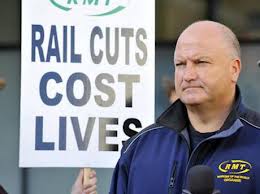
Bob Crow

Bob Crow

Opportunities to restore economic growth are also being squandered as the benefits of transporting more freight by rail have long been neglected. As British Rail prepared for privatisation, freight was ‘rationalised’ and the tonnage transported sank to record low levels in the mid 1990s. As the “car revolution” took off in the 1950s and 60s, both passengers and freight began to switch from rail to road. Helped by aggressive government policies of motorway building and the notorious Beeching rail cuts, the “transport of the future” seemed to have trumped the old fashioned Victorian railways. However, with g petrol prices, gridlocked roads and government targets to reduce carbon emissions, we witnessed a renaissance in both rail passengers and freight in the past decade.

While tonnage moved by rail has increased, and some projects are taking off to reduce road transport such as the Atlantic Gateway project to re-utilise the Manchester ship canal for freight transportation, there is simply not enough investment in infrastructure. The private sector lacks the will or ability to invest.

In response to the problems outlined here, an independent report of a study chaired by Sir Roy McNulty was commissioned by the Secretary of State for Transport in 2011. The McNulty report identified many of the problems created since privatisation but perversely has indicated that still more privatisation and fragmentation is required.

While it would be an election winning promise, Labour still refuses to back renationalisation. Shadow Transport Minister Maria Eagle has apologised for New Labour’s tame acceptance of rail privatisation, and attacked some of the problems and costs associated with fragmentation and “competition”, she still cannot even bring herself to mention the term “renationalisation”. If Labour is too timid to commit to such a policy in opposition, you can be assured a future Labour government certainly wouldn’t take such a bold step.

The public support renationalisation because they can see that the problem is profit. As with utilities, energy companies, the NHS and education, wherever privatisation occurs, maintenance is neglected, the quality of service is hampered and prices soar.

Rail travel is now more popular in terms of the number of passengers carried than at any time since the 1920s. Yet back then Britain had a much larger rail network with many more lines and stations than today. This means that overcrowding continues to be a problem. While some lines and stations have been re-opened since the Beeching cuts, many more have since become impossible to do so as they have been built over.

There is scope for the rail network to expand to support more passengers and more freight, but until a system of central planning is established with adequate investment, this is unlikely to happen.
The mess that is the West Coast bidding process stands as a synecdoche for privatisation. Until our network is renationalised it will never realise its potential.

Action for Rail is a campaign organised by passenger groups and rail unions against job/service cuts and fare increases, for nationalisation. Lobby your MP and help us leaflet outside stations across Britain.

action for rail

If you have enjoyed this article and would like to support this blog by making a donation you can do using this button

Posted in anti-cuts, trade unions | Tagged , , , | 1 Comment

Stop,Look,Listen…my weekly selection of favourite films, books and events to get you out of the house

Watch….Vampires in Havana, another interesting film being shown by the Manchester Film Cooperative. Juan Padron’s animated film is a spoof on gangster and vampire movies. Set in 1933, at a convention of vampire-gangsters who are meeting in Havana to get their hands on a fabulous new potion called “Vampisol” that at last lets vampires out into the sun without the harmful effects of UV rays. Living proof is a young vampire who was raised so normally that he has no idea he is a vampire — though that will soon change. As is the norm with MFC they do not just show a film but try and get people involved in activity so they have linked the film up to a dayschool on Latin America, see the world economic crisis from a different viewpoint. The film will be shown on 22 January, 7.30pm at On the Eighth Day, Further details see

Read….Campaigning Online and Winning How LabourStart’s Act Now Campaigns are Making Unions Stronger by Eric Lee and Edd Mustill. Like me, you may subscribe to the online LabourStart and have sent messages of support to trade unions across the world. It has been in existence for 15 years and in this book we learn about their successes, including supporting union reps not just get to their jobs back but to get out of prison, and fighting for union rights and representation across the world. There are lessons for all of us to learn but it iss also an inspiration to read given the depressing outlook for trade unions in this country. To buy it use NFN

Find out.. about a history of protest Christmas cards….Glad Tidings of Struggle and Strife: Derby Peoples History 7.30 pm Wednesday 15th January The Quad, Derby DE1 3AS. Further details see

Listen to… Victoria Brittain, journalist and campaigner on 17 January, 7pm at the Friends Meeting House Mount Street Manchester . Manchester Palestine Solidarity Campaign has organised this as part of an on-going discussion group programme. Victoria will speak about the horrific situation of Palestinian child prisoners. Children as young as 10 years old are arrested, often during the night, from their homes, taken away to detention centres, usually without an appropriate adult and held for any length of time that suits the captor. They are ill-treated and often prevented from any access to their families. Join them and take part in the discussion about how we can publicise and protest at these human rights abuses.

Enjoy…. opera in Salford, no not at the Lowry but at the Kings Arms, a much friendlier and accessible venue. Opera is often seen as a middleclass pursuit. Pint sized Opera is a new company based in the northwest who want to change that, and are presenting their version of The Love Drug or L’elisir d’amore: “Sung in Italian (with English subtitles) using young professional singers, true to Donizetti’s score and the original libretto. Can the love drug turn a computer geek into a sex god? Business is booming and emotions are running high in an office not far from here. Nerdy Nemorino doesn’t stand a chance with ambitious Adina; she’s set her sights on playboy tycoon Belcore. Then dodgy “Doc” Dulcamara appears on the scene with a new wonder-drug that could change Nemorino’s life forever”…Join them at the Kings Arms in Salford on 24/25/26 Jan. £14/7. Further details see

Go on a march…..Northern Towns against the Cuts..Austerity Bites..Game Over..march on Saturday 2 February 10.15 Halifax Town Hall, followed by speeches at Halifax Piece Hall. Organised by 12 unions with the support of Yorkshire and Humber TUC. Further details see

Get active… Legal Aid is being cut in April 2013 for many areas of social welfare law, including housing, employment, benefits, debt and immigration. At this conference Free Legal Advice in Crisis on 9 February 2013, organised by Access to Advice, they are bringing together all those affected by the cuts to share ideas and experience.
‘Free Legal Advice in Crisis’ – one day conference 10am to 4pm at Friends Meeting House, Mount Street, Manchester. M2 5NS.
Please book a place by emailing: accesstoadvice2013@gmail.com

Posted in anti-cuts, drama, films, human rights, labour history, Manchester, Middle East, music, Palestine, Salford, Socialism, trade unions, Uncategorized | Tagged , , , , , | Leave a comment

Book review; This Changes Everything Occupy Wall Street and the 99% Movement

This Changes Everything Occupy Wall Street and the 99% Movement
Edited by Sarah van Gelder and the staff of YES! Magazine
ISBN 978-1-60994-587-9

The Occupy movement in this country was dominated by events at St. Paul’s in London, but smaller groups did exist in towns and cities beyond the metropolis. How Occupy has effected the politics of this country is probably too early to tell, in fact it could be said that in this country we are still reeling from the effects of the austerity agenda that the Con/Dems have been pursuing since 2010.

Occupy Manchester

Occupy Manchester

In the USA the impact of the Occupy Wall Street was immediate and dramatic and activists and writers, including Sarah van Gelder and the staff at YES Magazine, decided that they needed to not just post articles on what was happening but also produce a book which would articulate the views of people inside and outside the movement, highlight changes that would be needed to empower the majority of people and show how social movements can make changes.

YES magazine and Yesmagazine.org was started in 1996 and exists to provide alternatives to the status quo, covering key issues including the reform of health care, building local economies and promoting alternatives to the climate crisis.

They are not an unbiased organisation; they proudly take the side of the oppressed;

We decided to write in a voice that recognised that we, too, are part of the 99%

They wrote the book as a collective of activists and writers, which makes the book more interesting than many of the books and articles written about the Occupy movement, including those produced in this country.

Occupy Wall Street was important because it targeted the centre of world capitalism. It started because activists were moved by the uprisings of the Arab Spring and the protests in countries such as Spain and Greece. On 17 September 2011 Adbusters magazine challenged activists to turn up at Wall Street and “bring a tent” and a few thousand people did. By the end of the day some people decided to set up a camp in Zuccotti Park and began what became a national and international movement.

Occupy Wall Street_latino

What were they protesting about? Sarah van Gelder explains:

The Occupy movement, as it has come to be called, named the source of the crises of our time; Wall Street banks, big corporations, and others among the 1% are claiming the world’s wealth for themselves at the expense of the 99% and having their way with our governments.

The movement was not just about saying what the problem and how it needed solving, but most importantly, challenging the orthodoxy of the American dream, that individuals were not responsible for the dire state of the economy nor their consequent unemployment, underemployment or personal debt.

It is also utopian in its belief that the majority of people (the 99%) are key to;

Unleash(ing) the political power of millions and issued an open invitation to everyone to be part of creating a new world

The figures for the unemployed in the USA are staggering; 25 million are unemployed, underemployed or have given up looking for work. Over 45% of people have been unemployed for over 27 weeks.

Other contributors to the book showed what happened next as thousands of people descended on Zuccotti Park. Andy Kroll explained that it was not just Adbusters issuing a call to the streets, but the work of a small group of people in the New York City General Assembly that laid the foundations for the creation of a community in Zuccotti Park.
1320412104-occupy-wall-street-camp-in-zuccotti-park_9103412

Andy’s article addresses many of the issues that activists struggle with in setting up organisations that are democratic and inclusive. One of the problems in this country is the ingrained nature of the Left which is dominated by the trade unions and socialist organisations which are out of touch and struggle to attract new activists into campaigning and struggles. I have been an activist in trade unions and community organisations and the cultures are very different. I saw this clash of cultures recently in the Greater Manchester Community Union which was set up by Unite. Trade unions are large, rich organisations which do not want to give their power away to activists, inside and outside the union. This does not bode well for their future!

Andy explains what a people’s general assembly is about;

Put simply, it’s a leader-less group of people who get together to discuss pressing issues and make decisions by pure consensus.

Sounds good and it obviously worked to an extent in Occupy, but one of the major problems with these kinds of activist movements is the absence of working class people. In this book there are many references to the diversity of the constituency at Zuccotti Park. Unfortunately, and I think this is one of the weaknesses of the book, it seems that all the contributors are writers or political pundits of one kind or another. I would have liked to seen a contribution from the security guards of 9/11 site who shared lunch with the Occupiers or the marines who formed their own group.

And whilst supporting the spirit of we are many, they are few, I am not convinced by the basic premise that everyone is affected in the same way by the global economic crisis. Young unemployed working class men in this country have been affected over a long period by the changing nature of our economy. Their lives and experiences are very different from the majority of students, graduates and trade unionists who have formed a significant part of recent protests. Some of them took part in the riots of August 2011, where they showed their contempt for capitalism and the establishment. Any movement that calls itself representative of the 99% needs to bring those young people into a political movement that reflects their lives and hopes for the future.
images no ema

Overall I think this is an important book. It shows the role that large corporations and Wall Street have played in the international crises and the fact that the political establishment have refused to acknowledge this. It captures the hopes and dreams of not just the people who took part in Occupy Wall Street but of many peoples across the world who want a better world to live in. It is a manual for change providing ideas and actions that can make a better, more humane society.

If you have enjoyed this article and would like to support this blog by making a donation you can do using this button

Posted in anti-cuts, book review, human rights, Manchester, occupy, Socialism, trade unions, young people | Tagged , , , , , | 1 Comment

Lipstick Socialist Awards 2012

Welcome to 2013! Thanks to everyone who made nominations. Hope it is inspirational for all of us in 2013 and there is certainly lots to be learnt from the choices made. Here’s to the New Year!!

Trade Unionist of the Year…Mark Serwotka of PCS.
MSerotka 2

He has constantly and continually hammered both Labour and Con/Dem Governments over their attack on our public services. His members (like local authority workers) have been privatised, marketised and given pariah status as the finance sector has been lauded and rewarded, whilst the public services have been given a deathblow by successive governments. It was Mark Serotka who led the fightback over the Con/Dems attack on public service pensions followed by the other public service trade unions. And he recognised how significant an issue it was for the government. Unfortunately the other trade unions failed to follow his lead, and they are now presiding over their own meltdown as their members are being stripped of their jobs and the public services are melting like the polar icecap.

A Unite member says Let’s hope that in 2013 we see a real fightback by the unions and maybe its time that Prentis, McCluskey et al start listening to Mark Serwotka before its too late!


Film/DVD of the Year
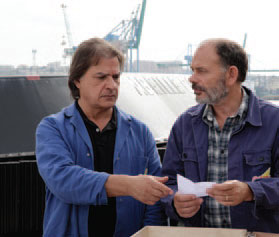
The Snows of Kilmanjaro. A French film with an unusual title that wouldn’t immediately label it as a film about trade unionism and globalisation. Over the last few years the French film industry has led the world in addressing some of the major issues facing many people in the west. Other films worth taking a look at are Army of Crime (about the French Resistance and the influence of other nationalities), Le Havre (about immigrants and the French)and 35 Shots of Rum ( about the African community as metro drivers and fathers).
The Snows is set amongst dockworkers who, facing a declining industry agree through theire trade union, the CGT, to ballot their members for redundancies.

Michel picks his own name for redundancy

Michel picks his own name for redundancy

Michel,the local shop steward, picks his name out of the drum and alongside other younger men faces the rest of his life on the dole. But, unlike some of the younger men, he is in his 50s, has had a life of permanent work, paid for his house and has a pension. He has a good relationship with his partner, children and grandchildren, but as the story unfolds, this is not the future that other redundant workers are facing in France, Britain or many other European countries. This is an important film because it reveals the anger that many young people are feeling towards an older generation of trade unionists who are experiencing redundancy but are doing so after a lifetime of not just secure wages, employment rights but also funding of education and welfare benefits. Young people are not just angry with the Con/Dems and the past Labour government but, like the young man in this film, are questioning the way trade unions are collaborating, particularly with Labour councils, to get rid of jobs and services.
George nominated this film: The Snows Of Kilimanjaro by Robert Guediguian is the best, maybe only, socialist film this year”

Demonstration of the Year…. One of the most important issues this year has been the attack on Gaza by the Israeli Government and every time I feature some aspect of the Palestinian struggle on my blog I have had an amazing response, it is a very important issue to you, dear readers. There have been many public responses to the outrageous attacks by the Israelis but the one that has been chosen as the demo of the year took place on 24 November in London.
gaza nov 1
Gaynor was there:
we managed to have the podium for the speeches set up in the pouring rain right outside the Israeli embassy and they must have heard every word of the speeches bellowed out. It was absolutely pouring down and yet there so many people were, young and old and very wet!! Tony Benn had a very bad chest. I was also late for it and very much enjoyed catching up with the tail end outside the Ritz and seeing peter tatchell chatting to the tail enders and the boat from Gaza. I was inspired as people turned up notwithstanding the ceasefire announcement (pah!) a couple of days earlier and despite the weather, and by the fact that so many of my Jewish friends were pro-same.

Further info see

Website of the Year… the Salford Star…maybe not so well known outside the north west but it should be! Run by Stephen Kingston, it is in the tradition of the local radical press of the 1970s and sits firmly on the side of the working class of Salford. Over the last year it has exposed the villainy of Salford Council and the new Mayor of Salford in their support for the interests of big business against those of the people of Salford. Not just featuring politics, the Star aims to educate and inform its readers about art, history and sport. Always cheeky and sometimes hilarious, it is on its own in trying to address the major issues, including the bankruptcy of local politics, and the struggle by people to hold onto the important things in life, including decent services and jobs.
salf star
Salford Star fan…forget Peter Kay and the millionaire comedians… read the Star and the highjinks at Clown Hall, Salford..its funnier and you can make a donation to keep it going!

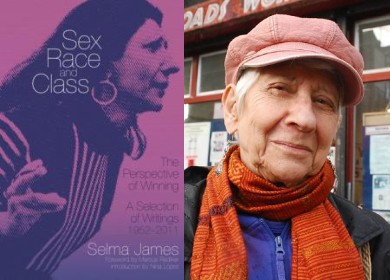
Book of the Year Sex Race and Class- The Perspective of Winning by Selma James. She addresses the power relations within the working class movement, on how to organise despite and against these power relations, and drawing on the experience of Occupy in London and the US in which the Global Womens Strike has been active.

Selma James

Selma James

Christine nominated this book: Selma gives an insight into the political economy of the exploitation of women, producing a theoretical basis for a revolutionary and autonomous womens’ struggle.

Music of the YearSarah Gillespie has won a deserved reputation on the basis of the two albums In the Current Climate and Stalking Juliet and her powerful live performances, both solo and with her band. She writes about life, love and politics, including a song about Shaker Amer, How the West was Won. Her next album, now being recorded, will be launched in July 2013.
sarah gilles
Michael says; she wowed us at the Manchester Peace Conference social and its heartening to see a performer who is concerned about some of the most vulnerable members of our society.

Campaign of the year ….the fightback by disabled people as the Con/Dem Govt stripped some of the most vulnerable sections of the community of their benefits. Their campaign against Atos (who made the decisions) during the Paralympics was inspiring and they have led the way in the fightback against the Con/Dem Govt.
cropped-Black-Triangle-web-banner-1 atos

The Disabled People Against the Cuts’ message for 2013: DPAC will not be resting in any tents in 2013 but fighting with disabled people in the courts, on the streets, online and everywhere we can

Shameful Act of Betrayal of the Year… . The United Nations and Ban ki-Moon for sending into Haiti soldiers from Nepal as peacekeepers who took with them cholera. A reminder that we might believe things are bad in Europe, but that for some countries and peoples oppression means more than losing your job or benefits.
un in haiti
Chris says :Thousands of people died from the disease. Despite the medical evidence the UN will still not admit culpability or compensate some of the poorest people in the world. For more information see this report on the BBC
http://www.bbc.co.uk/news/world-latin-america-20024400

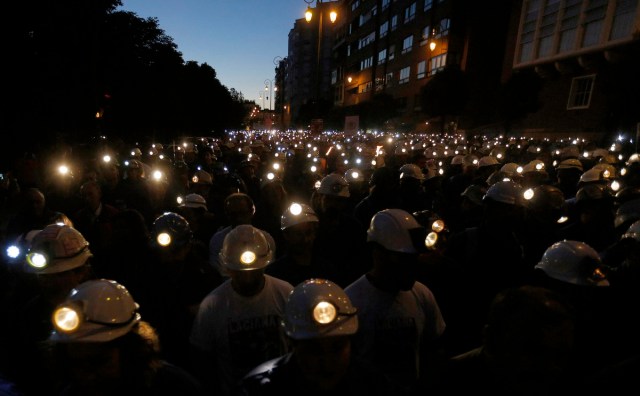
Most Hopeful Event of the Year…Spanish Miners’ Strike. Nominated by George: The Spanish miners’ strike was inspirational. Its militant nature and tenacious support received in mining communities were exceptional. Yet again, disciplined militant tactics brought employers to the negotiation table and won results. This holds many lessons for the timid and increasingly irrelevant leadership of the TUC, who continue to act as an arbitrator of, rather than a participant of industrial disputes. The heroic struggle of the Spanish Miners provided a militant lesson for the combat of austerity for the peoples of Europe.
TOPSHOTS Spanish coal miners demonstrate

If you have enjoyed this article and would like to support this blog by making a donation you can do using this button

Posted in anti-cuts, book review, Communism, disabled people's campaigns, feminism, films, human rights, labour history, Middle East, music, occupy, Palestine, political women, Salford, Socialism, trade unions, women, young people | Tagged , , , , , , , , , , , , | 3 Comments

Book review; Utopia

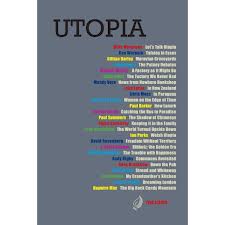
Utopia Five Leaves Publications ISBN 978-1 907869-50-1

We are living in the age of austerity. As a socialist and a writer my aim in life has always been to act collectively in my union, my neighbourhood and with my friends to make the world a better place. But in 2012 it is hard looking around to find organisations that give a lead and, most importantly, offer hope to achieving a better future.

Tom Paine, philosopher and revolutionary, wrote We have it in our power to begin the world over again. Five Leaves Publications in their latest book Utopia have reminded us of how important it is for all progressive people to have a vision for the future.

utopia fig leaves

The book includes a mixture of essays from past and present writers.

Mike Marqusee in his essay Let’s Talk Utopia sets out the case for utopian thinking:

We need the attraction of a possible future as well as a revulsion at the actual present. If people are to make the sacrifices required by any struggle for social justice, then they need a bold and compelling idea of the world they are fighting for.

Utopia is not a new concept and has a fine tradition in this country. Earlier this year, for instance, I attended the 2nd Diggers Festival in Wigan which lauded Gerald Winstanley of the True Levellers (aka The Diggers). They did not just dream about a utopian lifestyle, but in 1649 occupied St.George’s Hill to set up a colony on common lands, cultivating the soil and distributing the crops without charge to their followers. Utopia includes Leon Rosselson’s song The World Turned Upside Down which encapsulates Winstanleys’ dreams:

They make the laws to chain us well
The clergy dazzle us with heaven or they damn us into hell
We will not worship the god they serve
The god of greed who feeds the rich while poor folk starve

A song for 2012 as the bankers are bailed out by the government, our public services are being dismantled and poor people are having their benefits cut. The Wigan festival will hopefully become an annual starting point for activists, not just a get together but to look at campaigning on these issues.

Gillian Darley in her essay Equal in Death: the Moravian Burial Ground explains how the Moravian community has survived whilst others, such as the Shakers, have disappeared. The English Moravian settlements were founded in the 1700s near Manchester, Leeds and Belfast. Originally from Germany the Moravian missionaries took their message across the world, establishing communites based on economic self sufficiency and close communal ties:

They observed the egalitarian customs and norms of their own society …and while their contemporaries lived bound by a mesh of intricate social gradations and subtle measurements of class and conditions, the Moravians – largely artisans- had effectively absolved themselves from all this in favour of equality in life and death.

Moravian Settlement Fairfield Manchester

Moravian Settlement Fairfield Manchester

The Moravians understood the importance of linking work with home life and, in his essay on William Morris, Colin Ward explains why the latter is still an important socialist thinker for us today. He quotes Paul Thompson, biographer of Morris:

Morris stands alone among major socialist thinkers in being as concerned with housework and the home as work in the factory. The transformation of both factory and home was equally necessary for the future fulfilment of men and women.
wmorris

Utopia includes Morris’ own essay A Factory as it Might Be in which he sums up his vision of creating factories that would combine work and pleasure, extol training and education, as well as art and culture. He believed that machinery should be used to save the time of the worker so that s/he would have time to develop their own individual artistic and cultural needs.

Morris’ ideas of a modern factory were taken up by some employers, including William Lever at Port Sunlight and George Cadbury at Bournville, but they were never the norm for most people. And as Colin Ward points out, capital has eliminated labour and, in its drive for lower labour costs, it has relocated to China and Latin America.

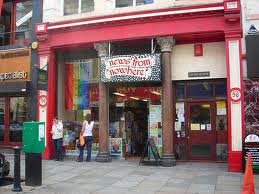
Public anger about tax dodging organisations, including Amazon, will hopefully remind people about why co-operatives such as the News from Nowhere bookshop were started in the first place and why they are even more important today. NfN started in 1974 and became a co-operative in 1984. One of the founders, Bob Dent, explains why they took the name of William Morris’ book News From Nowhere:

To create that better world which William Morris envisaged in NfN, we need ideas which counter the prevailing ideologies. Access to alternatives, creative radical ideas,which help us challenge the different power structures of society, is not a sufficient condition for changing the world, but it is a necessary one.

News from Nowhere bookshop

News from Nowhere bookshop

In Mandy Vere’s contribution about News from Nowhere, we are shown how collective action can produce radical workplaces and centres for political activity.

Her essay is insightful on how they created the co-operative and decided to make it women only and the response this got, not just the customers, but from sections of the more traditional left. One of the strengths of the cooperative has been its openness to all political movements, individual activists from the left and all strands of progressive thought.

Utopia is a good book to read to inspire and motivate ourselves and make us think about trying to encourage other people to join us and become more politically active.

Through Lipstick Socialist over the past year I have interviewed many individuals and groups about their political activity and how they see the future. There are many positive things going on, particularly in terms of new groupings, and people trying to work together on many issues from opposing the public sector cuts to encouraging more people to learn their own history.

If we as socialists want to see more people become involved in creating a better society, a utopian society, then we need to engage with the majority of people who are not active and show them that it is possible to live in a more collective and compassionate way. To quote Oscar Wilde:

A map of the world that does not include Utopia is not worth even glancing at, for it leaves out the one country at which Humanity is always landing. And when Humanity lands there, it looks out, and, seeing a better country, sets sail. Progress is the realisation of Utopias.

Season’s greetings and see you in 2013 in a utopian society!

If you have enjoyed this article and would like to support this blog by making a donation you can do using this button

Posted in anti-cuts, book review, Communism, feminism, human rights, labour history, Manchester, political women, Socialism, Tameside | Tagged , , , , , , , | 2 Comments

Stop,Look,Listen…my weekly selection of favourite films, books and events to get you out of the house

Don’t forget to vote in the Lipstick Socialist Awards 2012 – nominations received so far  include Mark Serotka (trade unionist of the year ), Barack  Obama (most shameful betrayal) and the Snows of Kilmanjaro (best film), you can find the full list of categories here …. the closing date for nominations is 23 December, please  send them to lipsticksocialist636@gmail.com see list

Watch…the progress of two  new plays at the innovative Three Minute Theatre.  Headway is a 3MT initiative taking new work from established and upcoming writers, who work alongside the inhouse cast and crew to produce an evening of new topical dramas, work in progress shows and audience forums.The next HEADWAY production takes place over December 20th-22nd, presenting ‘Not Dead Yet’ by Victor Alexander and Cassandra Bernard, and ‘Breaking Point’ by Micheal Beswick. Tickets are available now from 3MT

Don’t Look away…….Please help to stop Ivo Kuka being deported on  29 December 2012. Ivo Kuka fled his homeland after being tortured and sexually assaulted in Cameroon for membership of the Southern Cameroons National Council (SCNC), who call for independence for English-speaking Southern Cameroon from French-speaking Republic of Cameroon. Denied justice in the UK asylum system, he has been forced to attempt to appeal his case himself and is now facing removal on 29 December.
When Ivo claimed asylum in the UK he was placed in the detained fast-track (DFT) system. Victims of torture should not have their claim processed in the detained fast track system. He has had problems with getting legal support and has applied for more time to adequately present his case. But the UKBorder Agency has decided to remove him by Air France Airways on 29 December.

You can do something……

Contact the airline…Ivo is due to be removed on Air France flight AF1081 at 07:15 on 29 December.

Call on Air France not to carry this political refugee, against his will, to Cameroon where he will face harassment, intimidation, probable imprisonment and maybe worse.  Please email: mail.mediarelations.gbi@airfrance.fr

Or publicise Air France’s involvement in this human rights abuse by sending them a message through
Twitter or Facebook. Further details see

Listen……to Kathleen Ferrier singing What is Life. She was born in Blackburn in 1912 and at a young age was winning prizes as a promising pianist. Her day job was as a switchboard operator at the local Post Office.  Today in the northwest many people remember her from her early days singing at concert halls across Lancashire and Blackburn. Her career started in 1939 and she went on to to become one of Britain’s best loved singers. Sadly she died of cancer in 1953. This song is one of her best and is often played at the funeral of Communist party members, due to the words but also the link, I think with the history of the era of 1939-53 and the impact of Kathleen in peoples’ lives.
http://www.youtube.com/watch?v=qQuahSdTvU4

Buy ethically and avoid buying from tax dodging Amazon.  Read the Ethical Consumer’s guide to buying,see

Send a greetings card to Shaker Aamer in Guanatanamo. November 24th was the eleventh anniversary of the day that, after having been kidnapped by poor Pakistani farmers and sold to the Americans, while on a family trip from Battersea to Afghanistan.  Shaker Aamer was rendered, tortured and incarcerated in Guantanamo bay.  Meticulous preparation by Clive Stafford Smith and his team of lawyers has now resulted in the decision to sue MI5 and MI6 for defamation of character. Scotland Yard have now arrived at Guantanamo to interview Shaker. Further information see

Shaker’s address is  Shaker Aamer 239 US Naval Base, Guantanamo Bay, Cuba,
Washington DC 20355, USA

Posted in drama, human rights, Middle East, music, Uncategorized | Tagged , , , | Leave a comment

Community Unions; more questions than answers

In the 1930s,  at a time of national and global economic meltdown (sounds familiar) the coalition  government cut the benefits of the poor. In those days trade unions were not interested in the unemployed so a militant group – the National Unemployed Workers Movement –  was formed to organise those thrown out of work and  challenge the government. In 2012 as the economy declines – and the rich get richer – once again a coalition government wants the poor to pay for their crisis. Only this time, unlike the 30s,  people are much more isolated and lack the community cohesion that was a part of the fightback that made the NUWM a successful organisation.

unemployednuwmcpwomen1932

As a life long trade unionist and activist I was pleased to see my union, Unite,   a year ago appeared to  address the issue of representing and organising the unemployed, particularly as I too became a victim of the ConDem’s  stripping of services and workers from the public services.

Last year Unite set up its community membership scheme stating

Unite’s mission is to organise people to strive for a society that places equality, dignity and respect above all else. But our union recognises that we can only achieve this if we bring people together from all walks of life.

Even now in the 21st century, too many people in our country are being pushed to the margins of society. They deserve to be heard; they too deserve the support to organise collectively. It is with this in mind that Unite has founded its community membership scheme.

And targeting those;

Unite’s community membership scheme brings together people from across our society.  Those not in employment are welcomed into the union family, adding another dimension to our strength in thousands of workplaces across the UK.

join cu

Coming from a trade union family when I was made redundant one of the first things I did was to change my membership to that of an unemployed member. The Greater Manchester Unite Community Union was launched in June last year, but I only heard about it from a journalist friend, not from Unite. Eventually in November I decided to go along to a meeting and find out what is being offered by Unite to the unemployed.

The meeting was not like any Unite meeting I have ever been to, in fact it was similar to many community meetings that I have been involved with over the years. People sat in a circle and there was little in terms of a formal agenda. And it showed one of the major issues for a community union, bringing together two different political cultures; that of trade unions and community organising.

There was a fair representation of people at the meeting, including women, younger people, people on benefits, ex-students, and older people.  Apart from me, there did not appear to be any other unemployed Unite members there. There was a Unite shop steward from a local council, a Unite member working in private industry and a PCS shop steward.  I was puzzled by this because the latter presumably have their own branches to be active in and therefore do not need a community union .There were also two students who said they were going to set up a community union  in their university. Now I know the Unite publicity does mention students, but to me students already have their own organisation, the NUS, to be active in, so why would you want to set up a Community Union branch in a university?

There were a number of people from the local Unemployment centres in Salford and they made some important contributions, including offering access to computers (very important these days for people who want to sign on for benefits or maintain their benefits) and help for those experiencing  problems with their benefits. The issue of benefits is a crucial one for any CU, as far as I am concerned, as those receiving benefits  are being targeted by the Con-Dem government and,  like the 1930s, are suffering  severe cuts in their money.

Information was given out about the changes,  including the new Universal Credit,  and concern was raised about the way it was being trialled at local Benefit Offices .  A man who worked at a solicitors offered to train up members of the CU in welfare rights,  which was a really positive contribution. The question was asked if Unite would pay for this but the answer was no, Unite would only pay for functional skills training.  I was quite shocked by this as Unite is a rich union, and, as many unemployed people are paying their dues,  this would be one way for  the union to   provide a crucial support service to  some of the most vulnerable people in this country. Whilst it is good that one individual offered the training, I know,  having worked with young people and benefits, that the system is complicated and that  it is important to  keep up to date with  all the changes. Welfare rights work is highly skilled, and given the challenges made by the Benefit Service,  it is important that the people who represent claimants are clued up on the system.

The use and mainly abuse of the Work Programme is a big issue for claimants, never mind that it has been shown not to work anyway. One of the people at the meeting was on the WP and wanted support with the way in which people are poorly treated. Another person spoke about the way in which the WP is being used for some firms at Xmas to fill their vacancies.

Throughout the meeting I kept wondering what was the link between the people sat in this room and Unite.  Reference was made to Sheila Coleman,(respected activist from the Hillsborough Justice Campaign)  who in September 2012 was  appointed as the new Community Co-ordinator for the North West for Unite. In the Liverpool Echo she commented;

Across the North West many communities feel like they do not have a voice. Unite community membership is going to help change that. We think it is time that people who do not have a job for whatever reason are now going to have access to the benefits of trade union membership.

What isn’t clear is how this access and benefits of trade union membership can be translated into providing the support that unemployed people need and are Unite prepared to put their money where there rhetoric is.

At the meeting it was inspiring that many of the people did want to get involved in activities ranging from recruiting people to the community union to actions around the cuts and anti-poverty initiatives. But without a base to operate from, and without some resources to fund campaigns it is hard to see how it can happen.  I did try to contact Sheila Coleman to discuss these issues, but I have not had any response.

What came out just at the meeting I attended was the need for an organisation which would stand up for the unemployed, that would publicly challenge the government over their policy on cutting benefits, that would provide the unemployed with the support to challenge individual claims and,  like the NUWM,  offer them the comradeship and sense of solidarity that is the hallmark of a good trade union.

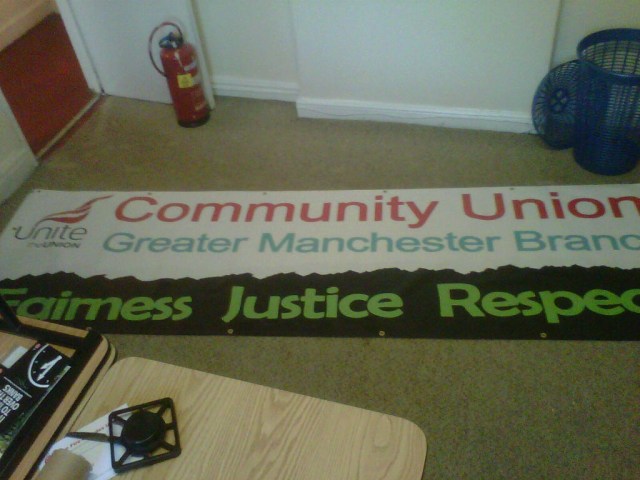
At the meeting a banner was produced for the organisation with Unite’s logo, the name of Gtr Manchester Community Union with the message Fairness, Justice, Respect admirable values for any organisation but the trick is to turn aspirations into reality.  I would welcome responses to this article.

Gtr.Manchester Community Union banner

Gtr.Manchester Community Union banner

If you have enjoyed this article and would like to support this blog by making a donation you can do using this button

Posted in anti-cuts, disabled people's campaigns, labour history, Manchester, political women, Salford, trade unions, young people | Tagged , , , , | 1 Comment

Stop,Look,Listen…my weekly selection of favourite films, books and events to get you out of the house

Watch97% Owned at the Manchester Film Coop on Tuesday 11th December, doors open at 7:30pm. Admission : £3 waged, £2 unwaged/student. Location: Kraak Gallery, Stevenson Square, Manchester.   In just 60 minutes this film provides evidence and research explaining what the money system is all about. It tells the story from the viewpoint of the UK economy and asks important questions such as where does money come from? Who creates it? Who decides how it gets used? And what does this mean for the millions of ordinary people who suffer when the monetary  and financial system  breaks down? Further info see

Join the debate…as the ConDem  government  announce more cuts and Labour Councils shed more staff why is it the trade unions have failed to build a movement against the austerity agenda? Greater Manchester Unite the Resistance have organised a meeting to launch their new pamphlet The Trade Unions and the Fight Against Austerity. Maybe it will answer some of the questions about the lack of trade union leadership. It takes place on Tuesday 11 December at 7.30pm at Friends Meeting House, Manchester. Further info see

Boycott…those firms who dodge paying tax and maybe will make even bigger profits at xmas..see 38 Degrees’  guide to spotting tax dodgers when Christmas shopping. See

Find out about…..The war novel in Africa.  Go to the lecture on Monday  10 December 2012 , NATURALISM, HUMANITARIANISM AND THE FICTION OF WAR given by Professor Eleni Coundouriotis (Connecticut) at Manchester Metropolitan University,Geoffrey Manton Theatre 5  Lecture 6.00pm. She argues that this genre,  from the 1960s through the 1990s,  is in fact a people’s history, an attempt to write outside the frame of the Bildungsroman, the genre which dominated the literature of an educated, assimilated class, and imagine history from below.

Listen to…music that suits the cold weather and winter, Vaughan Williams’  Sinfonia Antartica, the Antarctic Symphony. He wrote the music for the film Scott of the Antarctic in 1947 and he was so inspired by the subject that he went on to write a symphony, his seventh. The music reflects the tragedy of Scott’s expedition using vast orchestral forces, including an organ, a wind-machine,  a soprano and a women’s chorus which represent the wordless voices of the Antarctic blizzards. Epic and haunting…

Get Involved…….‘Inspire’ Festival Nicola from What’s On North West is looking to start up a community festival in Glossop: “It will involve many areas such as Arts, Culture, Charities, Green & Environmental Issues, Fair Trade, Local Shops/Traders, Sustainability, Human & Animal Rights, Wellbeing, Protecting Public Services…. Anyone wishing to be involved and offer support, or just wanting more information, please look at Inspire Festival Facebook page.


Avoid shopping
…go to Salford Art Gallery and see A Tourist in Your Own City: the paintings of  Nigel Walker. Born in Ordsall , Salford, Nigel’s paintings are colourful, natural, meditative and respectful of people and places.  For three years he toured Manchester and Salford presenting his view and not the usual tourist information view of the cities. His pictures show the diversity of the community; from orthodox Jews to women in Burkhas, to the youth and the poor who disappear from most mainstream pictures of our cities. Looking at the pictures made me feel I was watching a usual scene in Piccadilly Gardens or  Salford Precinct.Nigel says; “I do not copy a scene, I create a canvass.”  Nigel has created a magical mystery tour of our cities and I would highly recommend you to take the trip. See for more details.

And finally…….don’t forget to send me your nominations for the Lipstick Socialist Awards 2012   Mail to lipsticksocialist636@gmail.com

Posted in Uncategorized | Leave a comment

Still Anarchy in the UK in 2012!

My politics have been influenced by my background, including class, and the era that I grew up in. So trade unions, community and the women’s movement have dictated where I have put my political energies in past years. But in 2012 where would someone like me growing up on a council estate in the north west look for a vibrant political lifestyle? Unfortunately trade unions and the left are not particularly inspiring to me at the moment, never mind to younger people!

Last week I went to the Manchester and Salford Anarchist Bookfair because, just looking at the publicity, it seemed to be offering a way of exploring a different way of life that had some resonances with the lives that younger people lead today.
Bookfair-Poster m&s

The bookfair took place at the Peoples History Museum, quite a formal venue, but once inside the main hall I was surprised at the numbers of young people mingling with an older generation of anarchists. Yes, many people were wearing black, but there was an interesting array of stalls displaying books, photos, cartoons, veggie food as well as the more mainstream North West Labour History Society and International Brigade Memorial Trust.

Dave, one of the organisers of the bookfair, told me how it started;

It started 10 years ago and the idea behind it is to show what anarchism is, to get political people together, not to recruit them but to inspire people to do something whether it’s to get involved in some activity from squatting to writing or setting up a website. It’s about being outwardly looking and a space to show people what they can do.

Running alongside the bookfair were a series of talks offering people the chance to find out more about anarchism, and providing a venue for debate. The talks included: an introduction to anarchism, squatting, women and abortion in Ireland, and parenting and anarchism.

There are two main anarchist groups in Manchester; the Anarchist Federation and Solidarity Federation. They reflect different political strains of anarchism; the former describe themselves as “anarchist communists and revolutionary class struggle anarchists”, whilst the latter describe themselves as “ a revolutionary union initiative: a working-class organisation which seeks the abolition of capitalism and the state”.

What does it mean to be an anarchist today? Dave says that just looking around the bookfair it reflects some of the activities that people are involved in and which are relevant to their lives:

For example, there are hundreds of empty houses around Manchester and we can do something about it by squatting and this is a direct action. The idea is one of do it yourself, rather than waiting for someone else to tell you what to do, and this is our response to the issue of homelessness

In the talk An Introduction to Anarchism the speakers explained some of the political roots of anarchism and looked reasons why it continues to be attractive to new activists. Anarchism opposes the state and capitalism, and concentrates on individuals achieving their potential as political and creative beings. Contributions from the audience reflected on the difficulties of working with other mainstream left organisations in movements ranging from Occupy to strikes.
anarcha-feminism-hammer

In another talk two members of the Anarchist Federation showed a film called Why Women Travel which they had made to highlight the issue of the lack of abortion in Ireland. In the film Irish women were given the opportunity to explain how difficult and expensive it is to find out about abortion services abroad from Ireland and the obstacles faced in accessing these services. The AF have made the film to encourage people to take part in protests against the lack of abortion in Ireland and also to offer practical support (such as accommodation) to the women once they come to England. Although I think that it is good that people are organising to support a very vulnerable group of women the bigger issue is the unresolved political situation in Ireland.

In the age of the internet it was good to see that the anarchists are still producing paper leaflets and zines and books. One that caught my eye was Footnotes issue four, produced by the Footprint Workers Co-operative in Leeds. They are printers and produce the occasional paper zine, as well as having their own website and Facebook page. They use these to share campaign updates from direct action groups including Corporate Watch who have produced information on the housing crisis and a Nuts and Bolts Guide to Banking and Finance.
footprint coop

Within issue four one of the footprinters, Claire, gives her account of being at Dale Farm when 86 Traveller families were evicted from their land. Although a co-operative, they came out on strike in solidarity with the striking public sector workers as they stated;

Public sector pay, job losses and pension cuts are one major and high profile battleground in the fight against Tories’ frontal attack on public services and the welfare state.

Spending a day at the anarchist bookfair I could see why they attract such a mixture of ages and people. It is a movement that does respond to the creativity that most people have within themselves. It does offer a more direct solution to some of the problems that young people face including homelessness, low pay and isolation. And at a time when more traditional organisations such as trade unions and the left are struggling to cope with the Con-Dem attacks it seems that the anarchists, to use an old adage, understand that the personal is political.

Listen to Anarchy on the Airwaves at

If you have enjoyed this article and would like to support this blog by making a donation you can do using this button

Posted in anti-cuts, Communism, feminism, human rights, Ireland, labour history, Manchester, occupy, political women, Salford, Socialism, trade unions, women, young people | Tagged , , , , | 1 Comment

Vote for the Lipstick Socialist Awards 2012!

It’s that time of the year again when we look back on the last 12 months. I am very pleased to announce that the nominations for the Lipstick Socialist Awards for 2012 are now open, and the categories are:

Campaign of the Year

Trade Unionist of the Year

Film/Dvd of the Year

Demonstration of the Year

Blog/website of the Year

Book of the Year (either fiction or non-fiction)

Music of the Year

Most hopeful event of the Year

and finally…

Shameless Act of Betrayal of the Year

All nominations must be in by 31 December and the awards will be announced mid January. Vote early and vote often!! Please send your nominations with a short explanation as to why you have chosen them to lipsticksocialist636@gmail.com.

Events for next week……..

Attend‘Salt of the earth’: empowering working class communities across the land – a talk by Jacqui Carroll, who is Director of REELmcr and will talk about the organisation’s work giving individuals and communities groups a chance to tell their stories, using filmmaking as a medium for storytelling. The talk will include some film highlights. Wednesday 5 December 2pm at the Working Class Movement Library. More information here.

Be entertained…….at Studio Salford. Their last couple of offerings of 2012 starts off with Embryo (an eclectic cabaret of all things new) which is coming up next Friday 7th Dec, 7.30pm. Expect script-in-hand performances of new-writing-in-development, films, poetry, maybe a bit of high kicking and feather boa action, stand-up comedians, singer songwriters, head-shaving, bands, in fact anything performance based could happen see

Protest against the government’s cuts …say no to Osborne’s cutbacks and more Con-Dem Austerity Support the Fight to save our NHS………assemble 12. 30 All Saints Oxford Rd. Rally 2pm at Manchester Cathedral Gardens on 8 December. Further info Organised by Greater Manchester Association of Trades Councils.

Later…. Disabled people are amongst the hardest hit by the ConDem government’s attack on welfare. Disabled people and their carers are fighting back attacks cuts which will drive them into further poverty and leave them even isolated through lack of adequate social support. Manchester Coalition Against Cuts is facilitating the launch of a DPAC group in Manchester on 8th December, 3:30pm after the anti-cuts demonstration to protest further cuts expected in Osbourne’s budget announcement on the 5th. They are seeking volunteers to help ensure that the meeting is accessible to all those who want to attend. If you can help out contact MCAC

Later still…at 4pm demo against Starbucks who UK Uncut has announced a national day of action targeting Starbucks coffee stores in protest against the government’s spending cuts that are hurting women. Activists have chosen to target the company as a result of its tax avoidance; taxes they claim could fund public services currently being cut by the government. The action will see Starbucks stores transformed into refuges, crèches and homeless shelters to highlight the disproportionate impact of the government’s spending cuts on women. The action will take place on Saturday 8 December. See

Support local services (before Salford Council close them!)….the wonderful Salford Art Gallery still feels like a local service and has art that reflects the lives of the people who support it through their local taxes. Last week I went to the Re-tracing Salford Exhibition in which curator Lawrence Cassidy is collecting peoples memories of the streets of Salford. The exhibition includes family snaps, oral histories, home videos and street signs from the people who lives in Salford streets over the last 50 years. What makes it an emotional experience is seeing the faces and lives of ordinary people, something missing from many public art works. On the day I was there it was great to see people rediscovering their past as they looked at street maps and photos. It is to the credit of Lawrence and the other staff that they have created something that is so engaging and reflective of Salfordian life.

Posted in anti-cuts, art exhibition, disabled people's campaigns, drama, feminism, human rights, Manchester, Salford, Socialism, trade unions, Uncategorized, women | Tagged , , , , | Leave a comment