Building a Socialist Library (1) Rebel Girls: Their Fight for the Vote by Jill Liddington

Dear readers
here is the first in a series of occasional posts about books that can inspire us, not just in terms of their content but also their capacity to encourage us to take part in campaigns and activities to make the world a better place.

Rebel Girls by Jill Liddington

Rebel Girls by Jill Liddington

I have been involved with the Working class Movement Library for many years and I believe that writing and researching working class history is a political act. If we know our history, then we can learn from it and use that knowledge to keep politically active and encourage other people to do likewise. Jill Liddington, for instance, begins this book by telling us that she stood in her local elections to stop BNP candidates being elected.

The campaign for the vote was one of the most exciting periods for women in this country but, as Jill recognises;

As a suffrage historian, I know that the campaign for the vote was much wider than Emily Wilding Davison’s martyr’s death….and so much broader than the leadership of Emmeline Pankhurst which inspired such suffragette daring and bravery.

Jill has been researching and writing suffrage history since the 1970s. Her books have educated us, so we now know that there was far more to the campaign for women’s equality than the Pankhurst story. Her book One Hand Tied Behind Us; The Rise of the Women’s Suffrage Movement (1978), which she wrote with the late Jill Norris, took us into the world of the working women of the north west. Their demands were not just for the vote, but also included greater political representation and improved working conditions through trade unionism .

one hand tied behind us

In Rebel Girls Jill tells the story of the suffrage history of the Yorkshire region, an area that has previously not been researched or written about. It’s a region that provides a vibrant and exciting chapter in the history of the campaign for the vote:

They are decidly not the politically-experienced radical suffragists of Lancashire’s cotton towns, but daring rebel-girl suffragettes – usually between sixteen and twenty-five- who time and time again hurled themselves against the intransigent Liberal government.

And what did they women want? They wanted a new way of living, including equality in all aspects of their lives. They wanted an education, jobs with a living wage (something still being fought for in 2013) and a sexual freedom with greater personal choices.

In Rebel Girls Jill tells the stories of eight women who were born between 1881 and 1891. They lived through a highly charged era when taking on the authorities meant breaking all the rules and being punished for their political activity, including going to prison or being forced to go underground.

It is history at its most relevant, telling the story of otherwise unknown women and casting a light which;
Shifts little-known actors from the shadowy wings to well-lit centre stage: a new drama and chronology emerge, offering a fresh narrative history of women’s suffrage.

The front cover of Rebel Girls shows one of the most interesting characters in the book, sixteen year old Huddersfield weaver Dora Thewlis. Huddersfield was at the centre of the textile world. Families such as the Thewlis’s worked as weavers in the local mills and became active in the local labour movement.

In 1907, at the age of 16, Dora is earning almost a pound a week. Brought up in a highly politicised community her mother boasted of her daughter:
Ever since she was seven she has been a diligent reader of the newspapers, and can hold her own in debate on politics.

Dora and her family were inspired by the ethical socialism of the Independent Labour Party and the campaign for the vote. The Pankhurst campaign, the Women’s Social and Political Union, arrived in Huddersfield to set up a branch and fifty women signed up, including Dora and her mother.

Huddersfield WSPU

Huddersfield WSPU

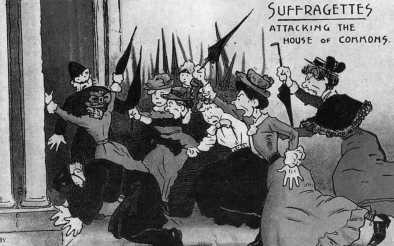
It is fascinating to read the accounts of the Huddersfield women when they went down to London on 13 February 1907, the day of the King’s Speech at the opening of Parliament. The women charged the doors of the House of Commons, fighting police on horses, for over several hours. Fifty six women were arrested:
Most of the prisoners were working class women from Lancashire, Glasgow and Yorkshire, reported the Daily Mirror, and the mingling of dialects made a strange element in the hubbub.

suffragettes attacking parliament

On 20 March it was Dora’s turn to take the train to London and become part of a contingent that once again marched on the House of Commons. The House was defended by 500 constables, but it did not stop the women. By 10pm seventy five women had been arrested, including Dora and seven women from Huddersfield. Their average age was twenty-seven and their occupations included weavers and tailoresses.

Dora’s arrest was captured by the Daily Mirror and again by Jill on the front cover of Rebel Girls. She was sixteen years old and was dubbed the Baby Suffragette by the papers. Dora was remanded to Holloway Prison and eventually released back to Huddersfield. She came back as a heroine and to parents who were extremely proud of her.

One of the reasons I really enjoy reading this book is because Jill reminds us that this history is an important part of the story of our fight for democracy in this country. And at a time when it is hard for people to feel inspired by politics, its good to remind ourselves that these women often worked ten hours a day in factories and then went out leafleting and to face violence at public meetings. They are an inspiration and in books such as Rebel Girls we are reminded how important it is to carry on the tradition of challenging authority, particularly as at the moment it is trying to take away everything that we see as essential in a democratic society.

If you have enjoyed this article and would like to support this blog by making a donation you can do using this button

Posted in anti-cuts, book review, feminism, human rights, labour history, political women, Socialist Feminism, women | Tagged , , | Leave a comment

Stop,Look,Listen…my weekly selection of favourite films, books and events to get you out of the house

WatchGood Vibrationsand discover an aspect of 70s Belfast that is not well known…the punk scene and one man’s struggle to bring some life into a bombed out city. His name was Terri Hooley and he ran a record shop and record label called Good Vibrations. Together with the kids he created a punk community determined to breathe life into their society and to try and negate some of the hardships of living in an occupied and war torn city. On his record label he signed one of my favourite bands, the Undertones. The shop still continues, so if you are in Belfast……

Look at…the new video piece by Yoshua Okon called OCTOPUS. Staged at the Los Angeles version of B&Q, the Home Depot, the artist got former Guatemalan soldiers to act out their military past. Guatemala has a bloody and violent past with over 30 years of a civil war,  including genocide against the Mayan community, and widespread human rights violations. Many Guatemalans now work in LA as day labourers and it was in the Home Depot where they search for work that the artist found the participants for his project.  There is something really eerie about this video, partly due to it being projected against four walls, but also that it was shot alongside your everyday shoppers in a parking lot. See what you think…….

Support the train  cleaners…invisible to passengers and paid peanuts by the companies who employ them. The RMT are raising the case of the cleaners on Arriva Wales who have outsourced the work to  a private company called Churchill’s. Like most of these companies,  they are a profitable firm,   but are refusing to give the workers a pay rise in line with inflation, who, like most low wage workers,  are seeing their real wages fall. RMT believe that it is  only if this work is brought in-house by Arriva Wales that this exploitation will cease. It is also calling on the Welsh government to get involved and to support the workers’ demands. You can support the cleaners by signing this petition at

Seek justice for Orgreave miners…The Orgreave Truth and Justice Campaign is seeking truth and justice for all miners victimised by the police at the Orgreave Coking Plant, South Yorkshire, on June 18th, 1984.Orgreave is part of the pattern of cover ups and lies by the police from many different forces, which are now being exposed. The campaign  calls for a full public inquiry, to take place as soon as possible, into the policing and subsequent statements recorded by the police at the time .It asks that everyone who seeks the truth and wants justice to support the campaign see

Oppose victimisation…many trade unionists face victimisation for  standing up for the rights of their members,  but UNITE activist Steve Acheson has done more than most to expose the illegal blacklisting of workers by employers, particularly in the construction industry.  He and others have been blacklisting for trying to ensure a safe working environment for workers in one of the most hazardous industries, or for trade union activity. Steve has been protesting outside Fiddlers Ferry power station since he was sacked from his job there in December 2008 as a result of being on the blacklist as a “troublemaker”.  He’s faced every sort of harassment – even having to fight off charges under anti-terrorism legislation to defend his right to protest.

Steve’s stand led to the blacklisting Consulting Association being raided by the Information Commissioner over offences against the Data Protection Act.  Its manager, Ian Kerr, gave evidence before a House of Commons inquiry a few months ago.  Kerr promised to give further evidence in private about matters involving the security services, but his sudden and unexpected death prevented him doing so.

There is an appeal to raise £25,000 to avoid Steve losing his home as a result of the illegal conspiracy to deny him work. Please make a donation to “Fiddlers Ferry Hardship Fund”  which can be sent c/o Warrington Trades Union Council, 6 Red Gables, Pepper Street, Warrington, WA4 4SB.

For more information see the Blacklist Blog.

Show your support… for the Morning Star, the only left wing daily in Britain, at the Ordinary Rebels Morning Star Social on March 28th from 7pm at 3 Minute Theatre. Join comedian Dave Puller, poet Alex keelan and singer Claire Mooney for an evening of folk music, stand up poetry and satirical sketches. Only £3! See for further information

Keep Our NHS Public protest …..on the Ist of April the NHS is going through a massive change and one that many of us are not happy with, so to mark our determination to challenge the new regime join us on 2nd April, 7.30am Cornbrook Metrolink, 7.45am Media:City Metrolink, 8am outside BBC building Media:City.. Join us at those times en route if you can’t make it to Cornbrook for 7.30am.
We’ll be leafleting commuters on the way.
A community choir will join us at Media City and everyone is urged to bring
NHS-related fancy dress for a bit of street theatre outside BBC building.
Let’s make this as lively and photogenic as possible!
We appreciate it’s early, but please do try to get along.
Organised by KONP Greater Manchester – supported by GMATUC/Greater Manchester Against Cuts.

Posted in anti-cuts, art exhibition, drama, films, human rights, Ireland, Manchester, music, NHS, North of Ireland, trade unions, Uncategorized, young people | Tagged , , , , | Leave a comment

The kindness of strangers: some reflections on exile and refugees

Dear Readers

welcome to a guest post from Ruth Eversley who gave this talk at the International Women’s day  event at the Working Class Movement library earlier  this month

Some of what you read here may not be strictly accurate. I am slightly uncomfortable about claiming to be able to recall the truth, the whole truth and nothing but the truth. I only recently found out that the story I have been entertaining friends with for years about how my father met his second wife might be completely untrue. So my personal story, like all family stories is a mix of misleadings, myths and memories.

Last October, I joined in the Feminista Lobby of the House of Commons. We had been asked to choose one of five issues important to women
• Ending violence against women and girls
• Childcare for all
• Women’s abortion rights
• The stereotyping, objectification and sexualisation of women in the media
• The ensuring of justice for women seeking asylum.

feminista 2

Like most of you here, I would probably have found it extremely difficult to prioritise any one of these above the others. Except for the fact that since I retired I have been volunteering at a project for destitute asylum seekers and I have been incensed by their treatment in this country – if any group is more stigmatised as outsiders in the UK in 2013, I would be surprised.

While we were walking across to the Houses of Parliament, I got talking to the woman next to me. It took two minutes to establish that we were both called Ruth, we had both chosen the issue of asylum seekers, and that we were both daughters of German Jewish refugees. There was an instant understanding between us.

Second generation of survivors of the Holocaust are sometimes called ‘memorial candles’; for some, that means keeping the story alive, for others, like me, it seemed unimportant, a bit of interesting family history. But as I get older, I find myself thinking about it more and more and wondering what it means and what my responsibilities are. I haven’t found any great clarity of thought yet, but I don’t think it is so difficult to understand why the plight of today’s refugees and asylum seekers might resonate.

My siblings and I were brought up as Quakers – in their time the Religious Society of Friends were outsiders themselves, persecuted and imprisoned for their beliefs, barely tolerated by some within the Christian community; they are still a tiny minority but are always there in the vanguard of movements for social justice from fair trade to gay marriage. But even in the safe environs of the delightful Bournville Junior Mixed Infants School, in the centre of the Quaker-founded Cadbury’s village in Birmingham in the 1950s, I used to lock myself in the outside toilets at playtime while the little boys re-enacted the World War Two outside, killing off those unfortunate enough to be designated Germans. Many years later, I was teaching the Thomas Hardy poem ‘The Man I Killed’ and confronted again the absurdity that my grandfathers were on opposite sides in the First World War. If it wasn’t for the fact that not a single member of either family ever showed any sporting prowess whatsoever, I would add to my mythology the possibility that they had played football together during that famous Christmas Day truce.

In the early eighties, as a naive and idealistic newly-qualified teacher, I was in charge of the sixth-form general studies programme, which meant booking speakers. It was an election year, and (despite my university indoctrination of no platform for fascists) I thought it would be a good idea to invite speakers from all the political parties standing in Canterbury. And that meant including someone from a long-forgotten party called something like the English People’s Party for Folk who Fear Foreigners. Their candidate turned up – a lovely little old woman, and proceeded to convince a few spotty youths that there was nothing wrong with foreigners as long as they stayed where they belonged. Her line was that if you go somewhere you don’t belong, you will be unhappy and then you will start behaving badly. So if all foreigners went back where they came from, all conflicts would stop and the world would be a better place.

There are so many flaws in that argument that it is almost impossible to start – but I was left temporarily speechless. Apart from the fact that as chair, I wasn’t supposed to have an opinion, a sort of tortuous logic whispered in my head Well, you’re not really English – your dad was German, you don’t belong here, so if you argue with her you’re being disruptive and are proving her point!

I’m not sure why, but as a family we never sat down and talked specifically about my father’s family’s experience; we sort of absorbed it by osmosis. It wasn’t a forbidden topic but our focus was always on the future and our education. And it was that emphasis on education which probably explains how they came here in the first place. My great-aunt, Hedwig, had met Quakers working for the Friends’ Ambulance Unit in the First World War and had been so impressed by them that she arranged for her nephews, Hans and Ernst, to attend the Quaker boarding school Leighton Park near Reading, in the 1930s.

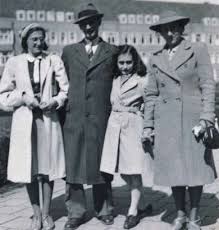
the Frank family

the Frank family

Their father, my grandfather, was called Otto. He was one of two Ottos born in Frankfurt in the 1890s. Both went to the Goethe Gymnasium, a highly rated secondary school, and both went on to do well in business. In the 30s, by now married and with two children, two daughters for one, two sons for the other, they saw the blazing writing on the wall and made their move, the one family to Amsterdam, the other to London. You probably know what happened to the Amsterdam family. Initially the business thrived but after a couple of years the family had to go into hiding in an attic where they were kept alive through the extraordinary efforts of their colleagues and friends but they were eventually betrayed and taken to the camps. There, his wife, Edith, and his two daughters, Margot and Anne died. As a child I was obsessed with Anne’s story and (much as I adored my own mother, coincidentally also named Edith) had a little fantasy that had Anne lived, she would have married my father – and my mother would have been Anne Frank. Serious bragging rights, there.

But the other Otto and his wife Dela, made it to London where they found a support system, re-built their family, made friends and stayed until their deaths many years later. They never lost their accents – my sister Judith and I once prayed for the ground to open beneath our feet while Grandma Eberstadt explained in her loud, strongly-accented voice exactly what was going on in the painting we were viewing in the National Galley. It was ‘The circumcision of the infant Jesus’. Total mortification. Their older son was interned as an enemy alien for a while but then joined the Pioneer Corps. He and his brother became naturalised British citizens, made good lives in England, one as an academic, the other as a businessman, and their children’s grandchildren with their multi-cultural German-English-Irish-Jewish-Catholic-Anglican heritage are just starting their education. The in-between generations have produced academics, social workers, teachers, entrepreneurs and business people, all making their contribution to the country which took them in. You could almost believe the Home Office Guide for New Residents when it claims that there is no place in British society for extremism and intolerance.

But of course, you would be wrong. Nowadays outsiders, asylum-seekers and refugees are, like the Franks and the Eberstadts, still too often dependant on the kindness of strangers. The prejudice and misinformation peddled by politicians and press turn desperate people into monsters and thieves, confused with economic migrants, demonised as benefit scroungers, isolated by poverty and stigmatised as criminals.

Stop for a moment and ask yourself, what is an asylum seeker?
We all have our own stereotypes, so don’t be embarrassed. Close your eyes and think of an asylum seeker. Is your image male or female? Young or old? Well-dressed or shabby? What colour is their skin? Where are they living? What are they living on? What did they do before they came here? Why are they here? What on earth would tempt them to leave home for the ordeal of disbelief, detention and destitution which awaits them here? How many of them do you think there are? What country are they from? (and are you surprised that Afghanistan, Iraq, Sierra Leone, Myanmar, the Palestinian Territories and South Sudan head the list?)

Now replace your image with the faces of :
the artist, Mona Hartoum and Alex Wek, the supermodel. How about Gloria Estefan, Olivia Newton John, Marlene Dietrich, Rachel Weisz.

when hitler stole pink rabbit

You might be familiar with the work of Judith Kerr, who wrote the wonderful children’s book When Hitler Stole Pink Rabbit and most of you will have heard of Isabel Allende, Anna Freud and Yasmin Alibhai-Brown. All of them either refugees or the daughters of refugees who have each in their own way enriched our lives because they were given a chance to escape persecution and start again. They don’t meet the stereotype so beloved by the Daily Mail.

And Britain hardly leads the world in accepting refugees, not even in Europe, let alone the rest of the world – we fall well behind Germany and Italy, let alone Chad, Jordan, Kenya, and Iran. The UN reckon that over 43 million people worldwide were forcibly displaced by conflict by the end of 2010, the highest number in the past 15 years. Eighty percent of the world’s refugees are in … developing countries … and sometimes, it seems the loudest objections to refugees and asylum seekers come from regions that do not shoulder the biggest burden of accepting and hosting refugees. Recent figures claim that there are already over 1 million refugees from the war in Syria – most of them are in Turkey, Iraq, Lebanon and Jordan. Of the three million Afghan refugees, Iran has taken over a million. In the UK, we have seen maybe 23,000.

The numbers quoted are huge and they are all going in the wrong direction. The statistics show more people are fleeing their homes because of conflict. At the same time, fewer refugees and internally displaced people are returning home than in past years, and fewer still are finding places of resettlement in third countries.

Just to clear up any misunderstanding of what the words mean:
A refugee is a person who is outside their country of origin or habitual residence because they have suffered (or fear) persecution on account of race, religion, nationality, political opinion, or because they are a member of a persecuted ‘social group’. She or he may be referred to as an ‘asylum seeker’ until recognized by the state where they make a claim.

Someone like Marjorie, perhaps. In Uganda she was active in opposition politics at a grassroots level: working in her village, helping women to know their rights and teaching them reading and writing. She was imprisoned twice. She was tortured, she was raped, she was burnt with cigarettes. She was cut with razors and subjected to electric shocks.

Eventually she escaped and came to England. She was refused asylum. It took 6 years to fight her case through the courts until she was finally given leave to remain. The anxiety and the fear she endured throughout those years were terrible. It was scary but she says she just wanted to be able to breathe fresh air again.

Or Herlinde – when she came here she thought she would be safe, but she wasn’t. In total, she spent nearly three years in destitution. That means that she was not allowed to work but also she was not allowed to claim benefits and she was not given anywhere to live.

Women like Herlinde with nowhere to go, may spend their nights in shelters. Sometimes those shelters are full, and women are forced to spend the night on the streets. Women have been raped on the streets because they are sleeping rough. Some women go to the airport to sleep. Or they take a night bus, going around and around the streets of our major cities. Some women become prostitutes to survive.

They will tell you, being destitute affects your whole wellbeing; your mind, body and soul. You can’t plan your life. You feel useless and down. Symptoms of anxiety, depression, guilt and shame are common – social isolation and poverty have a devastating effect on your mental health, along with the hostility you encounter, the racism and the fear of deportation.

Eventually Herlinde was given leave to remain but she still finds it hard to accept how her life has turned out. She feels sad all the time knowing all those years have been lost. Living like a beggar was never meant to be her life.

So what goes wrong? Most refugees are escaping some form of ethnic or political persecution. But for women this is frequently accompanied by gender-based persecution. This includes rape and sexual violence, forced marriage, female genital mutilation and forced prostitution. Gender-related persecution is not adequately understood by the UKBA and this leads to them doubting the credibility of applicants’ accounts for no good reason. The instability this causes for women who are already highly vulnerable, and the impact on their mental and physical health, is enormous.
index
This attitude, this appalling ‘culture of disbelief’ is all-pervasive within the UKBA. And then information about the conditions for women from their home countries is either not available or isn’t adequately used to inform decisions on many women’s claims.

In research conducted by Asylum Aid nine out of ten women’s cases are initially refused, the majority because the women are not believed. The fact that nearly half of these decisions are overturned if the women manage to appeal their cases tells you how inefficient the system is. Not surprisingly, under the present regime, women seeking asylum are affected by a desperate lack of legal representation. The new funding plans for legal aid for asylum cases discourages legal representatives from taking the most complex cases to appeal.

The impacts of refusal on individual women are severe – in one recent study, of those women refused asylum, 25% had been detained, 67% were made destitute, and more than half had contemplated suicide.

Adding insult to injury – literally – is the incompetence of the UKBA – you’ve probably seen the stories of the 100,000 unopened items of post in 150 boxes left in a room in Liverpool which included recorded delivery letters some of them probably related to the 147,000 outstanding ‘legacy cases’ which have left people in limbo for an average of 7 years, (which means some applications have been ignored for at least ten years)

While I was gathering my thoughts for this event, I stumbled on story after story concerning asylum-seekers and their treatment in the UK. A Radio 4 play about a gay Iranian facing deportation, a mother who slept on the floor of a mosque for five months, surviving on handouts and, possibly the worst of all, a newspaper story about a Sri Lankan woman in her 40s tortured and raped by security services after being forcibly returned to Sri Lanka on a specially chartered UKBA flight.

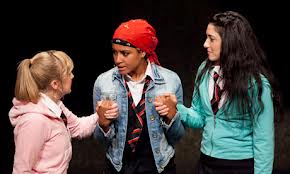
But I also read a review for Glasgow Girls, a play based on the activities of a group of Drumchapel High School students who prevented the deportation of a fellow student by co-opting teachers, lawyers, and even the residents of the tower block where the girl’s family lived who set up an early-warning system in case anyone from the Home Office was spotted.

Glasgow Girls

Glasgow Girls

And I met Rebecca, who as a child had escaped Somalia for a refugee camp in Kenya, now a mother of two, at university studying jewellery design and with leave to remain (despite not knowing that for over a year, because the Home Office had lost track of her).

So there are success stories – and behind those stories is an over-stretched network of charities, self-help groups, churches, temples and mosques, and individuals, the odd politician and journalist who, for whatever reason, recognise that these apparent outsiders could and should be our neighbours, friends and family.

Half the people recognised as refugees by the UNHCR are women. Of those who make it to the UK, maybe 24% are women. By the time they get as far as towns like Oldham, the percentages are even lower, maybe under 10%. Most of the time, we don’t hear their voices, we don’t know enough about their stories. This lack of information and understanding feeds into a fear of the unknown, an unease which can lead, as we know only too well to intolerance, disbelief and maltreatment which shames us as a society which prides itself on its tolerance and respect for human rights.

As a retired English teacher, I remember the autumn term I spent with a lively class of teenagers when, by serendipity or synchronicity, we found ourselves studying witches in Macbeth, witches in The Crucible for English Literature, witches among the many supernatural forces in Buffy the Vampire Slayer and even Sabrina the Teenage Witch for Media Studies. It was also the time of year when their younger brothers and sisters were roaming the streets trick-or-treating for Halloween.

If the women we once condemned as witches can now be celebrated as wise women, herbalists and healers – heroines and even super-heroines in some cases – we can and should work to stop the demonisation of those women who have come to the UK for support and justice. The women who come to our project are amazing – what has happened to them and their families, what they have gone through to get here, the prejudice and ill-treatment they endure now they are here can sometimes seem unbearable. But these are stories you should believe.


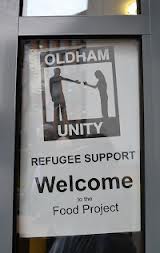
The Oldham Unity Destitution Project supports 60+ refugees each week providing food and support. They welcome donations for more information contact StewartBailey1943@hotmail.co.uk

oldham-unity 2

If you have enjoyed this article and would like to support this blog by making a donation you can do using this button

Posted in feminism, human rights, International Women's Day, Middle East, political women, women | Tagged , , , , , | 2 Comments

Stop,Look,Listen…my weekly selection of favourite films, books and events to get you out of the house

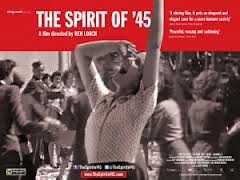
Watch..the Spirit of 45. Ken Loach’s homage to post war Britain:We have been the dreamers, we have been the sufferers, now we are the builders. (Nye Bevan) Nowadays its more a case of trying to hold onto what hasn’t been trashed by the ConDems or thrown away by Labour Councils. The film does feature some of our local heroes, including Karen Reissman of the Save the Bolton A&E campaign. Watch it at Moston Small Cinema 22-28 March from 7. 30-915pm only £3!!

Look…..at the beautiful Salford Cranes before Salford Council seeks to dismantle two of the most iconic landmarks that pay homage to the Manchester and Salford Docks and the community that was part of it. Support Alice Darlington who has campaigned tirelessly to save the cranes, sign her e-petition at http://epetitions.direct.gov.uk/petitions/45202 see article at Salford Star

Show… your support for the Morning Star, the only left wing daily in Britain, at the Ordinary Rebels Morning Star Social on March 28th  from 7pm at 3 Minute Theatre.  Join comedian Dave Puller and singer Claire Mooney for an evening of folk music, stand up, poetry and satirical sketches. Only £3!  See for further information http://www.facebook.com/events/137061903130558/

Go to…Palestinian Fundraiser for the Palestinian Women’s Scholarship Fund…at Denshaw Village Hall,Saddlworth on Sunday 28 April 2-5pm. The documentary And Still they Dance made by Sheffield PSC will be shown. Tickets are £8/4 and can be booked by ringing 07975 908409 or emailing saddleworth.pwsf@gmail.com

Remember…Ethel Carnie who was a working class writer and anti-racist activist. This year marks the 100 centenary of the publication of her first book Miss Nobody. On 7 September the WCML will be hosting a one day conference to commemorate this event. Nicola Wilson,  who is organising the event,  is looking for papers or presentations on any aspect of Ethel’s life. Contact her on n.l.wilson@reading.ac.uk by Friday 28 June if you wish to contribute.

You can read my article on Ethel here.

Oppose blacklisting Steve Acheson Benefit Friday 22nd March 7pm
Saffron Restaurant £20/£12Steve Acheson, a trade union activist  has been blacklisted, cannot get work and doesn’t get benefits so a fundraising night has been organised by friends, including Salford Pensioners Association, to get him some financial help. See the blacklist blog

Find out more about… Charles Parker, the radio producer  on Friday 22 March from 10am to 4.30pm at an event hosted by the University of Salford, in the Digital Performance Lab at MediaCityUK in Salford Quays. The event seeks to recognise the work of the late BBC producer and celebrates the radio feature-past, present and future. 2013 sees the 50th anniversary of two of Parker’s famous Radio Ballads made with Ewan MacColl and Peggy Seeger – ‘On the Edge’ about teenagers and ‘The Fight Game’ about boxing – so two of the main themes of this year’s conference are ‘the radio feature and young people’ and ‘sport on radio’.

The conference fee of £35 (£15 students) includes lunch and morning & afternoon refreshments.

More information here.


still time to see
….Shirley Baker; Looking Outwards at the Gallery Oldham. Find out more about one of Britain’s best and most interesting photographers. Through her portraits explore her life from  Manchester in the 1960s to contemporary photos of Japan and France. See

listen to… Nick Cave’s latest album,,Push the Sky Away..that distinctive voice, quirky songs and great music!

Posted in anti-cuts, art exhibition, book review, drama, films, human rights, Ken Loach, labour history, Manchester, Middle East, music, NHS, Palestine, political women, Salford, Socialism, Socialist Feminism, trade unions, Uncategorized, women | Tagged , , , , , , | Leave a comment

The Spirit of 45 and my hopes for 2013

Ken Loach’s new film The Spirit of 45 looks back to a time in the history of this country that now seems almost impossible to imagine.

I spoke to Ken last year when he was filming at the Working Class Movement Library. It’s about the spirit of 1945”, he told me, ”the election and war victories, and what people thought they were building when they took over the public utilities, including the mines, railways and established the NHS.

spirit of 45 1

The Spirit of 45 aims to recapture the spirit of an era when working class people were winning. The Labour Party won a landslide victory in the General Election in 1945, and went on to nationalise public industries such as the mines and railways and also create the National Health Service. As Ken says, It’s to celebrate the possibilities that people had in the 40s and to remember them.

He is clear about who is responsible for the destruction of the dreams of 1945, believing that the key principles of that period have been betrayed by successive politicians, It began in the late 70s with Thatcher at the forefront of attacks on nationalised industries Ken says, but carried on under New Labour. It is not politically correct to remember the times when we owned things collectively. Now people are taught to be competitive and not to work together as a team. He feels that if we are to reclaim the NHS, and other forms of common ownership, a new mass movement is needed. We need people to come together, to stop the sectarian splits, stop the charismatic leaders and get together in a mass, democratic organisation.

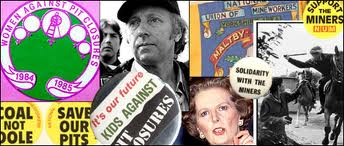
I am not so sure that it is as simple as Ken sincerely believes. Thatcher did undoubtedly wreak havoc in the 1980s across our public services and created mass unemployment, never mind the effect on the trade unions, the Labour Party and the left in this country. I was involved in supporting the Miners in the 1984-1985 strike, as were tens of thousands of others.
miners strike 2

However my own experience is that, with the growth of the economy in the 1990s, many working class people managed to get a standard of living only dreamt of or seen on TV, although it is true that some of this was gained through buying and then selling council properties and that people used credit to buy a lifestyle that they could not afford, including several holidays abroad every year, being able to move into a more middle class neighbourhood and having greater expectations for their children.

Maybe the deference factor changed in that working class people now felt they had a right to a better way of life. And maybe after working with, or being managed by middle class managers, they knew they could do those jobs. They did not feel it was a fair system whereby those jobs went to people who had the money to ensure that they could get better jobs for themselves and their children.

Women were beneficiaries of the boom in the 1990s, as the expansion in banking, finance and the public services gave them jobs and opportunities for advancement. Childrens’ Services, for instance, where I worked was just one area where, as the legal framework and professionalisation of the service increased, women from all different education backgrounds were able to take advantage of the new jobs.

Gaining financial independence meant women could make more choices about their lifestyle including marriage, cohabitation, children and also indulging themselves, symbolised by the number of nail parlours on every high street.

But what about the Left during this time? I have always worked in the public sector and it seems to me the trade unions just retreated into being part of the service sector. When I was a shop steward in Manchester in the 1980s we had regular meetings with members, branch meetings and an annual general meeting. By the 1990s there were few of these meetings, reflecting the attitude of the members and the absence of the union.

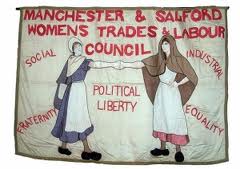
The decline of manufacturing and engineering in this country mirrored the retreat of the trade unions and lack of organisation in the new areas of work. Whilst unions such as Usdaw still organised in the growing sector of the supermarkets. other areas became union-free, including retail outlets and catering , areas which saw lots of young people get their first job and experience (often after after 3 years of a degree), working in conditions similar to a sweat shop. The trade unions had forgotten the lessons of the early 20 Century when organisations such as National Federation of Women Workers and Manchester and Salford Women’s Trades and Labour Council organised the women working in sweatshops or home working.
ms wtuc

Over the last twenty years life for young people has seen many changes, often for the worse. For young people who live in poor families, or have had to leave the family home, the change in benefits introduced by the Tories in 1988 when their right to claiming benefits was reduced to a discretionary basis meant the creeping dependency of young people on their parents/carers. They were expected and encouraged to stay in full-time education at 16 (hence the Educational Maintenance Award), but for those young people who wanted to go into an apprenticeship or just get a job, the options were limited. There was growing cultural shift so that 16-18 years olds did not work, or if they did, it was while undertaking a full-time education course.

Labour’s return to power in 1997 reinforced and accelerated this change within society. In their world everyone would want to be like them. Everyone was middleclass and everyone was winning. Their harshness to single parents, people on benefits and those who could not live the dream mirrored the Tory administrations of previous years. This was played out at the annual Labour conference which became more and more like the Tory conference. There was no vision for a better society or a more equal society, just one built on money and advancement through the accumulation of money.

So in 2013 what is happening to our dreams for a better future? Many of the jobs created over the last 20 years are now in decline as the Tories lay waste the public sector while Labour councils make no attempt to defend local services and jobs. At the same time the crisis in the banking system has already shrunk the workforce and, as in public services, led to a growing number of women losing their jobs.

Speaking to people who have lost their jobs or are just holding onto them, I can hear a growing sense of anger at the decline of not just jobs and income, but the end of a dream of a better future. Some people are looking for the antidote to this pain through alcohol and this is very obvious if you travel on public transport to cities such as Manchester or if you spend any time in the A&E’s of local hospitals.

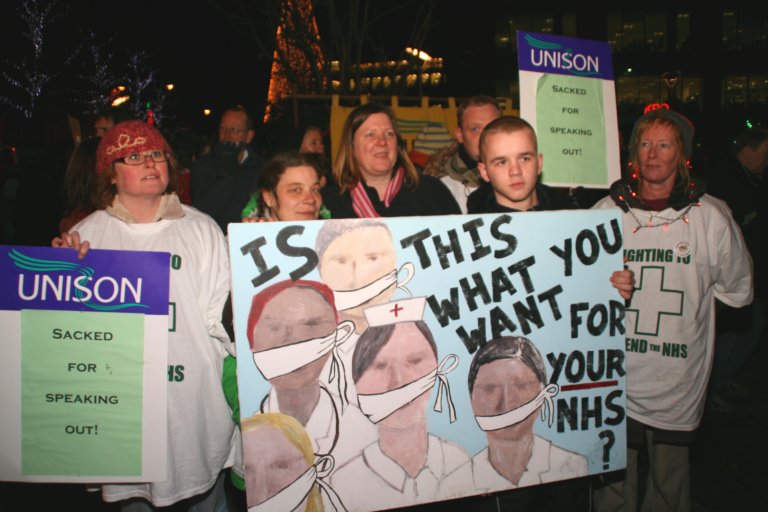
Ironically it is the campaign to save the NHS that seems to offer the opportunity for people to get together to start building an opposition to the wholesale destruction of our way of life. At a recent conference in Manchester over 100 people (many not from the traditional left) met up to challenge the privatisation of the NHS.

11dec2

Like Ken, I do believe that we need a mass movement to produce a better society, but I think we are far from achieving that at the moment. I think we need films such as The Spirit of 45 to remind us of the past, but I think if and when change comes, it will have to come from those people who are at the bottom and who are really experiencing the harshness of life.

Spirit of 45 can be seen at

Join the protest against the privatisation of the NHS April 2

Timing: assemble 7.30am Cornbrook Metrolink stop (free parking nearby), go to Media:City Metrolink stop 7.45am, go outside BBC building on Media:City campus at 8am. Join us at those times en route if you can’t make it to Cornbrook for 7.30.

If you have enjoyed this article and would like to support this blog by making a donation you can do using this button

Posted in anti-cuts, films, human rights, Ken Loach, labour history, Manchester, NHS, political women, trade unions, women, young people | Tagged , , , , | 1 Comment

Stop,Look,Listen…my weekly selection of favourite films, books and events to get you out of the house

Watch out for….Viva, 19th Spanish and Latin American Film Festival at the Cornerhouse in Manchester from 8-24 March. There are some interesting political films: my top choices are:

30 Anos de Oscuridad (30 Years of Darkness), a documentary about the people who spent 30 years hiding from Franco. They lived in attics and secret rooms in private houses, they were the moles and these are their stories.

Violeta Se Fue ALos Cielos (Violeta went to Heaven) Violeta Parra was a Chilean composer, songwriter,folklorist, visual artist and mother of the New Chilean Song Movement. Find out about her life and hear a soundtrack of her influential songs.

La Voz Dormida (The Sleeping Voice),  based on the novel by Dulce Chacon is  the story of two sisters following the Spanish Civil War. One sister is pregnant and as an active Republican has been imprisoned and her sister steps in to try save her from  being executed.

Infancia Clandestina (Clandestine Childhood),  based on real events and told from the perspective of the 12 year old son of Argentine political activists who,  on returning to Argentina,  continued to work against the military regime.

For further info see

Look….Hidden exhibition at Peoples History Museum, which is  an Impressions Gallery touring exhibition.  Hidden recreates great moments in the long struggle for rights and representation with scenes involving the dissenters, revolutionaries, radicals and non-conformists,  who have often been hidden from history.

Each scene is carefully planned and lit, using costumed models in the style of tableaux vivants (living pictures). All the participants are volunteers,  including the actors and behind scenes technicians. There is an interesting film of the project which is worth watching to show how he created this fantastic exhibition. What makes this different from many other photographic exhibitions is that Red Saunders brings his politics into the project. He was a founder of Rock Against Racism in the 70s and he hasn’t lost his belief that art can change people; “My hope is that these images can give new life to these important episodes of working people’s history.”There is more than a nod to Sheila Rowbotham’s groundbreaking feminist history book  Hidden from History here. Check out his tableau of my hero, Tom Paine, not quite how I imagined him, but if it encourages people to find out more about his life then the project will succeed and our history will not be “Hidden” anymore.

Further details see

Get active….Combat the Bedroom Tax…brilliant blog and campaign..love the angry cat logo…direct action gets satisfaction…..got a feeling that anarchists are involved…..challenging the myths about migrants are taking jobs when it’s the corporations who  are avoiding tax, exploiting the unemployed and making them work for their benefits. See

Support… our London comrades (its not their fault they are in the south).  Firebox is a political project following in the footsteps of the International Club and the Partisan Coffee House.  Not just a café,  they organise discussions, promote campaigns and are a meeting place for Londoners and,  because they are near King’s Cross Station,  it’s a convenient place to drop in if you are visiting the city. They  are located at 106-108 Cromer Street, London WC1H8BZ

They are now seeking to raise £5,000 to cement the cafe’s reputation as a haven for progressive minds. Their appeal is currently running through Kickstarter, an all-or-nothing platform; meaning the team have only 30 days to reach their goal.

Project co-ordinator Clare Solomon says The last six months have been incredible. We’ve worked with so many fantastic organisations – from the Haldane Society of Lawyers to the SockMob homelessness charity – and have had a brilliant response from the local community. Now we’re looking to fund a video editing suite for local residents and groups to use. We’d also like to run new events for the community, like free progressive parenting groups. Please give generously to allow us to do this; and pop in next time you’re in King’s Cross!

The appeal will run until Friday March 29th and can be accessed via the Kickstarter website

More…women’s events…at the Black Lion in Salford on Wednesday 13 March at 730pm. Kino Shorts; Women In Film.  Not particularly political films about women’s lives,  but featuring films from Greater Manchester to Europe that were produced, directed, written or acted by women. Go along, watch the films and join the discussion with the film makers.

Celebrate..St.Pat’s Day.. learn about our rich history and how it is entwined with the politics of the city..we are more than drinkers and singers ……Sunday 17 March,  11am,   The Irish in Manchester (Walk 1)

On St Patrick’s Day this walk will explore the history of the Irish in Manchester,  including Little Ireland, the Irish at Peterloo, the arrest of William O’Brien, MP and the story of the Manchester Martyrs. Meet at Oxford Road Station. Fee £6/£5. Advance  booking strongly advised.

More information and booking : redflagwalks@gmail.com

Posted in anti-cuts, art exhibition, films, human rights, labour history, Salford, Uncategorized | Tagged , , , | 1 Comment

International Women’s Day: Inspiring Women for the 21st Century

russian womens poster

For the sisters, mothers, friends and lovers

Who would not accept defeat

Who’ve been cut by broken promises

Been pounded by deceit

And still hold out for justice

Against brutality…….

Hitting Home by Claire Mooney  from her CD Slow Riot 1997

Clara zetkinluise zietz

On International Women’s Day 2013 I would like to dedicate this post to three women whom I think live up to the spirit of this day. International Women’s Day was proposed by two German socialist women, Luise Zietz and Clara Zetkin, at the Socialist Womens conference in 1910 and was first celebrated on 19 March 1911.

It was organised by word of mouth and debates took place about the role of women and their right to vote. It was a very successful day. Across the country meetings were organised in small towns as well as big cities. So many women attended that the men had to give way to the women and looked after the children, whilst the women went to the meetings. Over 30,000 women attended a street demonstration and, when the police tried to take the women’s banners, the women fought back.

Clara Zetkin believed that it was only working class women and men campaigning together who could change society and bring freedom and equality to all people.

In 2013 life can be really depressing and, even for those of us who have always been active in some kind of political struggle, we need inspiration to continue to oppose the attacks being made on our public services and our way of life. Here are three women who have led lives devoted to opposing injustice and inequality. They are ordinary women who led (or are still leading) extraordinary lives. They show that we can all make a difference to society – but we can only do it if we get together with other women and men. Happy International Women’s Day!

Hannah Mitchell

Hannah Mitchell

Hannah Mitchell

She was born on 11 February 1871, one of six children, on a remote farm in Derbyshire. Clashing with her mother, who stopped Hannah from going to school, she left home at 14 years to start a life of domestic service. Fortunately her employer had a good library which she devoured. Domestic work was not for her and, because she had good sewing skills, she left and went to work as a seamstress.

Hannah’s working life taught her many lessons about the limited opportunities for young working class women, the slavery of service – both domestic and factory – and the low wages which meant she often went without meals. But her new freedom did allow her to choose her own friends, develop her education through reading and begin a career in radical politics.

Hannah’s move to Bolton changed her life. She met Gibbon Mitchell, a tailor, member of the Fabian Society and founder member of the ILP. Together they pursued their politics, and Gibbon supported her in her fight for women’s right to vote in the years from the end of the 19th Century to the First World War.

Hannah, Gibbon and their son moved to Elizabeth Street in Ashton-under-Lyne where she began her life’s work;
It seems to me now, looking back, that all my previous life had been a preparation for this great experience. While indirectly it caused me much sorrow, it brought me many contacts which have immeasurably enriched my life.

Hannah became involved with the Pankhursts, the Women’s Social and Political Union and the Suffragettes. She was a good speaker, who wasn’t put off by hecklers or the violent behaviour of a minority of people who attended her meetings. She was employed as an activist and organiser for the WSPU, which involved everything from speaking at parliamentary by-elections to organising campaigns and going to prison.

The intensity of the work led to Hannah having a nervous breakdown and having to withdraw from the campaign whilst she recovered.

Hannah’s belief in pacifism meant that she broke from the Pankhursts over their support for the First World War. The years following the war saw the victory of the campaign for the vote. Hannah and Gibbon continued their political life in the ILP and in 1924 she was elected to Manchester City Council.

As a councillor she worked hard to improve the lives of working class women including building a local wash house where women who did not have bathrooms or wash-house facilities could use.

After retiring from the council in 1935 she continued to speak at womens’ meetings and the Co-operative Womens Guild. Hannah had always wanted to write and now she had the time and wrote stories about everyday life which were published in Labour’s Northern Voice.

Before she died in 1956 she wrote her lifestory: The Hard Way Up; the autobiography of Hannah Mitchell, Suffragette and Rebel which was not published until 1968.To buy it see

Bernadette Devlin McAliskey

Bernadette Devlin, 1969

Bernadette Devlin, 1969

She was born 23 April 1947 in Cookstown, County Tyrone, in the Six Counties of Northern Ireland, one of six children. Her father was a carpenter who couldn’t find work in Northern Ireland, so he lived, worked and sadly died in England, aged just 46. Her mother died at the same age and Bernadette became the legal guardian for her 15 year old brother, whilst she was a student at Queen’s University in Belfast.

She said about her life:
If it hadn’t been for the fact that I had an essentially Christian background from my mother,poverty would have made me bitter rather than socialist, and what I know of politics would have made me mad Republican.

From The Price of My Soul by  Bernadette Devlin,  1969

In 1968 Bernadette became involved with the growing Civil Rights Movement in the Six Counties, a movement that called for the right to vote, fair electoral boundaries, freedom of speech and assembly, repeal of the Special Powers Act and a fair allocation of jobs and houses. It was part of a world-wide protest movement of massive anti-war Vietnam marches , workers and students striking and rioting in France and sit-ins in Universities across Britain.

The reaction of the Royal Ulster Constabularly to the marches organised by the CRM was to violently attack the demonstrators. This galvanised the movement and within twelve months sent tremors through the Northern Ireland government and the Labour Government in Westminster.

Bernadette and her student comrades set up their own organisation, Peoples Democracy, which went on to organise more marches and leafleting. She became one of the leading figures.

In April 1969 Bernadette was elected to the House of Commons at the age of 21 years and was the youngest woman MP. She stayed as an MP until 1974.

Being an MP did not stop her political activity, she took part in the Battle of the Bogside when the residents, faced with loyalist marchers and a sectarian RUC, defended their area for three days until the British government intervened and replaced the RUC with the British Army.

Bernadette was convicted of incitement to riot and served a prison sentence. In 1971 she had her daughter Roisin and two years later she married Michael McAliskey.

Over the years she has been involved in various left organisations, including Irish Republican Socialist Party. During the Hunger Strikes in 1981 she stood as an independent candidate and she was a leading spokesperson for the Smash the H-Block Campaign. In January 1981 Ulster Freedom Fighters shot her and her husband in front of their children, despite a secret British Army surveillance on their house. Three people were arrested and jailed for the attempted murder.

Bernadette was, and remains critical, of the Good Friday Agreement and the creation of the power sharing executive in Northern Ireland. Her views have not changed, and history has shown that the power still lies with Britain. She believes that only a socialist republic can deliver justice and equality to all the peoples in Ireland.

In January this year she spoke at the 41st anniversary of Bloody Sunday. On that day in 1972 13 innocent people were killed by British soldiers in Derry. The Saville Inquiry confirmed this, but the report failed to expose or even attempt to explain, the role of Edward Heath’s Tory government and British army chiefs in the events of Bloody Sunday and the subsequent cover-up. In her speech Bernadette linked Bloody Sunday with the Miners’ Strike in 84-5, and the Hillsborough campaign, other tragedies where the Government have consistently covered up the truth, and the families and supporters have had to campaign for years to prove the innocence of their children or friends. She also confirmed her lifelong view of politics: that it is only when people get together to oppose injustice that they will produce a better society.

Let’s look at the endurance of the families who have held this fight. Let’s look at the endurance of Marian Price and Martin Corey and the others and let’s say to ourselves: we have got to get a political programme together here and get the struggle for civil rights, political rights, social rights and economic rights together or we are in, comrades and colleagues, for one hell of a hiding.
To read the full speech go to

Bernadette McAliskey Photo by Stephen Latimer

Bernadette McAliskey Photo by Stephen Latimer


Selma James

Selma at the recent disabled peoples protest

Selma at the recent disabled peoples protest

She was born 15 August 1930 in Brooklyn, New York. She worked in factories and then became a housewife and mother. At 22 years she wrote A Woman’s Place and became a regular columnist in Correspondence, a newspaper written by its readers with pages dedicated to women, black people and young people. She said about A Woman’s Place:

When the pamphlet was published I took it into work with me and sold a few copies to the women I knew in the factory. ……It was entirely new then for the opinions of a working class woman, especially a housewife to be published, even by a socialist organisation.

In 1955 she married CLR James who had been deported from England during the McCarthy period. Not just a married couple, they were close political allies for over 25 years.

From 1958 to 1962 she lived in Trinidad with CLR James and they were active in the West Indian movement for independence, after which they returned to England. Selma became the first organising secretary of the Campaign Against Racial Discrimination in 1965 and also founded the Black Regional Action Movement and was editor of its journal in 1969.

In 1972 she founded the International Wages for Housework Campaign and in 2000 Selma launched the Global Women’s Strike, which called for investment in caring not killing.
global womens strike

She coined the word “unwaged” to describe the caring work women do, and it has since entered the English language to describe all who work without wages on the land, in the home, and in the community. Selma has made visible the struggles of some of the most vulnerable groups, including sex workers and drawn the connections between them and all other workers. She recounts this campaign in her book Hookers in the House of the Lord (1983).

Selma has been active in politics for over forty years. Her writings are grounded in her own activism and she understands that for many people not winning has been their experience, but she draws courage from her understanding of history;
Information and understanding of how and where we resist and rebel are the basis on which we build our determination to win and our confidence that we will win.

Today her articles and books are being read by a new audience of activists.Her most recent book is Sex, Race and Class.

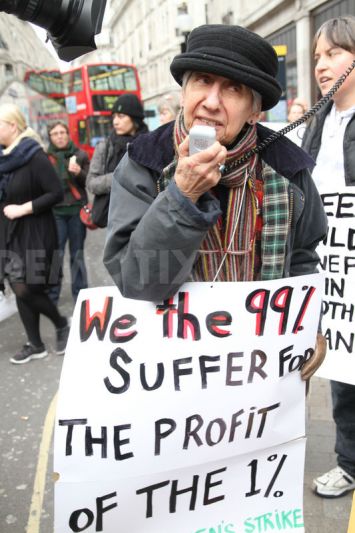
Selma spoke at the Occupy London Stock Exchange in November 2011:

All power to the 99% is a most anti-racist twenty first century statement. To highlight the 99% versus the 1% is to expose the basic hierarchy in society. It stakes a claim that almost all of us, waged and unwaged, belong together.

If you have enjoyed this article and would like to support this blog by making a donation you can do using this button

Posted in feminism, International Women's Day, labour history, North of Ireland, political women, Socialism, Socialist Feminism, women | Tagged , , , , , , , , | Leave a comment

Stop,Look,Listen…my weekly selection of favourite films, books and events to get you out of the house

WatchTull at the Octagon Theatre…what has happened to political theatre I am constantly asking myself,  and then up pops a brilliant play. It’s the real story of Walter Tull, the second black professional footballer in Britain,  and one of the few black officers in the British Army. Phil Vasili researched and wrote a book about Walter which has now been turned into a play. Its not just the story of a mixed race young man and his search for fulfilment on the football and military field but a young man who is part of one of the most dynamic periods of history in this country; 1888 to 1918. A period when the campaign for the vote for women was at its heigth and Vasili knows his history as we watch Tull’s suffragette girlfriend Annie speak at public meetings to make the case for equality and oppose the First World War, two of the most controversial subjects of this era. It all takes place on an empty stage and the actors wear modern clothes allowing the audience to concentrate on the words and actions of a dynamic and totally engrossing play. Its well worth catching but get there before the 16 March further details see

Look…at The original rocku/mocku/documentary. One More Chance by local film maker John Crumpton; Shane Ventura, the legendary rock ‘n’ roll artist of the late fifties and early sixties, narrates the emotional journey of his rise to fame and his equally meteoric fall…

John is a BAFTA award winning sound editor, film and video maker, writer, trainer, BECTU learning organiser and photographer. He makes inspiring and idiosyncratic films including the hit Tea Machine, and I Married a Cult Figure from Salford,  as well as documenting important political events such as the International Workers Memorial Day  featuring Claire Mooney singing A Day to Remember.  To watch these films see


Find out about…..The Youth of Palestine; How the occupation is blighting their future at a public meeting organised by Oldham Trades Council on Monday 18 March,  7pm. Speakers to include: Bernard Regan, Trade Union Officer, Palestine Solidarity Campaign. Venue; Oldham Unitarian Chapel, Oldham. Further details contact secretary@oldham.nut.org.uk

Celebrate…International Womens Week….here are some of my favourites…

3 March..Women at Peterloo walk…led by Michael Herbert from  Red Flag History walks, who is the author of “Up then Brave women”, Manchester’s radical women, 1819-1918.   He is also doing walks on 8 March on radical women in Manchester  and 10 March on “Votes for Women”.  booking advised in advance, go to

3-10 March at Three Minute Theatre:..an exciting programme of drama and arts events to celebrate minority womens issues and provide a platform for their voices. See

7 March 12.30-1.30 and 6pm-8. 30pm A talk about artists Isabel Dacre and Annie Swynnerton at Manchester Art Gallery. The gallery has 17 pictures by Dacre who studied at the Manchester School of Art who  with Swynnerton,  founded the Manchester Society of Women Artists in 1876. Not just an artist, Dacre was a member of the executive committee of the Manchester National Society for Women’s Suffrage. For more info see    FREE

8 March 1.15-2pm..Living History Performance; The Hard Way Up-A Suffragette’s Story. Hannah Mitchell is one of my heroes, her life is a testament to the many workingclass women who gave their life to the struggle for equality and justice for women and men. This is an excellent play, written by Eileen Murphy,  and we need more of these stories to inspire us today. See FREE

9 March…2-4pm  Working Class Movement Library.. northwest writer, Livi Michael,  author of  Malkin Child, and activist,  Ruth Eversley,  discuss what it means to be an outsider from  the Pendle Witches to the asylum Seekers and refugees of today.  For more information see FREE

More history…..A blog that offers the public the opportunity to tell their story about the history of Manchester. It says;

HistoryME is a community in which we all get to tell our story and how we have all contributed to the history of Manchester and how we are shaping its future. It’s where the History of Manchester is written  by you. Its simple because its FREE and all you have to do is write about what you know; you and your history, your family and friends, community and your relationship to the great city of Manchester.


Indulge in some forbidden arts……… Callout: Manchester Temporary Autonomous Arts is back!! 6th – 9th March. An underground movement has continued to rise over the past 10 years to become an exciting, active, and important network aiming to provide spaces for people not catered for in our consumer driven individualist society. Opening its doors to artists, poets, musicians and creatives of all kinds on Wednesday 6th March for the 4 day event, we hope YOU will join us in the tide of DIY culture, energy, ideas and fun. This unique open access event aims to unite people from all backgrounds on many different levels with creativity, workshops, food, discussion, skill shares, films, and music and and all good things people feel to bring. See

Eat……and make your views heard.…..  Salford based theatre company Quarantine are offering you a free lunch at Manchester curry house, the Kabana Café, if you talk to them for half an hour. It is refreshing that a theatre group want to listen to their customers,  and maybe other companies should follow when going to the theatre is a luxury item. For more info on the monthly curry and chats visit http://www.qtine.com or you can book your place by emailing info@qtine.com or calling 0161 830 7318.
Next date is Wednesday 13 March 2013
Time: Half hour slots between 12 noon – 2.30pm
Venue: Kabana Café
Address: 52 Back Turner Street, Northern Quarter, Manchester M4 1FP

Posted in art exhibition, drama, feminism, human rights, International Women's Day, labour history, Manchester, Palestine, political women, Salford, Socialism, Socialist Feminism, trade unions, Uncategorized, women, young people | Tagged , , , | Leave a comment

Dr Who and the Communist: the politics and work of Malcolm Hulke

Update. March 2016. Michael Herbert has written a revised and updated version of  this post on his blog  on science fiction which is called Fantasies of Possibility. You can read the article    here


Dear readers,  here is the latest in a series of  occasional guest posts. This is  from radical historian Michael Herbert who started watching Dr.Who aged 8 years in 1963 , and perhaps it had a bigger influence than he (or his parents) realised at the time…he is still watching… This has now been revised and published by Five Leaves Press see
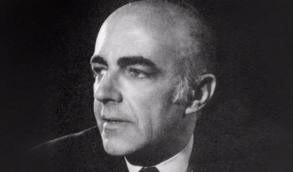
Malcolm Hulke

Malcolm Hulke

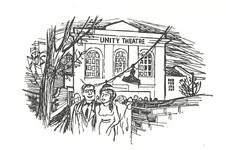
Malcolm Hulke was a successful, and much admired, writer for television, radio, cinema and the theatre from the 1950s through to the late 1970s. He wrote for Armchair Theatre, The Avengers, Crossroads and Dr Who, for which he is best remembered and on which I will be concentrating in this article. It is less well-known that he was also a socialist, belonging for a time to the Communist Party of Great Britain. My interest in his work was sparked by coming across a pamphlet he wrote for Unity Theatre, which is held in the collection of the Working Class Movement Library.

Malcolm (or “Mac” as he was often known as) was born on 21 November 1924. Despite checking with a number of archives, I have been not able to establish exactly when, and for how long, he was in the Communist Party of Great Britain but it seems to have been in the 1950s. He may have left the party in 1956, as thousands did, when the Soviet Union invaded Hungary and crushed the uprising with tanks. His politics remained on the left, though, unlike other former party members who moved to the right, and this view of the world was reflected in his writing.

Unity Theatre
unity 1unity 2

Malcolm was very involved with the socialist theatre company, Unity Theatre. In 1961, to mark the 25th anniversary of the company, he produced a booklet Here is Drama- behind the scenes at Unity Theatre on how the company worked. He stresses that almost all jobs at Unity “can be done, and are done, equally well and equally badly by women as well as men”. He ends the pamphlet thus:

Unity is a theatre of ideals. But don’t you be too dreamy-eyed in your approach. Only the very mature, and the lonely, stand the test of time. Some people have even been known to use Unity as a jumping-board for West End theatre work, don’t forgot they may do a lot of good for Unity Theatre in the process. Never store up grievances : take them to the Management Committee. In the final analysis, however, there is only one person who will change and improve unity theatre. You.

TV drama
He began working with Eric Paice in the 1950s. Their first success was The Day of Fear, rejected by ITV, but then taken up by the BBC and broadcast on 1 July 1958.
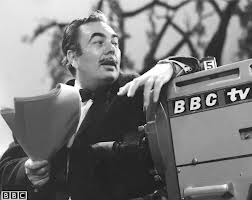
Sydney Newman

Sydney Newman

They wrote four plays for Armchair Theatre, broadcast by ABC, whose producer was the Canadian Sydney Newman. Newman, a voracious reader of science-fiction, also commissioned Malcolm and Eric to write a children’s science-fiction serial, Target Luna, broadcast in April 1960. This was a success with the public and Newman commissioned three sequels: Pathfinders in Space, Pathfinders to Mars and Pathfinders to Venus, which aired between September 1960 and March 1961.

Pathfinders in Space

Pathfinders in Space

The stories centred on British expeditions into space launched from a Scottish island. Newman’s aim was to educate young people about science and the space race, which got under way when the Soviet Union launched the first satellite, Sputnik, in 1957, followed by the first cosmonaut, Yuri Gagarin, in 1961.

Dr Who
Now working for the BBC as Head of Drama, Sydney Newman created Dr Who with much the same aims as he had in Pathfinders ie to broadcast  a popular drama series for young people which would also educate them. Newman came up with the idea of the mysterious Doctor and his time and space machine, the Tardis, and gave the job of producing the series to Verity Lambert. The first episode An Unearthly Child was broadcast on 23 November 1963, and it became a huge hit when its second serial introduced the Daleks.

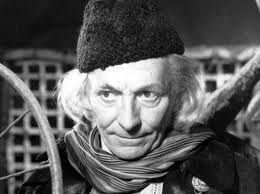
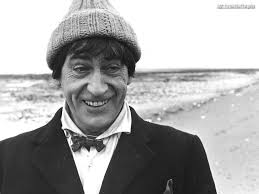
William Hartnell
William Hartnell

Patrick Troughton

Patrick Troughton

Jon Pertwee

Jon Pertwee

The Doctor was played by William Hartnell from 1963 to 1966 , by Patrick Troughton from 1966 to 1969 and by Jon Pertwee from 1970 to 1974.

In December 1963 Malcolm was commissioned to write a serial for Dr Who called The Hidden Planet and produced a number of scripts, but in the end it was not proceeded with. His first broadcast serial was The Faceless Ones, written with David Ellis, and broadcast in April 1967. This featured aliens, known as the Chamaleons, who have taken over an airport and are stealing the identities of travellers in order to take over the world.

The War Games

The War Games

Malcolm’s  next contribution to Dr Who was The War Games, written with Terrance Dicks and broadcast April-June 1969. This stretched over ten episodes and was written at haste, because, as Terrance admits, they had run out of scripts. The Doctor and his companions, Jamie and Zoe, land in what appears to be a First World War battlefield, but then discover other wars from the past, such as the American Civil War,  are taking place in neighbouring zones. It becomes apparent that they are not on Earth at all, but on another planet where the war games are being run by an alien race so that they can create an invincible army to conquer the galaxy. They are assisted by a renegade Time Lord, the War Chief. The Doctor falls in with a band of rebels who have realised what is going on. At the end the Doctor has to summon the Time Lords to resolve the situation. they  who do so, but exile him to Earth with a new body In this story Malcolm shows war as violent and futile , controlled by ruthless leaders who place no value on human life. It also shows that people can see through the illusions of war and make a stand together – and win.

When  Jon Pertwee  took over  the role of the Doctor in 1970 the producers opted for a new departure, with the exiled Doctor acting as a scientific advisor to UNIT ( United Nations Intelligence Taskforce).  Interviewed in 1994, Pertwee said,  “I wanted to play him straight, to be a figure that the children believed in, who have enough faith in the Doctor to say the doctor will do it, he will look after us and we’ll be all right under his wings”. The series was driven forward by script editor Terrance Dicks and producer Barry Letts. In these serials the Doctor often encounters aliens, not from space, but from out of the earth or the sea . Even those that do land,  such as the Axons, have an organic appearance, whilst the Autons transform the everyday material of plastic into a deadly threat.

Malcolm contributed six serials to Dr Who  between 1970 and 1974, written against a backdrop of considerable political and social upheaval. This included the rise of the Women’s Liberation Movement;  many industrial disputes, including national miners’ strikes in 1972 and 1974;  growing oncern about the impact of industrialisation on the environment; rising violence in Northern Ireland, which spread to Britain; increasing support for the far-right National Front and rumours of private armies being setup by retired generals.

Terrance Dicks
Terrance Dicks says that, whilst they never commissioned a Dr Who with a political message, “there is a streak of anti-authoritianism in all Mac’s work. He doesn’t trust the establishment”.

The  Dr Who companions, 1970-1974

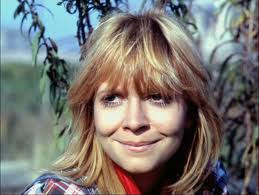
Liz Shaw
Liz Shaw

Jo Grant

Jo Grant

Sarah Jane Smith

Sarah Jane Smith

The Doctor’s  companions in this era were Liz Shaw (played by Caroline John), Jo Grant (played by Katy Manning) and Sarah Jane Smith (played by Lis Sladen).  Liz , we learn at her first meeting with the Brigadier,  is a cambridge scientist, “ an expert in meteorites, degrees in  medicine, physics and a dozen of other subjects”; Jo is a Unit operative, an expert in “cryptology, safe-breaking and explosives” ;  Sarah-Jane Smith is an investigative jounalist.

Some of the changes  then  taking place in the role of women in society are  shown by  two lines that Malcolm gives to Liz Shaw in The Silurians; “Haven’t you heard of female emancipation? “ (episode 2) and “I am a scientist, not an office boy” (episode 6). In 1970, the year this serial was broadcast, feminist campaigners disrupted the live broadcast of Miss World from the Albert Hall. A social  earthquake was underway.


The Silurians,
broadcast January-March 1970

The Silurians

The Silurians

UNIT is called in to investigate why an underground atomic research centre – seeking to provide cheap,unlimited power – is suffering problems with their energy supply and mysterious attacks. The Doctor discovers that they have awakened an ancient race, the Silurians, intelligent reptiles who ruled the earth millions of years before the evolution of the human race. Despite the best efforts of the Doctor to broker a peace, suspicions on both sides end in the destruction of the Silurians.

Malcolm explored a number of themes in this serial, including the threat posed by unfettered scientific research, relationships between races and the military mind-set which believes that violence can solve all problems.

The Ambassadors of Death,
broadcast March– May 1970

The Ambassadors of Death

The Ambassadors of Death

Malcolm inherited the script from David Whitaker and a number of other writers had a hand in the final version, which looks back to the Quatermass serials of the 1950s in its storyline of the astronauts from a British space expedition who vanish. Instead three alien ambassadors land on Earth and are kidnapped by a cabal of politicians and military men, who force them to carry out a series of robberies. The Doctor and his assistant , Dr Liz Shaw, eventually rescue them and avert a war with the aliens This theme of an establishment conspiracy occurs in a number of Malcolm’s serials.

Colony in Space, 
broadcast April-May 1971
Colony in Space

Colony in Space

The Master steals files about a Doomsday weapon. The Time Lords pluck the Doctor out of exile and send him into space to stop him. He and his companion, Jo Grant, arrive on Uxarieus, where a group of colonists are building a new society. There is also a native race, the Primitives. A mining company, IMC, lands an expedition and plots to expel the colonists and extract the mineral wealth, using a robot to fake attacks on the colonists. The Master also arrives in the guise of the Adjudicator. The Doomsday weapon is destroyed by the Guardian of the Primitives, the Master is defeated and the mining company is sent packing.

There is a strong storyline in this serial about the environment and the rapacity of mining companies The colonists have left Earth because of an environmental crisis which is killing the planet, while the leader of the mining expedition states that what’s good for IMC is good for earth and that IMC want this planet and they are going to have it.

The Sea Devils,
broadcast February-April 1972.

The Sea Devils

The Sea Devils

Exploration for oil in the Channel re-awakens another group of Silurians who begin to attack shipping. The Master makes contacts with them, offering an alliance to destroy the human race. The Doctor goes down to their undersea base attempts to broker a peace but this fails when a politician orders an attack. Finally, the Doctor defeats the Master and the Sea Devils, whose base is destroyed.

The storyline echoes the first Silurian story with attempts to reconcile the two races ultimately failing and ending in violence.

Frontier in Space, broadcast February-March 1973

Frontier in Space

Frontier in Space

The Doctor and Jo Grant lands in the C26th where the Earth and the Draconian Empire are on the verge of war after a series of attacks which each blame on the other side. It turns that the Master, in alliance with the Daleks, seeking to provoke a war, and then move in unimpeded to conquer the galaxy. The Doctor convinces the humans and Draconians of the real threat: a joint expedition defeats the Master. .

This storyline is surely shaped by the Cold War when the United States and its allies confronted the Soviet Union and its allies. Both sides possessed vast arsenals of weapons, including nuclear weapons, and on a number of occasions came very near to war. Malcolm shows how mutual suspicions can be manipulated, but also that they can be overcome.

Invasion of the Dinosaurs,
broadcast January-February 1974

Invasion of the dinosaurs

Invasion of the dinosaurs

The Doctor and his companion, Sarah Jane Smith, land in a deserted London under martial law and learn that dinosaurs have appeared, forcing the evacuation of the population. They discover a conspiracy of politicians, scientists and army officers who, concerned for the environment, are planning to return the earth to what they believe will be a “golden”, pre-industrial age using a device called Timescoop. The planet will then be repopulated by an elite group who have been fooled into thinking that they are in a space ship going to a new world, but is in fact an underground bunker. The Doctor defeats the conspirators, sending the leading scientist, Professor Whitaker, into the past.

This was perhaps Malcolm’s most openly political storyline, which can be seen as a critique of some elements of the environmental movement of the 1970s, who believed that industrial society was killing the planet and that only a revolutionary change in society and forms of production would suffice. Malcolm also includes a socialist slant on the environment crisis, giving the Doctor a speech at the end in which he says “Its not the oil and the filth and the poisonous chemicals that are the real causes of the pollution…Its simply greed” .


Dr Who novels and other written work

the making of dr who
As we have seen from his pamphlet on Unity, Malcolm had a strong interest in explaining how drama was produced. In 1972 he and Terrance Dicks wrote The Making of Dr Who, described by Gary Russell as “the most important piece of work in the entire history of Dr Who publishing”. Published in 1972, it recounts in a straightforward way how Dr Who started and developed, as well providing a précis of all the episodes up that point. It also explains how the show is produced and filmed. Nowadays this kind of information is instantly available on the internet, whilst “Making of” programmes, such Dr Who Confidential, lay bare the production techniques. In the predigital age, however, the book was groundbreaking and  eagerly seized on  by fans keen to know more about their favourite television programme.

The popularity of Dr Who led to the publication of novels based on the TV serials, beginning with Dr Who and The Daleks , written by David Whittaker, which appeared in 1964, published by Frederick Mueller. From 1973 Target books began publishing Dr Who novels, many of them written by the original TV scriptwriters. Mark Gatiss, a writer  for the current series of Dr Who,  has written “Target gave us exciting versions of the stories we had seen – and glimpses into a strange and mysterious past where the Doctor had been someone else… In an age before video and DVD, the Target novelisations were a chance to relive the television adventures ”. (You can read the full interview with Mark here)

novel sea devilsgrren deathnovel the war games

Malcolm wrote six novels for Target, five of which were based on his own work;  Dr Who and the Cave Monsters, Dr Who and the Doomsday Weapon, Dr Who and the Space War, Dr Who and the Invasion of the Dinosaurs and Dr Who and the Sea Devils. The sixth was Dr Who and the Green Death, based on the serial written by Robert Sloman, which famously featured giant maggots, the product of environmental pollution.

His Dr Who novels are more than just a straight retelling of the story. Malcolm often adds in extra scenes or references, sometimes alters the plot, and awards even minor characters a backstory and a character. In the Cave Monsters, for instance, he gives the Silurians personal names eg Okdel and begins with a prologue showing the intelligent reptiles bidding farewell to their world as they enter the shelters. In The War Games he adds the following

They passed through several corridors, glanced into study rooms and kept seeing men dressed as officers from the armies of world history. They even saw two young women dressed in blue slacks and shirts with scarlet neckerchiefs and blue berets.
“The Spanish Civil War”, the Doctor said quietly , “Women fought in the frontline there”.

Malcolm wrote another book Writing for Televison, published in 1974. In this he drew on 20 years of writing experience to explain the craft involved and also gives practical advice on the industry such as the need to get an agent. He naturally encourages young writers to join the union, the Writers Guild of Great Britain, which he helped to set up in 1959. Malcolm includes a number of examples of scripts, including an extract from the Dr Who serial Carnival of Monsters, written by Robert Holmes, with a comment from Robert, who says that “Doctor Who releases a writer from his normal mental straightjacket. He can, for once, leave the padded cell of reality and fantasise through eternal time and space. It is an enjoyable and refreshing exercise.

Malcolm died on 6 July 1979. Terrance Dicks recalls that, as a convinced atheist, he left orders that there was to be no singing or other ceremony at his funeral and that his friends sat by the coffin not knowing what to do: “Finally Eric Paice stood up, slapped the coffin and said ‘well cheerio, Mac’ and wandered out. We all followed him”.

Interviewed for the DVD release of The War Games, David Howe said that Malcolm was “passionate about writing, passionate about Dr Who and what he had done”, while Gary Russell said, “That genius, that little spark of making people come alive on the page is what made me want to be a writer. Its solely down to Malcolm Hulke’s writing of people’s character and that viewpoint.

The final word must surely go to Terrance Dicks; “he was  a very kind and generous man”.

afterword…

This is shortened version of much longer article which I would be happy to send to anyone interested. Please email me ; redflagwalks@gmail.com
Clearly there is great deal more to be said about Malcolm’s politics and  work, not just with Dr Who  but also his involvement with Unity Theatre, his contribution to  the TUC centenary pageant in 1968, his scripts for The Avengers and Crossroads,  his many radio plays, his work in the cinema (including Sigurno je sigurno, a film made in Yugoslavia in the 60s), and the strange tale of an episode he wrote for the German TV comedy series Gestern Gelesen.

A full-length study of Malcolm will be published later this year, written by John Williams, with whom I have had the pleasure of exchanging a number of emails. It will be called Mac,  The life and work of Malcolm Hulke and will be published by miwk publishing.

A note on the author
Michael is a Trustee of the Working Class Movement Library with which he has been associated for 30 years after meeting its founders the late Ruth and Edmund Frow: Ruth and Eddie were a huge influence on my life and I learnt so much from them about working class history and the importance of not forgetting the past and what working people have done to gain political rights and social justice.

Michael is a past editor of the North West Labour History Journal and has written numerous articles about Manchester’s history. He has written three books Never Counted Out!, a biography of Manchester black boxer Len Johnson who became an active member of the Communist party in the 1940s; The Wearing of the Green, a political history of the Irish in Manchester; and Up Then Brave Women; Manchester’s radical women, 1819-1918. Weather permitting,  he leads radical history walks around Manchester. More information at Red Flag Walks

If you have enjoyed this article and would like to support this blog by making a donation you can do using this button

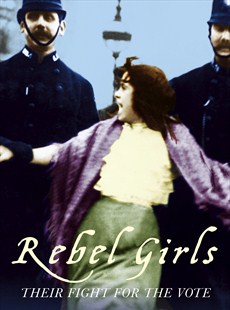
Posted in Communism, drama, films, TV drama | Tagged , , , , , , , , , , , , , , , , , , , , , | 4 Comments

Stop,Look,Listen…my weekly selection of favourite films, books and events to get you out of the house

Watch.Chasing Ice ..as part of Climate Week (4-10 March), Manchester Film Co-op invites you to a screening of the brand new environmental documentary, Chasing Ice by photographer James Balog. In 2005 Balog decided to prove the effects of climate change by undertaking; The Extreme ice Survey. He set up revolutionary time-lapse cameras across the Arctic to produce a record of the change in the glaciers. It was a challenge for him in terms of his own survival and it took years to produce this film. His hauntingly beautiful videos compress years into seconds and capture ancient mountains of ice in motion as they disappear
at a breathtaking rate. Chasing Ice depicts a photographer trying to
deliver evidence and hope to our carbon-powered planet.

See it; Tuesday, 5th March.
Doors open at 7:30pm, film begins at 8pm.
Admission: £3 waged, £2 unwaged/student.
Venue MERCI, Beswick Street, Ancoats, Manchester, M4 7HR.

Celebrate….International Womens Day 2013 at the Working Class Movement Library Saturday 9 March at 2pm. International Women’s Day was first celebrated on 19 March 1911 following a resolution proposed by two German Socialists, Luise Zietz and Clara Zetkin, at the Socialist Women’s conference in Copenhagen the previous year. At a time when many other women’s organisations want to define IWD as a women-only lifestyle event stripped of its real politics, the WCML places the day at the centre of socialist and historical reality. Our event will have speakers, Livi Michael and Ruth Evers discussing what it means to be an outsider in society. Livi is a novelist who will discuss her latest book Malkin Child, a fictionalised account of the story of the Pendle Witches. Ruth is a volunteer with the Oldham Unity Destitution Project and will talk about her own experience as a refugee and the lives of the asylum seekers and refugees whom she works. Please note the event is open to women and men.For further details see
Further info on Livi see

Stop the English Defence League….who are coming to Manchester on Saturday 2 March. Join all the people who don’t think that they should be allowed to take over our city. Gather at Piccadilly Gardens at 11am on 2 March. Further details see

Support….. Manchester Refugee Support Network. This is a network of Refugee Community Organisations who supports refugee led organisations and provides specialist advice and support to asylum seekers and refugees. Like many similar small charities, it is currently struggling to continue to offer these services on a shoe string. To raise money they have organised a Ceildh on Friday 1st March at Chorlton Irish Club 7.30 – 11pm. Tickets £5 or £7, available from siamak@mrsn.org.uk

Learn about…..A history of social movements; the Bolton Perspective…the tutor is activist and historian Mark Krantz. Starts 17 April 10.30-12.30pm at Bolton Central Library. Further details contact http://www.nw.wea.org.uk or ring their regional office on 0151-243 5340

Take part….as an actor in a play by Bertolt Brecht, Fear and Misery of the Third Reich also known as The Private Life of the Master Race. The play is a compilation of short mini-plays/ sketches which build in tension to paint an intense human picture of life under an increasingly brutal totalitarian regime. It is ideal for those who want a challenge in acting without taking on too much of a commitment in rehearsal time or line learning.Audition: Monday 25th Feb at the Casa, Hope Street, Liverpool L1 9BQ . 7.30pm 3 nights performance at the Lantern Theatre, (performance dates Tue, Wed & Thu May 7th, 8th & 9th)
Experienced actors and newcomers welcome. 0771 684 8894 or tomm562002@yahoo.com for more details.

Don’t Forget……There’s a follow-up organising meeting by Greater Manchester Keep Our NHS Public, as agreed on at their recent conference , taking place on Thursday 28 Feb, 7pm, room G1 at the Friends Meeting House, 6 Mount St., Manchester city centre. Please do your best to attend. Room booked as GMATUC / Keep Our NHS Public.

Posted in anti-cuts, book review, drama, education, feminism, films, human rights, International Women's Day, labour history, Manchester, political women, Salford, Socialism, Socialist Feminism, Uncategorized, women | Tagged , , , , , | Leave a comment