Stop,Look,Listen…my weekly selection of favourite films, books and events to get you out of the house

Watch…..Libertarias (1996), a film showing organised by the Manchester Film Co-operative. It’s a historical drama that explores the role that women played in the Spanish Civil War. In 1936 Spain was a deeply conservative Catholic country and the SCW offered women the opportunity to become physically active in the militias that opposed Franco. Only it is never as simple as that because women in many liberation struggles face the problems of sexism and misogyny, and that was as true in 1936/7 as it is today. Libertarias gives a different perspective on the SCW, looking at the Anarchist struggle and their women’s organisation, Mujeres Libres (Free Women). The SCW was not just about fighting Franco, it was for many people the opportunity to create a society that offered true peace and justice to all sections of society.
Date: Monday, 30th of September.
Time: Doors at 7.30pm, the film to begin at 7:45pm.
Admission: £3 waged, £2 unwaged/student.
Venue: The Kings Arms, Bloom Street, Salford.

Defend the NHS……it’s a big week for all of us campaigning to stop the further privatisation of our beloved NHS so please join us…

Saturday 28 September 1.30pm at the Volunteer Centre, 95 Penny Meadow, Ashton under Lyne. Listen to local campaigners including Terry Tallis of Stockport NHS watch and the director of Tameside Healthwatch, Dr.Chand, and find out how they have been challenging the selling of our local services to Virgin, Serco etc. Also join in the debate about what we can together to oppose this privatisation. Organised by Tameside Keep Our NHS Public. Further details TamesideKONP@gmail.com

Sunday 29 September the Tories are in conference in Manchester and the TUC has organised a demo to highlight how their policies are undermining the ethos of the NHS and public services. It starts at 11am. More details see

Later that night…celebrate subversion with The Anti-Capitalist Roadshow : a collective of singers and songwriters: Frankie Armstrong, Roy Bailey, Robb Johnson, Reem Kelani, Sandra Kerr, Grace Petrie, Leon Rosselson, Janet Russell, Peggy Seeger, Jim Woodland plus the socialist magician, Ian Saville. see

Support ..Saddleworth Palestinian Women’s Scholarship Fund. On October 13 from 11-2pm there is a Fundraising Brunch to raise money to support the Sheffield Palestinian Women’s Scholarship Fund. It is helping 20 Palestinian women in Gaza to access higher education. The brunch includes breakfast, a talk by a woman recently returned from Palestine and the opportunity to buy Palestinian goods. For more information please contact:
Saddleworth.pwsf@gmail.com


And for something completely different…
…….3 October is National Poetry Day and if anyone could be said to be the poet of the north, then John Cooper Clarke is the man! To celebrate the day and find out more about Mr.CC watch Evidently…John Cooper Clarke at the Cornerhouse followed by a live streamed interview with him from Tyneside Cinema in Newcastle. Not sure why Newcastle when he lives down the road in Salford! Further details see

And for more about the north…earlier on the 3 October at 5.30pm, it’s the launch of Manchester photographer David Chadwick’s new exhibition , We Were All Here, Once in the Cornerhouse bar. The exhibition features photos from the heyday of Manchester clubs, the 70s and 80s, including the Legend, the Mayflower and Fridays. You might even see yourself in one of them…more details see
Posted in anti-cuts, art exhibition, Catholicism, Communism, feminism, films, human rights, labour history, Manchester, music, Salford, Tameside, trade unions, Uncategorized, women | Tagged , , , , , | Leave a comment

Stop,Look,Listen…my weekly selection of favourite films, books and events to get you out of the house

Watch….The Spirit of 45.  Tameside NHS campaigners have arranged a special showing of Ken Loach’s documentary The Spirit of 1945 on Saturday 21st September, 6.30pm, in Mossley Community Centre, Roughtown Road.Mossley. Entrance is free.Premiered earlier this year, the documentary looks back at how in 1945, in a country battered by six years of war, Britain created a National Health Service and Welfare State that there was the envy of the world. It includes archive footage and interviews with people about their memories of the 1940s, including a number of nurses from Manchester who worked in the NHS at its birth. Loach poses the question; what is happening to that legacy?

Loach says he was motivated to make the documentary because I felt it was important to record the memories of those almost written out of history who upheld the spirit of ’45. Today, the market penetrates everywhere. It’s time to put back on the agenda the importance of public ownership and public good, the value of working together collaboratively, not in competition.

The showing has been organised by Tameside Keep Our NHS Public which is campaigning against the privatisation of the NHS. Further details,  TamesideKONP@gmail.com

Find out about….the British Left and Zionism; History of a Divorce, a new book by Paul Keleman which explores the relationship between the Labour Party and Israel. Manchester Palestinian Solidarity Campaign have invited Paul to speak about his book on Thursday 19 September at 7pm at the Friends Meeting House in Manchester. Further info contact Linda on 07985 624968

Go and see; Don’t Shoot the Messenger…a wonderful play about the history of the  Post Office and the reasons why we should support the Communications Workers Union in their strikes to stop the theft/privatisation by the Government. Local theatre group Mikron are performing it at Buile Hill Park Hall on 22 September at 7.30pm. The proceeds from this event will raise money for Salford Loaves & Fishes, a charity which provides services in a safe and secure environment for homeless and vulnerable. More information http://www.salfordloavesandfishes.co.uk It costs £20 which includes your theatre ticket and a hot supper. Further details; tel: 0161 661 0903 or email rita@mcnassociates.org.uk to buy tickets.

Listen to…. Lotte Lenya sings Kurt Weill’s The Seven Deadly Sins and Berlin Theatre Songs. Lotte (18 October 1898 – 27 November 1981) was an Austrian singer, and actor. Married to Kurt Weill she is famous for singing his songs and it is in this performance, captured on disc in 1956,  that the true power and beauty of her voice and the magic of his songs make it a truly unique recording. Listen at

Posted in anti-cuts, drama, films, human rights, Ken Loach, NHS, Palestine, Tameside, Uncategorized | Tagged , , , , , | Leave a comment

Stop,Look,Listen…my weekly selection of favourite films, books and events to get you out of the house

Watch… The Most Valuable Englishman Ever..(on Youtube so its free) iconoclast Kenneth Griffiths’ documentary on Thomas Paine. Griffiths is as ever totally over the top but, like me, he venerates Tom because he was an intellectual and activist who spoke and wrote about human rights at a time when this was seen as treachery by the upper classes. But he was lauded by his own people, the working classes, because he supported their ideals for a just and fair society. Watch the film to find out more about Tom which might inspire you to get involved in a campaign. Also available on Youtube is In Lambeth, a play about Thomas Paine and William Blake, written by actor Jack Shepherd (he of Wycliffe and Bill Brand fame). In the 80s I saw a production in Manchester with Ruth and Eddie Frow who ensured that the WCML had a wonderful collection of his writings .Also in this version a rather handsome Mark Rylance plays Blake..not how I imagined Blake but… and Bob Peck plays Thomas Paine

The Most Valuable Englishman

In Lambeth Jack Shepherd’s play on Thomas Paine meets William Blake see

Find out more about badges….I love wearing badges that express my political views but its not that popular anymore, not sure why, maybe people are not so certain about where their loyalties lie?. Next week at the wcml on Wednesday, 11 September, at 2pm, in the first in the Library’s new series of Invisible Histories talks, Lauren Murphy, whose grandad was a Moston miner, will be talking about the wearing of ‘statements’ and messages of the working class over the years – badges, political ribbons and so on.
Lauren is a recently graduated jewellery student and based her last project around the miners of Bradford Pit. She carried out interviews with some of the pit’s remaining miners, who still live on the estate where the pit stood, to find out how they feel their efforts have been remembered. She created a collection of wearable ‘commemoratives’ in honour of these miners since, she says, ‘it is apparent from my conversations with them that they feel the need to have recognition through some kind of physical remembrance’.She is planning to put on a fundraiser for a commemorative plaque for the Moston miners. Come and find out more on Wednesday!

Support Afghan Women…I marched against the government’s involvement in Afghanistan and never believed that the West’s involvement in that country would create a democratic society for women and men. Since 2001 women’s rights have improved with two and a half million girls are enrolled in school, women can work outside their homes while the constitution grants women and men equal rights. But women have not had a say in the talks around a peace deal for Afghanistan and Amnesty strongly believe that women not only have a right to be involved in any future peace process but their participation is also crucial to securing a just peace for all Afghans.Check out their site for more information see

Read…The Sea Captain’s Wife by Martha Hodes. Published in 2006, this is a fascinating story about how the author found in an archive 500 letters which she used to recreate the life of a working class woman in 19 century America; Eunice Connolly. The lives of working class women of any century are often missing from the established histories and it takes a brilliant historian such as Martha to produce a book that is not just historically correct but is an insightful and heartwarming story. There are many apects to the book that are fascinating. For many in the Irish community (either here or in Ireland) going to America was seen as a way to find work and a better life and in this book we see that certainly in the 1840s that was not the case for many Irish people. They were treated not much better than black people and, for Eunice as a white working class woman, she was conscious of not slipping down the economic ladder to the position of the Irish or black community. Ironically she did eventually marry a well off black sea captain and moved to the West Indies. Highly recommended.See

Stop G4S….they are everywhere minding us in public buildings, railway stations except if you are a refugee… G4S guards forcibly restrained Jimmy Mubenga (Angolan refugee) while trying to deport him – they used “unreasonable force and acted unlawfully” and the Inquest has found that he was unlawfully killed while in their custody. Greater Manchester Campaign is calling for all publicly funded G4S activities to be brought back “in house” under public management and control. In particular, they are calling for Manchester Council to stop contracting with G4S – now! There is a campaign meeting on Thursday 12th September 2013, 7pm Friends Meeting House Mount Street Manchester M2 5NS.

Posted in anti-cuts, art exhibition, book review, drama, education, feminism, films, human rights, Ireland, labour history, Salford, Uncategorized | Tagged , , , , , , , , , , | Leave a comment

Book Review; Miss Nobody by Ethel Carnie

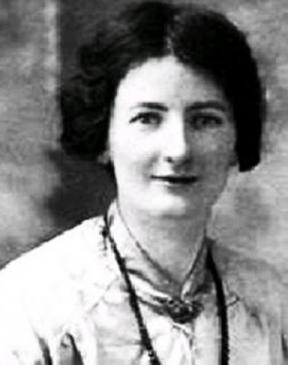
Ethel Carnie grew up in one of the most vibrant and progressive eras for working class people. It was a period of the birth of the trade union movement, of mass unrest on the streets and in workplaces and the continuing struggle for votes for women.

ethel carnie

Ethel was right at the heart of this momentous change in society. She was born into a cotton weaver’s family and had worked in the mills from the age of eleven. Her political education was part of her life as a worker and being part of a society where politics was at the centre of the community. Her father, like many people in Great Harwood at that time, was active in the Social and Democratic Federation and took Ethel along to its meetings and social events.

She learnt from her own experiences as a factory worker and, at a young age, used poetry to express the bitterness she felt about the life she and her comrades lived:

Factory life has crushed the childhood, youth, maturity of millions of men and women. It has ruined the health of those who would have been comparatively strong but for the long hours of unremitted toil and the evil atmosphere (The Factory Slave, Woman Worker 1909)

Spotted by socialist author Robert Blatchford she eventually left the mill and took up a writing career. She wanted to write books about her own class;
What I feel is that literature up till now has been lopsided, dealing with life only from the standpoint of one class

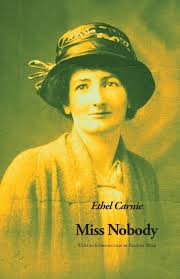
In 1913 first novel Miss Nobody was published, which has just been reissued, and is probably the first published novel by a working class woman in Britain.
miss nobody

For me it is not just that Ethel was a working class woman novelist but that she was a socialist feminist who chose the novel as one way of expressing her political views about the lives of women and men with a distinctive message: that the system itself needed changing.

Miss Nobody is Carrie Brown, an orphan, who lives in Manchester and makes a living working as an oyster seller. On a visit to her sister in the countryside she decides that life would be better there than in the city;
The sky fascinated Carrie. It looked so different here in the country from the narrow, hand’s breath between the grey houses as she viewed it in slack moments from the door of the oyster shop.

A chance encounter with a local farmer, Robert Gibson, leads to marriage and the realism that life is in the countryside was not the rural idyll she had imagined and eventually she leaves and returns to the city. It is in this part of the book, as she trudges around Ardwick in Manchester looking for work, that the real grimness of life for women and men is explored by Ethel:
Only the clatter of the clogs was heard in the lull of the wind-tramp, tramp, tramp, sounding mysteriously out of the darkness and hurrying more quickly like the ending of a musical march as the shriek of the whistle gave its warning that the doors would soon be closed. Little feet of half-timers, fresh from school, and the feet of grey-haired women who had borne children, buried children, had grandchildren, yet must still follow the call of the whistle.

Because Ethel had been active in political struggles she knew that these women (and men) could collectively improve their pay and conditions and in Miss Nobody it is Carrie who instigates a strike:
She asked the girls to back up Room 7, and join the Union, those who were not in it already, and fight, like Englishwomen.

But Ethel is not romantic about the price that these women pay to get their ninepence wage rise:
From scrap meat to ham-bones, from ham bones to butterless bread-credit refused in many cases-everything sold that could be done without, and always the thought haunting them that if they would merely give in they could get meat again.

For me, some of the most powerful passages in the book are about the strike and the Battle for Ninepence, reflecting Ethel’s own experience of factory life and the struggle for a better life.

She went onto write nine more novels as well as more poetry and articles. She worked as a teacher at the Bebel House Women’s College and it was there she set up the Rebel Pen Club for working class women:
The idea occurred to me of binding such women together in a club whose members would not only help and encourage one another, but might do an immense service to the international socialist movement.

Ethel’s own political life continued and, with her husband, Arthur Holdsworth, she set up the National Union for Combatting Fascism and the first anti-fascist magazine Clear Light, which she edited from 1920-25.

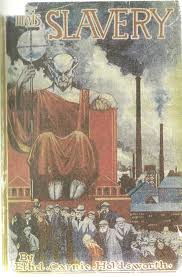
In 1925 she wrote This Slavery, a no holds barred depiction of the factory life she endured and then escaped. And, like Carrie in Miss Nobody, it is working class women who are central to the story, women who are not victims but who challenge their place in society and challenge a system that denies them equality and justice.
this slavery

Ethel wrote her last novel in 1931 when she was 45 years old. She said she was worn out which probably reflected the feelings of many political activists who lived through this era. She had survived a world war, seen the rise of fascism, witnessed the election of a short-lived Labour Government in 1924 and seen all women achieve the vote in 1928. In her personal life her marriage had ended and she lived out the rest of her life with her daughter in Manchester.

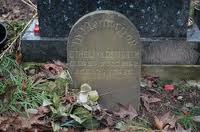
Ethel Carnie's grave in Blackley, Manchester.

Ethel Carnie’s grave in Blackley, Manchester.

For me, as a working class socialist feminist, Ethel’s novels are an inspiration because of the politics that run through them. Her heroines are lively and funny but also serious and dedicated, wanting not just bread but roses too. Her novels are an antidote to many modern depictions of working class life and in many ways provide hope in an era of economic and social austerity.
On Saturday 7 September celebrate the centenary of Miss Nobody and the life of Ethel Carnie at the WCML see

If you have enjoyed this article and would like to support this blog by making a donation you can do using this button

Posted in book review, feminism, labour history, Manchester, novels, poetry, political women, Socialist Feminism, trade unions, women, young people | Tagged , , , , , | 1 Comment

Stop,Look,Listen…my weekly selection of favourite films, books and events to get you out of the house

Watch..…Kuma. .the story of Ayse, a young Turkish woman, who leaves her village to join her husband and his family in his adopted country of Austria. But, as we watch Ayse arrive in Vienna, the story becomes more complicated and no-one, including her, is what they seem to be. The director, Umut Dag, is a Kurd born in Vienna, and in the film he explores many issues that affect women and men in the Turkish community in Europe. It is not just about the role of women and marriage but also the strains of trying to maintain one’s identity and family links, whilst seeking freedom. See it at Cornerhouse

Learn about,,, the Tolpuddle Martyrs in this new play WE WILL BE FREE. Set in 1834 the drama follows the extraordinary true story of George and Betsy Loveless. He was a Methodist preacher and the leader of the six Dorsetshire farm labourers who were tried, convicted and condemned to harsh transportation by an oppressive Government for having the temerity to swear a secret oath and form a union to fight against a succession of wage cuts inflicted by the local landowner. Sadly it is only being performed in two places in the northwest; Marsden and Bury. Further details see

Celebrate……the life and ideas of Wigan born and bred Gerrard Winstanley & the 17th Century “Diggers' (True Leveller) Movement at the Wigan Diggers Festival….Over the weekend of 7 September that marks 337 years since his death, the event promises a celebration: via the medium of poetry, music and song, film and a range of other activities, of the life and ideas of Wigan born and bred Gerrard Winstanley (1609-1676) and the 17th Century ‘Diggers’ movement he became the inspirational theorist and spokesperson of. The great thing about this event is the lack of the official trade union movement, no Francis O’Grady nor Billy Bragg, just many ordinary folk who are involved with a real mixture of campaigns, including the Keep Our NHS Public. Further details see

Challenge… your prejudices about body hair…I WISH I HAD A MOUSTACHE A solo poetic journey into the history of the female beauty regime. Written by Keisha Thompson, a poet, actress, feminist and musician.The show explores beauty, gender anxieties and the taboo of body hair. She says: I think considering the significant level of PCOS sufferers in UK, it is about time we challenge the taboo labels attached to some of the symptoms, such as female body hair. There are many vehicles for political change but the most engaging one for me is political theatre. Tuesday 10 Sept to Thursday 12 Sep 2013, 7.30pm, £6/3 Contact Theatre, Oxford Road, Manchester, M15 6JA 0161 274 0600

Read… The Big Music by Kirsty Gunn. A novel set in the highlands of Scotland about family, music and identity. John Sutherland is dying and he wants to create a musical composition that will tell the story of his life. From the book we learn about the history of the clearances that drove many people off their land, the role of pipe music in their communities and the history of two generations of one family. Watch this clip where actor Brian Cox reads from the book and we catch a glimpse of the land that inspires the music and the story see

Posted in book review, Communism, drama, feminism, films, human rights, labour history, Middle East, NHS, Socialism, Socialist Feminism, trade unions, Uncategorized, women, young people | Tagged , , , , , | Leave a comment

Book Review: Jim Larkin and the Great Dublin Lockout of 1913 by John Newsinger

Review of Jim Larkin and the Great Dublin Lockout of 1913 by John Newsinger. Bookmarks publications
jim larkin......

On 26 August 2013 it will be the centenary of the Dublin Lockout. John Newsinger, author of a new book Jim Larkin and the Great Dublin Lockout of 1913, says that:

The Dublin Lockout of 1913 is without doubt the most important industrial struggle in Irish history. It was also one of the most important industrial struggles in British history.

A hundred years later, he feels that there are lessons that people can still learn from those events;
The Irish in Dublin at that time were some of the most downtrodden people in Europe. But a key aspect of the Lockout was the solidarity amongst workers and the way in which the strong helped the weak.

From 1910 to 1914 there was a massive backlash from working class people in Britain and Ireland against the British state. In Dublin workers had the lowest wages and worst living conditions as the workforce were often casual workers fighting to survive from day to day. The dispute lasted six months with over 25,000 people on strike and was led by charismatic trade unionist, James Larkin, of the Irish Transport and General Workers Union. Newsinger defines Larkinism as: a remarkable movement of working class revolt and resistance.

Jim Larkin

Jim Larkin

Newsinger’s book is a highly readable account of the lead up to the strike and the consequent repercussions for the trade union movement on both sides of the Irish sea. He has uncovered new research which he has incorporated into the book, including facts such as Pete Larkin (Jim’s brother) speaking at a meeting in Sheffield where 20,000 people turned up and the trams had to be stopped.
DB 1

He used the newspaper of the Social and Democratic Federation, Justice, and local newspapers to discover new facts about the impact of the Dublin lockout in Britain. Newsinger feels that there are still big gaps in the story:
There is no list of places where Larkin spoke when he came to Britain and there is a need for someone to study reports that were published in local papers.

Newsinger is a Marxist historian and trade union activist and in his writing of history he takes a deliberate line by telling the stories from the peoples’ viewpoint:
In my past I worked in industry in a sweatshop and even there we turned around our pay and conditions. Even in the worst conditions people had a laugh. Sometimes it is the little anecdotes that capture the flavour of real life and of people fighting back.

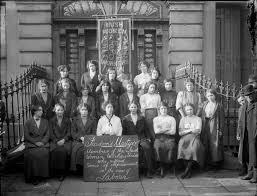
Often overlooked is the women’s role in the Lockout and in this small book (only 80 pages) Newsinger has captured the way in which women were feisty union members. As the dispute progressed the authorities used the police to baton union members off the streets and arrest them for dubious crimes. Larkin told the story of how a 17 year old union member was up in court and sentenced to one month’s hard labour. Leaving the dock she shouted: Three cheers for Jim Larkin. She was hauled back and given another month. Once again she shouted her support for Larkin but this time the magistrate did not respond. It was no laughing matter for union members as over 400 men and women, including most of the union leadership, served time for their activities during the Lockout. James Byrne, chair of the Kingstown Trades Council, died after being on hunger strike.

Irish Womens Workers Trade Union

Irish Womens Workers Trade Union

Newsinger feels there are plenty of parallels with workers today, particularly the casualization of workers through the use of zero hour contracts:
Even where I work, in the university sector we have seen the increase in the use of casual contracts. I belong to a privileged group of workers and many do not even realise what it means to be on a zero hour contract. Of course my students totally understand it because they are working in shops or supermarkets where this kind of contract is rampant
.
He feels that there is a lack of knowledge about the history of working class struggle and hopes that this book will encourage a broader range of readership.
I don’t want people to think its just nostalgia. People can learn from the Lockout today and there is a need for a series of small, low priced books on popular movements that changed society.

Newsinger believes that there should be more access to working class history where people are shown to be winning even small victories:
I like the Channel 4 programme “The Mill” because it shows people fighting back and also having a laugh at authority.

He believes that people can learn from the Lockout and that the key issue for all working class people is solidarity:
The capitalist class prospers by divide and rule. This has to be met with working class solidarity. The need for rank and file organisation and for socialist politics was crucial in 1913 and it remains crucial today.

Jim Larkin and the Great Dublin Lockout of 1913
by John Newsinger is available from Bookmarks bookshop at the very reasonable price of £4. A series of events are being held in Britain and Ireland during the year to commemorate the event.

If you have enjoyed this article and would like to support this blog by making a donation you can do using this button

Posted in anti-cuts, book review, drama, feminism, human rights, Ireland, labour history, political women, trade unions, TV drama, women | Tagged , , , , | Leave a comment

Stop,Look,Listen…my weekly selection of favourite films, books and events to get you out of the house

Watch…..Louie (only on DVD) written by American real life stand-up comedian Louis C.K. He is the star of the show, playing a middle aged man going through a crisis about his life. We see him performing on-stage, off-stage with his male friends, with his children and in increasingly surreal encounters with women. It is American sitcom at its best, Louie is a likeable guy and he has all the characteristics of men of a certain age. We watch him in his bathroom as he examines his body, we squirm as he talks about his divorce and his (mis) adventures with new partners. And, unlike most British sitcoms, there are some politics thrown in, in one episode he is playing cards with his buddies and a macho man gets into conversation with a gay guy about the gay club scene. As a writer Louis really captures the underlying tensions that exist between men whilst they desperately try to achieve emotional support from each other. Highly recommended.

Listen again…last years International Women’s Day events were recorded on a podcast by local radio journalist Sanne Bury. It’s an opportunity to catch up with an amazing variety of events, in particular (and I admit bias) our event at the Working Class Movement Library and Ruth Eversley’s talk on asylum seekers. See

Celebrate…..Ethel Carnie Holdsworth (1896-1962) and working-class women’s writing: A centenary celebration on Saturday 7th September at the Working-Class Movement Library, Salford
This event will celebrate the life of local working class writer and political activist Ethel Carnie. She wrote ten novels which spoke about her life and those of the working classes. Unlike most modern novels, she was concerned about the important aspects of life, including poverty, unemployment and working class life. She created characters that reflected the complexities of people’s lives in a positive way.Ethel didn’t just write novels, she also produced the first anti-fascist newspaper Clear Light which the WCML has several copies of. Her novel Miss Nobody has just been republished and the day school will include readings from the book, music written by Ethel and an opportunity to view some of the WCML’s resources on Ethel’s life. Further details see
And for my article on Ethel see

Go see….local writer and director Joe O’Byrne’s new production Diane’s Deli (26 – 30 August, 7.30pm, Kings Arms Salford), a world première production that follows O’Byrne’s series of plays and films: Tales from Paradise Heights. Joe has used a photo taken at the battle of the Bogside in Derry N.Ireland in 1969 as the flier for the play which is “a tale of blackmail,murder,obsession and breakfast specials”. tFurther information see

Posted in book review, drama, education, feminism, human rights, International Women's Day, Ireland, North of Ireland, novels, political women, Salford, Socialist Feminism, Uncategorized, women | Tagged , , , , | Leave a comment

Stop,Look,Listen…my weekly selection of favourite films, books and events to get you out of the house

Watch….. Parks and Recreation (DVD) it was on BBC4 but the series has now finished. Set in the fictional town of Pawnee in Indiana,USA, it centres on a group of people working in the Parks and Recreation department. Actor Amy Poehler plays Leslie Knope, a manager: her hero is Hilary Clinton, and, apart from making her town the best place to live, she dreams of one day getting to the White House. Alongside her workplace colleagues she relentlessly dreams up crazy plans to raise the profile of Pawnee. The show is filmed in a mockumentary style with the characters speaking to camera. It isn’t sickly sweet but is a satire on the idealism of American life and small town parochialism. Played for laughs, but it has some serious issues running through it, including one episode of the series when city goes broke. Couldn’t happen here could it????

Go seeLounge Fest at the Contact Theatre, 10 days of free events set up by the Contact Lounge team starting on Tuesday 20th August. The Lounge Fest highlight looks set to be ‘Contact Compacts’, two nights of new short plays which, as well as including a handful of Liverpool’s Annexe Writers, also features Manchester Theatre Award Winner and 24:7 Alumnus, Ian Winterton. There are some interesting plays being debuted, including commentaries on the economic crisis we are all experiencing as well as sexual politics. Further details see

Fight the Bedroom Tax…across Manchester there have been over £250 million pounds of cuts to the public services and 15,000 households are being hit by the Bedroom Tax and facing eviction. It is not all the fault of the Tory Government as the housing trusts running areas such as Wythenshawe could redesignate the housing stock, but the Labour members who are on the boards of these housing trusts are refusing to do so. People are fighting back and the Wythenshawe Smash the Cuts are organising a march against the Bedroom Tax on 30 August. To join the campaign see http://www.facebook.com/groups/smashcuts

Read…the Ragged -Trousered Philanthropists. A classic of working class literature, written by Irish man Robert Tressell.(His real name was Noonan). The book was not published until after his death. He commented on the book;”Being the story of twelve months in Hell, told by one of the damned, and written down by Robert Tressell. Robert was a house painter and the book is an expose of the poverty and exploitation facing working class people. It is a Marxist critique of the lives of workers who very often acquiesce in their own exploitation and Robert attacks those who do so , but he also provides a socialist alternative. The book is unique because he wrote it at a time when Britain was changing, as many progressive socialist organisations were formed including the Labour Party. You can find out more about the book by visiting http://www.raggedtrousered.com/1.html an organisation which was set up last year to promote the book and its philosophy.

Celebrate Peterloo..the anniversary is on 16 August…and local trade unions have organised a social at the Radisson Hotel in Manchester (around the corner from the event). It’s nearly 200 years since 80,000 met at St.Peters Fields to demand parliamentary reform; they were attacked by the local yeomanry and 18 people were killed and many injured. Join speakers plus radical singer Claire Mooney, poet Dave Puller and Salford rap collective Class Actions to mark the event. Further details see

Or if you prefer a walk….Saturday 17 August, 11.45am The Story of the Peterloo Massacre, 1819
On 16 August 1819 an unarmed, peaceful crowd, gathered in the centre of Manchester to demand basic political rights, was attacked by the military, resulting in many deaths and injuries. This walk will explore the political and historical background and trace the events on the day. £6/£5
Meeting point: Friends Meeting House, Mount Street
The walk will be led by Michael Herbert from Red Flag Walks, more information, redflagwalks@gmail.com

Posted in anti-cuts, book review, Communism, drama, human rights, Ireland, labour history, Manchester, novels, Socialism, trade unions, Uncategorized | Tagged , , , , | Leave a comment

Stop,Look,Listen…my weekly selection of favourite films, books and events to get you out of the house

WatchWajdja….the story of a girl growing up, living with warring parents, a mother trying to hold onto her job and with problems getting to work, a girl dreaming of buying a bike. This could be a story about any girl in any country in the world but this is Saudi Arabia, one of the most repressive societies for women on Earth and not that good for poor men or foreign workers. Wajdja has to cover herself up in black to go outside and walk to school, she is told off by the school authorities for wearing sneakers rather than plain black shoes, she has no status in her family because she is a girl and she is slowly waking up to the limits of her freedom as a female in Saudia Arabia . Wajdja refuses to accept this second class status and the film is a clever and insightful story of her dreams to not just ride a bicycle but escape a repressive society. Watch it at the Cornerhouse…

Look at…..Spindleopolis; when Cotton was King…a new exhibition at the Gallery Oldham exploring the Oldham of 1913 when it was at its height as a cotton town. Look back at a time when Oldham was a prosperous town through the cartoons of Sam Fitton and a variety of historic objects and paintings. Esteemed local historians Alan Fowler and Terry Wyke have produced an accompanying booklet which can be bought in the Gallery Bookshop. Looking around Oldham today its hard to imagine how prosperous and dynamic the town once was…further details see

Did you go to the nightclubs of Manchester in the 80s…including Legends, the Sandpiper and Fridays? Cornerhouse are hoping to identify Manchester nightclubbers who were photographed by Dave Chadwick in the late 70s and early 80s in an exhibition called We Were All Here, Once. I am just hoping that I am not there because it was a bad hair period for me and most of my friends. Check out the photos here and, of course, in the British tradition name and shame!! Just not me!
Further details see

Read about a campaign that won…..Sparks revolt: how rank and file electricians beat Besna.Besna was set up by building contractors to destroy the Joint Industry Board national industry agreement which provided electricians with protection over their pay and terms and conditions. For more than six months workers protested at building sites, blocking bridges and roads until on 23 February 2012 they learnt that BESNA had collapsed. In this booklet find out how the workers won against the massed ranks of some of the largest construction companies in the land , the timidity of the bureaucracy of their trade union Unite and the hostility of the police. The question is why are these people not being hosted at the People’s Assembly across the country to show that we can win??? Another excellent price at £2 and buy it from

Learn about Popular Radical Movements in Greater Manchester 1819 to 1918…..socialist historian Michael Herbert is running a 10 week course starting in September on Monday evenings: 6.30 pm to 8.30 pm at Aquinas College in Stockport. It will be an introduction to radical political ideas and movements in Greater Manchester. Not just classroom based, there wil lalso be three walks in Manchester city centre which will explore sites connected with Peterloo, Karl Marx and Frederick and the radical movements discussed during the course. Further details Email: sheila@aquinas.ac.uk

Join campaigners against the cuts in council tax….in Tameside on Wednesday 7 August a demo has being organised at Tameside Magistrates Court 9.15 am where Council Tax summons cases are being heard. It has been called by Tameside Against the Cuts. Further details see

Posted in anti-cuts, art exhibition, book review, feminism, films, human rights, labour history, Socialism, Tameside, trade unions, Uncategorized | Tagged , , , | Leave a comment

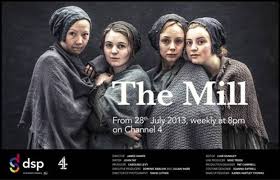
Northern white slaves and the campaign for the 10 hour day . My interview with John Fay writer of The Mill.

The Mill, a new historical drama on Channel 4, written by John Fay is set during one of the most turbulent periods of British history. Fay says;
It is set in 1833 where a period of resistance is just beginning, where the working class has found its voice and begins to organise autonomously and flex its muscles.

Fay is from Liverpool, a city with its own history of slavery but also of a strong politicised working class. He started his writing career in Kirby Unemployed Centre, writing plays with other unemployed workers and produced drama about political heavyweights including Tom Mann. He says:Whatever you might say about Militant and the Miners’ Strike in the 80s people were more interested in politics in those days. It was a political time and there was more of a resistance.

Spotted by Brookside directors he spent 16 years working for them and has since gone on to write for other north west series, including Coronation Street, Clocking Off and Blue Murder. In Torchwood’s Children of Earth he took up the issue of child exploitation and this is a key theme in his latest work The Mill.

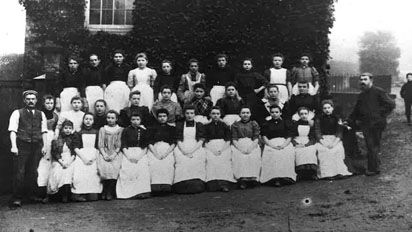
The series is based on the historical archive of Quarry Bank Mill in Cheshire, owned by the Gregg family, who had five cotton mills in the north west, as well as a slave plantation in Dominica in the West Indies.

THE MILL Mill Girls outside Quarry Bank Mil BG_A2

Fay says; The Greggs were philanthropists and their mills were much better than other ones, but they still employed nine year olds to work 12 hour shifts.

Fay used the Working Class Movement Library in Salford to do some of the research for the drama and, in particular, the real life story of trade unionist John Doherty. Doherty was involved in setting up the Cotton Spinners Union and campaigned for restrictions on the hours and conditions of work.
IRdoherty

He is the main activist in the show and provides the inspiration to the mill workers
.

In 1833 the Factory Act was passed which curtailed hours of work and brought in a system of factory inspectors. At the same time slavery in the British Empire was abolished. The Gregg family were known locally as a liberal family but could happily maintain a slave plantation on one side of the world with a white slave tradition in Britain. And even after the law changed, the Greggs held onto their apprentice system longer than other mill owners.

Fay hopes the series will show the reality of what it was like for children in the 1830s and sees parallels with the present day. In a recent report the United Nations’ International Labor Organization estimated that as many as a million children between the ages 5 and 17 work in the small-scale gold mines of Africa for as little as $2 a day.

The mill 1

Dramas such as The Mill challenge current emphases on working class people being seen as victims with middle class liberals needing to feel sorry for people who on the surface seem to lack the trappings of money, access to Oxford and Cambridge and jobs in the establishment. They fail to recognise that in working class communities people may be happier living with people who value relationships more than money and status. And that solidarity between people, as shown in this drama, counts for far more in terms of human happiness.

The Mill is a four part drama and Fay is hoping that he will be commissioned to continue the story of the millworkers as the story moves into the 1840s and the campaign by the Chartists for the vote for working class people. He says;
I hope people watch it and and I hope it will also ignite in people an interest in working class history.

The Mill continues on Channel 4 on Sundays at 8pm

If you have enjoyed this article and would like to support this blog by making a donation you can do using this button

Posted in drama, human rights, labour history, trade unions, TV drama, young people | Tagged , , , , | 2 Comments