Stop,Look,Listen…my weekly selection of favourite films, books and events to get you out of the house

Nowadays everybody celebrates International Women’s Day including the banks!!! Help, this is not what socialist feminists Clara Zetkin and Louise Zeitz would want. They created the day to highlight the importance of women’s struggles for equality at home, at work and in making a better society to live in.

In 2014 we need this vision and hope for the future, but few of the events on offer reflect the reality of many women’s lives, particularly those women affected by the massive cuts in benefits, wages and public services. Sadly many of the IWD events are mere “celebrations” with no political agenda. Here are a few events that I think are in keeping with the real spirit of IWD.

Liverpool …one of the few demonstrations where women will get out on the streets to highlight the issues facing women locally and internationally see

Manchester….there are many events organised under the Wonder Women banner but few reflect the experience of working class women, here are some of my choices.

Learn about the life of suffragette Hannah Mitchell at this performance. it was written by leftwing playwright Eileen Murphy and encapsulates the harsh choices faced by working class women who wanted to challenge inequality in society and pursue their own creative lives.See

Read her brilliant biography which was never published during her lifetime. “The Hard Way Up”. You can buy it from
And if you want to learn more about some of the poorest workers today that is care workers in east Manchester and how the lives of working class women have declined…see

Discuss.. How does the History of Feminism Inspire Current Thinking in Manchester? at the Suffragette Legacy Conference…….an interesting mix of speakers, artists, films and discussions…..you can go for free (price is £25/15) by applying for a bursary.

Palestinian women.. it is one of the most vibrant campaigns locally and there are several events across the northwest organised by the Palestinian Solidarity Campaign see

Watch…some films by our favourite local filmmaker John Crumpton. The Hat Block Maker I like wearing hats and I still buy them from a local hatmaker (see ) but this film records the history of hatmaking in the northwest and interviews some of the workers. John uses archive footage of Stockport market in 1910 to show why we had a hatmaking industry because in those days everyone wore one. In the film we meet Bert Gurden who was 14 when he became an apprentice hat block maker and was still working at 75! It is an incredible moving film, not just because of listening to Bert’s story and watching him create the hat blocks but the care and attention put into the making of the film, reminding us of the history of what was an important industry in this area.
And look at John’s documentary about painter Charlie Shiels…another northwest artist who should be better known..see

Join... an anti-fracking march…because it’s not just happening at Barton Moss.. on Sunday 9th March starting at 12 from Piccadilly to Cathedral gardens. The demo is called by Frack Free Greater Manchester. Further info see

Go to. Hidden written and performed by Laura Lindsay and Peter Carruthers, a comedy drama, it is the story of six people and their secrets. Past performances have got rave reviews and you can see it at the Kings Arms next week.

Posted in anti-cuts, biography, book review, Communism, drama, education, feminism, films, human rights, International Women's Day, labour history, Manchester, Middle East, Palestine, political women, Salford, Socialist Feminism, Uncategorized, women, young people | Tagged , , , , | 1 Comment

Stop,Look,Listen…my weekly selection of favourite films, books and events to get you out of the house

WatchMuseum Hours(2013) …when I go to an art gallery I speak to the attendants because they spend hours walking around an exhibition and they often have an interesting comment to make about it. This documentary/fiction is the story of Anne, a Canadian woman who has journeyed to Vienna to see a relative in a coma in a local hospital. She escapes from the hospital to the Kunsthistorisches Art Museum and by chance makes friends with Johann, one of the attendants. He is an interesting character, in his late 50s, previously a tour manager for a band and a woodwork teacher. Through his eyes we watch the people coming and going in the museum and their interaction with the pictures. He also takes Anne around his Vienna, which is framed by the director like the pictures in the museum. There is not a lot of dialogue, the background to Vienna and the pictures are the main characters, but there is a strong sense of atmosphere and of people’s histories which make this a fascinating film.

Are you angry about the media in Manchester and the lack of any real investigative journalism?…the Manchester Mule is looking for new people to run the paper and presumably fund it. The NUJ in Manchester and Salford have organised a meeting on 25 February at 6.30pm at the Mechanics Institute; Manchester Mule and the need for a Radical Free Press in Manchester. We need another Stephen Kingston of the Salford Star but it is up to organisations on the left in the city to fund a radical paper because political commitment alone cannot pay the bills!

Go to some International Women’s Day events…it’s kicking off on the 1 March in Manchester. The Manchester Feminist Network has an event that day at the Friends Meeting House. Events include workshops on singing, dancing and craftivism. Political events, I think that is what they mean, include Feminist Avengers Creative Activism and Lesbian and Bisexual Women seeking asylum. Further info, manchesterfeministnetwork@riseup.net.

The Palestinian Solidarity campaign have a series of events across the northwest for IWD, the first one on the same day on Resistance, Survival and Identity, 6pm-9pm at Birch Community Centre, Rusholme. It include a meal and a film. £5. Further details see

Support…the campaign against the cuts in Legal Aid. A conference in Manchester “Legal Justice Together – Call for Action” on 15 March aims to bring together legal practitioners and those affected by the cuts to decide a plan of action to challenge the cuts in legal aid. Further info, accesstoadvice2013@gmail.com

ReadCivil and Strange by Clair Ni Aonghusa. Set in modern day Ireland it is the story of Ellen, who is in her mid-30s and leaves Dublin and a failed marriage to return to rural Ireland and a village where she spent her summers as a child. I really enjoyed it because it dealt with universal issues affecting women and men and also issues particularly to Ireland. Modern Ireland, to me, seems very much like over here. But the massive changes that have affected their society ie changes in the law including divorce and gay rights are still percolating through peoples’ lives. One comment in the book is that you can change the law but it is not so easy to change people’s prejudices. In Ireland there is still no abortion so a teenage pregnant girl is seen getting the bus to England and presumably an abortion. Ellen is also confronted with the gossip of locals when she starts a relationship with a younger man and which threatens her job in the local Catholic school. Clair’s book is one of the most insightful books I have read so far this year.

Learn about real direct action….I am constantly stunned by the way in which people (including trade union members) are so accepting of the cuts in public services and I ask myself – why are they not angry? Watch this video here for some real trade union action by the Blacklisting Campaign, who are not prepared to allow the heads of companies such as McAlpine get away with destroying their lives…

More information on the Blacklisting Campaign here

Posted in anti-cuts, Blacklisting campaign, book review, feminism, films, International Women's Day, Ireland, Legal justice Campaign, Manchester, novels, Palestine, political women, trade unions, women | Tagged , , , , , , , , , | Leave a comment

Feminism in 2014: what do women want? (1)

In this occasional series I will be interviewing women and discussing what feminism means to them in 2014. Over the last thirty years the lives of women in this country has changed rapidly with growing numbers of women in the labour market, getting access to an expanding education system and having greater economic and social freedom.

But in the last few years all these gains have been put under threat due to the declining economy and a Tory Government that has attacked the public services which many women depend on for jobs and services. For some women this has meant taking a role in the many single issue campaigns that are active in opposing the government including the Anti Fracking, Bedroom Tax, Against Atos, and Keep our NHS Public. Other women have made different choices.

In this post I am interviewing Lex one of the founders of the Women’s Institute in Manchester and discussing with her why this is the organisation she has chosen to be active in.

Lex Taylor

Lex Taylor

The WI is the largest voluntary women’s organisation in the UK. It was founded in 1915 in the UK during the First World War and was involved in food production. There are now about 6,600 branches across the country with over 200,000 members.

The WI says that it plays “a unique role in providing women with educational opportunities and the chance to build new skills, to take part in a wide variety of activities and to campaign on issues that matter to them and their communities.”

The image of the WI is that is rural, socially conservative and well-off but in branches such as Manchester younger women are redefining this stereotype. Lex Taylor, aged 25, who formed Manchester WI with her friend Lucy Adams in 2011, is not from a traditional WI background. Lucy’s grandmother was a member of the WI and taught her traditional skills such as baking and knitting.

Manchester WI

Manchester WI

“I am from a working class background in Liverpool. My dad worked abroad and my Mum was a housewife who brought up three children. She did not have much opportunity but over the last 15 years has trained up to be a nurse. Seeing what she has done for herself, has made me want to progress and encourage other women to take up opportunities.”

Lex came to Manchester to study but did not find any women’s groups that she wanted to join.

I am a feminist. When I was growing up the word feminist was seen as an ugly one. It is only in the last few years, for me, that I have felt alright about using it and to me being a feminist is about owning and control your own body and mind.”

Setting up a WI branch came about because of the lives that women, particularly professional women, face when living in big cities such as Manchester.
“Women are losing the ability to connect as women. We sit behind a screen all day working, dashing to and from work, looking after our children but have little opportunity to interact.”

Lex and Lucy are in their mid-20s but the age profile of their WI branch ranges from 18 to 67. They now have 120 members.
“The issues for women today have massively changed and we reflect those issues, including education, charity and friendship, a mixture that is completely varied.”

The WI is a charity and as such is not a political group.
“But both nationally and locally we adopt a charity to raise money for each year. This year we are supporting the Booth Centre in Manchester which is a homeless charity.”

After several of their members were attacked in the city centre they organised a meeting with the Greater Manchester Police for advice and had a talk on self defence. Other talks have included speakers on women’s history, and women in business.

Next year the WI is one hundred years old. It is seeing a growth in groups in urban areas such as Manchester and across the north-west, tapping into a need felt by professional women to link up with other women to socialise and develop interests.
Further info see

If you have enjoyed this article and would like to support this blog by making a donation you can do using this button

Posted in anti-cuts, education, feminism, Manchester, women | Tagged , , | 1 Comment

Stop,Look,Listen…my weekly selection of favourite films, books and events to get you out of the house

Watch...Callan (DVD)…filmed in black and white and made in the the late 60s, to me this series confirms my views of the secret services in this country; unaccountable, undemocratic and dangerous. Edward Woodward is mesmerising as Callan, the government agent who starts to question his orders to kill. In the first episode he has been demoted to work for a book keeper and then suddenly Hunter, his Secret Service boss, asks him to do another job, another killing. Woodward is suspicious of Hunter and does his own investigation, calling in his “grass” Lonely, played by Russell Hunter, to get him a gun. He realises that its not just another killing but that he too is in the frame. Very much of its cold war era it features escaped Nazis and informers and women do not get much of a look in. But it’s exciting, chilling and brilliantly acted. Is this why everyone seems to be watching Scandic TV these days??

Go to...The Tyburn Tree a musical presentation of a new album from singer Marc Almond and composer and saxophonist, John Harle. It is a musical journey through the streets of London, using nursery rhymes and the words of poet William Blake. The gallows at Tyburn provide the material for the song cycle that exposes the darkness at the heart of the history of London. The show is on at the Bridgewater Hall next month see

Focus on Clocking In… and explore the emotions behind the objects at the Peoples History Museum and get an insiders view on growing up during the Industrial Revolution. Join this tour on 17 February, its free, from 13:15 – 14:00, only 45 minutes. Further details see

Listen to... A tribute to Jack Johnson. Never been a jazz fan but I was interested in this because of its subject; the life of American black boxer Jack Johnson. Recorded in 1970 by Miles Davis, Jack Johnson is jazz-rock fusion, a type of music that trumpeteer Davis chose to specialise in at this time. The music was created for a documentary about Johnson. On the CD are other jazz greats including Herbie Hancock and John McLaughlin. Over forty years later it still sounds modern and really cool!

Love this blog...Blink and You’ll Miss It, written by local journalist Chloe Glover. Her posts are random, quirky and really interesting. Check out the one about Delia Derbyshire the electronics innovator and how the little Yorkshire village of Slaithwaite was the birthplace of violinist Hayden Wood. See

Have a laugh…and don’t we need one… What Manchester Really Thinks About The Tories…a group called the Intruders pretend to be from Tory HQ and ask voters in Wythenshawe if they will be voting Tory last Thursday…the reactions are what you might expect!. See

Posted in drama, labour history, Manchester, TV drama, Uncategorized, women | Tagged , , , , , | 2 Comments

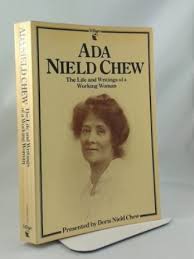
Building a Socialist Library (4) The Life and Writings of Ada Nield Chew

The Life and Writings of Ada Nield Chew Remembered and Collected by Doris Nield Chew. (Virago 1982)
ANChew book

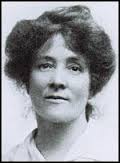
Ada Nield Chew was a working class woman who played a major role in the socialist and suffrage campaigns. This book was written by her daughter, Doris, to remind us of the important role she played as an activist and how difficult it was for women of her class and generation to take part in political struggle;
“My mother, as Ada Nield, a young woman of twenty-four, took the lead in one particular struggle – for better conditions and pay for sweated women workers in a Crewe clothing factory.”
ada NC

We know about Ada’s life in a clothing factory in the 1890s because she wrote a series of letters to a local paper under the pseudonym “Crewe Factory Girl” which exposed the dire working conditions although the publicity led to her dismissal.

Ada then went on to become active in the campaign for the vote and the improvement of women’s lives at work.
Ada was born in 1870, one of thirteen, her father was a farmer and her formal education ended at the age of eleven years. Not much is known about the early influences that shaped her politics but it was her experiences as a tailoress in a clothing factory which led to her entry into a political life.

Crewe in the 1890s was a thriving railway town and, like many working class women, Ada lived with her family whilst working as a tailoress. She was a skilled writer but little is known about how she became one. In her letters as a “Factory Girl” she shows that she had an understanding of the politics of the time and the inequalities experienced by working class women.
In a letter to the Crewe Chronicle on 5 May 1894, written anonymously as “Factory Girl” she said;
“I have come to the conclusion, sir, that so long as we are silent ourselves and apparently content with our lot, so long shall we left in enjoyment of that lot.”
In her letters she showed the harsh conditions where workers merely existed and did not live. It was; “A “living wage!” Ours is a lingering, dying wage!”

In her letters and articles she called out for the women workers to join a trade union, not the Tailors’ Union which did not do anything to improve the women worker’s conditions, but one which would organise for equal pay and oppose unfair practices.

Ada was provoked by the factory owners to reveal her identity and was forced to resign. She then joined the Independent Labour Party and became a socialist speaker, travelling around the country in a van to promote socialism in small market towns and rural areas.

In April 1897 Ada married another ILP organiser, George Chew, and they moved to Rochdale to live. In 1898 she gave birth to Doris and took her with her on her travels around the country. Ada continued to write articles in papers such as the Labour Leader.

In 1900 she started working for the Women’s Trade Union League which had been created to support women workers to improve their conditions and pay. She toured industrial towns and villages in northern England and Scotland and addressed public meetings, visited workshops and factories to speak to women and held meetings at factory gates.

It was a hard life for Ada involving lots of travel and constantly trying to raise the spirits of low paid women workers. The work was paid which meant that she could contribute to the household and be economically independent.

Ada believed in the suffrage struggle but she saw it as part of a wider strategy for women to improve their lives. She wanted women to have political power to radically change society at all levels of society. But at this time her views were seen as extreme, particularly the idea of linking political rights, women’s role as workers and their lives as wives and mothers.

For twenty years Ada was active but, as the suffrage movement fractured with the beginning of the First World War, she withdrew from politics. Like many socialists she may have been depressed by outbreak of the war and the way in which it split the left.

This is a fascinating book on many levels. The fact that it is written by her daughter who reflects on her relationship with Ada and the difficulties involved in trying to tell the story of one’s mother. Because she is her daughter we get a glimpse into the relationship between Ada and her husband and the particular problems faced by women who try to balance their life of politics with a family life. One of the saddest aspects of the book is that Ada did write her own biography but because it was rejected by a publisher she burnt it. Luckily her daughter has produced a book that gives Ada Nield Chew her place in women’s history, sadly the book has not been republished since 1982. You may be able to buy it from

If you have enjoyed this article and would like to support this blog by making a donation you can do using this button

Posted in book review, feminism, human rights, interesting blog, labour history, political women, Socialist Feminism, trade unions, women | Tagged , , | Leave a comment

Building a Socialist Library (3) Ellen Wilkinson From Red Suffragist to Government Minister by Paula Bartley

EW 3In 1924 Ellen Wilkinson returned to her home city of Manchester as a newly elected Labour Member of Parliament and spoke to several thousand people in a cinema in Moston. She attacked the capitalist system and its effects on declining wages since 1900, whilst the wealth in the hands of the few had grown. She said that taxes for the rich were being reduced whilst the poor were the “victims of the profiteer” and finished by saying; “This is not a fight for party but a crusade for the freedom of the human race.”

Paula Bartley’s new book; Ellen Wilkinson; From Red Suffragist to Government Minister is a reminder of the amazing life of this working class woman whose rhetoric in the 1920s is not out of place in the austerity Britain of 2104. Bartley who is a feminist historian says that; “in her day, ‘Red Ellen’ as she became known was arguably the most famous, certainly the most outspoken, British politician. She was a fierce left-wing feminist who championed the poor and the vulnerable.”
images EWWilkinson was born into a working class family Ardwick in Manchester on 18 October 1891. It was one of the poorest areas of the city at that time and little has changed in 2014. She was one of the luckier children born in that area as, after she finished her elementary education, she won a scholarship to Ardwick Higher Grade School (which was later renamed Ellen Wilkinson High School). Winning a bursary in 1906 she combined studying at Manchester Day Training College for half a week with teaching at Oswald Road School for the rest of the week. In 1910 she won a scholarship to read history at the University of Manchester, one of the few working class women to do so at this time. At the age of 16 years she joined the Independant Labour Party and began a lifetime of radical activity. In 1920 she helped set up the Communist Party.

ellen 1Bartley feels that the role Wilkinson played in the Communist Party has not been recognised; “I knew that Ellen Wilkinson was one of the early members of the Communist Party but had not realised how influential she was in it. Indeed the Soviets gave her and Harry Pollitt money to travel first class to the first Congress of the Red Trade Union International in Moscow. When she returned Ellen helped found the British section of the Red International of Labour Unions, Profintern.”

Wilkinson left the Communist Party in 1924 but maintained a close relationship with her former comrades. Her parliamentary career started a few months later when she elected as Labour MP for Middlesborough East.

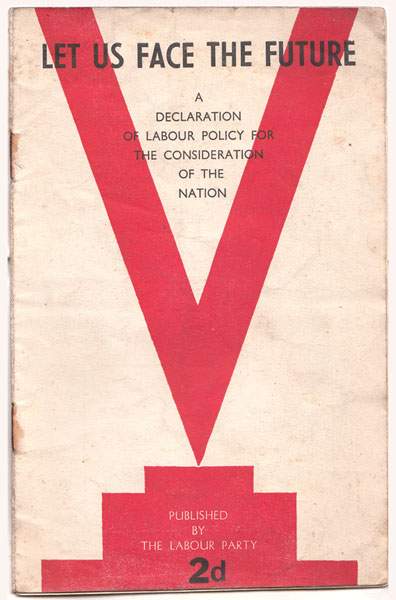
Wilkinson played a significant role in the Labour Party which, as Bartley points out, is reflected in their manifesto for 1945 which she co-authored: “Let us Face the Future” was a passionate, expressive, radical manifesto which had Ellen’s hand, and principles, written all over it.”

1945 Labour Party Manifesto

1945 Labour Party Manifesto

The Labour Government of 1945 had a radical agenda based on socialist principles of providing free health care and education as well as nationalising major industries.

Wilkinson was appointed as Minister of Education with the job of implementing the 1944 Education Act. At the Labour Conference in 1946 she said;” “When I went to the Ministry of Education I had two guiding aims, and they come largely out of my own experience. I was born into a working-class home, and I had to fight my own way through to the University. The first of those guiding principles was to see that no boy or girl is debarred by lack of means … the second one was that we should remove from education those class distinctions which are the negation of democracy.”

Sadly she died on 6 February 1947 and did not see the major changes brought in by her Labour Government.

Wilkinson’s radical life is being remembered by a new history/activist group that has recently formed in the northwest. Called the Mary Quaile Club it takes its agenda from a woman trade unionist who worked alongside Wilkinson in the progressive movements of the 1920s and 1930s.

Mary Quaile

Mary Quaile

Quaile, originally from Dublin, came to Manchester in 1908 for work, but ended up organising Clarion cafe workers for a living wage. She opposed the First World War and was active in the No Conscription Fellowship. All her life was dedicated to her work in trade unions, she became an organiser in the newly formed Transport and General Workers Union and was elected onto the General Council of the TUC in 1924.

The theme of the first meeting of the Mary Quaile Club is; Whatever Happened to the Welfare State? Bartley will be speaking about her new book alongside Hugh Caffrey, secretary of Gtr. Manchester Keep Our NHS Public.

Alice Searle secretary of the MQC says; “There are many history conferences but few that link up past history with present day campaigns. Our aim is to educate people about their history and inspire them to get involved in campaigns. ”

Whatever Happened to the Welfare State? The first meeting of the Mary Quaile Club will be on Saturday 15 February 2014, 2pm, at the Cornerstones Community Centre, 451 Liverpool Street, Langworthy, Salford M6 5QQ.

Paula Bartley’s book is published by Pluto Press, buy it from

If you have enjoyed this article and would like to support this blog by making a donation you can do using this button

Posted in anti-cuts, biography, book review, Communism, education, feminism, labour history, Manchester, NHS, political women, Salford, Socialist Feminism, women | Tagged , , , , | Leave a comment

Stop,Look,Listen…my weekly selection of favourite films, books and events to get you out of the house

Watch…. People for Tomorrow | Selma James: Our Time Is Coming…Selma, campaigner and writer, made this programme for the BBC in 1971. She had been a factory worker and typist and in this programme she highlights the unpaid work of women, both as mothers and carers. It is of its era as she interviews women in Women Liberation Groups which range from Belsize (posh area) to Peckham (poor area) and gets them to speak about what it means to be a housewife and the relationship they have with their partners and children. Groundbreaking at the time but times have changed so much over the last forty years. Nowadays many of these women will be in work, more likely to be single parents and some of them will have got better jobs through the expansion of the public services and education.
What I really liked was the interview with the women from the Birmingham Claimants Union, a group of women who were challenging the sexism of the Job Centre and their attitude to single parents. The film ends with a demo by trade union women for equal pay ( a really big issue in 1971) and interviews with women in engineering who are angry about their lower pay but are positive that times were changing. Although forty years old there are plenty of lessons for us today, particularly around defending the benefits of vulnerable groups. Find out more about Selma at

Go see.. Counting the Days, a new play by New Moon Theatre, which is about staff facing redundancies and the effect it has on their lives. It is great to see a theatre company taking up issues that are affecting so many people. It is on at Three Minute Theatre, so support a theatre which gets no public funding, but supports new plays and young actors and writers.

Did you march in 2003 against Blair’s adventures in Iraq? And did you feel disillusioned when he went ahead with the war? Ian Sinclair’s book; The March that Shook Blair explores how we did have an effect on Blair’s actions in Iraq and he puts into context the importance of the anti-war movement. Listen to his arguments at the WCML see

Read...The Witch & Her Soul by Christine Middleton. Set in Lancashire in 1612 and 1652 Christine has written a fascinating, fictionalised, account of the politics of that era. Jane Southworth is the main character and it is through her life we learn that being the daughter and then wife of a nobleman is no defence when the King decides to target learned women as witches. It is a time when being able to read and write or run your own household is enough to get your arrested and killed. Christine has created complex female characters in Jane and Alice Nutter showing how it is really their humanitarianism that the King really wants to destroy. Buy it at

Listen to.….Rimur a collection from Steindor Andersen, a fisherman and chanter/singer of traditional Icelandic epic poetry. Rimur is a style of musical chant and this CD includes a variety of rimur chants. Steindor regularly performs with Sigur Ros. I really like this CD as it shows the beauty of Steindor’s voice and evokes Iceland.

Posted in anti-cuts, book review, drama, feminism, films, human rights, music, novels, political women, Socialist Feminism, Uncategorized, women | Tagged , , , | Leave a comment

Stop,Look,Listen…my weekly selection of favourite films, books and events to get you out of the house

WatchGasland Part 2. Find out about what fracking is about and how it is now taking place in over 32 countries across the world. Fracking is a dangerous process and one that can seriously destroy local communities, never mind destroy the climate. This film does not just show how dangerous it is but also shows how the gas and oil industry are manipulating the democratic process to ensure that the process and the industry grows across the world. We have our own fracking nightmare at Barton Moss in Salford (not far from where this film is being shown) and the reality is that, unless stopped soon, fracking is going to come to your town at some point.
Thanks again to the Manchester Film Cooperative for organising a film and debate on this serious issue. More details see

Listen to... Peter Tatchell, one of the few interesting and inspiring speakers of this era. He is best known for his campaigning on gay rights issues but his record of activity shows that he is a true democrat, working hard to stop the erosion of all peoples’ democratic rights in this country. He is speaking on ‘Queer Britain – the struggle for LGBT rights 1958-2014’ in which he will discuss how the battle for law reform was won – one of the most successful law reform campaigns in British history – and the current challenges facing the LGBT community. His talk is at the Old Fire Station on 1 February at 2pm as part of LGBT week see

Find out about…five Cuban men who have spent fifteen years in prison in the USA. As the Cuban Five pointed out in their defence, they were on a mission in Miami, beginning in 1990, to monitor the actions of Miami-based terrorist groups, in order to prevent those groups from carrying out attacks on their country of Cuba. They never harmed anyone nor ever possessed nor used any weapons on their mission. Their objective was simply protecting people from terrorism. An International Commission of Inquiry is taking place in London at the moment to find out more about the case and there is a public meeting on Saturday 15th February, Central Hall Oldham Street, M1 1JQ Further info see

Read “The Colour of Milk” by Nell Leyshon. The story of a young woman growing up on a farm in 1831. Written as a monologue, which makes it a powerful narrative, we are taken into the life of a young illiterate woman called Mary. She tells us of her family, of living on a farm and the way in which her life unfolds. Once you start reading it you just cannot stop. Brilliant. Buy it from

Be inspired.…activists have set up a Mary Quaile Club to educate and encourage people to become more involved in campaigns. Mary Quaile was an Irish woman who was active in campaigns around women and low wages at the beginning of the century. All her life she campaigned for a better society, including opposing the First World War and encouraging women and girls to get involved in their trade unions. She lived in Manchester and was one of the few women to be elected to the TUC General Council. The MQC takes inspiration from her life and their first meeting is in Salford, arguably one of the most political parts of the north-west, with feminist historian Paula Bartley speaking about her new book on Ellen Wilkinson and Hugh Caffrey of Greater Manchester Keep Our NHS Public outlining the campaign to stop the privatisation of the NHS. See

Experience... The Seven Deadly Sins, a collaboration between Kurt Weill and Bertolt Brecht written in 1933. A fusion of opera, dance and theatre it is a satire on society and a parable about the evils of greed and capitalism. So just right for the times we are living through! Well done to Mark Elder and co at the Bridgewater Hall for this rare performance of a great work! It is a shame that the tickets are so expensive. See it on 10 April. For further details see And if you cannot afford to go have a look at this version see

Posted in anti-cuts, book review, Communism, drama, education, feminism, films, human rights, labour history, Manchester, music, NHS, novels, Salford, trade unions, Uncategorized | Tagged , , , , | Leave a comment

Stop,Look,Listen…my weekly selection of favourite films, books and events to get you out of the house

WatchCheers (DVD and ITV4)…at this time of the year we all need cheering up and this does it for me! Made in the 1980s this American series showed how class and feminism can be made interesting and relevant to big TV audiences. Based in a Boston bar the two main characters, Diane (Shelley Long), an upper class graduate and Sam (Ted Danson), an ex-alcoholic and baseball player, are thrown together as waitress and bar owner. Central to the early episodes is the sexual chemistry and witty banter between Diane and Sam. There are other entertaining characters including Carla, the foul mouthed waitress and mother of four children; Norm, the alcoholic accountant; and Cliff, the lonely postman. The series lasted 11 years and was popular because of the time spent developing the plots and characters. The theme tune “where everyone knows your name” sums up the series, a bar where you can go and someone will listen to you and help you out with your problems. Today it is hard to find any series that addressed so many issues in a positive and progressive way. Highly recommended.

ReadHolloway by Robert McFarlane, Stanley Donwoods and Dan Richards. Holloways are ” A route that centuries of foot-fall, hoof-hit, wheel-roll & rain-run have harrowed deep down into bedrock”. This is the story of the three men exploring South Dorset’s sandstone and it reads like the journey into the past and to another world. It really makes you want to follow in their footsteps, although parts of it do read like “three boys go exploring”. The text is enriched by the wonderful illustrations by Donwoods. A slim book of 38 pages, it is quite pricey at £12.99 so order it from your local library.

Find out about... fracking in your area. Its not just happening at Barton Moss in Salford, there are plans for fracking across the northwest. Speakers from the Northern Gas Gala are holding film shows and discussions at venues across the Greater Manchester area and on 26 January join campaigners at Barton Moss Camp to show your solidarity with them and against fracking.More info at

Go to Taking Sides: Artists and Writers in the Spanish Civil War on Saturday March 1 2014 in Manchester. How did Spanish cinema depict the International Brigades and what was the role of foreign correspondents during the conflict? This one day conference organised by the IBMT will answer some of these questions as well as providing information on their future events and projects. Further info see

Celebrate….the workers at Curzon cinema in London have got union recognition after a campaign by them and their union BECTU. Many people across the country sent emails to Curzon calling on them to recognise Bectu and give their workers a living wage. They have succeeded in the first part of their campaign so it is now time for the management to increase their wages. The campaign showed how many people feel ie that employers should not be making profits whilst treating their workers like slaves and, although there are many similar campaigns across the country, its great to see people winning!!

Posted in anti-cuts, book review, feminism, human rights, Manchester, Salford, trade unions, Uncategorized | Tagged , , , , | 1 Comment

Stop,Look,Listen…my weekly selection of favourite films, books and events to get you out of the house

Watch.Ethel MacDonald – An Anarchist’s Story. A fascinating film about a working class woman who became an anarchist and writer. Ethel was born in 1910 in a mining community in Lanarkshire in Scotland. Life offered few opportunities for working class women and Ethel wanted to break free from being a housewife or low paid worker. She became involved in politics and went from membership of the Independant Labour Party to the United Socialist Movement in 1934 and anarchist politics. When the Spanish Civil War broke out in 1936 she travelled clandestinely to Spain and took an active role in providing first hand testimonies from the inside of the anarchist revolution in Barcelona. and, through her radio broadcasts, became the international voice of Spanish anarchism. This film was made to commemorate the 70th anniversary of the Spanish Civil war and it reminds us of the way in which working class people in particular played such an important role in trying to defeat fascism, not only in Spain but also in this country. Ethel’s story is fascinating as is the story of the role of Spanish women in the anarchist movement.Watch it on Youtube at

Go seeWrong ‘Un – A Suffragette’s Story another story about one woman’s search for equality and freedom. Made by left wing theatre company Red Ladder it is set in 1918 at the time when women are about to get a limited right to vote. Annie Wilde is a Lancashire mill girl who is enthused by the suffragette campaign and the play tells her story of her journey from schoolroom to prison cell. It is a musical drama that takes on the major issues of class, privilege, hope and disappointment. Sounds exciting! You can catch it at the Lowry this week see

and also seeBlindsided starring Julie Hesmondhalgh. She is best known for her role as Hayley Cropper in Coronation Street, but she has worked in some of the best northern dramas including Clocking Off and Black Roses: The Killing Of Sophie Lancaster. In recent years she has become involved in local politics in the Manchester Peoples Assembly. Blindsided is set in Stockport in 1979 and the Isle of Man in 1997 and is about a young woman and her search for love. It starts on 23 January further details see

Support a different view of the First World War. This year, to mark the 100th anniversary of the start of the First World War, Peace News is launching a major new project: The World is My Country: A Visual Celebration of the People and Movements that Opposed the First World War. It will celebrate key figures and events from the organisations that were part of the anti-war movement at that time. The posters can be used to promote a different view from the nostalgia fest we are promised by the Tory government. You can help by making a donation, for further information see

Posted in anti-cuts, Communism, drama, feminism, films, human rights, labour history, political women, TV drama, Uncategorized, women | Tagged , , | Leave a comment