Building a Socialist Library (5) Ruby’s War by Johanna Winard

Ruby’s War.Published by Allison and Busby.
Price £7.99.

Ruby's War

Preston based author Johanna Winard has written a novel about the Second World War which provides readers with a less than rosy account of the role of the United States Army in this country. Reminiscent of the film “Yanks”, it tells the story of fifteen year old Ruby who in 1942 is taken to a small village in Preston after the death of her mother at the same time as a group of black GIs take over a base near-by.

Winard remembers members of her own family passing on stories about the relationships between the black soldiers and the poor local working class community. “Stories of the soldiers helping old folk to mend their gates, playing with the children and coming to the village dances have become a sort of folk memory.

Even watching contemporary news stories has brought back harsh memories for some people in the village . “I can remember sitting with an old family friend shortly before she died when an item came on TV about the US forces treatment of their prisoners in Iraq, and it immediately took her back in her mind to the way the Military Police beat black soldiers in the Second World War.”

It seems incredible nowadays that the US Army had a segregationist policy towards their own black soldiers. There were separate army units, separate hospitals, and separate blood banks.

In the novel Winard describes a real event known as the Battle of Bamber Bridge in 1943 when black soldiers revolted against the racism of their officers and were supported by local people and British servicemen.

The experience of the black soldiers shows that racial prejudice isn’t a knee jerk reaction, particularly not within the working class, and that in this situation, in this little community, people recognised the black American soldiers as working people like themselves who had come to join the fight against fascism.

Choosing to write about historical events can be limiting for a writer but Winard does not have a problem with this. “My novel is in a specific period and includes the Bamber Bridge event as part of the story. You have to keep to the main facts. It means that you couldn’t let the African American troops come off best, even though you would love to.

Winard chose to highlight the lives of working class people in Britain at this time and particularly their hopes for the future. “I wanted my readers to go away knowing more about the experience of working class people, the interaction between working people and the black American soldiers and how there was a feeling of hope that things were going to improve after the war.”

She wants the book to be read by younger readers.
It is written for young people because I wanted them to know about their history, that in a small village in Preston, ordinary people took black soldiers as their friends and to their hearts.”

Some older readers will be reminded of a time when class was embedded in the relationships in villages such as the one in this book – a time when people had to pay to see a doctor – but also a time of change when women could escape into the munitions factories and earn a better wage than they could get in domestic work.

Winard has not seen Ken Loach’s “Spirit of 45” but her novel does encapsulate the way in which people did have great hopes for a post-war Labour Government. She is a Trustee of the Working Class Movement Library in Salford and feels that remembering working class history is crucial.

Every time I walk into the library it reminds me of what people have achieved and it is so important to get this over to people. We have to defend what we have got and we will have to fight for it all over again.”

Buy Ruby’s War from here

If you have enjoyed this article and would like to support this blog by making a donation you can do using this button

What do you want to do ?

New mailCopy

Posted in book review, human rights, labour history | Tagged , , , , | Leave a comment

Stop,Look,Listen…my weekly selection of favourite films, books and events to get you out of the house

WatchMore Than Honey, a film to be screened by the Manchester Film Coop and Friends of the Earth. The film asks the question, why are colonies of bees being destroyed across the world? UK government figures suggest bee numbers have fallen by 10-15% over the last 2 years; the British Beekeepers’ Association (BBKA) quotes a figure nearer 30% for 2008. Bees are crucial to the production of fruits and vegetables and to the continuation of our species and this crisis has seen a new interest in beekeeping; you only have to look at the top of some of the buildings in Manchester and you can see that they now have their own hives. But how do the bees survive the pollution? Find out more on 23 April at 7pm at On the Eighth Day cafe. Further info see

Find out about...how people are challenging the eviction of people from housing in London. Blogger Kate Belgrave is right there in the middle of the protest, taking photos and videoing the action. It is good to see people fighting against the unjust actions, in this case by Camden Council, of using bailiffs and the police to evict a man with mental health issues.See

Learn about the coal mining industryDown the Pits, a guided tour of the history of the industry at PHM on 25 April. From the experience of working underground to the story of the strikes. All in 45 minutes. Book at

The WCML has its own film festival next month, 12-14 May, called Last Cage Down, as part of the 30th anniversary of the Miners Strike.The highlight will probably be Tues 13 May 7pm with the film The Last Strike, followed by a talk by Dave Douglass, the NUM activist. The film was made in 1984 by a French TV crew and Dave describes it as the best film made about the strike. It focuses on St Helen’s and the solidarity of Lancashire miners whilst the key role played by women comes powerfully across.
Further info see

Read another interesting blog...Blink and You’ll Miss It by Yorkshire based journalist Chloe Glover. She writes an eclectic mix of posts from the latest about electronic music pioneer Delia Derbyshire to picking out unknown attractions across the northwest. see

Go to…an exhibition… Silent Voices…see Palestine through the eyes of the children who live in the village of bil’in in the occupied West Bank.
The Eighth Day Café, All Saints, Oxford Road, central Manchester 1st – 29th April 2014

Read...Innocent Flowers; Women in the Edwardian Theatre by Julie Holledge. It was published in 1981 by Virago. A fascinating account of the lives of women who were determined to become actresses, against the moral code of their era. I particularly enjoyed the chapter on the Actresses Franchise League, which was set up in 1908 as part of the suffragette movement. What makes this really interesting history is that Julie went out and interviewed some of the women who were still alive in 1981. Members of the AFL did not just campaign for the vote but used their own skills to promote suffragism which included persuading women to produce their own plays on the subject. Another interesting example of how broad ranging was the campaign for the vote. We need to learn these lessons now!!!

Posted in anti-cuts, book review, Communism, drama, education, feminism, films, human rights, labour history, Manchester, Palestine, political women, Salford, trade unions, Uncategorized, women | Tagged , , , | Leave a comment

Stop,Look,Listen…my weekly selection of favourite films, books and events to get you out of the house

WatchThe Past (2013/ Cornerhouse)….Ahmad comes back to Paris to sign divorce papers so that Marie, his soon to be ex-wife, can marry Samir. But does she really want a divorce? As the film progresses Ahmad becomes intertwined in the complex relationships of his wife, her children and her new man. Interesting to see the ethnic mix of North African, Iranian and French couples. There are several children involved who play main roles in what is essentially an adult drama. It points to the way in which people now have complex relationships and the consequences of the choices that we all have to make sometimes. Sometimes painful to watch, particularly the reaction of the children to the anguish of the parents, but a fascinating insight into relationships today.

ReadSettling Scores: The Media, The Police and The Miners’ Strike by Granville Williams. It is 30 years since the Miners Strike and those of us who were involved are aware of the way in which the strike was only a symptom of the state’s war against those who want a different kind of society. In this book, published by the Campaign for Press and Broadcasting Freedom, the contributors review the news coverage at the time and assess the information that has emerged during the intervening years, not least in the 1984 cabinet papers of Conservative Prime Minister Margaret Thatcher. See
Granville is speaking about the book in Manchester on 29 April. Further information see

Find out about…Delia Derbyshire… spend time with the Delia Darlings on Saturday, April 12th, 2014, 7:30 pm. Delia was a pioneer electronic music composer with the BBC Radiophonic Workshop. Listen to a new commission by composer/musician Daniel Weaver and a new digital visual art work from new media artist Andrea Pazos, both created in response to the Delia Derbyshire archive in Manchester, UK. The evening will also feature an audio-visual collage of the Delia Derbyshire archive by David Butler and Sarah Hill, and performances from Caro C and Ailis Ni Riain. Further info see

Go to....Jacques Brel is Alive and Well and Living in Paris, theatre company Gambolling Arena’s own take on the off-Broadway show. Brel was one of France’s most well known singer/songwriters and has inspired many other performers from Scott Walker to David Bowie. This new play is written from the viewpoint of his daughters, intermingling their father’s songs and thoughts to tell his story. Sounds fascinating and is on at the innovative 3Minute Theatre on 25th & 26th April Box Office Number – 0161 834 4517


Want to know more about Scottish independence
……watch this fantastic lecture by Tommy Sheridan. You can see why Scottish progressive people want their own country and maybe if it does happen it will lead to a more open debate in the rest of the so-called United Kingdom about the relationship between the peoples of England and Wales. There is no debate around Ireland…but it is one country and the British should get out.See

Visit a veggie cafe.Pulse in New Mills is more of a community cafe than your usual eatery. It is child friendly, displays local artists’ work and has live music one night a week. Food is prepared daily by chef Paul Barrett and you can follow him on his blog Vegetarian dad and use his recipes.

Celebrate May Day… and remember Tony Benn. CND are organising a peace picnic in Heaton Park at the Peace tree from 530-730pm on May 1st. Bring your food and memories of Tony. There will be readings from his life, poetry and a song or two.

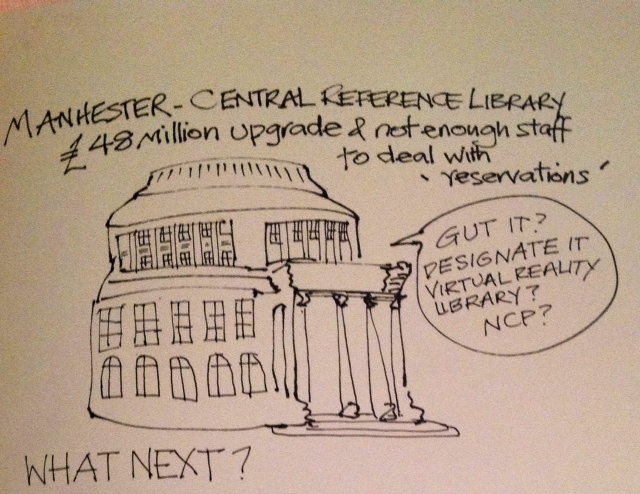
The case of the vanishing library staff.……..Central Library in Manchester opened last week after £48m being spent on its modernisation. The 1936 building looks good and in many ways it is an improvement but what seems to be missing is the staff to make it work!! Jill Woodward says it all in this cartoon.

cartoon by Jill Woodward

cartoon by Jill Woodward

Posted in anti-cuts, book review, drama, feminism, films, human rights, labour history, Manchester, music, peace campaigns, political women, Uncategorized | Tagged , , , , , | Leave a comment

Stop,Look,Listen…my weekly selection of favourite films, books and events to get you out of the house

Watch....The Missing Picture (DVD), a documentary made by Rithy Panh, a Cambodian, telling the story of how his country was taken over by the Khmer Rouge. It is told through the use of clay figures made by Panh and newsreels made by the Khmer Rouge. Strangely the horror was made worse for me by the combination of Rithy’s delicate production of figures representing his family and friends and the horrific justification of genocide played out in the newsreels. All of his family died in labour camps which the KR used to destroy not just the bodies but also the individualism and humanity that lies within us all. People were forced to labour for long hours, deprived of food and drink and most of all deprived of their hope for the future. Eventually the KR were defeated and the leader Pol Pot was put on trial for genocide but for Rithy and the survivors the horrors still continue.Highly recommended.

Support …the Labour Start campaign to pressure 19 companies to make public donations to support the victims of last year’s Bangladesh building collapse when over 1,000 workers died. C&A and Primark have coughed up but some of the biggest firms connected to the building have not. This includes Benneton and Matalan. Sign the petition at

Go toNature in the City at Manchester City Art Gallery on Thursday 3 April, 5.30 – 8.30pm. Find out about Thomas Horsfall and his Art Museum. He was inspired by William Morris and John Ruskin in his belief that art could set people free. He set up his museum in 1884 in one of the poorest parts of the city, Harpurhey, and provided music and theatrical performances as well as lectures and classes in art. Join curator, Hannah Williamson, for a tour of the Horsfall exhibition. There are lots of other activities during the evening see

Find out more...about the Spanish Civil War at a guided tour on 3 April, 13.15-14.00 at the Peoples History Museum. Learn about how the Communist Party organised “Aid for Spain” and the role that British volunteers played in the war. See

Read...Ruby’s War by Johanna Winard, a novel set in Lancashire in 1942. Ruby is 15 and after the death of her mother and disappearance of her father she moves to a small village to live with her grandfather. At the same time a contingent of black GIs move into the area and, mirroring historical events, Johanna shows how the segregagionist policies of the US Army affect the local population, bringing out racial prejudices but also the humanity of the poor villagers. Johanna knows her history and reminds us of a forgotten but fascinating aspect to the history of Lancashire during wartime.See

Posted in art exhibition, book review, Communism, drama, education, films, human rights, labour history, Manchester, novels, trade unions, Uncategorized | Tagged , , | 1 Comment

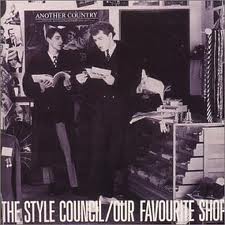
Classic LPs; Our Favourite Shop by The Style Council

Our Favourite Shop

Our Favourite Shop

In 1982 I stood in a Liverpool theatre watching the Jam as they performed in Liverpool on their farewell tour. They were not my favourite group, I loved some of the lyrics but that concert confirmed my prejudices. I was surrounded by what seemed like hundreds of young men in parkas and Fred Perry shirts. There were hardly any women there and it was like being at a football match. At the end of the concert, as Paul Weller said goodbye, a collective moan came from the young men who then ran out of the concert hall.

In 1983 Weller formed the Style Council with Mick Talbot and Steve White and DC Lee. Like Dexys Midnight Runners their music reflected my music tastes, the sound of the urban poor of Manchester, who loved Curtis Mayfield, Harold Melvin and Chic.

Style Council wore their politics with pride, echoing the lives of many young people in the 1980s and that generation of people who hated Thatcher and went out on the streets, joined the picket lines and flocked into the concert halls to demand political change.

The 1980s were about people fighting back against injustice; in the Miners Strike, in the campaign against the National Front, and fighting a Tory government intent on pushing us back to the ’30s….sounds familiar??

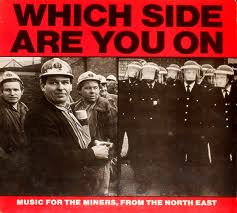
The 80s were summed up in the popular single by Billy Bragg; Which Side Are You On? Not written by him, by the way, but Florence Reece in 1931. She was the wife of a union organiser, Sam Reece. He was active in the United Mine Workers in Kentucky who were involved in a bitter and violent struggle with the mine owners which became known as the Harlan County War.

which side are you on

This government had an idea
And parliament made it law
It seems like it’s illegal
To fight for the union any more

Which side are you on, boys?
Which side are you on?
Which side are you on, boys?
Which side are you on?

The Style Council brought out their own single to support the Miners called Soul Deep and the proceeds from sales went to the Women Against Pit Closures and to the widow of a miner killed during the strike.

I love their second LP My Favourite Shop because it showed how many of the issues were linked together. The Miners Strike showed how working class people were being chucked out of their jobs to destroy a strong trade union movement.

Tracks such as All Gone Away expressed the sadness felt by young people who had to leave their communities to find work…..

Come take a walk upon these hills
And see how monetarism kills-

In A Stones Throw Away the role of the police during the Miners Strike is commented upon…

For liberty there is a cost – in broken skulls and the leather cosh
From the boys in uniform – now you know whose side their on

And 30 years later, through campaigns such as the Orgreave Truth and Justice Campaign, we are finding out more about the illegal behaviour of the police and the government.

In The Stand Up Comics Instructions Weller showed the insidiousness of racism in what passed for comedy, both on TV and in the club scene…….

Tell Irish jokes and you can’t miss
Do the building site one and how they are all thick

And the 80s saw a revulsion against this hatred in campaigns that we ran in Irish in Britain Representation Group against anti-Irish racism in all its forms as well in the popular Rock against Racism movement.

The album finishes with a call to action in Walls Come Tumbling Down….

You don’t have to take this crap
You don’t have to sit back and relax
You can actually try changing it

Looking back Weller says about this time; It wasn’t a time to be non partisan…It was too serious a time, too extreme. I wasn’t waving the Labour party flag but the socialist red flag that’s for sure. In The Jam I didn’t want to be a part of any movement. But this was different. Thatcher got into power in 1979, and from the Falklands war onwards, that was her wielding her power, the trade unions were being worn down, we had the miners strike, there was mass unemployment, there were all these issues, you had to care and if you didn’t you had your head in the sand or didn’t give a fuck about anyone but yourself. You couldn’t sit on the fence. It was very black and white then. Thatcher was a tyrant, a dictator see

In 2014 this record seems more relevant than ever although we have no organised left to challenge the Con Dem government and a Labour Party that thinks it is acceptable to vote for a ceiling on welfare payments! Opposition today is more diverse, fragmented and lacks an ideology that attack capitalism in a meaningful way for the majority of people.

Tony Benn in 1984 is quoted on the album sleeve and his comments are just as relevant today;

But as history teaches us, time and time again, it is not enough to speak or write, or compose songs or poems, about freedom if there are not enough people who are ready to devote to their lives to make it all come true.

If you have enjoyed this article and would like to support this blog by making a donation you can do using this button
Posted in anti-cuts, human rights, Irish second generation, labour history, Manchester, music, Socialism, trade unions, women, young people | Tagged , , , , | 1 Comment

Stop,Look,Listen…my weekly selection of favourite films, books and events to get you out of the house

WatchPunk Syndrome(DVD and youtube)…a documentary about a punk band in Finland made up of men with learning disabilities. It follows their lives as a band and also the realities of living with a disability including the day-to-day frustrations of living in a residential home, negotiating with their carers over simple (to us) issues such as personal care and drinking coffee. Punk music was (and is) popular because it did not care about image or even playing the instruments properly, it reflected the lives of people on the edge of society and gave them a platform to articulate how they feel. This is just one of the reasons why this is such a good, compassionate film. Unlike many films about disability we do not get to like the people, they are angry and do not want our sympathy, they want the lives and the choices that everyone else has. It is a shame that this film has had such little publicity but you can watch it on youtube see Highly recommended.


Oppose mental health service cuts
……we need mental health services more than ever but they are seen as easy to cut by the health authorities. In Gtr. Manchester 54 mental health beds are under threat of closure and people will have to travel across the borough for care and to visit their relatives. Join the protest on 29 March at 12 at Eccles Cross, next to tram stop and Morrisons in Town Centre..further details see

Remember…Bradford Pit..in east Manchester…Lauren Murphy and some of the miners have put together this exhibition. It is a forgotten part of the history of this area, in fact Manchester City now play on the old pit, and the area has been completely redeveloped..not sure for the better. See the exhibition at Beswick Library see


Find out about
Concerts for the People; music education and public programmes in Manchester…at a time when the music education service is being ruthlessly cut this talk will look at its history and how people got involved with it. It is taking place in the new performance space for the Halle in Ancoats. Further info abigail.gilmore@manchester.ac.uk

Go to a talk.…….the co-operative movement was such a progressive organisation..notice I use the past tense…..from 1919 to 1967 the women of the co-operative movement had their own magazine, Woman’s Outlook. As you might expect it was not just baking and knitting but offered women a space to debate issues such as women’s role in parliament and equal pay. Natalie Bradbury is giving a talk about her research on the magazine on Sat 29 March, booking is essential see

Learn about the history of radical Ashton-u-Lyne…..taking history onto the streets on Sunday 30 March meet at Town Hall steps, Market Square. This walk will explore a number of episodes in Ashton-under-Lyne’s radical past, including the political career of socialist and suffragette Hannah Mitchell, the Chartist Rising of 1848, the Bread Riot of 1863, the Anti-Irish Riot of 1868 and the formation of the Co-operative movement. (part of Manchester Histories Festival) Booking essential. Further details see

Posted in anti-cuts, films, human rights, labour history, Manchester, music, NHS, political women, Tameside, trade unions, Uncategorized, women | Tagged , , , , | Leave a comment

Stop,Look,Listen…my weekly selection of favourite films, books and events to get you out of the house

Watch...The Invisible Woman (2013/general release). A real Victorian drama telling the story of Charles Dickens and his relationship with actress Nelly Ternan. They met when he was 45 and she was 18. He was already married with ten children and in this film we see the image of the great writer and social commentator undermined by his treatment of Catherine, his wife. Ralph Fiennes portrays Dickens as a complex character trapped by the morals of his age. But it is the women who are really the victims, both Catherine and Nelly, who have no independent lives or incomes and are dependent on Dickens. Felicity Jones, who plays Nelly, gives an outstanding performance of a young woman who is bewitched by Dickens. She receives little discouragement from her mother who recognises that by going with Dickens her daughter faces social ostracism but will enjoy a much securer life than being an actress. It is also worth reading Claire Tomalin’s book on Charles Dickens see

Support..Honest Coffee. Fed up of fat cat corporations who sell you coffee but pay little in UK taxes? A new workers co-op is starting in Manchester which aims to set up a coffee shop which will use the profits to support community projects. Its launch meeting is Wednesday, March 19, 2014 from 6:30 PM – 8:00 PM. Further details see

Be inspired by... the past to fight privatisation of our hospitals…“Occupational Hazards” is produced by anarchist group Past Tense. They have recently published a dossier on some of the history of occupying hospitals in the UK, with some longer accounts of a couple of occupations, and shorter summaries of some twenty others. They hope: “this dossier can be something of a contribution to discussions about what control workers and ‘users’ can have over the NHS, how occupations could defend services that we have now, and what possibility there might be of extending that control… ‘Occupational
Hazards’ is not a finished product, more of an opening of a conversation.”
Buy it from: Past Tense c/o 56a Info Shop 56 Crampton Street, London
SE17 3AE Cost £5 plus £1.50 P&P or from the publications page at the website at and join the local campaign Gtr. Manchester KONP see

Not history lite...Manchester in Fiction…explore Manchester through novels past and present, from Howard Spring and Elizabeth Gaskell to modern writers such as Livi Michael. Saturday 22 March 11.00-12.30pm, led by radical historian Michael Herbert. Booking essential. Further details see

Go on a bus tour…during the Manchester Histories Festival and visit some of the gems of the northwest. On Sunday 23 March Chetham’s Library, Manchester Jewish Museum, Museum of Transport Greater Manchester, the Pankhurst Centre, Victoria Baths and the Working Class Movement Library (WCML) are all opening up to the public for free. Plus visitors can also hop aboard a free heritage bus to easily travel between venues. You can listen to Jennifer Reid sing ballads dating back 300 years, theatre group Lipservice will be performing a play about a meeting between Elizabeth Gaskell and Mrs. Pankhurst as well as songs from the Bailey Sisters at the WCML plus much more! Full details at

See what a real politician looks like…watch Clare Daly, Socialist Party TD (Ireland), as she puts the boot in to the Irish Government and Obama on his visit to Ireland. She says; “Is this person going for the hypocrite of the century award?” Daly asked of Obama. “Because we have to call things by their right names, and the reality is that by any serious examination, this man is a war criminal.” For the full speech see

Enjoy…an evening of words and song by Surrey based non-conformist folk band the Free Radicals. Listen to their musical presentation of Peterloo tracing the stories of the people who were there on 16 August 1819. It’s on at the Royal Exchange on Friday 21 March and its free! Further info see

Remember…Tony Benn…in the 90s many Irish people were arrested on dubious “terrorist” charges which later proved to be miscarriages of justice Tony was one of the few MP’s who, after being told that a prisoner was not getting their rights’ would ring up the prison governor and insist that the prisoner should be listened to. He will be missed…
See the Artist Taxidriver’s heartfelt eulogy..at

Posted in anti-cuts, Communism, drama, education, feminism, films, human rights, Ireland, labour history, Manchester, music, NHS, Palestine, political women, Salford, Socialism, Socialist Feminism, trade unions, Uncategorized, women | Tagged , , , | 1 Comment

Belle Vue; more than just a theme park….

East Manchester used to be one of the most vibrant areas of the city. People flocked there to work in engineering, manufacturing and its own colliery in Bradford. My parents moved there after they got married in the early 50s, following in the wake of many of my aunts and uncles who worked in the local industries. The Irish community was one of the biggest in the city and it had the Gorton Monastery as its cathedral.

Our Street

Our Street

Famous activists on the left lived there including Harry Pollitt, General Secretary of the Communist party; Eddie Frow, another Communist and co-founder of the WCML, Len Johnson, the black boxer and Communist party member, as well as all the other unamed women who made up the socialist and suffragette movements.

Children (and adults) in east Manchester were lucky to have their own amusement park at Belle Vue. It started in 1836 as Belle Vue zoo which was a small private collection of birds owned by gardener John Jennison. By the beginning of the twentieth century it had grown into a theme park and was the country’s third largest zoo as well as a showground and amusement park.
belle vue 1

Belle Vue played an important role in the hurly burly of the anti-fascist movement in Manchester. In 1934 Oswald Mosley, leader of the far right British Union of Fascists, organised a meeting inside Belle Vue. Local anti-fascists organised a protest, both inside and outside the venue. Mosley’s speech was drowned out by the anti-fascists and the meeting broke up.The Communist Party organised a Peoples Festival at Belle Vue in the 1970s. In the 70s the latest generation of anti-fascists organised a Rock against Racism gig at Belle Vue which brought together an interesting mix of young people who opposed the hatred spouted by the National Front.
rar badge

The Kings Hall at Belle Vue was a venue for all the up and coming local and national bands. I stood in the queue with my sister’s partner as he tried to get tickets for the Rolling Stones. Later on my Mum and I worked in the kitchens, and I met the roadie for the Bay City Rollers who were performing there that night. Offered complimentary tickets I refused as I wasn’t a fan whilst thousands of girls were outside howling for them!

By the 1970s people’s ideas of amusement had changed, the local area was stripped of its manufacturing industry and through a mistaken idea of “slum clearance” many decent terrace housing, including my own family house, had been knocked down. In 1982 Belle Vue was closed down for good just leaving its many memories. In the Manchester Histories Festival there will be a series of events that will try and recapture these memories of a cherished Manchester way of life. See

Posted in labour history, Manchester, music, Uncategorized | Tagged , , , , , , | 1 Comment

Stop,Look,Listen…my weekly selection of favourite films, books and events to get you out of the house

Watch.…. Dirty Wars..another fascinating film put on by Manchester Film Cooperative. It is the story of the secret war by the US to eliminate people that they see as their enemies and this includes US citizens. Reporter Jeremy Scahill exposes the working of the secretive and powerful Joint Special Operations Command (JSOC). For those of who never believed in the West’s involvement in Afghanistan, Iraq, Somalia etc, it just confirms how out of control these wars are and how ultimately the peoples in those countries are bearing the real cost of the “war on terror”. Further info see

Go see..This May Hurt a Bit…a play about the NHS at Bolton Octagon. Written by Stella Feehily, it’s a political comedy asking important questions about one of our most cherished institutions but one that the Tory Government is determined to privatise. Bolton is the right place to stage this play as locally it has one of the most vibrant local NHS campaigns; the Save Our Health Services Bolton . So support the play and join the campaign!

Commemorate the 30th Anniversary of Miners’ Strike….were you involved in the support campaign? Members of the Atherton & Tyldesley Miners’ Support Group, including miners at the former Bickershaw, Parkside, Golborne, Agecroft and other local collieries, along with their wives and partners, are to hold a reunion event to commemorate the 30th anniversary of the miners’ strike at The Atherton Arms on Friday 14th March. The former Labour Club was the HQ for the group during the epic twelve month long dispute, which started at Corton Wood in Yorkshire on 5th March 1984.
The Atherton & Tyldesley group provided daily lunchtime meals to miners and their families in addition to collecting and distributing food parcels, and raising other material support for NUM members involved in the union’s fight with the then National Coal Board (NCB). Speaking on behalf of the organisers, Mick Shaw, a former Bickershaw miner, now living in Tyldesley said: “We are inviting everyone who was involved in the strike in the Lancashire area, in whatever capacity, to come and join us at this reunion. 30 years may well have passed since the strike, but to some of us, it feels like only last month. “Next Friday evening we are wanting to look back and commemorate the stand we made, to thank all those who supported us, and to reminisce and enjoy each others company once again. If people want to bring any memorabilia from the strike, then even better!” There will be a free buffet provided courtesy of Leigh Unite the Union Branch. So the group know how many to cater for, anyone planning on coming is asked to ring 07807 521337 as soon as possible.

Read and go to a talk.Vanishing for the Vote. Suffrage Citizenship and the Battle for the Census...written by feminist historian Jill Liddington this is a fascinating account of one aspect of the campaign for the vote. On the night of the Census in 1911 many suffragettes decided to evade the count because they did not have the vote. Some decided to comply. Jill has used new documentary sources including the census schedules written by the women to tell the story of the battle for the census. And listen to Jill discussing the book at the PHM on 29 March 3-345pm. Booking essential at

Remember….the meeting of Christabel Pankhurst and mill worker Annie Kenny in this clip from the 1974 suffragette drama Shoulder to Shoulder see

Enjoy..…..American women got the vote in 1920……watch this fun video, parodying Lady Gaga’s, about their campaign…watch

Posted in anti-cuts, book review, drama, education, feminism, films, human rights, International Women's Day, labour history, Manchester, Middle East, music, NHS, political women, trade unions, women | Tagged , , , | Leave a comment

The Spirit of International Women’s Day 2014

NUwssInternational Women’s Day was created to offer hope to working class women that they could collectively get together with other women (and men) to improve their lives. That was in 1911 and, although women’s lives have improved dramatically since then, over the last few years, for some women, life has become much worse. In this article I interview Charlotte, who lives in Ashton-under-Lyne, the town where the radical suffragist Hannah Mitchell lived in the early 1900s and took part in the socialist movement. Charlotte is part of the new generation of activists who are not prepared to put up with being treated shabbily by the government – and are doing something about it!

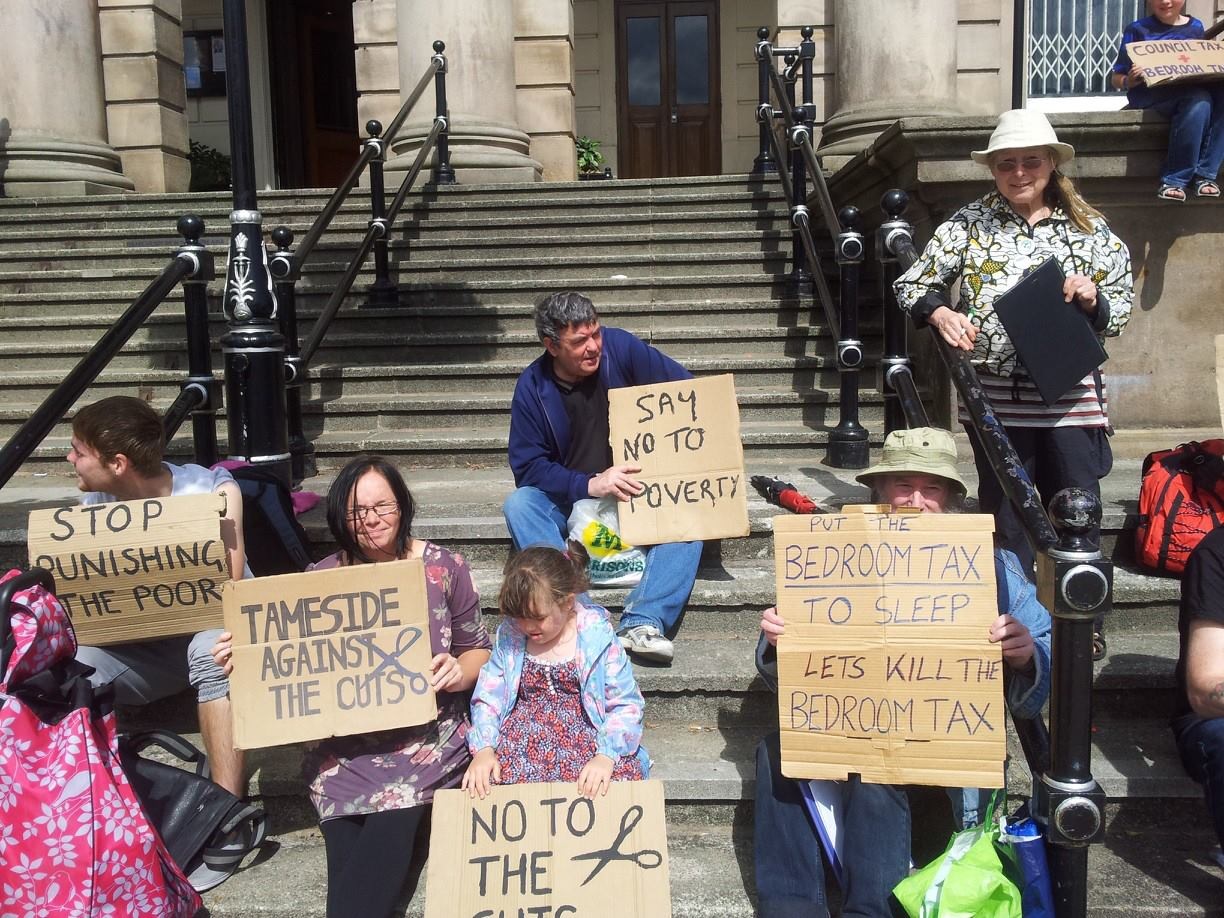
It was a cold, dark evening in Ashton-under-Lyne town centre when I first met Charlotte Hughes and her 7 year old, Tallula. She was there as part of Tameside against the Cuts who were lobbying Tameside Council about their use of bailiffs to extract council tax debt from some of the poorest people in the borough.

Charlotte and Tallula second and third from the left.

Charlotte and Tallula second and third from the left.

She said:”I am fed up being poor. I have to stand up against the Council and I don’t have any choice. I am angry about the way I have been treated by the Job Centre and Workfare organisations. They think they can treat me how they want and get away with it.”

Charlotte is a single parent with 2 grown up children and a 14 year old and 7 year old. She comes from a working class family of Latvian/Estonian extraction.
“My grandmother, who was Latvian, brought up 8 children. She was a matriarch as was my Mum. I have learnt a lot from them.”

Growing up during the Thatcher era affected her view of the world. “My father was an engineer and lost his job and never worked again. He hated the Tories for what they did to areas such as Tameside and now I see things going backwards.”

Being a mother of two children with learning disabilities has made Charlotte tough. “At that time I did not get much help with supporting my children. The authorities treated me as a ‘bad mother’. But it just made me stronger as a mother and a woman.”

Charlotte is appalled by the way single parents are treated in the benefit system.
“It is degrading and they do not take into account that you have to take children into consideration when they send you for job interviews.”

She is not prepared to be treated in this way and has challenged the Job Centre and taken complaints to her local M.P. Charlotte has used her knowledge of the benefit system to help other people who are also being targetted unfairly by the Job Centre.

Charlotte takes Tallula with her on all her demos and protests. She is active in Tameside against the Cuts, the Peoples Assembly, the Green Party and Barton Moss Camp.

Tameside against the Cuts

Tameside against the Cuts

“It is really important that she learns to stand up for herself. This country is not going to get any better unless people stand up for their rights.”

She sees herself as a feminist and an equalist. “Women can do anything a man can do but it is not about being better than anyone else. ” She lives on her own with her children. “I am very happy on my own and I impress on my children that they don’t need someone else to make them happy”.

Charlotte is fearful for the future, particularly for her children, but she has hope that life can get better.

“International Women’s Day is important as it shows women that we are more than just a wife or mother and that we have the power to stand up for our rights. We are not second class citizens.”

If you have enjoyed this article and would like to support this blog by making a donation you can do using this button
Posted in anti-cuts, feminism, International Women's Day, labour history, political women, Socialist Feminism, Tameside, women, young people | Tagged , , | 1 Comment