Stop,Look,Listen…my weekly selection of favourite films, books and events to get you out of the house

Watch..
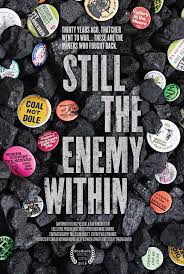
still the enemy Still the Enemy Within (Cornerhouse and Moston Miners) an award winning documentary that was funded by individuals and trade unions. The film includes new interviews and archive material that has never been shown before. You probably know the story, 160,000 miners challenged the Tory Government over its, secret, plans to close down the coal industry. This is their story and the story of the many people who joined the NUM in what became probably one of the most important disputes in recent times. At the Cornerhouse event there will be a Q&A with the producer Mark Lacey and Cath Booth who was involved with the Lesbians and Gays Support the Miners.

Find out about
cable streetwhat it means to be an activist and I mean not just going to meetings but physically opposing fascists on the street!. Mike Luft has been active in anti-fascist struggles all his life. He says; ““I grew up in Manchester in the 1940s and my family background included Rumanian, Russian, Irish and Scottish roots. In my neighbourhood I was surrounded by refugees. But it was a political, a communist background where opposing racism and particularly fascism was part of my lifeblood.” Mike is talking about his life and struggles at the WCML in Salford on Wednesday 15 October at 630pm. Further info contact enquiries@wcml.org.uk.

Look at.
BV and chethamsSampling Belle Vue: a 21st-century remix at Chethams Library. Loved this fascinating mix of Art students reinterpreting the BV archive. Didnt know the archive existed and there are some wonderful artefacts including postcards, guides, ceramics and photographs. The students looked at these and reinterpreted them to reflect their viewpoint. They were particularly horrified by the way the animals in the zoo were treated and this is shown in some of the pieces that they produced. Chethams is a little gem and well worth a visit.

Learn about…

Hannah Mitchell

Hannah Mitchell

Hannah Mitchell. On Saturday 18 October 2014 the Mary Quaile Club will celebrate the life of Hannah Mitchell at the Topaz Cafe, Katherine Street, Ashton-under-Lyne from 10.30-3.30pm. Hannah was a member of the Independent Labour Party, a suffragette, a peace activist and councillor in Manchester. From 1900-1910 she lived on Elizabeth Street in Ashton. The day will include a number of talks about her life, songs, some readings from her autobiography The Hard Way Up. Playwright Eileen Murphy, will read her play about Hannah’s life.Entrance fee is £6.00 waged and £4.00 unwaged and includes lunch. Places are limited and must be booked on advance by emailing maryquaileclub@gmail.com

Support….

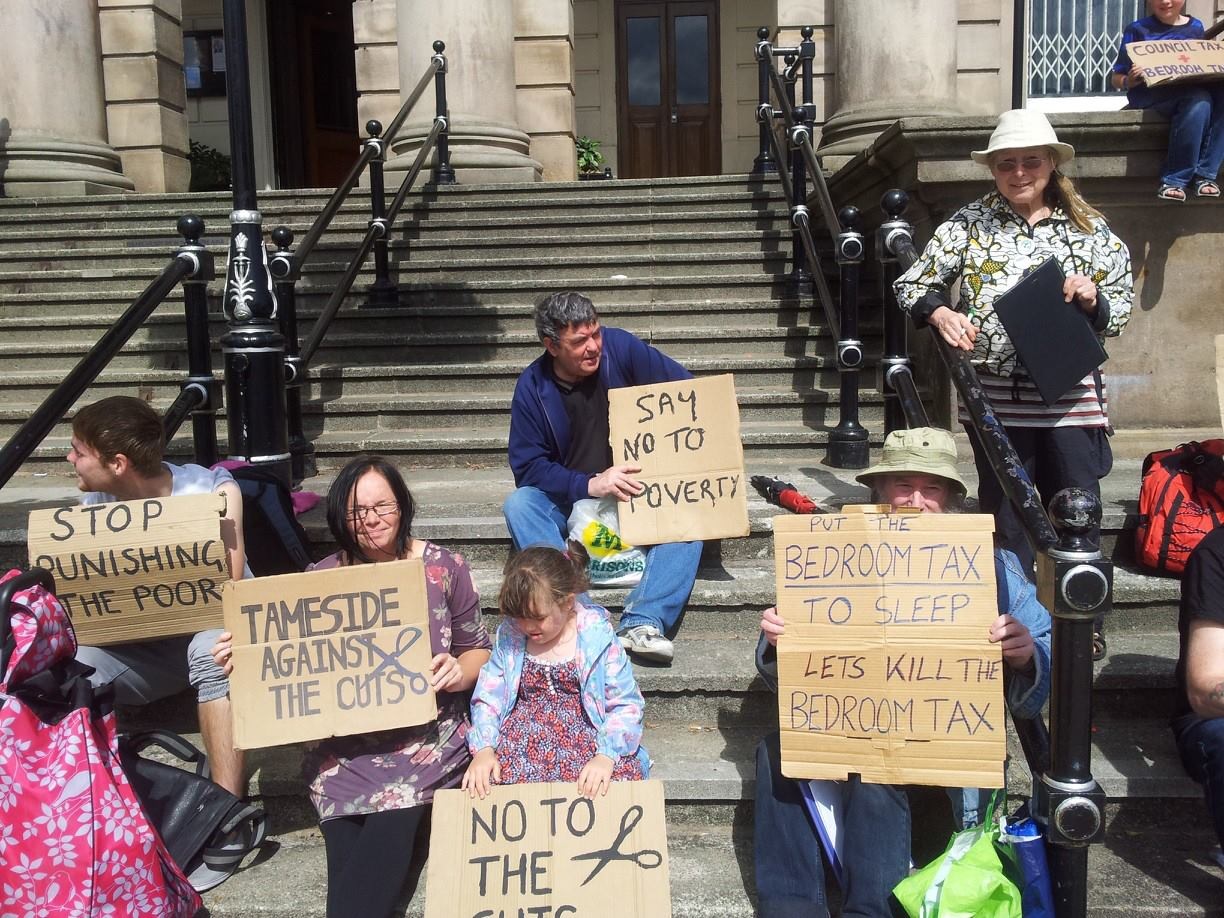
Tameside against the Cuts

Tameside against the Cuts

National Boycott Workfare Week: Saturday 4th – Sunday 12th October 2014 there are various events going on across the region. They want to to highlight the unfair use of benefit sanctions. Last week in Ashton a man was sanctioned for attending a relative’s funeral.Further info see  Find out about the reality of life on benefits read this great blog see and watch some direct action as people chase away bailiffs see

Enjoy…

cassette boy.Cassette boy has mashed up Cameron’s conference speech and produced the Cameron rap ….hilarious! See


Listen to
martin harris centre
…some free classical music. Walter Carroll Lunchtime Concert Series – Shakespeare à la Russe: Voice and Piano on October further info see

Posted in anti-cuts, art exhibition, Communism, drama, education, feminism, films, human rights, interesting blog, labour history, music, political women, Salford, Tameside, women | Tagged , , , , | Leave a comment

Building a Socialist Library(9) Left for the Rising Sun,Right for Swan Hunter

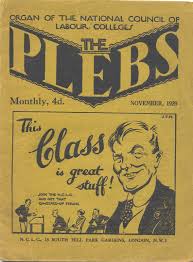
Left for the Rising Sun, Right for Swan Hunter. The Plebs League in the NorthEast of England 1908/1926 £6.99.
RTurnbull

Mark Twain said; I’ve never let my schooling interfere with my education.
In 2014 all the educational doors that I managed to get through are rapidly closing to the new immigrants and the poor working class in this country. And it is not just that access to education has a hefty price tag, it is also the downgrading of many jobs that working class people could get into. In this I include many public service jobs and professions that are melting away in the government’s agenda to make the poor pay for the austerity.

But for me education is not just about the collection of a series of certificates and the race to get a middle class job. Brought up in an Irish family my political education was as important as my father teaching us to write our name before we went to primary school. Like many people who were denied an education he got his on his travels across this country, in his experiences at the bottom heap of society and in his constant battles for respect and equality for himself, his family and his community.

In this very important book, Left for the Rising Sun; Right for Swan Hunter; The Plebs League in the North East of England 1908/1926, historian and communist (a winning combination) Robert Turnbull tells the exciting story of how this amazing organisation played an important role in the political education of working class people.
plebs league

The Plebs League started in 1908 when a group of students challenged the teaching at Ruskin College which until then was a major player in labour and trade union history. Their aim was to “bring about a more satisfactory relationship between Ruskin and the wider labour movement”. Their slogan was;”Educate, agitate, organise”.

This led to a the creation of the Central Labour College (CLC). The divide being between the reformists and the revolutionaries with very differing views of what the purpose of education is. Should it be solely to equip people to get better jobs or should it be part of a political education to turn society upside down?

Central to this story is the north-east of England and the coalfields of Northumberland and Durham which fed the shipbuilding, heavy engineering, chemicals, railways and glassmaking industry. Waves of immigrants from Ireland and Scotland went there to find work, becoming part of a community that sought to educate itself and build a strong trade union movement. The Plebs League responded to this;
“Education is and must always be a means to an end. To some it is a means to personal satisfaction, to others a means to a living; to us it is a means to the Great End, the emancipation of the workers.”

Robert shows how this was not that straightforward and that there were to be battles, not just with the capitalist class but also with organisations such as the WEA which had the support of the political and educational establishment.

This new independent working class education was quite different from the liberal curriculum of the WEA. It was “about workers equipping themselves with the necessary intellectual and cognitive skills so that they could meet the capitalist class on their own terms for the showdown that was coming.”

The Plebs League were following in a tradition of working class education that had its roots in the creation of the Mechanics Institutes in the late 1840s. Robert shows how radicals such as Joseph Cowen believed in the emancipation of working class people through education. He founded the Wincanton Literary and Mechanics Institute in 1847 which offered both men and women (very progressive in its day) classes in politics, science and technology. As Robert says; “Without the pioneering work of the Mechanics Institutes it is doubtful if the Independent Working Class Education movement in the North East would ever have got off the ground”.

Central to the story of the IWCE across the country was the political atmosphere with the growth of organisations such as the Independent Labour Party, the Social and Democratic Federation, and newspapers such as the Clarion. Political unrest from 1910-14 was reflected in industrial unrest, the ongoing suffragette campaign and the Home Rule for Ireland movement.

The IWCE thrived in the revolutionary era of 1908-1920 but then declined, partly as it became a more centralised organisation and partly because of events such as the defeat of the General Strike of 1926 led to the shattering of ideas of unity across the labour movement and a sense of hopelessness in their ability to challenge the capitalist class.

Today it is hard to find the hope and political committment that drove the IWCE in the early part of the 20 Century. In response to the privatisation agenda of both past Labour governments and the present Con/Dem government there has been the growth of many new organisations such as the Peoples Assembly, UK Uncut as well as many single issue campaigns against fracking, NHS privatisation and so on. But what is missing from most of these organisations is any sense of class consciousness. There is a growing sense of anger at the inequalities of society but this hasn’t been transferred into a politicised view of society. One of the reasons I believe that these organisations fail to sustain themselves beyond organising meetings and marches is that few, if any, offer their members a political education, something that the Communist Party was very good at. Across the country there has been attempts to set up an IWCE network but without working class people at its heart I am not sure that this will address the importance of giving people back a sense of their own worth and a respect for their own political heritage.

I have been involved in the Mary Quaile Club, an informal group trying to make working class history more accessible through talks, films and music. Each event has an element of history and a link to present day activism. We hold our events across the Greater Manchester area and try to engage with people and communities that do not normally go to history events.

Left for the Rising Sun
is an important contribution to the present day movement to revive a sense of history and political commitment to those people who really need it, the working classes. Books like this, I think are inspiring and are crucial to working class people taking back their history and redefining it for the 21 Century.

Buy it from Five Leaves Bookshop, an independent bookshop in Nottingham. see

Robert Turnbull is speaking at the WCML in Salford on 29 October see

If you have enjoyed this article and would like to support this blog by making a donation you can do using this button

Posted in anti-cuts, book review, Communism, education, human rights, labour history, Socialism, trade unions | Tagged , , , | Leave a comment

Stop,Look,Listen…my weekly selection of favourite films, books and events to get you out of the house

Watch
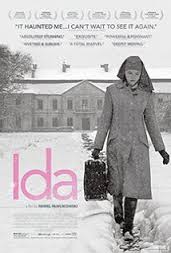
IdaIda (Cornerhouse)
a story of war, occupation and death. Set in Poland in the early 1960s Anna, a young novice, is sent from her convent to meet her aunt before she becomes a nun. It turns out that she is actually Jewish and called Ida. With her aunt, Wanda, she goes on a trip to uncover the truth about her family. For me it is the aunt played by Agata Kulesza who steals the show. Wanda is a tough woman. She was a partisan and fought against the Nazis and is now a judge. She drinks, smokes and is a woman not to be trifled with, the complete opposite of Ida. This odd couple find little comfort in each other’s company as they travel through rural Poland, all filmed in black and white. It is an unnerving film that kept me on the edge of my seat. Highly recommended.

Be inspired
Tommy-Sheridan-This-choice….by Citizen Tommy Sheridan. The vote was lost for Scottish independance but much more was gained by the debate that took place across the country. Watch Tommy at his best, in the Hope not Fear tour, so many people turned up to this community centre in a working class area of Glasgow that he spoke both inside and outside the building. He is still one of the most inspiring speakers you can listen to see

Celebrate the bard’s birthday.
shakespeares deadly sins…I am not a great fan of Mr.Shakespeare but there are plenty of others determined to mark the day. Conor McKee’s new production Shakespeare’s Deadly Sins is a journey through his plays, from Romeo and Juliet to Macbeth, plus stage fights, sonnets and songs. Read my review of Hamlet at the Royal Exchange see

More my kind of Shakespeare

art not oil…the Reclaim Shakespeare Company were set up to expose the way in which BP use funding arts projects to give themselves a squeaky clean image. BP are not good for the environment: you only have to look at their destructive activities in the Canadian tar sands, Russian Arctic and so on. So sign the RSC’s petition to stop the British Museum having a sponsorship deal with BP. As one of the most prestigious and well funded museums they cannot need the money!!! Sign the petition here

Join
greenpeace coal…the campaign against coal, ironic in the year we are celebrating/commemorating the Miners Strike of 84/5 but it is a highly polluting energy source. Watch this film as Greenpeace stop a coal train to highlight the growing use of Russian coal to keep power stations going. see

Learn about…Zimbabwean stone sculpting group Matombo-Tombo. They meet every Saturday at Gallery Oldham and their new exhibition Kubatana Nematombo opens on 4 October 2014 from 1-3pm. They welcome new members to their group, further info see

Posted in anti-cuts, art exhibition, Catholicism, Communism, drama, education, films, Uncategorized, women | Tagged , , , | Leave a comment

Stop,Look,Listen…my weekly selection of favourite films, books and events to get you out of the house

WatchManuscripts Don’t Burn (general release)
manuscripts-dont-burn film….one of the most frightening films I have seen in a longtime. Why? Because it was made by Mohammad Rasoulof, a filmmaker who has been banned by the Iranian government from making films so the film had to be smuggled out of the country. The cast and crew were so worried about being arrested that they did not want their names to be listed. The film is about how the Iranian government will go to any means to repress human rights including the arrest, torture and killing of individuals. The title is taken from a work by Bulkagov, a writer who lived during the times of Stalin, who started writing his famous novel the Master and Margarita in 1928 but fearing it would never be published in the Soviet Union burnt the first draft. He restarted the book in 1931 and it was published but heavily censored after his death in 1967. The complete manuscript was published in 1989 and many people believe it to be one of the finest novels of the 20 century. I believe Rasoulof has used this title to assert that you can burn books and you can kill individuals but you cannot kill the spirit of freedom. Watching this film reminded me of writer Jim Allen’s film Hidden Agenda which dealt with the war in the north of Ireland in the 80s. Another haunting but important film about the importance of people speaking out and fighting for freedom. Allen said; “After a film I hope the audience demand answers and action. I’m not keen on sending them to bed happy-I want them angry to get change.” This film certainly made me angry and I hope it will/can make some change in Iran. Highly recommended.

Go to a play...about union representatives being sent to jail…shrewsbury 24think it couldn’t happen in this country? It did in 1972 when 24 trade unionists who had been active in a strike in the construction industry were put on trial. Two people, Des Warren and Ricky Tomlinson, were sent to prison on conspiracy charges. Warren is now dead but there is a campaign to expose the political nature of the charges and to clear the names of the men. A new play called “United We Stand” is being toured by Townsend Productions which tells the story of the men and this very important miscarriage of justice. This week on 23 September on BBC Breakfast you can watch an interview with Ricky Tomlinson. Further info see Join the campaign for the Shrewsbury 24 at

Go to a meeting… on press freedom.
nuj manchesterIt’s the Labour Party conference in Manchester and the local NUJ are organising a public meeting on No More Murdoch’s ; Making the Media An Election Issue on Monday 22 September, 6.30pm Friends Meeting House, 6 Mount Street, Manchester M2 5NS. Speakers include John McDonnell MP, Rachel Broadey of the NUJ and Ann Field of the CPBF.

Support radical theatre
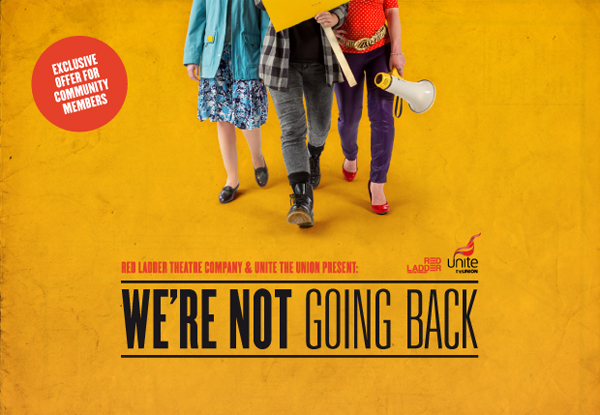
We Are Not Going Back 1Red Ladder Theatre’s We Are Not Going Back is on this Monday and Tuesday in Oldham. Its the story of three sisters and the Miners Strike so lots of opportunity for conflict of all kinds! More info at

Join a campaign.
..
hope not hateto stop groups with a racist agenda such as UKIP winning at the General Election next year. Hope not Hate are the main organisers and to do this important work they need financial support, please see their appeal at


Find out about
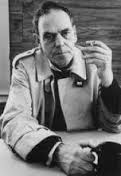
jim allen….local writer Jim Allen and see his film United Kingdom. Set on a council estate it’s about a community that refuses to pay a rent increase. Listen to Honor Donnelly of the Bedroom Tax Campaign and lecturer Andy Willis talk about the significance of Allen’s work. Further info see

Posted in anti-cuts, Communism, drama, education, feminism, films, human rights, labour history, political women, Socialist Feminism, trade unions, TV drama, Uncategorized, women, young people | Tagged , , , , , , , | Leave a comment

Stop,Look,Listen…my weekly selection of favourite films, books and events to get you out of the house

WatchPool of London(DVD ) made in 1951 by esteemed director Basil Dearden. It is set in the London docklands and filmed in black and white. It is the story of the people we rarely see in films or on television; men who work on ships, women working in pubs, theatres and offices.We follow two merchant seamen, Dan who is white and involved in petty crime and his friend Johnny, supposed to be Jamaican but the actor Earl Cameron uses his American accent. One of the interesting aspects of the film is the way it addresses the racism that Johnny experiences and how his friend and other people in the film step in to support him. But the filmmakers cannot get away from the attitudes of cinemagoers in Britain in the 1950s so although Johnny goes out with a white woman he is not allowed to kiss or touch her as they discover London together. I love the way in which we see London as it was then and the black and white just adds to a romantic and atmospheric view of the city. It is also great seeing the dock area as a working port as well as the pub life, the variety theatre and the lives of the men on the ship. Highly recommended.

Get a copy ofChartist Newsletter. I have not come across this publication before but I was really interested in another view of the conflict in the Ukraine particularly one concerning the workers there which rarely gets any publicity. In this issue you can read an interview with of Sergey Yunak: Head, Western Donbas Miners Union, Dnipropetrovsk see

There is something about the name Bernadette.. Bernadette Devlin McAliskey was a heroine of my fathers and she is an inspiration to me. She is a woman who got on the barricades to defend her community against British soldiers in Ireland in the 70s, she was elected to the British Parliament at the age of 20 and tried to challenge the British establishment about their role in Ireland and in 1972 over the killings at Bloody Sunday. Bernadette was almost killed for her views and her political activity. In my view it is only when we recognise and value activists in the working class community that we will see change in society. Watch these two interviews she did recently with chunkymark in his taxi. In 20 minutes she makes more important comments than any book produced in the last 30 years see parts 1 and 2

Sign a petition…if you are a woman..Feminist organisation Global Womens Strike say; We call on women’s groups and organisations, prominent feminists, and all women everywhere, of all faiths and secular, to stand with the women and children of Gaza and demand an immediate end to this Israeli slaughter of the innocents. It is time to hear from the women outside of Gaza. Further info see

Find out the latest on workfare…read this summary by Tameside Unemployed Workers Alliance and how a judge has ruled that working for free is lawful but taking benefits away is not. Love the Ben Hur clip! See

Find out about how.People Make their Own History run by activist and historian ( a winning combination) Mark Krantz. From Peterloo to Stop the War in 10 sessions from 23 September at the Peoples History Museum. Further info see

Posted in anti-cuts, drama, education, feminism, films, human rights, Ireland, labour history, Manchester, North of Ireland, political women, Socialist Feminism, Tameside, trade unions, Uncategorized, women | Tagged , , , , | Leave a comment

Stop,Look,Listen…my weekly selection of favourite films, books and events to get you out of the house

WatchKinshasa Symphony (Cornerhouse) a documentary made in 2010 about the only symphony orchestra in Central Africa. The film is not just about the orchestra but also about the Congo, one of the most violent countries in Africa. The musicians are self-taught and rely on other jobs to make a living whilst dedicating themselves to their music and the orchestra. They get no funding from the government and have to pay for their own instruments, clothes and sheet music. There are many Congolese people in Manchester who have fled the war in their country, let’s hope they can get to the film or the concert given by the L’Orchestre Symphonique Kimbanguiste at the Bridgwater Hall on the same evening. Watch a clip from the film at

Go to…the International Workers of the World meeting in Manchester. They are a very different kind of trade union from the British brands of Unite and Unison. They say; “The IWW’s unique approach to unionism is based on grassroots action and real democracy from the bottom up.” Their next meeting is an attempt to organise the downtrodden bar and hospitality workers and show them that organisation is the key to getting better pay and conditions. The meeting is 6pm on 8 September at Friends Meeting House. Further details see Have a look at their work in London see

Go on a tour.…of the John Rylands Library, one of the most distinctive buildings in Manchester (except for the glass extension!) I love the late-Victorian neo-Gothic architecture and the story of how Enriqueta Augustine Reynolds founded the library in memory of her husband Mr. Reynolds. The tours take place every Friday at 3pm, you do not need to book, just turn up. Further details see

Find out about.… Ashton-under-Lyne’s historic baths. Sadly Ashton is now best known for the blue box  Ikea monstrosity. These baths were built in 1870 and were at one time the largest municipal baths in Europe, it was closed a hundred years later when a modern swimming pool was opened. The building is Grade 111 listed and still has many of its original details intact. Gay Oliver is giving a talk about the history of the baths on Saturday 13 September, 1.45pm at the Tameside Local Studies and Archive Centre. Ring 0161-342 4242 to book a place.

Sign a petition…the Palestinian Solidarity Campaign says It is hypocritical and likely to be detrimental to community relations in the UK for the British government to be taking action against British Muslims who are fighting abroad while tolerating British Zionists participating in a military action that is being investigated for war crimes. Sign their petition at

Fancy yourself as a scriptwriter
….join this course at Oldham Library from 27th September – 1st November. Run by esteemed local playwright Cathy Crabb, Brandnewscripts is a six week course running on a Saturday from 2-4pm. For more information contact Cathy direct on cathycrabb@gmail.com Read my interview with her see

Posted in anti-cuts, drama, education, films, labour history, Manchester, music, Tameside, trade unions, Uncategorized | Tagged , , , , , | 1 Comment

Bee positive; Tasting the Honey in Harpurhey

You might have heard about Harpurhey but for all the wrong reasons. Last year BBC3 decided to make a documentary, called People Like Us, about (some of) the people who live there. It caused outrage because of the negative image it gave of the area. Residents packed meetings to sound off about the programme, whilst the local MP and councillors denounced the way in which the documentary portrayed the local community.

Harpurhey is three miles from Manchester city centre: you get there by taking the Rochdale Road out of the city going north, but not very far. The statistics for this area are shocking. In 2013 Greater Manchester Poverty Commission showed that Harpurhey was in the UK’s top 60 for high levels of deprivation, including very low income, unemployment, poor job or education prospects and high crime levels.

Behind these statistics, and beyond the main drag of Rochdale Road, a little green paradise has been created by the residents of Cypress Road. In 2011 they watched television programmes which alerted them, and many other people, to the threatened destruction of bees. As Richard Searle, one of residents, says;
“I thought I had better do something for the bees. I thought it was important to look at the world through the eyes of the bees.”

BBP 2

In 2011 they decided to set up the Baytrees Bee Project which is not just about setting up a beehive but is also a project which involves providing an environment that will help the bees thrive. Six people are directly involved in looking after the bees while many local people have taken part in activities to support the development and growth of the bees. As the project develops there are day-to-day problems eg on the day I visited a tree had fallen on the hives. Richard filmed co-worker Kay sorting it out, and the footage immediately went onto Youtube.

Kay Phillips says; ” I felt it was important to challenge the idea that it is a middle class pursuit.
‘What! honey from Harpurhey?'”

And its not just in Harpurhey that people have reacted to the decline by a third since 2007 in the British bee population: there has been an amazing response up and down the country with some people setting up hives in their back gardens while others have decided to grow the kinds of flowers and plants that will best help the bee population to thrive.

Manchester is an important place for a revival in beekeeping. The first industrial city in the world, it took the worker bee as its mascot and you can find it emblazoned on the Town Hall and many other buildings and parks. Richard sees it as important to link up the symbol of the worker bee and Manchester’s ambition to be the first pollinator friendly city. “It would give hope to new industrial cities of China when they look out on their smog each day.”

Manchester Bee

Manchester Bee

Manchester City Council has supported bee projects such as BBP by providing funding for training up new beekeepers, but it is the project’s aim is to be self-sustaining through their sales of honey.
Kay explains; “In the first year we only produced enough honey to put into tiny little pots which we gave away to the people who helped us.” This year they have sold the honey in the local markets as well as in Manchester City Art Gallery. The proceeds go back into resources for the local people, including a community lawnmower.
BBP honey

Honey produced in local hives is superior to that bought in supermarkets or shops because of the very high quality of the product: it is not blended with different honeys as many commercially bought honey products are.

One of the many staggering statistics about bees is that in order to create 60lbs of honey the bees have travelled 3 million miles around Harpurhey which works out 50,000 miles per pound!

That is why environment is so important. It is not just about the bees but it is also about providing an environment in which they will prosper. Harpurhey, it turns out, has a rich habitat, even in the Irk, the local river which Engels described in 1845 in the “The Condition of the Working Class in England” as ” a narrow, coal-black, foul-smelling stream, full of debris and refuse, which it deposits on the shallower right bank”. Nowadays you can find carp ponds in the Irk which probably reflects the lack of industry and population and the continued regeneration of the area.

Local people have become inspired by the bees project and even if they, like me, are wary of becoming directly involved, they have been asking questions to the BBP about what plants they can put in their gardens to feed the bees. Around the streets there are many pretty hanging baskets and the intention is to plant flowers outside the borders of the gardens and on every spare bit of ground.

Richard believes that the bees project and the allotment offer something almost spiritual to the local community. “It feeds the inner peasant, feeding your soul and bees can get you to see the world differently and that is important in everyone’s life.”

Across Manchester city centre there are now beehives on some of the tallest buildings including the Printworks, Manchester Cathedral and the Manchester Museum. The aim is to create a pollinated city where bees can stop for a snack in the bee alternative of Greggs or Cafe Nero. Already church grounds are being turned into wildflower meadows and the aim is to get people in the city who have balconies to grow plants which are bee-friendly.

Since its beginning the BBP has used social media to show people how they started and maintained their bees and it has been a popular and accessible way for viewers to become educated about the bee project. Their next step is to make a film tracing the story of bees in Manchester and Salford. The film is being made with no money, just their equipment and their enthusiasm for the project.

Kay explains; ” Our aim is to explore the symbol of the bees, using the idea of the worker bee as the symbol of Manchester and Salford, and reinterpreting it in 2014 as bees representing the ecological vitality of the cities”. Their film will start in Kersal Vale in Salford and their bee project and then travel down the Irwell into Manchester to map the growth of bees in the city.

It is just one aspect of their bee propaganda to educate and inspire people to take up the cause of saving the bees and creating a better enviroment for them and the people of the city. Nationally the British Beekeepers Association has reported that their winter survival survey shows that the honey bee colony survival rate has improved greatly: “despite the colony losses reported since 2007/8, there has been an upward trend in the total number of honey bee colonies being managed by members of the BBKA. BBKA membership has more than doubled since 2007, when there were around 11,000 members, to around 24,000 today and consequently the number of colonies is increasing”.

Richard believes; “Our aim is to create a pollinated city, to improve the quality of life of all people in the city. It is a plan for a better future and it is really important for the bees but, most of all, for the people.” You can watch the progress of the BBP at

If you have enjoyed this article and would like to support this blog by making a donation you can do using this button

Posted in education, films, Manchester | Tagged , , , | 2 Comments

Stop,Look,Listen…my weekly selection of favourite films, books and events to get you out of the house

WatchUnited Kingdom at a Mary Quaile Club event. Written by Manchester writer Jim Allen and set in Jim’s backyard, the council estate of Middleton, it is the story of how a group of tenants decide to organise a rent strike. It was made for television and shown on BBC in 1981 – just at the beginning of the Thatcher era – and never shown again. It represents the end of an era of left wing political drama on TV, after which writers such as Allen moved into film or theatre. It marked the end of seeing on television working class people as political activists in their own history. Come to 3 Minute Theatre on 27 September to see this outstanding film and join in the discussion about politics today and what we can do about it. Further info see

Go to a play...about women during the Miners Strike in 1984/5: “We Are Not Going Back” by Red Ladder Theatre. Catch it at only two dates on this side of the border at University Oldham Campus on 22 & 23 September. This is the 30th year since the strike and there have been plays, a documentary and some TV programmes but not much has been said about the role of women during the strike. The writer of the play Boff Whalley says he intends to express the way in which the strike opened up working class womens’ lives. Set in a mining village it is about three sisters, their dreams and hopes for the future and the impact the strike has on them. Boff wrote the exceptional “WrongUn” play about a suffragette last year so it looks like we will be in for another great night. Red Ladder have recently had all of their Arts Council grant cut so we need to support their productions. Further info see

Find out about women’s history… This autumn the Aquinas College, Stockport is offering a 20 week course over two terms on the history of radical women. The course is called From Mary Wollstonecraft to Women’s Liberation and the course will explore the history of radical women in Britain over two centuries from the 1790s to 1970s and their struggle for civil and political rights. It will include the contribution of women from Greater Manchester. The course is being tutored by Michael Herbert, MA, who has been researching and writing about radical history for many years. His most recent book is “Up Then Brave Women: Manchester Radical Women, 1819-1918″ which was published in October 2012. For more information or to book a place on the course please contact Sheila Lahan at Aquinas College, telephone 0161 419 9163, email : Sheila@aquinas.ac.uk

VisitGallery Oldham – one of the best art galleries in the North West. It doesn’t have the money or profile of galleries such as the City Art gallery in Manchester or the IWM but it has a warmth and sense of localism that I think is really important for arts organisations that are funded by local tax payers. Whenever I visit GO there are always local working class people at the exhibitions due, I think, to the way in which the staff produce exhibitions that draw people in to find out more about Oldham and its rich history. This week I visited their 200 Years on Union Street exhibition, a fascinating retrospective of how the town has changed since the 1800s. In 2014 Oldham has a new tram service but sadly previous council leaders have destroyed many of the wonderful buildings that made this such an interesting place to live in and visit. Highly recommended.

See some new plays…Contact Theatre are producing six brand new plays, each one is only 15 minutes. It is part of Pull Your Finger Out productions who say: they are proud to present a varied and dynamic programme of six brand new unperformed plays, written, directed and performed by some of the finest North West talent. Further info see

Posted in anti-cuts, art exhibition, drama, feminism, films, human rights, labour history, TV drama, Uncategorized, women, young people | Tagged , , , , , , | Leave a comment

Stop,Look,Listen…my weekly selection of favourite films, books and events to get you out of the house

WatchTwo Days, One Night (Cornerhouse)..another brilliant film from Belgian brothers; the Dardennes. Sandra has just returned to work after being ill with depression only to find that the management have asked the staff to vote for a bonus or for her job. She has the weekend to persuade them to vote again, only this time for her to keep her job. It is capitalism writ large. As she visits her colleagues we see how the management have sought to turn them against each other. Most of them are poor working class people, many are from non-European backgrounds, including Arabic and African. It is heartbreaking as we watch her children as they watch their mother on the verge of a mental breakdown. Luckily she has a husband and a union rep who believe in her, that she can convince her colleagues to change their minds and even at the lowest point of her own misery she offers her friend sanctuary in her home from an abusive husband. This film reminds us of the importance of solidarity at work and that in the end people are more important than profit.
Highly recommended.

Go to a talk…about political theatre at the WCML on 10 September at 2pm. Mike Harris, writer, discusses his own work which has included touring theatre, community and radio drama and the “Great Tradition” of committed political theatre by which I think he means the Red Megaphones and Unity Theatre. The WCML has the archives of both these organisations. Big difference here is that these organisation were created by communists and had a political strategy, so it will be interesting to hear his take on political drama today. Further info see

Support the right to protest….at the Kedem picket in Manchester. Only last week we were commemorating the Peterloo Massacre when 13 people were killed as they demonstrated for the right to vote. But in Manchester in 2014 the head of the council Richard Leese and the police are trying to stop people protesting about the massacre in Gaza. Tight limits have been imposed on the picket at Kedem. So if you want to support the protestors sign this petition
see

Support… a family in need of sanctuary in the UK. Abiola Famaminwa is a biomedical scientist from Nigeria, she has 3 children, her husband Samuel was a well known journalist in Nigeria who died in suspicious circumstances in Borno State. He is just one journalist of many who are persecuted in Nigeria. Abiola fled to the UK to protect herself and her children and she is now facing deportation back to Nigeria. Support the campaign by signing the petition, write to her MP and make a donation if you can. There is a social for the family on Saturday 30 August 12-6pm, further info see

Find out about the architecture of Manchester….the Modernist Society and the Modernist Magazine have organised a talk on 4 September at Manchester Central Library, From the North: TV in Manchester. They say: This talk will not focus so much on the creative output of the television companies based in Manchester namely the BBC, ABC and Granada but more a narrative relating to the places these television companies inhabited and how their development in the second half of the 20th century symbolised and mirrored Manchester’s wider shift from an industrial to post industrial economy along with the changing nature of television. Further info see

Posted in anti-cuts, Communism, drama, education, films, human rights, labour history, Manchester, Middle East, Palestine, Uncategorized | Tagged , , , , | 1 Comment

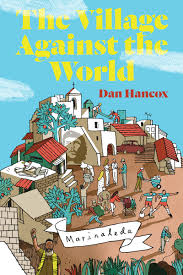
Building a Socialist Library (8) The Village Against the World by Dan Hancox

The Village Against the World

The Village Against the World

Reading this book reminded me of visiting republican areas such as the Bogside in Derry in the 80s and 90s. As I walked the streets of Derry with SF councillor Mary Nelis I saw a landscape not unlike my own in east Manchester, except for the shadow of the British army in the background. The occupation of this part of Ireland spurred on a wonderful rich culture of language, art and history which was part of the republican opposition to the British presence.

Derry Mural

Derry Mural

In The Village against the World there are many parallels, except they are opposing their own government and not an occupying force. Dan found out about Marinaleda from a Spanish travel book and decided to travel there and find out what was happening in a village dubbed a “communist utopia.”

Marinaleda is a small Andalusian village of only 2,700 people. Andalucia is an agricultural region that has not changed over the last 100 years. It has a history of peasants rebelling against the landed aristocracy particularly during the period after the death of fascist dictator Franco. Their actions were undertaken to secure some land so that they could do the basics including feeding themselves and so they took on the might of the Spanish government :
“As Spain began its slow, careful transition from fascism to liberal democracy, the people of Marinaleda formed a political party and a trade union, and began fighting for land and freedom. “

Their actions varied from marches and pickets to hunger strikes which for some meant a prison sentence. But in 1991 they achieved their goal and were granted 1200 hectares of the local noble’s land, for which he was paid by the Spanish government.

Central to this struggle was Juan Manuel Sanchez Gordillo who in 1979 became the first elected mayor of the town, a position he has continually held since then. He defined his politics; “I have never belonged to the Communist Party of the hammer and sickle, but I am a communist or communitarian.” His influences are as diverse as Christ, Gandhi and Che.

Dan described his interview with the mayor; “He spoke that day with range and passion, for hours about the struggle he has led the village through, its general assemblies and hunger strikes, its cultural opportunities and collective personality, and the inhumanity of the capitalist world outside, as well as the misery of its crisis.”

Andalusia has been hit hard by the economic crisis. In 2013 unemployment was 36% with young people being affected much worse at a rate of 55%. The housing boom has now gone, leaving local people facing eviction from their homes by the banks. The government has freed up labour laws so that employers can hire and fire at will.

Like much of western Europe people in Spain have become disillusioned with the political system that allows bankers to destroy peoples lives and communities whilst not taking any responsibility for the economic crisis. Out of this crisis Spanish people have created their own reform movement – the indignados – with its cry for real democracy now or iDemocracia Real YA!

After the locals got their 1200 acres they went on to cultivate the land producing crops that could be part of a processing industry that would give work to the locals. It is a co-operative that aims not to redistribute the profits but to provide more jobs. It is not just about jobs either: they have created a community with self- built houses, a cultural centre, a worker’s stadium, tennis courts, a gym, an outdoor swimming pool, nurseries and schools.

But Marinaleda is part of a country that is going into meltdown and this is having an effect on their community as funding is cut and they are affected by the same economic forces. But it is also being seen as an alternative for the millions of Spanish people who are rejecting the established political order.

Dan compares the experience of going to Marinaledo to the response of Orwell going to Republican Spain in 1936 as “the strange and moving experience” of believing in a revolution. I think that many people had that response when they went to Derry or Belfast in the 80s and 90s or maybe were involved in the Miners Strike in 1984/5. It is the kind of experience that keeps you going if you are an activist.

For those of us who are socialists we are always looking to create a better world whether it is as trade union activists fighting for decent lives at work or in our neighbourhoods to stop the destruction of trees. Our history is one of people believing that we can create a more equal and just society, the big problem is maintaining the optimism to do so in an increasingly cynical world.

The Village Against the World is a fascinating book because for the people of Marinaleda they have created a little utopia in a small part of Spain. It will be interesting to see how it develops as Spain and the world lurch from one crisis to the next.

The Village Against the World published by Verso £9.99
Buy it at

If you have enjoyed this article and would like to support this blog by making a donation you can do using this button
Posted in anti-cuts, book review, Communism, human rights, Ireland, labour history, Socialism, trade unions | Tagged , , , , | Leave a comment