Stop,Look,Listen…my weekly selection of favourite films, books and events to get you out of the house

Watch

best of enemies
Best of Enemies (Home) a documentary film on the series of televised debates in 1968 between the liberal Gore Vidal and the conservative William F. Buckley Jr. The debates were on live TV at the Republican and Democratic conventions of that year. Both men represented (or were seen to represent) two sides of American life. Vidal was a commentator and author who believed that America was rapidly becoming a right wing society. Buckley believed Vidal was part of a left wing conspiracy to undermine the real America. But of course whilst they were exchanging intellectual blows nightly on live TV the real politics was going on outside with fighting between anti-war protestors and the police and army. Buckley and Vidal to me seemed to be talking in a language as far away from the USA of 68 as the Middle Ages. They didn’t just sound the same, they also looked very similar, with preppy hair cuts and clothes. Buckley did go on to become a kingmaker in the Republican Party, supporting Ronald Reagan’s rise to president. Vidal was famous for his books and novels, his commentary on modern day America, but never found a home in the political system. Best of Enemies does explain why the rightwing has dominated US politics for the last forty years. And I include Clinton and Obama in my analysis.
Support

Tameside 2
the first anniversary of the weekly picket at Ashton Job Centre. Poor people have been at the centre of the cuts since the “austerity” began. But some of the best campaigns have come out of this misery and Tameside against the Cuts is one of them. Each week they picket Ashton Job Centre, which is one of the first that trialled the notorious Universal Credit. TAC have been the witness to the way in which UC has destroyed peoples lives. It is not just about sanctioning benefits and depriving them of the basics to feed themselves but the wholesale persecution of some of the most vulnerable people in our community. TAC have not just listened to their stories but they have offered positive support through a weekly advice service at the local Ikea. Through her blog, The Poor Side of Life, Charlotte Hughes, one of the key members of the campaign, has publicised the stories she hears each week. It is grim reading but T ACoffers a network of support to people who are often living very isolated lives.

Join them this week Thursday 6 August from 1-3pm at Ashton Job Centre, 101 Old Street, Ashton-u-Lyne. It will be a celebration of how the poorest people can make a difference to their lives. And it will be fun with live music, singing speakers and food!

Read

john pilger
Assange: the untold story of an epic struggle for justice by John Pilger. You won’t find this in the media, particularly not the Guardian, nor on television. Read the article and find out why not…..see
Look
machine women

 
At Machine Women, a celebration of the lives of women who have worked in industry in this country. From the cotton mills of Lancashire (where one of the artists’ gran worked) to today’s workplaces. One of our local heroines, Betty Tebbs, is featured, talking about her life at work in the paper mills. The project is ongoing and will include women in Chatham docks and the Luton hat trade.Further info see

If you have enjoyed this article and would like to support this blog by making a donation you can do using this button

Posted in Uncategorized | Tagged , , , , , | 2 Comments

Stop,Look,Listen…my weekly selection of favourite films, books and events to get you out of the house

Watch
salt of the earth
The Salt of the Earth(Home). A documentary about my favourite photographer Sebastião Salgado. I have always been fascinated by his black and white photos and by the deep humanity that is expressed through them. Over forty years he has spent time in many continents photographing some of the worst aspects of humankind including war, poverty, exploitation and famine. In this documentary we find out more about the man and the close working relationship he has with his wife and business partner, Lélia Wanick. I would have liked to find out more about her and how they juggled having two children, one of them disabled, alongside pursuing their photographic projects. Highly recommended.

Support
the big ride
The Big Ride a fundraiser for medical aid for children; the Middle Eastern Children’s Alliance. The ride is from Edinburgh to London, arriving at Parliament on 9 August. There are eight cyclists from Manchester taking part and one of them is Jill Woodward. You can donate by going to The Big Ride Palestine see

Find
bicycle

out about the growing popularity of cycling in this film being shown by the Manchester Film Cooperative on Friday 31 July. MFC and Critical Mass Manchester are showing the documentary Bicycle and launching a new book by Carlton Reid Roads Were Not Built for Cars.
They say “Bicycle” is a humorous, lyrical and warm reflection on the bicycle and cycling and its place in the British national psyche”.
Further details see

Remember
cnd film

the commitment of peace campaigners in the northwest to a peaceful world. Watch this new film where activists remind us of this important part of our radical history. Recent events such as the arrest of a whistleblower at the Faslane Trident base show the importance of peace campaigns. CND was once a powerful force in the politics of this country but the issue of Trident was barely mentioned in the general election (except in Scotland) take part in the discussion following the film. More details see

Look
frank green

At some scouse art. Frank Green has been painting his native Liverpool for fifty years and in this exhibition at St. George’s Hall they provide a moving history of the massive changes that have taken place to some of its iconic and not so iconic buildings. Frank has painted the important buildings including the Town Hall, the main football grounds and the cathedrals that are how we see Liverpool. But he has also painted many of the streets, churches and buildings that are/were an important part of local communities in less well-known suburbs including Tuebrook, Everton and Wavertree. The exhibition is a tribute to his love for the city and well worth viewing. See it at

If you have enjoyed this article and would like to support this blog by making a donation you can do using this button

Posted in Uncategorized | Tagged , , , , | Leave a comment

Manchester: a tale of two tents.

There are two sets of tents in Manchester city centre at the moment: white expensive ones for the Manchester International Festival and shabby ones for the homeless. The MIF tents are in Albert Square next to the Town Hall while the homeless’ tents are in St Ann’s Square, a script’s throw from the Royal Exchange Theatre, one of the main venues for MIF. The city centre is dominated by billboards and flyers advertising the festival, even though many of the events were sold out well before the festival started.

The MIF website champions its status: “Manchester International Festival is the world’s first festival of original, new work and special events and takes place biennially, in Manchester, UK. The Festival launched in 2007 as an artist-led, commissioning Festival presenting new works from across the spectrum of performing arts, visual arts and popular culture.”
background MIF

In 2015 the MIF hosts artists as diverse as Damien Albarn, Bjork and Ronni Ancona. All the events are in the city centre and the BBC, as one of its sponsors, has given the festival a national platform. The white tents have offered free performances including the BBC bringing its own arts programmes live from the tent: Newsnight broadcaster Kirsty Wark has fronted programmes about the MIF and indeed asked some challenging questions about the concept of the MIF.

But is the festival for Mancunians or is it another opportunity for tourists with money to visit Manchester and enjoy a festival that could be held in any city in the country? I spoke to Alex Davidson, Secretary of Manchester Trades Union Council, who told me, “MIF is integral to Manchester City Council’s strategy to turn Manchester into a London Mark Two where the city centre is largely lived in, worked in and socialised in by rich people. Funding events like this attracts the kind of people they want to live in the city centre.” Unlike other northern councils Labour-controlled Manchester City has substantial reserves. Davidson reflects; “It is where they decide to put the money; not on defending jobs and services but on concentrating on the narrow confines of the city centre and a specific group of people.”

Funding of the arts is a controversial issue. MIF got two million pounds from Manchester City Council, its single biggest donor, and even £30,000 from poor sister authority Salford City Coucil, even though none of the events were held there.The Arts Council of England rewarded the MIF with a 50% increase to £729,000. With corporate sponsors the budget could hit £12m.

Manchester has a thriving arts scene including the Greater Manchester Fringe Festival which is running events in July alongside the MIF, although not a partner within it. GMFF enables local actors, performers and writers to showcase their work in local venues as far apart as Saddleworth and Salford. Funding is scarce, though. Altogether they have raised several hundred pounds with a small donation from Salford City Council (where several events take place), an advert from a local car company and a one-off donation from one of the venues – the Salford Arts Theatre. Unpaid festival director Zena Barrie explained; “We applied for Arts Council funding but were refused on the grounds that we couldn’t guarantee quality.” Ironic given the whole point of fringe festivals is to give new performers a chance to get their work out to an audience. One of the few dramas about the austerity was showcased at the GMFF, Knock Knock by Love and Light Theatre company, a short play about poverty, sanctions and bailiffs, written by Kate Marlow.

Knock Knock

Knock Knock

For self-funded and eclectic Three Minute Theatre in the city centre, run by Gina Frost and John Topliff, seasoned performers and teachers, MIF is irrelevant to the work they do throughout the year. Frost comments; “We don’t see them as competitors because we cannot compete with them.” while Topliff adds; “It strikes me that the organisers have a low opinion of what happens in Manchester and it’s as if they are coming in to show us how to do it.”

3mt

The MIF does have an elitist profile but Alex Poots, the MIF CEO, explains how they have tried to reach out to the poorer Mancunians. “We run a reduced price ticket scheme for Greater Manchester residents at or below the living wage: 10% of tickets for all price bands across all shows are priced at £12. These are offered on an honesty basis to those with a GM postcode and via existing groups and networks – we have a dedicated member of staff who works to identify those groups and work with them to get the tickets to those that want them.”

What do people living outside the city centre, where the cuts in services and jobs are biting hard, think. I went to one of the poorest areas, Clayton in East Manchester, and asked some of the residents for their views about the MIF. Most of them had heard about it because of the publicity in the media. One person who worked for the Council and didn’t want to be named was outraged about the use by MIF as £14,000 as a benchmark for cheaper ticket prices. “£14,000 will barely cover rent, council tax, food and getting to work, never mind going out”. Ruth Joseph, a wife and mother of four, liked the idea of the MIF and was interested in taking her children along, but when I told her that a child ticket was priced at £12, she said; “I could buy a DVD for that and all of them could watch it.”
aldi clayton

Unemployment and underemployment is rife in Manchester and, apart from the money that the MIF has been given by public funds, the issue of the use of hundreds of volunteers to take part in the running and performances is a controversial point. Entertainment unions Equity and Bectu have been running campaigns to stop exploitation, particularly of young people who are desperate to get a job in the arts. Alex Davidson comments; “It’s negative and demeaning of Manchester Council to dress up volunteering as civic minded engagement when it’s only people who come from rich or better off backgrounds with parents subsidising them that can afford to take part in arts activities.”

As the last performances are staged and they start dismantling the white tents of the MIF, the homeless people who have been camping in the city centre face another court appearance as Manchester Council tries to exclude them permanently from the city centre. I spoke to Wesley Duff, a spokesperson for the homeless camp; “I think it is wrong the way Manchester City Council has prioritised giving money to the MIF and it won’t look after their own people; the homeless and people with mental health problems.”

Frederick Engels, writing in 1844 in his classic study of poverty in Manchester, The Condition of the Working Class, could have been writing about the city in 2015.

“And the finest part of the arrangement is this, that the members of this money aristocracy can take the shortest road through the middle of all the labouring districts to their places of business, without ever seeing that they are right in the midst of the grimy misery that lurks to the right and left. For the thoroughfares leading from the Exchange in all directions out of the city are lined, no both sides, with an almost unbroken series of shops, and are so kept in the hands of the middle and lower bourgeoisie”.

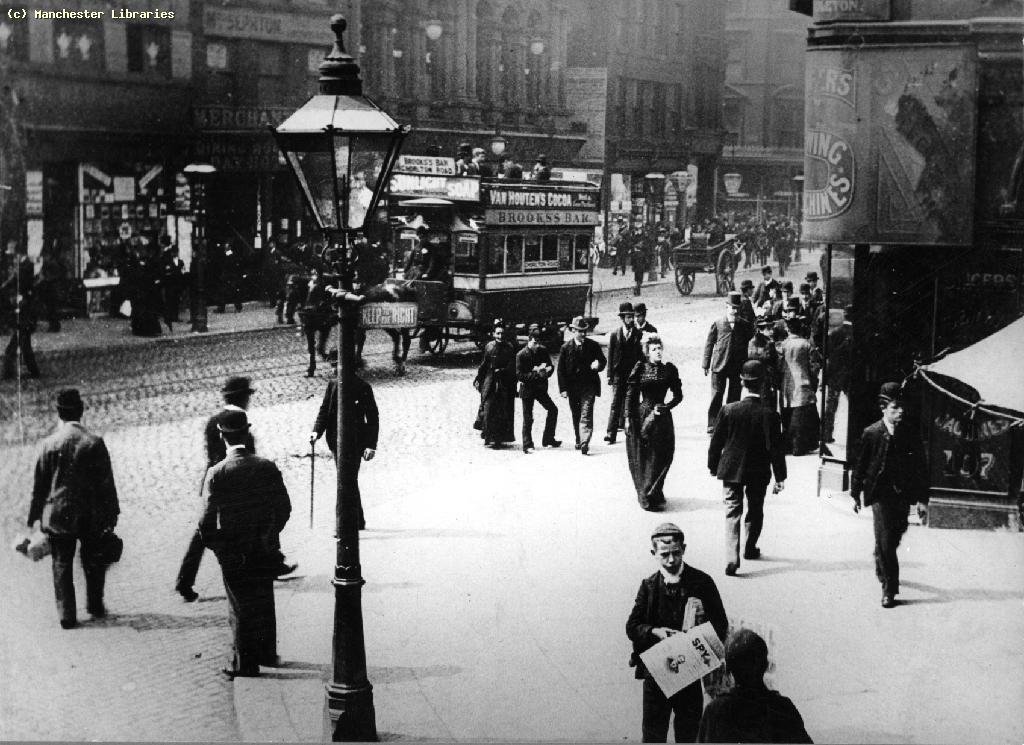
Manchester 19 Century

Manchester 19 Century

I put these comments about the MIF to Councillor Rosie Battle, executive member for Culture at Manchester City Council, but did not get a reply.

If you have enjoyed this article and would like to support this blog by making a donation you can do using this button

Posted in Uncategorized | Tagged , , | 4 Comments

Stop,Look,Listen…my weekly selection of favourite films, books and events to get you out of the house

Watch
Udita
Udita (Arise) a film about the garment industry in Dhaka in Bangladesh. It could be 19C Britain or 20C New York (Triangle Fire 1911). Poor impoverished, mainly women, who have left their villages to join the 4million in factories producing cheap clothes for us. They tell their story in this remarkable film, a story about living in sheds, with wages that barely cover their costs and that are sometimes not paid for months and working long hours with little time to see their children. But the women and men have not been defeated, even after fires at Tazreen and Rana Plaza that have killed and injured thousands of workers. We watch as they become activists in their trade union; the National Garment Workers Federation. The union has been successful in gaining higher wages for the workers and joining with other international organisations to highlight the way in which the workers are being exploited by the industry. Its a difficult film to watch but inspiring for anyone concerned about justice across the world.

Find
tracey moffatt 1

out about Aboriginal filmmaker and artist Tracey Moffatt. Her work reflects her background. Tracey’s mother was white and her father aboriginal. It is an aspect of the Aboriginal history that I knew nothing about. In these short films Tracey explores topics including; being mixed race, the lives of young aboriginal women today and the attraction between different races.
Nice Coloured Girls

Night Cries: A Rural Tragedy (1989)

Other

Read
the world that never was

The World That Never Was A True Story of Dreamers, Schemers, Anarchists and Secret Agents by Alex Butterworth. You might think this is not holiday reading but I found it fascinating. It is set in the last years of the 19 Century and reading it leads one to draw parallels with the kind of society we are living in today. There was great social injustice, economic instability, a cynicism about the democratic system and a capitalist system that seemed to be on the point of collapse. This is the story of the anarchist movement that believed in social revolution although when the time came for action it wasn’t them who took power. The book reminds us on some fascinating characters such as Louise Michel who was active in Paris in 1871 and with a rifle in hand she defended the new republic. Anarchism spoke to peoples’ hopes and dreams for a better world with science playing a major role in transforming society. This book shows how those dreams shaped peoples’ political activity and the world we live in today.

Join
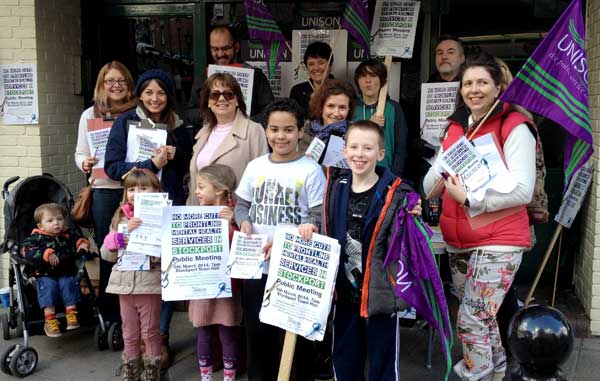
pic_stockport-mental-health-protest
Stockport against the Cuts. The campaign is exposing what it means to be living in Stockport and the effects of cuts in public services. Join them on 23 July at 7pm at Stockport Town Hall for a meeting to discuss the closure of the Well Being Centre and cuts to local mental health services. Further details see

Go
manchester shakespeare co
To a production of the Manchester Shakespeare Company, set up by Gina and John of eclectic 3MTheatre. Their aim is show more people the beauty and relevance of 16 century drama. Events include productions of the plays with a Mancunian twist, poetry evenings and readings. It will be different, of that you can be sure!! Further details see

If you have enjoyed this article and would like to support this blog by making a donation you can do using this button

Posted in Uncategorized | Tagged , , , , , , | 2 Comments

Stop,Look,Listen…my weekly selection of favourite films, books and events to get you out of the house

Watch
dear-white-people-poster
Dear White People (Home), a satire on American race relations, the emphasis being on “satire”. Set in a posh university (similar to Oxford and Cambridge) somewhere in the USA it is about the power struggle between privileged black (Afro American) and white students. It asks what does it mean to be black? is the race war over now Obama is president? can white people make jokes about black stereotypes? do white people secretly want to be black people? It sounds very serious but it’s not, it is very funny,lots of clever witty remarks thrown around although I have to say I only got about 60% of them due to the language and cultural differences. The only thing I found irritating was the lack of any debate about race and poverty; which are the real divisions in American society. Otherwise a very thought provoking and challenging film.

Go
knock knock
See some austerity drama. You are not going to find it at the Manchester International Festival even if you could afford to get a ticket, which most Mancunians cannot. Love and Light Theatre presents Knock Knock, a new play written and directed by Kay Marlow. The performance began with Kay announcing that 2 (out of the 4 actors) had dropped out due to illness. She offered us the choice of leaving or staying whilst the cast carried on. The audience stayed.
Knock Knock is a play for today. The story of a single parent who loses her job, is sanctioned for missing a Jobcentre appointment and descends into poverty and despair. It is a common story in Britain today and was told with great performances by all the cast. The term Knock Knock refers to the arrival of a bailiff to try and get payment of community tax or to remove property. There is a strange scene about the Tory government and wanking which I found really irritating. People in power are not bothered about personal attacks; they don’t need to, they have all the power. Also the writer uses Peterloo as an example of people fighting back against poverty. Unfortunately that was not what it was about; it was for the vote. A better analogy would have been the unemployed workers movement of the 30s of whom women played a significant part. Proceeds from the play are going to the homeless project coffee4craig so support them!
Book tickets at
Remember
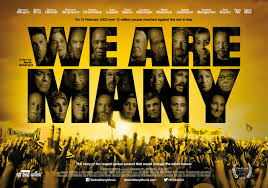
we are many
the protests against the Iraq war in 2003 in the film “We Are Many”. It was the biggest demos I had ever been on. Across the world people refused to allow Bush, and to a lesser extent Blair, get away with bombing Iraq on the pretext that Saddam Hussein was behind the 9/11 bombings. The film is an important reminder of how Blair and his supporters used the “dodgy dossier” to push Britain into supporting the USA. So millions of people demonstrated and what was the outcome? The Iraq war still went ahead and has led to further destabilisation across the world from Syria to the streets of this county. Blair’s government and their response to the march is just one of the reasons why people are so disillusioned with the political system. Great film but I could have done without the celebrity comments ie. Richard Branson and Damien Albarn: who cares??!
Support independant film club as Kino Indie Features Presents a Special Screening of ‘We Are Many’ at 3MT on Wednesday 15th July . Buy them at

Learn
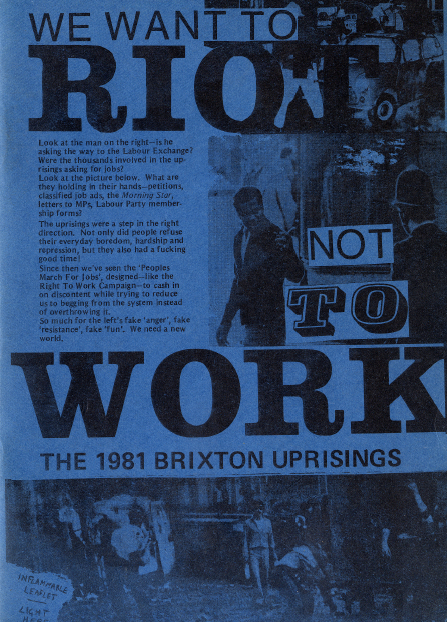
we_want_to_riot
about the Brixton riots in 1981. Past Tense publications have just reprinted their classic WE WANT TO RIOT, NOT TO WORK ( £5) They say “Between Friday, 10th April, 1981, and Monday April 13th April 1981, serious disorder occurred in Brixton… when large numbers of persons,predominantly black youths, attacked police, police vehicles (many of which were totally destroyed), attacked the Fire Brigade, destroyed private premises and vehicles by fire, looted, ransacked and damaged
shops…”We Want to Riot, Not to Work” (originally published in 1982) combines
rip-roaring personal accounts of the riots from unashamed participants,
with a radical analysis of their causes, and the response of the
authorities”.
Buy it at

Save
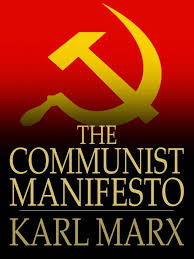
communist manifesto
Yourself the bother of reading the Communist Manifesto watch the cartoon see
Only an American could make this!!

Posted in Uncategorized | Tagged , , , , , | 1 Comment

Headscarf not digital revolutionaries!


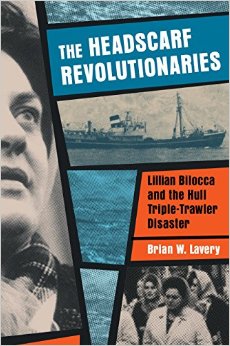
The Headscarf Revolutionaries Lillian Bilocca and the Hull Triple-Trawler Disaster
by Brian W. Lavery
Barbican Press £12.99

HR book

Today it is difficult to find protest groups run by working class women with northern accents. And if they do exist they are not likely to get much national attention unless they have a celebrity such as Russell Brand or Charlotte Church in tow for the press to take an interest in, with the exception of newspapers such as the Morning Star.

1968 might have seen revolution kicking off everywhere from Derry to Paris and Berlin but in the city of Hull there were just as important things going on and it was a group of working class women who were at the heart of it. In this wonderful new book, Headscarf Revolutionaries, Brian W.Lavery reminds us of a forgotten chapter of our radical history.

In 1968 in the fishing community of Hull in a period of just three weeks, three trawlers were lost and 58 men died. One woman, Lillian Bilocca, who worked in the fish skinning section of the industry, decided to do something about it. She said to her daughter; “Something has to get done. I’m starting a petition to get the gaffers to make them trawlers safer. That could be our Ernie or your Dad out there, God forbid.”

Lily didn’t just get people to sign a petition, she wrote to the papers, organised a meeting for the community and then, backed by a contingent of women and children, she confronted the trawler bosses. This is her story and of the women who fought an intense battle to get a safer working environment for their men.
lily 2

Reading this book about the conditions in the fishing industry (both in the warehouses and at sea) reminded me of the 19Century: that is how bad things were. Men who worked on the trawlers were zero hour workers, they had to pay for their own protective gear and bedding for their time at sea.

The trawler owners did not care about who worked for them and this was highlighted at Xmas when the usual crewmen, who only had 36 days off per year, refused to work. The fishing carried on with what were called “Christmas cracker crews”. Lavery says “owners turned a blind eye to ships crewed by drunks and incompetents and even by men and boys who had never been to sea.”

Many of the ships were not suitable for the Arctic winters, lacking signalling equipment for emergencies and sailing without wireless operators and with an inexperienced crew.

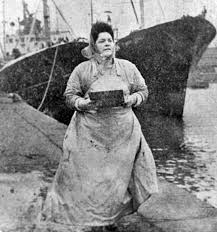
How do you fight for workers who are so beaten down and desperate for work? Well Lily knew that the only way to stop these badly equipped ships from leaving the port was to take direct action. She said to reporters; “I’ll be on that dock tomorrow, checking them ships are properly crewed and have radio operators on them. I ‘ll jump aboard myself to stop ‘em going out that dock if I have to.”
lily on the docks

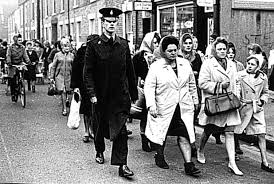
And that is what she did with her headscarfed sisters. As a ship passed by on the dock she asked the crewmen if they had a radio operator and if they replied no she went into action. “It took six uniformed coppers, one WPC and a plain clothes man to hold Lily back. She threw herself off the quayside and tried to jump aboard.”

The campaign was successful. This was at a time when there was a Labour Government that was prepared to support workers’ rights and trade unions such as TGWU that made sure they kept their word. The women changed the shipping laws.

But, like many campaigners, there was a price to be paid for the level of attention that Lily got as one of the main women involved in the campaign. Not everyone in her community supported her or the campaign and she got a series of death threats, while the national tabloids were unkind about her appearance and her working class persona. Lily lost her job at the fish factory and was blacklisted by the industry.

In 1975 Iceland declared a 200 mile limit and the Cod War started. It signalled the end of the Hull fishing industry.

This is the kind of working class history that we need today; to inspire working class communities across the country and to show that, however bad things may seem, you can do something about it. Brian W. Lavery has written a very readable and accessible book and given us back a real working class heroine.

If you have enjoyed this article and would like to support this blog by making a donation you can do using this button

Posted in book review, education, feminism, human rights, working class history | Tagged , , | 1 Comment

Stop,Look,Listen…my weekly selection of favourite films, books and events to get you out of the house

Watch
cnd film
Now More than Ever the premiere screening of a new film about people, protest and the Campaign for Nuclear Disarmament in Greater Manchester. CND has been one of the most important national organisations in the history of radical movements in this country. In the late 1970s when I first joined it was at the cutting edge of the debate around what kind of society we want to live in and it woke people up to the shocking horror of the potential use of nuclear weapons. Many people went to Greenham to oppose the siting of cruise missiles in this country: many others took part in demos and protests across the UK. Today when we still have thousands of nuclear weapons in the world we need CND even more. This film is an important part of the debate about why people get involved with peace campaigns and hopefully this and other screenings will bring new activists into the campaign. Book here

Look
why be a wife
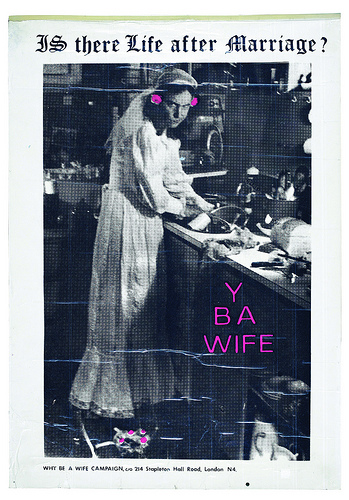
See Red at Huddersfield Gallery. See Red was a women’s silkscreen printing collective that produced posters and illustrations for the women’s liberation movement. Their aim; to challenge negative images of women in the media. If you were around in the 70s and 80s you will recognise their style. One of the memorable ones was of a woman dressed as a bride, the slogan of the poster was Is there life after marriage; Y BA Wife. More controversial was their poster highlighting the human rights abuses against republican women by the British government at Armagh prison in Northern Ireland in the 80s. The artists produced the posters as part of a collective, they were not in it to make money or become well-known, they did it to change society’s views about women and promote a better way of living. This is art at its best: direct and challenging and they made a difference!
The display at Huddersfield Art Gallery will include a selection of posters and archival material produced by the collective between 1974-1983 exploring both the history of the workshop and its legacy today. Further info see

Find
Rising of the Moon 111-23201

out about Chartism in Bradford. Chartism was one of the most influential working class movements. It was born out of despair with the political system after the failure to get the franchise widened to include the working classes in 1832, (nothing new there), after the introduction of repressive legislation against the poor in the New Poor Law, and the failure to get the repeal of the Act of Union with Ireland (anti-imperialist) ; the Chartists wanted a whole new world. “The Rising of the Moon” a new play about Chartism was produced by the theatre company Northern Lines.   Javaad Alipoor wrote and directed it. It was funded by Bradford MDC and the National Lottery. Sadly the play is not touring but you can download a podcast. See
Also look at Rebel Road, a section of the Unite website that celebrates trade union and labour movement heroes which signposts statues, plaques or buildings as well as museums and exhibitions that are worth visiting to find out more about our labour history. See

Read
the dignity of chartism
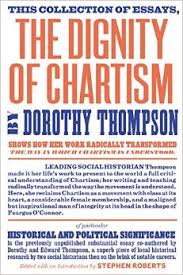
The Dignity of Chartism, a selection of essays by Dorothy Thompson. She spent fifty years of her life uncovering the real story of Chartism and made us all aware of the significance of its role in our radical history. Dorothy showed us that it was a movement with class at its heart, that women played a key role in the organisation and that it was led by an Irishman, Feargus O’Connor, who inspired a generation. She was married to Edward Thompson and together they pursued their politics and historical studies. This book includes a previously unpublished essay on Halifax Chartism that they both wrote and is for the first time available to read. I think this is an important book to read at a time when activists seem overwhelmed with a neo-liberal agenda. It is a study of how working class people changed society and shows how we can do it too.

If you have enjoyed this article and would like to support this blog by making a donation you can do using this button
Posted in Uncategorized | Tagged , , , | 1 Comment

My interview with TUC General Secretary Frances O’Grady

Frances O’Grady is the first woman to be appointed to the job of General Secretary to the TUC. She faces a difficult task as trade union membership is in decline and trade union representatives are being victimised and sacked on a regular basis and the new Tory Government wants to bring in more anti-trade union legislation. Is there a future for trade unions in 2015?

Frances 1

In the late 70s trade union membership was at a height of 12 million but today it is down to 6 million. O’Grady believes though that however bad things are today, they would have been much worse without a trade union movement. She says, “Trade unions have been involved in a 30 year battle against a set of ideas called neo-liberalism that says the best way of running the country is to let the top elite do very well and eventually it will trickle down to the rest of us.”

She points to the growing inequality in society and the way in which it has affected peoples’ lives including the destruction of public services and the loss of 1 million jobs which has hit peoples’ standard of living, particularly women, because they depend on services such as the NHS and Surestart Centres.

O’Grady believes that people are now looking for a deeper change in society and the way in which the country runs. “I believe we are at a crossroads moment, are we going to buy this ideology any longer? Or are we going to say we need a new set of values for this country, ones about fairness, everyone sharing in the economic recovery and recognising that if you are going to redistribute wealth you need to redistribute power and that it won’t just happen by itself.”

O’Grady is proud of the role that trade unions have played in the hard times that this country has been living through. But she is realistic about the problems of organising workers in a “flexible” labour market. “The government are making claims about an economic revival but behind the headlines we can see that unemployment is now being distributed amongst a larger number of people. And for the first time in the UK there is the problem of the underemployment of millions of people stuck in part-time jobs or on zero hour contracts.”
She points to some of the wins that have been made by marginalised workers including the Curzon cinema workers in London, the campaign by the Bakers Union to organise fast food workers and the pressure put on large employers over the use and abuse of unpaid internships.

The TUC strategy is to tackle the unfairness at the heart of the labour market. “We believe we need to strengthen the rights for workers both collectively and individually and that will give us a better chance of organising them.”

It’s a back to basics role for the TUC. O’Grady is emphatic about that; “We have to tell young people the truth that, unless you get organised, as each generation has had to do, the odds are against you. You need to band together at work to win better pay and conditions and respect.”

But she is also very aware that trade unions themselves need to change.”We have done amazing things against the odds but we have got to do more.” She feels that change needs to come in the way trade unions organise. “Sometimes our structures and cultures end up looking too much like a club and not a movement.” That means that trade unions should be more representative of their members or the workers they want to get to join the unions. This includes women and people from the black and ethnic minorities.

Democracy is at the heart of O’Grady’s strategy for a fairer society with trade unions playing an important role. She understands the history of struggle for democracy in this society and the battles that have been fought in the past but she is not nostalgic about that history. “Its no good celebrating heroes or heroines of the past if we don’t respect them by using our vote and fighting for a deeper more equal democracy.” She is concerned that the growing cynicism about the political system will mean that people do not vote in elections. “It plays into hands of an elite who don’t care if we don’t vote and by doing so we will let them off the hook.”

O’Grady comes from an Irish background, her grandfather came over from Dublin to work in the building industry and was a trade unionist and socialist. Nowadays he would be stereotyped as a foreign worker but it was the Irish and other ethnic minorities who were at the bottom end of the labour market who were involved in some of the greatest political struggles. As she says; “Very often we talk about migrant workers as ‘victims’ but they are very often the ones who have the guts to take the first steps to organise themselves at work.” There is a lesson there.

If you have enjoyed this article and would like to support this blog by making a donation you can do using this button

Posted in Uncategorized | Tagged , | 1 Comment

Stop,Look,Listen…my weekly selection of favourite films, books and events to get you out of the house

Watch
london road
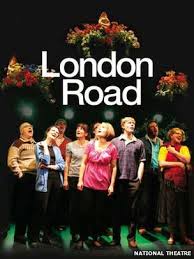
London Road (Home/AMC) I don’t usually like films about serial killers and particularly ones that are based on the murders of real women but this is an interesting and complex film about the murders of sex workers in Ipswich in 2006. London Road was an area that had become the red light area in the town and where the killer lived and one of the women was found. It is a cine-opera; a thriller set to music and interlaced with the script that includes interviews with the local people, the media and the sex workers. The stage show (on which the film is based) was a great success and no doubt the film will be just as popular.

Go
song of the people
To a film screening of National Co-operative Film Archive’s Song of the People (check out trailer see ) which was made in 1945. Actor Bill Owen is a factory worker who sings about characters and events in British history from the 14th century to recent conflicts, showing how the lesson for the future lies in co-operation. A bit weird people singing at work, looks pretty dangerous given all the machinery whirring away around them!
Introduced by Gillian Lonergan from the National Co-operative Archive. Event starts at 2pm on 24 June 2015. You can also visit the new exhibition at the library; Spirit of 45; from warfare to welfare. Further info see

Join
save stockport
Stockport against Mental Health Cuts on Saturday 27th June at 12pm. Open mic and stalls at Bears Pit, Stockport Town Centre. They are widening their campaign to include all cuts. for further info see

Read
hotel florida
Hotel Forida Truth, Love and Death in the Spanish Civil War by Amanda Vaill. I have read many books about the SCW and to be honest I was originally put off this book by the inclusion of celeb writers Martha Gelhorn and Ernest Hemingway. I was right, they come over as arrogant, superficial and thoroughly unpleasant people but I kept on reading because of the other two couples that feature in the book; Robert Capa and Gerda Taro and Arturo Barea and IIsa Kulcsar. They are the real heroes of the book as they put themselves on the line (physically and mentally) to defend the Spanish Republic and tell the truth about the war. Amada uses unpublished letters, diaries, reels of film and new archival discoveries to remind us of the significance of the SCW and hopefully encourage a new generation to understand why it was so important to the 30s and its lessons for us today.

Find
pankhurst centre
Out about how the Pankhurst Centre in Manchester was saved in the 1970s. In this new exhibition “Squatting to be Saved” it tells the story of how it was saved by squatters and the Pankhurst Centre was established. The exhibition is open on Sunday 21 and 28 June 11-4pm. Further details see

Posted in Uncategorized | Tagged , , , , , | Leave a comment

Building a Socialist Library (11): Notoriously Militant The Story of a Union Branch Sheila Cohen

Published by Merlin Press

notoriously

Why would anyone join a trade union? Why would anyone want to be a trade union activist? It seems that every day we hear of trade union representatives being sacked for nothing more than representing their members.
In this very important book Sheila Cohen answers these questions. It is a history of one of the most anti-trade union companies, Fords, and the way in which trade unions, with all their imperfections, made a real difference to working class people’s lives, not just at work but also in giving them hope for a better future.
Central to the book is the David and Goliath struggle between the global empire of Ford’s and ordinary working class people: it reads like a modern day story about slavery and the attempts by people to escape the misery and servitude, not on a plantation but in a car plant.
Ford has a long history, founded by Henry Ford in 1903 in the USA, and was the pioneer of the modern motor car industry. The term “Fordism” summed up the nature of its method of production and “Taylorism” which as Sheila says; “was as dedicated as Ford to squeezing maximum labour out of the industrial workforce.” Fordism meant huge factories and a conveyor belt system which suited the design and production of cars and led to massive profits for the company.
Assembly line work was monotonous and, although workers were paid well,they were subject to a selective process based on Ford’s own bizarre views of morality whilst Ford employed spies within the workplace to ensure that workers did not talk about union organisation.
Throughout the 1920s and 1930s it was the Communist Party and dedicated groups of activists who organised the workers at Fords. Faced with the depression workers became more militant and in 1932 took part in a “March on Hunger” mobilising thousands of workers who faced the full force of the state; “The police used tear gas and water cannon to disperse the demonstrators, who nevertheless broke through and began to throw bricks at the plant.”

5315650_orig march for hunger
Fords came to Britain in 1911 to a plant at Trafford Park in Manchester but faced serious unrest from the workers and several strikes. Their local manager Baron Perry commented; “Manchester.. the hot bed of trade unionism.” Eventually in 1931 the Manchester plant closed and the workers were transferred to Dagenham. The Ford Dagenham plant became a key part of the global empire where new methods of production and work organisation were tried out.
Central to this book is the story of ordinary people who organised themselves in the workplace and did not wait for the trade unions officials to do it for them. A crucial role was played by branch TGWU 1/1107 which was the largest union branch in one of the key industries in Britain. As Sheila comments; “This place is all the more deserved given the historic struggles carried out by 1107 against the anti-union and anti-worker culture of the company which gave its name to a whole industrial system-Fordism.”
What is fascinating in this book is the militancy of the workers in resisting Fords’ attempts to undermine them one eg in 1944 when stewards from the TGWU and AEU occupied the manager’s office and forced the TUC and Fords to reopen their talks on organising. As Sheila shows the grassroots shop stewards were not just fighting Fords but the reactionary forces within their own trade unions. And as a former shop steward I can testify that very often activists spend as much time fighting their fulltime Trade Union officers as the management.
The Irish in this country have played a major role in trade unions and the labour movement and Fords was not an exception. Sheila shows this Irish militancy in 1944 when two shop stewards, Sweetman and Lynch, are sacked. “They received great support not only from Sweetman’s fellow- Irishmen in the foundry, who had become “pillars of the union at Fords’”.
Sheila also shows how the increasing numbers of women being recruited at Fords during the Second World War to do men’s jobs refused to accept the poor working conditions: as one of the convenors commented; “During the war it was through the women, quite honestly, that we gained a lot of the advances-rest periods, washing facilities, all that sort of thing-because they wouldn’t put up with what the men used to put up with.”

women shop stewards at Ford's

women shop stewards at Ford’s

But it was in the early 1980s that new activists in 1107 reformed the branch “based on principles of workplace union democracy” and determined opposition to Ford’s collaborationist “Employee involvement policies”.
The new leadership of 1107 came in as Thatcher came to power. Over the last year there have been many commemorations of the Miners Strike 84-65 but there has been a lack of a wider analysis of the real reasons why the miners and other trade unionists were defeated. As Sheila shows it was the anti-trade union laws that really kicked the stuffing out of shopfloor militancy plus the lack of leadership from the trade unions.
She says; “Thatcherite anti-union laws limiting solidarity and undermining workplace trade union democracy were to have a devastating impact on even strongly-organised workplaces like Ford’s Dagenham plant.”

ford workers on strike
The new leadership of 1107 were not just fighting Thatcher but major changes taking place in the car industry including getting the workers to take on more tasks as well as contracting out jobs and imposing more flexible work practices. TGWU official Steve Turner summed it up; “Ford was at the forefront of many of the industrial changes that were coming about at the time, trying to drive home a new agenda of not working smarter but working a lot harder.”
But 1107 responded by building links with other Ford workers and political activists through the national Ford combine and connecting with workers across Europe and the USA.
In the workplace 1107 was at the forefront of challenging racism in the workplace, not just from individual workers but also racist recruitment practices. They also took an active role in the boycott campaign against South Africa; refusing to handle parts which led to Ford’s pulling out of the country.
Trade union solidarity was a key factor in their politics as Alan Deyna-Jones comments; “The banner of the 1107 was always there on marches and rallies all over Britain, supporting all other workers like the nurses, miners and bus drivers.”
“Notoriously Militant” is an important book for anyone who wants to find out what real trade unionism means. For me a major strength of the book is the way in which the story is told through the use of interviews with the grassroots activists and it reminds me of many people I have met throughout my life as a trade union member and shop steward, ordinary people who worked hard for their members and were often victimised for standing up for justice for their members in their workplace. It is one of the few books that are inspiring about the role of trade unions in the workplace and shows how together members can make a real difference to our lives at work and in the wider world.

If you have enjoyed this article and would like to support this blog by making a donation you can do using this button

Posted in Uncategorized | Tagged , , , | 1 Comment