My review of “High Wages” Dorothy Whipple

high wages cover


High Wages is set in 1912 and describes the lives of many young women of that era who had  limited educational and career options. Jane Carter, the heroine of this novel, is a Northern young woman who has to leave school and get a job as a shop girl after the death of her father.  Jane is one step up from the local mill girls. She woke to the blackness filled with clogs. ..Dark shapes streamed across the market place. “Thank goodness I don’t go to the mill” breathed Jane, plunging back into bed. “I couldn’t get up at half-past five.”

But Jane’s life as a shop girl in reality  is little  better than the mill girls. She works long hours,  lives above the shop where she  shares a bedroom with the other shop girl, and is paid considerably less than mill girls. Unlike them she is isolated in the shop, her life is dominated by the owner and his wife, and she does not have the solidarity and growing militancy of the mill girls.

Friendship with   Maggie, the other shop girl, brings her to the local Free Library and friendship with the library assistant Wilfrid. He introduces her to the radical  novels of H.G.Wells and the poetry of William Blake. The three of them escape the town and, like thousands of other working class people in this era,  spend their limited free time walking on the local moors.

Jane is a feisty young woman and challenges the shop owner over his low wages and the way he tries to cheat her out of commission. But she quickly  realises  her subservient position. “She remembered Mr. Chadwick had the power to turn her away at a day’s notice, without wages. She remembered that she would have great difficulty in getting another job in Tydsley, if she left for such a reason as this. She remembered that she had nowhere to go-but her stepmother’s house.”

Jane, who has a good eye for fashion,  proves herself invaluable to Mr. Chadwick and his customers. But times are changing in the retail business and his shop – the old fashioned draper’s selling to a local elite of rich women-   is being supplanted by a ready to wear market selling to a much broader group of women.

Jane makes friends with a local woman, Mrs. Briggs, who was originally from humbler roots,  and together they upset the status quo. When she gives Jane tickets for the Hospital Ball, even Mr.Chadwick is impressed and is happy to go with his wife and Jane. But their presence is a scandal as the local matriarch Mrs. Greenwood comments. “How do tradespeople get the tickets? I impress on all ticket sellers that they must be most careful, but in spite of all I can do, the tone – the TONE is lowered year by year.”

Financed by Mrs Briggs Jane escapes the drudgery of Chadwick’s to open her own ready to wear shop.  She now can employ staff, travel to London to buy stock , and establish herself in the town as an independent person.

High Wages is a well written novel, with a sympathetic heroine, but something is missing.  The author, Dorothy Whipple, was from Blackburn and the novel is set in Preston, but she chooses not to mention the vibrant political culture in these northern towns during this time.  There is no reference to the suffrage movement and the growing militancy of working class women who formed the backbone of workers in these towns.

Also for a novel about shop girls there is no mention of the National Amalgamated Union of Shop Assistants which was set up in 1891. Margaret Bonfield, who started her working life as a shop assistant, was Assistant Secretary in 1898 and regularly spoke at meetings across the country.  Mary Quaile heard Margaret speak in Manchester in 1908 and it encouraged her to become an activist in her trade union.

High Wages was published in 1930 but you have to go to Ethel Carnie’s novel Miss Nobody, published in 1913,   to get a more political view of women’s lives in this period.  Both women were from northern towns,  but Ethel and Dorothy were quite different characters. Ethel originally worked in a mill, Dorothy came from a middle class background and was a secretary. Ethel came from a highly politicised community in the mills and factories of the north and channelled that radicalism into her political activity and her  novels.

Dorothy does capture the life of a young woman and her search for an independent life. Jane is a very sympathetic heroine who fights against injustice and is kind to those who are not as strong as her.  It is a well written novel that has a strong sense of female friendship and captures the changing lives of women in this period.

Published by Persephone Books (2016) there is an excellent introduction by Jane Brocket.


Posted in book review, feminism, labour history, novels, political women, Socialist Feminism, trade unions, Uncategorized, women, working class history | Tagged , , , , | 2 Comments

My review of “You Can’t Kill the Spirit!” Houghton Main Pit Camp, South Yorkshire;the untold story of the women who set up camp to stop pit closures

you cant kill the spirit 1


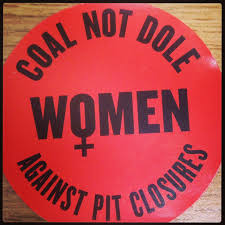
This is the inspiring  story of a group of working class women who decided to fight to stop further pit closures seven years after the momentous Miner’s Strike of 1984-5. They set up seven women’s pit camps outside the most threatened colleries.  This new and  fascinating history book concentrates on the Houghton Main Colliery in the Dearne Valley in the South Yorkshire Coalfields.

The women’s aim was: “To challenge a government that, as a matter of policy, was bent on destroying the publicly owned mining industry, with little regard for the economic and social consequences on local mining communities.”

By 1992 there were only 50 remaining deep mines.  Michael Heseltine, the President of the Board of Trade, announced on 13 October 1992, following the election of another Tory government, that 31 of these would be closed.  Not reckoning on the public outcry Heseltine  ordered a government review of the industry,  but this review only included 21 pits and not the 10 earmarked for immediate closure.

This sparked the setting up in January 1993 of the women’s pit camps at seven of the ten most threatened pits. These were Grimethorpe, Houghton Main and Markham Main in South Yorkshire, Parkside in Lancashire, Rufford in Nottinghamshire, Trentham Colliery in Stoke and Vane Tempest in Durham.

badge wapc

In an interview Lynne, one of the women,  summed up their determination: “The attempt to walk all over us, wipe us, our families, and our villages out has had the opposite effect…we are not bowed, not depressed, not about to admit defeat because we have got everything that is dear to us to fight for and absolutely nothing to lose.”

The women’s camps were set up outside the collieries and  had the support of the miners as they went into work each day;  the National Union of Mineworkers; local people;  and the children, who were included in all the activities – because it was  for them the women were fighting for, for their future and  for that of their communities.

kids against pit closures

Many of the women involved in setting up the pit camps were veterans of the 1984-5 Miners Strike and  had made links with other justice campaigns, including  the Greenham Women’s peace camp.

The pit camps were organised around principles influenced by the women’s peace movement  including non-violent protest, creativity and encouraging sharing skills, information and decision making.

After Heseltine’s announcement the National Women Against Pit Closures called for women and their communities to get ready to fight the closures. A lobby of parliament and a national demonstration showed that people were outraged by the threat of more pit closures.

Trade unions

Sheffield WAPC issued its first Bulletin in October 1992,  pledging their support to the fight to keep the pits open and,  most importantly,  making the links with other industries, showing that closing mines meant the decimation of other industries from rail, power and engineering to factories, retail and service industries.

This book is a manual for how to organise political activity. Not just a written history, but one that interweaves individual women’s stories through their words, diaries, photos and news clippings.

It shows the importance of grassroots organising: involving the local community, involving children, making links with other groups fighting injustice, and, most importantly,  keeping the solidarity work going even after the demise of the camp.

One aspect of organising a campaign has changed from 1992-3 is that activists today can use social media – which is direct and  can straight away  speak to thousands of people. But in 1992  the women organised using “snail mail” and telephone trees. “Each telephone tree started with one woman, who rang the next two and so on.”  But they also talked to each other, and used a camp diary and messages to keep the activists involved with what was happening.

messages page

In the book there are pictures of the telephone trees, the camp diary and the message book. But they also wanted to inform as many people as possible.  “We wanted control over our message: the campaign was not about pay, but about people’s livelihoods and communities, and our children’s future, just as it was in the 1984-5 strike.”

You Can’t Kill the Spirit is a brilliant book on many levels. It is interesting, accessible,  and gives a crucial account of a significant period of working class history. It is an example of how to set down and record working class history.  Most importantly it shows you  how to run a campaign .

There are modern day parallels,  particularly the Durham Teaching Assistants campaign in 2016-2017,   which again was about a group of mainly women workers fighting injustice at work but aware of the bigger issues about “women’s work”, the importance of education and community.

There are big questions to be asked about organising in 2019 and why so many people feel alienated from trade unions and political parties and why  ideas of community and solidarity are often seen as speaking in a different language.

But Socialist Tony Benn is quoted and his comments sum up the story of the women’s pit camps and why some people, often the poorest and most disadvantaged,  are still fighting . “You cannot obliterate from the human spirit two things – the flame of anger at injustice and the flame of hope for a better world.”

You Can’t Kill the Spirit can be ordered by emailing SWAPCPitCamp1993@gmail.com or by writing to SWAPC, c/o 6 Burnside Avenue Sheffield S8 9FR. The book costs £12 including post and packaging, though a solidarity price of £20 is suggested. Cheques should be made out to SWAPC Pit Camp Project.

Posted in book review, education, feminism, human rights, labour history, political women, Socialist Feminism, trade unions, Uncategorized, women, working class history, young people | Tagged , , , | 3 Comments

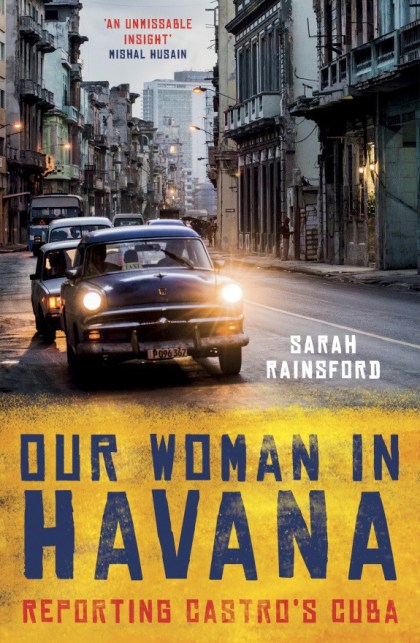
My review of “Our Woman in Havana Reporting Castro’s Cuba” Sarah Rainsford

our woman in havana


Sarah Rainsford was the BBC’s correspondent in Cuba from 2011-14. Known as “Our woman in Havana”  it  feels  like  a throwback to a time when the UK was a world power that needed  to send out foreign correspondents like missionaries. An irony probably not lost on Raul Castro as he did not grant her an interview during her tenure.

She arrives in  Cuba as the country is once again having to reboot the revolution.  Raul Castro unveils a new economic agenda,  opening up markets for citizens to buy and sell houses and cars, set up businesses and travel in and out of Cuba.

Life is not easy for Rainsford as she faces difficulties sending her reports back to the UK, government restrictions on her work  and the self-censorship of local people as she goes around interviewing the Cuban woman and man on the street.

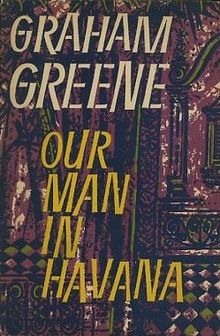
She uses Graham Greene’s 1958 novel “Our Man in Havana” to explore the last days of the Batista regime, linking  it to present day Cuba. At first Greene wallowed in the licentiousness of Havana,  but  was quickly revolted by it, and went over to the revolution and a lifetime commitment to the socialist state.

our_man_in_havana_(novel)_cover

Rainsford also explores the life of another female correspondent American  Ruby Hart Phillips who reported from  Cuba from 1937 to 1961.

In her interviews Rainsford  does show how Cubans, particularly the younger generation, are looking for a lifestyle similar to what they see on the internet:  this  is the challenge facing Raul Castro and his successors.

The Cuban revolution is still alive, but the constant assaults on it have led to the rise of new forces –  including Christianity –  which Rainsford highlights,  although she  fails to explore the ways in which it is being funded by the USA.

Likewise whilst interviewing Cubans who want to leave the country (and then do) she does not follow them abroad to see if the American dream has become  a reality for them.

Rainsford’s reporting is at its best when she puts aside her own personal prejudices and allows the reader to experience  the uniqueness of the history  and beauty of Cuba.

Published by Oneworld Publications”, cost £18.99. Buy it here

Posted in book review, Communism, human rights, Uncategorized | Tagged , , , | 2 Comments

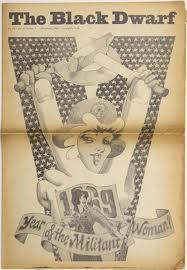
My interview with Sheila Rowbotham about her groundbreaking 1969 article “Women: the struggle for Freedom”

black-dwarf-year-of-the-militant-woman

 On 10 January 1969 in an article  called   “Women; the struggle for Freedom”, published  in the Marxist magazine Black Dwarf, socialist feminist Sheila Rowbotham  poured out her anger and resentment about the inequality and injustice of women’s lives:   “A much less tangible something – a smouldering, bewildered consciousness with no shape – a muttered dissatisfaction – which suddenly shoots to the surface and EXPLODES.”

Sheila  lived in a communal house  in London, worked part -time teaching at a local F.E. college, and was involved with socialist politics.  But she saw  her male comrades as  part of the problem. “They, like the left generally then, treated women with derision when we spoke up about how we felt about our lives,” she told me when I spoke to her.   This came to a head when she became involved in producing an issue on women’s issues for “Black Dwarf”.

11sheila rowbotham 1969

Sheila in 1969

Sheila  remembers that when her  male  comrades tried to make out that it was her that was the problem, not all women, the 17 year old secretary, Ann Scott, spoke up:  “It’s not just Sheila, it’s all women.”

As Sheila  explained to men in the article: “We still get less pay for the same work as you. We are still less likely to get jobs which are at all meaningful in which we have any responsibility. We are less likely to be educated, less likely to be unionised. The present setup of the family puts great strain on us.” Sheila was part of a minority of women that had got to Oxford, but it was not an easy position to be in. “The girl who for some reason breaks away intellectually is in a peculiarly isolated position. In the process of becoming interested in ideas she finds herself to some extent cut off from other girls and inclines naturally towards boys as friends.” 

In the 1960s everything was changing. Civil rights movements across the world were kicking off and there was a widespread belief that things would change dramatically.  Rowbotham was researching women’s history,  finding links with the writings of women such as Alexandra Kollontai, who in the early days of the Bolshevik Revolution  drew the links between the personal and the political.

Sheila’s own analysis of women’s discrimination was (and still is) grounded in her respect for working class women. She realised how divided women are by men and society,  but that the position of working class women was much worse. “They remain the exploited, oppressed as workers and oppressed as women.”

Whilst some women were still intellectualising about feminism, working class women such as Lil Bilocca and the Hull fishermen’s wives in 1968  were defending the lives of their men at work on trawlers.  As Sheila recognised,  “It was unusual to see a woman fighting publicly and speaking, and men on the left listening with respect, tinged admittedly with a touch of patronage.”

lil bilocca

Lil Bilocca

At the same time as some women, mainly   middle class, were taking part in workshops, conferences,  and setting up the first  Women’s Liberation groups, there was a parallel movement of women activists in their workplaces. The women at Ford’s in Dagenham, led by Rose Boland,  showed   that women could organise themselves and take strike action. It also had a ripple effect on the left. “The Ford’s women also helped make the question of women’s specific oppression easier to discuss on the Left” says Sheila.

ford women 1968

Ford Women

Women’s groups spread across the country,  culminating in  February 1970 when  where  the first nationwide meeting took place at Ruskin College Oxford. Sheila  was amazed at the response. “We thought perhaps a hundred women would come. In fact more than 500 people turned up, 400 women, 60 children and 40 men…it was really from the Oxford conference that movement could be said to exist.” They settled on four demands to begin with: equal pay, improved education,  24  hour nurseries,  and free contraception and abortion on demand.

For Sheila  it was not all analysis. In  1971 she was involved with the Hackney Women’s Liberation Workshop and the night cleaners campaign. They were a very badly treated group of women workers. May Hobbs was one of the central activists as Sheila comments:  “May Hobbs came to my bed room to speak about the cleaners and various people came from London Women’s Liberation Workshop to hear her in autumn 1970. There were certainly not crowds volunteering to leaflet in the city at night! Partly because women were busy campaigning for nurseries, contraception abortion- issues that related more to their immediate lives and it was not possible anyway for women with children to go out at night. Those of us who volunteered tended to assume that if we recruited women the union would support us.”

may hobbs of nightcleaners

May Hobbs of Nightcleaners Campaign

Over the last fifty years much has changed for women in this country. But Sheila comments that few people now talk about an alternative vision for society, and  that while race and gender are dominant issues,  class has been  marginalised.  “Inequality has increased. Women have been pushed down and working class women pushed down even more.”  She believes that the values of the left in the 1960s,  which were about solidarity and caring have been replaced with ideas of individual rights  rather than ones of collectivity and the possibility of   creating a different society.

In 1969 Sheila  concluded her article:  “But the oppressed have to discover their own dignity, their own freedom, they have to make themselves equal. They have to decolonise themselves. They then can liberate the colonisers”.  In 2019 this still seems a worthy aim for women, to liberate themselves –  and then liberate men.

You can read the whole of Sheila’s article here.

Verso are republishing Sheila’s autobiography   Promise of a Dream; Remembering the Sixties in July  2019.

Posted in biography, Communism, education, feminism, human rights, labour history, political women, Socialist Feminism, Uncategorized | Tagged , , , , , , , , | 2 Comments

My review of “Algiers, Third World Capital Freedom Fighters, Revolutionaries, Black Panthers” Elaine Mokhtefi

algiers third world


Elaine Mokhtefi was a key person for the Black Panther movement in Algiers,  but her own story, added to the end of this book,  is as  important as it sheds  light on how a young Jewish woman from small town America went on to became a militant anti-imperialist, journalist and translator.

Born Elaine Klein in 1928 she was the only daughter of dry store goods retailers. Her family survived the Depression because of the support of family and friends.  When her parents moved to a small town in Ridgefield Connecticut Elaine witnessed the prejudice against black children and also  her own exclusion from activities as the “little Jewish girl”. Elaine learnt from her mother about not just being an antiracist but the importance of standing up for her principles. During the war their shop was daubed with “JEW” on their front window while  the local German barber had “NAZI” scrawled on his.

College meant Georgia in the racist Bible Belt of the South. Elaine  was 16 years old and had ended up there because she knew nothing about going to college and had no-one to advise her. She describes the South “not only racist but underdeveloped economically and inbred culturally.” At the end of her first year she was told by the Dean not to come back. Her response; “I have no intention of coming back. I’ve had enough of this place!”

Elaine moved to New York, met up with radicals – including refugees from Republican Spain – and enrolled on a Spanish translation course. She became director of the Student Division of the United World Federalists (UWF) and toured schools and universities promoting an agenda of peace and and end to war.

In 1951, aged 23, she arrived in post-war Paris and got work at the French section of the UWF. She soon realised that the image of the French state as one of liberty, equality and fraternity did not include its large North African community who lived in a shantytown, outside of  the city  and outside the gaze of the average Parisian.

Elaine became a translator and interpreter for student and youth conferences,  travelling  to  Europe, Africa and India. She went on to organise conferences in newly independent African countries  but it was Algeria that became the defining issue  of the 1950s in Europe. She says: “I became involved, marching in anti-war demonstrations, attending international meetings and discussions, introducing resolutions, denouncing torture.”

In 1960 she returned to the USA and began work at the Algerian Office which handled relations with the United Nations and with the UN delegations for the Provisional Government of the Algerian Government. Opposition to French colonial rule had been going on in Algeria from the 1920s, but in   1954 a new chapter opened in the war. The National Liberation Front (FLN) launched a series of attacks against French colonial targets across Algeria, beginning  an eight year war that  led to the liberation of Algeria but at a terrible cost for the indigenous people.  Out of a population of nine  million it is estimated that between 300,000 to 500,000 people were killed. Over two  million men, women and children were herded into French  concentration camps and their villages, herds and crops destroyed.

Elaine moved to post-liberation Algiers in 1962. The country was devastated by the war.  “Algeria was an overwhelmingly rural society of poor people, over 90% illiterate, who had accomplished the awesome feat of bringing the fourth-greatest military power in the world to its knees.”  But thousands of foreigners, supporters of an independent Algeria, flooded into the country to bring their skills and idealism to create a new country and a new world.

By 1969 Elaine was involved with bringing  members of the  Black Panthers Party  (BPP), including Eldridge  and Kathleen Cleaver,  from the USA  to the safety of Algeria. As Elaine says, they were not alone in being welcomed. “Algeria adopted an open-door policy of aid to the oppressed, an invitation to liberation and opposition movements and personalities from around the world.” 

The BPP were singled out and given formal recognition and privileged treatment by the Algerian government. They became the superstars  of the liberation movements and had a lifestyle very different from the average Algerian. Elaine was the liaison for the BPP to the Algerian  establishment as she spoke and wrote French and had many contacts. I loved the photos in the book of this small Jewish woman surrounded by these charismatic Panthers.

mokhtefi-2-eldridge cleaver-420

Eldridge Cleaver and Elaine 1969

Hounded out of the USA the BPP gained an international status,  but over the years they became detached from their people and organisation. It is a disturbing  story,  central to which is the role of Eldridge Cleaver, his misogyny and destructive behaviour.

By 1972 Cleaver was determined to leave Algeria and move to France  and away from a revolutionary life.

The turbulent politics within  Algeria led to Elaine’s exclusion from the country in 1974 which was only revoked recently. What she did have was a relationship with Mokhtar, FLN soldier and writer,  whom she went on to to marry and to spend the rest of her life with  until his death in 2015.

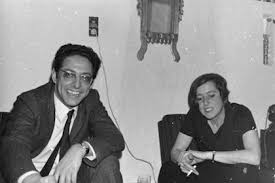
elaine and mokhtar

Moktar and Elaine  1972

Algiers, Third World Capital is an amazing insight into how  the Algerian independence movement reclaimed their country from the French empire.  And Elaine’s story shows how a young Jewish woman could change her life, become involved in worldwide revolutionary movements, and have a happy personal life. Not many women revolutionaries can say that!

My only criticism of the book is that Elaine wrote it without reference to diaries or notebooks,  but living through these turbulent events it is not surprising that she chose not to record them at the time.

For Elaine Algeria is still in her heart; “In every gathering, I seek them out, Algerians young and old: they are people with a sense of the past, and I go back with them, and remember. I am young again.”

Buy it, at £16.99, here

Posted in biography, book review, Communism, human rights, political women, Uncategorized, women, young people | Tagged , , , , | 1 Comment

My review of “Moving Histories Irish Women’s Emigration to Britain from Independance to Republic” Jennifer Redmond

moving histories


MORE Irish women than Irishmen have over the years emigrated from Ireland. In this new history of Ireland from the 1920s to the 1950s Jennifer Redmond uses an important array of new sources to tell their story. This includes newspapers, archives, oral histories, statistics and personal stories.

The  Irish Constitution of 1922 enshrined for all citizens religious and civil liberty, equal rights and equal opportunities, but it also lauded the traditional Irish woman as  wife and mother and not the feisty women of the Irish Citizen Army or the suffragettes.  Not a surprise then that after independence women emigrants  outnumbered men  1926-31 and 1945-51. In the 1920s 84% of emigrants went to the USA,  but,  as the latter brought in restrictions,  by  the 1930s 94% went to the UK. In the North of Ireland these figures were reversed,  perhaps  reflecting more job opportunities for women.

Redmond highlights the inadequacy of the new Irish Government to deal with a serious failure of the new state. As Redmond comments. “No elected official emerged as a champion of emigrants in the post-Independance period, and women representatives did not demonstrate an interest in either developing arguments on the necessity for women to work or defending female emigrants from charges of moral wantonness.”

Irish women emigrated primarily for work and for the better wages and conditions in Britain. Irish women (and men)  played  a significant role  in the many battles fought and won in the British  trade union and labour movement for a better world for all workers in this country. For me a major omission  from the book is any reference to this history,  including the role that groups such as  the Connolly Association played in issues such as the role of Irish nurses in the NHS.

Moving Histories is an important contribution to the history of Irish women emigrants  in the UK but the classic is still the 1988 “Across the Water Irish Women’s Lives in Britain” by Lennon, McAdam and O’Brien.  Both of these books, in their own ways, as Redmond comments  “explores these lives interpreting the weight given to loss and tragedy in narratives of emigration in a specifically gendered way.”

Buy it for £24.95 here

Posted in book review, Catholicism, Communism, education, feminism, Ireland, Irish second generation, labour history, North of Ireland, political women, trade unions, Uncategorized, women, working class history, young people | Tagged , , , , , | 1 Comment

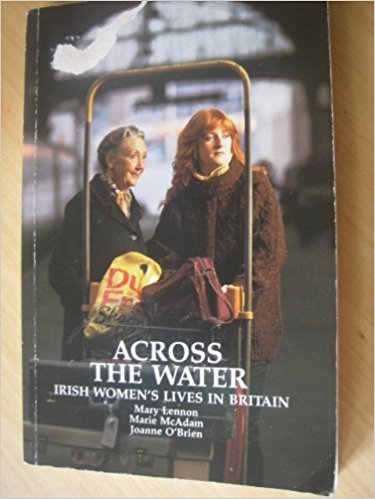
My review of “Across the Water Irish Women’s Lives in Britain” (1988) Mary Lennon Marie McAdam Joanne O’Brien

across the water


This  unique history of the role of Irish women in Britain was published  in  1988: Across the Water Irish Women’s Lives in Britain.  It was produced by three women, none of whom were academics, all of them had been  born and brought up in Dublin, and came to London in the mid-70s.

In the 1980s the Irish community in Britain was about 5  million strong. Strength meant the resurgence of the political nature of that community bolstered by a radical left in the politics of many cities and towns across the country that voted in Left wing, Labour councils.  Irish people were  active in groups such as Irish in Britain Representation Group, Labour Committe on Ireland, Troops Out, the London Irish Women’s Centre and single issue campaigns including equal rights for Irish workers, abortion and strip searching.

The authors were all activists in feminist and socialist movements in both countries and in Irish organisations in London.  They were all working class women whose politics influenced their interest in writing up a history of Irish women.

They said:  Our concern was to highlight women’s part of the story (of emigration) because of its particular significance in immigration to Britain. Also, just as important, we knew that without our experiences the overall picture is inadequate and distorted.

Irish women and FF

Authors speaking at IBRG Irish Film Festival in Manchester in 1988

Not being academics they approached the  Greater London Council for funding for the project. The GLC was one of the first to recognise the Irish as an ethnic community and fund  Irish community activities. The book took five years to research and write: the funding meant they could pay for childcare (two of the women were parents) and typing.

The authors wanted to produce a book that was accessible,  seeing themselves as part of a tradition of oral histories and working class autobiographies.  Crucial to the book is the weaving together of the women’s stories and the photographs by Joanne O’Brien:  Photographs often convey experiences which cannot be expressed in other ways and their immediacy is one of their great strengths.

The book includes women from a wide range of age groups: working class women, lesbians and women who saw their  Irish identity from different viewpoints,  including catholic, protestant, jewish, black and second generation.

The author’s politics are reflected in the way in which the women go about interviewing the women, taking their photographs,  and most importantly spending a lot of time debating how this should be conveyed onto the written page.

It is real democracy in that it  involves  the subjects in the discussions on  how the book will finally be edited. The authors debate the issues around the rhythms of Irish speech, of working class, ethnic and regional accents.

Similar issues were debated by the authors in the use of photography of the women. They agreed from the outset that the individual women would have the final say in how the authors used the material in the book.

Prior to this book very few Irish history books reflected women’s role as emigrants or their experiences in this country,  even though more Irish women have over the centuries emigrated than Irish men.

Women, because of their role in society, face greater pressures in British society than Irish men. It is women who have to deal day-to-day with British institutions,  including schools, local services, shops and playgrounds.  It is Irish women who faced  anti-Irish racism and have to negotiate it as parents and users of services.

For many single Irish women they face different issues such as isolation as they did not fit into a conservative, family orientated Irish community. For some women though emigration meant being able to express themselves as lesbian, or get divorced and remarry.

The authors also took up the issues not often spoken about in the Irish community , including female sexuality, religion and also how political traditions affected their identity.

In this book the authors explore Irish women’s experiences and the resounding silence waiting to be filled.  The women were of all ages and had come from all different parts of Ireland. And whilst some of the women reflect the lives of many Irish women in Britain their circumstances are very different.

Miriam James was a  political activist. She was born in Scotland in 1918 but moved to Ireland as a child. She joined Cumann na mBan (women’s section of the I.R.A.) at the age of 14 and her political activities led to imprisonment. After emigrating to England she became involved in local community politics supporting black people, CND and by 1980 she had joined the Labour Party and their Labour Committee on Ireland. She said of Ireland and the impact of colonialism. Ireland has been drained not only of wealth, but of self respect. They couldn’t prove themselves in Ireland, and you had to go away in order to regain your own self-respect. This is the legacy of colonialism, and you find it in all the other colonised countries too.”

Self respect is an important theme throughout the book as women speak about how they lived in England. Some of the women, like Margaret Collins and Catherine Ridgeway,  became active in their trade unions and fought anti-Irish racism and discrimination in a collective way.

Not all Irish women were so lucky. Noreen Hill, like many Irish people, moved from Cork to England during the Second World War. She married a protestant English man and lived in an area, Leicester, with few Irish activities. It is heartbreaking to read about how she tried, against a sea of anti-Irish racism and prejudice, to give her children an understanding of their Irish background.

Noreen channelled her ideas and thoughts into writing fiction. After living in England for forty years she felt; I’m more politically minded now, and my identity is  stronger than it ever was.

Thirty years ago when this book was published writing about travellers was rare. Nellie Power was one of 15,000 Irish travellers in Britain. Her story reveals the double discrimination that many travellers experienced over here; in mainstream society and from Irish centres and pubs. This changed her view of the Irish community; Really and truly, most of the Irish people over here are more against the travellers than the English are.

Across the Water also included lots of photos of second generation Irish young people and one of the first interviews with a mixed race Irish woman, Jenneba Sie Jalloh. Her mother was from Limerick and her father from Sierra Leone.

Brought up by parents that were proud of their identity this was passed onto Jenneba but it was not easy being part of two oppressed communities. I call myself an African woman with an Irish mother, and a Londoner. I want to pass on whatever I’ve got to my children, so I’ve got to work it out for myself. So, for those people who want to deny me, well, I think it’s them who’ve got the problem, not me.

It is thirty years since this book was published and sadly it is now out of print. The Irish community in Britain has changed dramatically, as has the political and social environment on the island of Ireland. But in many ways this book is still unique and a brilliant example of how to write up the lives and experiences of a community.

For communities to produce their own histories is very difficult because of issues that are highlighted by the authors including paying people and getting a publisher. The GLC was crucial in getting this book produced and fulfilled a genuine socialist belief in giving power back to communities such as the Irish.

But credit must be given to the three women involved in producing such an important book and they certainly achieved their goal. We want this book to contribute to the Irish community’s sense of itself and draw attention to the role that women play in it.


You can buy the book second hand here

Or a copy is in the Irish Collection at the WCML.

Posted in book review, Catholicism, Communism, education, feminism, human rights, Ireland, Irish second generation, labour history, Manchester, North of Ireland, political women, Socialist Feminism, trade unions, Uncategorized, women, working class history, young people | Tagged , , , , , | 2 Comments

My review of “But You Did Not Come Back” by Marceline Loridan-Ivens

but you 1

Marceline Loridan-Ivens  (19th March 1928 – 18th September 2018) was a French Jew, an activist in the French Resistance and the Algerian resistance, an actor, a filmmaker, and a writer.

In 1944 at the age of 15 she was arrested by the Gestapo with her father for their resistance activities, In this book, written  75 years later,  her anger screams out from the pages. But also  her love for the father,  who was brutally taken away from her.

When they were held together in Drancy (the internment  camp in Paris where arrested Jews were held prior to deportation)  her father  knew that he was not going to survive and said to Marceline:     “You might come back, because you’re young, but I will not come back.” She says:  “That prophecy burned into my mind as violently and definitively as the number 78750 tattooed on my left arm a few weeks later.”

After their arrest Marceline and her father were separately deported to Auschwitz-Birkenau in Poland from where her father’s family originated. They did meet, once, as they passed  each other on the way back to the camp. “I fell into your arms, fell with all my heart-your prophecy wasn’t true, you were alive.” Marceline was beaten by the guards,  but her father managed to hand her a tomato and an onion and she told him the number of her prison block.

By  a miracle  her father managed to get a note to her in the camp. “I can see your writing, slanted to the right, and four or five sentences that I can no longer remember. I’m sure of one line, the first: “My darling little girl” and the last line too, your signature: “Shloime”.  But what came in between, I don’t know anymore.”

Marceline survived the camps,  but her father as he had predicted, did not. She returned to a  France where the collaborators with the Nazis were  still in jobs and running the country. Rejected by Israel, where she  had planned to move to,  she  took  her anger and desire for political change into activity to support other colonised people such as Algeria  which in the 1950s and 60s  becomes the biggest cause for   French left. “The more I demanded reparations for the Algerians, the more I felt I was being paid back myself, felt I had found my place. They were Arabs, I was Jewish.”

She met  filmmaker Joris Ivens (18th  November 1898 – 28th  June 1989) who became the love of her life. With him she makes many films about post war struggles for independence including Algeria and Vietnam,  and shares in his hopes for a different and fairer world.  “I had married a man of your age, an heir to the exalted nineteenth century that believed in the continuous, automatic progression of History.” But in the end: “he too left me alone in the ruins of the twentieth century.”

marceline

Marceline

Marceline  says:  “I would like to run away from the history of the world, from this century, go back to my own time, the time of Shloime and his darling little girl.” But she does not and that is the inspiring theme of this book.  She takes the anger and pours it into her life work and  tries  to make sense of a world that seems to be going backwards. Ultimately this is an inspiring book that challenges all of us to become active in opposing inequality, fascism, and injustice.

Watch a documentary about her: “Marceline. A Woman. A Century”  True Story.

Posted in art exhibition, Ireland, Manchester, Salford, Uncategorized | Tagged , , , | 1 Comment

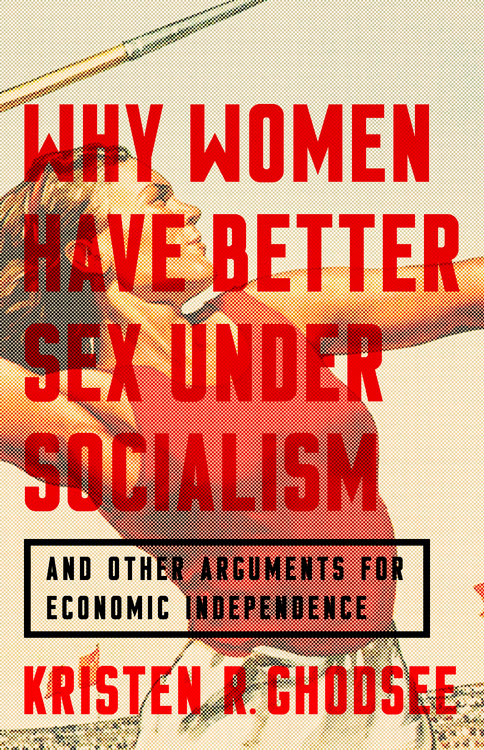
My review of”Why Women have better sex under Socialism” Kristen R. Ghodsee

kristen


In 1925 Mary Quaile, Manchester Irish trade unionist and one of the first women to be elected onto the  Trades Union Congress, led a women-only delegation to the Soviet Union to investigate the lives of women and children in the new socialist state.

Mary left school at 12, like most working class girls of that era:  her real education took place in the sweated labour of cafes and on the streets as she took part in organising a  new Cafe Workers Union and became an organiser for the Manchester and Salford Women’s Trades Council.

When Mary  went to the Soviet Union in 1925 all Soviet women had had  the vote for 8 years, while most British working class women were still waiting. In  their journey around the Soviet Union, Mary and her sisters saw much to envy,  including women having equal pay, free workplace nurseries, paid maternity leave, communal canteens, as well as  access to abortion, contraception and divorce.

In this new book, written by American academic Kristen R. Ghodsee, the author’s message is blunt. “Unregulated capitalism is bad for women, and if we adopt some ideas from socialism, women will have better lives.” Kristen is living in Trumpland, but has worked and travelled across Europe and has studied the effects of the end of state socialism in Eastern Europe and the  transition to capitalism.

Kristen blasts her way through the history of state socialism showing the influence of well-known (and less well known) communist women such as Alexandra Kollontai who  pushed through policies that promoted equality for women in all aspects of life. She is not an apologist for the authoritarian regimes:  she shows how  State socialist regimes needed women to work but they were often  carrying the double burden of work and childcare.

Her own research,  including the interviews she recounts with women who grew up in the Soviet era, really bring the book alive for me. It is fascinating to read  Kristen’s interview with octogenarian Elena Lagadinova, the president of Bulgaria’s national women’s organisation. Bulgaria and across the Soviet Union used quotas to get more women in parliament and they did have higher percentages of women in political office than most of the Western democracies during the Cold War. Elena believed it was a combination of a patriarchal culture, and an authoritarian state that discouraged women in pursuing  high office.

But the Soviet tradition of encouraging women into job sectors such as science and engineering has  left a legacy for today. Kristen quotes the Financial Times in 2018  that eight out of the ten European countries with the highest rates of women in the tech sector were in Eastern Europe.

When it comes to the discussion about socialism and sexual satisfaction Kristen uses some fascinating research from Germany about what was dubbed “The Great Orgasm War.”East German researchers, prior to unification, produced evidence that people did have better sex under socialism and that this was because, unlike the West, sex was not commodified in the same way. The researchers Staker and Friedrich claimed that this  was because of women’s “sense of social security, equal educational and professional responsibilities, equal rights and possibilities for participating in and determining the life of society.”

Kristen’s message is that we need to take the best of what came out of the state socialist era and adapt it to creating a better world for women and men. But she is an academic, and not an activist,  and that is one of the failings in the book. Her own life is quite privileged and frankly not very interesting  like those of her friends that she uses to dramatise modern life in American society.

This may be why there is a big gap in her analysis as there is no mention of trade unions in the book, even though they have played a significant role,  even in the Soviet Union. Neither   does she not mention them in her discussion of American politics, even  one of the most dynamic areas of American life at present is  trade unions  who  are the vanguard of the fight for better pay and conditions in female dominated industries such as fast food.

Also the UK experience has shown that, whilst you can elect socialist governments, including the feted 1945 Labour Government who brought in the Welfare State,  it is organisations such as trade unions which will really  promote the needs and desires of working class people.

Like Mary Quaile during her era, in the 1980s it was my experience as a trade union representative that showed how we could and did  improve the lives of women inside and outside work. Women then played a major role in trade unions, ensuring that issues such as job sharing, maternity leave, equal pay and abortion were high on the union agenda.

The so-called austerity has woken up a lot of people as to the increasing inequality and unhappiness that dominates present day life in the UK, as well  as across the world. Unfortunately it has not led to a growth of radical grassroots organisations  who question the nature of society; of relationships between women and men;  and between workers and the state. Kirsten’s book is an important part of that discussion because it reveals a hidden history that is hardly known in the USA and has been forgotten or marginalised in Europe.

Buy it here at £12.99

Posted in anti-cuts, book review, Communism, education, feminism, human rights, labour history, Manchester, political women, Socialism, Socialist Feminism, trade unions, Uncategorized | Tagged , , , | 1 Comment

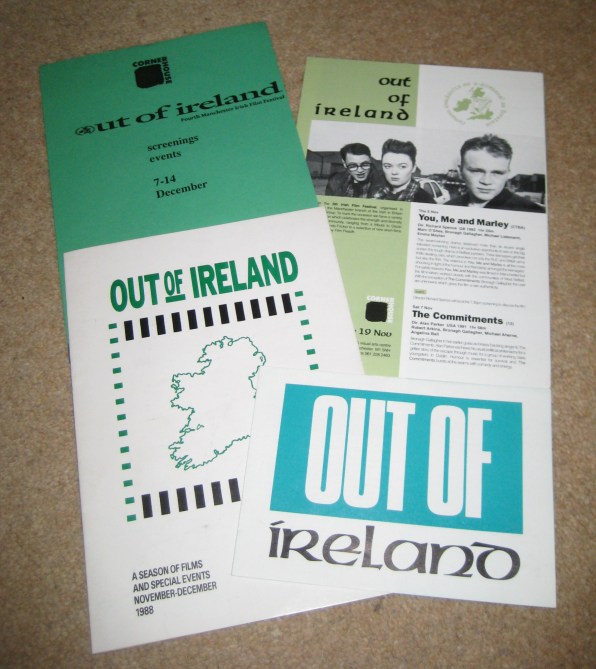
IBRG Archive at the WCML. Out of Ireland. Six Irish Film Festivals 1988-93

img_4429.jpg

Out of Ireland was the name given to six Irish Film Festivals that were initiated by the Manchester branch of the Irish in Britain Representation Group  and organised  from 1988 to 1993 with the Irish in Manchester History Group and in collaboration with  the  Cornerhouse Film Centre.

Bernadette Hyland, secretary of Manchester IBRG, explained that “The aim of the Festival was to explore the image and experiences of the Irish through film and video and to look at the way in which Irish groups themselves can control this medium.” An important aspect of the Festivals was exploring contemporary social and political issues through the uses of day schools and speakers.

The Festivals were groundbreaking in raising issues that no other Irish group in Manchester were prepared to raise at this time. This included identity, the experiences of Irish women and second generation Irish young people, the conflict in Ireland and media censorship.

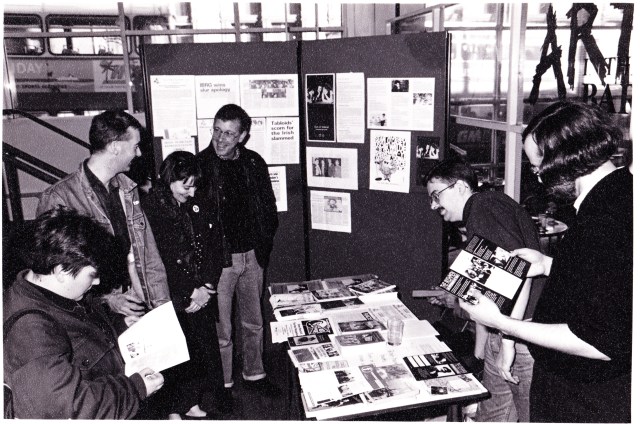
Irish Film Festival photo.jpg

In the first Film Festival one of the most controversial documentaries, at this time, about the conflict in Ireland “The Cause of Ireland” was shown.  This was followed by a screening of Pat Murphy’s “Maeve” exploring issues about feminism and Irish identity.

Two day schools took place exploring the history of the Irish in Manchester with socialist  historian Michael  Herbert and Pat Reynolds, IBRG National P.R.O. who explained his involvement in the use of video to document the lives of the Irish in Britain.  Videos by the Irish Video Project were shown.

Manchester IBRG were keen to promote the specific experiences of Irish women at events and the Irish Film Festival was no different. An Irish Women’s Day took place which included speakers Marie McAdam and Joanne O’Brien authors of the classic history of Irish women’s experiences in Britain “Across the Water.” Afternoon screenings concentrated on women in the North of Ireland and included films on subjects such as poverty and strip searching.

Not unusual for this period of history a free crèche was made available to women taking part. Tickets prices for the films and dayschools  were kept low at £4/2.

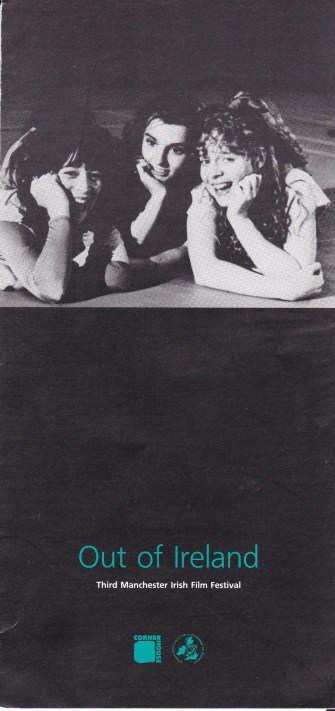
Censorship of events relating to the North of Ireland which included indirectly affecting groups such as IBRG who wanted an open debate on the British government’s involvement was a prevailing theme in the Festivals. In 1990, at the third Festival, a session called “Ireland As Not Seen On T.V.” included films that had never been broadcast on British television and which under the Broadcasting Ban, which existed 1988-94, could not be screened under the legislation.

3IFF

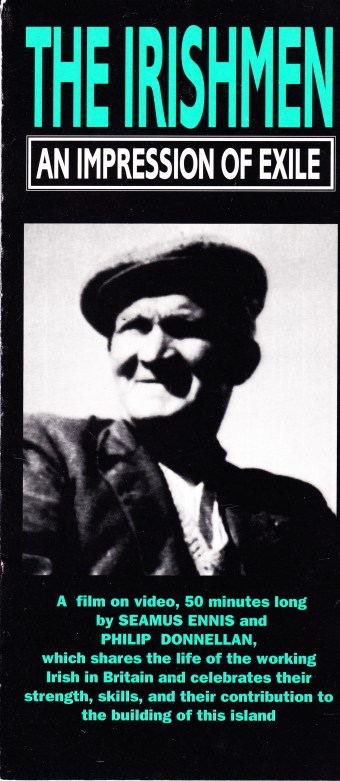
Filmmaker Philip  Donnellan took part showing his iconic “The Irishmen” which celebrated the contribution that the Irish had made to building the UK and became part of an important discussion in the Irish community and the politics of emigration. Philip and his wife Jill went onto play an important role in the miscarriage of justice case of Kate Magee from Derby in 1994. They stood bail for this single parent Irish woman and  Jill produced a beautiful banner which was displayed outside the court during Kate’s trial.

The Irishman

The Festivals gave the opportunity to explore issues of Protestant identity which were often ignored in the mainstream Irish community. In the Fourth IFF writer Christine Reid and journalist Cherry Smthe discussed what it meant to be from Irish protestant backgrounds. The film “Ascendancy” was also shown.

1993 was the sixth and final IFF which marked the 25 anniversary of the Civil Rights Movement in the North of Ireland  with a speaker from Derry, community activist Mary Neilis.

The IFF also showed many not so controversial films including  “The Commitments”,  hosted a tribute to Irish actor Brenda Fricker, films by acclaimed Irish film maker Thaddeus O’Sullivan, and new adaptations of iconic plays including Brian Desmond Hurst’s take on “Playboy of the Western World.”

Strong support from Sandra Hebron, Screenings Officer, at Cornerhouse,  ensured that the IFF were a success. The Festivals were financially supported by local arts organisations, Manchester City Council, local media and national newspaper “The Irish Post”.

The IBRG archive includes the programmes for the IFF, as well as posters, press cuttings. Some of the videos shown are included in the archive.

Philip Donnellan’s “The Irishmen” is being shown at Home on 27 November.

Posted in Catholicism, drama, education, feminism, films, human rights, Ireland, Irish second generation, labour history, Manchester, North of Ireland, political women, trade unions, TV drama, Uncategorized, women, working class history, young people | Tagged , , , , | 2 Comments