
Jennifer Stoller and Lee Mongague
In 1977 the BBC commissioned Andrew Davies to write a three-part drama about the life of Eleanor Marx. Eleanor was the daughter of Karl Marx, philosopher, political economist (and much more) and lived an intense, hot house life with her mother Jenny, her sisters, and the redoubtable housekeeper Helen Demuth. Frederick Engels is the other key member of the family; he is Marx’s political ally and financier of the family.
Eleanor, the youngest daughter by ten years, is her father’s favourite. Affectionately (but maybe worryingly) he calls her Tussy and proclaims that “Tussy is me.” After her mother’s death she steps into her role as her father’s secretary and equal in promoting the cause of Marxism in his writing and becoming an activist in socialist politics.
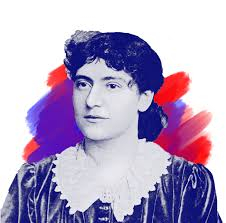
Eleanor Marx
The series faithfully follows Eleanor’s life. Her education, like her sisters, is in the highly charged atmosphere of her father’s friends and comrades: a world of politics, music, and Shakespeare.
The death of her father shakes her world but Eleanor takes his philosophy and puts it into action with her involvement with the National Gas Workers Union: she works hard to support their cause for an Eight Hour Day. Her personal kindness is shown in her teaching the union leader and close friend Will Thorne how to read.
Eleanor, whilst successful in politics, makes bad choices in the men she has relationships with. The phrase “new women, old men” comes to mind. Her hero worship of her father is destroyed when Engels admits that Freddy (illegitimate son of housekeeper Helen Demuth) is not his son, but that of Marx.
No doubt affected by her close relationship with her father she takes up with men who fail to respect her as a woman and equal. Her disastrous relationship with Edward Aveling seals her fate.
Jennifer Stoller is brilliant at portraying Eleanor. I also loved Anne Carroll’s depiction of Manchester Irish republican and wife of Engels, Lizzie Burns; Lee Montague is outstanding as Marx while Nigel Hawthorne gives us an Engels that captures the pleasure seeking but serious equal to Marx.
Watching the series made me want to read again Rachel Holmes’s “Eleanor Marx” and Tristan Hunt’s brilliant biography of Frederick Engels. Michael Herbert wrote about the Burn Sisters here https://radicalmanchester.wordpress.com/2010/03/15/frederick-engels-and-mary-and-lizzy-burns/
You can watch the series here https://www.youtube.com/channel/UCPsl_wi6FTf2GPjDR-XFC4A

 lipstick socialist