
Manchester used to have its own municipal theatre, the Library Theatre based in Central Library and its southern sister at the Forum in Wythenshawe. In those days going to the theatre was more democratic. For many Mancunian school children like myself, it was where we were introduced to theatre through its annual Xmas play. It was a theatre that was unpretentious and attracted a working class audience searching out for ideas and escapism through drama.
The days of the municipal funded theatre have long gone, alongside the history of Annie Horniman and the Manchester Gaiety Theatre which spawned the life of repertory theatre locally and nationally.

Gaiety Theatre
John Harding’s new and very well-researched book, Staging Life, on the Gaiety Theatre in Manchester is much more than the story of one northern theatre company over ten years. It highlights Manchester’s significant role in the history of repertory theatre in Britain.
In 1907 Annie Horniman (AH), inheritor of a tea fortune, decided to site her new repertory company in Manchester with the aim of promoting drama written by and about local women and men who lived and worked in the city.

Annie Horniman
Annie was the driving force. With no training in the theatre she was a great enthusiast for the new avant garde European drama of writers such as Ibsen. She had bankrolled her friend W.B.Yeats in setting up the Irish National Theatre, but politics – both national and personal – drove her out of Dublin and on to Manchester to set up a new kind of theatre.
Her cast included theatre manager Iden Payne, who was idealistic and ambitious to create a permanent theatre company, produce new plays, stage foreign plays, and most importantly, have a change of play two or three times a week.
Iden was the power behind the throne of the Gaiety. “ He was by instinct a teacher and he set about creating a style of performance that would help to transform the way drama in Britain would henceforth be presented.”
Key to this new drama was the one-act play. In the first three seasons of the Gaiety some fifty-one plays would be staged: most of them by new Manchester-based playwrights. They were mainly by men, middle class and professional, who had been to the “best” local schools such as Manchester Grammar or to university.
But for once local plays written by local people were getting a venue to be performed in. And creating a body of work that would be a key feature of the legacy of the Gaiety Theatre.
Manchester in 1908, when the Gaiety opened, was going through hard times. There was a slump and in response to a proposed pay cut of 5% workers went on strike. Many of the actors were socialists and they wanted to appeal to the working classes and “spent much of their free time campaigning and proselytising, while the Gaiety itself would become a focus for left-wing-leaning individuals.”
A.H. was a suffragist and recognised the barriers facing women playwrights. Gertrude Robins, another local suffragist, was one of the more successful women playwrights at the Gaiety. Her play Makeshifts appeared on the fourth Gaiety bill in October 1908 and as Annie Horniman said it “was one of the best one-act plays…performed at my theatre.”

Gertrude Robins
The Gaiety was attracting left wing writers including Harry Richardson, a journalist, who was involved in setting up the National Union of Journalists in 1907. Angry and bitter at the state of the world he poured it into drama. In his first play The Few and the Many he castigated employers for paying their women workers low wages which forced them into prostitution.

Harry Richardson
But it was playwrights such as Harold Brighouse, Stanley Houghton and Allan Monkhouse that gave Manchester some of its best loved plays, including Hindle Wakes, Hobson’s Choice and the now forgotten The Conquering Hero.
Over ten years the Gaiety attracted an audience of working class socialists, including factory worker Alice Foley, who were looking for drama that would speak to their lives and experiences. “As a member of a group of socialists I hoarded my scanty pocket money…so I could afford with them the luxury of a monthly matinee.” Harding would have liked to included more about the way in which the Gaiety brought in mill girls such as Alice, but she was unique in writing up her memoirs.
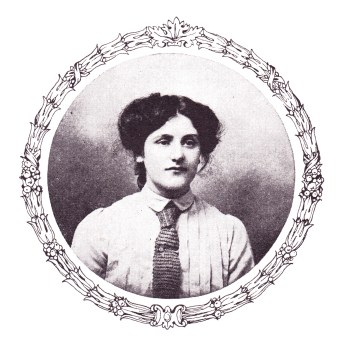
Alice Foley
Staging Life not only commemorates the legacy of Horniman and the Gaiety Theatre in Manchester, but as John Harding reminds us, “It was a pioneering institution that would have far-reaching effects for drama in the United Kingdom.”
Buy it here
John Harding and Tim Gopsill of the NUJ will be speaking in Manchester on November 10 at 3MTheatre. Further information contact maryquaileclub@gmail.com

 lipstick socialist
Hi i have enjoyed your very interesting post about the Manchester theatres 🎭 i take it that Ms Horniman was probably to be associated with Hornimans tea ☕️ etc.
I think so. Its a fascinating subject as is Ms Horniman. The book is definately worth ordering from your library as its quite prices £18.99. cheers B
Reblogged this on Anarchy by the Sea!.