In this occasional series I ask the question; why do some women become political activists? Sandy Rose was part of the post war generation that lived at a time of great hope, this is her story………..

“I was born in 1945 and my parents were very conservative and narrow minded”. Sandy left school at 17 and then worked in a library for a year before going to university at 18.
In order to do a degree she had to overcome both her parent’s objections and their refusal to make the parental contribution to her state grant. In order to support herself she worked in various jobs, including one at the London Zoo.
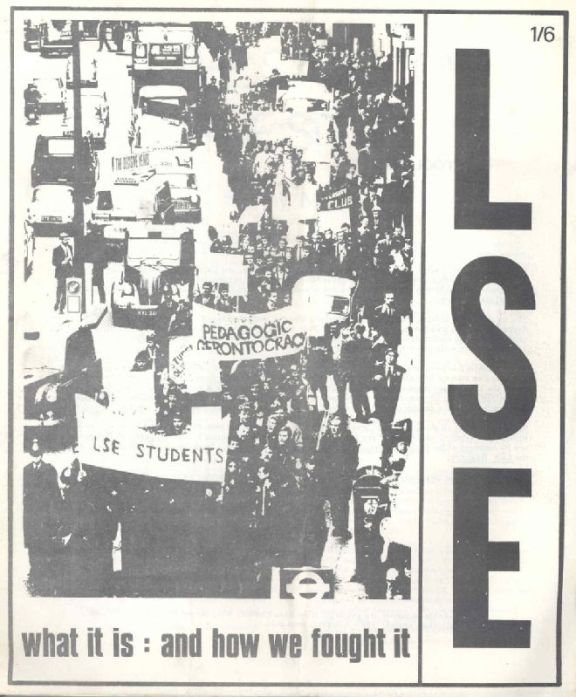
In 1967 Sandy went to the London School of Economics to do a postgraduate diploma in social administration. LSE was then a hotbed of radicalism, and it was there that Sandy met her future husband, Brian Rose. “He was the first dustbin man from Kent to go into higher education and was involved in the big sit-in at LSE in 1968.”She also met her best friend Celia and her then huband, Brian. Unlike Sandy; “They were all very left wing whereas I had no interest in politics up to then. I gradually became drawn into their way of thinking and went on all the anti-Vietnam war demos.”
She took part in the Grosvenor Square demonstration in 1968 with her new friends. ” Thousands of people were in the Square and were pushing towards the American Embassy. Suddenly a row of enormous police horses was galloping at full pelt towards us and Celia and I were really scared. We all turned and ran as fast as possible over the low chain link fence in any direction. We got away without trouble. After that we all joined the International Socialists and that was the start of my political life.”, I.S. was a small Trotskyist organisation founded in 1950 whose leading figure was Tony Cliff. In 1977 it became the Socialist Workers Party.
Sandy joined IS because “I was convinced that parliamentary reformism would not change anything. And after the LSE sit in and anti-war demonstrations all over the world that revolution on the streets was the only way forward”.
She was not alone and her friends also decided to join, inspired by the leadership of I.S. Looking back she acknowledges, “I was also rebelling against my parents.”
In the 1960s students in Britain were inspired by events in places as diverse as the student protests in Paris at the Sorbonne in May 1968, the anti-apartheid struggle in South Africa and the protests in the USA against war in Vietnam. Occupying the LSE was part of the ideology of revolution that worked its way through the universities of the UK. The chant was “London, Paris, Rome, Berlin, we shall fight and we shall win!” Sandy says; “It was exciting, it was positive, and we just knew we were going to change the world”.
But 1968 for Sandy meant a job as a social worker in Hackney. Home life meant that she worked as Brian completed his teacher training course and, like a good wife, she made sure that he had breakfast each morning! Outside work both she and Brian were members of Fulham IS and active in anti-Vietnam protests.
Surprisingly perhaps, they got married in 1969. “We were living together, but we did it to please my Mum, who was religious. It was what people did in those days”, admits Sandy.
Life within IS was not radical for women, even though the Women’s Liberation Movement was questioning women’s role in society. “The view of the party was that it was class that was the unifying factor and that feminism would divide the sexes.”
IS did have a women’s magazine Women’s Voice but, but the editorial team was seen as too middle class.

Sandy began to question the role of social work in society and became a founding member of a revolutionary social work organisation called “Case Con” with friends Celia and Bob Deacon which started in 1970. Jeremy Weinstein, another founding member, commented; “We were, then, part of an explicitly anti-capitalist movement that rejected traditional authority and struggled to find instead new ways of living and relating, both personally and professionally.”
Sandy says, “We campaigned for fundamental change in social work from challenging the concept of case work to recognising poverty as the main cause for families with problems”. Later she became the northern correspondent of the organisation’s journal, which also called Case Con. One of the campaigns she was involved called on Manchester City Council to remove the source of methane gas on an estate which caused a man to nearly get killed when his cigarette blew up just outside his house. The estate was built on an old tip.

In the early 1970s Sandy and Brian moved up to the north-west. They set up an IS branch in Salford and it became their social grouping. Sandy worked at the local college, and as a medical social worker in a children’s hospital.
Sandy was an active member of her union Nalgo, and says she enjoyed recruiting workers both to the union – and to IS. But it was when NUPE nursing auxillaries went on strike at the hospital she became active in the campaign. “I helped produce leaflets and supported them. Their shop steward was right wing and did little to help the women”. The strike failed, and Sandy was reprimanded for supporting the strikers by her management. She says; “Nalgo did not approve of my role in supporting the strike. I used to attend the Nalgo National Conference because the other union officers were not interested”.

In 1974 she was pregnant with her first child, Danny, and gave up work. “It was the norm for women in those days, and I do believe that children are better off with their mothers at that early age”. Sandy’s life in IS continued though. “I was District secretary of the District and we had premises on Deansgate in Manchester, so I used to work for the party”.
Manchester in the 1970s was still a city with many factories and engineering workshops and a radical tradition of sit ins and strikes. IS members were active during this industrial activity. Sandy and Brian were the only couple with children in their IS Branch, but other members were supportive. “We had a babysitting rota and the male members were very good”. But IS was a very macho organisation, and Sandy says; “I felt I was not taken seriously because I could not do the early morning paper sales (of the IS paper Socialist Worker) or go on the picket lines”.
She went back to work in 1976, and her son Danny went to the college nursery. ”I worked about 20 hours a week in two jobs. Brian’s involvement in childcare was nil”.
By the early 80s she had drifted out of the SWP. Her marriage had broken up, and she was now a single parent with two sons aged 6 and 11. “I did not feel that the SWP were child friendly, and they got even less so, and I thought my kids were getting neglected”.
Sandy worked for the Citizens Advice Bureau part-time, but was then diagnosed with ME. This meant she was off work for long periods and felt vulnerable about her job. “I spoke to my trade union, ASTMS, but they said they could not do anything”. Luckily she had a supportive manager, and being a highly skilled worker , she was valued for her work as a trainer and doing benefit appeals.
Politically Sandy’s activity changed and , like many parents, she now focussed on a local level. “I attended my union meetings, and went on demos with the kids. I was a school governor, and got involved with an anti-bullying campaign”.
Sandy still sees herself as a feminist but says, “I have not found any women’s group that is worth joining”.
Neither of her sons have been involved with political parties but, according to Sandy, “Joe comments on politics through his anti-capitalist blog and, since Jeremy Corbyn became leader of the Labour Party, my older son has joined. Both of them voted Labour in the General Election”.
Sandy still believes that society needs a radical change. “I voted Labour, but it is not an anti-capitalist party. We need a united front of progressive people”.
Although now in her early 70’s Sandy still sees being in a trade union as crucial. “I could not not be in a union. I am still in Unite and try to get to meetings. I support the work of groups such as Tameside against the Cuts and wish I could help out with their work on benefits. I enjoy going to meetings and support the Mary Quaile Club”.
And her advice to young people……..”Don’t join the SWP because it is no longer democratic. Campaign for a united left organisation through union work”

 lipstick socialist
Reblogged this on Anarchy by the Sea!.
enjoyed reading about Sandy and being reminded of our work together on case Con. Celia Burgess-macey (previously Deacon)