
I love this novel for lots of reasons, but primarily because it is written about the people who rarely get any publicity but who are the people who make a bigger contribution to creating a good society than anyone else. It’s about cleaners, nursing auxillaries and clerks while its settings are the unglamorous parts of the USA, Chile and Mexico. It’s about laundromats and public buses, it’s about drinking, racism and abortions. In short it’s about real life.
The writer, Lucia Berlin, is worth a whole book written just about her life. She was American, the daughter of a mining engineer, who spent her life as a child and adult travelling across the USA. She was married several times, had four sons and existed on low paid jobs until near the end of her life when she got work at a college teaching creative writing.
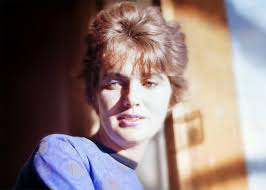
Lucia Berlin
Lucia was an alcoholic and died comparatively young, at just 68, and sadly her writing only became famous after she died. I came across this book after moaning on Twitter about the lack of books by and about working class life. Lucky for me I could find one of her books in my local library in East Manchester.
In A Manual for Cleaning Women we get an insight into Lucia’s life and that of countless anonymous working class women who work in the low waged and low value labour market.
Underlying many of the stories is alcoholism, something that Lucia struggled with most of her life. One of the most tragic stories is Unmanageable. An unnamed woman wakes up with the DT’s. She needs a drink and to stop herself shaking she sits on the floor and starts to read the titles of books in her bookcase. “Concentrate, read them out loud. Edward Abbey, Chinua Achebe, Sherwood Anderson, Jane Austen, Paul Auster, don’t skip, slow down. By the time she had read the whole wall of books she was better.” Later on we find out her children are asleep in the room next door and have taken her wallet and keys to try to stop her going for drink. It doesn’t work.
In the story A Manual for Cleaning Women we get the lowdown on a cleaner’s life. “Try to work for Jews or blacks. You get lunch. But mostly Jewish and black women respect work, the work you do, and also they are not at all ashamed of spending the entire day doing absolutely nothing. They are paying you, right?”
Waiting is what you do in hospitals and I have often spent my time watching the behaviour of the staff. In Temps Perdu the story begins. “I’ve worked in hospitals for years now and if there’s one thing I’ve learned it’s that the sicker the patients are the less noise they make.”
Many of the stories are grim, small little tragedies of normal everyday life. But I laughed out loud reading. Electric Car, El Paso. An elderly woman drives an electric car at 15mph down the freeway. The writer and her grandmother join her.“So slow we went that I saw things in a way I never had before. Through time, like watching someone sleep, all night.” The two elderly women end every sentence with a quote from the Bible. There is a hilarious encounter with a policeman who “stomped around and got into the patrol car, gunned his engine and roared off, sirens wailing right through a red light, crash into the tan end of an Oldsmobile and then crash again, into the front end of a pickup truck.” Brilliant.
At the heart of Lucia’s stories is a kindness towards the people she writes about. They are not all heroes- many of them dissolute and harsh- but she portrays them as real people with complex characters and struggling to get by in life. The stories include references – many of them literary but also to one of my heroes Tom Paine – as well as stories about Communism and the influence of left wing politics.
It is a life that many people lead, one that gets little publicity in the mainstream media. We need more stories like these, but most of all we need to get more writers like Lucia Berlin.
If you cannot borrow it from your local library, you can buy it here

 lipstick socialist
Sounds v interesting. Will try and get it x
Reblogged this on Wessex Solidarity.