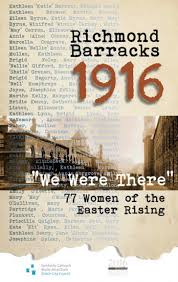
Today is the actual day of the 100th anniversary of the Easter Rising in Dublin when revolutionaries tried to kick the British government out of Ireland. Not an anniversary that the Irish government really wants to celebrate properly; it might give opposition forces such as the trade unionists, the anti-war charge campaign, the People Before Profit Alliance and the pro-choice groups a few ideas. On this side of the water it might remind people of the heroic history of Irish people in making this country a better place to live in.
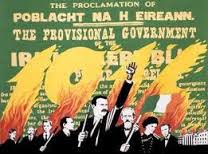
It is always worrying when the mouthpiece of the British establishment, the BBC, spends hours championing revolutionary events and this is what has happened over the last few weeks in many television and radio programmes, with some dodgy characters including Bob Geldof, retelling the story of the Rising.
But maybe it reflects the latest phase in the relationship of the two countries. Northern Ireland is now a devolved state, albeit with the British still in control of the puppet strings while the Republic is a place which the Royal family can happily visit with few people raising the issue of a united Ireland.
Over on this side of the water the Irish community is in decline and with it any radical organisation that would give an alternative view to the events of the Rising. Instead we have nostalgic celebrations of the Rising, mostly funded by the Irish government, reflecting the smug self satisfied response of the well-to-do Irish listening to academics churning over the Rising, but with no engagement either with the present day issues of the Irish diaspora or with the state of the island of Ireland.
Breaking this complacency is this new book; Richmond Barracks 1916; We Were There 77 Women of the Easter Rising by Mary McAuliffe and Liz Gilles. This seminal book reminds us of the important role that women played in the politics of Ireland in the years before, during and after the Rising.
The title refers to 77 women who had taken part in the Rising, surrendered alongside their male comrades, and were then taken to the Richmond Barracks in Dublin. There were other women who took part in the Rising, some of whom who had travelled over from Britain, and theirs is a story that still needs to be written.
The book reminds us of the importance of the trade union movement during this period which politicised a whole new generation of women. Many of the women involved in the Rising were working class and represented the new wave of women’s public activity, not just in trade unions but also in the campaign for the vote. Many were young and unmarried and were aged 16-30 years. They came from the working class urban neighbourhoods and were linked together by family and kinship ties. Their leaders were generally older with an average age of 30-40.
“These seventy-seven women are representative of an important minority, a group of women politicised through feminism, nationalism and trade unionism, who were determined to have their say and their place in the shaping of the future of the country.”
About 280 women in total took part in the Rising: the majority in Dublin, with others in Galway, Enniscorthy and Ashbourne. But the chaos of the Rising with its mobilisation being countermanded meant that some women did not take part on either on the Sunday or on the Monday.
The women who did take part marched, assembled and worked alongside their male comrades at the main positions of the garrison. What did they do? They took part in the fighting, delivered important dispatches whilst dodging bullets as the city turned into a war zone. Some of the women ran first aid posts or kept the rebel army going by cooking meals.

Women from organisations as diverse as the Irish Citizen Army, Cumann na mBan and Clan na nGaedheal Girl Scouts were there alongside their male comrades in the major outposts of the Dublin Rising.
What I really liked about this book, apart from the fascinating and in depth research and its readability, is that most of it is given over to the biographies of the 77 women. As a Republican I know quite a lot about the politics of the Rising, but I was fascinated by the stories of some of the less known women activists.
Annie Norgrove came from a Protestant nationalist family in Dublin. Her father, mother and sister were involved in trade union politics and the Rising. At the time of the Rising Annie was 17, representing that group of women who had become politicised by the 1913 Lockout. She joined the IWWU and was in the women’s section of the Irish Citizen Army. After imprisonment she carried on her revolutionary politics supporting the anti-Treaty side in the Civil War.
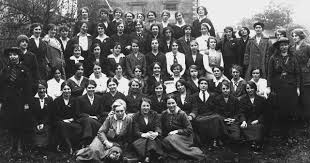
For me, being a second generation Irish activist, there is a big gap in the book because of the absence of the names and stories of women who went over from the cities such as Liverpool and Manchester where they were members of Cumann na mBan. In 2014 there was a celebratory event for the Liverpool Cumann na mBan women who took part in the Rising. They were Nora Thornton, Kathy Doran, Francis Downey, Peggy Downey, Kathleen Fleming, Anastasia MacLoughlin, Kathleen Murphy and Rose Ann Murphy. Perhaps off the back of the recent Rising events someone may follow these women up so that we can know their stories.
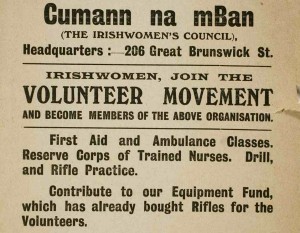
Liverpool Cumann na mBan
We are living through what Bertolt Brecht called the “dark times” and the Left, including trade unions and progressive organisations, are on their knees. And it’s not just on this side of the water. But books such as this are important in reminding us of the tremendous commitment of women in particular to Irish revolutionary politics from 1913-23. It is a history that can only encourage and inspire a new generation of activists and let us hope that the book can get beyond the usual academic circles and reach out to the new generations of women fighting in their trade unions and anti-cuts groups and show them that they are part of a rich radical tradition of working class history.

 lipstick socialist