They have nothing in their whole imperial arsenal that can break the spirit of one Irishman who doesn’t want to be broken.
Bobby Sands.
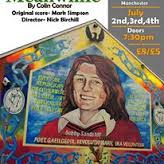
Meanwhile
In 1981 a small group of people used to gather together in Manchester City Centre with black flags to mark the death of Republican prisoners who had starved themselves to death for their political views. The group were called the Manchester Hunger Strike Committee and they were commemorating the deaths of prisoners in jail in the Six Counties of Northern Ireland.
The Hunger Strikes of 1980 and 1981 marked a crucial period in the history of Ireland and the history of the Irish community in Britain. In 1976 the Labour Government had decided that it would no longer treat the continuing war in Northern Ireland as a political problem that needed a political process, but as a security problem which needed a security solution. This meant that instead of treating Republican prisoners as political prisoners, as had been done since 1971, henceforth they would be treated as criminals. Previously they had been able to wear their own clothes, have free association, did not do prison work, could undertake educational activities, whilst the prison management recognised their command structure.
The prisoners began to revolt against the new “criminalisation” and, due to the intransigience of the British Government, this led to a series of hunger strikes by men and women Republican prisoners. In March 1981 Bobby Sands began a hungerstrike, followed by other men at regular intervals in order to place maximum pressure on the British Government.
On 9 April 1981 Bobby Sands was elected as MP for Fermanagh and South Tyrone. He died, aged 27 years, on 5 May after 66 days on hungerstrike. Rioting broke out across Northern Ireland and a further nine men died on hunger strike by the end of September. The hungerstrike was called off after 217 days. In Britain it was portrayed as a victory for Thatcher and her government, but across the world Britain’s role in Ireland was denounced. Over the next few years all the prisoners’ demands were quietly met by the government, which ironically meant that the Loyalist prisoners also benefited from the new regime.
Colin Connor, author of a play set in Belfast during the Hunger Strikes, remembers that time:
I was 12 years old and I didn’t come from a Republican family but I remember the night Bobby Sands died. I remember the women banging the bin lids and the rioting throughout the area. Over 100,000 people attended his funeral, my family didn’t go but my Mum later said she regretted not letting us go to the funeral.
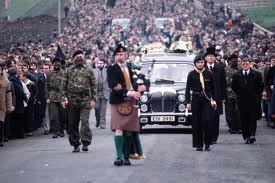
Bobby Sands funeral
It was when he moved away from Ireland that he became more aware of his own identity and history:
I became more aware and politicised when I moved to England. I felt more Irish here.
Colin has been working as an actor for many years with a career spanning theatre, TV and films. His new play, Meanwhile, is on during the Greater Manchester Fringe Festival. Set in Belfast in 1981, it is centres on a female football team the “Dalebrook Torpedoes”, who, as Bobby Sands nears the end of his life, all they can think about is winning the next match.
For Colin the Hunger Strikes and, in particular the death of Bobby Sands, has politicised a whole generation of Irish people.
Living in Belfast, at that time, we Catholics were second class citizens, without the Hunger Strikes we wouldn’t have the freedom we have today.
Originally the play was going to feature a boys football team, as the story reflects Colin and his brothers’ childhood. But because he had worked with some excellent female actors in the last play he directed, Best, he decided to change it to a girls football team.
Colin became interested in Bobby Sands when he was researching a radio programme for St. Patrick’s Day:
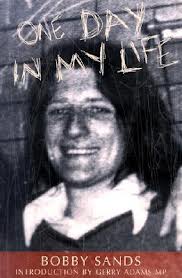
I came across Bobby Sands’ diary and found it fascinating. I think we need to understand why he decided to starve himself to death for his right to be a political prisoner
Colin thinks there are parallels with other communities and the Irish experience;
The government needs to ask the question; why are young Muslims being radicalised, why are they so vulnerable, because they are marginalised in this society with little integration. It is like how things used to be in Northern Ireland for Catholics.
Meanwhile features a poem that Colin wrote as a young man and also an original score by Mark Simpson. Colin hopes:
The play will educate people about Bobby Sands and the Hunger Strikes. It’s a way of exploring childhood and politics. I want people to be educated and uplifted.
Meanwhile is on 2/3/4 July at the Lass O’Gowrie Pub Manchester. For further details see
Read about Bobby Sands see
If you have enjoyed this article and would like to support this blog by making a donation you can do using this button


 lipstick socialist
Pingback: Stroker’s Picks: The Greater Manchester Fringe – Week 1 | The Fiction Stroker