More than a 3 Minute Wonder!

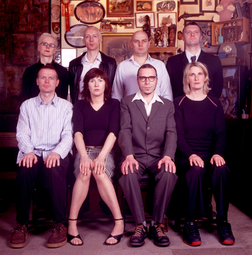
Cuts in arts funding, whether it’s the Arts Council or cuts to theatre companies and venues, are constantly in the news, but Gina Frost and John Topliff of 3Minute Theatre in Manchester are bucking the trend by running with no subsidy at all:

We knew once the ConDem government came in that our jobs in theatre studies at a local college were threatened. We also knew that as we were in our early 50s that it was going to be hard to find work so we decided to develop a small theatre and do teaching and learning during the day

Frost and Topliff had a lifetime of experience as performers and teachers so it was at that point they decided to try and set up their own theatre. 3MT is based in Afflecks Palace in the Northern Quarter and is literally inside a shop unit where Frost and Topliff have built a 70 seat theatre with a stage, seating and bar out of donations and recycled items from skips.
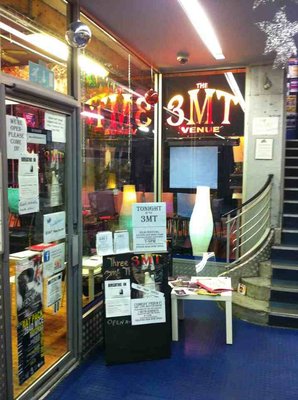
They carry on their teaching in the weekly workshops they run on a Saturday:

Anyone can come along to our workshops. We work with actors and non-actors and help them devise a piece that lasts three minutes. Outside in the arcade we set up a stage and then invite the audience to watch the plays and from their feedback decide which we are going to help develop further so that they can progress to the main stage.

At any one time they have up to three plays that they are helping the actors to develop in what they call their Headway Project:

We put a focus on adults who want to have a go at acting, who maybe cannot go to college, but we see it as a part of the community focus that runs alongside the business side of 3MT

Frost comes from Clayton in East Manchester and was introduced to performing through her local church:

It was a great community at St. Paul’s Church and I learnt so much from doing the shows there, not just performing but everything, including making the costumes! It was a lovely community experience.
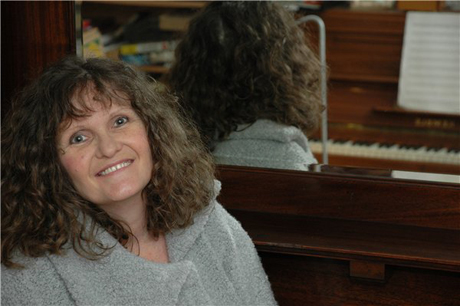
Gina Frost

Like many of the adults who come to their Saturday workshops, she had to combine working during the day with performing at night. Eventually she did a Theatre Studies Degree and became a teacher. She met Topliff in 1990;

We worked in the same band. I was a professional singer and John was the bass player. We got on really well together and our skills and interests compliment each other. We also both wanted to set up our own theatre.

3MT was opened in July 2011. Frost and Topliff have not received any funding to set up and develop the space and depend on a wide-ranging calendar of events to bring in an audience and pay the bills. This includes City Centre Cinema, 24/7 Theatre Festival, The Badly Stuffed Animal Cabaret, as well as esoteric performers such as Ushiku Crisafulli and his performance art. They also run a range of workshops in singing, comedy and theatre, some of which will be accredited to LAMDA from September. The theatre can also be rented out by individuals and groups for events such as album launches and parties.

One of the aims of Frost and Topliff was to combine a community venue with a business that would pay the bills. One year on, 3MT has a reputation for not only being a venue that will encourage small performers and projects but also being a theatre space that is warm and inviting to performers and audience alike:

We are dedicated to the development of emerging local talent and premiering the best new work Manchester has to offer. We wanted our own theatre with writers, actors, singers, musicians and artists, all coming together to create a magic space where anything can happen – and usually does!

Further information see

If you have enjoyed this article and would like to support this blog by making a donation you can do using this button

Posted in anti-cuts, drama, Manchester | Tagged , , , | 1 Comment

Stop,Look,Listen…my weekly selection of favourite films, books and events to get you out of the house

Watch…..Amour (2012) Michael Haneke is one of my favourite directors. In this film he is directing his camera and focus to a very unfashionable subject in the celebyouth film market; getting old and getting ill. Anne and Georges are in their 80s and live an enviable lifestyle,it seems, both are musicians and Anne has been responsible for training the latest and greatest pianists. They live in Paris in a beautiful apartment and seem to have a good relationship with each other but, as we find out, their only child is distant and cold towards them when they need support. Anne starts becoming ill, which completely changes their lives as Georges goes from being partner to carer. Not a subject most of us want to think about but a film that addresses some of the biggest issues for all of us as we live longer and have to face such challenges…

Look…at Teacup Theatre last week I went to see Stephanie Jessum’s latest show Confessions of a Waitress. In the play she shows us how being a waitress has its funny as well as dramatic moments. See her website for further shows

Seedisability differently. It’s Disability History Month in Salford and there are various events taking place around the city see

Go to an exhibition at WCML…the library founded by Ruth and Eddie Frow is celebrating 25 years in Salford. Visit the exhibition and become a Friend to keep it going. Further information see

ReadMoss Side Stories, produced by Commonword, which tells the stories of Moss Side and Hulme in Manchester, communities which have important histories of the beginnings of the Afro-Caribbean peoples in Manchester. This book includes short stories and a play, as well as interviews with the residents. We learn how black people lived alongside other white communities (including the Irish) and tried to live a decent life whilst experiencing racism and discrimination. Further details see

Go to …the Manchester & Salford Anarchist Bookfair will take place on Saturday 1st December 2012 from 11.00am until 4.30pm. There are talks on a wide range of subjects from what it means to be an anarchist to a film about the lack of abortion rights in Ireland called Why Women Travel. There are many stalls from the Northwest Labour History Journal to Pants4Peace, a group organising to oppose prejudice against subgroups. The venue is the People’s History Museum Left Bank in Spinningfieldsoff Bridge Street
Manchester M3 3ER Further details see

Posted in art exhibition, disabled people's campaigns, drama, films, human rights, labour history, Manchester, Salford, Uncategorized | Tagged , , , | Leave a comment

Book review: At the Coalface; My life as a Miner’s Wife by Catherine Paton Black

At the Coal Face; My life as a Miner’s Wife by Catherine Paton Black ISBN 978 -0-7553-6325-4 Headline publishers.

Many books have been written about the Miners’ Strike 1984-85, but few have been written by the wives of the miners. Catherine Paton Black’s book is important, not just because of her husband taking part in the strike but because she was one of the few women who were NUM members and became official pickets during the strike. It is also the story of why those mining communities had such a sense of solidarity during the strike; they realised that, without those jobs and their union, their lives would be one of poverty and instability. This is why they put up such as fight for their jobs and communities and why they were such an inspiration to people in Britain and across the world. It was also the reason why they were dubbed “the enemy within” and why Thatcher was determined to destroy them.

Catherine was born in 1946 in Hamilton, near Glasgow. She came from a poor background:

My father,George was a drunk gambler, always looking for a quick buck to pour down his throat, and my mum suffered a heart condition all her life and struggled to cope. Luckily my grandparents stepped into the breach and became my heroes.

At an early age she was aware of her future:

from a young age us girls knew our fates. We’d grow up to be wives and mothers like our mums and maybe get a job in a factory if we had to. That was our lot in lives and we didn’t know any different.

Catherine left school at 15, got a job in a factory and spoke out when she realised that they were earning very little in comparison to the profits the company was making:

The strike never happened, but the seed had been planted. Even the lowliest paid worker had a voice if they wanted to use it. Little did I know that was a principle I’d stick to much later in life.

Tradition in those small communities wasn’t just about what women did and what men did, it was also about who you married. Catherine meets Doug and when he comes to meet her granddad asks him straightaway What colour are you?, referring to religion. Catholics and Protestants did not mix, so her granddad was relieved when he found out Doug was “blue” ie Protestant.

Through her relationship with Doug she gives the reader an insight into the horrors that his father and brothers experienced as miners;

Working conditions in the pits in the 40s and 50s were primitive. Before the modern machines arrived Doug’s father and brothers were at times quite literally going at parts of it with a pick axe…They were all injured at some point.

If young men didn’t want to go down the coalmines they had few other choices and for Doug that meant going in the Army. In 1968, when she had their first child, he left the Army and took the only other alternative, a job in a pit in Nottingham in England, but as a surface worker. There were other advantages, as Catherine says, after living in a tenement in Glasgow they now were given:

A smart new Coal Board house, with clean red bricks, it really did feel like a piece of heaven after where we had been living. The village, pronounced “Renoth” by locals, had been built especially for the pit and had some lovely rolling green fields, farmland and lake areas nearby.

Catherine was also now living near her Mum and sister, who had moved south several years previously. Catherine and Doug had five children. His work on the surface did not pay enough to keep the family so she went back to work. Eventually Doug went down the mine to improve his wages while Catherine joined him in the colliery canteen (and joined the union). Unfortunately he had an accident in the pit, injured his back and could not go back underground, so the Coal Board found him another job at the pit;

So Doug started a new role on the surface in an office alongside two poor fellas who’d lost their legs in terrible accidents.

During the Miners Strike of 84-85 the Nottinghamshire coal field had many miners who did not support the strike and Catherine believes that this was because :

the mines in Notts employed lots of people from all parts of the country so fewer people felt a sense of loyalty to the area.

Controversially pickets from Yorkshire visited their area to try and get them to join the strike. Catherine did not support this;

As much as I supported the strike, I resented this. We didn’t want or need people from another county telling us what to do, but I did just wish more Nottingham communities were joining in.

Like many people from the coalfields she could see the government’s strategy of provoking the miners into striking at a time when they had been stockpiling coal at the power stations. As she puts it:

It all seemed terribly cynical, like open war had been declared on miners. Yet they were decent, hard- working people who just wanted to protect their jobs and communities.

Many miners wives got involved with the strike, but Catherine was different because she was an NUM member and she could officially join the picket line. Her husband didn’t want her to so she went one morning with her daughter;

After shinning down the drainpipe, we walked into the street, where we spotted other people coming down the road
.
The other women commented;
We’re off to find a demonstration. We can’t just sit at home cooking and cleaning while all this is kicking off.

Catherine throws herself completely into political activity. She organises the soup kitchen and attends pickets, demos, travels around the country and comes across other peoples ways of life that she never knew existed. But she wasn’t interested in the bigger politics of the strike as she comments:

We had them all up here, including Scargill, but I never took time to listen. I wasn’t interested. …I was too busy to think or consider any further issues or the politics of it all

For many miners’ wives (and miners) the strike showed them different ways of life and some of them took the opportunity to get an education and jobs and move away from the coal mining communities. Catherine was happy with the life she had, and after the strike ended she returned to her husband and family. And her feelings today about the strike?

Echoes of its legacy lives on. We’ll bear both the scars and the memories forever.

National Women Against Pit Closures 2012

In 2012 with growing dissent about energy costs it is even clearer that the demise of the coal mining industry was not just a defeat for the NUM and its members, but has left this country now hostage to large energy companies with a government that has no sympathy or concern for poor families.

At the Coalface
is a reminder that communities and trade unions can work together to campaign for a better society and we need to remember those lessons now.

If you have enjoyed this article and would like to support this blog by making a donation you can do using this button

Posted in book review, feminism, human rights, interesting blog, labour history, political women, Socialism, Socialist Feminism, trade unions, women | Tagged , , , , | 1 Comment

Stop,Look,Listen…my weekly selection of favourite films, books and events to get you out of the house

Watch….at the Manchester Film Co-operative on Tuesday 27th November – a screening of Manufactured Landscapes. Jennifer Baichwal’s eye-opening documentary follows Ed Burtynsky’s photographic journey through the epic industrial landscapes of China and beyond, exploring “the aesthetic, social and spiritual dimensions of industrialisation and globalisation”.
Time: Doors open at 7:30pm. Screening begins at 8:00pm.
Admission: £3 waged, £2 unwaged/student.
Location: International Anthony Burgess Foundation, Engine House,
Chorlton Mill, 3 Cambridge Street, Manchester, M1 5BY.
Go To …. Book launch of The Oil Road Wednesday 28th November at 6-8pm,same venue:, Virtual Migrants present the latest of their ‘Passenger’ events using live music and spoken word, plus a panel discussion in response to Platform’s new book, The Oil Road. This panel discussion will explore the themes of the book and ask, “How does the sanitisation of difficult, violent processes and imperialist histories inform the fight for climate justice today?”
More information on event is available here

Look…..Shirley Baker was born in Salford in 1932 and studied at Manchester College of Technology. Her pictures of inner city Manchester and Salford in the 60s are historical documents of the lives of poor people in those cities , who endured shocking housing and living conditions so that other people could make vast profits from their labour. The people are down, but not out, and that is why I like the pictures so much. Shirley gives her subjects a sense of humanity and communality that stops them from being a voyeuristic take on poverty and its circumstances. She doesn’t ask them to pose and that gives the pictures a sense of reality and brings out the character of the individuals. In this exhibition there are the iconic photos of the 60s alongside her latest ones taken in 2000, once again in Manchester and Salford. In 2000 she has chosen to use colour which gives the photos a modern look, although there are still pictures of children on the street but their mothers and aunts have exchanged the street for the shopping centres.
See for yourself at Gallery Oldham……

Another exhibition…….on volunteers from the Northwest who joined the International Brigade during the Spanish Civil War. Launch and opening talk by member of International Brigade memorial trust on Wednesday 21 November 7pm at Fusiliers Museum (opposite Art Museum) Moss Street, Bury. More information here.

Find out …about Community unions. In the 1920s and 30s the National Union of Unemployed Workers were a group of people, many in the Communist Party, who took direct action on the streets to oppose the cuts that the Government were making to their unemployment pay. Walter Greenwood in his novel, Love on the Dole, described a famous event during this period where the NUWM fought the police in Bexley Square in Salford. Greenwood used Eddie Frow as the model for his angry young man. in real life, Eddie was beaten up by the police and sent down for 6 months.
This year it is trade unions, such as my union Unite, who are trying to organise the unemployed in organisations such as the Greater Manchester Community Unions. Their aim being we will work with you to make life better; we will give you the platform you need to create a fairer society. Our trade unions are the biggest voluntary group in the UK. At 6.5 million strong, we are the Big Society. At Unite we have 1.5 million members – just imagine what you can achieve with them standing by your side?
After 6 months in existence there is an opportunity to find out what Unite’s strategy is on working with the unemployed on Manchester Tuesday 27 November at Friends Meeting House at 7pm. The agenda is nomination for elections, organising for TUC demo on 5 December and a 6 month plan for Jan to June 2013 . More information here

Save….Newcastle libraries.. The council is proposing to get rid of 10 of its 18 branches as part of budget cuts and several authors led by Alan Gibbons have organised a protest. Newcastle Libraries Emergency meeting Tuesday 20 November 7pm, St. John’s Hall, 30 Grainger St. Newcastle NE1 5JG Speakers include: David Almond, Alan Gibbons, Steve Barlow. Further info see

Buy ethically……….. 2nd Peace & Craft Fair to be held at Cross Street Chapel, Cross St, Manchester on Saturday 24th November. Everything from beautiful crafts, head massage, henna painting, campaigning stalls, Father Christmas, elves to mulled wine. The antidote to Primark and M&S…..see

Go to a left wing play………Liverpool’s Dingle Community Theatre are performing the play “Waiting for Lefty” written by Clifford Odet, it is the story of a strike by New York taxi drivers. The original production by a socialist theatre group was so successful that they went on to form the Unity Theatre. See what so inspired people in the US in the 1930s. Performances are at the Lantern Theatre, Blundell St. Liverpool, 29&30 November at 8pm. Further details; 0151 703 0000

Posted in Uncategorized | Leave a comment

Political Women (10) Alice Nutter

Alice Nutter
Formerly in Chumbawamba, now a regular scriptwriter for TV and radio, Alice is from a working class family in Burnley, Lancashire:

It’s a myth that all working class people are leftwing. My parents were weavers, but were Tory in their politics. My Dad was a Tory councillor and petrol pump attendant, while my Mum re-trained as a nurse when I was 18 months old, but we still lived in the same working class area.

She grew up at a time when, if you lived in a small northern town, the roles for men and women were clearly laid out:

I used to go to the soul events at Wigan Casino, but it was the men who did the dancing, the women just stood and watched. The men worked in factories, the women were “someone’s girlfriend or wife”. There weren’t many options for women in Burnley at that time.

Alice left school at 16 and worked in Asda and in waitressing jobs A year later she went to Art School to do a Foundation Art course. It was the advent of punk rock in 1977 that showed her that there could be more to life…….
.
Punk rock was liberating for girls like me, and for a generation. Bands such as the Slits opened my eyes to a different life. I met other people who like me were looking for something different.

In the 70s the new wave of feminism meant that even if you couldn’t meet other feminists, because you lived on working class council estates, you could still find books that would broaden your ideas:

I have always enjoyed reading and always wrote stories. One day I got the bus from Burnley to Manchester and went to the radical bookshop Grass Roots Books. I bought some books, including Germaine Greer’s The Female Eunuch and Erica Jong’s Fear of Flying. Politics interested me but I didn’t know anyone like me.

Alice’s Mum supported her daughter in a search for a new way of living:

She let me be anything I wanted to be, even when I was a punk. She never thought I should get married, and I haven’t.

After finishing her course Alice decided not to go to University, and instead started going to punk rock gigs:

I went to a party in Liverpool and from there went down to London to an anti-nuclear war demo. It was the first time I ever went on a demo, and from there I got involved with anti-Falkland war activity with other people, and we went on to form Chumbawamba

The Chumbawamba website says:
Chumbawamba was our vehicle for pointing at the naked Emperors, for telling our version of the truth; it gave us more than the joy and love of playing live, writing songs and singing together – it gave us a chance to be part of a broad coalition of activists and hectors, optimists and questioners.

From the late 70s there was a culture of radical dissent with people opposing racism and the National Front, the war in Ireland, cruise missiles at Greenham Common, Tory cuts, against a background high levels of youth unemployment. It defined a whole generation of young people including me and Alice:

We moved from Burnley to Leeds and set up Chumbawamba in a commune. We had all the zeal of new political activists, demonstrating, printing leaflets on our press etc. I worked on Leeds Radical Paper and at Suma, the wholefood collective, as well as being active in local womens’ groups.

In 1984 the Miners Strike began and like thousands of others, Alice and Chumbawamba got involved:

It changed everything. We had our own Miners Support Group, we worked with other groups such as SWP and for 18 months supported the soup kitchen at Frickley.

For Alice, like many other people on the Left, the Miners Strike defined their politics, particularly around issues such as class:

I joined Class War, wrote for the newspaper, and stayed with it until it became a parody of itself

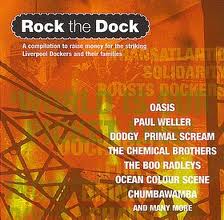
From there she went onto anti-capitalist politics with Chumbawamba used its profile and finances to support events such as the Leeds May Day Conference and campaigns such the Liverpool Dockers Strike in the 1990s.

In 2005 she left Chumbawamba and took her creative skills to scriptwriting:

I’ve always thought I could write scripts, I have always written stories which looked like scripts. I just put my head down and it’s been a combination of luck and self confidence (from 23 years with Chumbawamba) that I have been able to get work.

Alice says her scriptwriting reflects her politics, trying to tell stories about the complexity of human life. She has turned down writing for the soaps because:

My heart isn’t in it and I just couldn’t do it. I work with Jimmy McGovern and I enjoy the work, it’s creative and his heart is in the right place. I want to write about the struggle to be human in difficult circumstances.

One of her heroes is Jim Allen, who put his politics of the class struggle into his plays and films in the 1970s and 1980s. She feels that over the last 25 years there has been a major shift in society and that class is once again the issue for political activists:

There is no social mobility, all those avenues that I went down ie punk rock/art school/being able to have a creative life on the dole, have been shut down. If I was growing up now, and from a working class background, I would be screwed.

Alice is now involved with the Plan C campaign:

It is recognising that we had Plan A and that has been swept away by the neo liberals, there is no Plan B and we want to work out what to do next. A group of people in Leeds have got together to look at other societies eg Scandinavia and then collectively work out how we can build a better life here.

And what is her message to those young women who are perhaps 17, working class and living in small towns but want a different life?

Find things that you love doing, it doesn’t have to be political, find the life you want, and find people that you enjoy working with and enjoy yourself!

Further info on Alice’s writing see

If you have enjoyed this article and would like to support this blog by making a donation you can do using this button
Posted in anti-cuts, Communism, drama, education, feminism, human rights, labour history, music, political women, radio drama, Socialism, Socialist Feminism, TV drama, women, young people | Tagged , , , , | 1 Comment

Stop,Look,Listen…my weekly selection of favourite films, books and events to get you out of the house

Watch….Community It’s a US series set in an adult education college with a collection of unconventional students and the script one long satire on sitcom tropes and popular culture from Star Wars to zombies. The leader of the gang is Jeff, a lawyer, who lost his job because he didn’t have a degree, he lusts after another student, Britta, who was a political activist and is now trying to get an education. They are joined by Shirley who is into Christianity and is a surrogate mother to the group; Abed, a Muslim young man who is obsessed with film and TV and has Asperger’s; Annie, who looks like the archetypal good girl but is a recovering drug addict; Troy, an ex-high school football star; and Pierce, an older man who is a millionaire and who is always on the outside of the group trying to get in. Some of the dialogue is just unintelligible to non-Americans, but it is extremely funny and becomes more bizarre as you watch each of the episodes.

Read.…..In the Sea There are Crocodiles (Vintage books) by Fabio Geda. Fabio is an Italian novelist who works with children who have problems. When he was doing the launch of a previous book, which was the story of a Romanian boy’s life in Italy, he met Enaiatillah Akbari. Ena approached him and told Fabio his story, and this book is the culmination of those conversations. Fabio says the book is a work of fiction because he has had to recreate Ena’s experiences from those conversations and some of the names have been changed. Having read many stories of refugees I did not expect to be shocked and horrified by Ena’s experiences; but I was. He is a Hazara, who are a minority community in the province of Ghazni in Afghanistan. Life is very difficult for Hazaras, and they are badly treated by the Taliban and Pashtun, so Ena’s mother decided when he was 10 years old to take him to Pakistan. When they got to Pakistan she left him, and he had to make a life for himself. The novel is the story of his journey to Italy, a story of scraping a living, making friends and trying to make sense of this new world. Alongside his incredible story is that of all the people who help him along the way, the strangers who give him food, clothes, bus tickets etc and make his escape possible. The really sad aspect of the book is that he had to leave his family and the place he loved to lead a safe life, an indictment of the way in which the West has destroyed countries such as Afghanistan and the hopes of children such as Ena.

Listen to…. The Anti-Capitalist Roadshow double CD: Celebrating Subversion. Twenty nine songs and one visionary poem on 2 CDs from singers & songwriters Frankie Armstrong, Roy Bailey, Robb Johnson, Reem Kelani, Sandra Kerr, Grace Petrie, Leon Rosselson, Janet Russell, Peggy Seeger, Jim Woodland and socialist magician Ian Saville. Eleven different voices with one aim – to oppose the ideologically driven austerity programme imposed by this millionaire government on all but the elite and to challenge the narrative that says there is no alternative. Release date 26 November but available now from Fuse Records. Send a cheque for £16 (inc. p.&p) to Fuse Records, 28 Park Chase, Wembley, Middlesex HA9 8EH. Make the cheque out to Fuse Records. Don’t forget to include your address.

Go to….the next talk in the Invisible Histories series on Wednesday 14 November at 2pm at the Working class Movement Library. Michael Herbert recounts the story of the Women’s Freedom League (1907-1961), an often overlooked suffrage organisation, whose members included Charlotte Despard, Hannah Mitchell and Teresa Billington. All welcome, admission free. Michael will also be doing a talk on the same day at 6pm in the Lydia Becker Room, City Library, about his new book “Up then Brave Women” Manchester’s Radical Women 1819-1918. More details here

Celebrate….A free event at the People’s History Museum. Celebrate the Luddites’ 200th Anniversary  on Sunday 18 November from 2pm  to 5pm. 2012 is the 200th anniversary of the Luddites’ uprisings against the  machinery which was destroying weavers’ livelihoods. This cultural celebration will include music by One Accord, talks, exhibitions and artwork. It is organised by the PHM and Luddites200 – a network of historians, scientists, artists and activists, which has been organising events to celebrate the Luddites’ 200th anniversary. Booking advised: please contact 0161 838 9190 or info@phm.org.uk

Get involved….derbyfiftythousand peopleclub  are organising a meeting about the cuts and privatisation agenda at the Quad in Derby on 15th November at 730pm. more details at derby50k.co.uk

Posted in anti-cuts, labour history, Manchester, music, novels, Socialist Feminism, TV drama, women | Tagged , , , , , , , , , | Leave a comment

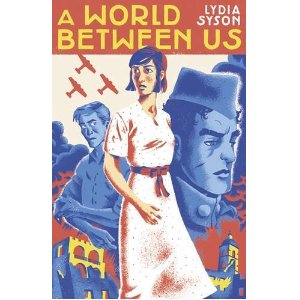
Book review; A World between Us by Lydia Syson


A World Between Us by Lydia Syson
Hot Key Books ISBN 978-1-4714-0009-4

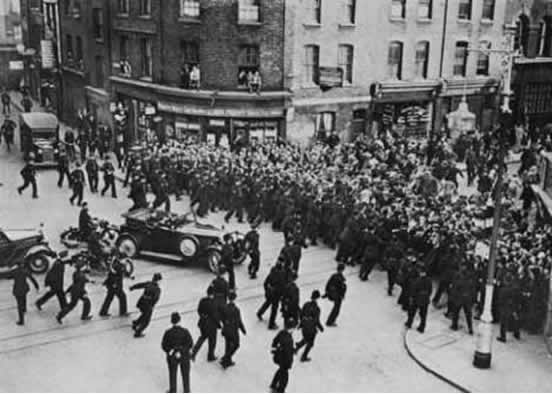
Taking part in the march on the 75th anniversary of Cable Street in October 2011 made me feel very proud of the history of working people’s opposition to fascism, whether on their streets in 1936 or in the protests against fascist groups such as the English Defence League. As the economic system nationally and globally goes into decline there are some similarities with the 1930s in Britain. Unemployment is rising, we have a Conservative government that is cutting the benefits of the poor in its strategy to pay off a decifit caused by the monied class. Unlike the 30s we do not have a vibrant political organisation such as the Communist Party which provided working class people with not just a political way forward but in its actions in areas such as the East End of London took the class struggle to the street. It is this context that Lydia Syson has set her new novel.

Lydia Syson’s, A World Between Us, explores some of the most important issues about how and why people ( and young people in particular) get involved in political activity. Her book is set in London in the 1930s, at a time of a worldwide economic crisis and the mirroring rise of fascism. Her grandparents were involved in the Communist Party and were part of a movement that organised against the growing rise of fascism in this country and abroad, particularly in Spain:

I wanted to write about the Spanish Civil War and its effects in this country because my children didn’t know about it. It was important on many levels, not just in terms of people going to fight in Spain but in the whole political culture of that time.

Like many people in the 30s, and particularly in the East End of London, her grandparents took part in the large political demonstrations such as Cable Street:

I wanted to show in the book how people got swept up into the street politics and how different life was for them. Being a communist now is seen in a negative way so I wanted to show why people did become communists and that it was a response, a gut feeling, about the political and social situation they were in.

The novel begins with the Cable Street demonstration when the British Union of Fascists attempted to march through a largely Jewish and working class area of East London:

Missiles kept flying overhead-saucepans, bottles, rotten vegetables, god knows what. It was like a tide on the turn, with banners and placards dipping and rearing. There were all sorts here, not just East Enders. Even the side streets were packed with protestors.

It is at this march that the two main characters meet, trainee nurse Felix (Felicity) and young communist Nat. He is about to go to Spain, and explains to her why he thinks being a communist is important:

It’s changed my life really. I can see everything clearly now. It gives you hope, doesn’t it? When you realise how things could be much better, so much fairer? And that you can do something about it.

One of the reasons Lydia chose to write about this era was to show young people now how the SCW did motivate young people of that generation to not just become politically active, but to go and fight in Spain:

When I was writing the scene about Cable Street I wondered if my audience, young teenagers, would understand what it meant to be on a demonstration and being threatened by police on horses. But at the same time I saw on the news the student demonstrations and it struck me that this will make sense to a different generation of young people.

One of the startling aspects of British people going to take part in the Spanish Civil War was their age, like Nat and Felix in this book, many of them were teenagers when they made that decision. Lydia captures the horror of war, and for me reading Felix’s story as a nurse on the frontline gave it a potency that is quite different from reading about a battle:

Leaning on the doorjamb, Felix began to tremble. She couldn’t go any further anyway: a body lay at her feet, blocking the way. She had nearly stumbled onto it. She bent to apologise, but as she put a hand on the man’s arm, she could feel that already beginning to stiffen….There were bodies everywhere.

In AWBU Lydia is writing fiction, but her motivation in writing the novel was to remind her readers of the importance of the Spanish Civil War in the history of Europe in the 20 Century:

I used the history of the war as a framework but I was committed to making the novel mainstream. I wanted it to work on different levels in terms of its romance and its politics. I hope the politics will seep into readers’ consciousness so that later on the significance of the SCW will be understood.

AWBU is published by Hot Key Books for young adults but I think it is a book that can be read and appreciated by people of all ages. The love story between Felix and Nat is beautifully written and shows how political activity can bring people together in loving relationships. The novel finishes in 1939 and one of the reasons why it is important to understand the politics of the SCW is that the defeat of republican Spain led onto the Second World War. Lydia’s book is well researched and is a good beginning for further reading and studies in what is a crucial history of Britain and Spain in the 30s.

To buy it see
See Lydia’s blog for links to SCW It is also published as a Multi-touch iBook2 from Apple iBook store with lots more info on the SCW.
See wcml.org for more info on SCW
See IBMT for more information and activities regarding the International Brigadiers see

If you have enjoyed this article and would like to support this blog by making a donation you can do using this button

Posted in anti-cuts, book review, Communism, human rights, labour history, novels, Socialism, young people | Tagged , , , , , , | Leave a comment

Stop,Look,Listen…my weekly selection of favourite films, books and events to get you out of the house

Watch Ginger and Rosa (2012) a film directed by Sally Potter. Ginger and Rosa are two young women growing up in London in the 60s. The script catches the intensity of relationships between young women; sharing clothes, emotions and that separateness that you feel at that age. Unlike many similar films, the politics of the nuclear bomb of that era are intertwined with story of the young women. We watch them attending Ban the Bomb meetings and demos and get an insight into the heightened fear at that time of nuclear war. Less interesting is the interplay between the adults and their disengagement with their children. It’s good to see a film showing young people caring about the big issues and documenting what was an important part of the history of this country ie the beginnings of the Campaign against Nuclear Disarmament.

Read….Extreme Rambling by Mark Thomas. There was the Berlin War, there still are so-called Peace Walls in Northern Ireland and in this book Mark decides to walk the wall erected by the Israeli Government in their determination to push Palestinians off their land and out of their country. Its an entertaining read as Mark adopts the Englishman abroad persona with his cagoule,walking stick and Kendal mint cake. He is very funny in pointing out the absurdities of the political situation in the West Bank, as well as being outraged by the human rights abuses against the Palestinians. Buy it from

Join a picket line……at the Cross Rail site at Westbourne Grove in West London….more details at Women’s Fightback and at Electricians United Against the World see

Go to a meeting about ….Who Polices the Police Tuesday 6 November 630pm at Phil Martin Centre, 141-143 Princess Road Manchester. Watch a documentary about Sean Rigg who was found dead in police custody. Listen to Sheila Coleman of Hillsborough Justice Campaign and speakers from various communities. The aim is to organise a campaign to unite groups against police violence.see

Find out more…about Alice Wheeldon, watch the film The Plot to Kill Lloyd George Thursday 8th November Friends Meeting House (next to Radio Derby) for further information see

Protest…..against the threatened deportation of Unite member Mohammed Al-Halengy originally from Eastern Sudan. His Court hearing is on 7th of November 2012, at 9.30am. Please attend Piccadilly Exchange, 1St Floor Piccadilly Exchange,2 Piccadilly Plaza,Mosley Street,Manchester
M1 4AH

Posted in anti-cuts, drama, feminism, films, human rights, Ireland, labour history, Manchester, Middle East, North of Ireland, Palestine, peace campaigns, political women, Socialist Feminism, trade unions, Uncategorized, women, young people | Tagged , , | Leave a comment

Political Women(9) Linda Clair

Communist, political activist……..

Linda comes from a Jewish, Communist background in Manchester:

My father joined the Young Communists at 14, he wanted to fight in the Spanish Civil War but was too young. He was my biggest influence , he was a living example of what it meant to be a Communist. He worked all his life in the interests of others, whether it was anti-fascist campaigns or trade unions. He taught me that for things to change you have to go out and make things happen

Her own political activity started at the age of 13 years when she started a local Youth CND branch.
Like many working class young people, although she passed the 11+, she did not enjoy school and left at the age of 15 without any qualifications:

I hated school and my parents needed the money, so I had to work and I got a job as a junior clerk in a mail order company

Linda married her first husband at 18 and had her first child when she was 19 years. After 15 years of marriage and two children she got divorced. It was at this point she became more politically active. She joined the Communist Party in 1975 when she was 30 years old. She was in the CPGB for 10 years and then in the New Communist Party for 4 years.

In 1982 she went to university to study Social Administration and Social Policy, followed by a post graduate course in Youth and Community work:
It was a big plus to me being a student. In those days I got grants because I was a mature student, with children and it included travel payments. I was better off as a mature student than a low paid worker.

She has also spent many years being involved in women’s organisations:
In 1982 I joined a local Women’s Aid Group in Bury and we went on to open a refuge for women. I was also involved with the National Abortion Campaign, as well as being on the management committee of the Pankhurst Centre for 13 years.

In her working life she has been involved with working with women who have fled domestic violence and homeless families:
It was an environment I was happy working in because of my own politics. I wanted to help women to gain confidence and to believe in themselves. I worked there for 13 years and retired because it was the beginning of the privatisation of the accommodation and I was not prepared to work in that environment.

As a single parent with two children she is aware that her children have not always reacted positively to her political activity:
Kids want you to be the same as other parents and I never wanted to be like other parents and never pretended to be. My eldest daughter found that more difficult to deal with. She wanted me to be at home and didn’t want to be dragged round meetings and expected to sell raffle tickets. My other daughter acknowledges how important my work on Palestine is and is supportive.

In 1986 Linda went on a delegation to Palestine and this was the beginning of a new chapter in her life:
I didn’t know anything about Palestine or anything about Israel. I was catapulted into the Occupied Territories and could not believe what was happening there. I was taken all over the West Bank and Gaza and met people in their homes, in schools and hospitals. I came home a different person and committed to doing something about it.

Earlier that year, 1986, a few people in Manchester had set up a Palestinian Solidarity Campaign group and Linda joined after returning from Palestine. She is now the Chair of Manchester PSC.

Although brought up in a Jewish family, she is not a religious person. Indeed she has taken on the responsibility of showing that being Jewish does not mean being a Zionist:
They are not the same thing. I feel it is important for me to assert my Jewish identity and show that this does automatically mean that I am a Zionist and anti-Palestinian. It is important to make those alliances.

Educational work is an important of Linda’s role in PSC. She speaks at schools, colleges, trade unions and community groups both locally, nationally and internationally. She speaks on the history of Zionism and the Palestinian movement.
Her other main role is selling Palestinian merchandise at stalls around the country. This is a major part of the work of Manchester PSC.
The money raised goes to a variety of projects, including women in Israeli jails to help them pay for lawyers. We support a school for the blind in Bethlehem and a women’s centre in Gaza.

Looking back over 26 years she sees the way in which the issue of Palestine has changed:
In 1986 no-one wanted to know about Palestine. Things have changed dramatically over the years. Then Manchester PSC was only the second branch in the country, now we are in every town and city. But there has been a deterioration in the lives of Palestinians and things have got much worse for them.

Linda feels that in terms of the battle of ideas the cultural boycotts have had a major effect in terms of putting the case for the Palestinian cause;
They, the Zionist community, have lost the battle of ideas but the effect of that is they are becoming more violent and that is increasing the risks for people like us.

PSC, unlike many other organisations on the left, has a lot of students and young people involved in its activities.
As a Communist, Linda is aware that other young people have not had the benefit of a political education, so what is her message to young people?
Young people are suffering because of a serious crisis in capitalism and for me that crisis may mean we have a good chance of overthrowing that system. So young people need to put up a fight for a decent education and a job. They should join campaigns, such as anti-cuts, and also get educated as to why the system doesn’t work. They should learn from older people but also point out our mistakes as to why we didn’t achieve what we wanted to achieve. One thing they shouldn’t do is to sit back and do nothing.

Join Linda and PSC outside the Lowry Theatre Salford on 2&3 November at 6pm as they protest the performance of Israeli group Batsheva.

If you have enjoyed this article and would like to support this blog by making a donation you can do using this button

Posted in anti-cuts, Communism, feminism, human rights, labour history, Manchester, Middle East, Palestine, political women, Salford, women, young people | Tagged , , , | Leave a comment

Stop,Look,Listen…my weekly selection of favourite films, books and events to get you out of the house

WatchShine on Harvey Moon (DVD) Made in 1982 it tells the story of Harvey Moon and his working class family in London following the end of the Second World War. Not the usual sentimental rubbish about soldiers returning to home and family,  but real characters with complex lives and feelings. Harvey’s wife has been having affairs with American soldiers and is not a good mother to his 10 year old son and teenage daughter.  Harvey has a close relationship with his Mum,  who is the backbone of the family and acts as a moral compass in encouraging Harvey to be a father to both of his children. In 1945 people did have more hope for the future and Harvey epitomises that feeling in his struggle to organise a union at his workplace and as his Mum becomes ill he challenges the doctor who wants his payment up front. He goes onto join the Labour Party and become a councillor. I really like this series because the writers, Laurence Marks and Maurice Gran  give a true and respectful insight into the life of a working class family with all their foibles. Its also funny and shocking in showing how poor people were in the 1940s and makes you realise why there was such a demand for a Welfare State.

ReadSex,Race and Class;The Perspective of Winning Selma James has been an activist for six decades. She was born in Brooklyn, USA in 1930. Her father was a truck driver who was involved in organising a union,  as well as being an active anti-Zionist. Her mother was a housewife and community activist working with homeless families.  Selma was a factory worker and mother who at the age of 22 wrote her first pamphlet , A Woman’s Place. She wrote from her own experience and was the first person to set out a radical expose of the position of the millions of women who work in the home and on the land as unwaged workers. This book shows her political development  and also the way in which she has, with other women, built up a campaigning network that is international in its perspective and in its political activity. It is a positive contribution to the many debates going on at the moment about organising, about getting people involved in campaigns and about what kind of future we want. Buy it at

Look at things in a different way
…..David Dunnico, documentary photographer, reviews the way in which the changing covers of George Orwell’s  1984 have reflected the politics of their time. He is speaking at the WCML in the Invisible Histories series  on Wednesday 31 October at 2pm: Under cover: designing Orwell’s 1984. Admission free, all welcome.

Go to… the Small Cinema Festival in Moston, North Manchester 27 October – 4 November. Not just showing  films the project has been involved in listening to the memories of local people about their cinema going experiences in the past. Moston has a coalmining connection, several of my relatives were miners who lived in the area so its appropriate they are showing Bill Morrisons “The Miners Hymn” made about the North East coalfields.

Wear a White Poppy…….buy them at the WCML. The white poppy remains a symbol of grief for everyone who has been harmed by war,  but also a symbol of determination to work to abolish war. Proceeds from sales of the poppies will go to the Peace Pledge Union. The Peace Pledge Union has been distributing white poppies for peace since 1934.

Organise……go to the Living Wage open meeting on Saturday 3 November 1-3pm at the Friends Meeting House, Manchester. Called by Unite the Union NW 6/159 branch to highlight the growing poverty in the North West as the ConDem government’s cuts affect both working and unemployed people in this area. The aim of the meeting is to set up a campaign for a living wage. All welcome.

Posted in Uncategorized | 1 Comment